Travelblog LA#25: Granada (Part 2) – Nicaragua

20th – 24th August, 2023


For those of you who are not regular readers; the first two days of my time in Granada were covered in my previous blog – where I visited places within the city – whilst this blog is going to be an account of the time spent afterwards; when I used it as a base to explore other attractions just a stone’s throw away.


Laguna Apoyo

This was the first place that I visited and I did so with a friend I made who had a car. Our first stop that morning was to a village called Catalina that overlooks the lake.
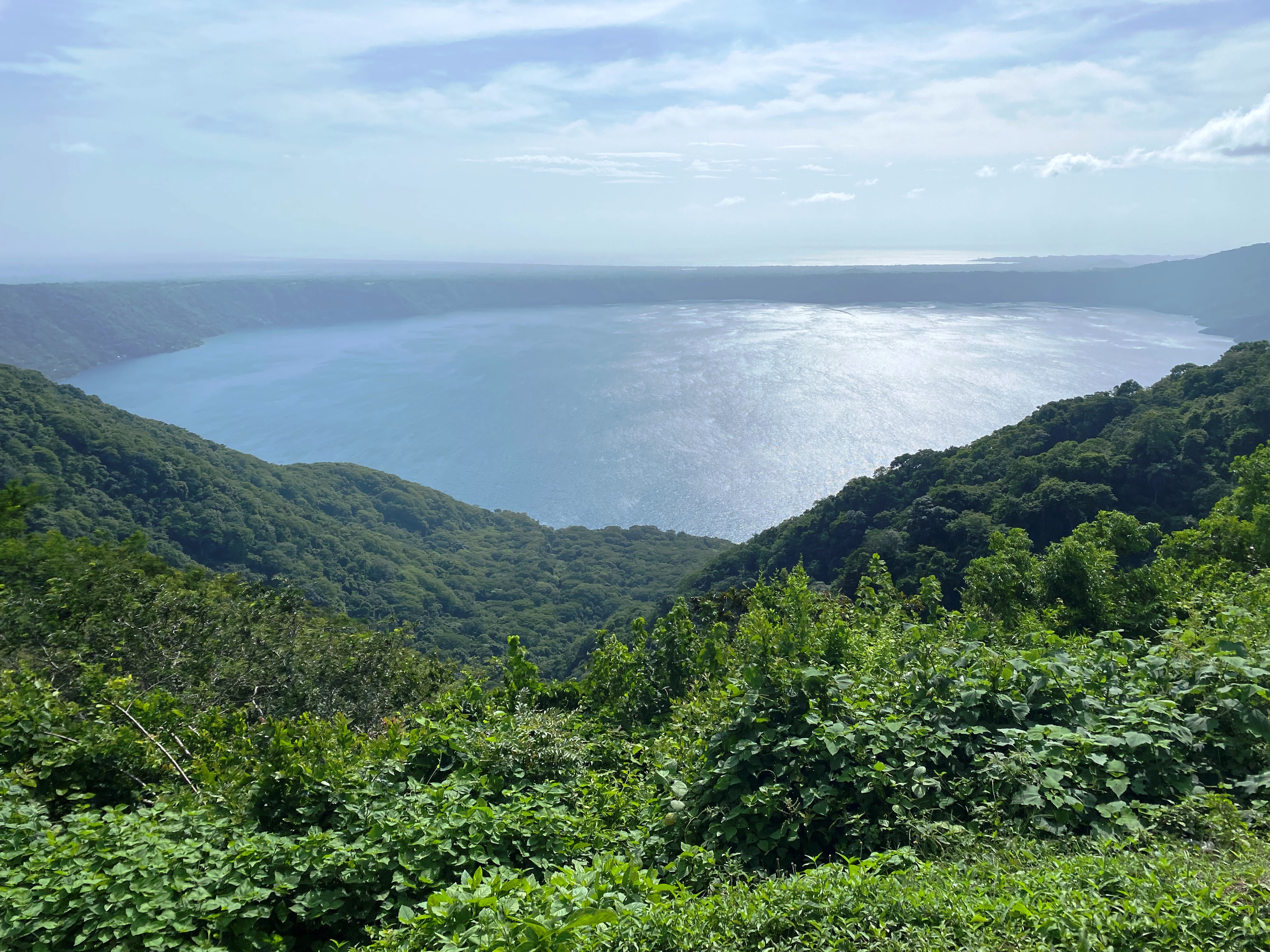
As you are probably beginning to suspect; yes, this is an extinct crater. That is not the only thing that is interesting about this lake, however; it also happens to be almost two hundred meters deep – despite being only four miles in diameter – and has thermal vents at its base which keeps the waters comfortably warm.
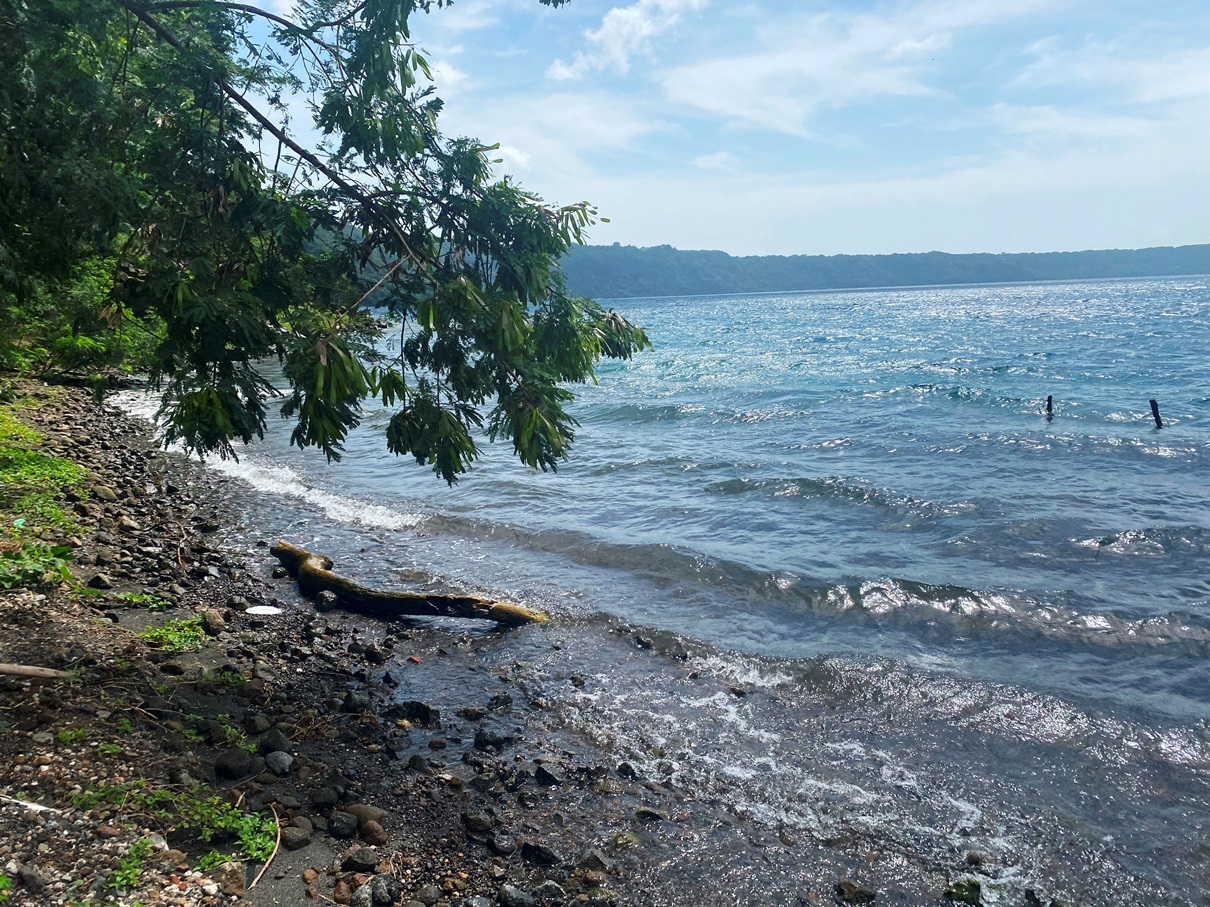
We spent most of the day relaxing at one of the beaches there. I read a book, ate some lunch, and went for an occasional swim. Due to the authorities having strict rules on development and a ban on motorised boats on the lake, the waters are crystal clear. I have read that there are some scuba diving and snorkelling opportunities, but I am not exactly sure where they are. I didn’t see many fish in the spot we were in. I was happy to have a day to relax.


Mombacho Volcano

This is a feature that overlooks Granada, but I never got to see its entire outline because it is almost constantly shrouded by clouds. Getting there was relatively easy; I just caught a chicken bus to a village called Guanacaste, and from there a tuk-tuk to the entrance. Note for travellers; the drivers will try to charge you an outrageous amount of Gringo Tax but at the time of writing this it should cost no more than thirty cordobas.

Speaking of Gringo Tax; I was surprised to find that the paved road did not end where the tuk-tuk driver dropped me off (which was at a car park). It goes on much further. Almost goes all the way to the top of the volcano. But, the authorities have created a system that goes something like this.

When you speak to the tuk-tuk driver, they will ask you where you are going. If you say you want to do the Miravalle Canopy Tour for ziplining (which is about two-thirds of the way up the mountain). That is fine. The tuk-tuk will take you there.

But, if you are going to the crater for hiking, the tuk-tuk is only permitted to take you to the ‘car park’ (which is one-fifth of the way up the mountain). But don’t worry the park has its own ‘Mombacho Express’ service which will take you the rest of the way for a whopping $22.

Which is… hmmm. What word shall I use here?… Convenient? Yeah, let’s go with ‘convenient’.

Suffice to say, what this means is that the people who are on short holidays – and have money to splurge – use the ‘express’ service whilst budget backpackers like myself end up walking.

(I do wonder what would happen if someone claimed they wanted to go zipline but *cough* ‘changed their mind’ when they arrived? There might be a way to cheat the system, perhaps.)

After a couple of miles of walking uphill, I was pleasantly surprised when a truck that was passing me by stopped and offered me a ride. It was some of the rangers who worked in the park.

It’s kind of funny, isn’t it? No matter where you go in the world a lot of things remain the same. The people who invented this ‘system’ at Mombacho are probably just some miserly white-collars sitting at a desk somewhere miles away. The people who actually work here day to day are kind and happy to help.

When we reached the top of the crater, the change was dramatic. I had only been sitting in the truck for a few minutes and it was like I was in a different world. I went from hot humid air and sunshine to it being cool. Mist wafted all around us, the sky was grey and cold gusts of wind kept blowing through all the trees. The rangers told me to go into their office where I paid a small fee and they told me a bit about its park and its trails.

A few minutes later I was walking along a trail around the crater.
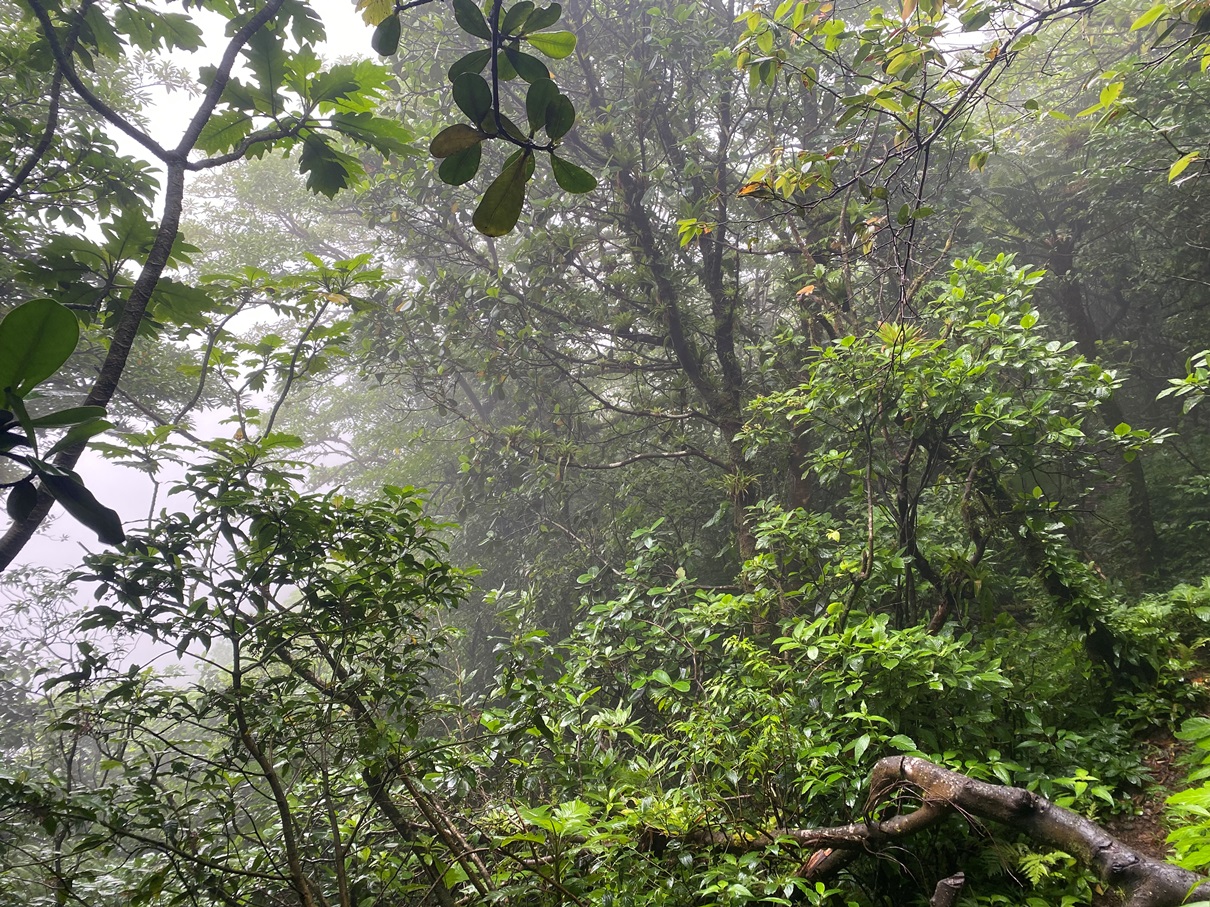
Although, you wouldn’t have known it with the air being so foggy. Very early in I came across a mirador that overlooked the crater, and here was the view.

Which I think is the rule rather than the exception. I wasn’t disappointed because the cloud forest was one of the most beautiful I have ever been to, full of colourful bromeliads and mossy trees.

And when I first entered, I thought it was raining but it wasn’t. The trees were wet and it was the wind disturbing them. I was by myself the entire walk and it was a very eerie experience.

This trail also has a few other features beyond the cloud forest. There is a little canyon that leads you closer to the crater edge.

And towards the end, there is a secondary trail that you can divert for a while that leads you to some geothermal vents. During the journey, you eventually leave behind the trees and enter a moor.

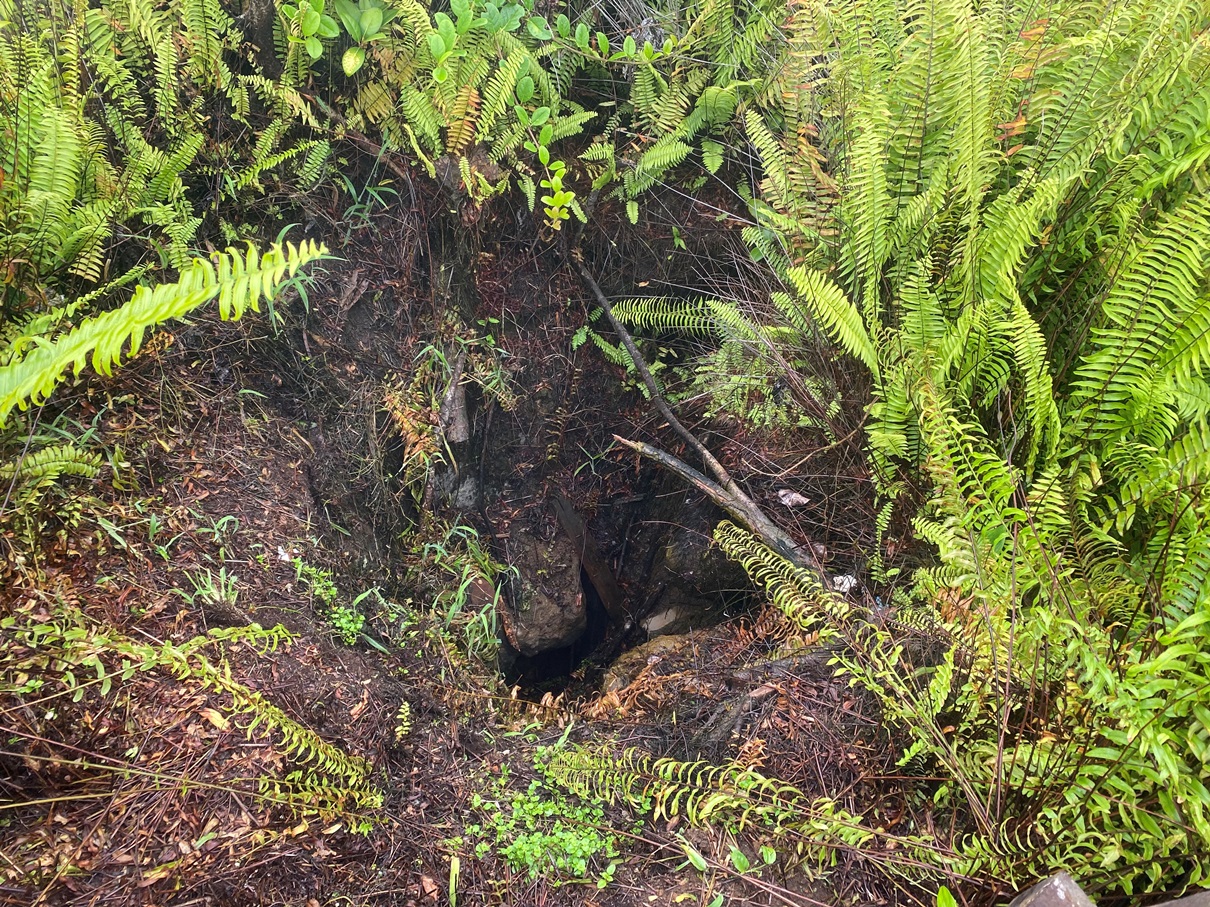
And once you arrive, you can get up very close to one of the vents and feel the warm air belching from it.
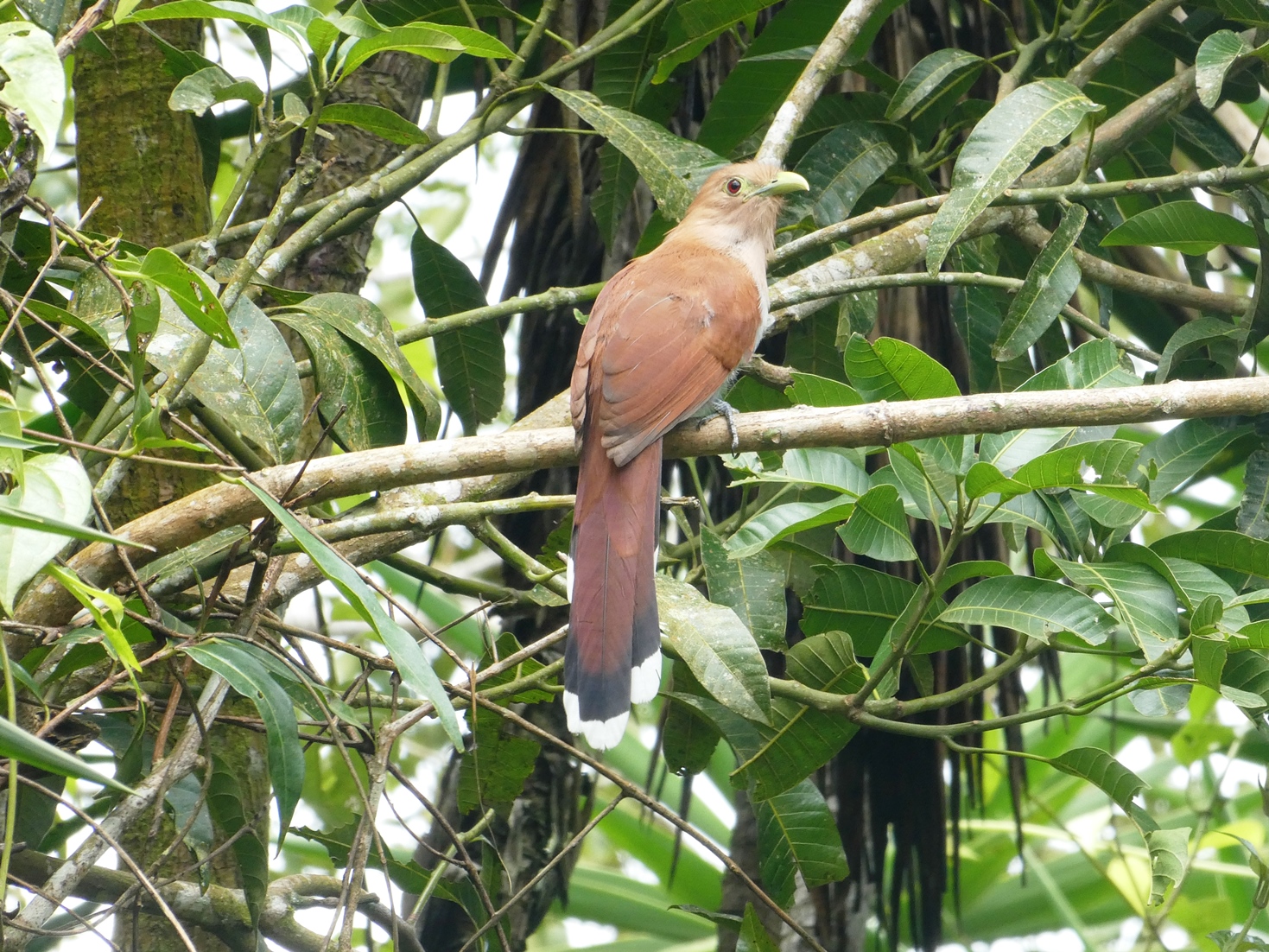
On my way back down, another ranger passed me and also offered me a lift but I decided to walk, which allowed me to see lots of birds, including this cuckoo.
 

Masaya Volcano

This was something that I did as a tour one evening. The bus picked me up from my hostel at 4 pm and it was less than an hour away.

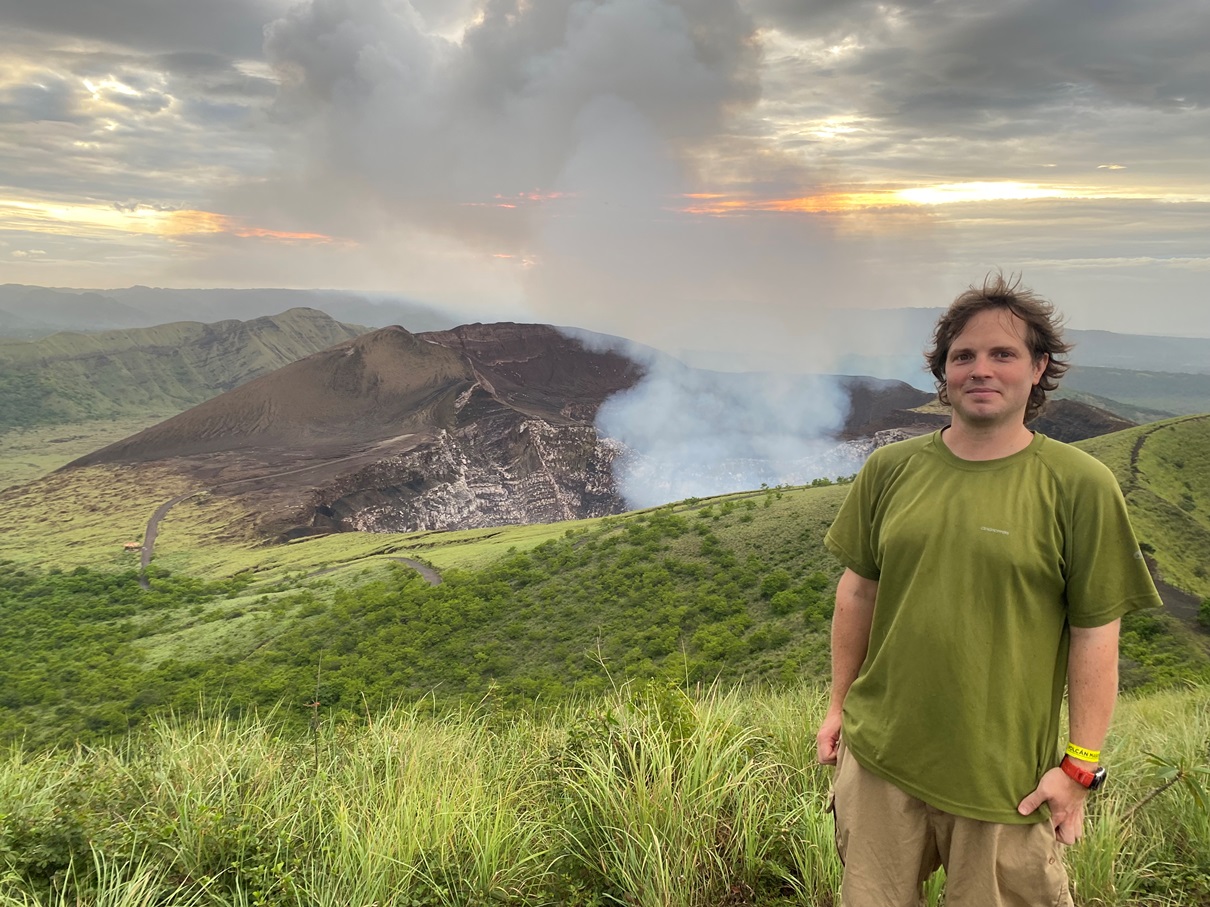
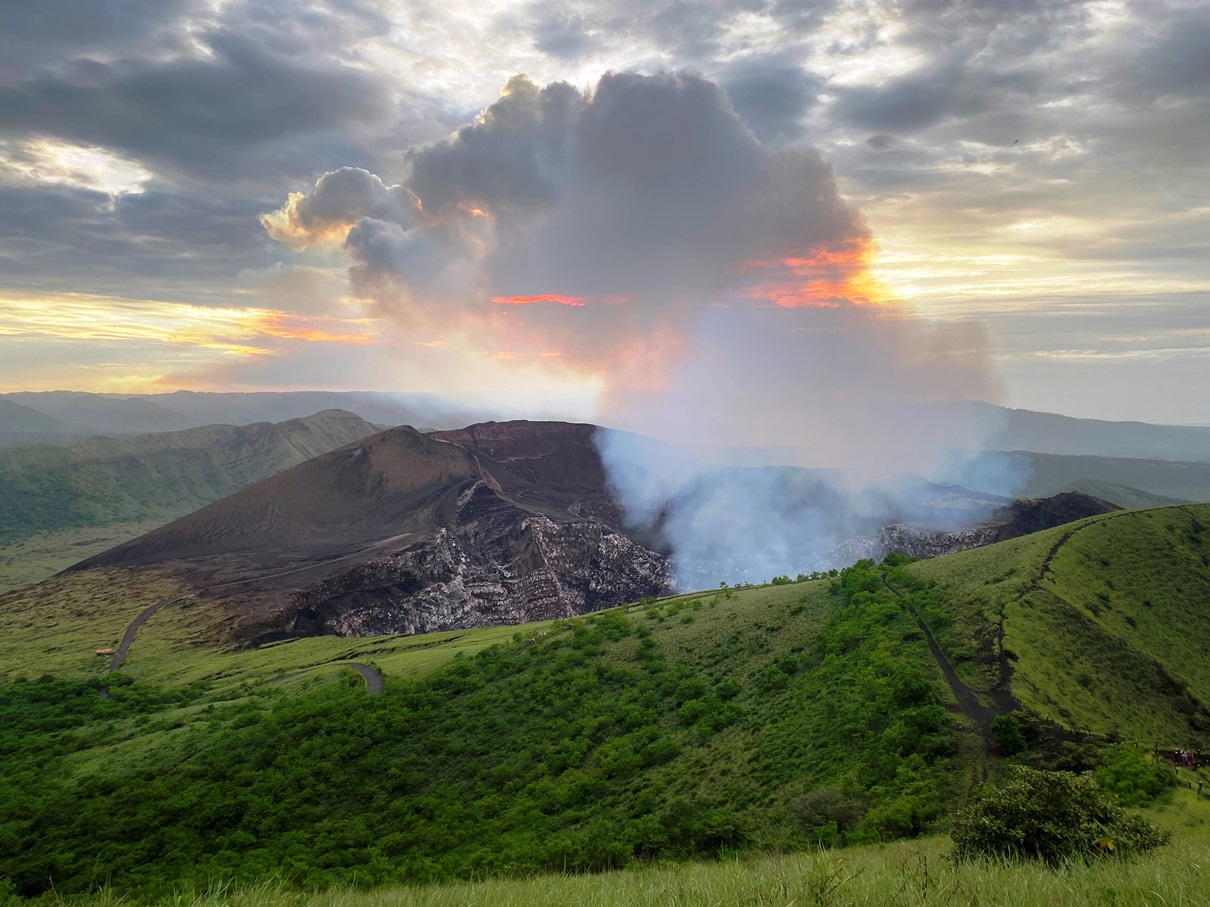
When we reached the car park I was surprised to discover that it was not just one crater that we would be visiting but several. Our first stop was to look into one called Santiago which is still active.
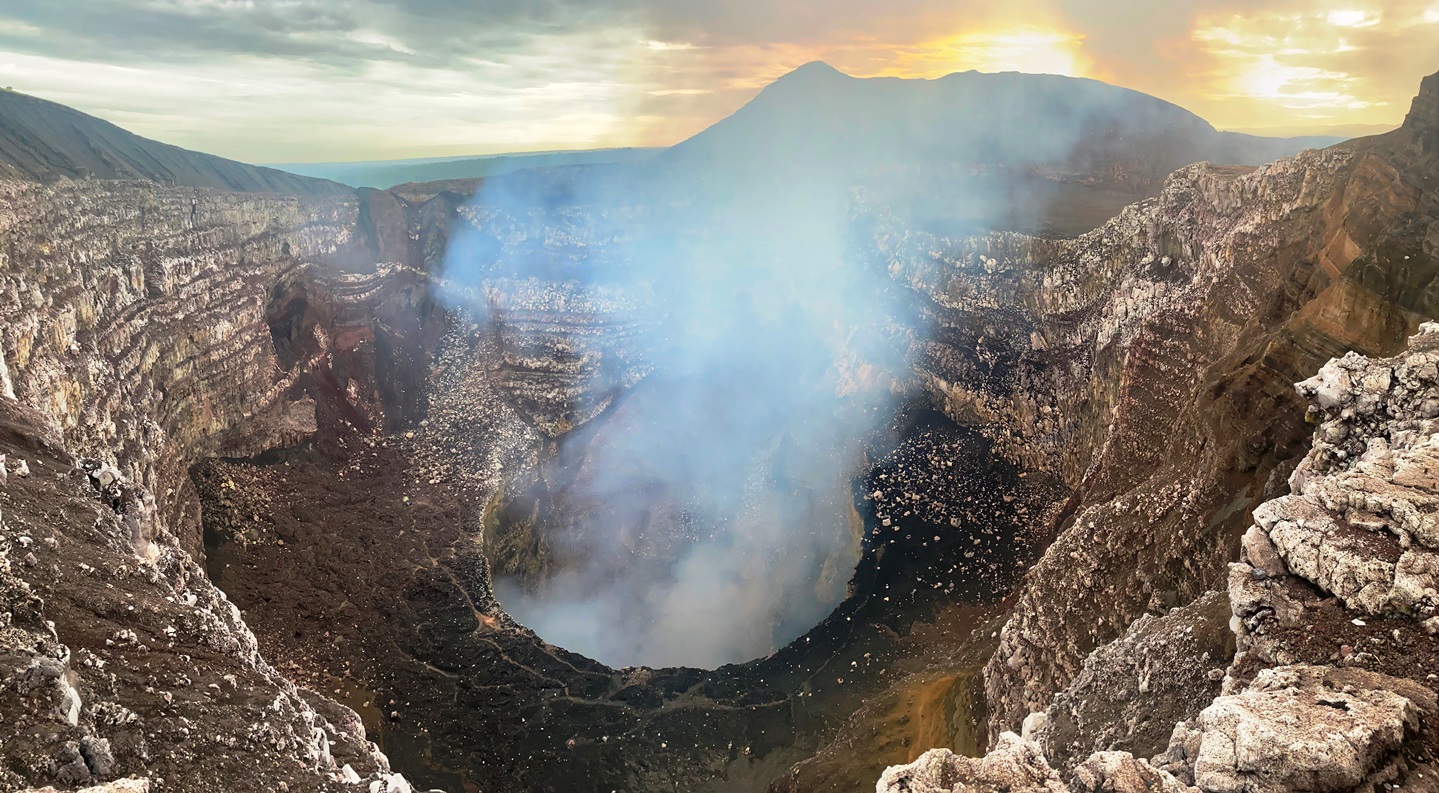
And from there it was just a short walk away to another crater called San Fernando, which is much bigger but dormant. It is now filled with a forest.

Whilst walking along its crater you can see more views of Santiago Volcano.
As well as Laguna Apoyo.

Towards the end of the tour, you return to Santiago just as the sun is going down so that you can see the lava roiling as the sky darkens.


A Change of Plans

I have been forced to make another alteration to my itinerary, but this time it is a bit unfortunate. My daypack is broken. I heard it crack when the truck I caught a lift up Momacho Volanco went over a bump, and didn’t think much of it at the time but then a couple of days later – whilst on the tour at Masaya – the back support snapped. This isn’t something that can be fixed, and Granada doesn’t have the kind of shops where I will be able to find a suitable replacement.

Originally, I was planning to head to Ometepe Island on Lake Cocibolca for a few days but my main plans there involved some strenuous hikes to the summits of volcanoes. This is not something I can realistically do without a functioning day pack – to carry my water as well as other gear. Also, my daypack is what I use to carry my valuables when I am in transit and I don’t want to make a complicated journey – involving a least four buses and a boat – with it flopping around.

So, I will now be heading to Costa Rica earlier. Its capital city – San Jose – is my first stop and it should have what I need. It is very disappointing that I won’t be able to see as much of Nicaragua as I originally intended but – as far as travelling hitches go – it could be much, much worse. I wasn’t going to see any of this country originally so I am going to think of the little of it I have seen as a bonus and not dwell.

I am at the latter stage in my travels now, and am running low on funds and some of my gear is starting to fail on me. The backpack is not the only thing. My shoes and sandals are both almost worn out, and I am currently typing this blog on a keyboard with a few of its keys not working. My digital camera – which was second-hand and kindly given to me by my parents – is also starting to malfunction. The backpack and sandals need replacing immediately, whilst I think the shoes I might be able to get a few more weeks out of them. The keyboard I am just going to live with them, as the specific keys not working are an annoyance but not ones that stop me from being able to blog. I probably won’t replace the digital camera as I am too late into the trip for it to be worth it; I take most of my photos on my smartphone anyway so the only difference you will notice is a lack of my amateur wildlife photography. Perhaps some of you will be relieved.

I am not saying this as a cryout for help. I do have enough money to get through the rest of this trip but I just want this blog to reflect all aspects of this journey. When you are backpacking on a low budget and with no income, finances can get stressful. It feels like a board game; you have a certain amount of money but need to find a way to get to the end, and I have just landed on a few fines that I need to pay. I will get to the end, though.


For more photos from my time in Granada, click here.


Travelblog LA#24: León & Granada (Part 1) – Nicaragua

16th – 19th August, 2023


My time in Honduras was short but memorable; I was there for just under three weeks and yet they were some of the most rewarding of this journey. From the majestic ruins of Copan to the bird-watching paradise of Lake Yojoa, and the island of Utila – where I treated myself to some scuba diving – Honduras was a country that kept surprising me. I will look back on it fondly.

For the next few weeks, I will be travelling fast again. Nicaragua and Costa Rica were not in my original itinerary, but I added them on when I realised that I had extra time to spare and flights from San José to Mexico City are cheap. My last day in Honduras was spent in a minibus, heading south. Mostly, over the last couple of months, I have been using cheap local buses but on this occasion I booked one of the touristy shuttle services. This service was fast, air-conditioned, and for the first eight hours there were just three of us so we got to spread out and it felt very luxurious. When we reached San Lorenzo we picked up a dozen more gringos who had just transferred from another shuttle service from Guatemala.

I have often commented on how swift and easy most border crossings in Latin America have been, but this one was an exception. I will first say that it wasn’t in any way dangerous, and I have certainly endured much worse when I was travelling through Asia, but entering Nicaragua was a strange experience due to how pointlessly inefficient it seemed. First, we all had to hand over our passports and fill out a form, and then wait a while. When we received our passports back they were still not stamped. We were then told to form a queue. When each of us had our turn at the kiosk we were asked a series of questions – mostly ones that we had already answered in the forms we had just filled out but since disappeared – whilst they tapped away at their keyboards for several minutes. Then passports vanished again for several minutes to finally get stamped. It took over an hour for less than twenty of us, and the strangest thing about it all was that – despite all that processing time – they did not do what you would think would be the most important thing and scan/search our bags. Those they trustingly let us keep on the minibus during the whole affair.

I arrived at León at around 11 p.m., where I checked into my hostel, had a shower, and climbed into my bunk. It had been a long day, but that shuttle service had shot me like a bullet across hundreds of miles, saving me two days of slowly trawling my way across the breadth of Honduras in tin can buses that would have stopped every mile or so. It got me to where I wanted to be.

I began exploring León the following. It is Nicaragua’s former capital, but unlike many former capitals in this part of the world, it has endured the relentless earthquakes. By the mid-twentieth century, Managua became Nicaragua’s new capital whilst León has so far managed to cling on to being its second most populous city.

Despite this, Nicaragua isn’t a hugely populus country, so the pace of life feels slow here. It is still small enough for everything to be within walking distance. Many travel guides claim that León’s historic centre makes it a rival for Nicaragua’s primary hotspot; Granada.
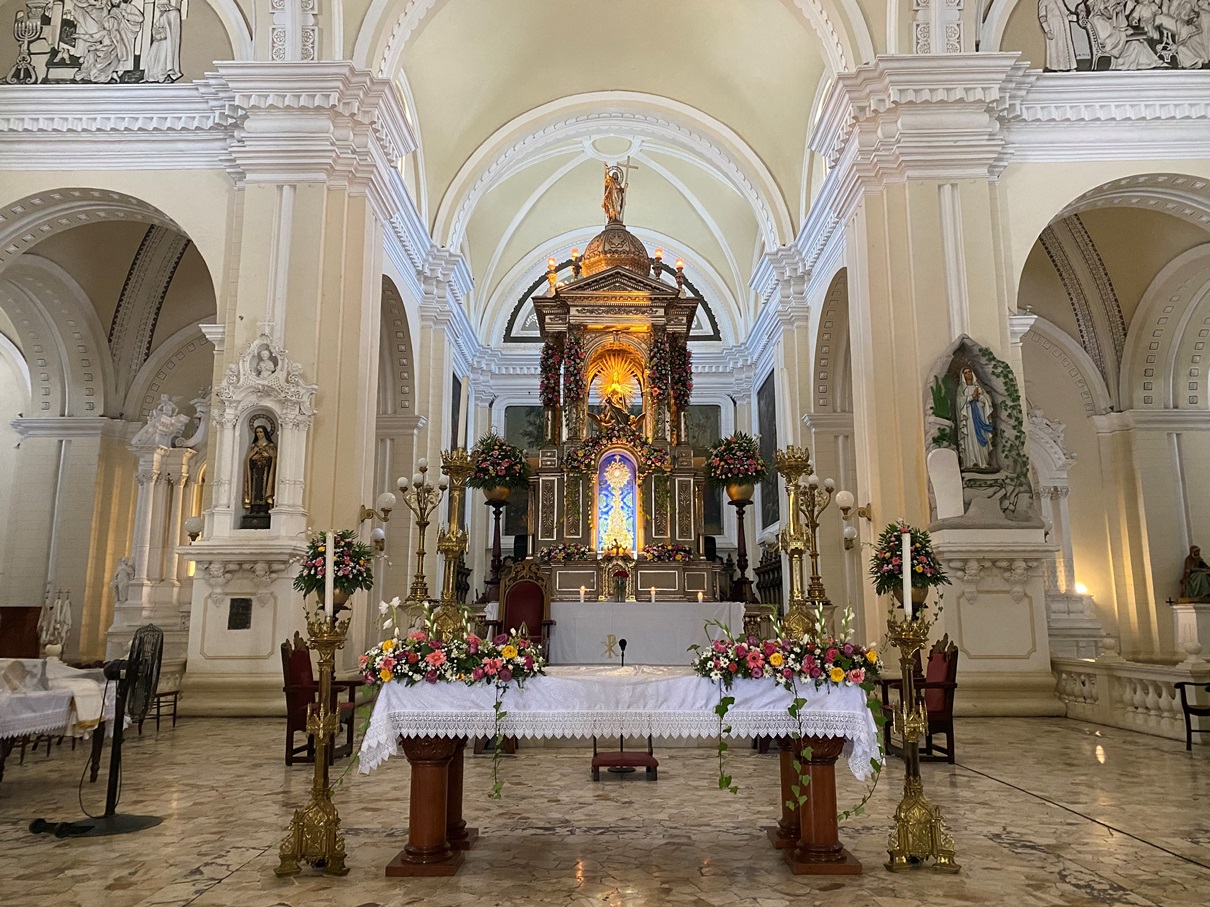
Its Cathedral – La Basílica de la Asunción – is the central feature of the city and is a mixture of neo-classical and baroque styles. It is said to be the largest in Central America and is also a UNESCO Heritage Site.

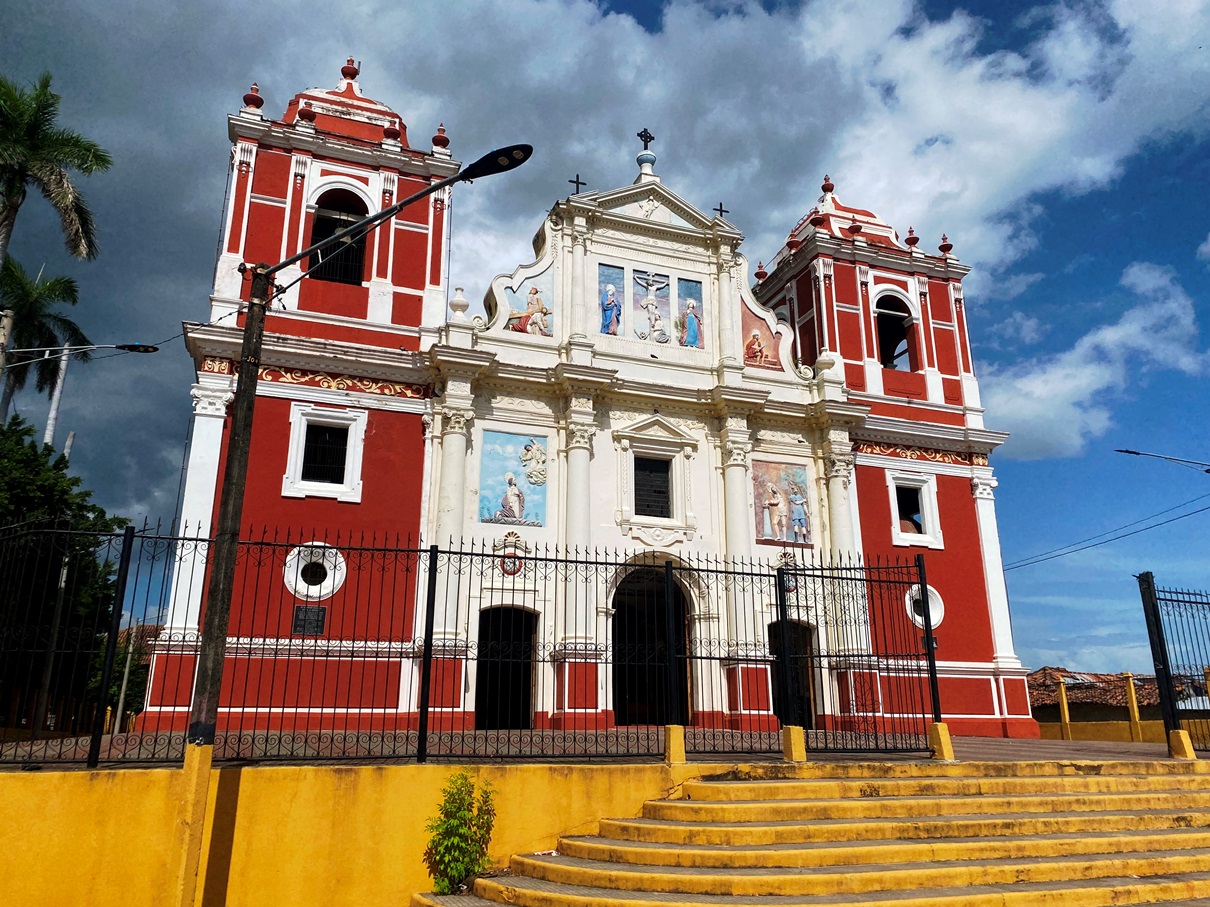
León is home to several other charming churches, which I spent much of the morning wandering between. I also paid a visit to Centro de Arte Fundación Ortíz Gurdián; an impressive art museum that I regard as a must-see for those visiting. It is located in a series of buildings near the plaza, and the paintings – which span across many different styles and periods – are split between several different rooms and courtyards.

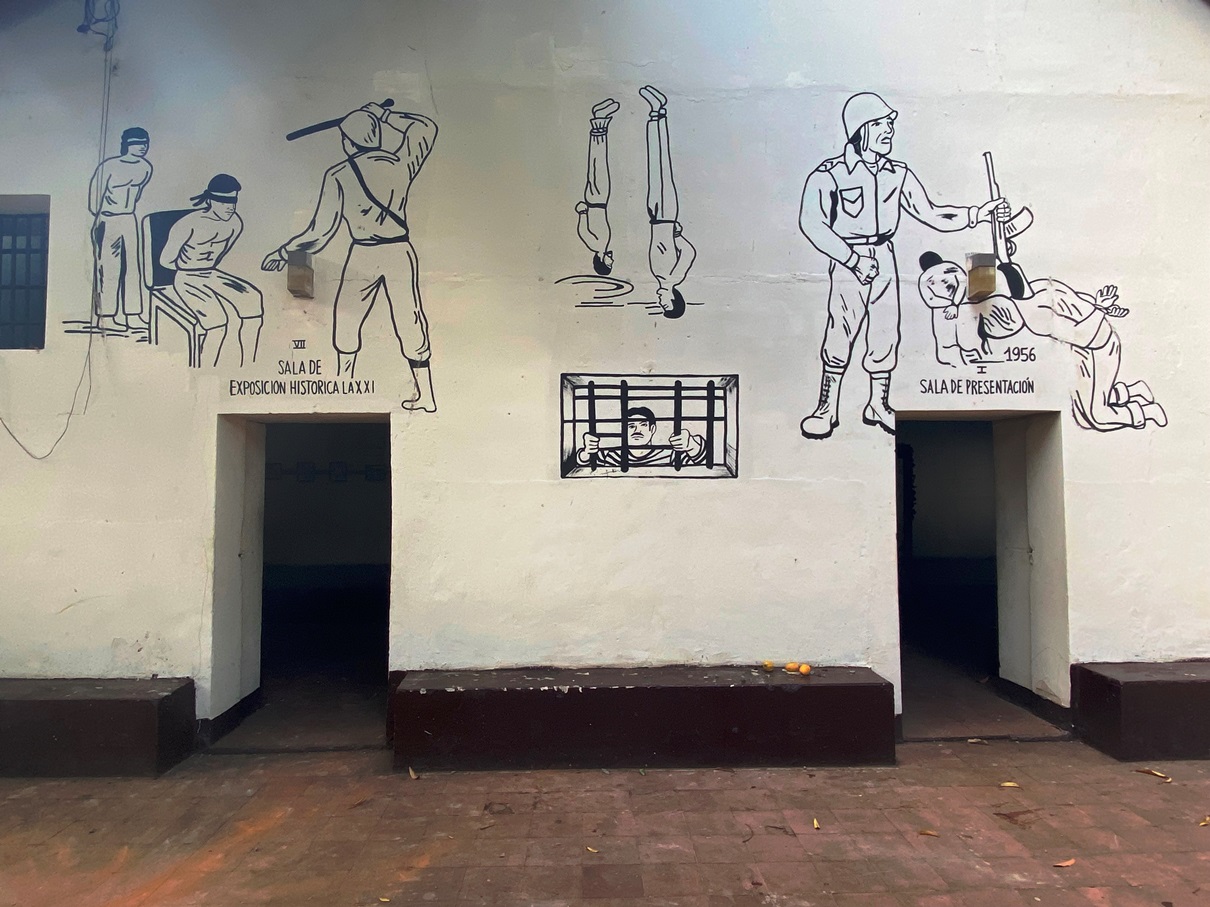
The last attraction from León that I would like to mention is the Museum of Traditions and Legends. This place is very quirky and has very mixed reviews if you look at places such as Google or TripAdvisor. I can see why. Many of its displays are tacky or a bit decayed and could do with some love, but I appreciated it. The building is actually a former prison from the Somoza dictatorship, and some of the displays – as well as artwork depicted on the walls – do pay homage to that period, as well as its victims.

But, most of the former cells – as well as the courtyard – are home to a series of paper-mâché mannequins in costumes. Many of them are depictions from Nicaraguan myths and legends.

After visiting this museum, I looked at the map of the city on my phone and realised that – in the space of one day – I had managed to see everything that I wanted to in León.

I am not saying this as a diss. And I hope that the account that I have given here – along with the pictures – does make it clear that it was an enjoyable day for me. I am just mentioning it here because – as I said before – some of the guidebooks are touting this place as a rival to Granada, which perhaps set my expectations higher than they should have been. León is a nice city. It is a place that does have some attractions to see whilst also not being overly touristy, so you can come here and feel like you have visited a ‘real’ Nicaraguan city. But I think that people trying to sell it as a ‘rival’ to Granada is a bit of an oversell. I originally saw myself staying here for longer, but rearranged my plans. If you are not doing any day trips to places outside of it, a day is more than enough time to see León’s sights.

So, the following morning, I went to Granada.

Which, as I have already stated, is much more touristy than León, but I am not one of those purist backpackers who automatically diss such places, as many of them are popular for a reason. Also, ‘Touristy’ in Nicaragua is on a much more low-key level than many other Latin American countries, and it is currently in low season anyway. The place was fairly quiet.

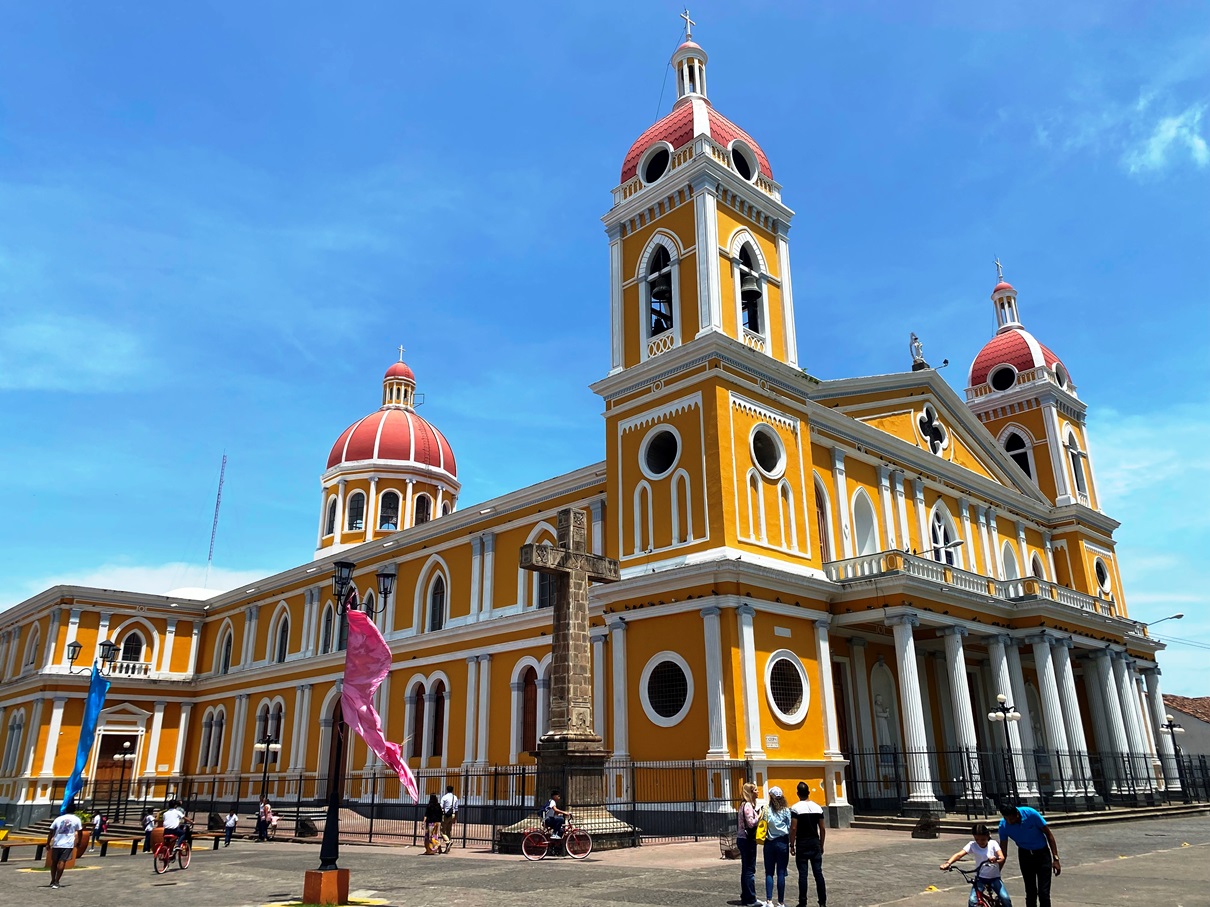
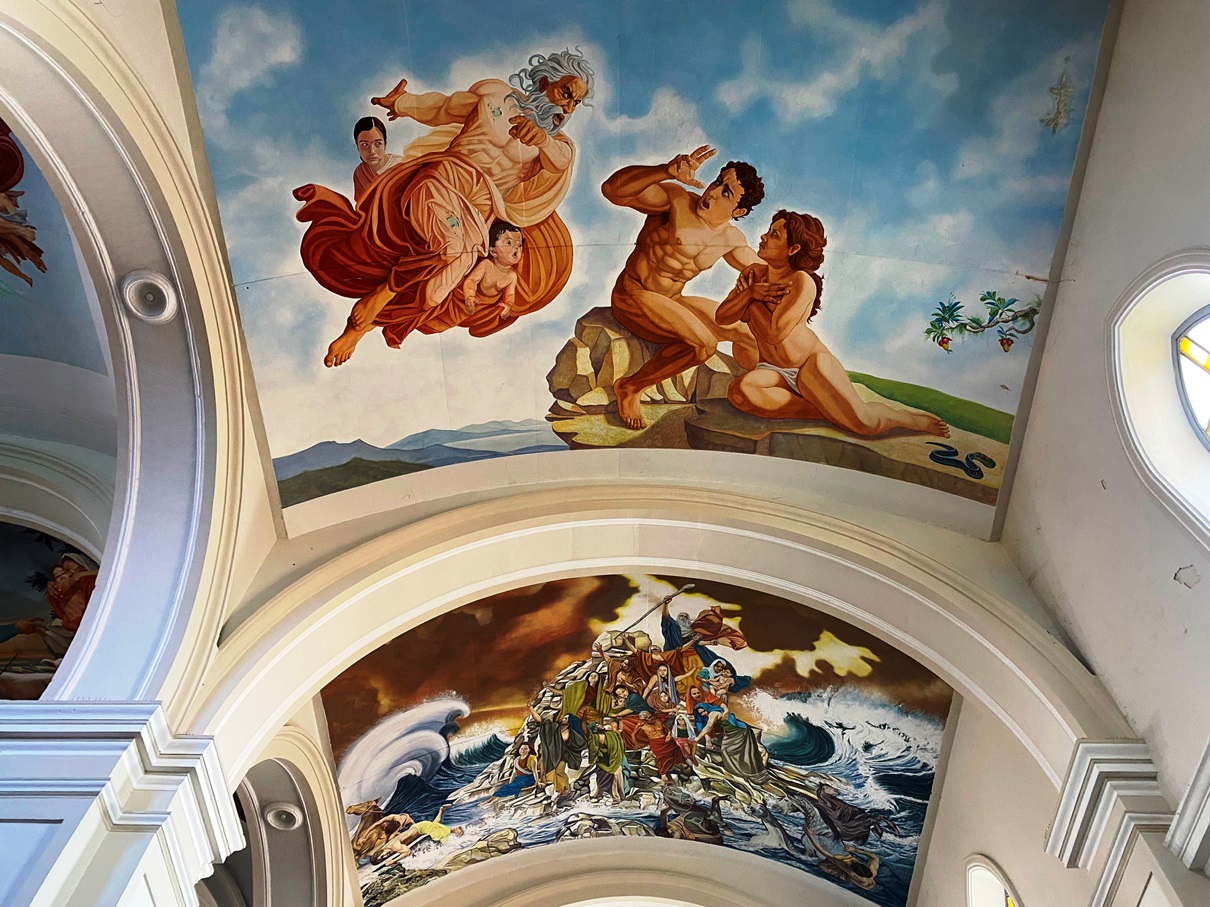
I spent my first two days exploring the town and its immediate attractions. Its cathedral is quite modern but charming. Unembellished yet elegant. I appreciated the murals on its ceiling.

More interesting, perhaps, are some of the churches outside of the plaza, which have endured centuries of earthquakes and are thus much older. Iglesia Nuestra Senora de Las Mercedes has a beautiful exterior.

And for a small fee, you can climb its tower for views of the city.

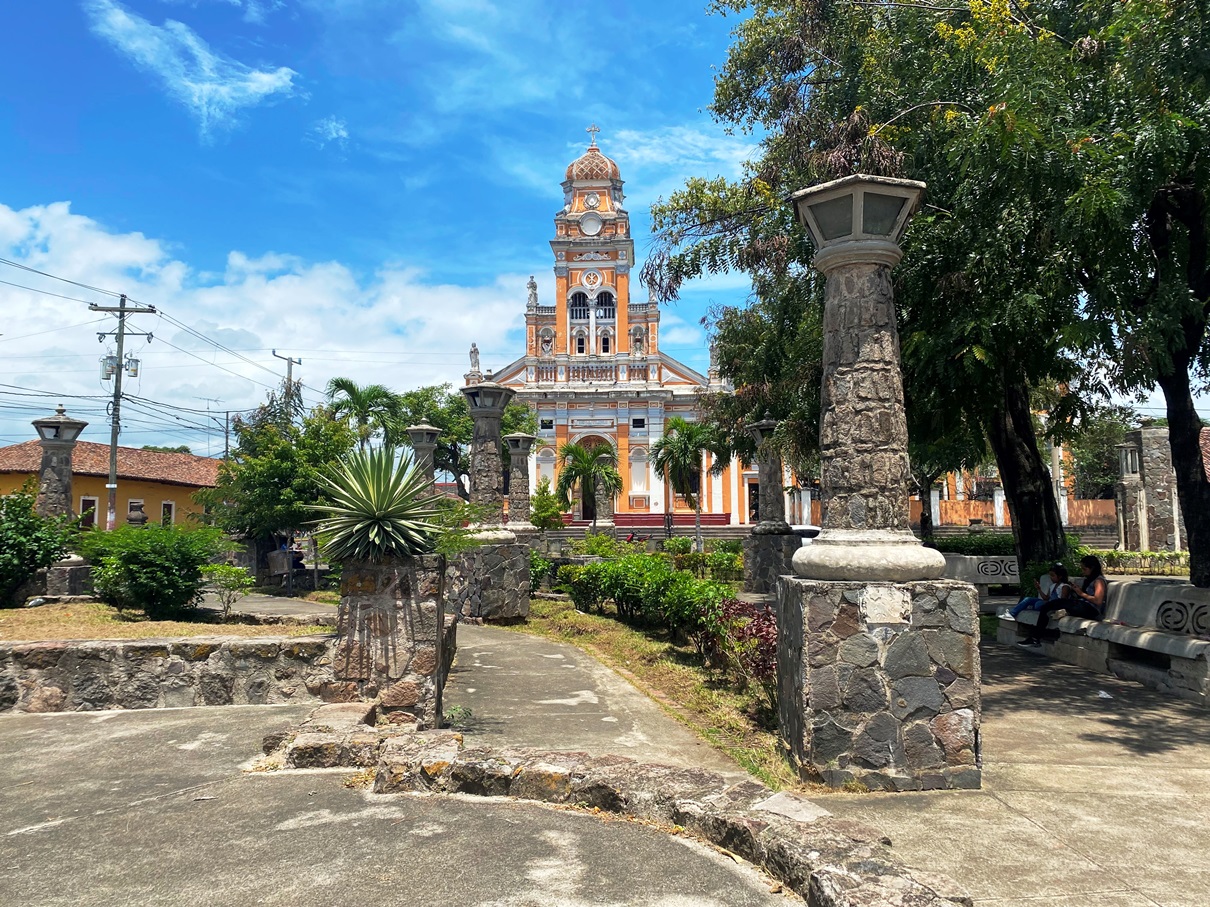
I think my favourite overall was Iglesia Xalteva, which has its own little plaza filled with stone sculptures.

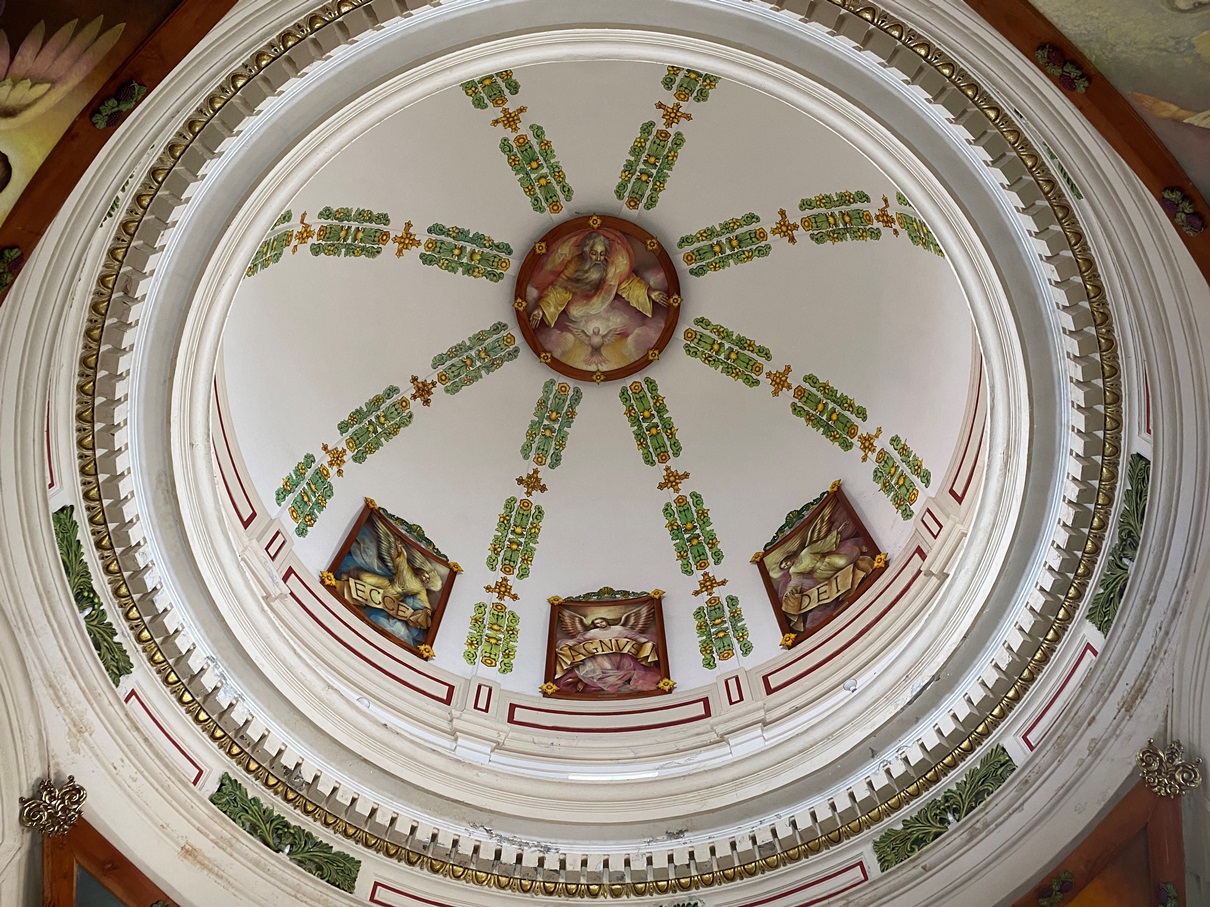
And beautiful murals on the inside.

A place to certainly not miss if one comes to Granada is the San Francisco Convent Museum. I have a feeling that a lot of people who are either anti-religion or not too interested in history miss this, which is a shame because its name is quite deceptive. Yes, it is within the walls of an old convent, but that is not the primary focus of its exhibits. It is compartmentalised into five different museums. Some are historic in nature, but even a surprising amount of them are non-Christian in theme. It is home to a collection of pre-Colombian sculptures and pottery recovered from the local area, for example.

And as far as art goes; yes, there is a very small section dedicated to religious paintings from colonial times. I personally – despite not being Christian myself – appreciate religious art, but I was also pleased to discover that this place is home to many other forms.

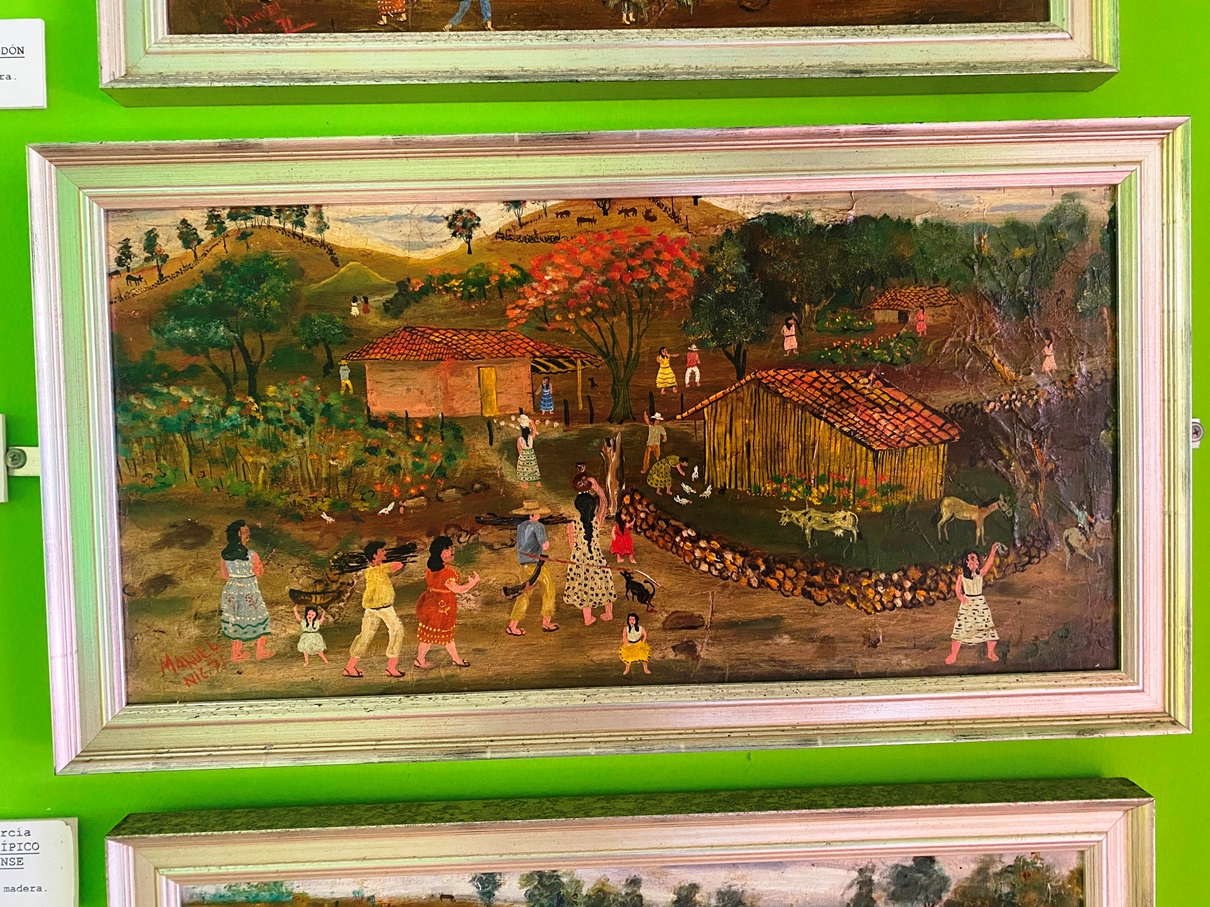
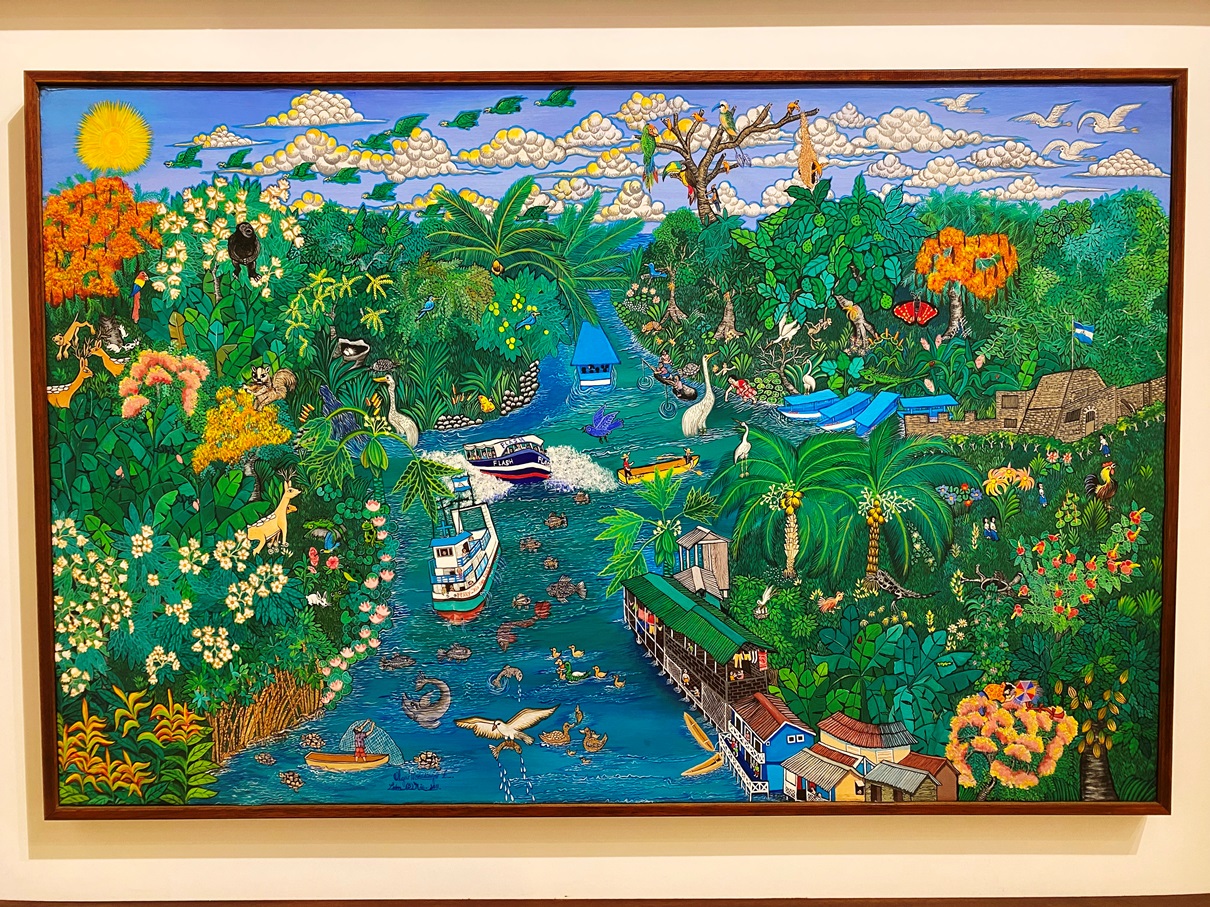
I particularly enjoyed its section on ‘Nicaraguan Primitivism’; a local movement that spawned within the twentieth century, where artists began to focus on nature, folklore, and animism and combined it with fantastical elements and surrealism.

This distinctive style is one that I recognised from my visit to the Centro de Arte Fundación Ortíz Gurdián in León, and it also caught my attention then. It seems to be popular here.
I like it very much, for its bright colours and exquisite detail. It is a style that has made a big impression on me.

And that just about covers my first two days in Granada, but I am not quite done with this place yet because beyond the town itself are many other attractions that are just a stone’s throw away; all of which I will be visiting in a series of daytrips that will be covered in my next blog.


Click on these hyperlinks for more photos from León and Granada.


Travelblog LA#23: Utila – Honduras

10th – 14th August, 2023


To finish off my time in Honduras, I went to yet another Caribbean island: Utila, which sits on the south end of the Mesoamerican Barrier Reef and is a place famous for an old pastime of mine.

Diving!

The ferry from La Ceiba arrived early in the morning. I had originally planned to have a day to get my bearings and decompress a little, but after checking in at Alton’s Dive Centre they told me that there was a boat leaving that afternoon, and I was keen to get into the water again so went to get myself fitted for gear.

I operate in a strange position when it comes to diving. Technically, I have Advanced Open Water certification, and I have around two hundred dives under my belt, but most of them were during my teenage years (when I was a member of a local dive centre and went for a couple of holidays in Egypt). My diving in my adult life has been very sporadic. I usually do a few days of it during each long trip I go on but can’t afford anything more than that on a backpacker budget. The last time I dived was five years ago – when I went to the Galapagos – so I was required to do a refresher which entailed a quick test to see how much of the theory I remembered and a demonstration of some essential diving skills (such as equipment recovery and buoyancy). My first dive was a one-to-one with Branden – one of their Dive Masters – and I was pleased to find that most of it came back to me instinctively. Once the review was over, we went to a place called The Labyrinth, which had some interesting rock formations, and we saw a pair of bright green moray eels.

Utila is said to offer some of the best places for diving in Central America, but it does have a rivalry with a neighbouring island called Roatan. Many people seem to debate online over which is ‘better’, and I have not dived Roatan, but if you want me to throw in my perspective after my time in Utila, here it is.

From what I have heard, it seems you are more likely to encounter ‘big’ creatures – such as sharks – during dives at Roatan, whereas Utila has more pristine coral. Utila is also said to have a more laid-back vibe, whereas Roatan has livelier nightlife and is more ‘resorty’. Nobody contests that Utila is much cheaper – not just for diving, but also accommodation and everything else. I spent five days exploring the reefs of Utila, which is more than I usually do while backpacking, but if I had gone to Roatan I would have been forced to do less than that for budget reasons.

Overall, I am very happy that I went to Utila, and not just because it was cheaper and I got to do more dives. A lot of the diving I have done over the past decade or so has been very ‘ticking a box’ style. What I mean by this is that you are diving in a specific place because you want to see a creature and tick it off your bucket list. When I did Gordon’s Rock on the Galapagos, it was to see hammerhead sharks. When I went to Manta Point in Indonesia, it was to see – yes, you’ve guessed it – Manta Rays. These kinds of dives usually involve heavy currents and you end up clinging between different rocks between either riding or fighting against strong drifts. They usually pass by very quickly, and you don’t see much in the way of coral or other marine life. It is diving with a sole objective which if you don’t succeed you will get back on the boat feeling disappointed. I certainly do not regret doing these dives. They were exciting, and I was lucky enough to be one of the people who did get to see the creatures that I wanted to.

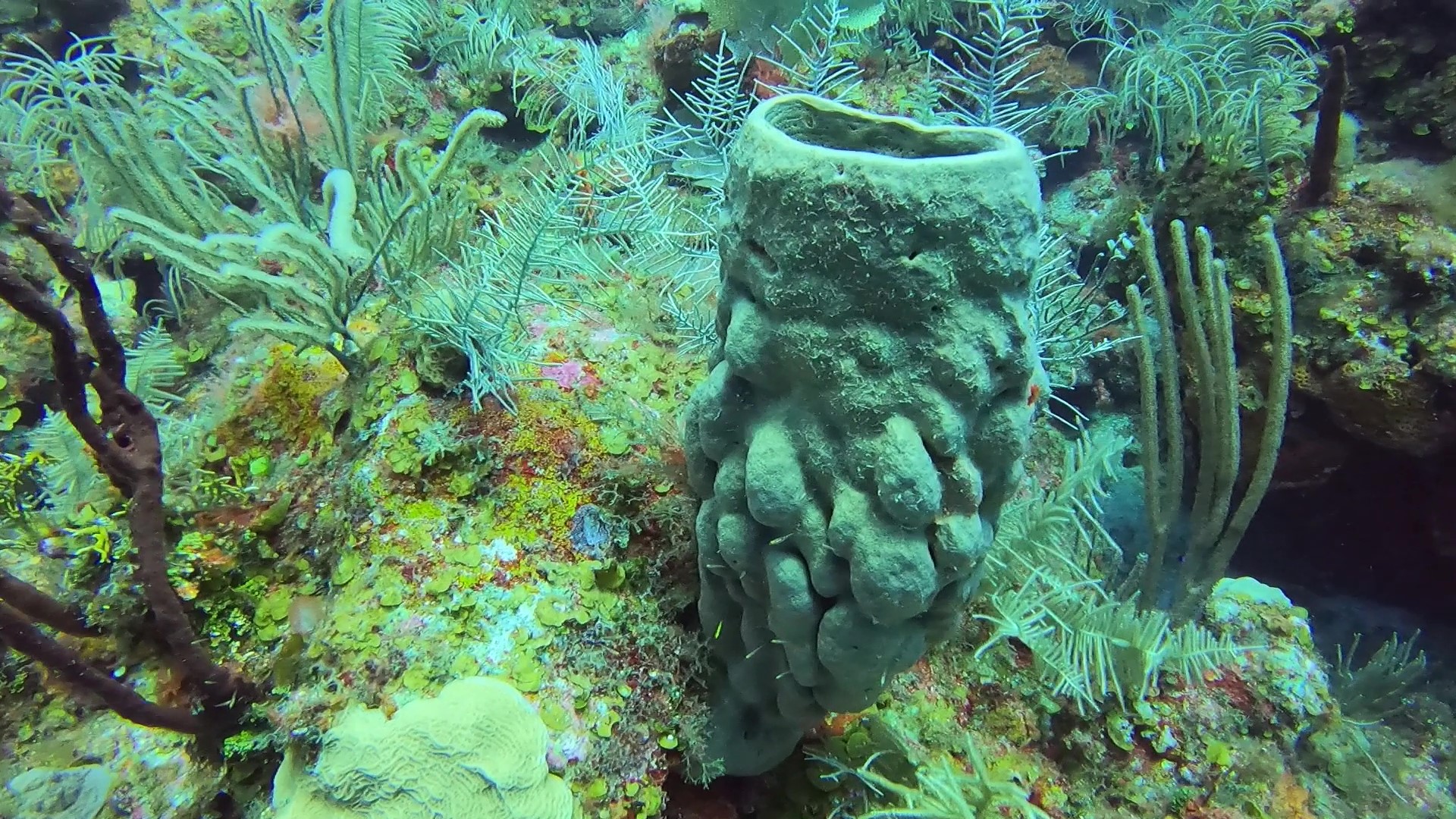
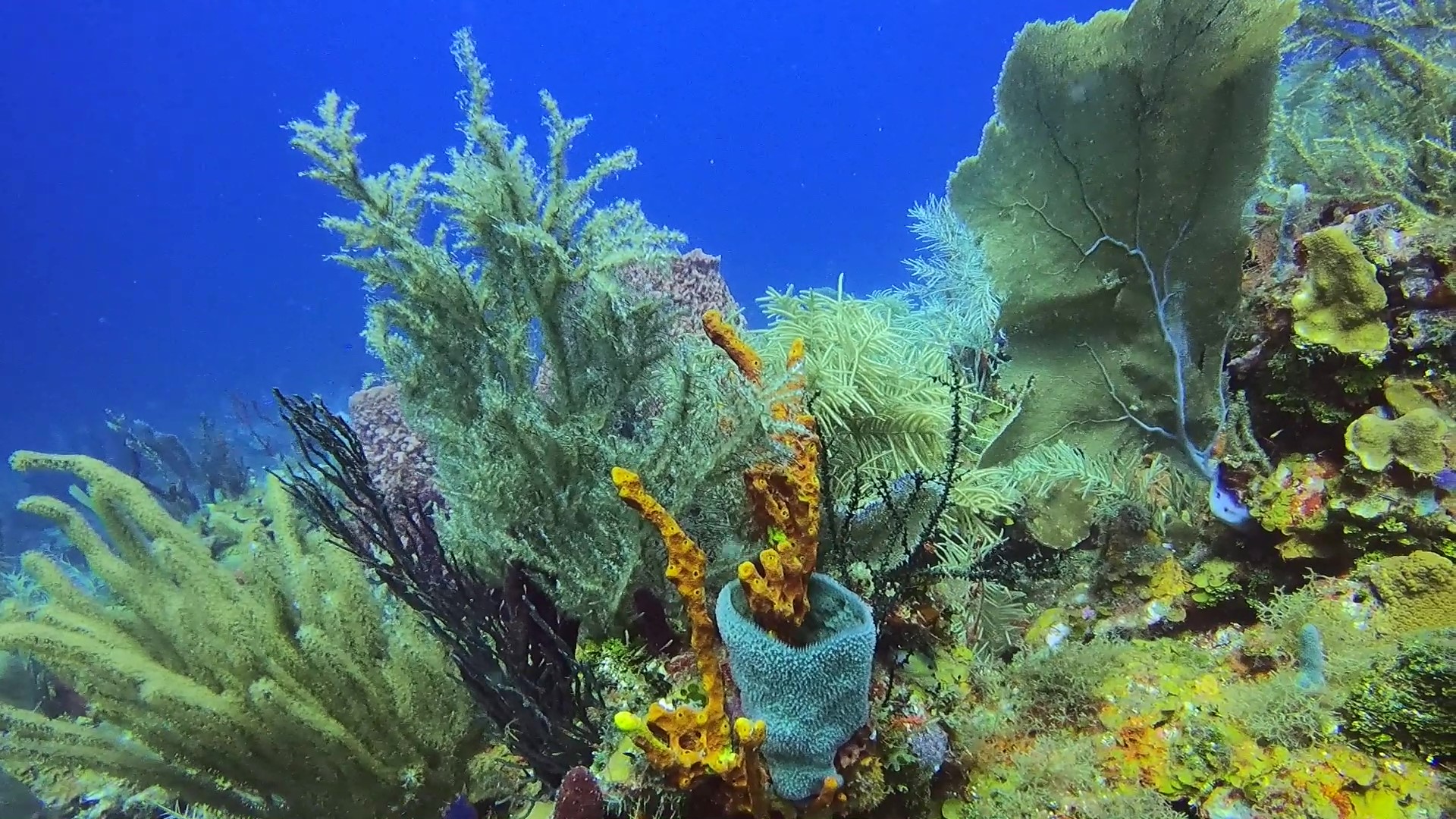
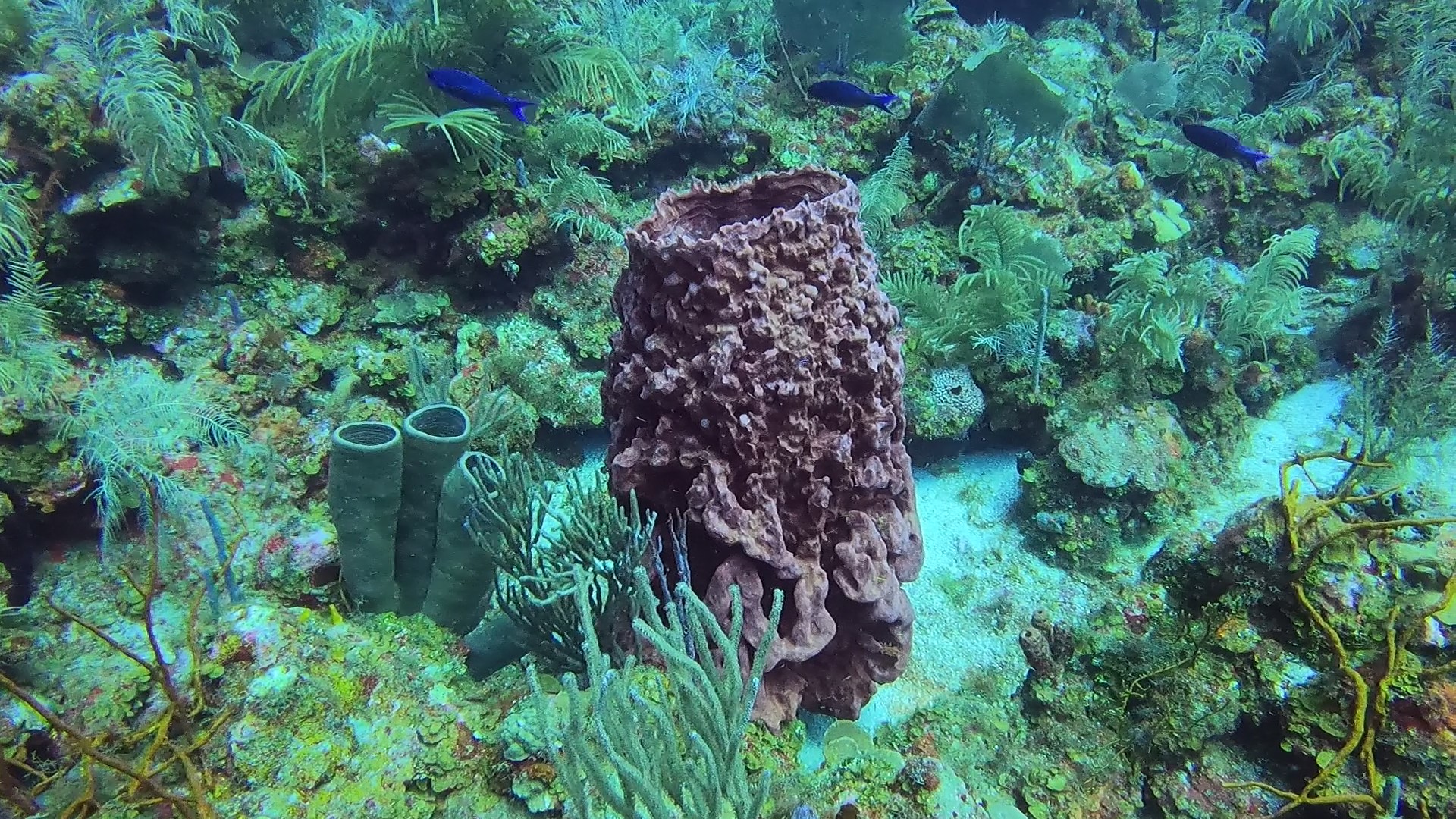
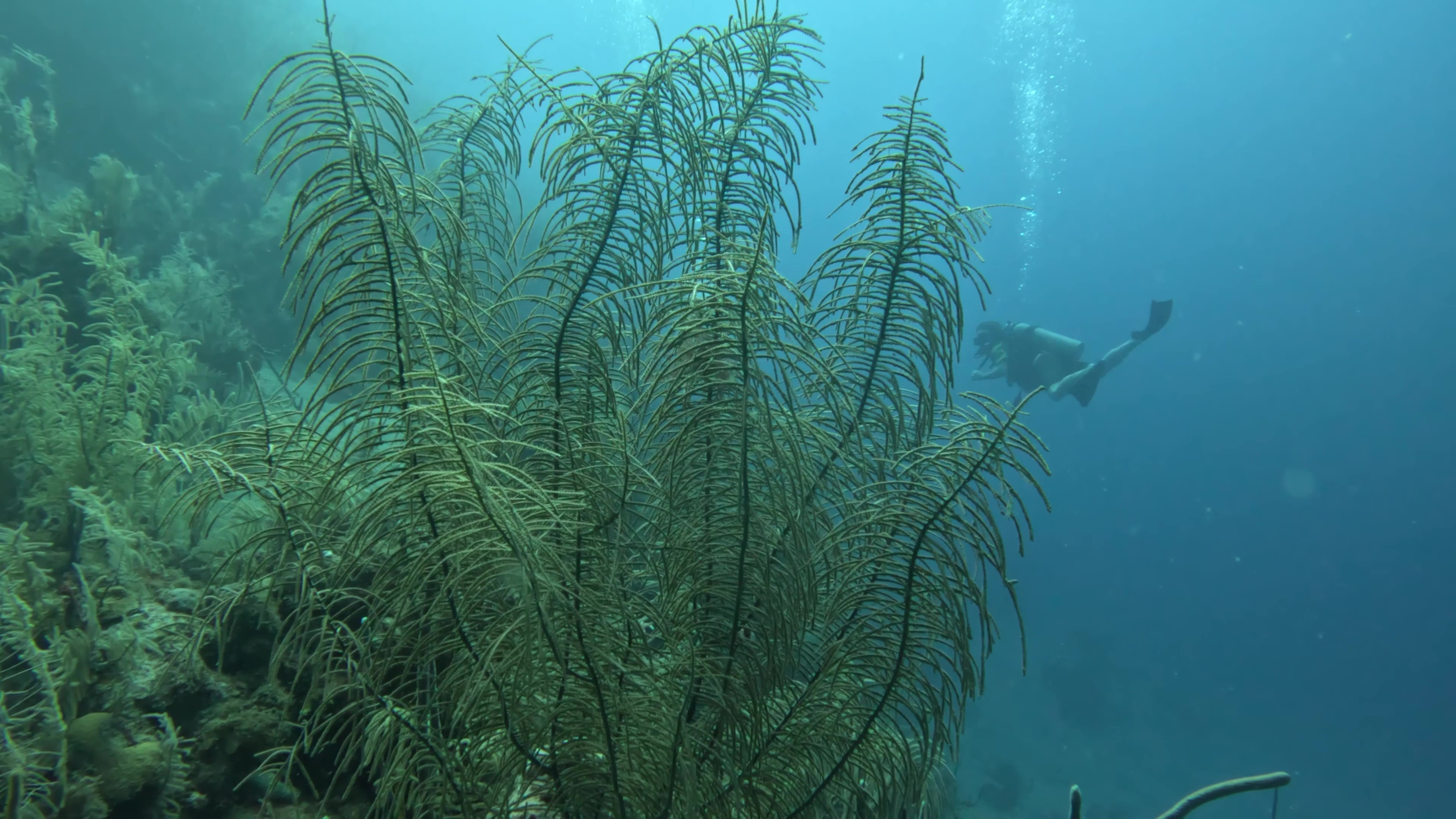
Utila was very different. You are never diving somewhere merely to see a specific creature. Every time you get into the water you are guaranteed to see lots of beautiful, healthy, intact coral – something that can often be scarce these days in popular diving locations – and lots of fish, and any special or noteworthy species that you may see will be a surprise and a highlight rather than the objective. The seas are also calm, so the visibility is almost always good, and the currents are either non-existent or gentle. This makes diving there a more relaxing experience for those who are seasoned and a great place for newbies to learn.
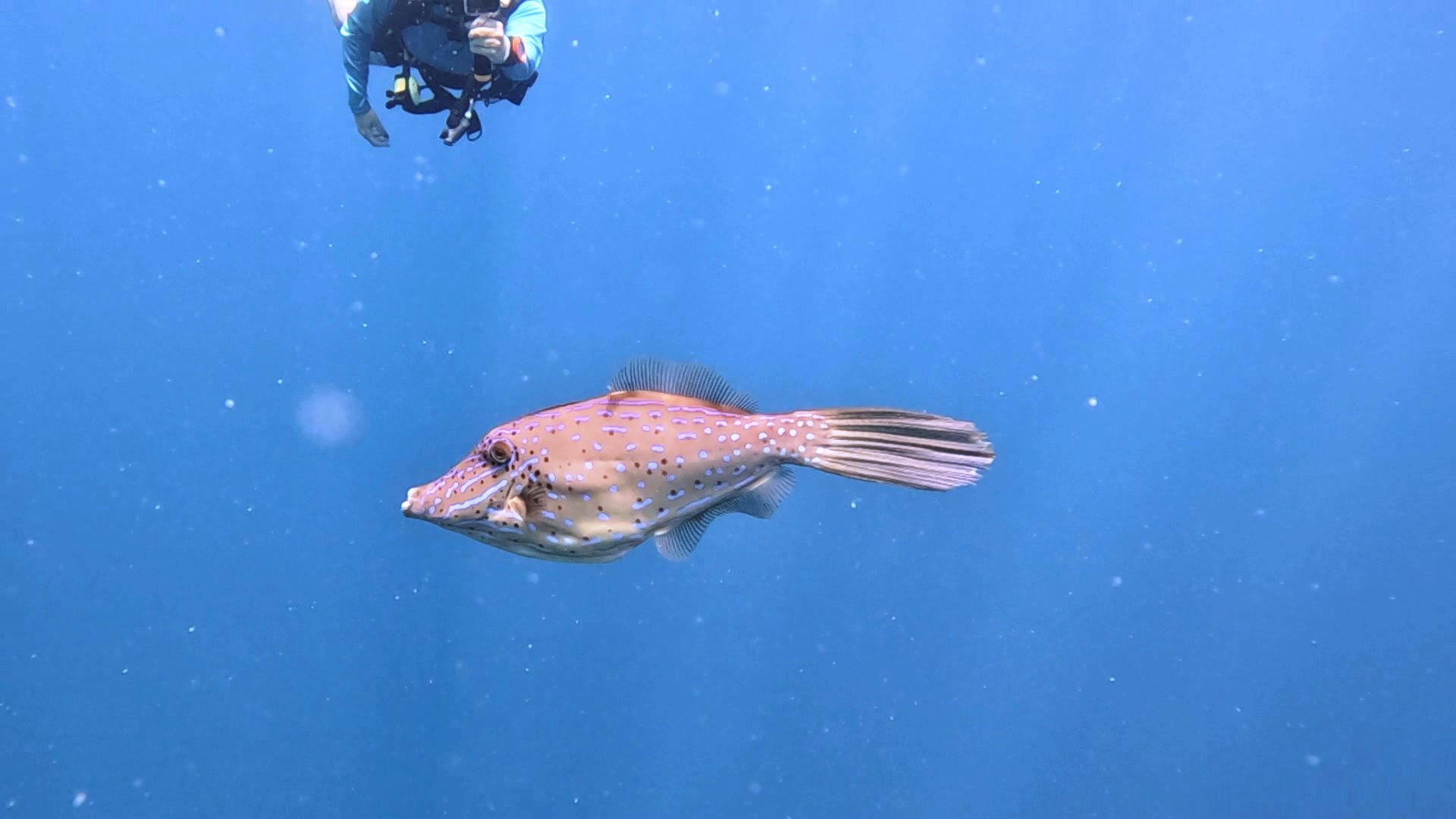
Out of all of the days that I spent diving there, the third was the most memorable. It also happened to be the day that not just one but two of my companions had GoPros, so I can share some of what I saw with you.

We were taken to a secret spot that only Alton’s Dive Centre knows about (and they only take their guests there once every couple of weeks to limit the chances of others finding out about it, so I was lucky with the timing). As with most dives around Utila, we started swimming along a walled reef, but we also eventually reached some pristine coral gardens.

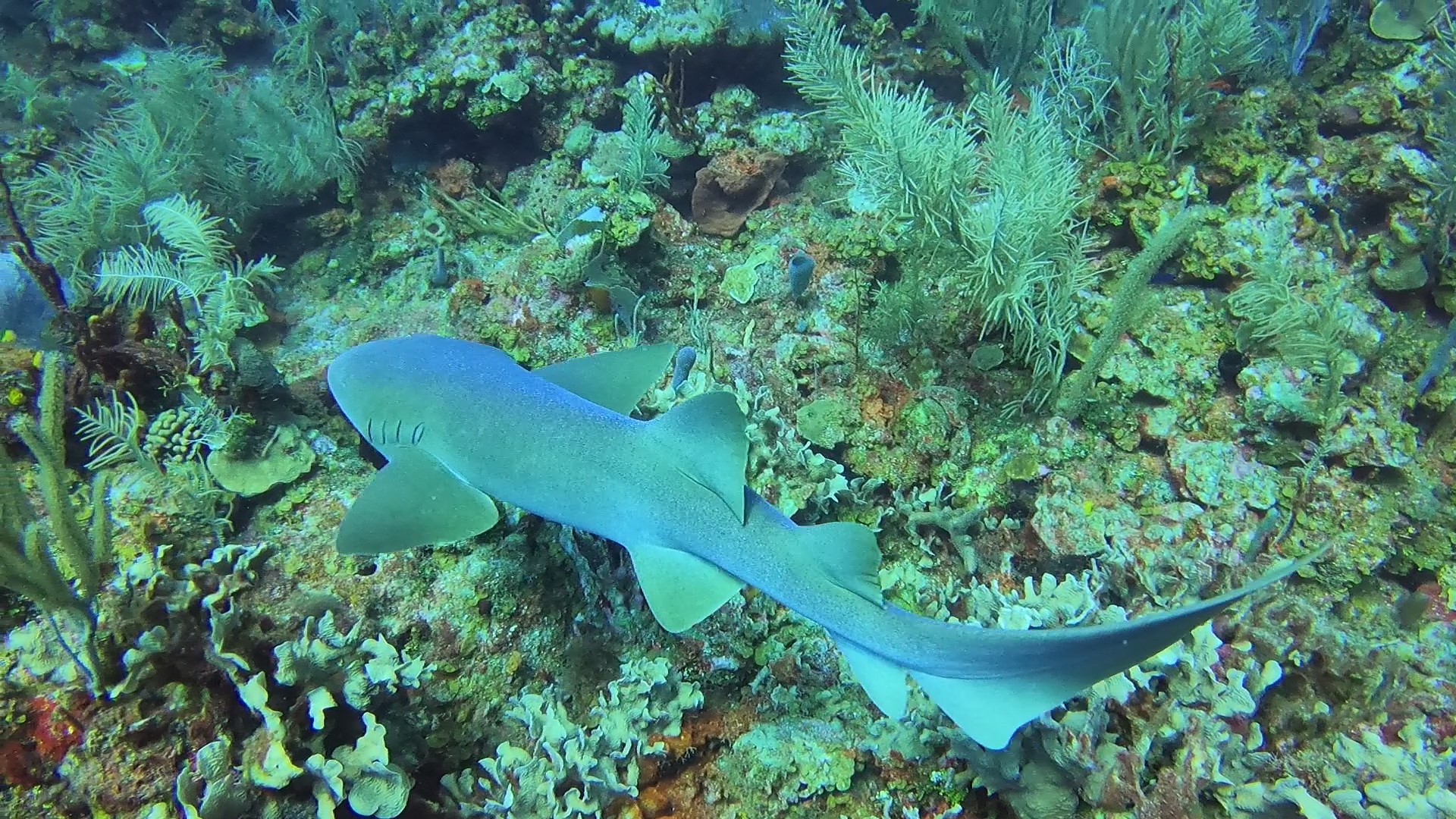
As usual, we saw lots and lots of fish that day, but the more notable sightings included three lionfish – which, I was later informed, are an invasive species and are not good for the ecosystem. The local authorities are even offering rewards to people who hunt them down. Still, they were interesting to see.

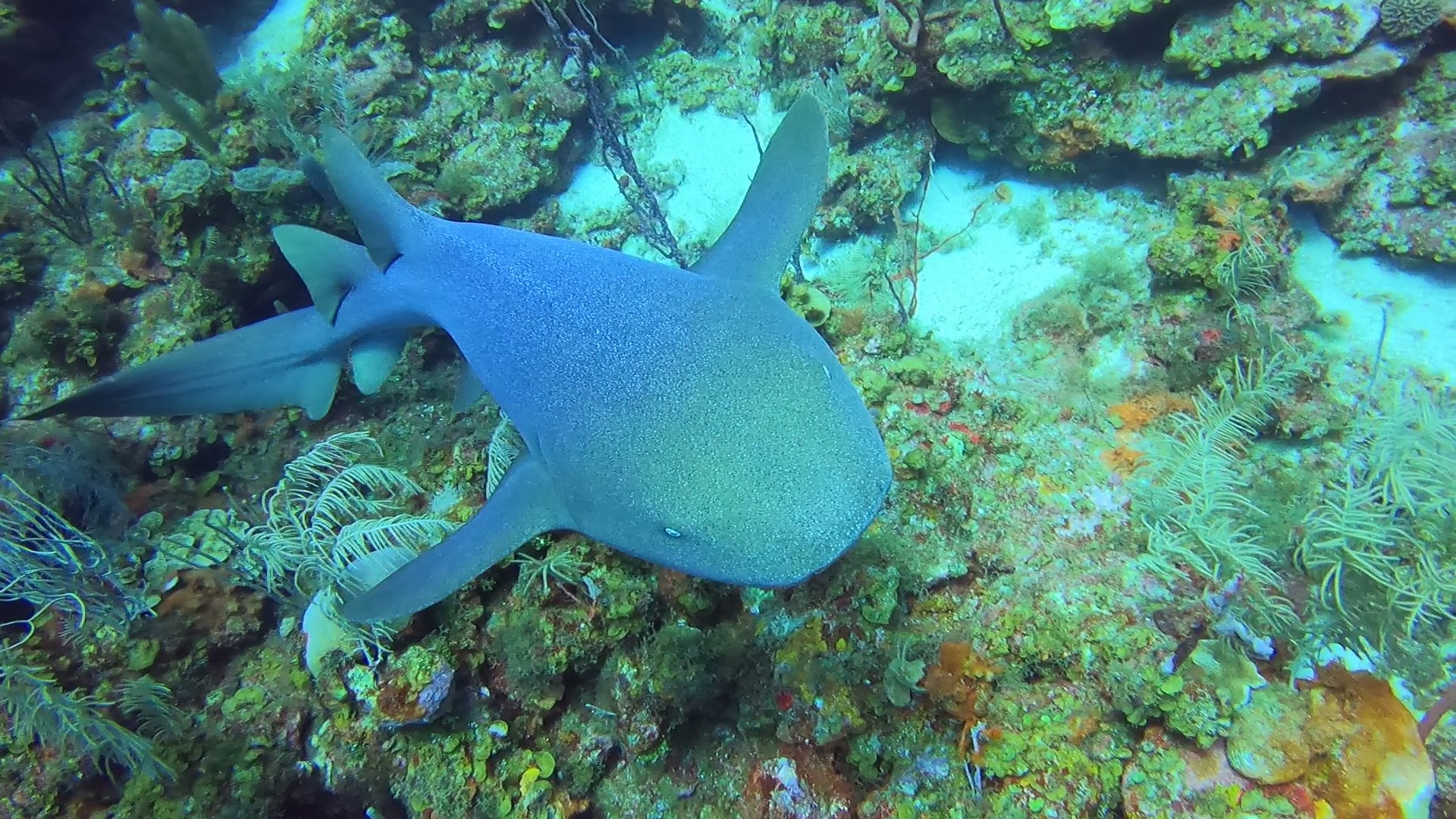
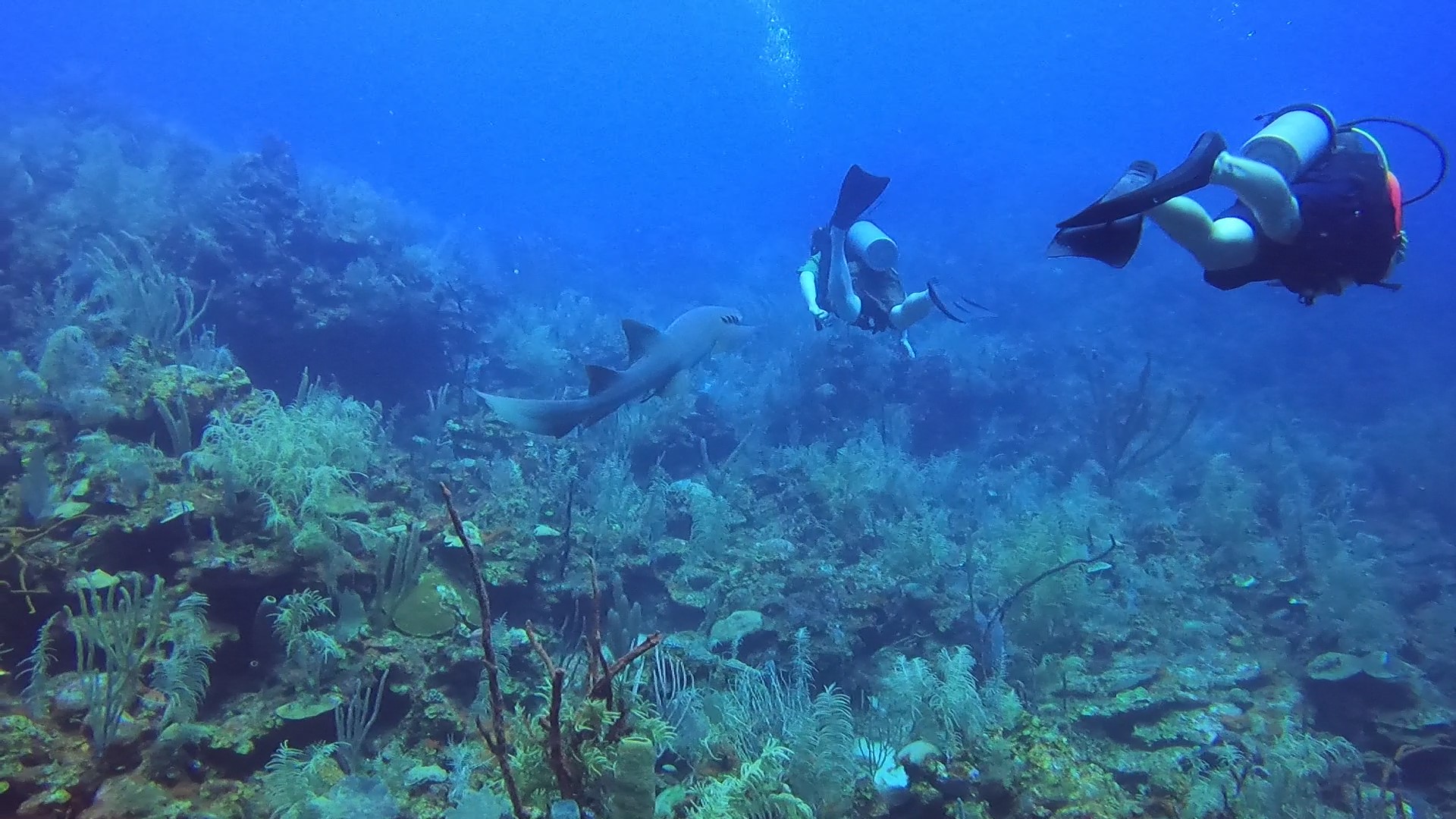
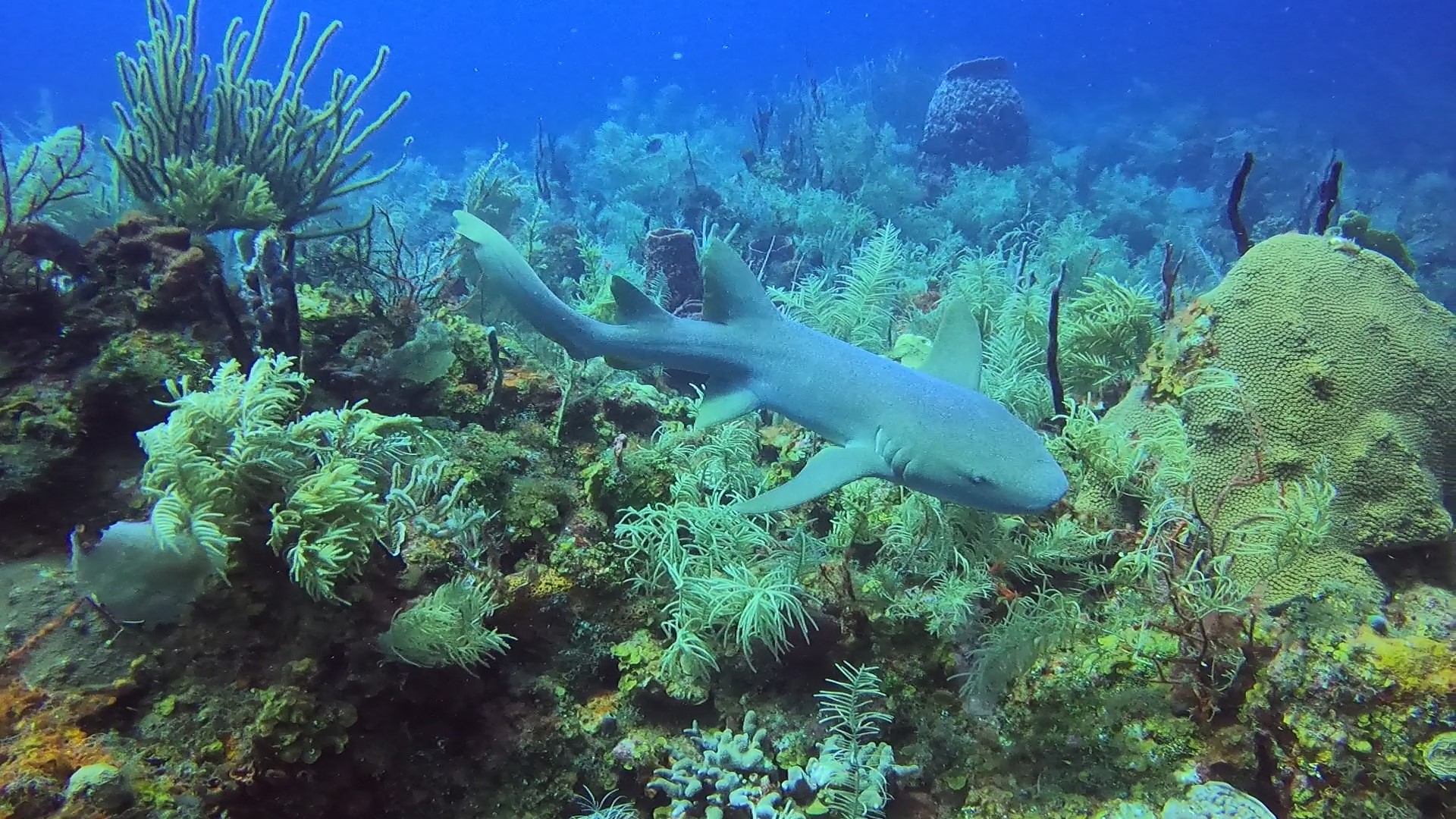
But, most notably, two nurse sharks appeared shortly in the dive.

And after, they just… kept appearing.

Again and again.

They seemed very curious about us and kept swimming up close. Once we surfaced, a young woman called Amy said it was, “like we had two extra dive buddies,” which was a very fitting way to put it.

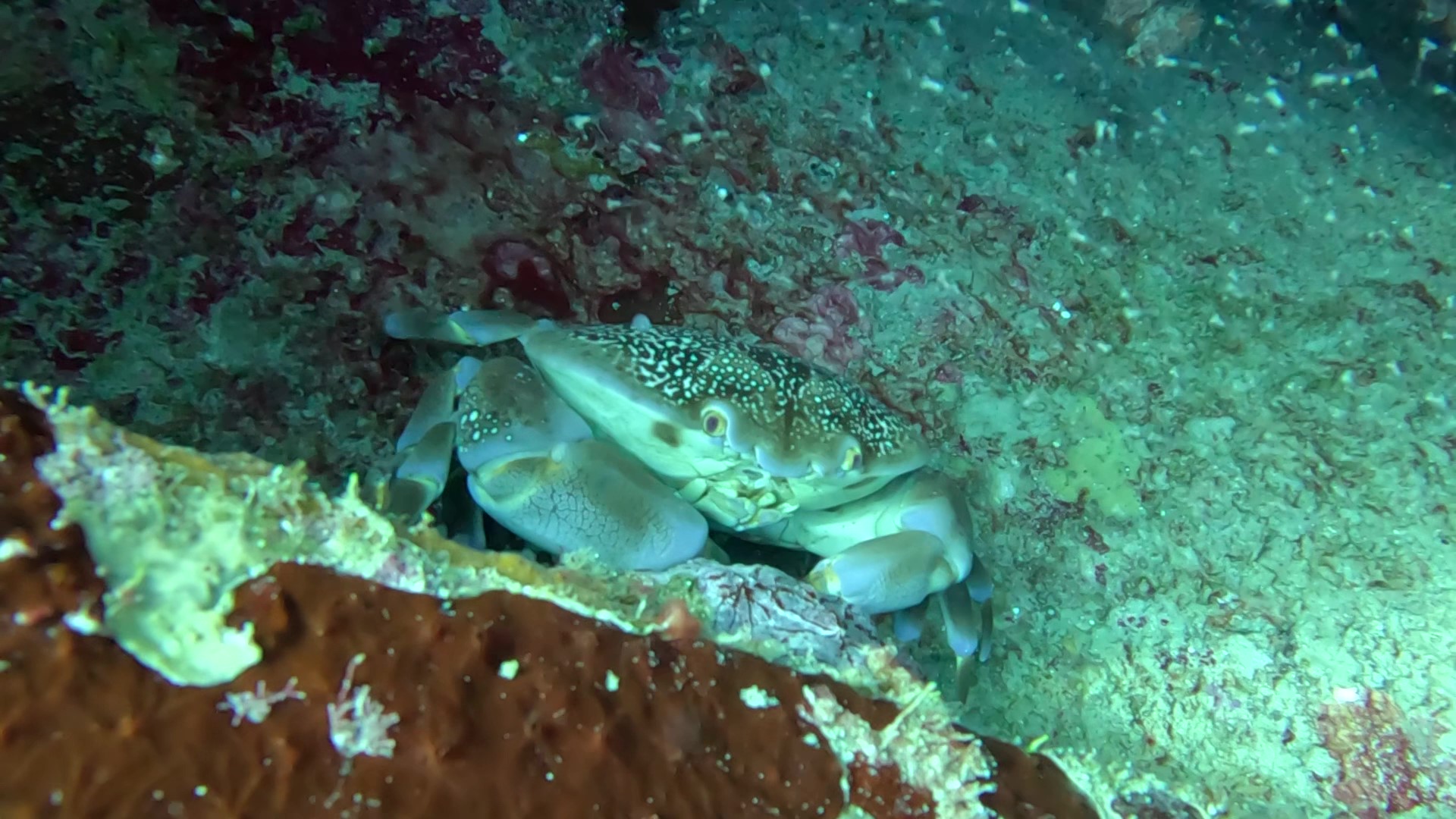
The second dive that day was at Ted’s Point, one of the more common sites. We started by descending to the ocean floor to look at the wreck of a small boat, where we spotted a crab.

And then, we ventured back to the reef, where our Dive Master – who that day was Ryan – found two species of frogfish, as well as barracudas, tarpons, and a cool-looking filefish.

But, I think the highlight of this particular dive – for me, at least – was this squid that appeared just as we were beginning to ascend for our safety stop.

Another particularly memorable day was my final one, and it just so happened to be another one where someone who owned a GoPro was present.

As it was my last day, Branden took me to see a little cave within the wall of the reef and lent me his torch. Within the darkness I could see a small group of fish backed up against the far side of it, watching me. It was an eerie experience, and when I swam back out of it the sight of being back amongst all the bright and colourful coral again was a moment that I will always remember.

In terms of sightings that final day: the ones that stood out of me was a giant lobster that Branden found hiding within one of the coral formations. I didn’t manage to get any footage of that but I do have some of the barracudas we saw lurking by the wall of the reef.

As well as pufferfish, which we saw several. Towards the start of the dive I found one that was big and of a greyish/blue colour, and then later on we also found a spotted puffer that was yellow and had black spots.

Utila is a lovely place, and I think when I look back on my time there I will not just remember the diving but also the people that I met and watching beautiful sunsets from Alton Dive Centre’s pier whilst enjoying a beer. I can see why many people end up staying here and making a new life for themselves.

The following day, I caught the ferry back to La Ceiba where I spent a day relaxing and preparing for the next stage of my journey; Nicaragua.

Photos and videos used for this blog were kindly donated to me by several people. Most of them are anonymous, but the ones with the nurse sharks and the beautiful coral were from Kari, who also happens to run a business called Island Pet Movers that is currently running a scheme to help those who have been affected by the Maui bushfires relocate their pets and pay for vet services. If you enjoyed the pictures and happen to have some spare money consider donating.