Travelblog#23: Bunaken & Tangkoko Nature Reserve – Sulawesi, Indonesia

15th-20th November, 2014

The first thing I saw, as I waded out to sea, where lots of starfish scattered along the seabed.

Note: This photo was not taken by me. I lifted it off the internet.

And that was all I saw, for a while. I carried on swimming and eventually came across some corals, too, and a few little critters. None of it was anything particularly exciting or new to me, though: I had been in Indonesia for almost two months by this point and at least a third of that time had been spent by the sea. I had swum with manta rays, sharks, morays, dozens of turtles, the list goes on…

Just as I was beginning to think, “What is the big fuss about this Bunaken place?” I then caught a glimpse of some bright colours glistening in the blue ahead. I swam faster.

When I reached the ocean wall, the first thing that hit me was how striking the coral was. It was like a cliff edge in some kind of strange and beautiful alien world. It went so far down I couldn’t even see where the ocean floor was and there were hundreds of tiny fish in a whole variety of shapes and colours swimming around the face.
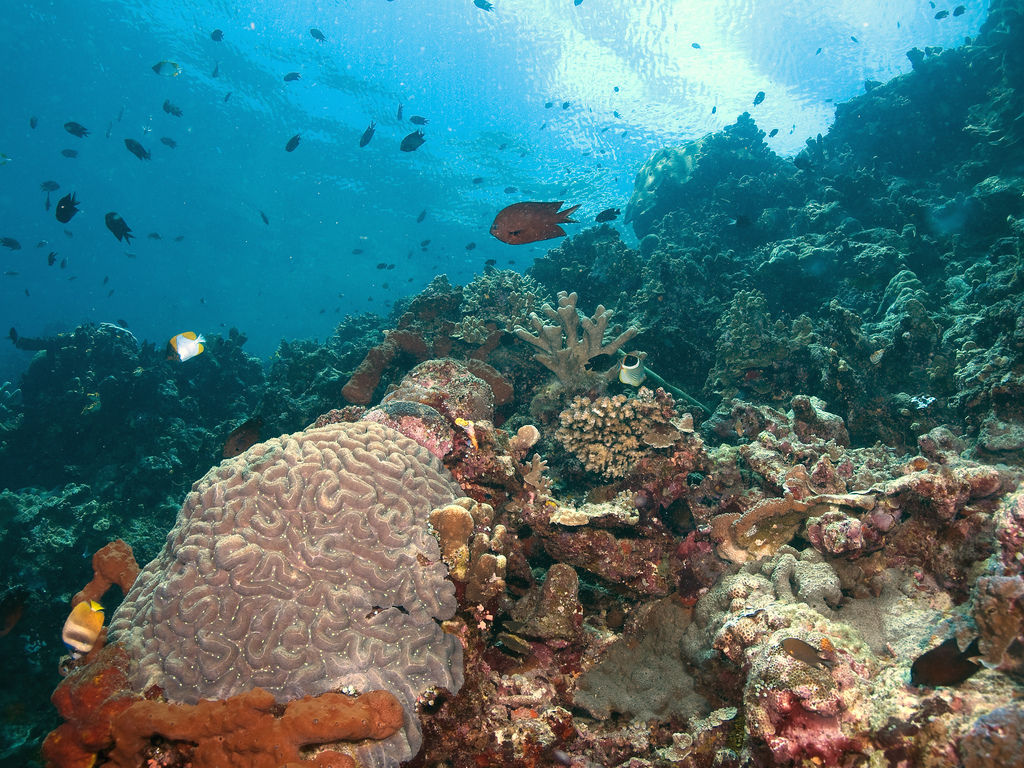
Note: This photo was, also, not taken by me and was lifted off the internet.

The second thing that hit me was a strong current, which abruptly began to pull me downstream. I fought it, trying to pull myself along the surface with breast-stroke.

I then noticed that between all the shoals of fish there were two figures ahead – fellow snorkelers, hanging on for dear life to a buoy attached by a rope. They were motioning for me to come join them.

I switched to front-crawl and swam hard, fighting the drift. Once I had reached them and safely grabbed hold of the rope, I pulled my head to the surface.

“Crazy currents, huh?” one of them said.

“Yep. It’s awesome down there, though,” I said, briefly dipping my mask beneath the water again.

They both nodded.

“You don’t have any fins!” one of them exclaimed, laughing.

“How long have you been here?” I asked.

“Two days,” he replied. “You?”

“Literally just got here. Is it all as good as this?”

“Pretty much.”

Nice… anyway, I am going to swim up there now,” I said. I thought I could feel the current weakening, and I definitely wanted to see more.

“Be careful, dude.”

I let go of the buoy, and swam off. It was hard work, but after a hundred meters or so the current eased.

I had never seen so many shoals of fish in my life, nor coral as abundant. Yeah, there weren’t any sharks or any other predators of note, but I swiftly realised that Bunaken doesn’t need larger creatures because it is more about the micro-life.

I swam all the way up to the northern peak of the island, and every span of the journey was spectacular and teeming with life. After completing what was probably the best snorkelling I had ever ventured out on, I retired back to by beach hut behind a small patch of mangroves.

I ended up staying on Bunaken Island for three days. On the final day Roy and I signed up for some scuba diving, but it was a bit disappointing. Firstly, because we didn’t really see anything else by going deeper because there were actually more fish nearer to the surface and, secondly; the dive outfit we were taken out with (Immanuel Divers) weren’t very professional (no buddy checks, very little guidance underwater, Roy’s depth gage didn’t work, as well as a few other things). We signed up for three dives, but Roy only completed one; I gave up after the second.

We left, and made our way to Tangkoko Nature Reserve.

???????????????????????

On our way there we passed through a town called Girian where by a stroke of fortune we bumped into Jenly, who just happened to own Tarsius Homestay which is situated just outside the park headquarters. He gave us a lift there and, along the way, told us many stories about the park, the creatures which lived there, and about how crew from the BBC Natural World series stayed with him while filming Meet the Monkeys.

When we arrived we were fed and told about all the different guided expeditions we could be taken out on. As well as all the jungle excursions there were also dolphin spotting tours being run by local fisherman. We were told that the dolphins nearly always turn up and sometimes, if you are lucky, you can even swim with them. Roy didn’t have time for this (as it meant staying for an extra day and he had a flight to Jakarta to catch) but I did.

Myself and the four other people were taken out on the boat the next day and were apparently very unlucky; there were no dolphins that morning. It was a shame but, if they did turn up, swimming with dolphins is probably an experience I would have remembered for the rest of my life. If you don’t ever take chances like that, you’ll miss out on some amazing experiences.

I arrived back from that rather disappointing tour with plenty of the day still left. So, what did I do?

Well there was a whole jungle just beyond the balcony of the place I was staying in…
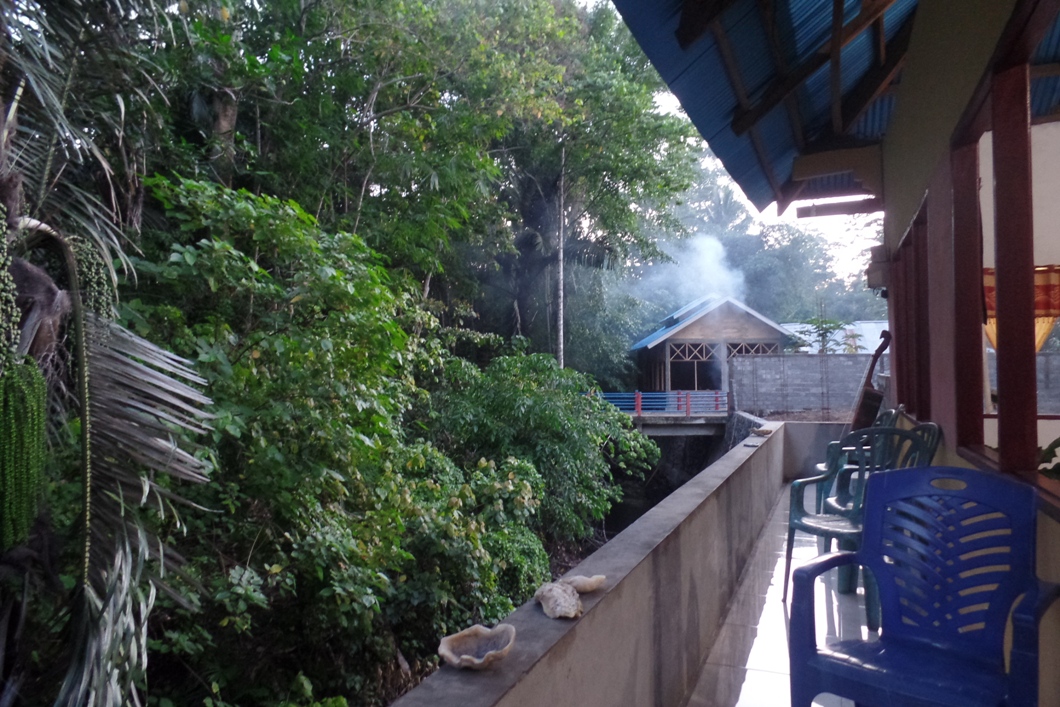
???????????????????????

So I did something a little bit naughty, and snuck in.

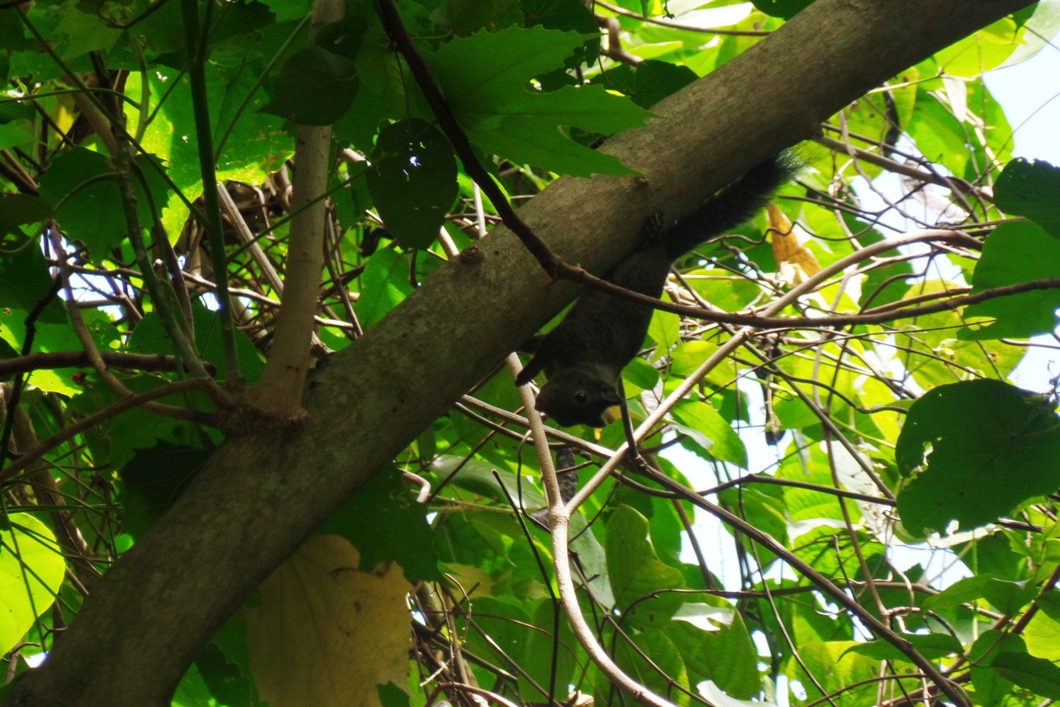
I thought that because I didn’t have a guide who knew their way around the place there wasn’t much chance of me finding anything too exciting. I saw a few birds, lizards, and a black squirrel.
???????????????????????

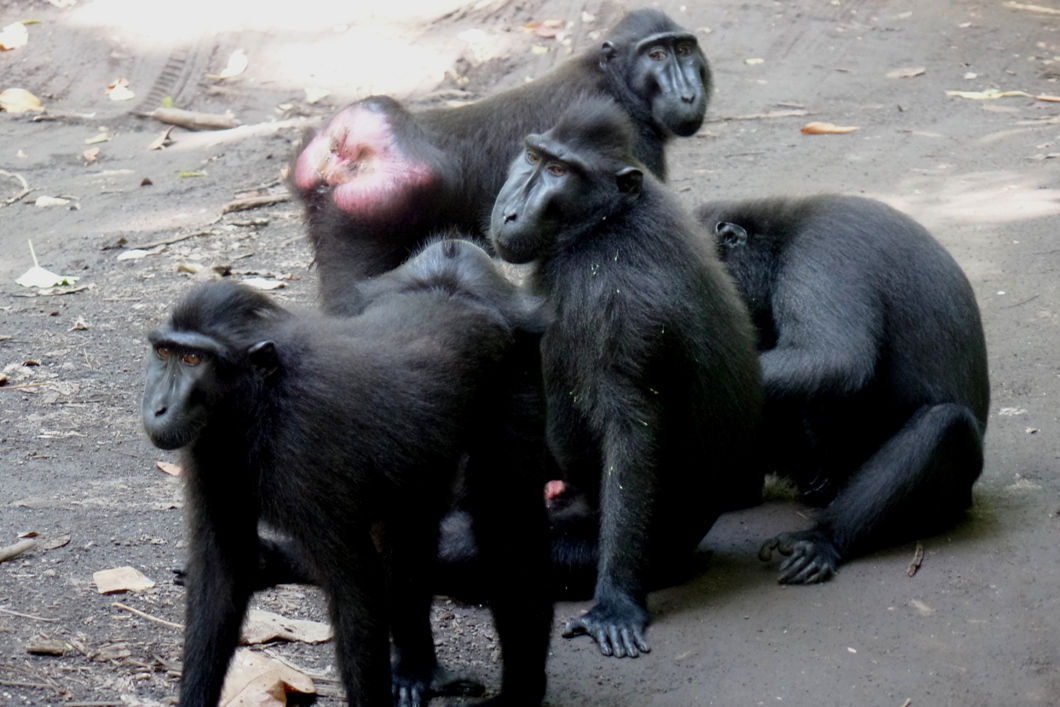
I wasn’t at all expecting to stumble upon these guys.

???????????????????????

Celebes crested black macaques. They are indigenous to Sulawesi only, and now, thanks to the destruction of most of their natural habitat and poaching by locals, on the red list of endangered species.
???????????????????????

It was pretty awesome to see them, but they were a rather large group (there were many more in the trees around me) and it made me all too aware that I was alone in the jungle. I soberly made my way back to Tarsius Homestay, sat on the balcony with a Bintang, and read a book while listening to the jungle.

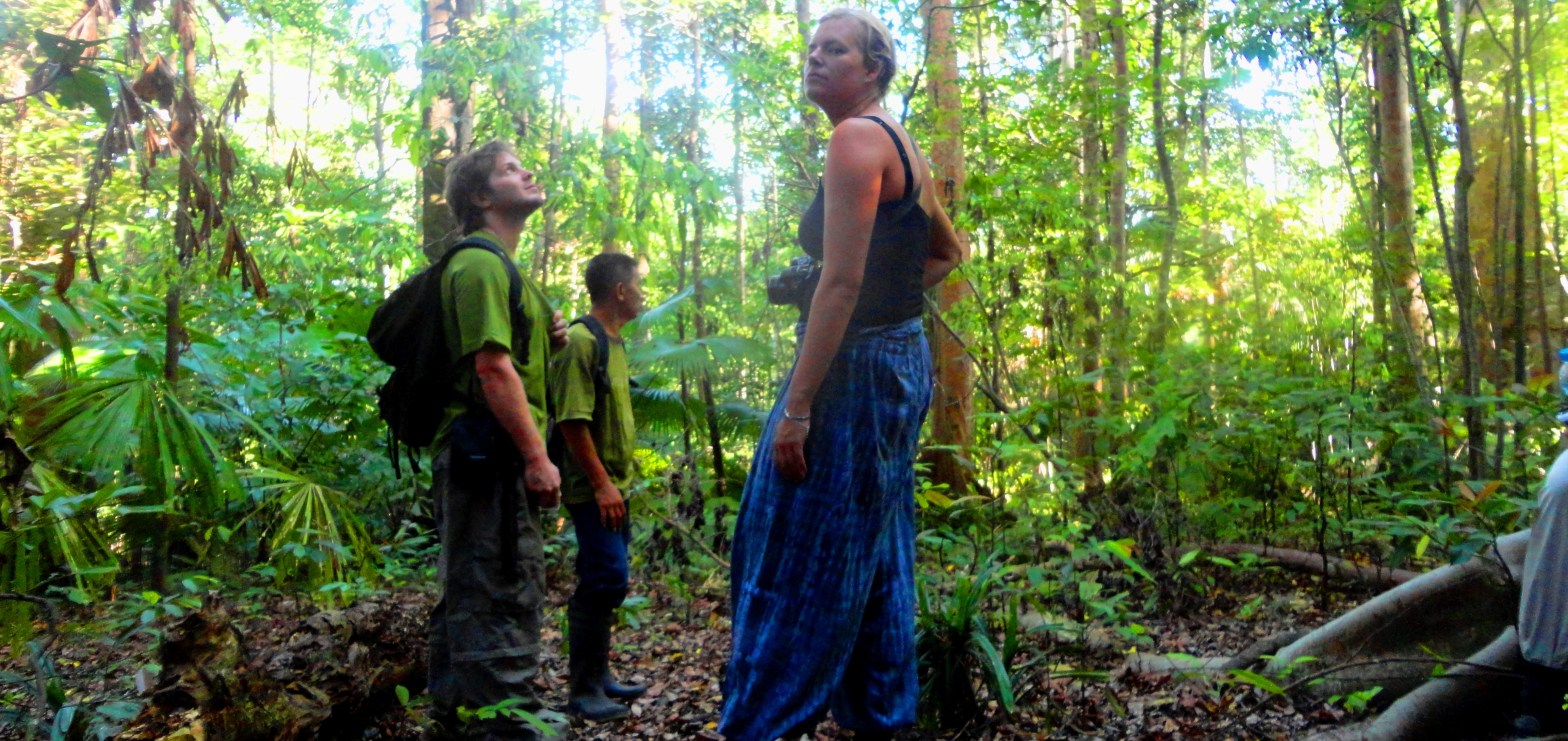
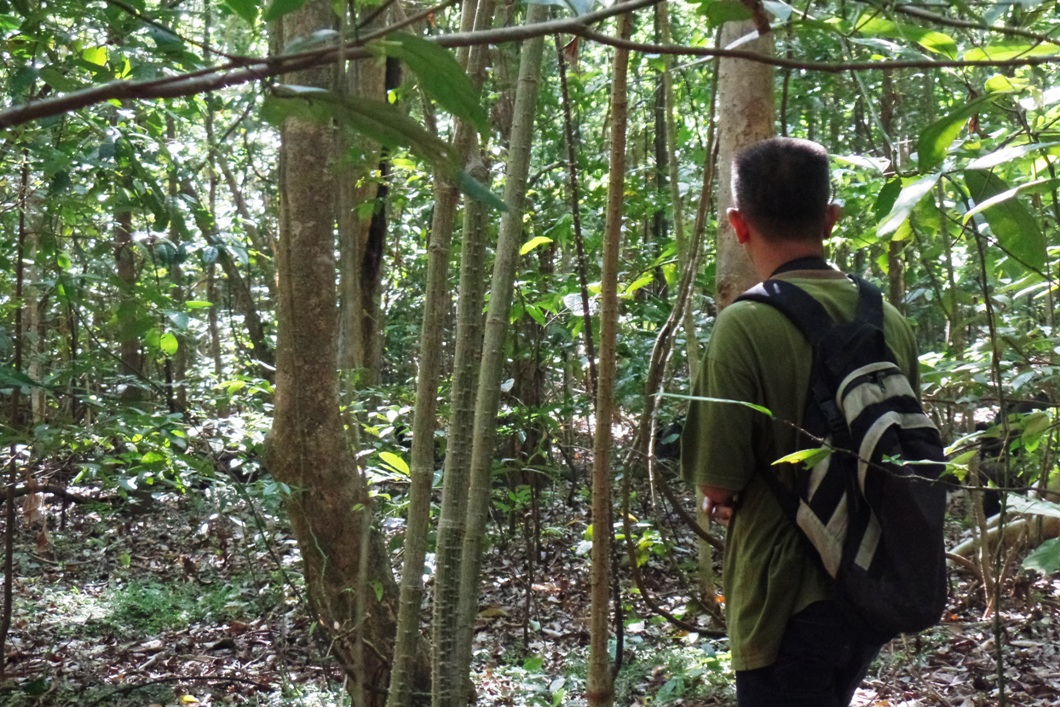
The following morning I woke up at 4 am, got dressed, sprayed myself with plenty of repellent, and went to meet the others for our jungle trek.
???????????????????????

Jenly was taking us out himself, and also with him was Untu, a bird specialist.

???????????????????????

It was still dark when we set out, so we walked by torchlight. We got to hear the dawn chorus and even saw a few tarantulas along the way, but they all crawled back into their tree-holes before I could snap a picture of them. By the time it was light we reached a tree where the tarsiers come home to roost after a long night of hunting insects.

???????????????????????

When we had finished admiring and taking photos of them, Jenly went off on his own to see if he could find out where the monkeys were while Untu took us bird-spotting. He found a red-backed thrush, which is something we were quite lucky to see.

???????????????????????
It was a bit too far away to get a decent picture of with my camera. I tried to get a little bit closer but it flew away.

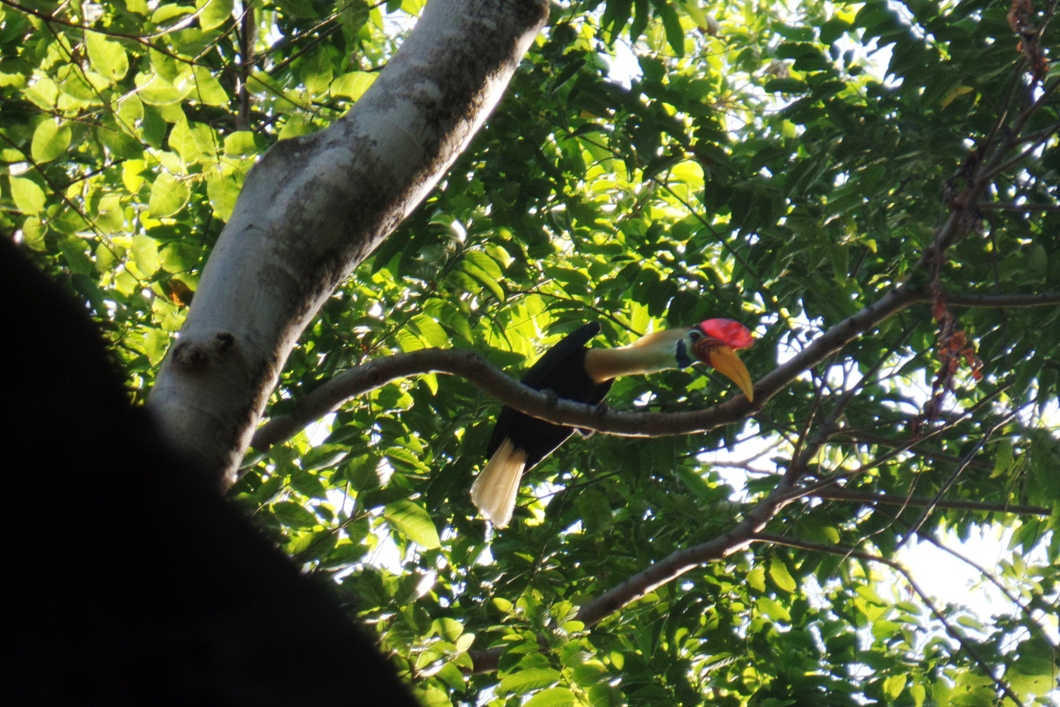
The hornbills were probably the highlight of the entire day for me. We found about five of them, in all, and they were amazing creatures. Whenever they flew you would hear a great whoosh-whoosh as their wings beat against the wind, and the sounds they made when they opened their beaks was like nothing I have ever heard.
???????????????????????

We also came across a pair of cuscuses, but they were sleeping and could only be seen with a pair of binoculars. They were far too high in the treetops for me to take a photograph. The same was true for the woodpeckers and some of the other species of bird we spotted with Untu’s binoculars.

Time seemed to fly by very quickly in Tangkoko; before we knew it we looked at our watches and realised that we had been there for over six hours and it was time to head back. We found another group of the macaques on our way out though, which was a great relief to the four other people I was trekking with who had not seen them yet.

???????????????????????

I then went back to my room, showered, packed my bags, and got ready to begin a new chapter of my journey. After over three months of travelling together, mine and Roy’s paths had now been destined for different directions; he was heading to Sri Lanka, and I, to Sumatra. From this point on, unless I click with someone who just happens to be on the same route as me, I will be a solo traveller until I reach Taiwan.

More photos from Tangkoko can be found on my Flickr account.
Travelblog#22: The Togians – Sulawesi, Indonesia

5th-13th November, 2014

The backpacking scene is quite well networked these days. During my time on the road I have made lots of friends – from both this trip, and the one I went on a few years ago – and many of them I am still in touch with via Facebook, email and Skype. Occasionally my path will cross with one of theirs again but, even if it doesn’t, it is still interesting to find out where they wind up on their journey.

One of the benefits of this networking between travellers is the sharing of information. When we notice that others are about to venture to an area we have already been to we will often throw tips to each other. A cheap hostel to stay in, perhaps; or a one of those “travellers’ secrets” (places that are played down or barely mentioned in the Lonely Planet, often purposefully and/or by request); or, more often, somewhere that is in the guide book, but we just want to make sure they are going see it.

Such was the case when I reached Sulawesi: I received a stream of private messages and Facebook comments. “Go to the Togians!” they said. “Are you going to the Togians?” “You HAVE to go to the TOGIANS!”

So, we went to the Togians.

Kate was, sadly, no longer with us: her spider-bite which we thought was healing got infected again so she was told she would not be allowed to swim nor hike for a while and – as that is pretty much all there is to do in Sulawesi – she decided her time might be better spent in an area with attractions which are easier to access and had better hospitals, such as Bali, or Java.

So it was back down to the original duo again; me and Roy.

???????????????????????

The journey to the Togians took almost three days, in all. I won’t bore you with too many details. There was a stomach churning bus through south-Sulawelian mountains (Roy threw up, I merely felt nauseous), followed by a night in a dingy hotel in Poso. Then, in the morning, we hopped onto another bus, this time along the coast, to Ampana, where we had an afternoon to relax before we caught the boat.

???????????????????????

In the early evening, just as it was getting dark, we arrived on Malenge Island.

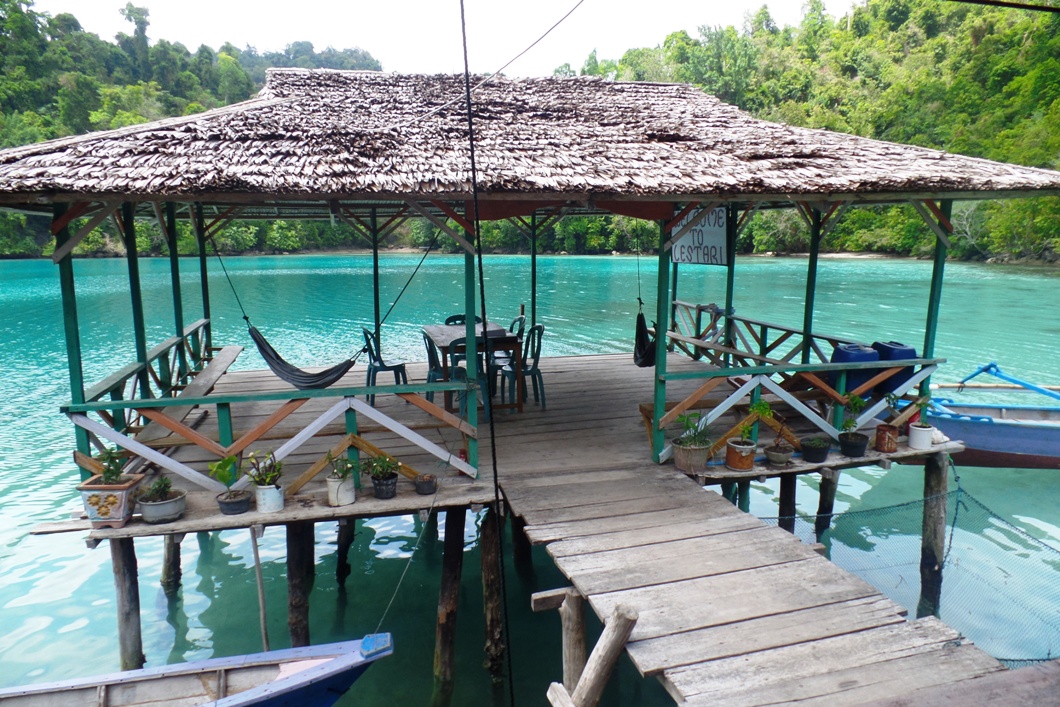
We didn’t have much time other than to claim a bungalow each at Lestari Cottages (where we were stayed) and eat dinner that night. In the morning we finally saw the place in the daylight and realised that it was paradise.

???????????????????????

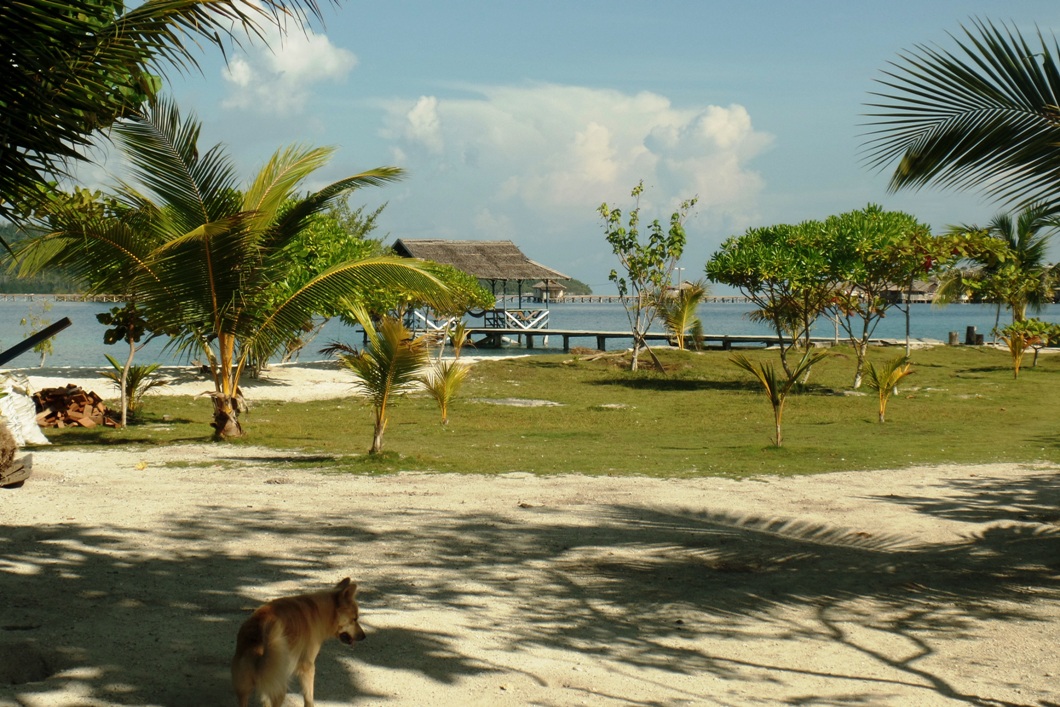
Lestari Cottages is perched on the narrow straight between the joining of a small peninsular to the rest of the island. One side of the resort opens out to a stunning sandy beach, dotted with grass and trees.

???????????????????????

Walking through to the other side of the decked out restaurant area brings you out into a small lagoon.

???????????????????????

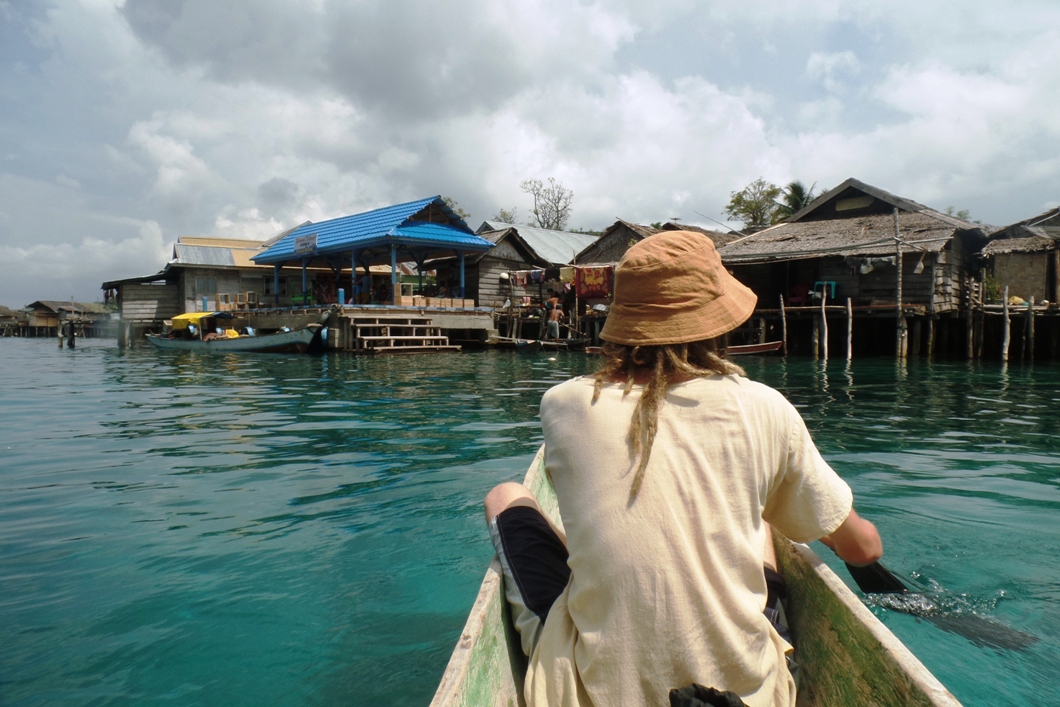
We swiftly found out that the owners of Lestari Cottages also own a small canoe which is free for guests to use so, on our first day there, we commandeered it and rowed out to a nearby Bajo village.

???????????????????????

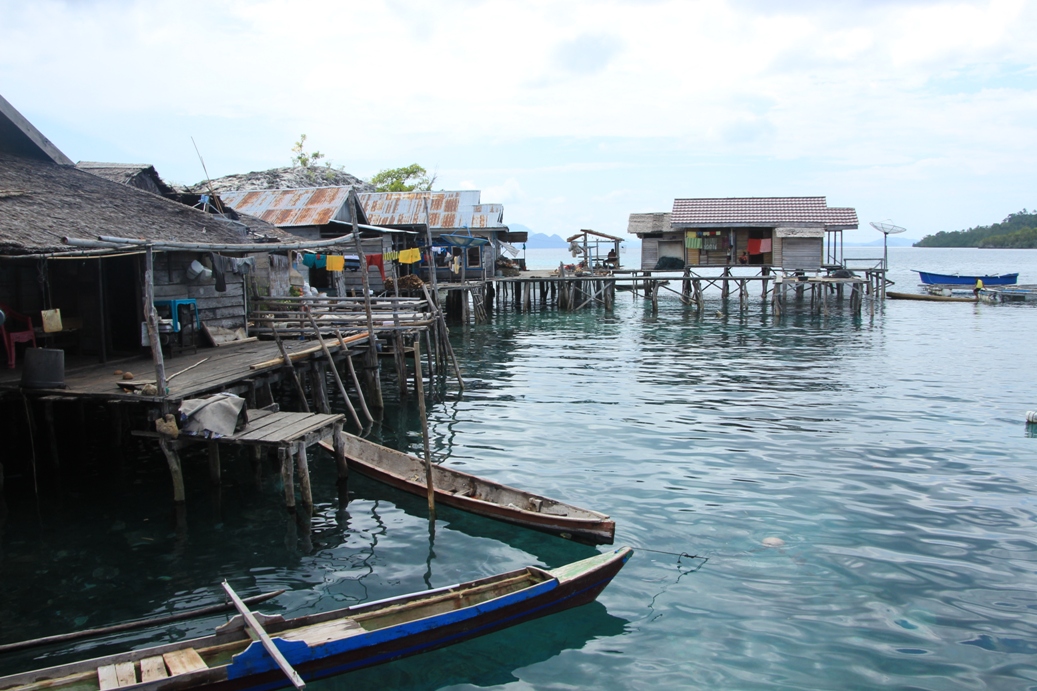
The Bajo (also referred to as “sea gypsies”) are the oldest inhabitants of the Togians, and many of them still live in villages built on stilts over the reef.

7

Many of them are even said to possess evolutionary adaptations, such as changes to the muscles of their eyes to help them see clearer underwater and bodies which are more efficient at conserving oxygen (indeed, when Roy snorkelled out this way a day later, a boy swam out to meet him and, without any mask, fins, or breather, was ducking beneath the surface, holding his breath, opening his eyes, and swimming around with a grace which put Roy’s own efforts to shame).

They were very friendly and enthusiastic, and happy to show us around their village. The children kept asking us to take photos of them so they could stare in wonder at the screen, and never at any point did any of them ask us for money, or ”gula” (sugar), like many of the kids on the mainland (who live comparatively much more comfortable and modern lives) have been trained to.

8

I stocked up on some snack foods at a small shop and was quoted prices which were much lower than I what people often try to charge foreigners on the mainland. By the time we got back onto our canoe and began rowing back, I realised that these sea gypsies were possibly the happiest and most honest of the people I have met in Indonesia so far.

9

Much of the exploration we did around Malenge was below the water. We didn’t see big creatures such as sharks or turtles, but the micro-life was spectacular and the coral was some of the healthiest and most intact that I have ever seen. One afternoon I simply jumped into the water and followed the coral gardens along the coast until I reached a mangrove forest a couple of hours later. When I emerged from the water a sighting of a pale snake slithering in the shallows put me off exploring, as I was barefoot and wearing only my swimming trunks, so instead, I just sat there for a while and rested while enjoying the sounds of the birds.

I am not one of those flashy travellers who owns a GoPro, I’m afraid, so I have no photos. You’ll just have to take my word for it.

Birds were another attractive feature on this island. The lagoon was a great place to lounge in a hammock and watch them fly by, and bright green parakeets were a fairly common sighting. Roy and I also went on a walk through the jungle early one morning and spotted some other interesting species which we couldn’t name. We were past the Wallace Line by this point, so much of the fauna was unfamiliar to us.

???????????????????????

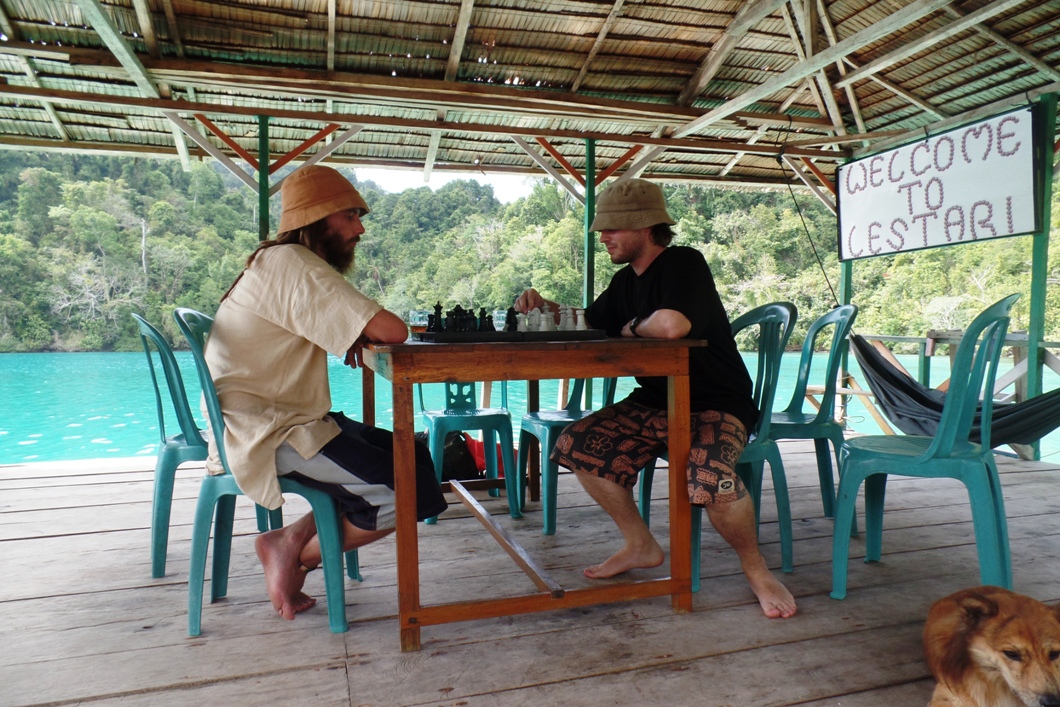
The rest of our time in Malenge was spent relaxing: reading books, playing chess, laying in the shallows of the water, and staring out at the sea. We were tempted to stay there much, much longer, but there was more of the Togians to explore so, almost reluctantly, we left on the fifth day.

Sorry Tioman, you are now my second favourite island in the world.

???????????????????????

We went to Kadidiri next. We were a little bit underwhelmed by the location: the sandy cove, with three different resorts to choose from, was nice, but it didn’t have a spot on Malenge.

12

Or maybe Roy and I have been a bit spoilt recently, when it comes to islands and beaches.

Kadidiri is, however, – with its larger population of tourists – a much better location for booking tours and venturing out to places. On our first day there Amal (the son of the family were staying with) look us on a free trip to nearly Taipi Island for some snorkelling.

12a

We also ended up visiting a lake nearby which had a very unique eco-system; it was absolutely full of stingless jellyfish, and many other curious creatures.

13

We swam around for a while with our snorkels. I ended up spending much of my time childishly swishing my hands around and, without touching them, casting the jellyfish off in different directions with the waves I created.

“Feeling powerful, Tej?” Roy asked me, lifting his head up from the water and removing his snorkel.

“Yes.”

He ended up doing the same thing for a while, and discovered its rather addictive quality. I have since named this art “Jellyfish Kinesis”.

14

Click here for more photos from the Togians.

Travelblog#21: Tana Toraja – Sulawesi, Indonesia

29 th October – 3rd November, 2014

Part 1

Following his loss of passport (as well as many other valuables) at the bus station in Makassar, Roy was forced to stay behind while Kate and myself ventured on to Tana Toraja.

It was a real shame, as Sulawesi was probably the part of Indonesia that the three of us had been looking forward to most and it now seemed that Roy was going to miss all its sights. It was also a bit shitty to part with one of my closest friends in such a sudden and downbeat manner. Kate and I weren’t expecting to see him again until, possibly, later that month when we passed through Jakarta – where the nearest British embassy was.

Rantepao, a laidback town nestled between the mountains of Tana Toraja, was where the two of us based ourselves for our first couple of days in the area. Kate was still recovering from a nasty spider bite which got infected and, with her brother no longer with us, I took over the duty of accompanying her on her third visit to the hospital to get the dressing changed.

We didn’t do much else that day. I scouted out the various “Tourist Information” centres, but none of them were willing to reveal to me where any of the tomates (traditional Toraja funerals) were happening or provide me with a map of the area. They were all merely thinly-veiled touts who wanted to sell me tours. I toyed with the idea of going on a multi-day trek, but the price they quoted me when I enquired came loaded with a staggering (and, quite frankly, offensive) amount of White Tax.

These days, when touts quote me ridiculous prices I don’t even bother trying to haggle them down. I just walk away, and hope that they’ll learn that, sometimes, trying to scam foreigners will lose them business.

I did find a map, eventually, and Kate and I spent the rest of the afternoon researching the area. We found out that many of Tana Toraja’s most rewarding trails and sights could be seen without a guide and were near a village called Batutumonga, which itself had a handful of simple, homestay-style accommodation options. So it sounded like a perfect place to base ourselves for a few days.

That night, while eating dinner, I met Dana Rappoport; a French scholar who wrote Songs from the Thrice-Blooded Land: Ritual music of the Toraja,  as part of her PhD. It was published over ten years ago but only recently translated into Bahasa Indonesia, and she had returned to Toraja to finally present the book to the tribes-people who helped her write it so long ago.

She spoke very passionately of the Toraja people. I knew a little about them from what I had read and the documentaries I had seen, but during our conversation she fleshed out many of the details for me.

The people of Tana Toraja are mostly known for their peculiar burial customs: when people pass away here their family members will embalm the body and keep it in the house. They will even talk to them occasionally, as if they are still alive. In many ways the deceased are still thought of as alive until the family have gathered enough money and organised the funeral. This can take anything up to ten years.

These funerals – or tomate, as the locals call them – are extravagant and very public events which vary greatly in size and scale but often take place over the space of several days and almost always involve the sacrificial slaughter of dozens of pigs and buffalos.

Most of the population of Toraja call themselves “Christian” these days, but these customs are obviously from something much older. Dana told me, in a regretful tone, how the Toraja people used to have many more beliefs and practices which have now been lost thanks to the efforts of Dutch missionaries and the Indonesian government, who banned most of their rituals until eventually it was only some of their customs surrounding death that they still were still allowed to practice. The Toraja people used to have ways to celebrate life and older gods too, but that has mostly been forgotten now.

When I wandered back to my room later I switched my computer on. I had a message from Roy. It was good news: after spending the day jumping through a series of hoops with the Makassar police and the British consulate, he had been given permission to spend a few weeks in Sulawesi before he reported to the embassy in Jakarta to collect his Emergency Travel Document. He was, as he wrote to me, just about to jump onto the night bus, and would be with us by the morning.


Part 2

Roy arrived the next day bright and early and, after a quick reunion over breakfast, we decided to not waste any more time and find one of those Torajan funerals we had heard so much about. Kate had heard rumours about one taking place in a village called Langda, but we found it impossible to find a bemo heading there: everyone we asked just kept sending us around in circles. We also kept being told about other villages where funerals were supposed to be going on – Londa, Lemo, La’bo – so we decided to get on a bemo which was heading to Lemo.

This turned out to be a mistake: the driver had merely been giving us what I call the “Asian Nod”: a common practice in Asia, where one whom faces the prospect of receiving money from a foreign tourist will simply nod their head and say “yes” to pretty much anything.

“Going to Lemo?”

“Yes.”

“Funeral there, yes?”

“Yes”

“Definitely funeral there. Burial. Yes?”

“Yes.”

Usually, we would have spotted this by implementing a tactic Roy invented; asking a few trick questions, such as, “are there unicorns in Lemo?” and “does the ride come with a free handjob?” to see if they are actually listening – but it was a bit early in the day and I guess we were being sloppy travellers that morning.

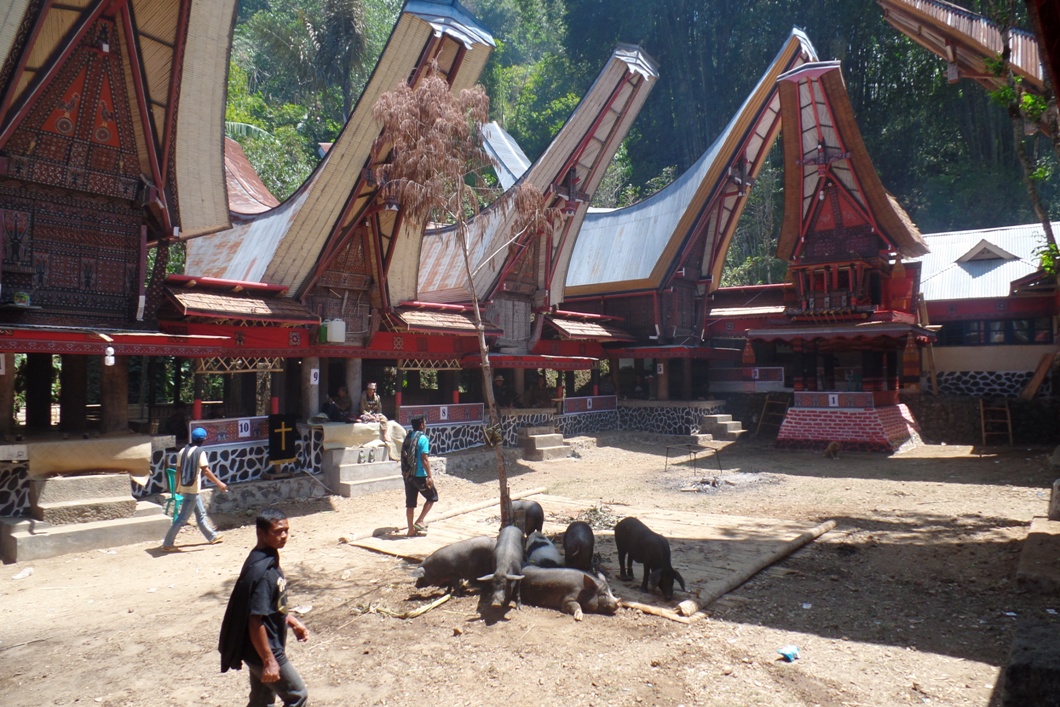
As far as mistakes go, it wasn’t a particularly bad one: Lemo was a pleasant village and it was there we saw our first examples of tongkonan (traditional Toraja houses, with boat-like roofs).

???????????????????????

We also got talking to some people there and found out about a couple of places where there actually were funerals going on. We then got back onto another bemo, this time heading east. To Sangalla.

???????????????????????

Where we found ourselves not walking into the main ceremony, but the bloody aftermath. Dozens and dozens of pigs and buffalos had just been sacrificed and people were in the process of butchering the meat and sharing it out.

???????????????????????

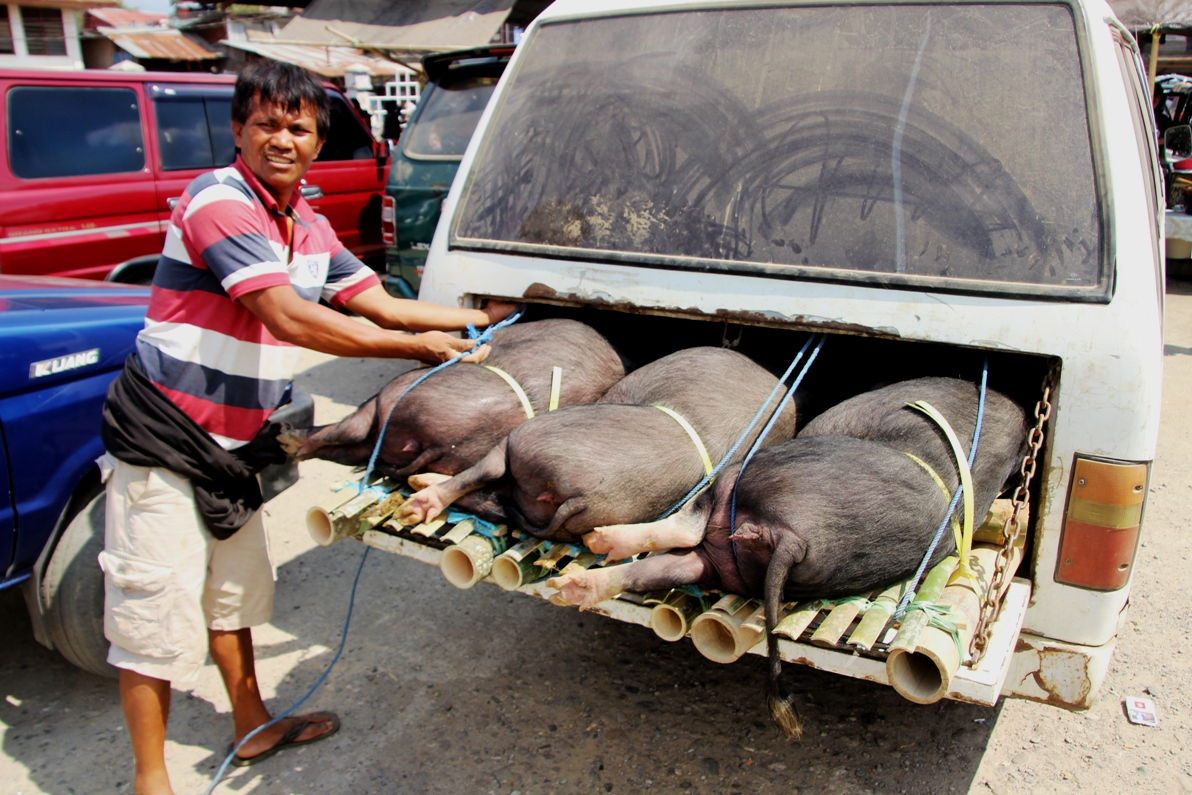
I found the level of animal cruelty in Tana Toraja a bit challenging at times. Yet I also felt that I – even though myself a vegetarian – was not in a position to judge them, being from a country where the majority of the meat consumed is battery farmed. Here, in Toraja, the buffalos and pigs at least seem to live fairly comfortable lives until the day they are picked to be sacrificed in a ceremony – after which, they are then unceremoniously strapped to a plank of wood and thrown into the back of a bus (as I witnessed being done several times to pigs at bus stations).

4

In the “modern” Western world, the meat industry is based upon denialism: factory-farms go to great lengths to stop consumers seeing the conditions animals are kept in, and the sterile, clinical way the meat is then processed, cleaned and packaged before it is sold in the supermarket, doesn’t encourage consumers to think too much about where it actually comes from. We even disassociate it further by giving it names, like “beef”, “pork”, and “venison”. Here, in Asia, at least people know and, more importantly, experience, how their meat is produced.

???????????????????????

Later in the afternoon, Roy and Kate were feeling tired so they went back to our room in Rantepao. I ventured off alone and visited Ke’te Ketsu, a very scenic village.

???????????????????????

I also went to Palatokke, where a pair of youngsters ran out to greet me. They escorted me up to the face of rocky outcrop overlooking the hills.

???????????????????????

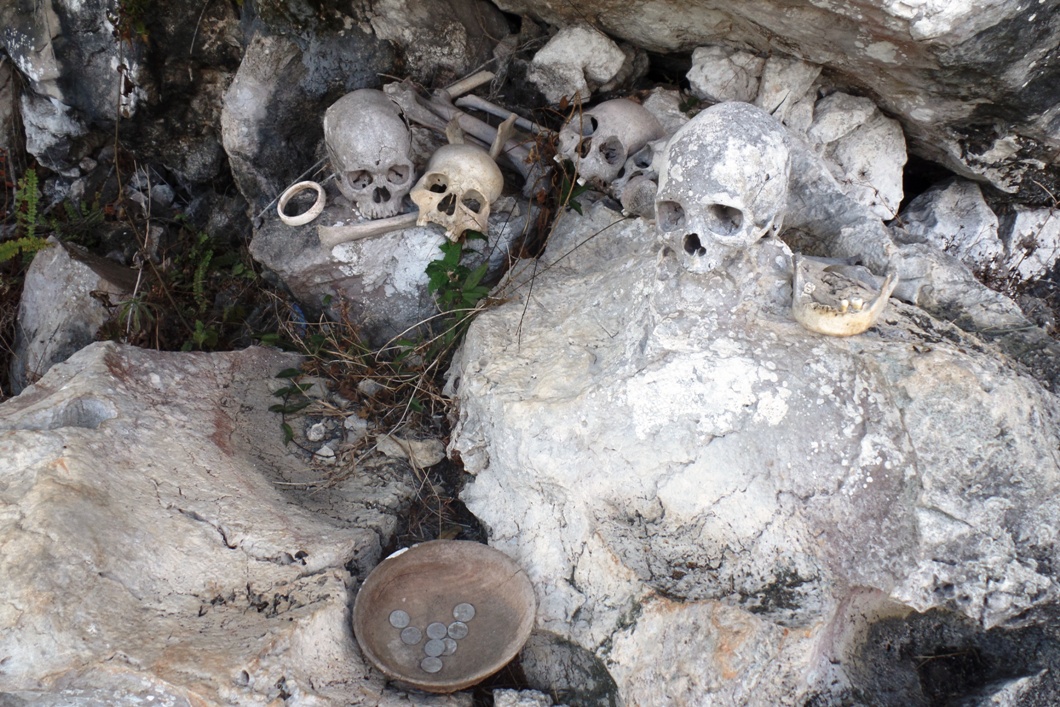
It was a burial site; where the bones of their ancestors now rested in hanging coffins, and human skulls had been arranged around various altars.

???????????????????????

When I returned to Rantepao later, Roy, Kate and I began to make preparations for the next few days: we packed away a change of clothes and some other essentials into our daypacks and asked our guesthouse if they could store the rest of our things for a few days.

In the morning we were heading to Batutumonga.

Part 3

We left Rantepao by ojek.

???????????????????????

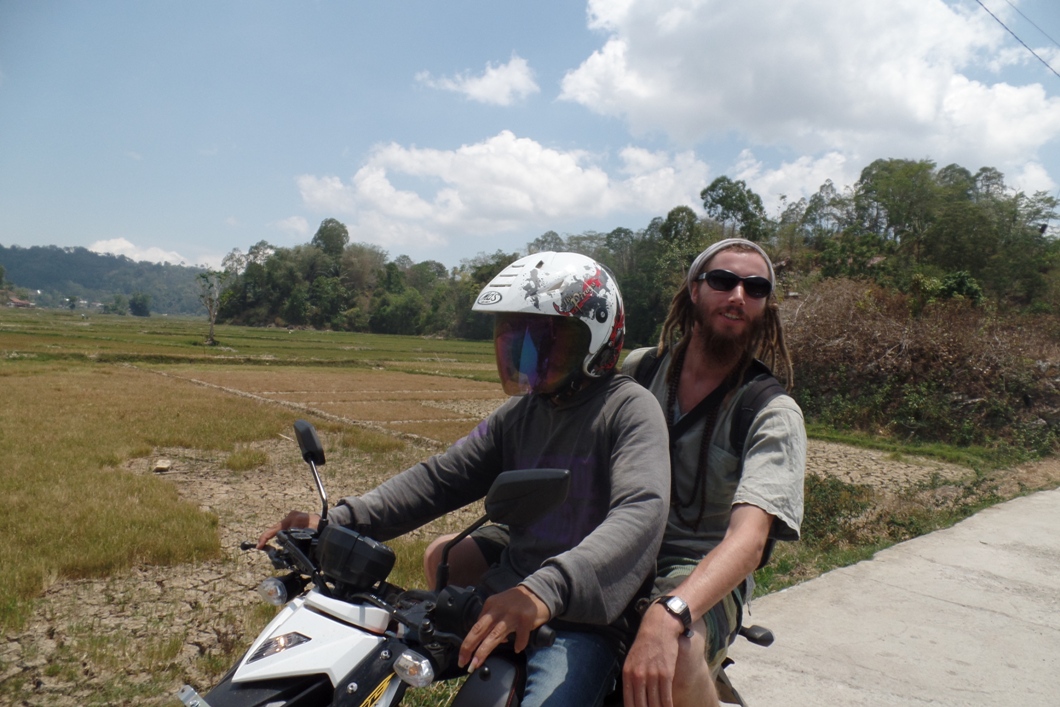
Which I believed to have been a good decision: it was much faster, the drivers took us on a shortcut through some roads where buses can’t go, and we got to enjoy sweeping views of Tana Toraja mountains from the back of a bike and feel the wind on our faces.

???????????????????????

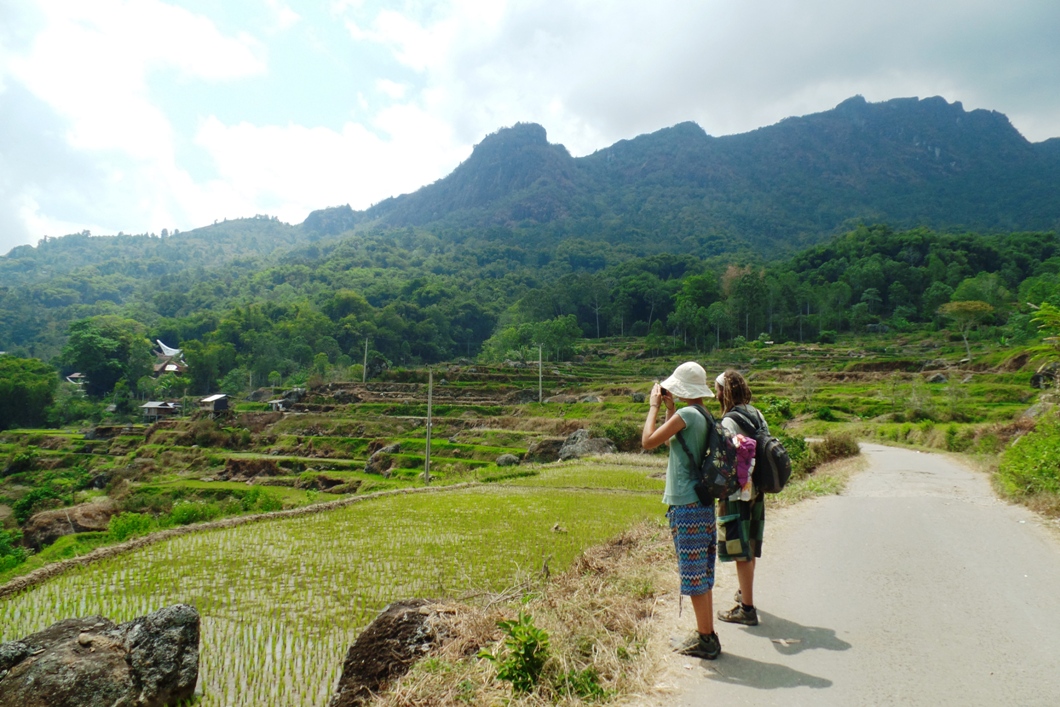
We were dropped off in Lempo, which was just above some of the rice terraces and was a great place to stop for a while and take photos.

???????????????????????

We carried on making our way up the mountain by foot, reaching Batutumonga an hour or so later, where we found suitable accommodation to base ourselves for the next few days: a rustic homestay called “Mama Yos”. We were each given a small room with a mattress on the floor to sleep in, and there was a mandi style bathroom for washing.

12

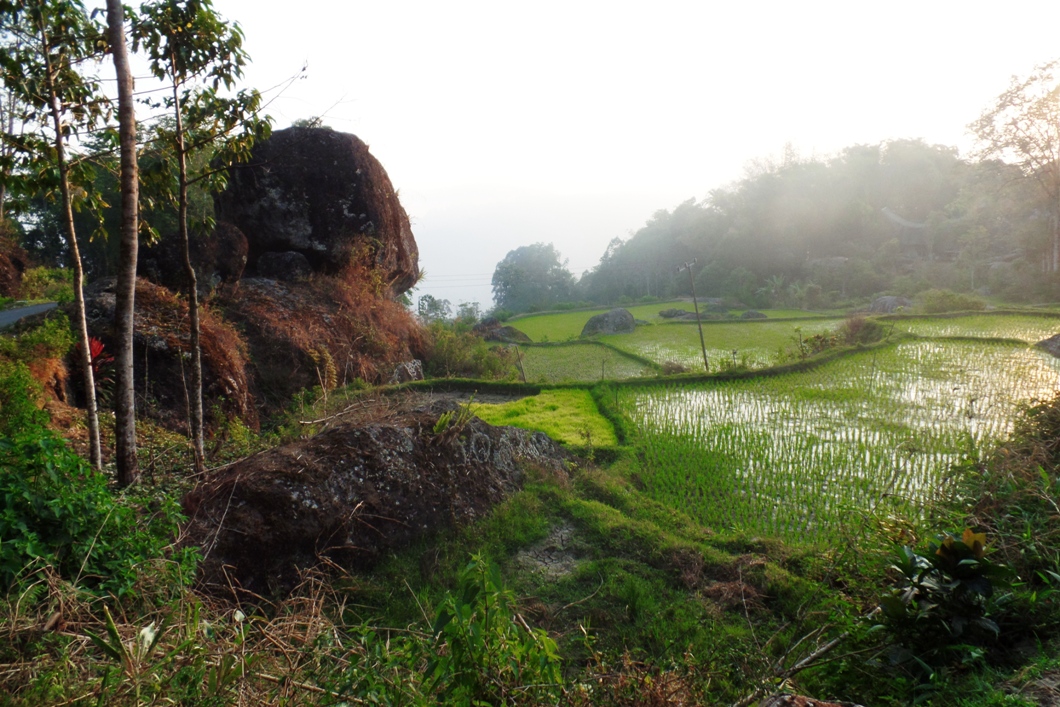
That afternoon we walked to Lokomata, a nearby village. The route was along a concrete road but on the way I saw some of the finest views of rice terraces I have ever seen.

???????????????????????

Lokomata itself was also very impressive. It was where some of the wealthier Torajan people had been laid to rest in holes which had been slowly chinked away out of the face of a large rock-face.

???????????????????????

Just before sundown we made our way back to Batutmonga, and Yos had prepared a small feast for us of rice, vegetables, fried eggs, and tempe. I washed it all down with a Bintang and then retired to my room with a book. I fell asleep very early that night.

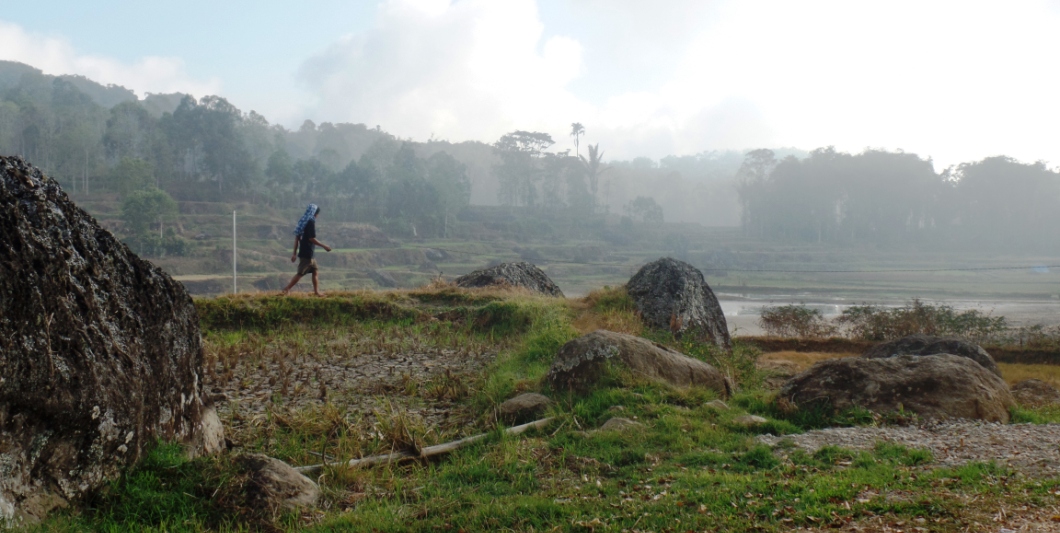
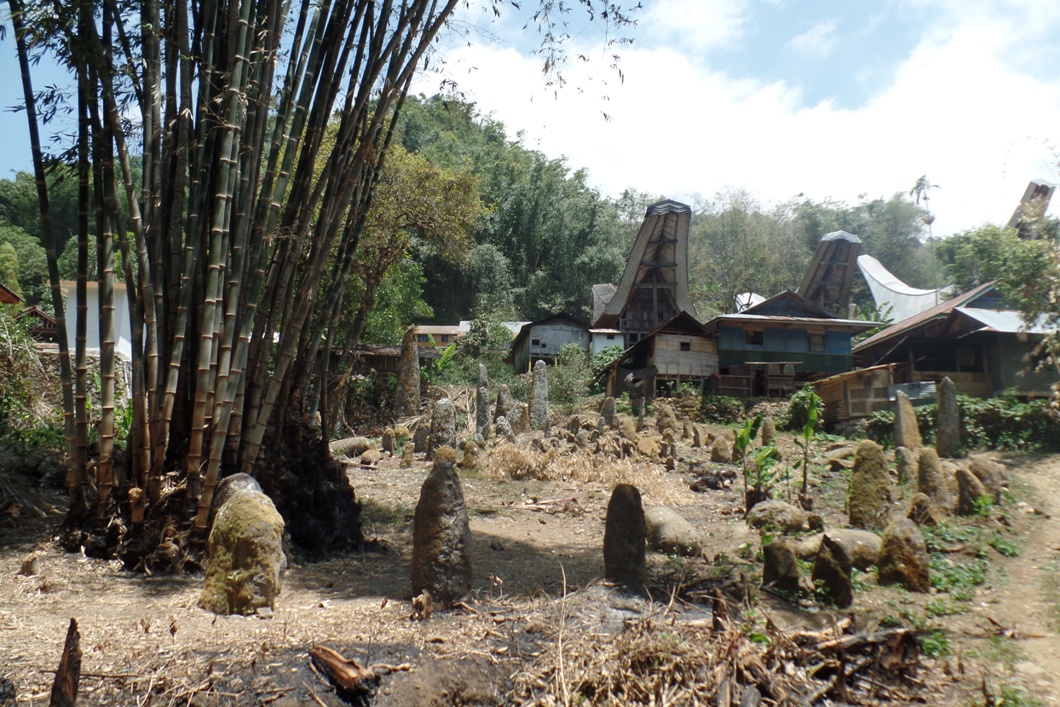
Throughout the days which followed we embarked upon a series of short hikes through the majestic landscape of Tana Toraja, and we passed through many terraces, forests, burial sites, and villages along the way. We also came across a few mysterious megalithic stone monuments which could almost have been lifted straight out of Celtic Britain.

???????????????????????

With its almost mythical landscape, scattered with large grey boulders, one can see how the generations of natives here might have developed weird, magical, and wonderful customs.

???????????????????????

There is something very special about Tana Toraja, and I am certain that it will one of the highlights from my trip around Indonesia.

???????????????????????

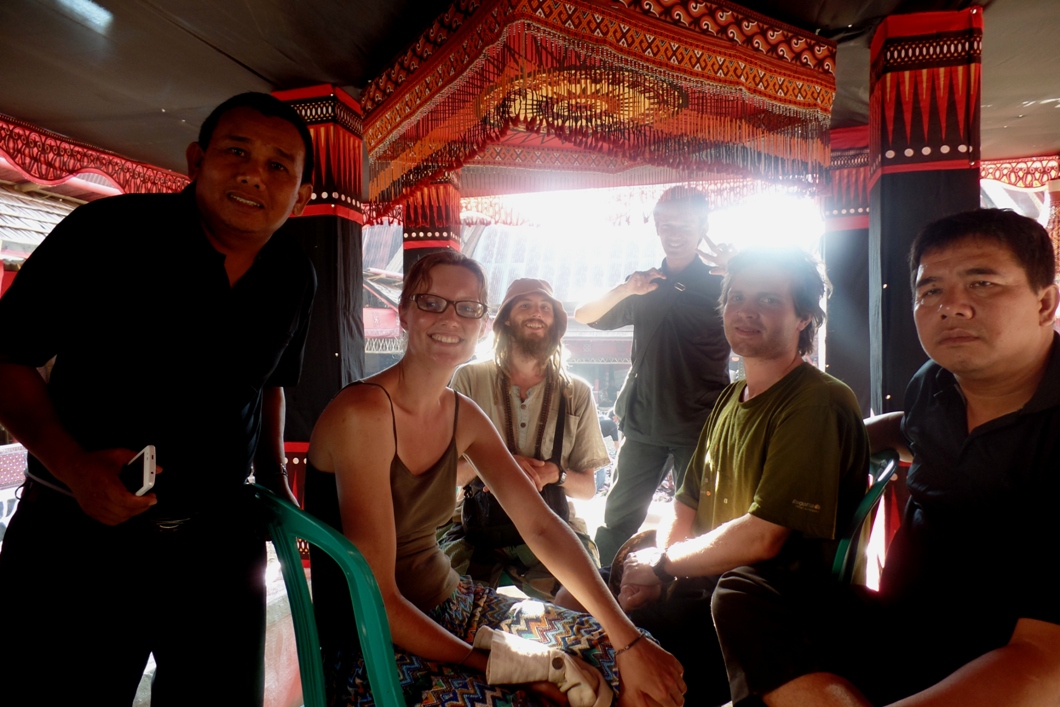
While staying in Batutumonga, we also wandered into another funeral. This was a bit smaller than the one we saw in Sangalla, but the people were very friendly and welcoming. They took us up to a small room to see the coffin of the deceased and then sat us down in a space usually reserved only for special guests.

???????????????????????

They then made conversation with us while supplying endless rounds of coffee. In the background, the butchered remains of sacrificed pigs were being dealt out to guests, and it seemed to go on for hours. We were eventually bequeathed a chunk of pork flesh each ourselves. It was a bit awkward having to then explain to them that the three of us were all, in fact, vegetarian, and had come to merely observe the mass slaughter of animals, but once they understood, there was much laughter.

???????????????????????

On the morning of our third day in Batutmonga we sadly had to say goodbye to Yos and her family. We packed our bags, again, and began to make our way back down the mountain by foot.

???????????????????????

This trail, out of all the ones we had hiked over the last few days, had the most spectacular views, and we passed through lots of charming villages.

???????????????????????

Five hours later we reached Bori. By then we were feeling hot, sweaty, and weary, so, after having a quick look around the village, we hitchhiked the rest of the way back to Rantepao on the back of a truck.

???????????????????????

???????????????????????

For more photos, feel welcome to visit my Flickr account. I must apologise, for there are quite a lot of them this time. I deleted as many as I could, I promise!