Travelblog LA#7: Medellín – Colombia

8th-15th May, 2023


I often struggle when it comes to writing blogs concerning time spent in cities. As a traveller, I am more inclined to rural places so unless it is historically noteworthy, close to some worthy day trips, has notable museums, or something else to draw me in, urban areas are usually my pitstops before heading to places that excite me more. And the things that I do enjoy about cities – such as their museums – are not the sort of things that are translatable into an exciting story for readers to hear about, so I will skim through them and simply give highlights.

But those of you who know a little about Medellín will know that history is certainly a box that it ticks. It was formerly known as the ‘murder city’ and ‘the most dangerous city in the world’. It was a lawless place of slums, gang warfare, militias and home to the infamous Pablo Escobar and his Cartel de Medellín.

Yet now it is known as the city that turned itself around, and this is something I will get into a bit later, but if you want to have a detailed account of how such a thing happened, there are plenty of places where you can read about it online. I often give historical context on this blog, but I try not to make such things too long-winded as it is foremost an account of my experiences as a traveller passing through places.

So, what was Medellín like for me?

If I am honest, many of the ‘attractions’ I visited as a tourist left me feeling disappointed, yet I still managed to have a good time and grew to love this place.

To explain this, I will start by giving you a rundown of the places I visited and explain why some disappointed me.

I spent my first day visiting museums. First, the Museo de Antioquia, which was – despite its generic name – exclusively an art museum. Overall, I did enjoy it, but most of you will know by now that my foremost interest is history.

So, I hoped to get more information of that nature at my next stop, El Museo Casa de la Memoria, a museum concerned with armed conflicts and wars within Medellín and the rest of Colombia.

Before I continue, I will first say that this museum is free to enter and I probably just happened to visit on the wrong day, so please don’t let what I am about to say stop you from visiting if you happen to be someone about to pass through Medellín. I have long advocated on this blog that when you are visiting countries that have endured hardships, you owe it to them to make an effort to understand their cultural content.

For one to get the most out of this museum relies upon using an audio guide you are instructed to download onto your phone, but on the day I came their wi-fi wasn’t working. No matter, I thought; I spent a considerable amount of my data allowance downloading the app, only to find when I opened it that kept malfunctioning. There seems to be an unresolved issue, so all I had to go by was the written information that accompanies the displays, most of which are translated into English, but I found to be mostly primarily generic statements about violence and war in general and very few facts about things concerning the Cartel, Pablo Escobar, and other matters.

One feature of this museum that I was able to appreciate, however – and thought was a nice touch – is the large screens in the middle of the room where they play video testimonials on a loop. They feature people from Medellín telling their stories. Mothers whose children went missing and spent their lives campaigning for justice. People who grew up in the slums and wanted to change things so joined grassroots movements. Victims of violence from elsewhere in Colombia who came here for better opportunities. Queer artists who moved here because this city is (somewhat) more accepting than their hometowns (but still has a long way to come). Former members of militias explaining what drove them to join and how they later reintegrated into society. I spent about an hour watching and listening to these stories, and – despite my disappointment elsewhere – they did make my visit overall worthwhile. Lived experiences are important when learning about hardships. They are the flesh of the story, and some similar museums I have visited in the past have lacked these and could learn something from this example here. However, whilst other museums have lacked this flesh, my visit to the Museo de Casa Memoria in Medellín was missing the skeleton as a framework to help me contextualise it all. If this museum manages to fix its problems – concerning its app – it could be an outstanding place, and if you are someone about to visit Medellín, they may have done this by now, so you should still definitely go.

I made an overnight trip to a little township called Jardín. It is a few hours away, but the journey passes through Andean villages. Many people end up staying here for a few days, as there are trails one can hike to waterfalls and caves, but one evening was enough for me. I went for a stroll up to Cerro Christo Rey to eat ate lunch whilst enjoying the view, and I also visited its church and a small garden known for attracting birds such as cock-of-the-rocks. Jardín didn’t disappoint me as a destination but neither did it blow me away.

I also made a day trip to Guatapé, a little town surrounded by farmlands on the shore of Embalse El Peñol. It is a bright and colourful place filled with cafes and artisan shops, making it a nice break from the (mostly ugly) metropolis of Medellín, but just as the lake itself is artificial – created during the seventies as part of a hydroelectric system – there is something that feels a bit over genteel about it.

Its main attraction is the nearby El Peñón de Guatapé, a geological oddity a few kilometres away.

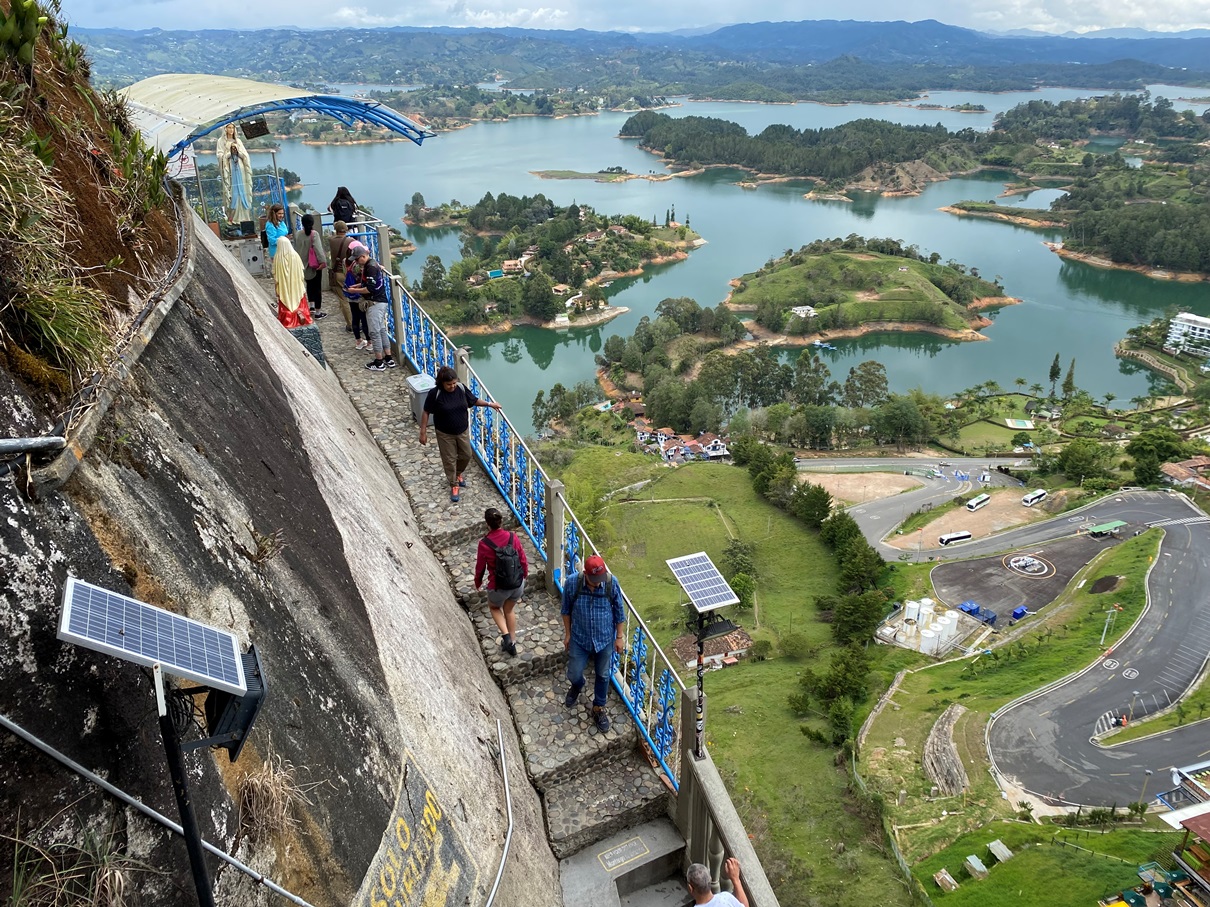
After one has climbed up the many steps to reach the top, there are some truly spectacular views of the surrounding area, but the ambience is somewhat compromised by all of the loudspeakers the owners have planted around the place broadcasting a long list of fines one can be charged for various infractions whilst making your way up and down in the conveyor belt of passing crowds. It seems like the place has become too popular for its own good, and the family who own it are very aware that people will come and pay their money no matter what. After my visit, I happened to read online that this was once a sacred site to the indigenous Tahamí, so it seems a shame what the current owners have done.

Many people who make the day trip to Guatapé do so as part of a tour that includes a boat journey across the lake and a visit to La Casa De Pablo Escobar; the ruins of one of his former vacation houses. This was something that I was tempted by, but after doing some reading decided to forgo it as I discovered that access is controlled not by the community but rather by a former employee of Escobar, and thus – as far as I know – going straight into his pocket.
I have saved my biggest disappointment from my days spent in Medellín until the end – and after that, I will get to the good stuff, I promise – and the award goes to my day trip to Arví, a park on the outskirts. I had previously heard high praise for this place from other travellers who had visited over the years, but I have a feeling that this reputation it has built for itself is about to come crashing down after some recent changes that they have made.

I was surprised to discover that they have brought in new rules. Ones that require you walk its trails with the assistance of guides. Now, I have several problems with the way they have done this. Let me explain.

  1. This park takes a while to get to. First, you need to catch the metro, followed by a cable car system. The cable car is expensive (by Colombian standards) and it is my understanding it is owned by the park, so I imagine it is probably how they used to make most of their money (as most people would have no other reason to use this cable car other than to visit the park).
  2. This is a place people mostly hear about from travel guides and online, and almost all of these sources still state that it is free. The station you catch the cable car from has no information concerning any other charges either, meaning most people taking this long (and pricey) journey are still doing so on the premise that entry will be free. Some will end up paying because they feel like they have to after coming all this way, whilst those who refuse to pay will feel like they have wasted their time, and almost everyone is going to be annoyed. The woman at the (newly created) admission desk seemed embarrassed when she explained it to me, so I have a feeling they have been getting a lot of pushback.
  3. You don’t need a guide for this place. It is a park on the outskirts of a city with well-marked trails. It is not big enough to get lost in, and the climate is mild. In terms of wildlife, you are unlikely to come across anything more than some birds and maybe a squirrel or two.
  4. I have come across this trick of enforcing unneeded guides upon people before (it is becoming increasingly common in Asia), and trust me; nobody gets a fulfilling experience out of this. The people being ‘guided’ feel duped and frustrated, and the ones ‘guiding’ often adopt a passive/agressive mien to cope with the tension. Even if you try to be polite to each other, the energy is awkward. Imagine being one of those guides and your job only existing because it is an unwanted ‘service’ being imposed upon people, and spending your days walking disgruntled people around under the pretence that you are needed when you are most definitely not. It must be soul-destroying. There are many other ways people can create jobs. They could set up ziplines, open cafes, butterfly farms, or museums. The list is endless when it comes to creating opportunities for people to have valid and rewarding careers if they are innovative enough.
  5. I do understand how capitalism works and that Arví Park is a private corporation, so I would have happily paid a moderate fee to enter but it is currently a whopping 50,000 Colombian pesos for foreigners, whilst locals pay 15,000. Not only do I not want to pay that much Gringo Tax out of principal, but I honestly don’t think this place is worth it.
  6. Did you notice me saying that I would have happily paid a moderate ‘fee’ to enter? Well, that’s it. I go for walks in places like this for some peace and in the hope that I might be able to see some birds. I am not going to get either if I am lumped with a group of other people in a ‘tour’.

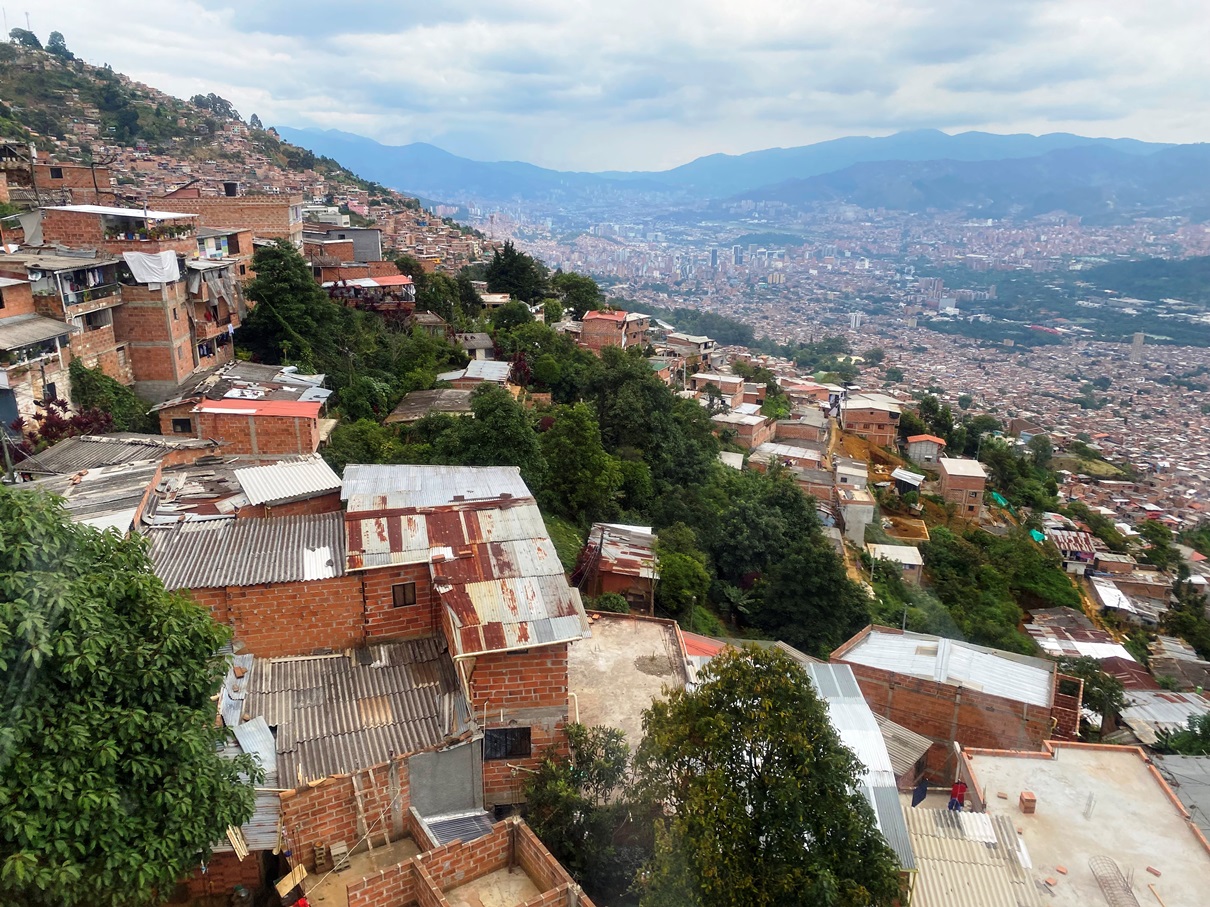
But on the bright side, there were some nice views of the city from the cable car. It just wasn’t quite worth the disappointment of the destination.

So you are probably wondering what exactly it was that I did like about Medellín. I have already said that it is quite an ugly place and most of its ‘attractions’ were disappointing.
Well – and I realise that this is going to sound very, very cheesy – but it was most definitely the people. Medellín is a place where I made friends, both ones that were born and raised in Medellín or are originally from elsewhere. Some move from the Caribbean coast for the cooler weather, some migrate from Bogotá because it is a little warmer, and almost all enjoy its modern transport system, safer streets, and wealth of opportunities. It is a city known for its rich nightlife and the arts, and the reoccurring theme for almost all of its residents – where ever they come from – is that they are all very proud of it.

On my last day, one of my friends – Juan – took me to Comuna 13.

Just in case some of you haven’t heard of it, this was once – out of all Medellín’s slums – the most dangerous of all. As recently as in 2002 it was attacked by the Colombian Military during their infamous Operación Orión, which aimed to clamp down on all the gangs and rebel groups but was a disaster. Civilians (including children) were killed in the crossfire, and the residents took action not by using aggression but rather coming out onto the streets in a series of peaceful demonstrations. This was when the community began to change and turn itself around, and gradually, over time, these grassroots movements built momentum.
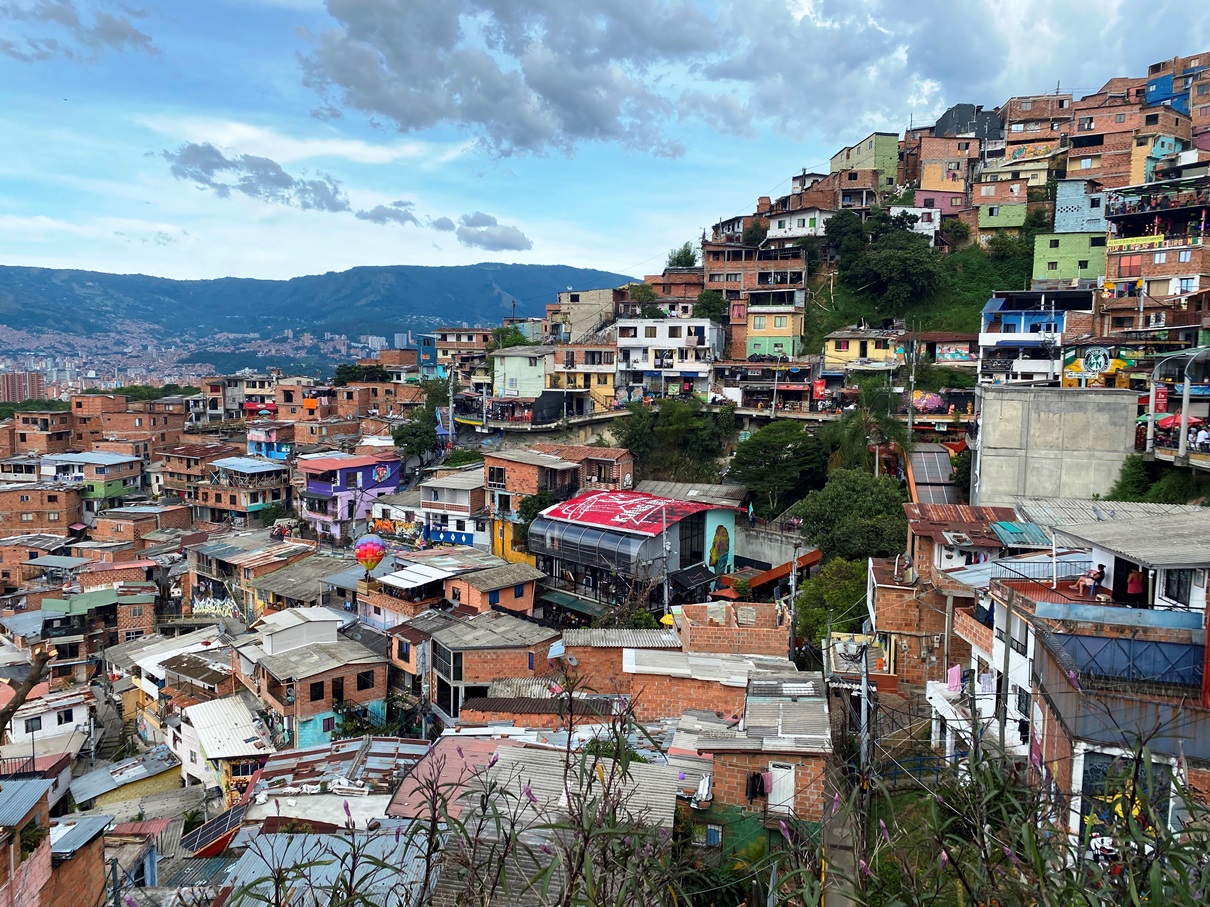
It took a while, but Comuna 13 is a place now known for its graffiti art, bars, markets, and street performers. It is safe enough for tourists to come and visit (as long as they keep to the main strip and do not walk alone). Local businesses run tours where people can learn about its history, but they can also, if they like, merely wander around and soak up the atmosphere whilst having a drink or trying some street food and appreciating everything else it now has to offer. Despite its history, it is a surprisingly uplifting place now, and – despite being much safer – it still has a ramshackle charm and just that right amount of chaos to have not lost its personality.

That afternoon I spent in Comuna 13 is the time that will foremost stay in my mind when I think back on my time at Medellín, as it perfectly encapsulates what it is about as a city. Once it was a place that thousands of disadvantaged people migrated to in the seemingly vain hope of creating opportunities for themselves, and as they built their slums on its outskirts and the gangs and cartels took over, it seemed its destiny was inevitable. But, somehow, Medellín overturned the odds, and it wasn’t something it achieved through force or the actions of a draconian government, but through the community banding together and embracing the arts and socialism. Medellín truly is an amazing place with an amazing story.

Click on the following links for more photos of Medellín and Jardín.
 

Travelblog LA#6: Popayán, Tierradentro & San Agustín – Colombia

2nd – 7th May, 2023


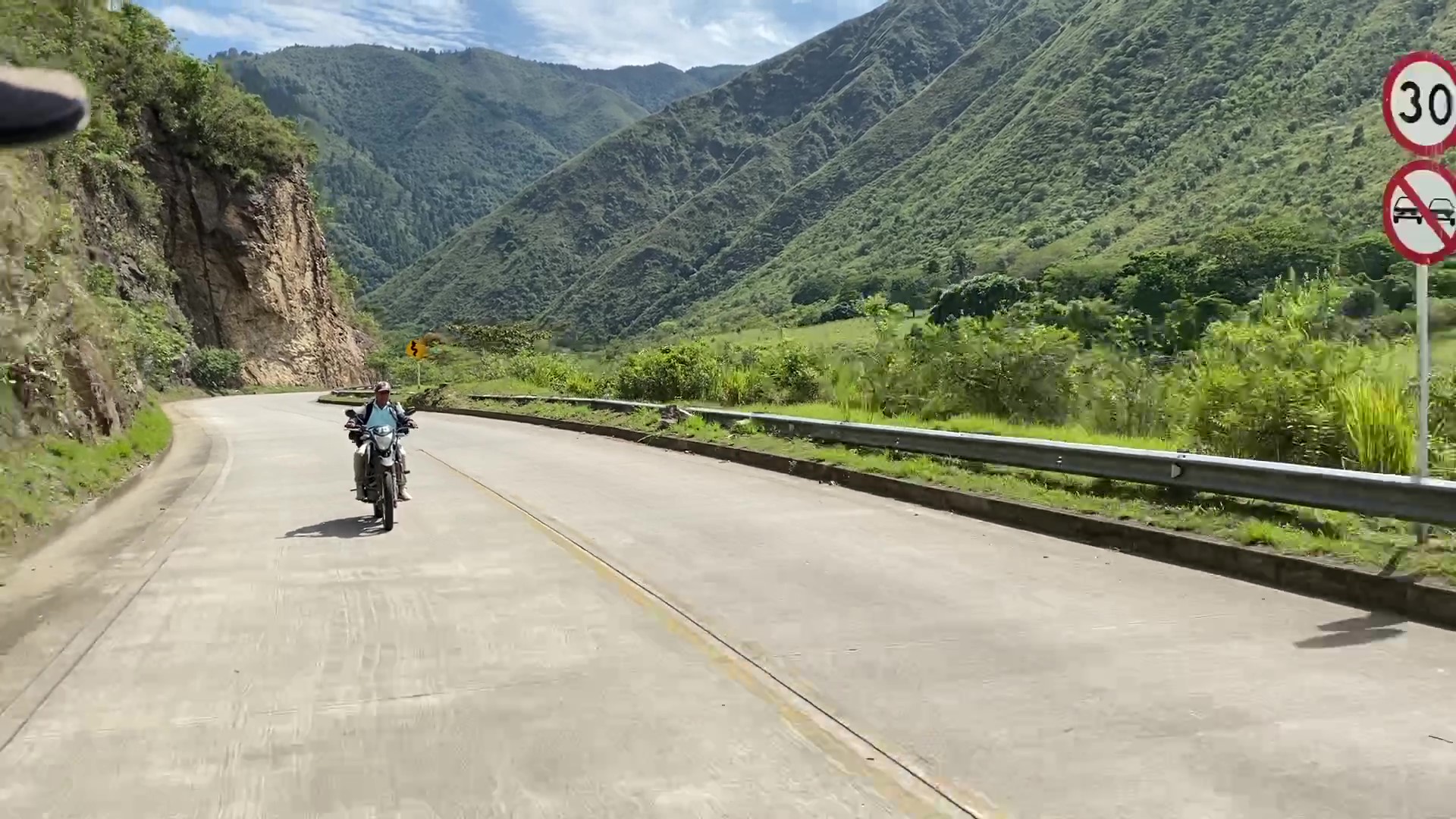
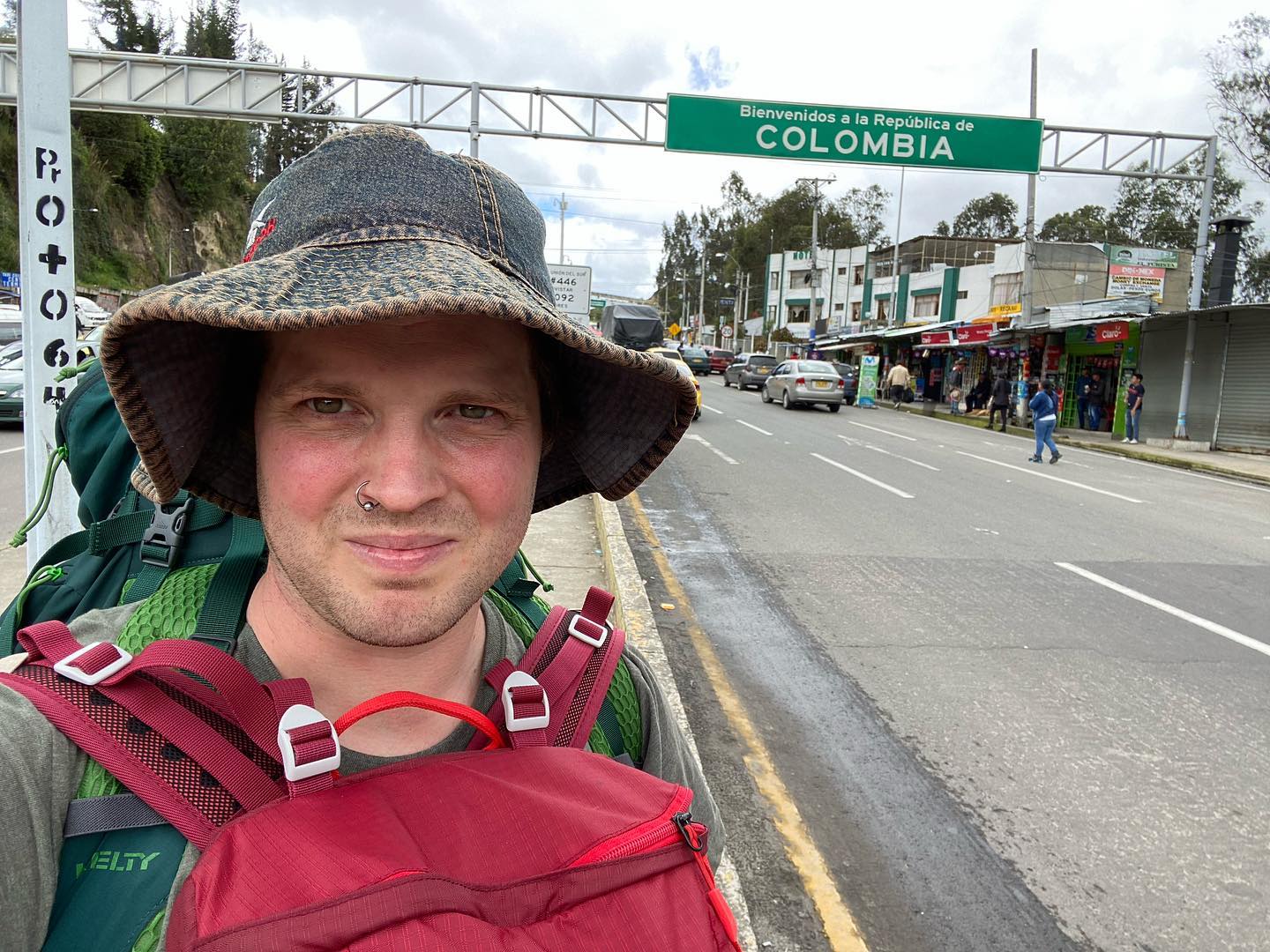
The border crossing into Colombia was smoother than I expected – no queues, bag inspections, or questions – but it was rather the journey after that was choresome. Due to recent landslides, a bus that was supposed to take seven hours took over ten, meaning it was late into the night when I finally arrived in Popayán. I was worried that it would be too late for the hostel wouldn’t let me in, but after ringing the doorbell a couple of times, a man came out and greeted me.

I was surprised by how empty it was as he showed me around. This hostel was one of the cheapest and best-rated in the entire town, but my dormitory of twelve beds only had another two people sleeping in it, and most of the private rooms were empty. This would become a reoccurring theme over the next week during my time in the south of Colombia.

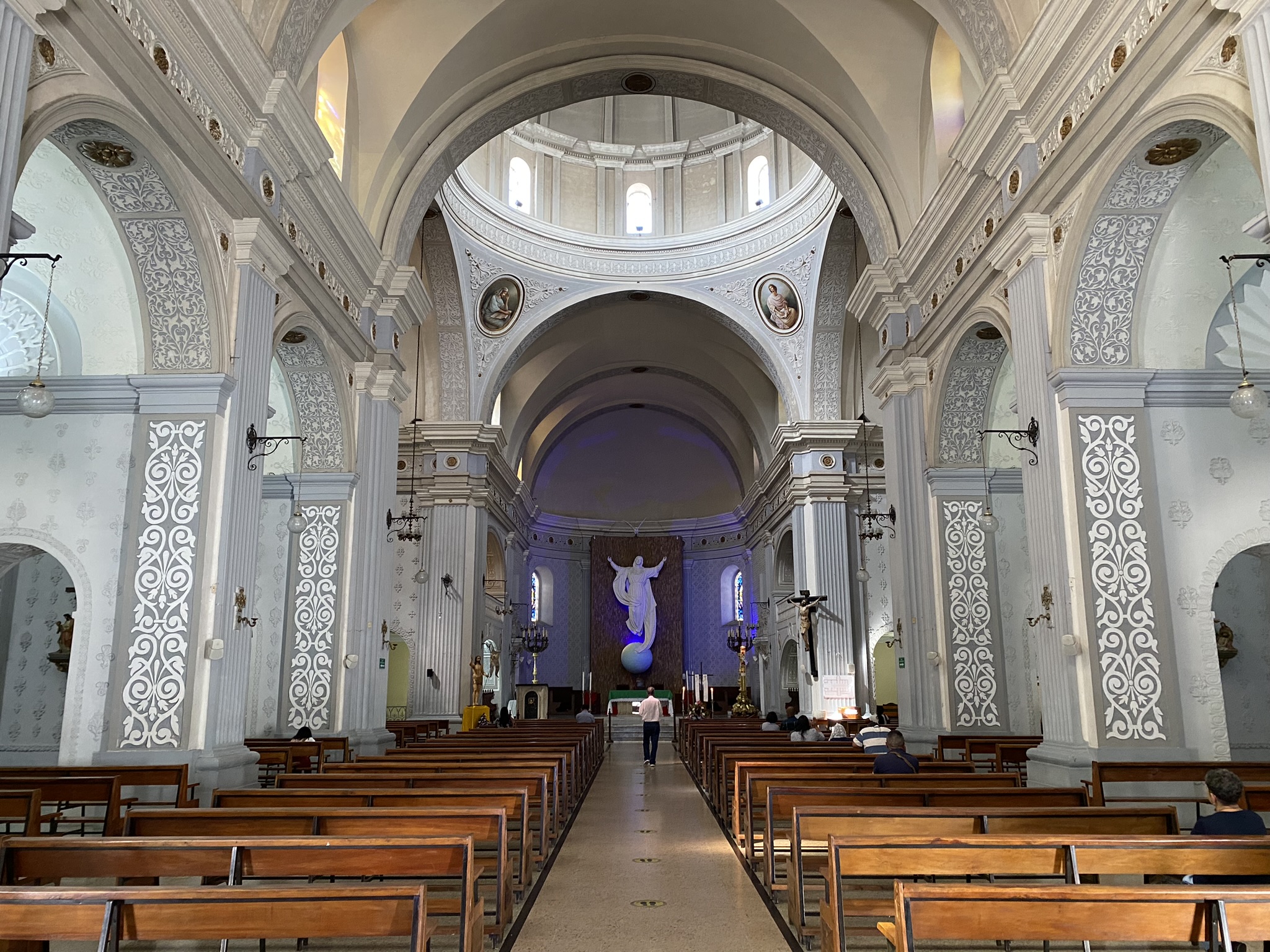
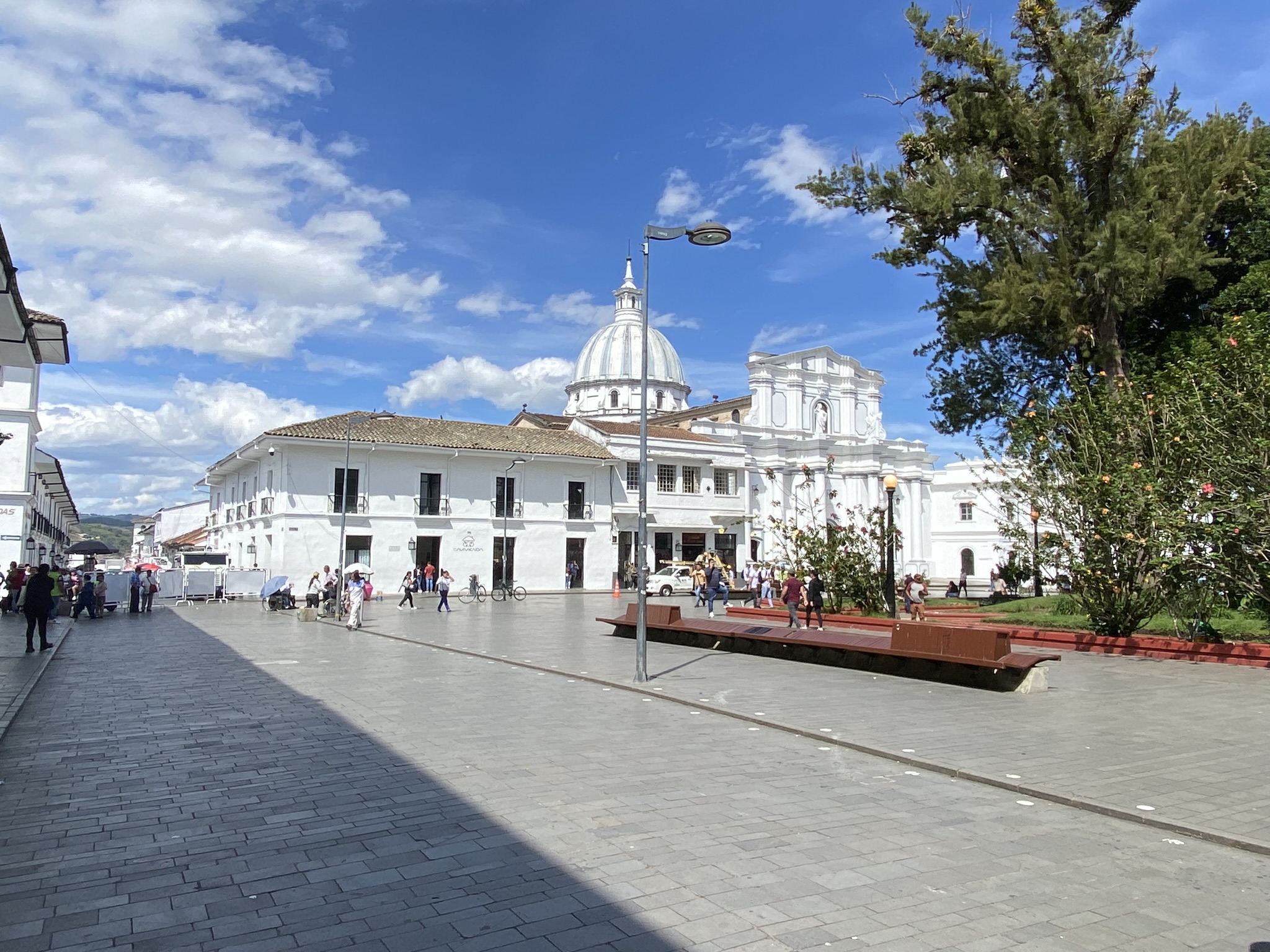
Popayán is a charming colonial town in the Pubenza Valley, most famous for its white buildings and being home to seventeen Colombian presidents. Unfortunately, I found many of its attractions – such as its churches and museums – to be closed, but I did manage to get inside its cathedral.

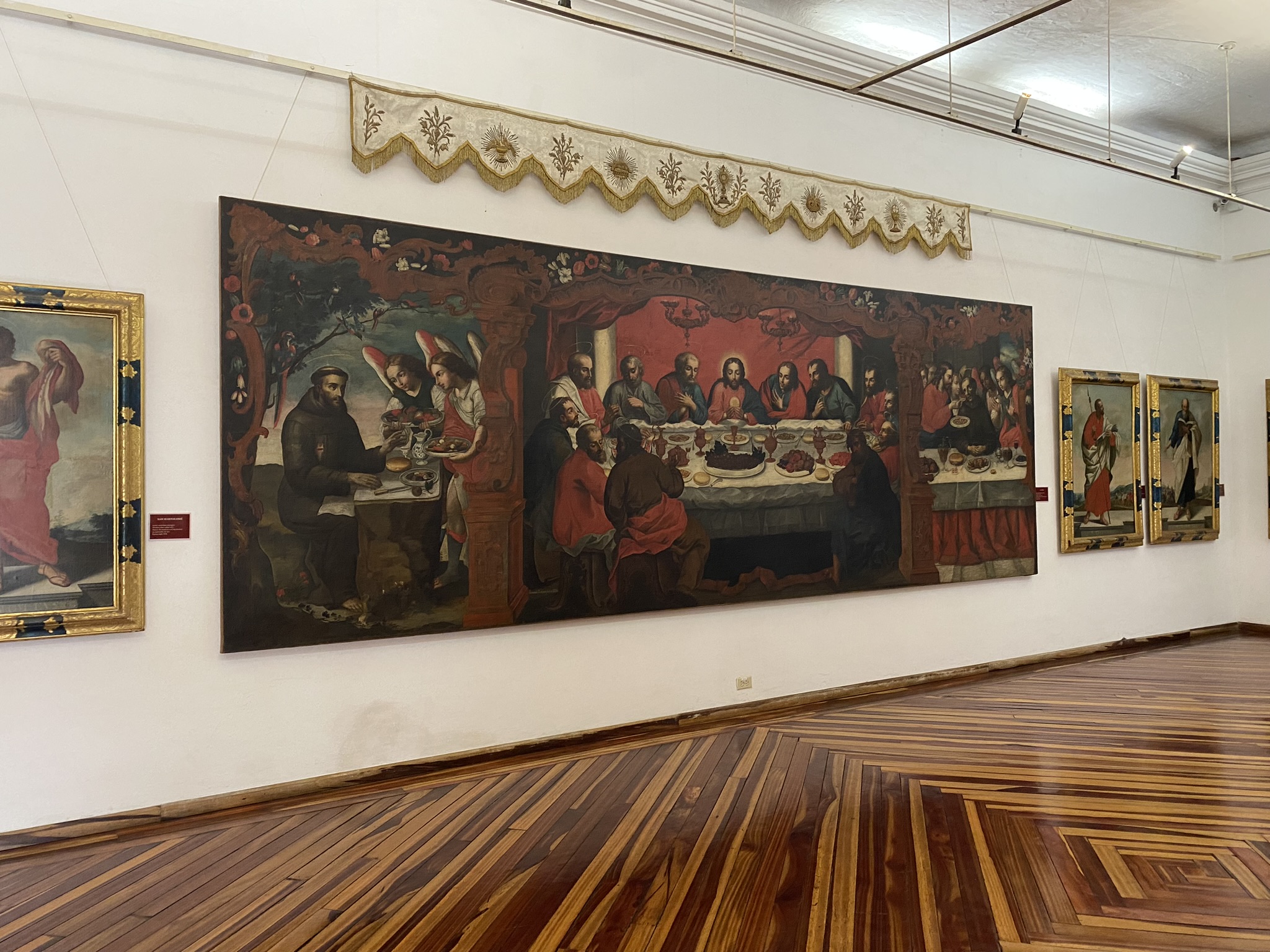
Along with the Archdiocesan Museum of Religious Art (once I rang the bell a few times).

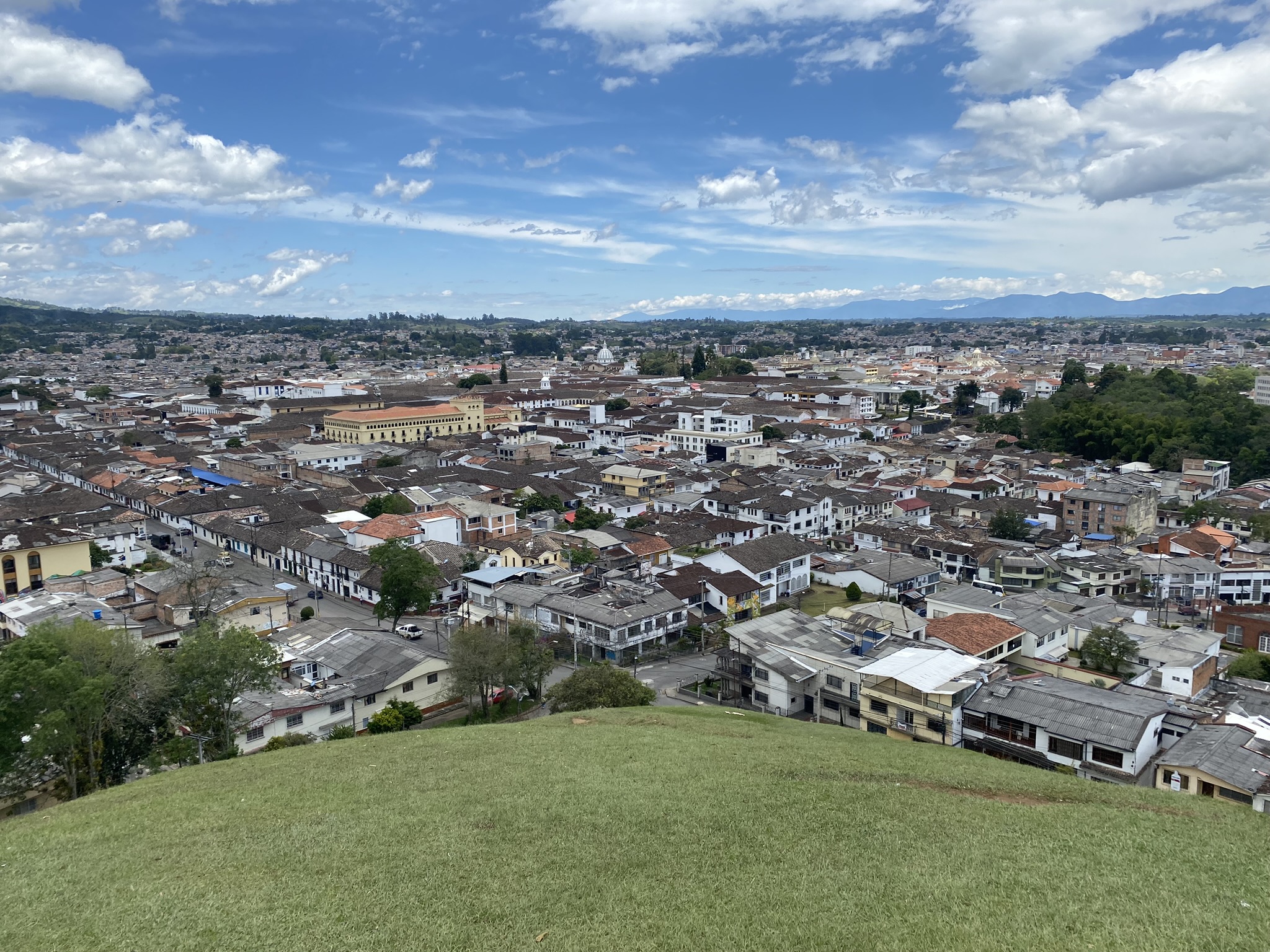
I also went for a walk up El Morro del Tulcán, which is supposedly a pre-Colombian burial site, but I didn’t see any signs of any ruins. It did, however, have views of the city.

Other than that, it was a day when I got my bearings in this new country. Purchased a SIM card. Drew out some money. That sort of thing. The following morning, I rose early to catch a taxi to the bus station in time to claim a seat on a bus heading to Tierradentro.

A reoccurring theme of this area will be, ‘Where is everybody?’. I had asked a few questions by now and was told by others that the south of Colombia doesn’t receive too many tourists as it is, and we are currently in low season. I was still a little confused. I usually travel to places during low season – as I don’t like big crowds – but it had been quite some years since I had witnessed a low season quite as ‘low’ as this. Usually, when a place is this quiet, it will be because of a recent natural disaster or adverse weather, but I couldn’t see any sign of either.

After checking in at a hostel, I went straight to the admission office for the archaeological park, and as I filled out my details noticed that I was their only visitor that day and one of less than a dozen over the past week.

For a place that sees such few visitors, Tierradentro does have a lot of staff, all of which immediately tore their attention away from their phones and seemed happy to let me into the various hypogeums.

This site is not the most photogenic, so I don’t expect my photography to do it justice, but it was rewarding to visit. Not much is known about the culture that created these monuments, but archaeologists have dated from between the 6th and 9th centuries. I am someone who likes to study the history of places I visit, so a part of me yearned for answers, but I also have a fondness for mysterious places.

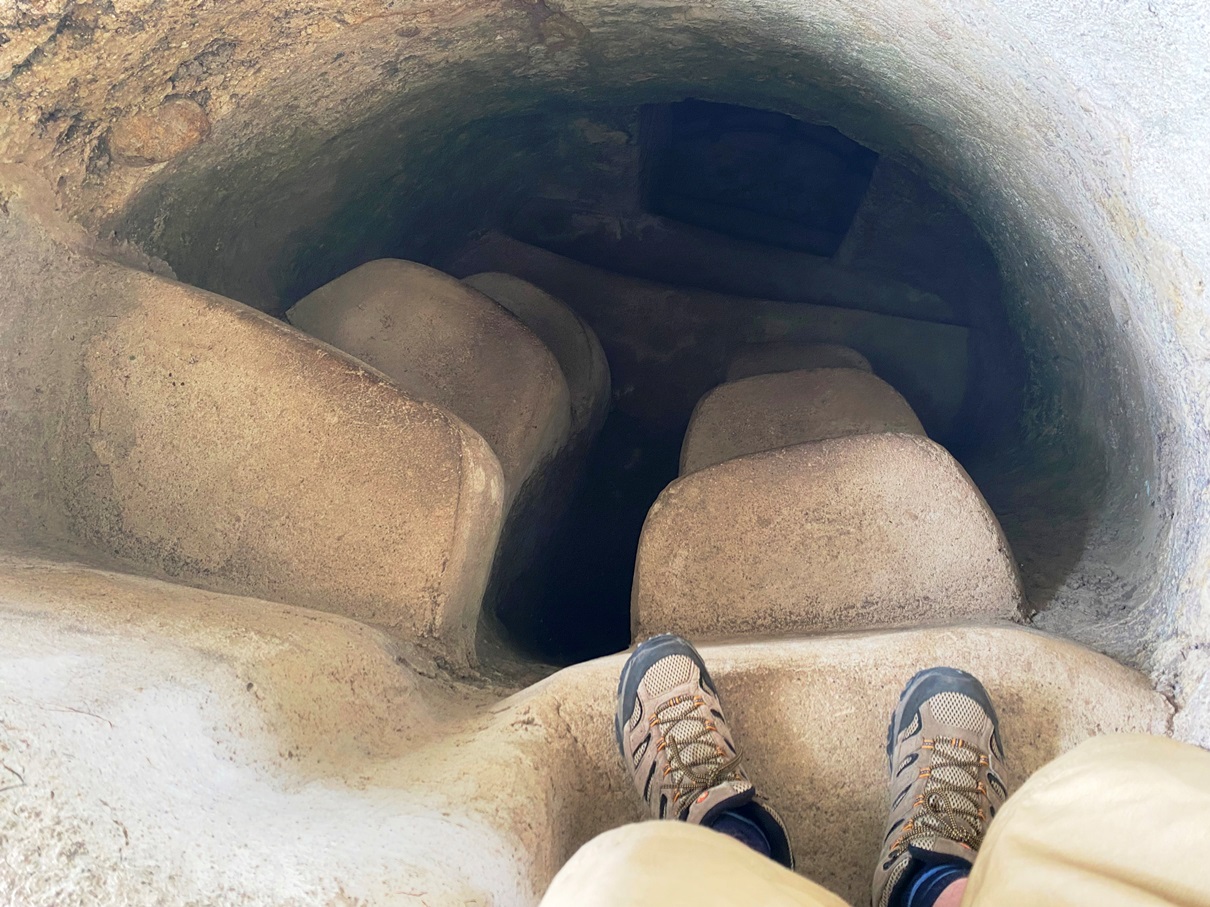
Most of the entrances face towards the west, and many feature anthropomorphic carvings and geometric patterns on their walls.

Once I had finished clambering in and out of all the hypogea I was allowed access to in the Alto de Segovia – the main site located closest to the admission office – I walked along the trail to reach El Tablon. It was then that I began to appreciate just how much Tierradentro had to offer as a destination, not just because of its ruins but also its scenery, situated in a beautiful valley surrounded by little hamlets and farms. This was my first real glimpse of rural Colombia.

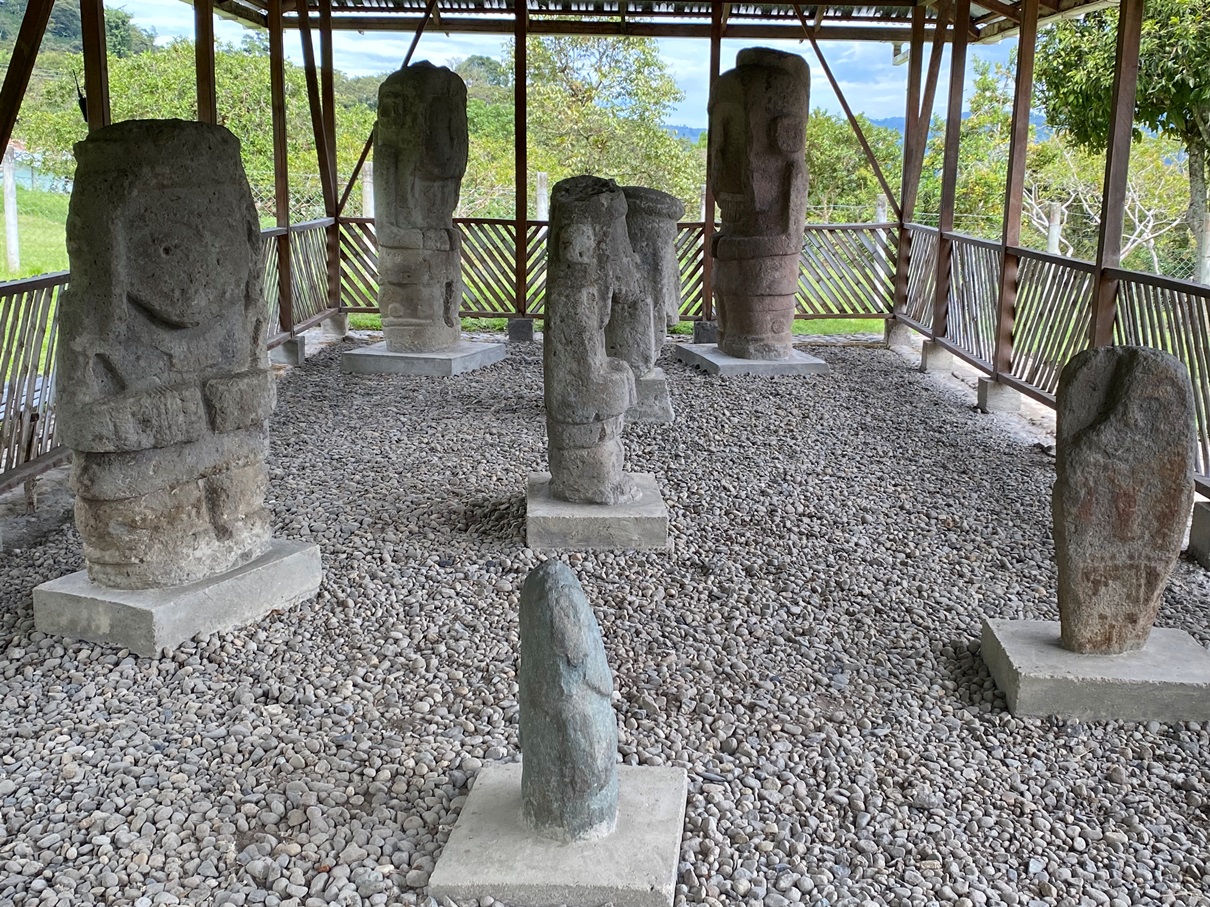
After passing through El Tablon – home to a series of anthropomorphic statues – I stopped at the village of San Andrés to hydrate myself before heading to the last two sites, both of which involved a rather strenuous climb.

It was around 3 pm when I reached Alto de San Andres which had yet more hypogea that I could climb inside. One of them in particular was very well preserved with original paintings.

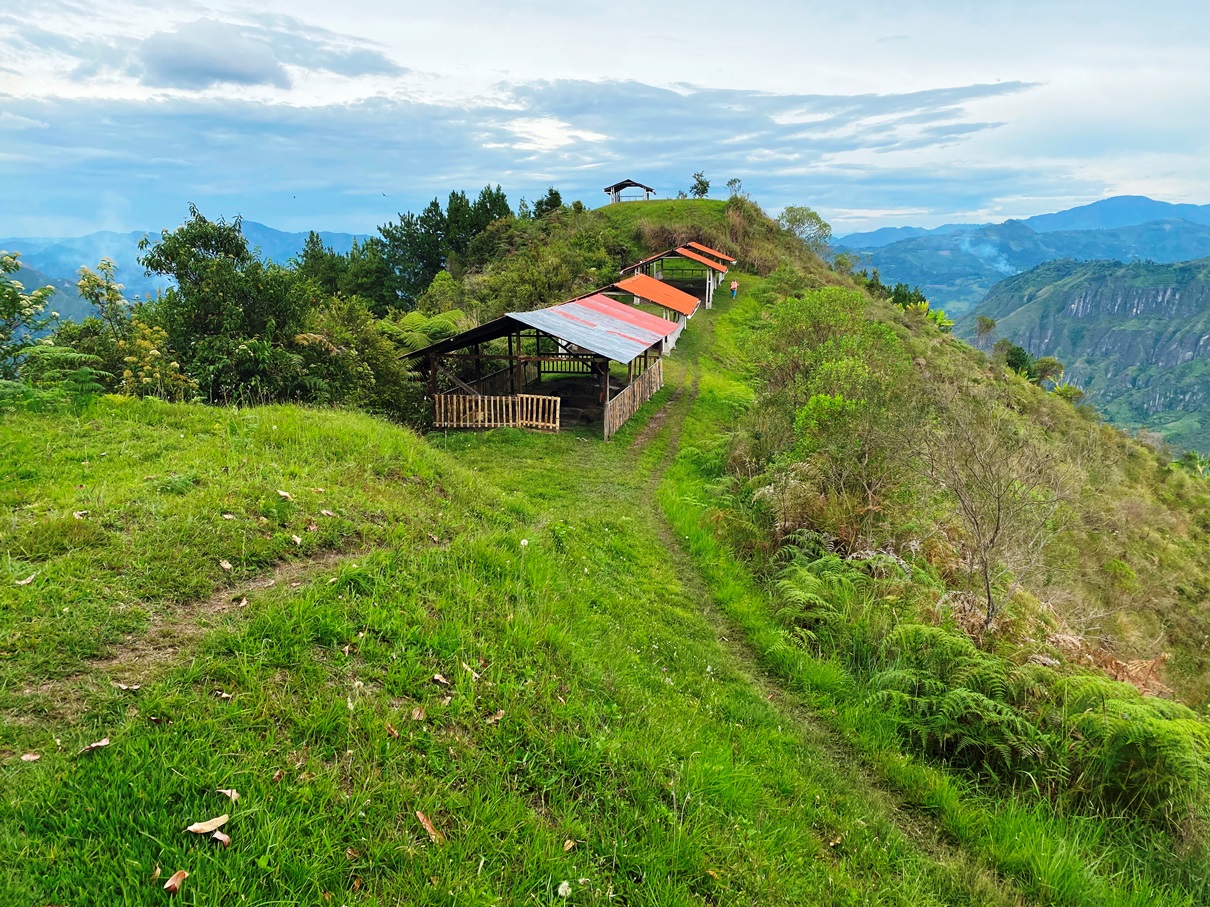
And then I set off for El Aguacate (‘the avocado’), the peak of the mountain overlooking both Tierradentro and San Andres. It was a bit of a tough climb – especially considering the heat – but it was worth it for the stunning vistas.

If I am honest, once I reached the top, the hypogea located there we neither as impressive nor as well maintained as most of the others I had seen that day, but I was still glad I came up there for the setting itself.

It was there that I also met a Belgian couple by the names of Mari and Tom. This was their second day exploring these ruins, and they were also coincidentally staying at the same hostel as me. We swapped some stories and realised that we were both travelling to the same destination the next day – San Agustín – so decided to band together. I was quite pleased by this, as my recent experiences made me appreciate the idea of safety in numbers.

Overall, I liked Tierradentro and think it deserves to be visited more. It has everything going for it. A UNESCO World Heritage site, with stunning scenery, well-maintained paths, and a smattering of (mostly empty) hostels waiting for guests. I guess there are a few reasons it doesn’t get the attention it deserves. Colombia, as a country, is not known for its ruins, and among the few ancient sites that it is known for, Tierradentro is overshadowed by Ciudad Perdida and – the more local – San Agustín.

I think the real problem, however, is transport. It is a bit of a pain to get to. There are buses from Popayán, but mine dropped me off at a junction two kilometres away, and I had to walk the rest with all my bags. And then, if you are travelling on to San Agustín – like most visitors to this place seem to – there is no direct bus there either, so the onward journey is a bit of a hassle. We had to catch a two-hour colectivo to La Plata, followed by a four-hour minibus to Pitalito, and finally another colectivo to San Agustín. With all the waits between, it took us most of the day, and the first colectivo was one of those trucks with a pair of benches at the back that we were crammed inside, and by the end of it our bags, clothes, and hair were all covered in dust. Personally, I don’t mind these kinds of days too much – as long as I don’t have to do them too often – as, despite the discomfort, there is a certain novelty to watching the scenery pass you by whilst feeling the wind in your face. You get to see a different, less touristy side of a country.

It seems that Tierradentro is caught in a rut that it is yet to climb out of. It is not busy enough for shuttle buses between it and San Agustín to be a viable enterprise, and yet the absence of such a service is making people shy away.

After the attempted robbery during my last day in Ecuador, one thing I have been particularly mindful of during my first week in Colombia is that I do not want it to define the rest of my journey. I am more mindful about certain things, definitely, but I don’t want to become one of those travellers who clutches their bag tightly the whole time, eyes every stranger that passes by suspiciously, or flinches away every time a local person offers them help.

I can happily say that Colombia has made this very easy for me. Everyone I have met so far has been warm, welcoming, and helpful. I have already mentioned the staff at Tierradentro, but on this blog, I always try to also want to give shout outs small businesses that make an impression on me, so I also want to recommend Hospedaje Bamboo. The couple who own it are very friendly and helped me figure out transport options before I left. It is not one of those places that can be found online or are listed on Google Maps, but you can’t miss it if you walk up the street a little from the entrance to the site. They also run a shop downstairs and – most importantly – have a very cute doggo.

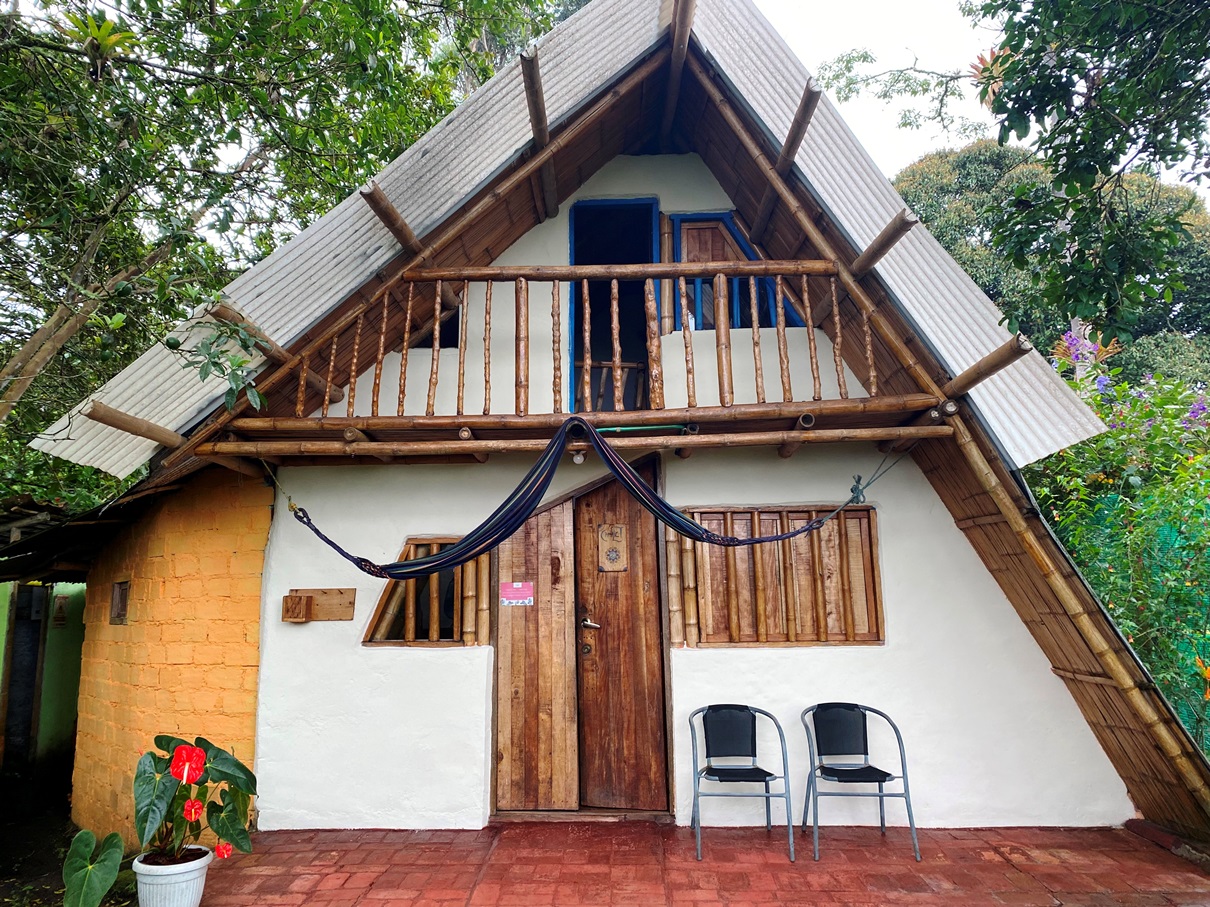
Similar can be said for the place I stayed in San Agustín, Finca El Maco, an ecohotel set within some lovely gardens. I booked to stay in their dorm, but because the place was nearly empty, they upgraded me to a chalet, and they went out of their way to help me feel at home during my entire stay, despite how little I paid, and the incredible deal they gave me.

Although my hostel was almost empty, San Agustín is more connected to the tourist trail than Tierradentro, so I was not the only person visiting its main attraction the following day.

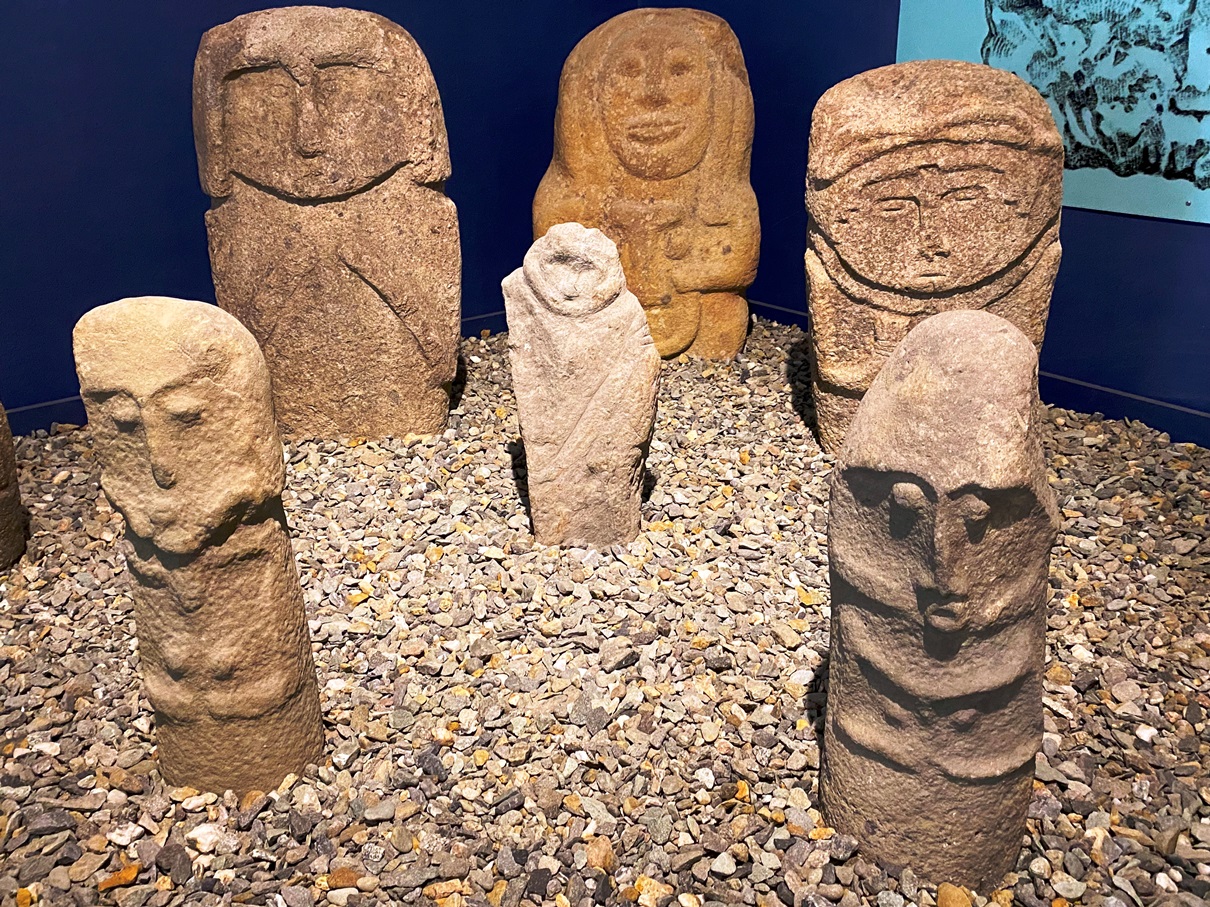
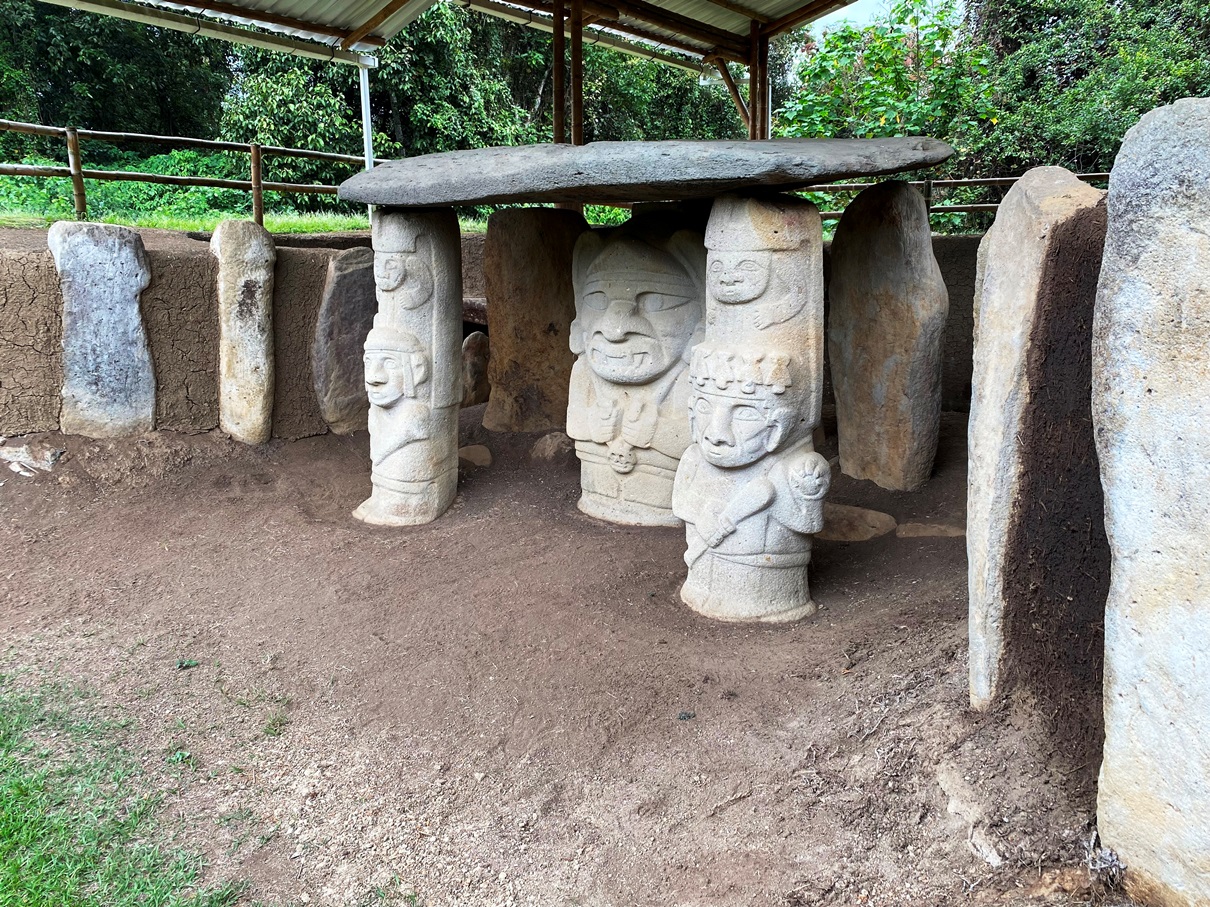
The monuments are more photogenic than Tierradentro’s hypogeum but no less mysterious. Not much is known about this culture either, but there does appear to be a connection between them as the two sites do feature some similarities, such as in their anthropomorphic statues.

As someone who has also explored a lot of neolithic sites in my home country, I found it quite eerie that some of the photos I took looked like they could have almost been taken in the British Isles. And no, I do not think it is aliens – it is most definitely always humans – but synchronicity is something that I have encountered again and again during my travels, and I find it fascinating.

San Agustín also has an on-site museum with information in both Spanish and English, and there are guides available to hire at the entrance. I decided to forgo hiring a guide, as being alone meant it would have been expensive, and not much is known about the civilisation that built these monuments anyway so I am not sure how much reliable information they will be able to give you beyond a series of speculations and perhaps some anecdotes concerning the excavations. If you are travelling in a group and/or have some money to splash, it could be worth it – and you would also be helping to support local workers – but one thing I will say is this; make sure you don’t miss any parts of the archaeological site. It didn’t escape my notice that very few people with guides ended up venturing to the Alto de Lavaplatos, for example, which just so happens to be the one that involves walking up a hill. This is a phenomenon I have noticed many, many times, and I can’t help but suspect that it is sometimes because the guides become jaded over time about which parts of the sites are ‘worth seeing’, and they don’t want to walk too far.

There are two other smaller sites that one can visit with the same ticket, and I did look into options to get to them, but transport turned out to be a lot of hassle. San Agustín sits within the slightly frustrating intersection of not receiving enough tourism to have convenient bus services but being popular enough for the taxi drivers to have pulled off the ol’ tourist town classic of setting their tariffs for rides artificially high. So, once again; if you are in a group or have some money to splash, it could be worth it, but if you are a solo traveller on a budget, there are currently no viable options.

Despite this slight niggle, I had a great time in San Agustín and am glad I came. More people should explore this beautiful and fascinating part of Colombia.

If you want to see more photos click here. I also have albums for Popayán and Tierradentro.


Travelblog LA#5: Attempted Robbery and Burundanga Drugging in Quito – Ecuador

1st May, 2023


Those of you who follow me on social media will already know that I had a bit of a scary incident on a bus recently, and I have decided to give an account of what happened. This is not because I desire sympathy – not necessary; I was not harmed, and I managed to recover my possessions – but rather because I want this blog to reflect all facets of this journey I am taking. Also, to potentially help other travellers who might end up reading this. As a backpacker with over three years on the road under my belt, I am well-versed in all kinds of scams they warn us about, but this particular method they tried to use on me was not one I had heard of before.

It started when I got on the bus at Terminal Carcelen in Quito. I was heading to Ibarra as it is closer to Colombia, and I wanted to get a head start for my border crossing the next day.

Just as the bus was revving its engine, a man came to me pretending to work for the company. He sprayed some stuff on my hands (which he pretended was hand sanitiser, but I later came to suspect was something else), and then placed my bag in the luggage compartment above my chair before telling me to fasten my seatbelt.

I will preface what happened next with a little caveat; I was a bit foggy-headed that day as I had arrived back in Quito late the night before (having just come from the Amazon), so I was tired and not fully acclimatised to Quito’s altitude. But, a couple of minutes later – after the bus had driven out of the terminal – I suddenly felt a sense of unease. I realised that I had zoned out for a couple of minutes – almost like I had drifted out of my body a little – and now I had ‘zoned in’ again, I was feeling a bit disorientated. I blinked a few times to help clear my mind and noticed something peculiar.

The other people on the bus were not wearing their seatbelts. And some of them had their bags on their laps.

I turned around and looked up just in time to see the man in the seat behind me make a sudden movement. My bag was closer to his seat than mine now, and I immediately knew then that something was wrong. 

I grabbed it to find it was fastened closed, but didn’t seem full enough, so I opened it to find that my laptop, camera, Kindle, and power bank were missing and immediately went into panic mode.

I asked the man where my laptop was – as it was obvious that he was the culprit – and he seemed to panic too. He pointed to the front of the bus and told me to go there. That my things were there.

I obviously knew he was lying, but I went to the front of the bus anyway – taking my bag and what remained of its contents with me – so that I could get the driver or someone to help.

But as I was walking, the man yelled at me again. He was now gesturing to the place underneath my seat, where I looked to find my laptop. I grabbed it – feeling a huge amount of relief to be holding it again – and then put it in my bag.

I then asked him where my camera was, and he – once again – pointed to the front of the bus only to call me back to tell me it had mysteriously ‘appeared’ underneath my seat.

I am not sure exactly how many rounds of this weird game of whack-a-mol we played – three, perhaps? – but I eventually recovered all of my things. As I was placing them back into my bag, the would-be thief talked to me. I didn’t catch all of it, and I don’t know if it was because of the altitude, the rush of adrenaline when I thought I had lost everything, or because his accomplice had possibly drugged me with that spray; but I was feeling very disorientated. I was just relieved to get my things back. From what I did hear, he was trying to gaslight me. Implying that it was someone else. That he had rescued my things. That I should be careful.

I knew he was lying, of course, but I didn’t know what to do. I felt scared. I knew by then that he had at least one accomplice – the man who pretended to work for the bus company and then vanished – how many other people were involved? At least ten people were sitting behind us. Why had none of them noticed what was going on? Why had none of them stopped him? Why were all of them – still – doing nothing? Was it because they were scared, some of them were involved too, or, did they simply not care?

I was very aware, during that moment, that I was a foreigner, and I was alone.

So – with all of these things going on in my clouded brain – I simply froze whilst clutching my bag. I didn’t want to sit down again because that would mean turning my back on him. I just stood there, watching him.

Eventually, he got off the bus, speaking some last words to me about being careful as he left.

It was after he left that I started to think a bit rationally again and thought to take some photos of him. I did so just in time to catch the side of his face.

And a few minutes later, I finally went to the conductor and spoke to him about what happened. I know I should have done this earlier – before he left the bus and got away – but I wasn’t thinking clearly or feeling my usual self. Also, whilst I can converse fairly well in Spanish now, it takes a certain amount of brain energy for me to hold conversations, and that was something that I didn’t have when I was feeling so spaced out and disorientated.

The bus conductor was somewhat sympathetic and got me to send him the photo I had taken. I am hoping that this means the people at the station will look out for him, and he will find it harder to target other people from now, but I don’t know how seriously they take these things in Ecuador. From what I have heard, I can’t even completely rule out the possibility that the conductor and bus company were involved too.

During the rest of the journey, I turned to some of my friends for support over Whatsapp, and almost all the ones from Latin America said the same thing when I mentioned the spray and how I was feeling.

Burundanga. Also known as scopolamine.

When you look up burundanga online, there is a lot of conflicting information. There are reports about police stations and hospitals recording people needing help after being spiked with it in their drinks, but in Latin America it seems to be more commonly sprayed in people’s faces during muggings and robberies; after which the victims either go into a daze or pass out completely. It is said to make you feel more passive and compliant if you stay conscious. There are also some wilder claims – such as criminals impregnating into paper and drugging people by handing them leaflets – and, finally, lots of sceptical first-world people giving their ‘opinions’ on whether it is real or not (whilst seemingly ignoring the lived experiences of thousands of people who claim to have been victims).

If you want my (unprofessional) opinion, here it is. I can understand why people would be sceptical about people being drugged by being handed pieces of paper – that sounds rather dubious to me – and there are yet to be any clinical studies on whether absorption of scopolamine in liquid form through the skin would be effective. I personally don’t see why the absence of studies makes some people feel like they can weigh in heavily either way though; I can only guess that they all feel very smart typing away at their keyboards whilst living in their much safer countries. Many substances are known to be absorbable through the skin, so it is possible. 

And even if scopolamine is not absorbable through the skin, that doesn’t mean that spraying it at people is not an effective technique, as it can still be breathed in, and people touch their faces much more often than they think they do (around twenty-three times an hour on average, and I am guessing it is more when people are in stressful situations.) 

And, finally, even if scopolamine is not as effective as believed, that does not mean that the criminals aren’t trying to use it, so watch out for anyone who tries to give you ‘sanitiser’. 

I would say – from my experience of how I felt – that I was probably under the influence of something during this incident. I didn’t feel my usual self and continued to feel very spaced out and disorientated for the rest of the day. I am not entirely certain, as it could have been a combination of altitude and adrenaline, but I am lingering on about 70% sure I was drugged.

And, before any of you feel compelled to bless me from your fountain of wisdom; yes, I do know how psychosomatic symptoms work. I also happen to know my own body better than you do, and I think I know whereabouts I lay in the spectrum of suggestibility. Ta.

It is a shame that my time in Ecuador (a country that I am very fond of) ended in such a way, so I am trying not to dwell on it too much. I am unharmed, I managed to recover my things and learned some lessons.

I think one of the reasons that I let my guard down a little on this occasion is just how nice most of the people in Ecuador have been. The Pastaza region (where I have spent most of my time in Ecuador) is very safe, and people had warned me that other parts of the country are much more dangerous than they used to be. I did listen, but over the years I have gotten used to claims of how dangerous places are being exaggerated – and, if I never visited anywhere that people (and/or institutions) warned me was not safe to travel, I would have denied myself some of my richest experiences.

So onwards and upwards, I guess. The next day I got back on a bus again (clutching my bag much more carefully this time) and headed to Colombia.