Travelblog LA#4: Cuyabeno Wildlife Reserve – Ecuador

27th – 30th April, 2023


Day 1

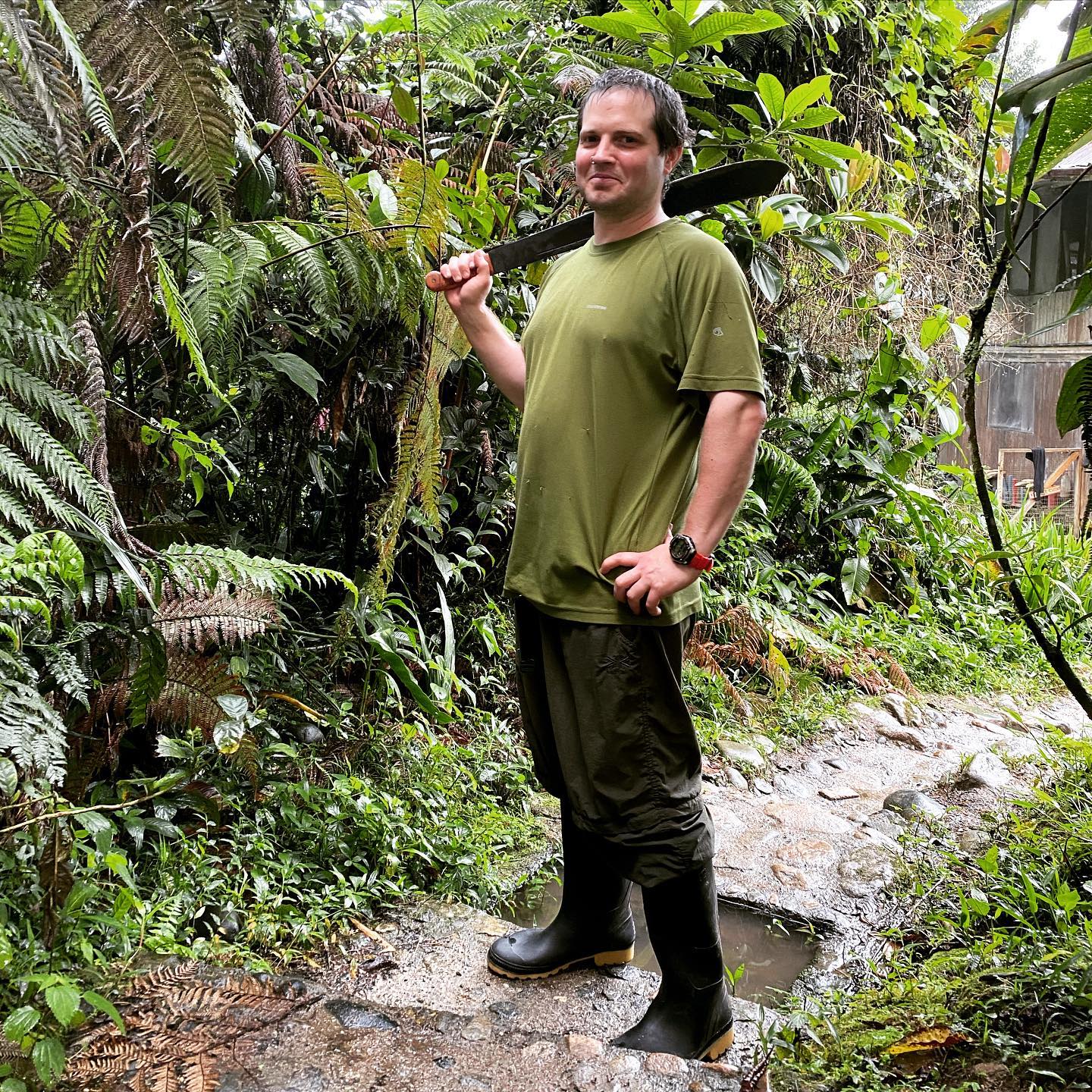
I arrived in Lago Agrilo in the morning after a long and rocky journey from Quito. I did sleep a little but it was broken by all the twists and lurches as the bus snaked through the Andes. Looking out the brightening window, I could already see that I was within Ecuador’s tropical realms by the vegetation around me. I was back in the Amazon again for a tour of Cuyabeno Wildlife Reserve (close to the border of both Brazil and Colombia).

This was not part of my original itinerary – I have already done an Amazon tour four years ago in Peru – but during my time at Merazonia Refuge other volunteers gave this place such glowing reviews that they inspired me to make a detour.

For this trip, I was also joined by two other Merazonia veterans, True and Lucian.

Our names were the first the conductor called out when the bus stopped at a little café down a dirt track road. I was somewhat relieved that – out of the entire bus full of gringos – only five of us were destined for Green Forest Ecolodge, whereas the others had all booked their tours with other jungle retreats. We drank tea as we waited for another minibus to pick us up, and it was only an hour or so later that we reached the dock, where we met Tamara, one of our guides. After loading our possessions onto the boat, we were soon making our way down the river. Our tour had begun.

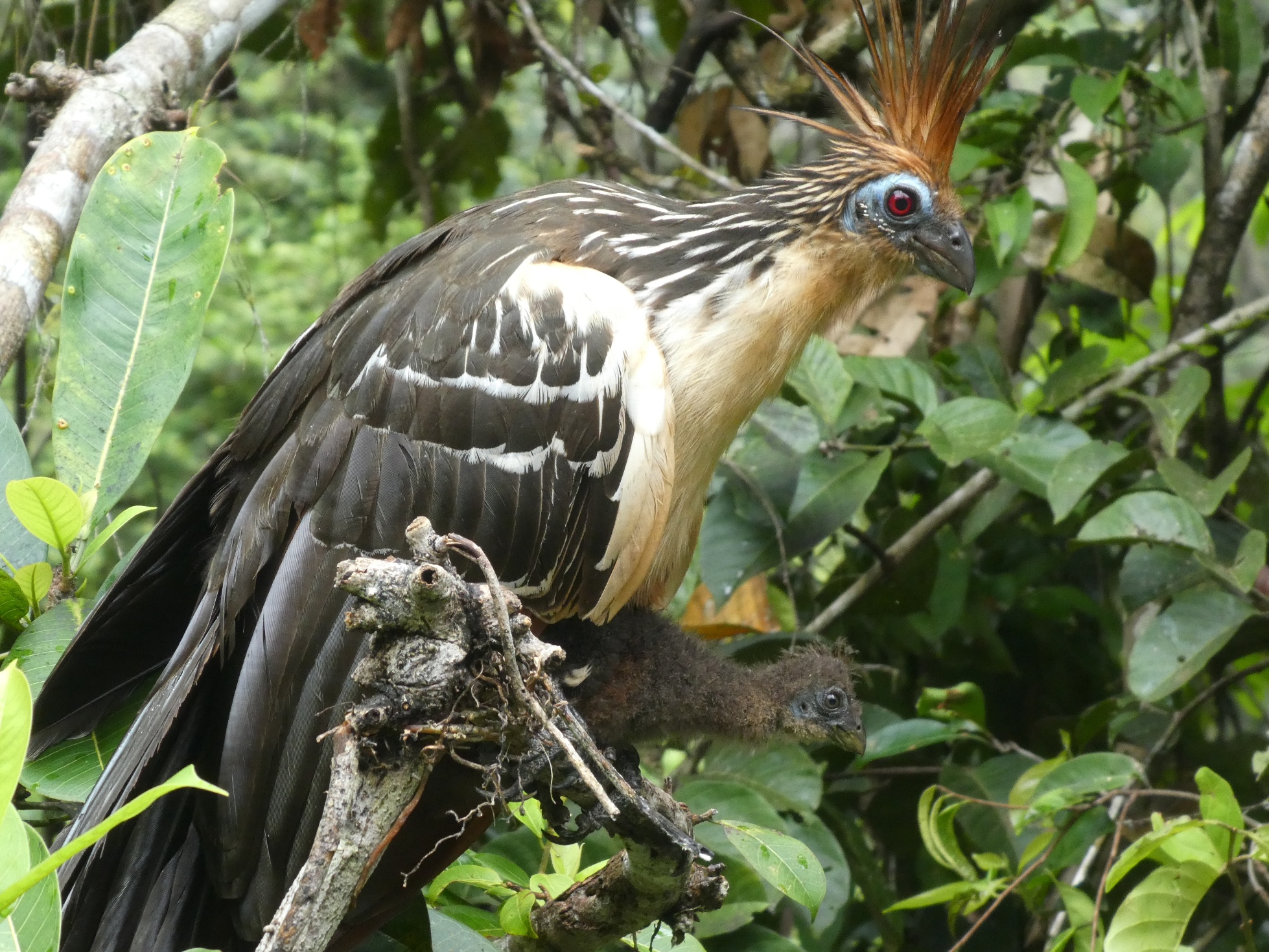
It only took a few minutes for us to start seeing wildlife. Our first sighting was some hoatzins, also known as ‘stinky jungle turkeys’. They are one of the most commonest sightings whilst cruising through the rivers on this part of the Amazon, but I never got bored of seeing them in the days that followed because of their unusual appearance. Their diets consist almost entirely of leaves that they eat straight from the branches of trees hanging over the waters.
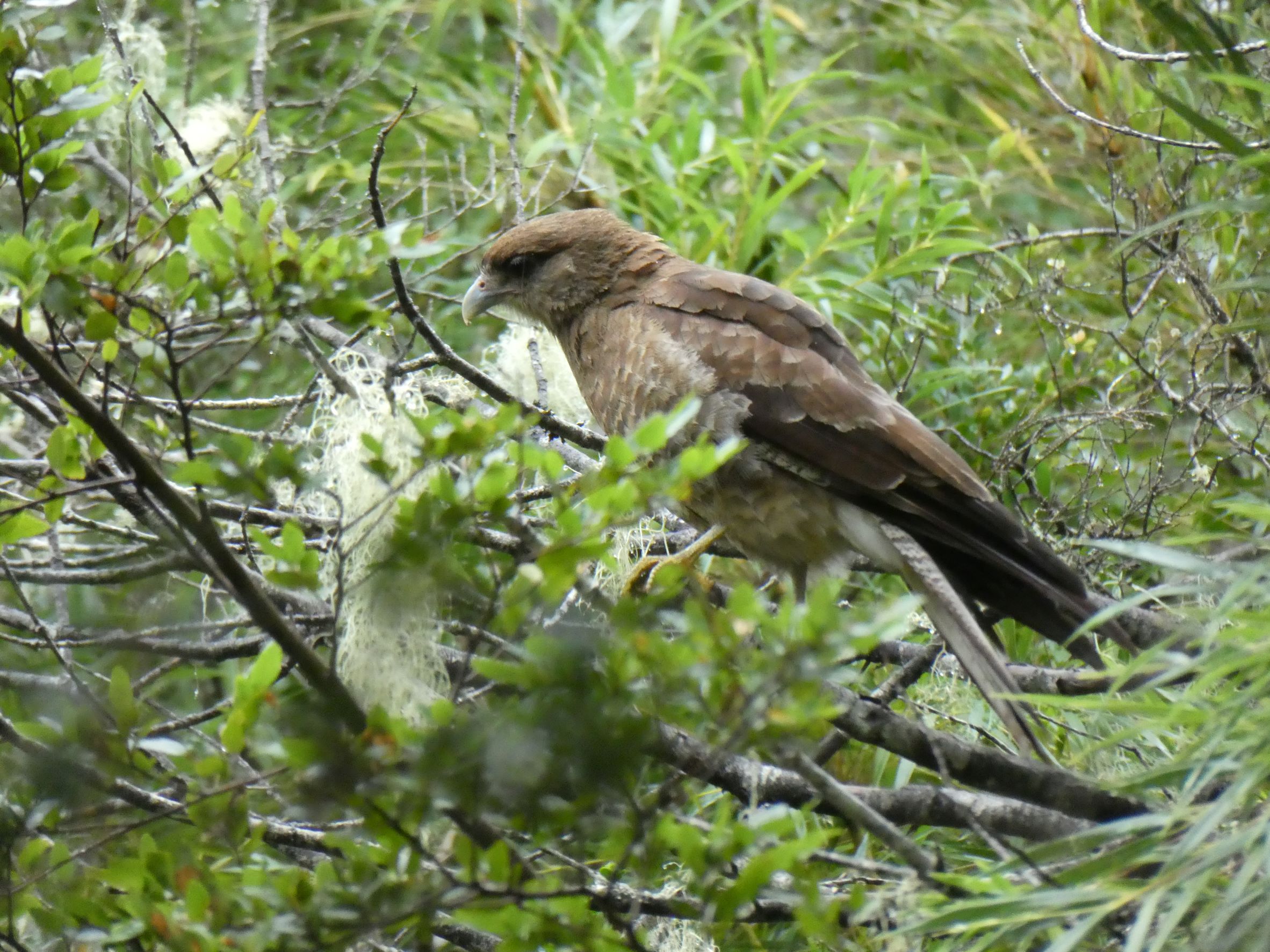
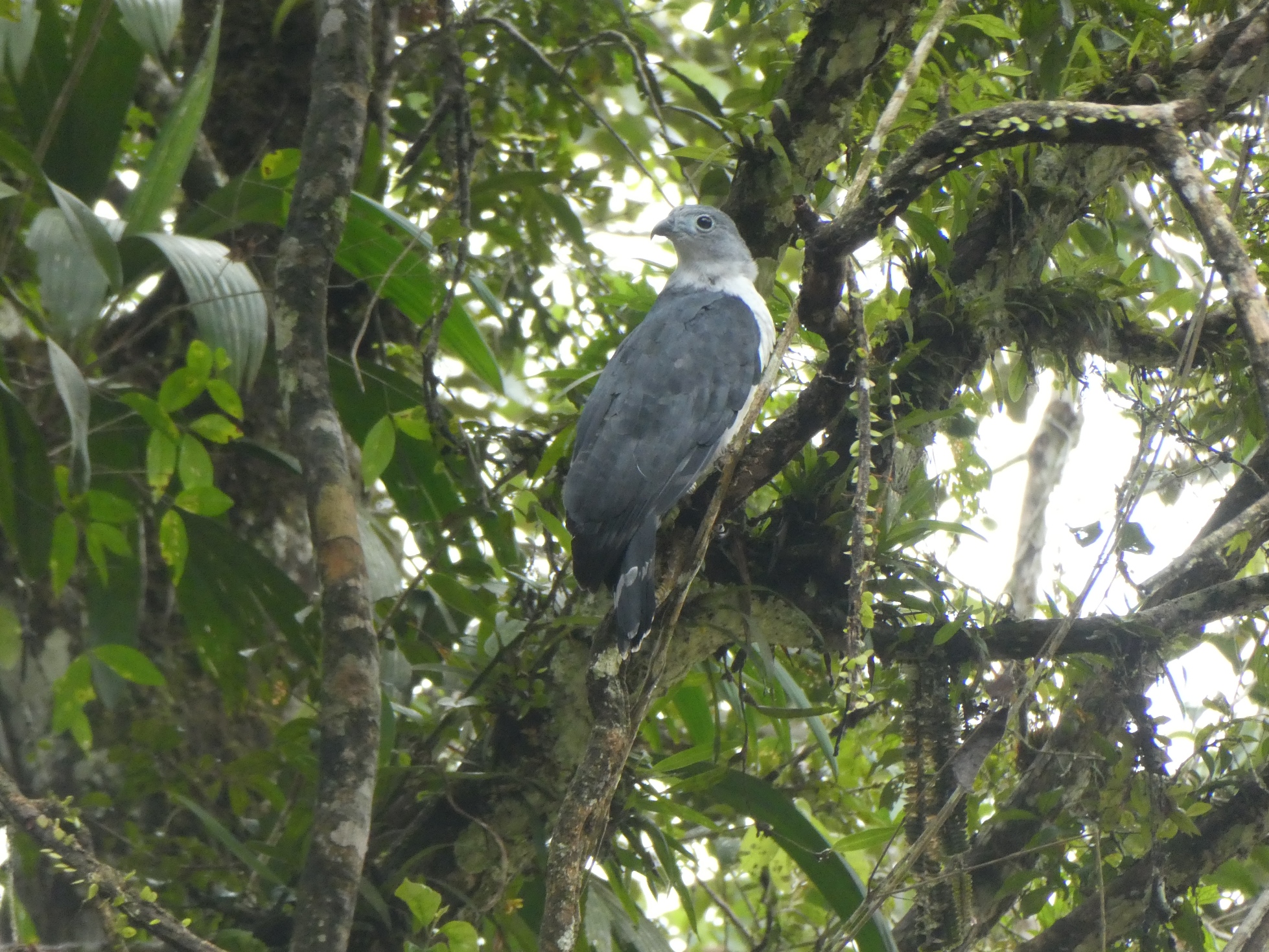
We were also lucky enough to see a grey-headed kite that afternoon.
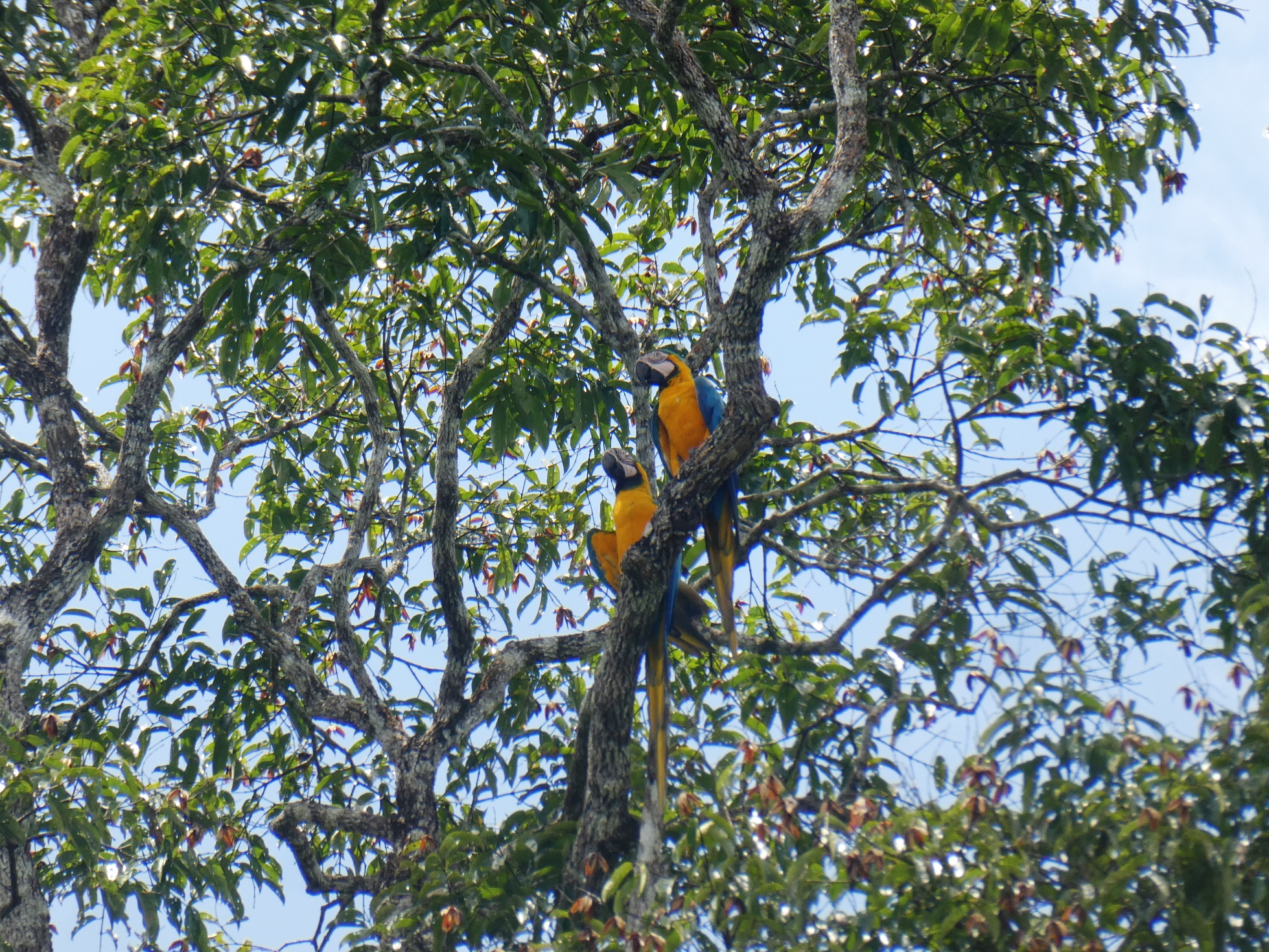
Blue and yellow macaws.

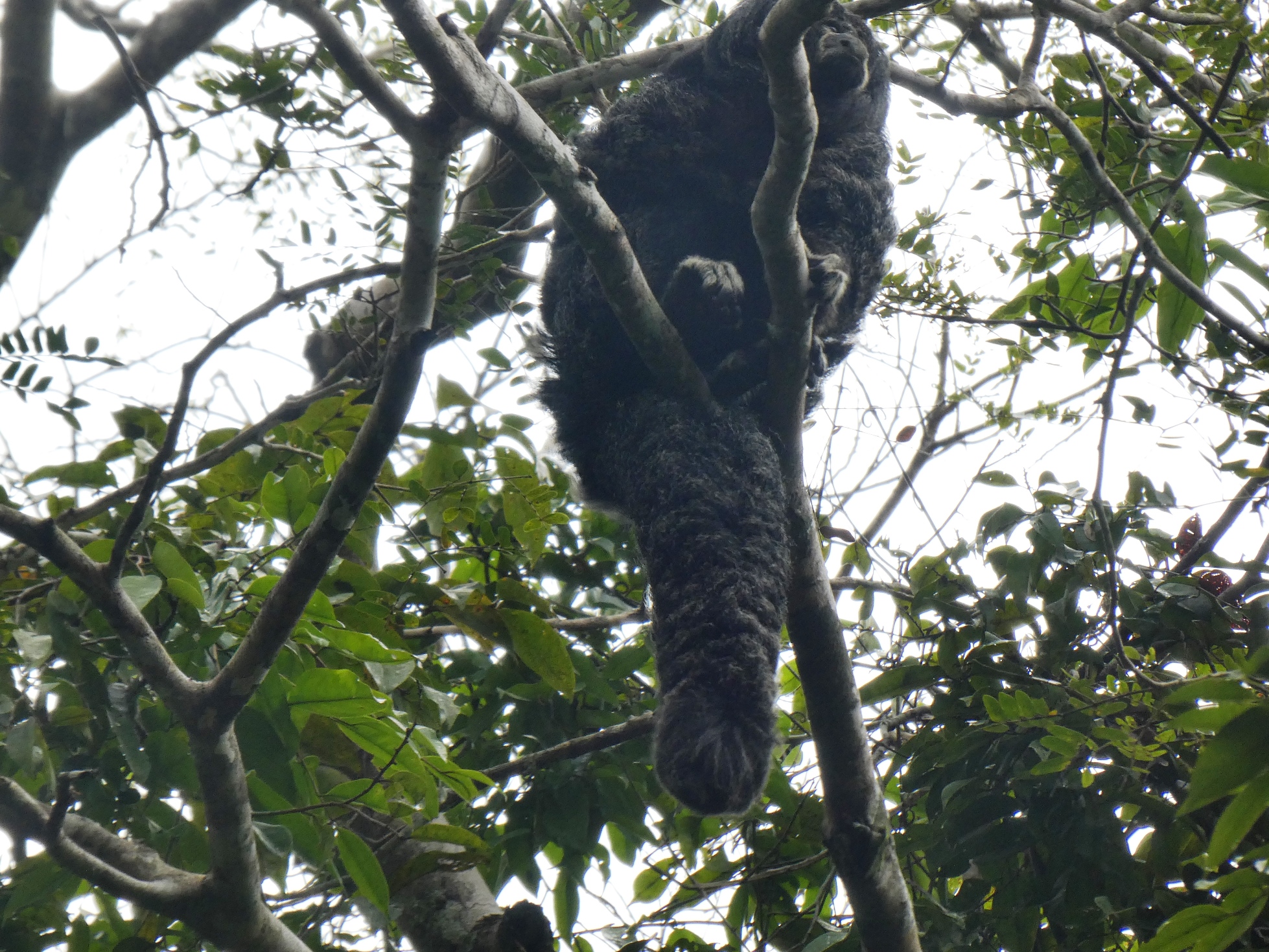
As well as a monk sakis.
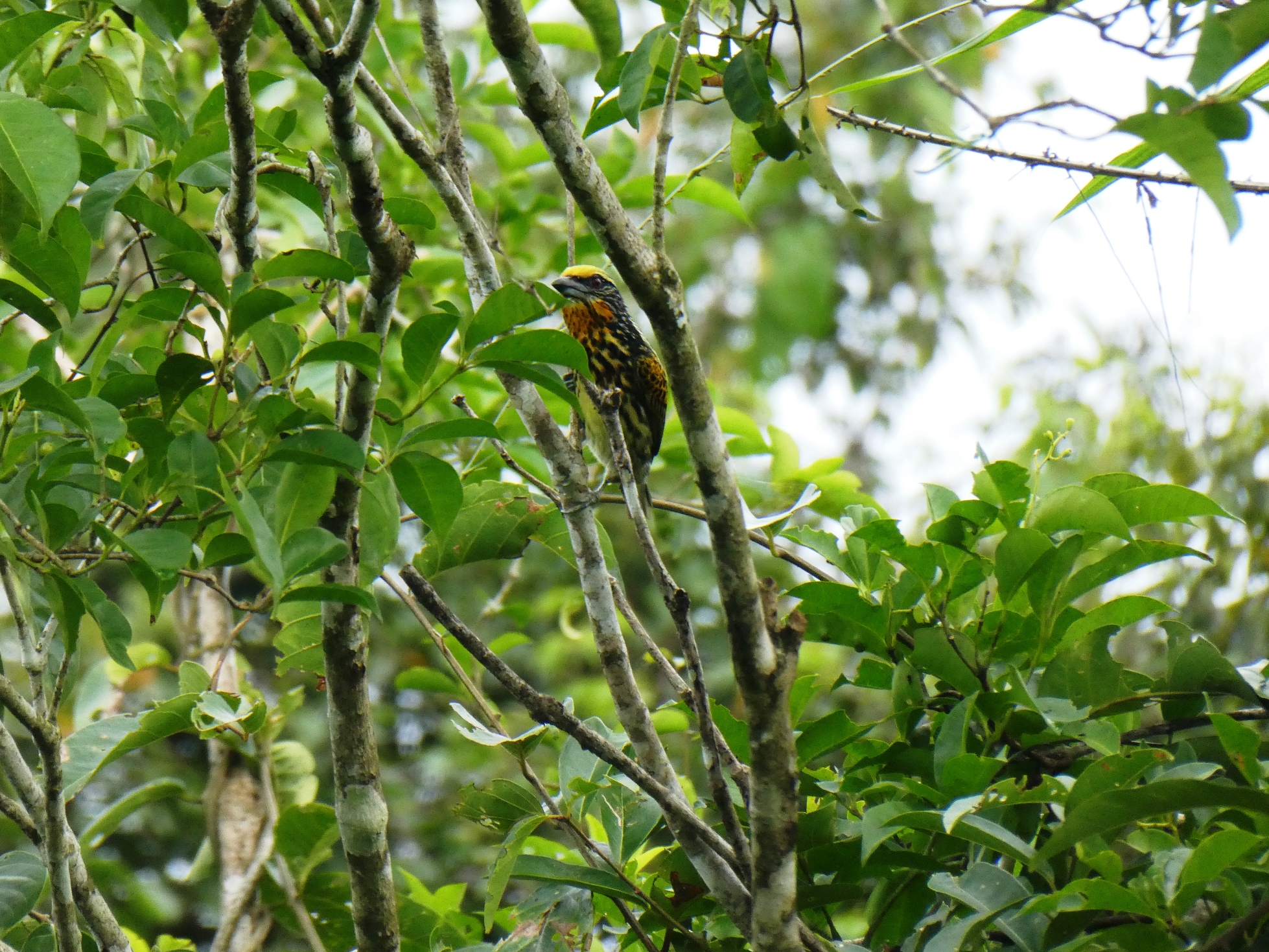
Two hours later, we reached Green Forest Lodge, were we assigned dorm beds in one of their jungle huts and unpacked our things. Whilst getting our bearings, we were delighted to discover they had a bird-watching tower; a place I frequently returned to during my free time. In that first afternoon alone, True and I were lucky enough to spot a gilded barbet, a squirrel cuckoo, and some tamarin monkeys.
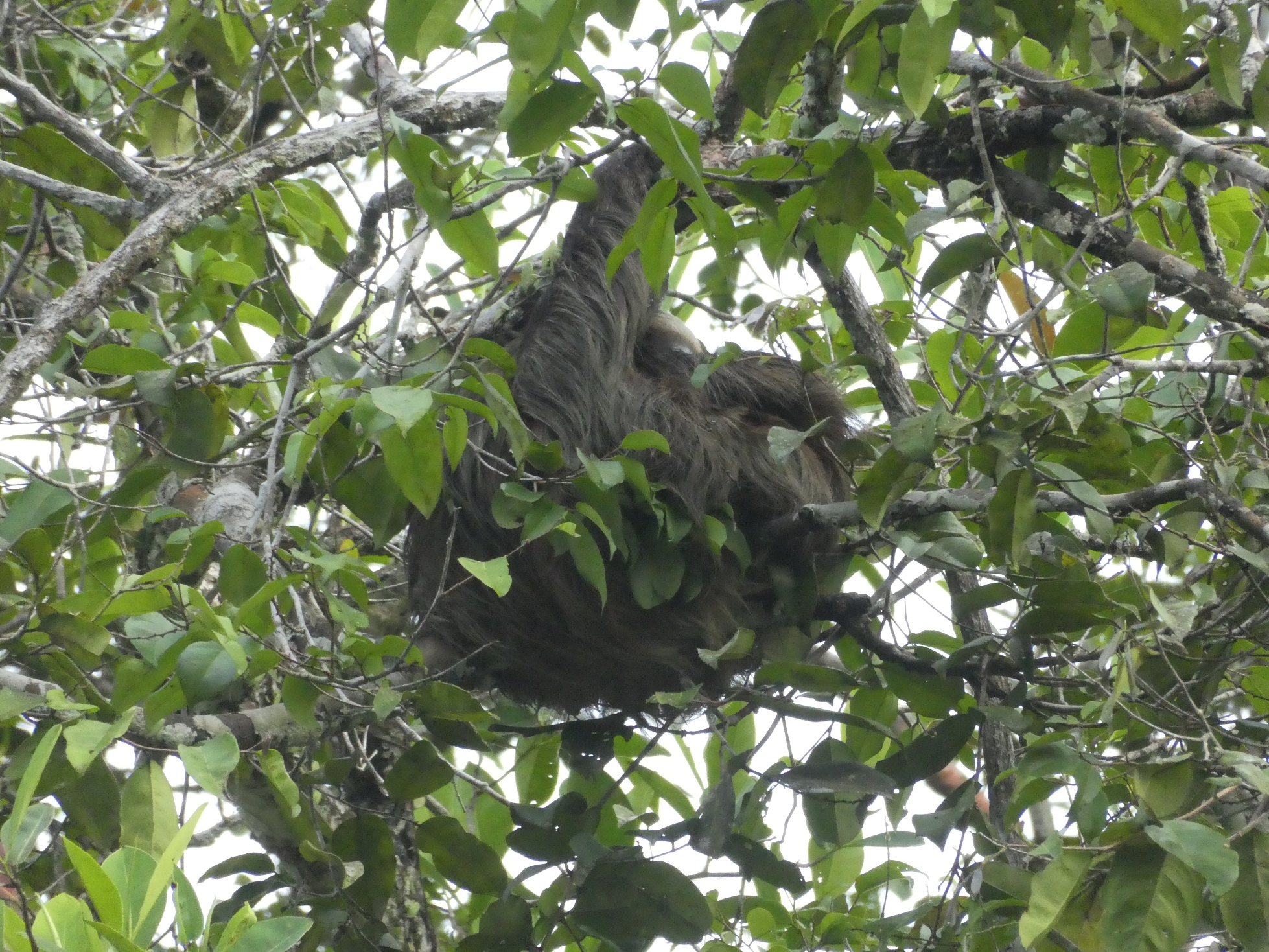
Shortly before sundown, we met Elvis, who would be our guide throughout most of the next two days. He took us out on a boat to a lagoon to watch the sunset, and on our way there, spotted two different breeds of sloths and yet more monkeys and birds. We also caught our first sightings of dolphins.
Swimming in the lagoon at dusk turned out to be a daily activity of this tour. It was always a refreshing way to finish a hot and sweaty day in the jungle, but the first evening was cloudy, so I will instead share photos from the following two days, where the clearer skies meant we got to see some spectacular sunsets.

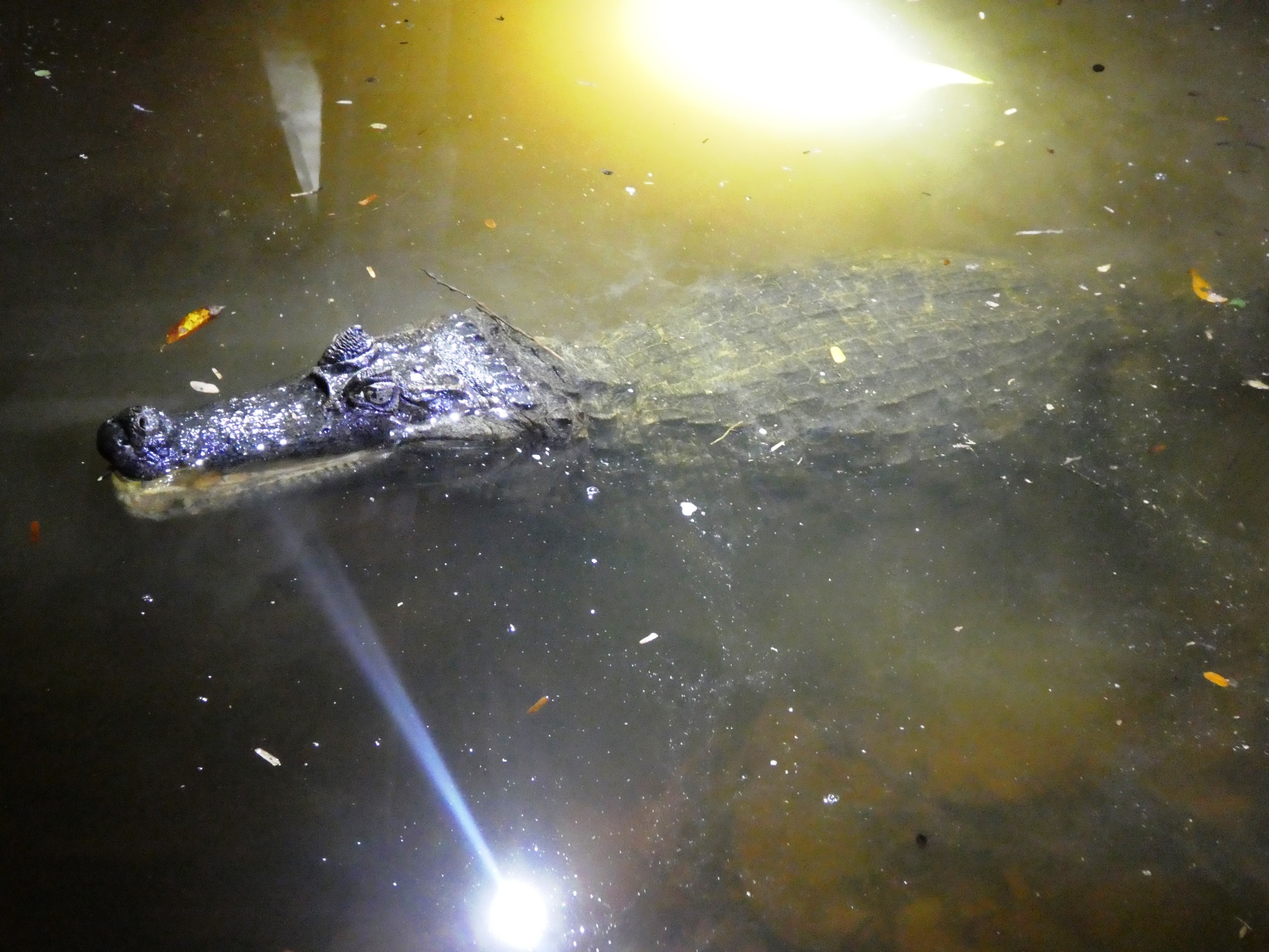
What did change with each event was the activity after the sunset on the lagoon. The first night we made our way back to the lodge slowly on the boat and saw some of the Amazon’s nocturnal animals, including a caiman and a tree boa.
 

Day 2

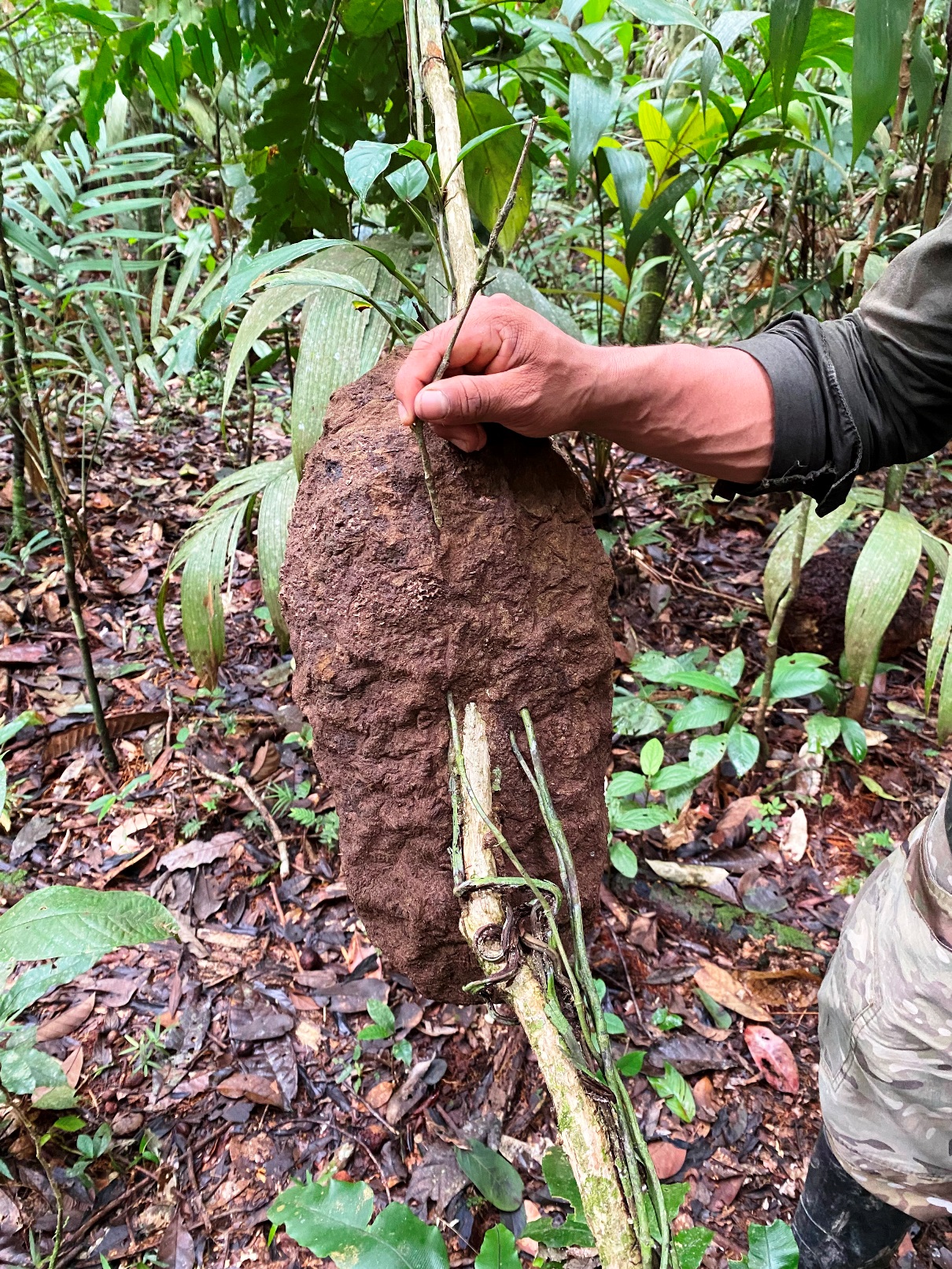
The main activity of this day was a jungle walk, where Elvis proved himself very knowledgeable about flora and fauna. I will not tell you about everything we saw that day – as it would simply take too long – but instead give you some highlights.
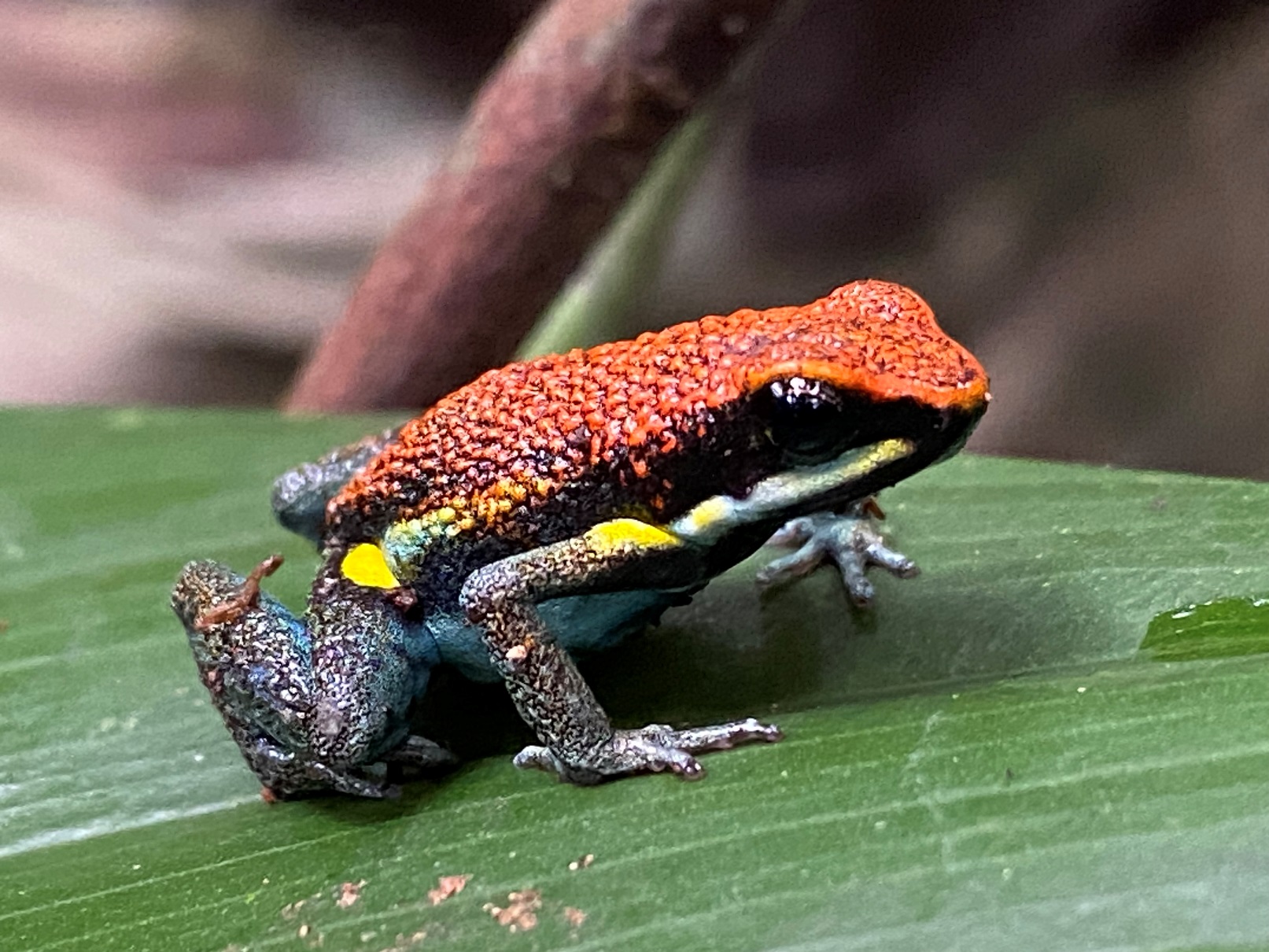
An Ecuadorian poison dart frog: so named because of the poison that seeps from its flesh is often used by indigenous people to coat their darts to paralyse their prey when hunting.
A goliath ‘bird eating’ tarantula, which Elvis managed to cleverly draw out from its hole using a stick (video here).

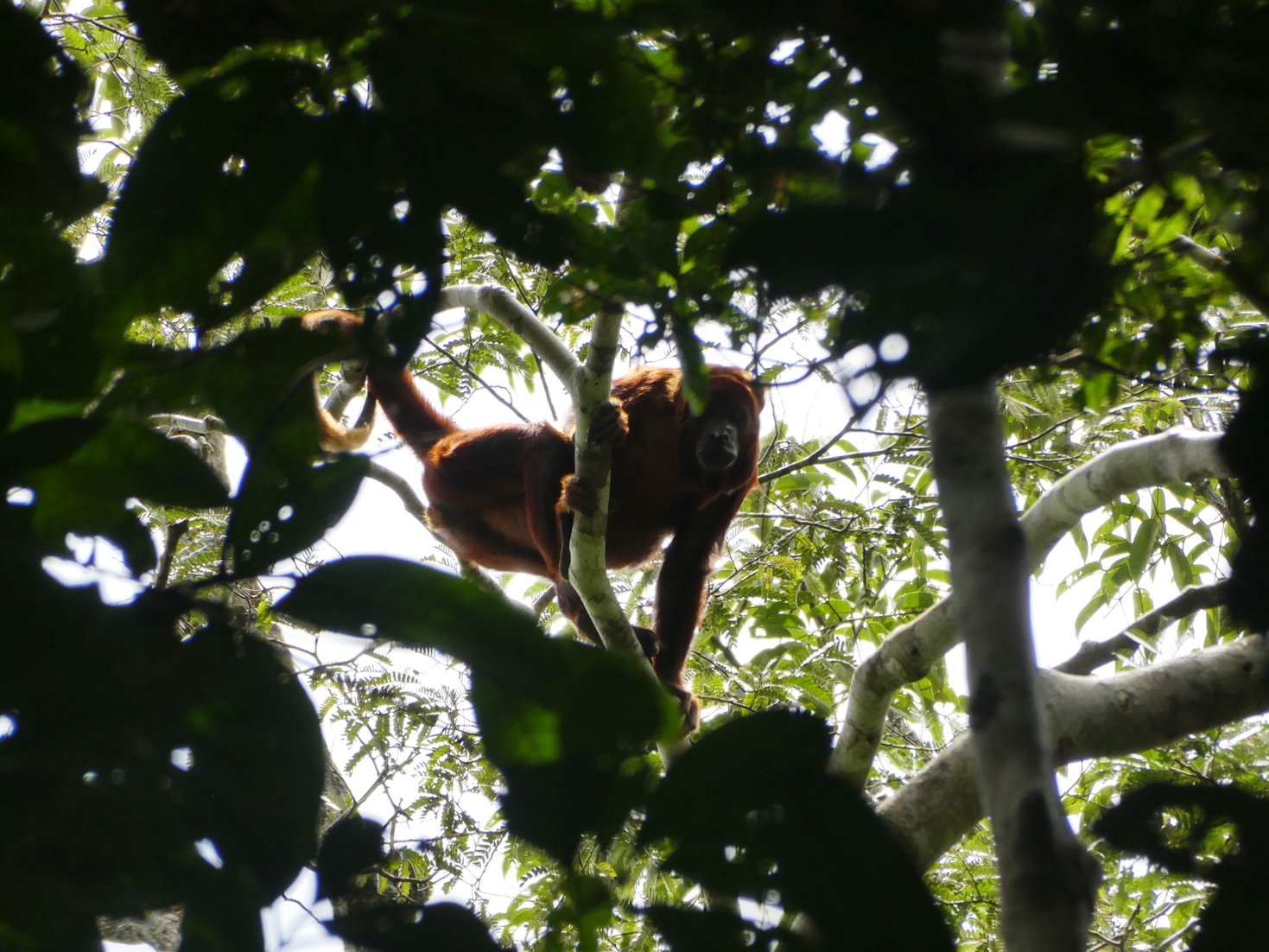
Howler monkeys.
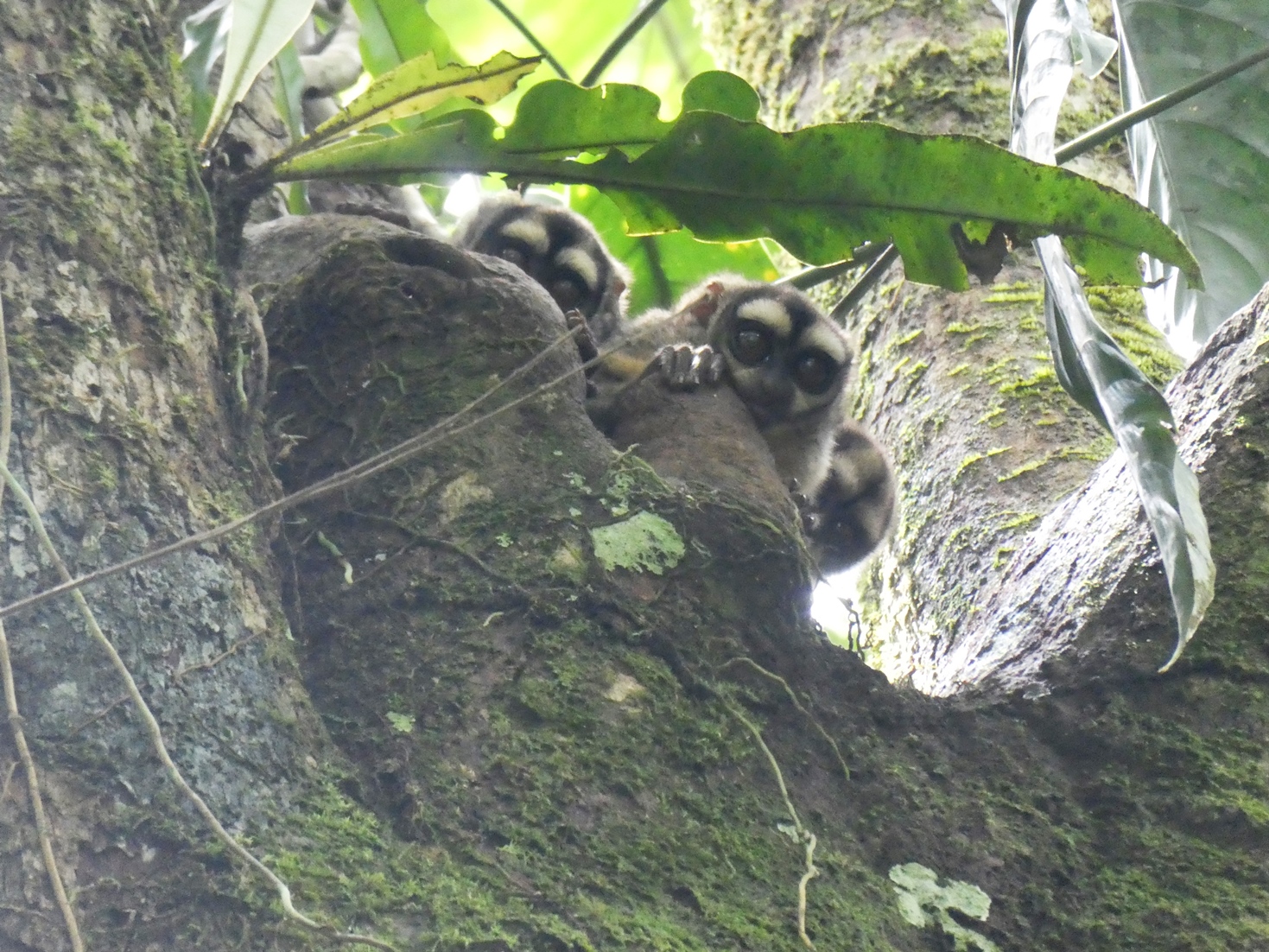
And, finally, a family of night monkeys.
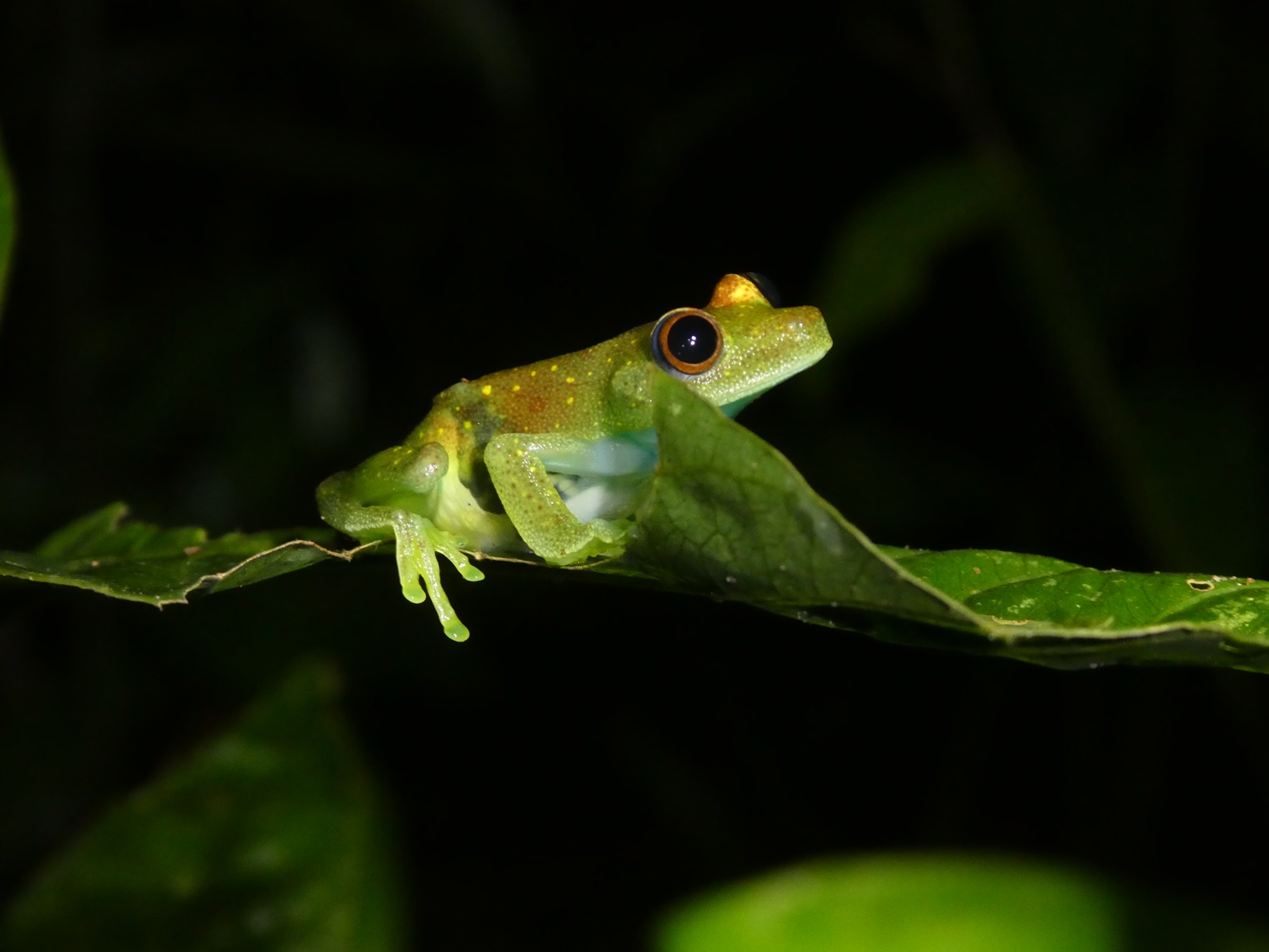
That night we once again went to the lagoon at dusk, but after the sun had set, we made our way back to the lodge quickly – matching pace with a group of bats along the way – so that we could put on our wellies in time for our night walk, during which we saw spiders, tarantulas, and lots of frogs, including this glass frog.
And a HUGE – and very grumpy looking – bullfrog.


Day 3

We spent most of this day in a little paddleboat, and Elvis took us to another lagoon.
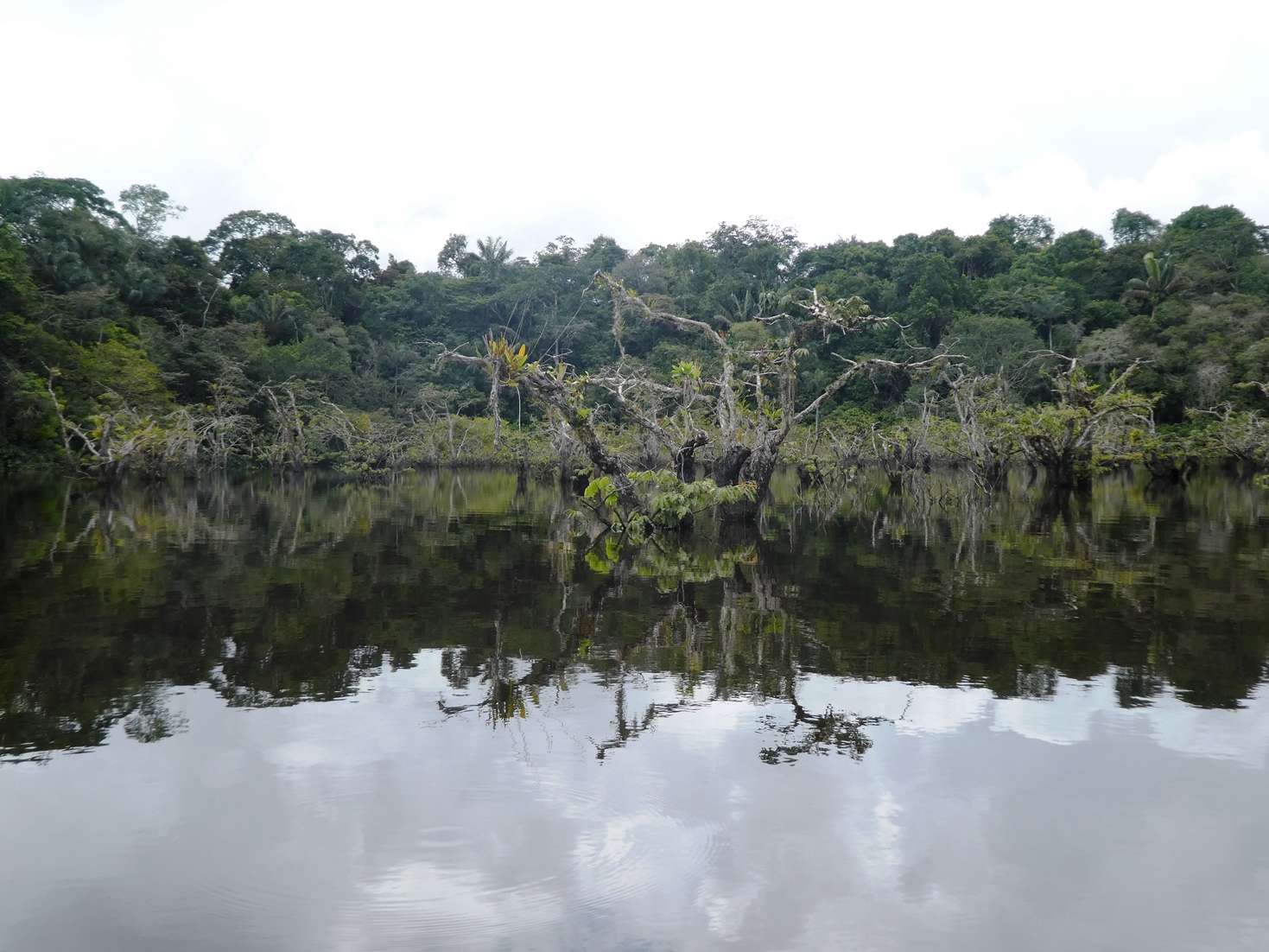
We didn’t have quite as much luck with wildlife that morning, but I think that was due to the weather being a bit wet.

Despite this, this was probably my favourite day of the tour. We had the entire lagoon to ourselves – there was not another tourboat in sight – and the lack of engine made for a peaceful ambience (and also that the wildlife we did see we managed to get closer to). This was the closest I ever felt to living in a David Attenborough documentary during this trip.
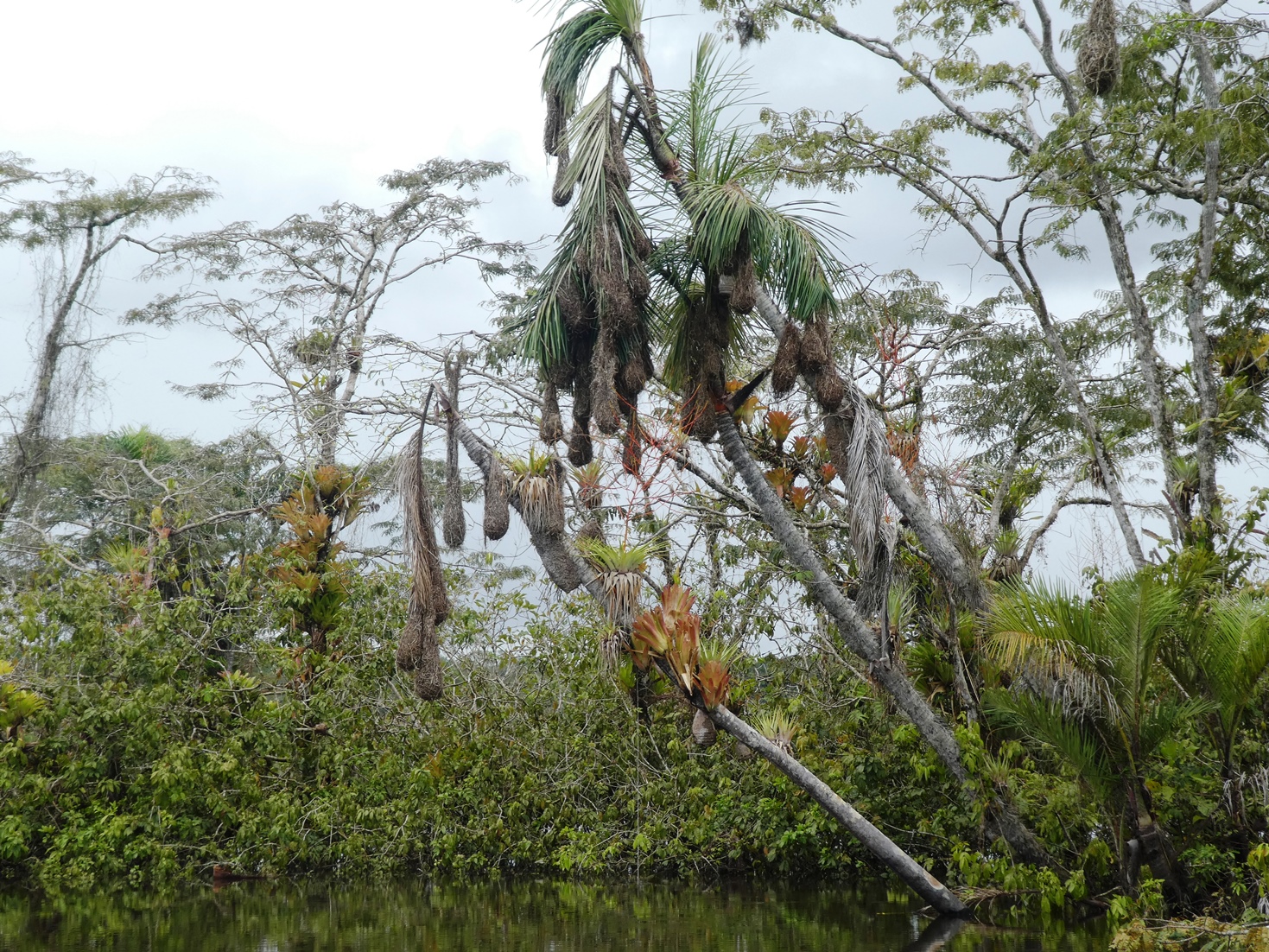
The lake was also very still, almost turning it into a mirror.

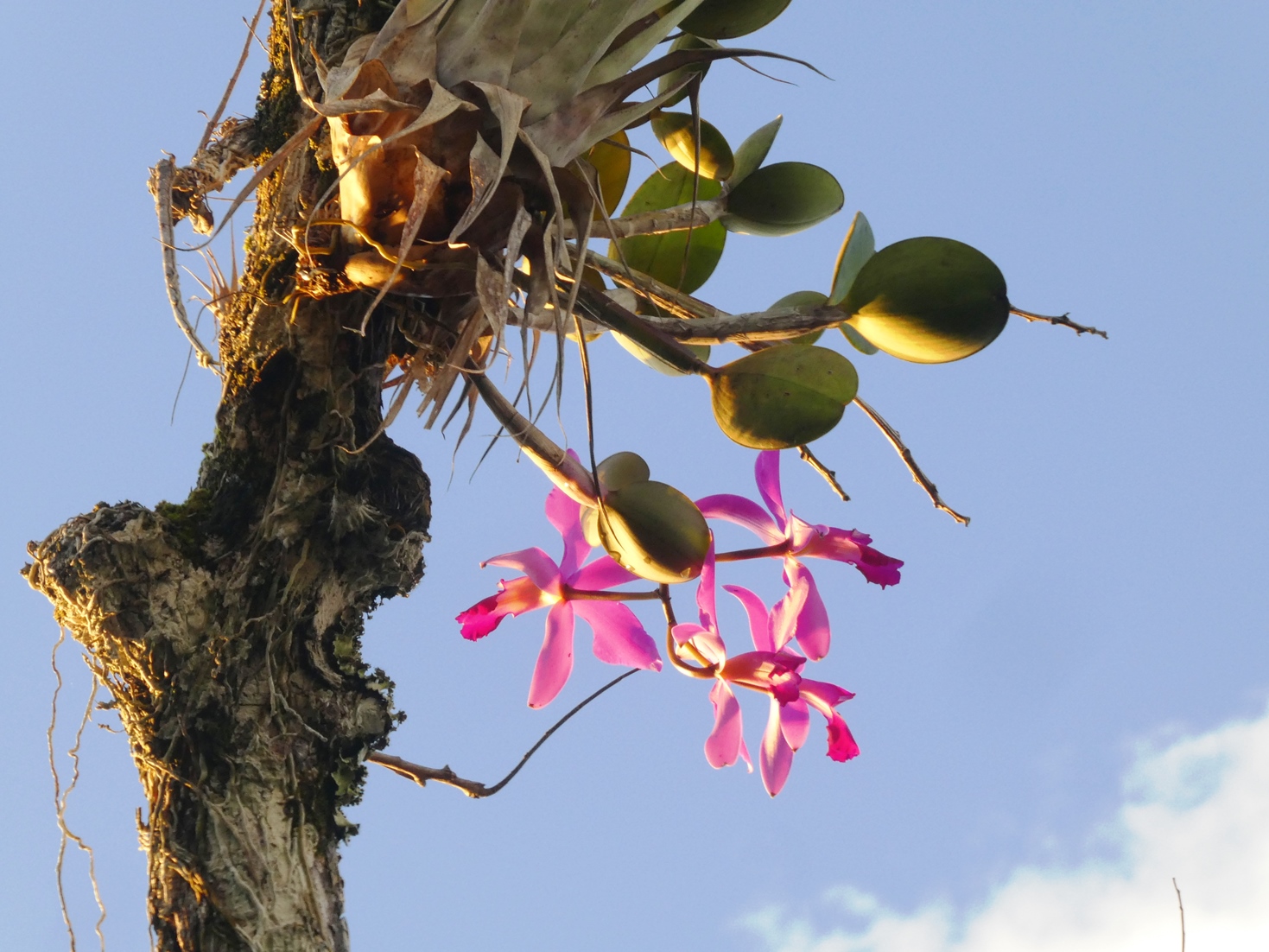
And we saw some beautiful orchids and bromeliads.
We weren’t completely unlucky with the wildlife either. We did see quite a few birds, including this blue-crowned trogon.

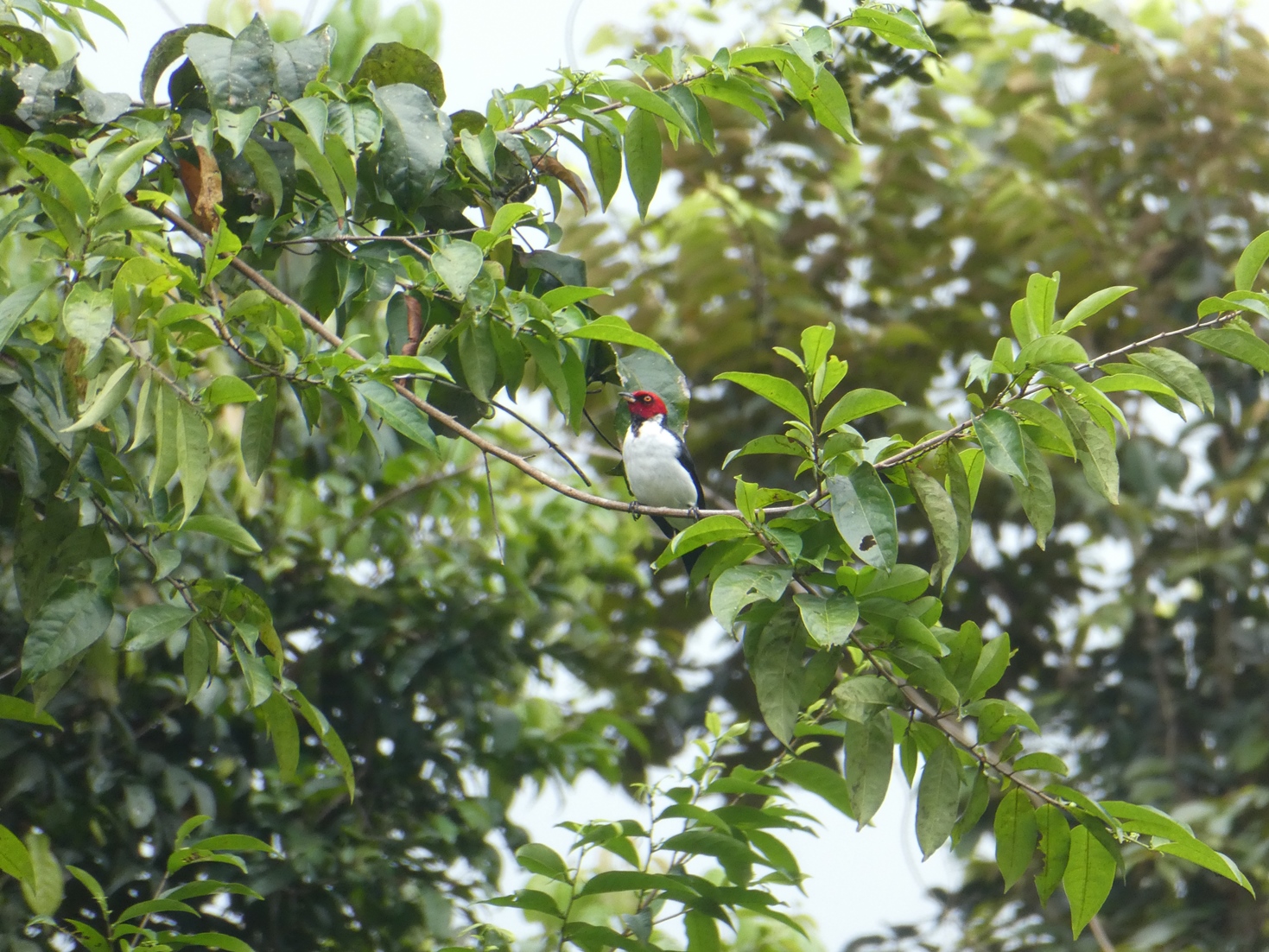
Some red cardinals.
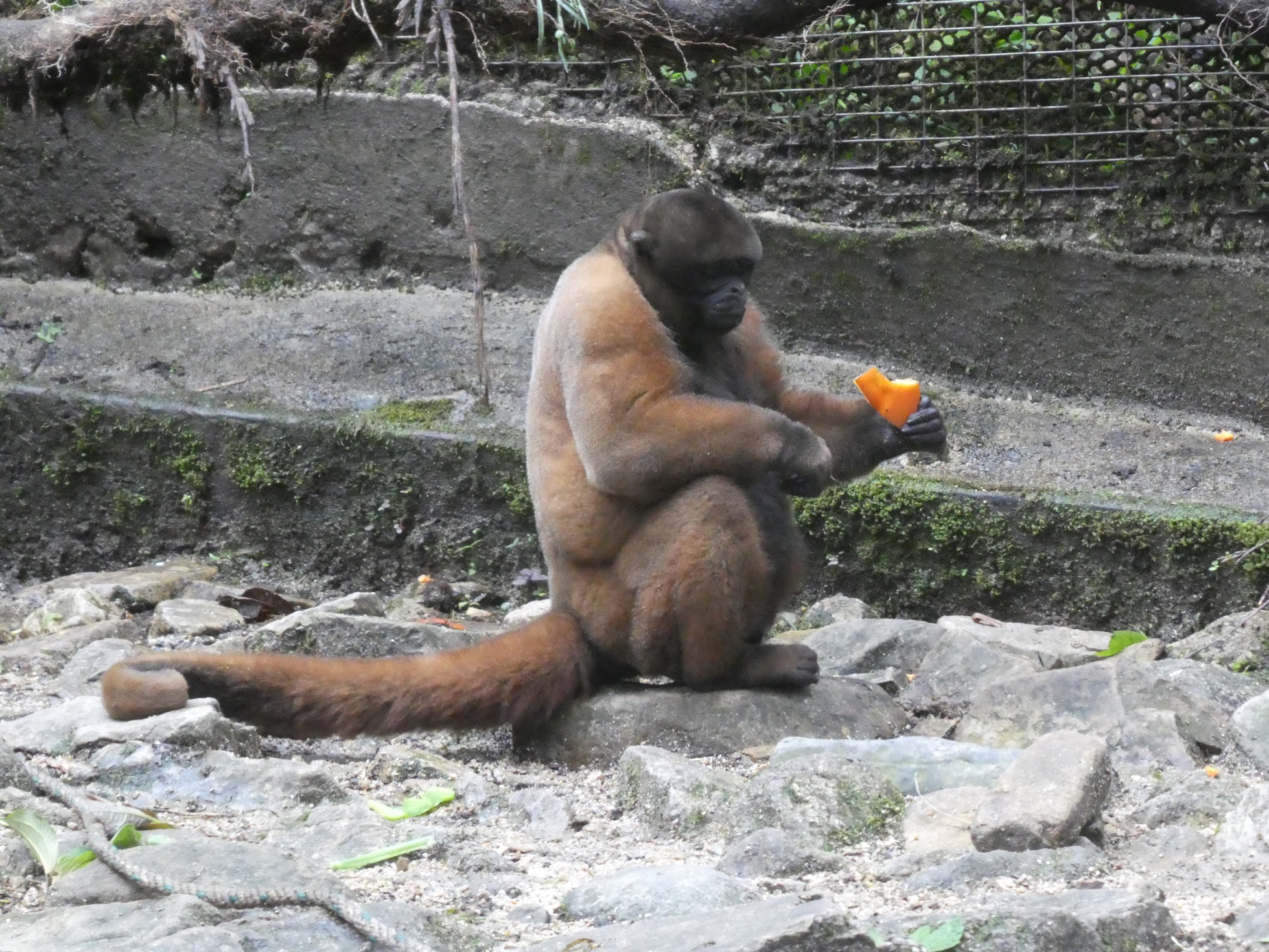
And last – but certainly by no means least – we came across a group of woolly monkeys later in the afternoon. This was something that I was especially happy to see after working with these species quite closely at Merazonia Refuge.

In the evening (after our customary swim in the lagoon), we were taken on one last boat tour, where Elvis found yet another caiman in the swallows outside one of the other lodges, as well as a tarantula and another tree boa.


Day 4
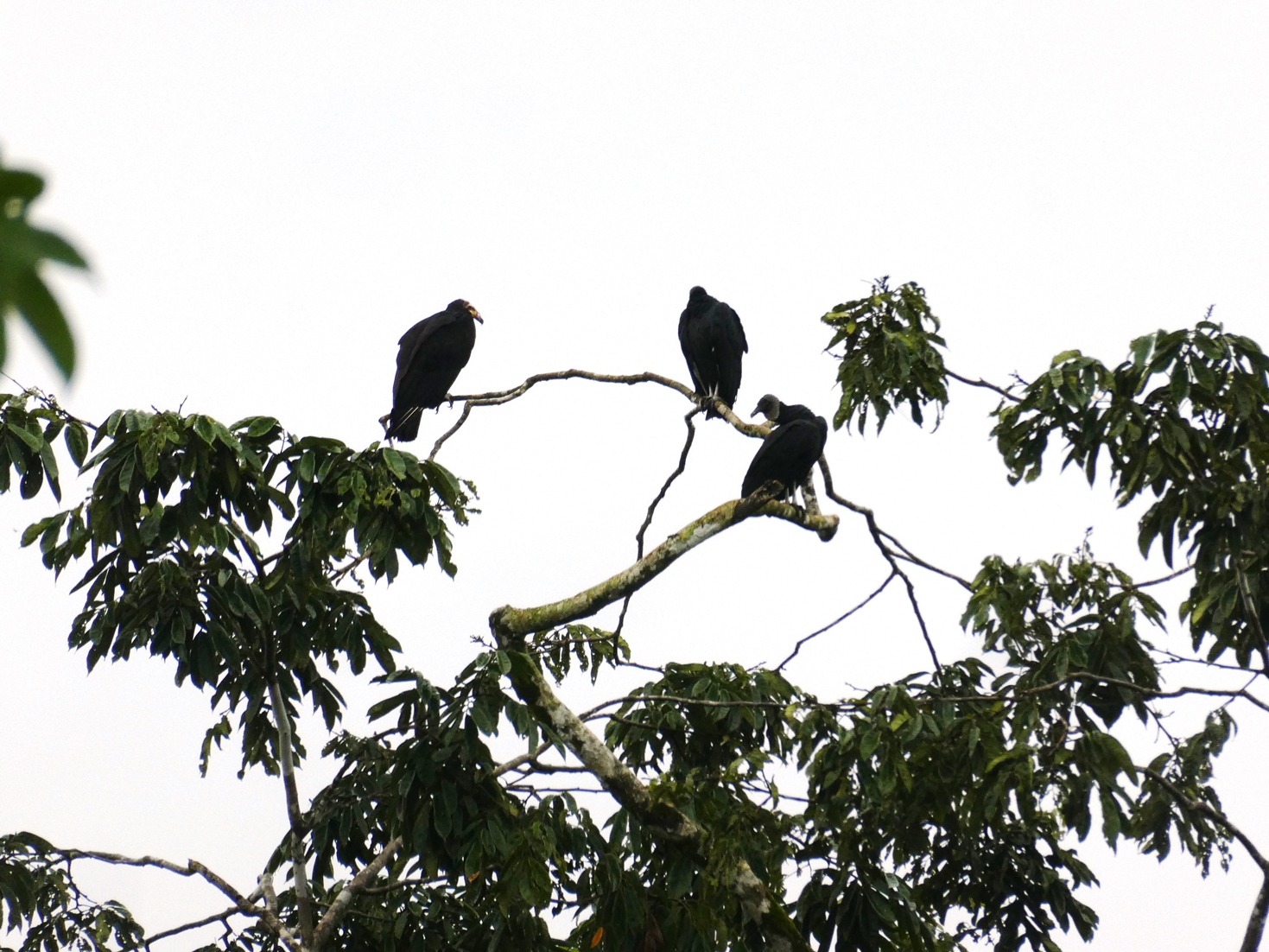
We rose early and met Elvis at the top of the tower to do some birdwatching before we had our last breakfast. With the help of his telescope, we managed to tick many more birds from our list, including a group of toucans and a pair of yellow-headed vultures.

After that, we packed our things, said our goodbyes and made our way back. We were once again with Tamara on our way out of the park, and we told her that our tour exceeded our expectations in almost every way. We seemed to have been lucky with the wildlife and (mostly) the weather.

The only thing that we wanted to see before we left was an anaconda – something that is a fairly common sighting for those who visit this park – but seemed to have eluded us so far, despite our luck elsewhere. Tamara said she would do her best.

And for the first hour or so of the boat ride, it did seem that our luck had run out. We passed by several hoatzins, ingas and tiger herons, but these were all things we had seen plenty of over the last few days and almost – but never quite – grown bored of. We didn’t even bother to slow the boat so that we could take photos but simply continued.

It was just as we were getting close to the dock – and the tour was almost over – that Tamara suddenly rose from her seat and yelled at the boatman to stop. She seemed excited about something, and when the boat halted and she pointed up to the trees, we saw why.
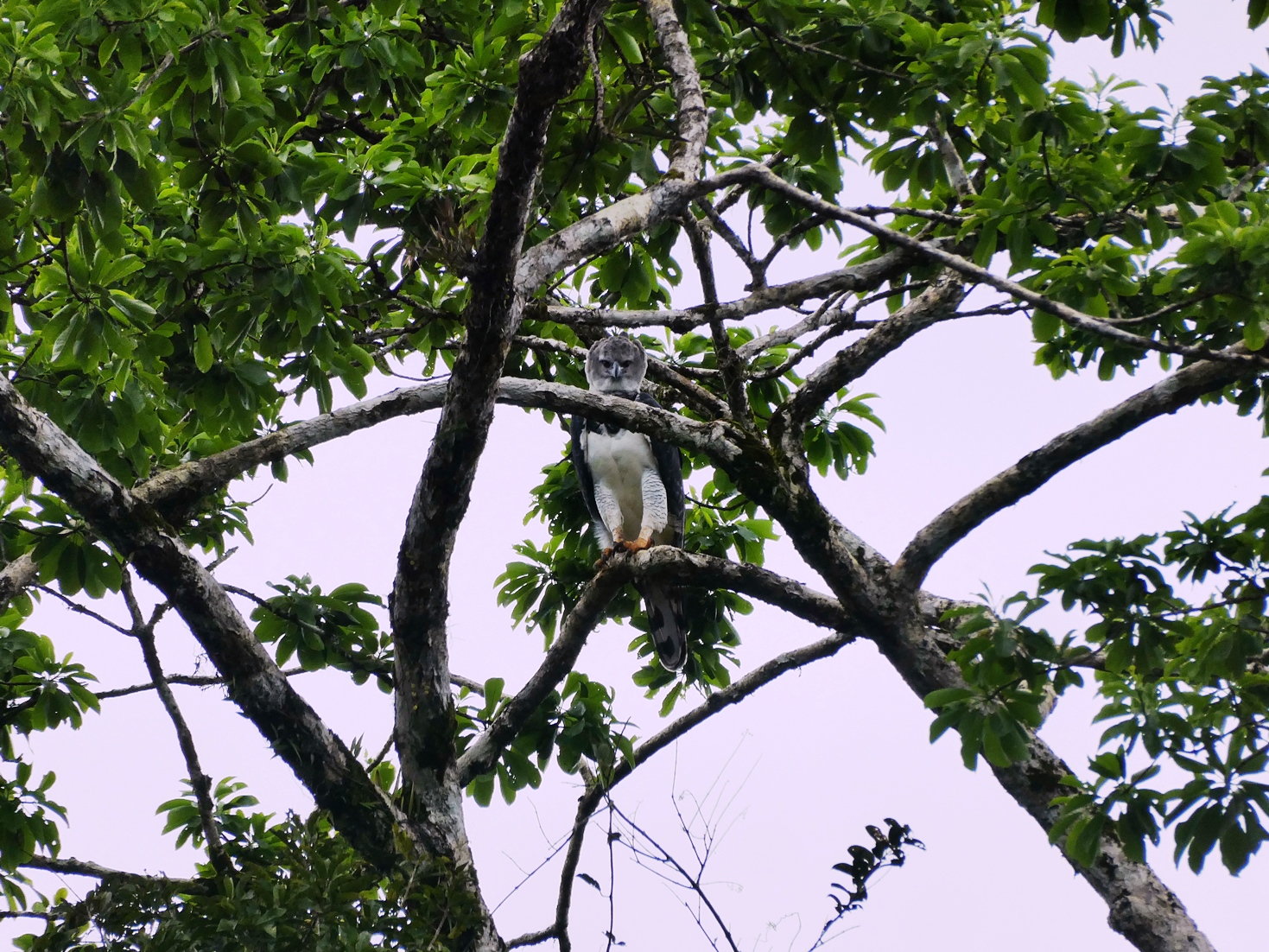
So, you have probably noticed that this is not an anaconda. It is something much rarer; a harpy eagle. Tamara claimed this was one of only a handful of times in her career.

The perfect end to our tour.

Overall, I was very pleased with my experience with Green Forest Ecolodge. They have good facilities, the food was great (considering the setting), and the guides are very enthusiastic and knowledgeable. Several different lodges are working in this park, so you often come across other boats during your tours, and I happened to notice that a lot of the others had bigger boats with louder engines and filled with more people (which means their experiences were probably less personal and they probably didn’t see as much wildlife).

If you are interested in booking a tour with them, their website can be found by clicking here.

If you would like to see more photos (and there are many on this occasion) click here.


Travelblog LA#3: Returning to Merazonia – Ecuador

24th March – 20th April, 2023


I previously volunteered at Merazonia four years ago, so I would advise those reading this to catch up with my previous blog (click here), as it will be a more thorough account of this organisation and what it is about. This will be an account of my new experiences and I will try not to repeat myself too much.

Returning to Merazonia a second time felt like coming back to my home away from home. In my absence some of the old animals have left – either because they were successfully released back into the wild or have sadly passed – but Merazonia always has a trickle of new creatures in need of care, many confiscated from the illegal pet trade.

I was delighted to discover that Whistler – Merazonia’s eccentric kinkajou – was still alive. The last time he had often been described as an ‘old man’, and one of the several reasons why he can never be released – and thus is one of the few exceptions to Merazonia’s strict ‘hands off’ policy – is that he has a heart condition, so my first night I volunteered for one of my old favourite chores; giving him his medicine (fed to him with some jam from a spoon).

Most of the work at Merazonia was still the usual; feeding animals, cleaning cages, and foraging for leaves. All whilst avoiding eye contact and other forms of interaction with the animals (unless they are one of the other exceptions besides Whistler, such as a few flightless birds who can never be released and lack stimulation so interaction is a form of enrichment). Merazonia is primarily a rehabilitation centre so the animals need to be kept as non-human-orientated as possible to ensure successful releases.

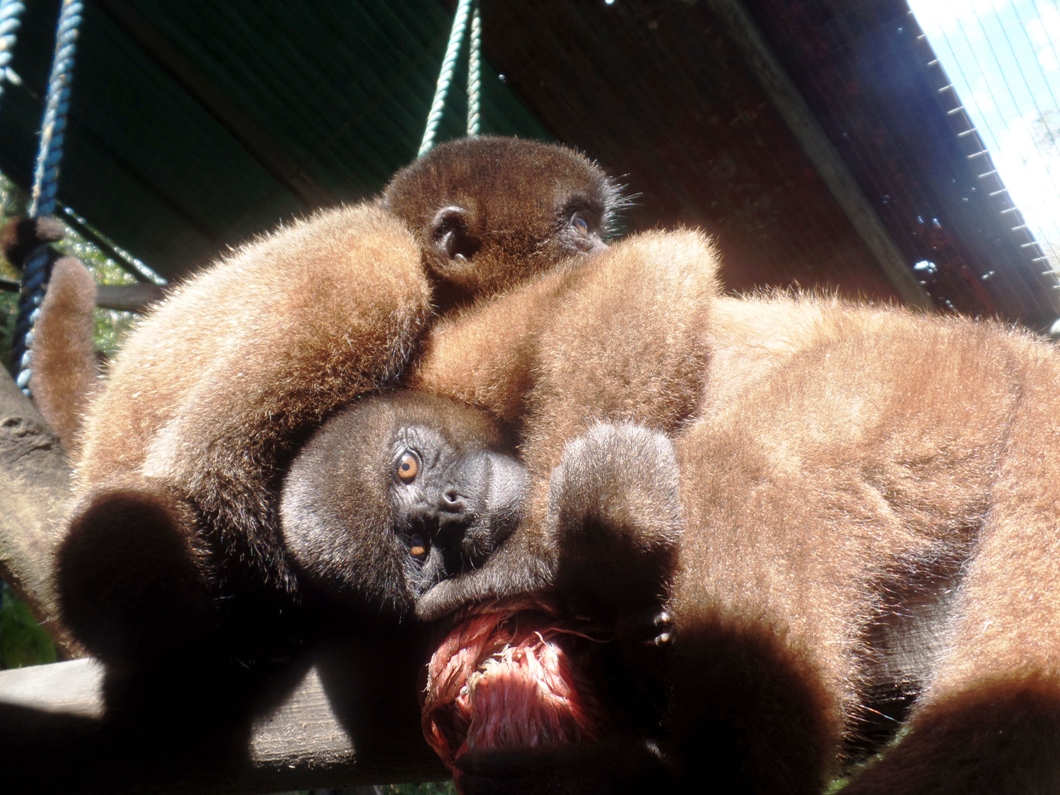
One of the most rewarding things that happened to me this time I volunteered at Merazonia is that they gave me the privilege of working with the group of young woolly monkeys they were preparing for release. It was harder work than most of the other rounds, as woolly monkeys are notoriously messy, and there is a lot of emphasis on ensuring you find a good variety of leaves for them from the jungle, but it was very rewarding. Particularly for me as I found myself reunited with someone that some of you might remember.

Fonzi, one of the two woolly monkeys that I gave post-natal care four years ago. He is all grown up now!

He didn’t appear to remember me, and a small part of me was a little sad about that, but a much bigger part felt much relieved. I had already decided – when I found out that I would be working with him – that if he tried to interact with me I would report it to the coordinator (which would have likely resulted in me not working with him again). He is due for release soon and the chances of him being rewilded seem good as – despite how clingy he was with me and his other ‘Dads’ and ‘Mums’ when he was a baby – he shows very little interest in humans now. He is even starting to turn into the alpha of his group – a change that is both physical and behavioural – and making aggressive displays. Unfortunately, I won’t be there for his release but the idea that he could soon be living in the wild – and that I played a small part in making that happen – makes me very happy.

Living in the jungle is an amazing experience but it does come with challenges. The unpredictable and often turbulent weather can be destructive and during my four-year absence a tree fell on one of Merazonia’s largest enclosures during a storm, rendering half of it unusable. I witnessed another such event first-hand when we suffered a freak storm that changed the direction of the river and flooded the home of Mo, Merazonia’s resident coati. Luckily, they managed to rehome him before he drowned, but keeping up with all the maintenance involved in running a centre is a constant battle. Merazonia is run entirely on donations and does not accept visitors – as doing so would mean that many of the animals would get too much human contact – so I would urge those who can afford it to consider donating.

Other than the experiences mentioned above, my five-week return was once again memorable for the people there. I reunited with old friends and made some new ones. Merazonia is a place that many either end up staying for much longer than they originally intended or – like me – return to. One of its greatest strengths is how dynamic it is; they are always open to suggestions when people notice things that could be improved, and some volunteers who possess certain skills often leave their mark before they leave. I ended up undertaking a little project to look into ways for them to make their shopping more economical and improve the diets of the volunteers. People come and go, and the place evolves, but in a way that doesn’t lose its essence or purpose.

It saddened me greatly to leave again, but I will take away many memories, new friends, and a feeling of purpose that I have become a small part of the DNA that is Merazonia. Perhaps I will be lucky enough to have the opportunity to return a third time one day.

But, for now, it is time to move on.

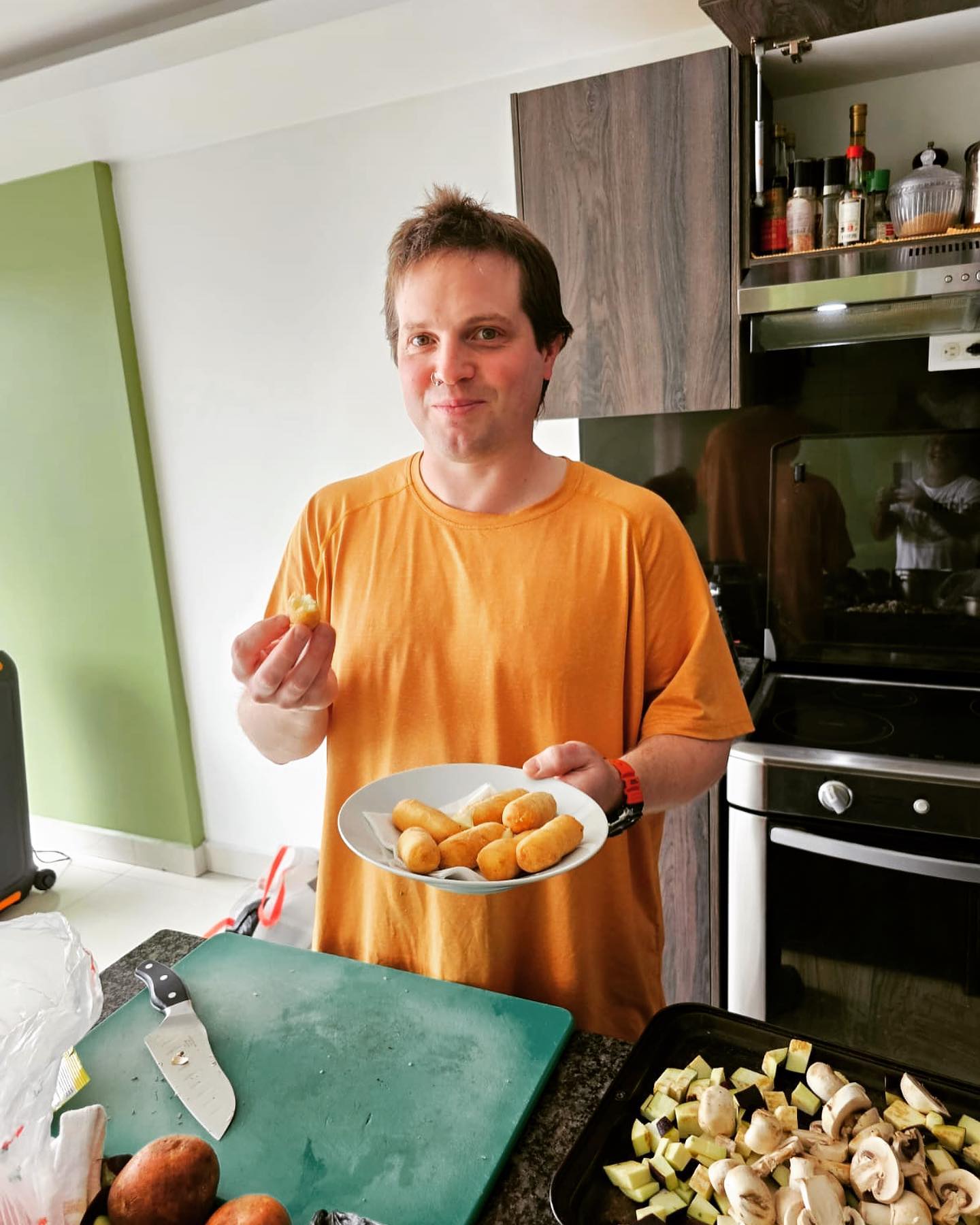
After leaving Merazonia, I headed to Quito, a city I have already visited previously as a tourist, so I treated these few days as a pitstop, wandering around some of its old churches again and making some friends (one of whom was a Venezuelan chef who taught me how to make tequeños) whilst preparing to continue with my journey.

It is now that I feel my actual adventures will begin, and they will start with a four-day tour of Cuyabeno Wildlife Reserve in the Amazon.

Travelblog LA#2: Huerquehue & Pucón – Chile

As this is just my second entry in a new trip (after a four-year travelling hiatus), I am going to preface this blog with a little reminder to some of my readers:

I have two core audiences for this blog, and they are quite different to each other.

Many of the e-mail subscribers are people I know personally, and perhaps some of them will one day visit the places I have been to, but most merely wish to follow my adventures from afar.

I do however also get a lot of hits from people who find my blog on Google and other search engines, and I suspect that many are contemporary backpackers seeking information.

Huerquehue National Park was one of the places I found to be lacking in practical information for backpackers (particularly English-speaking ones) and when this happens I do like to weave in threads of information that might be beneficial to them.

I will always try to do it as seamlessly as possible when it happens – to ensure that both kinds of readers find my blog rewarding – but there may be some instances where certain people might feel inclined to skim certain sentences and paragraphs. That is fine. If in doubt, scroll down until you get to photos again (as that is usually a good indication that I am talking about the journey/experience rather than waffling about some practical info). I hope I find the right balance in this – so that you all enjoy it – but feel free to give me feedback.


10th – 17th March, 2023


CONAF (Chile’s National Forest Corporation) is an establishment most Chilean residents and visitors end up developing a love/hate relationship. Created as a corporation in 1970 and since amended as a government agency in 1984, it operates under the strange limbo of being a state-owned yet private organisation.

And perhaps I am just biased – being from Britain, where the incompetencies of privatised national services are very noticeable – but I suspect this to be part of the reason for some of its inefficiencies. I still vividly remember tearing my hair out over four years ago whilst trying to book my eight-day trek through Torres Del Paine. And whilst Herquehue wasn’t quite so painful, the information CONAF currently provides on its website for this National Park was quite hazy and unhelpful, only mentioning there being ‘camping’, ‘hiking’, and other ‘facilities’ in a vague sense, but lacking in the kind of detail that can help someone meaningfully plan their time there.

And, as is often the case when a national service is somewhat lacking, it falls upon the people who exist on its periphery to recover for its shortcomings. In this case, the example is that when you purchase your bus ticket to get to Huerquehue at the terminal in Pucón, it is the drivers who warn the incoming passengers that they need to fill out a form on CONAF’s website or they will not be able to enter the park (at which point many immediately reach for their smartphone and rush to do so, in fear that they will run out of signal sometime during the journey there).

So a note I will send to those heading to Huerquehue: the form takes a couple of minutes to fill out, and shortly after, you get e-mailed an online ‘ticket’. You do not pay for this ticket online but rather present it to the rangers at the headquarters, who then take your fee (cash only). So if you don’t have a Chilean sim card, ensure you do this when you have wi-fi. And one more note (before I continue the blog); each ticket only lasts for one day, so if you plan on spending more than one day at the park, ensure you fill out the form for any subsequent ones so you have more potential ‘tickets’ ready to purchase if needed. Obtaining several potential tickets online does not necessarily mean you have to pay for them.

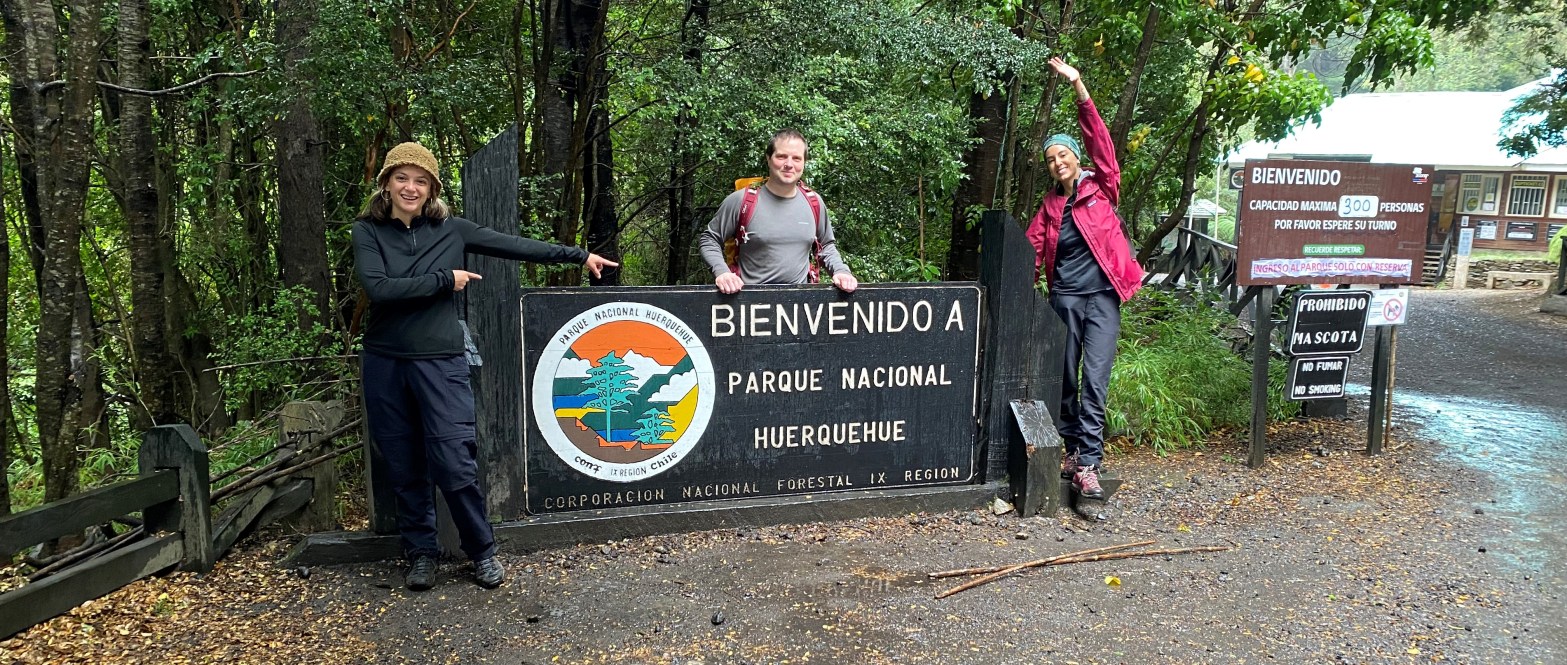
Once I arrived at Huerquehue National Park (at around 9:30 am), we were all instructed to get off the bus. A ranger came out and gave a long speech about the park and its various trails before we paid for our tickets, and perhaps it was partly because I was tired (having just caught a night bus from Santiago), but I found myself struggling to understand him. My Spanish proficiency is still rusty, and my understanding varies based on whom is speaking. If it is someone who is used to conversing with foreigners (and thus knows to speak clearly and simplify their vocabulary a little), I can follow and even engage in conversation, but if someone speaks very fast – and in a Chilean accent, no less, which is full of many colloquialisms – I easily get lost. Luckily, however, I befriended a pair of Chileans who spoke some English, and they helped me translate the parts I didn’t understand.

I originally planned to camp at the CONAF headquarters but was surprised to discover this was a jaw-dropping 24,000 pesos a night (something they are sheepishly quiet about on their website, no doubt because they are hoping people will turn up and think they have no other option). Luckily the two Chileans I had just befriended – Frances and Florencia – had booked a pitch at one of the private campsites in the park and offered to share it with me so we could split the cost. This was a stroke of fortune for me not only in a fiscal sense but also enriched my time there in general; the two of them became my companions for much of the weekend. We hiked together, cooked together, and helped each other practice English/Spanish.

This is one of the reasons that I enjoy backpacking alone. Once you learn to be content in your own company (a gift I acquired during my first trip and has benefitted my life exponentially), you never feel lonely anymore. And the thing is, you are not always alone anyway because you often make friends along the way (something you feel less inclined to do when you already have company).

And now – no doubt to the relief of many of you – I am going to get off my soap box a little about CONAF, the inefficiencies of privatisation, travelling alone, etc – and start telling you about the amazing time that I had at Huerquehue.

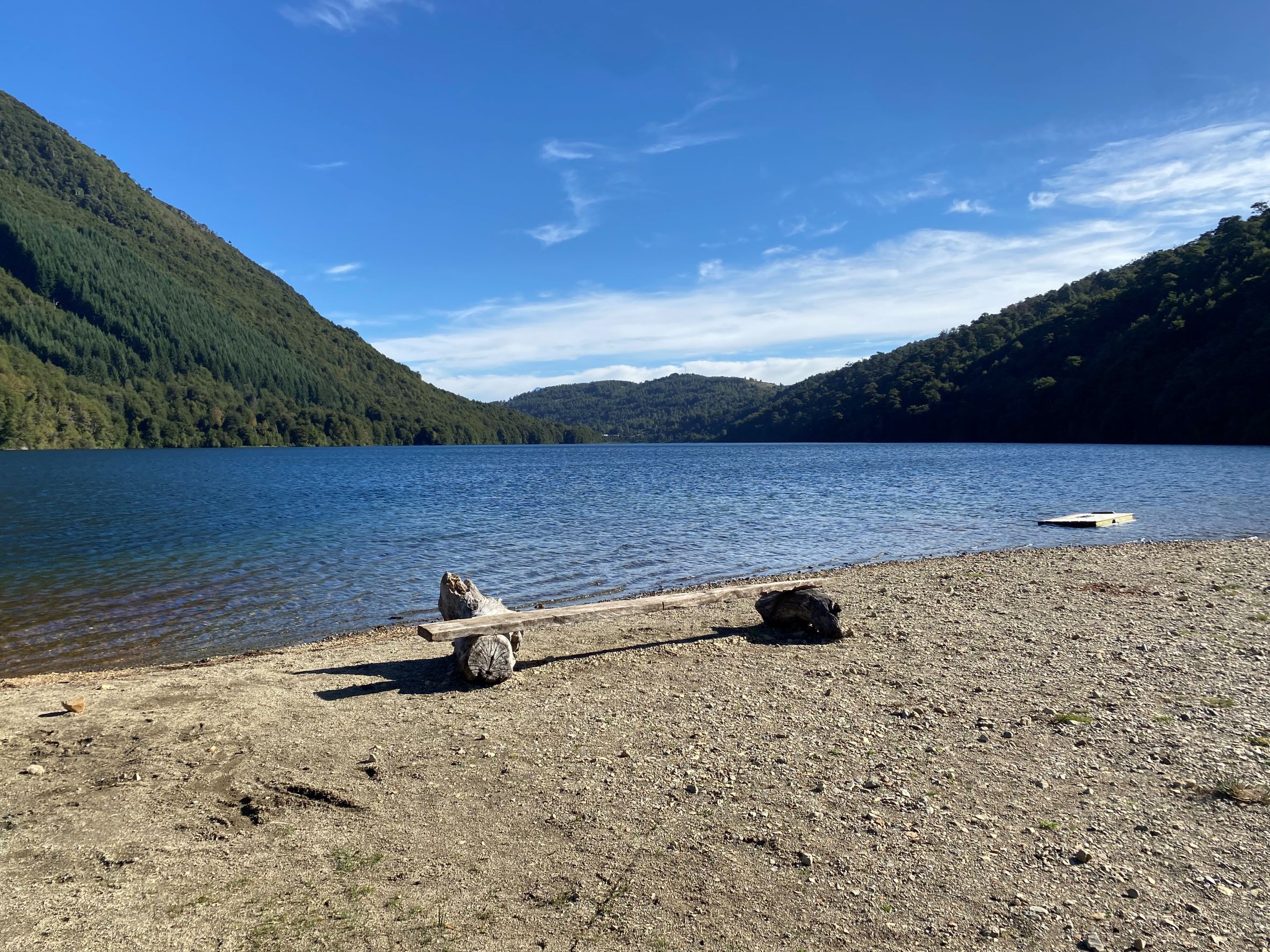
It was a two-kilometre walk from the headquarters to Olga Campsite, but it wasn’t gruelling, and we got to see some of the park. Once there, they gave us a plot close to a little beach on the shore of Lago Tinquilco.

And, after setting up our tents, we embarked upon the first hike of our stay.

There are two main trails in Huerquehue, Los Largos and Sendero San Cristobal. Another piece of advice I would give to this who might be heading this way is to check the weather if you want to do the latter, as it is forbidden if there has been any rain (even if it is just a little shower in the morning, such as was the case the day I arrived).

So, the three of us set off to see the lakes.

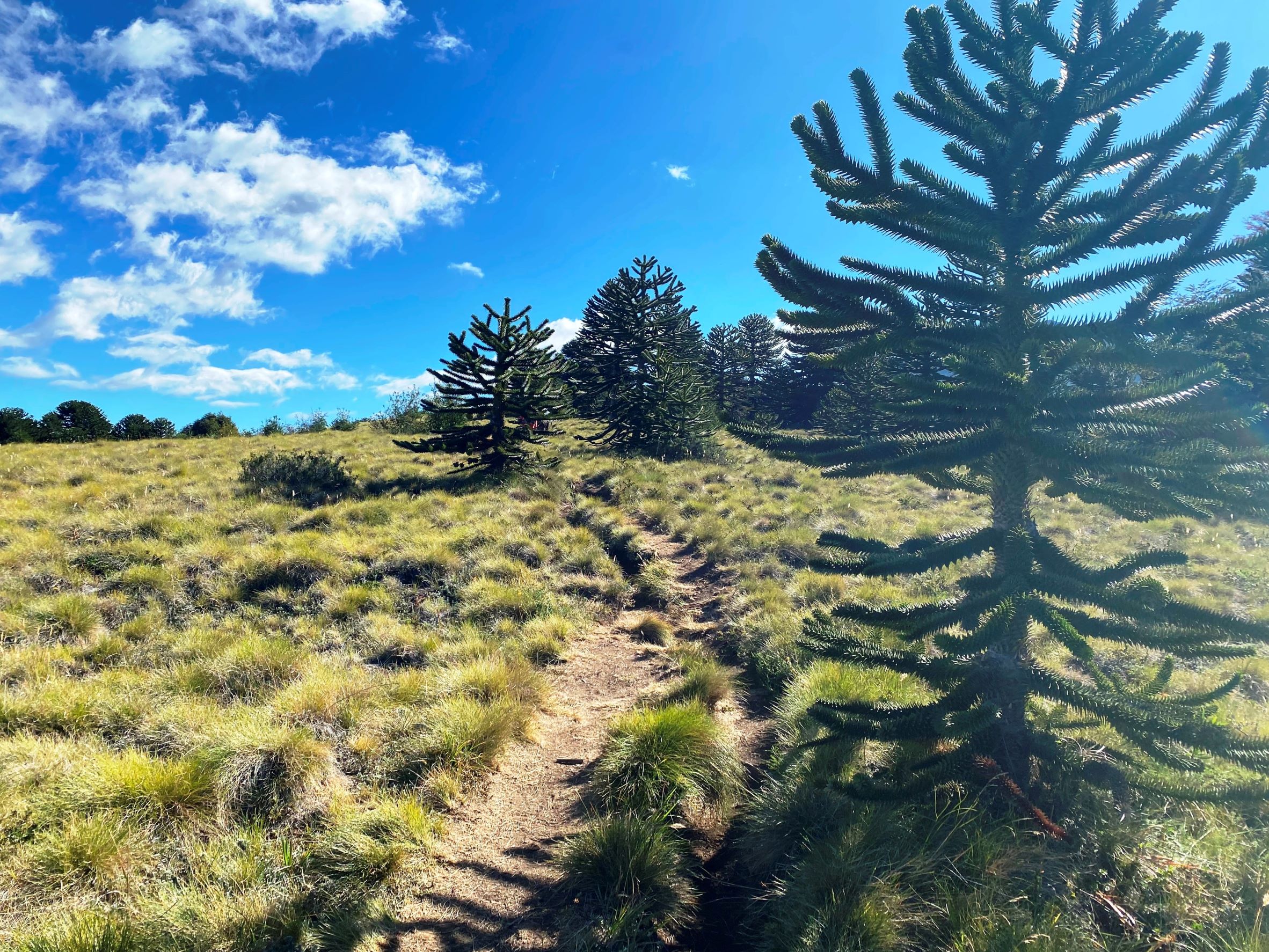
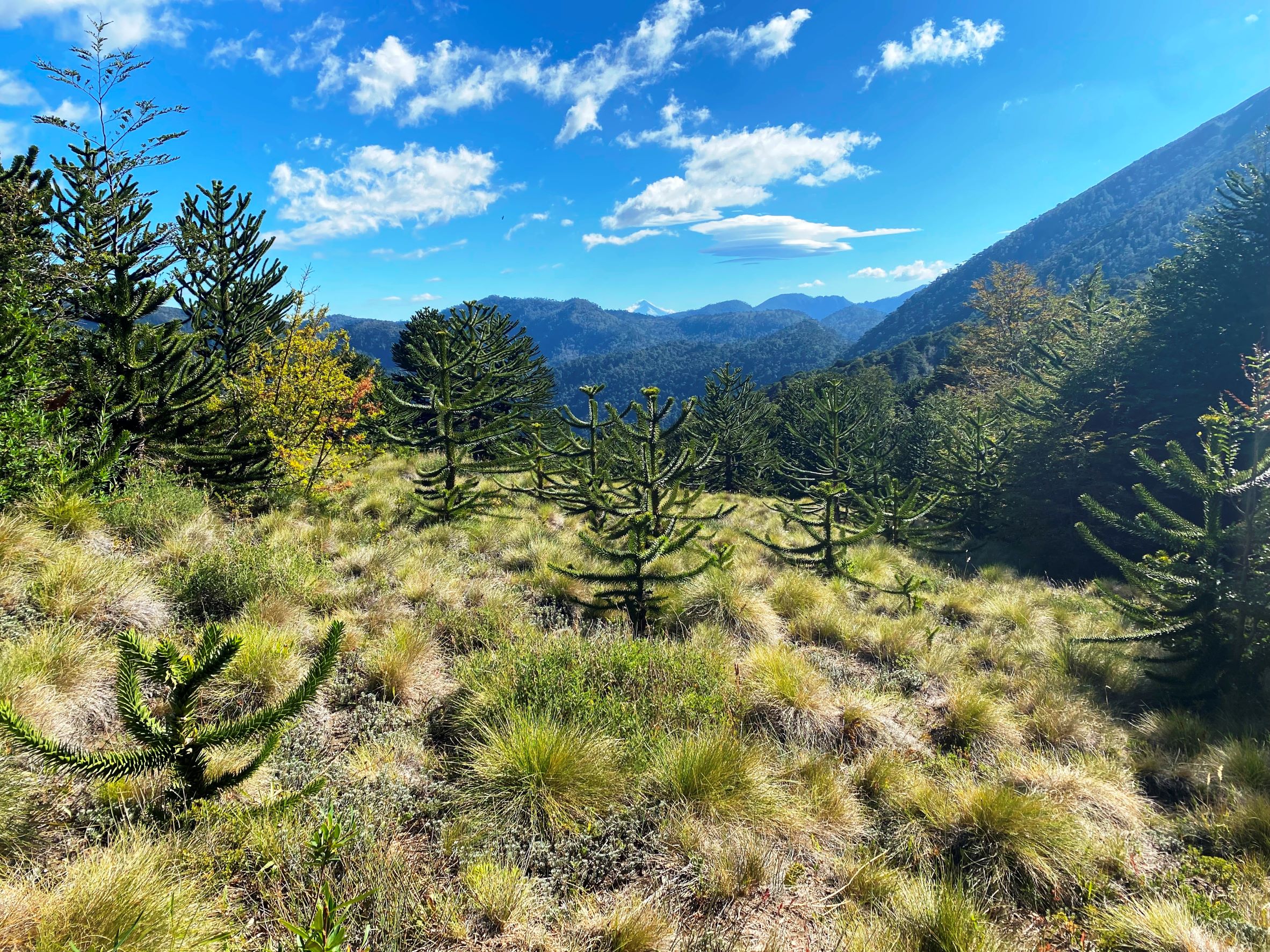
The trail is mostly uphill but not too steep. On the way we got to see not only two waterfalls but also many examples of Huerquehue’s ‘monkey-puzzle tree’ (also known as Araucaria araucana or ‘the dragon’), an ancient genus of Chilean pine. They are everywhere, so you can’t miss them, and they come in many sizes.

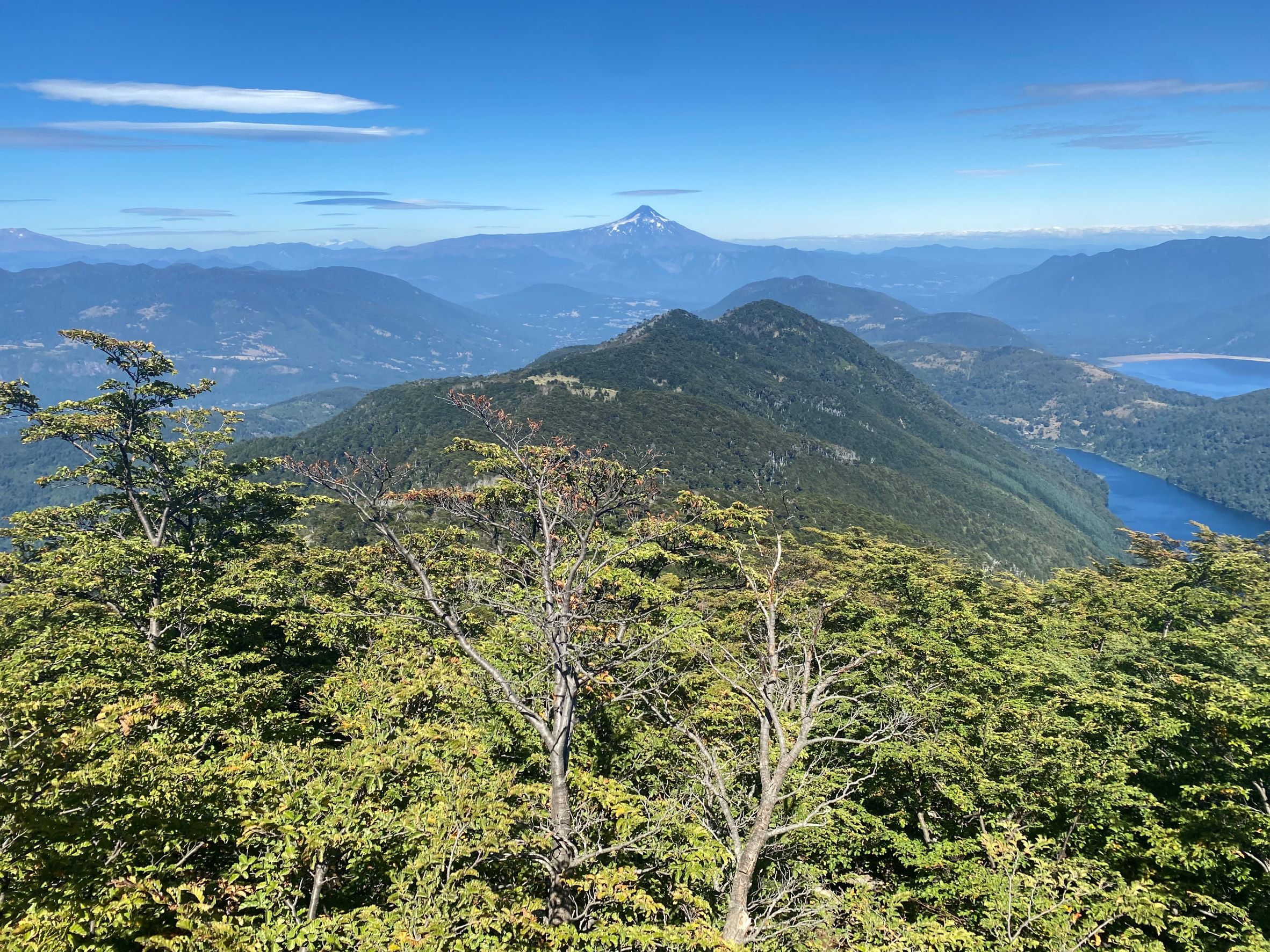
Shortly before reaching the lakes themselves, you also pass by a couple of miradors where one can catch amazing views of Lago Tinquilco (where Huerquehue’s headquarters and campsites are located) as well as Villarica Volcano (also known as Rucapillán, ‘great spirit’s house’ to the Mapuche people).

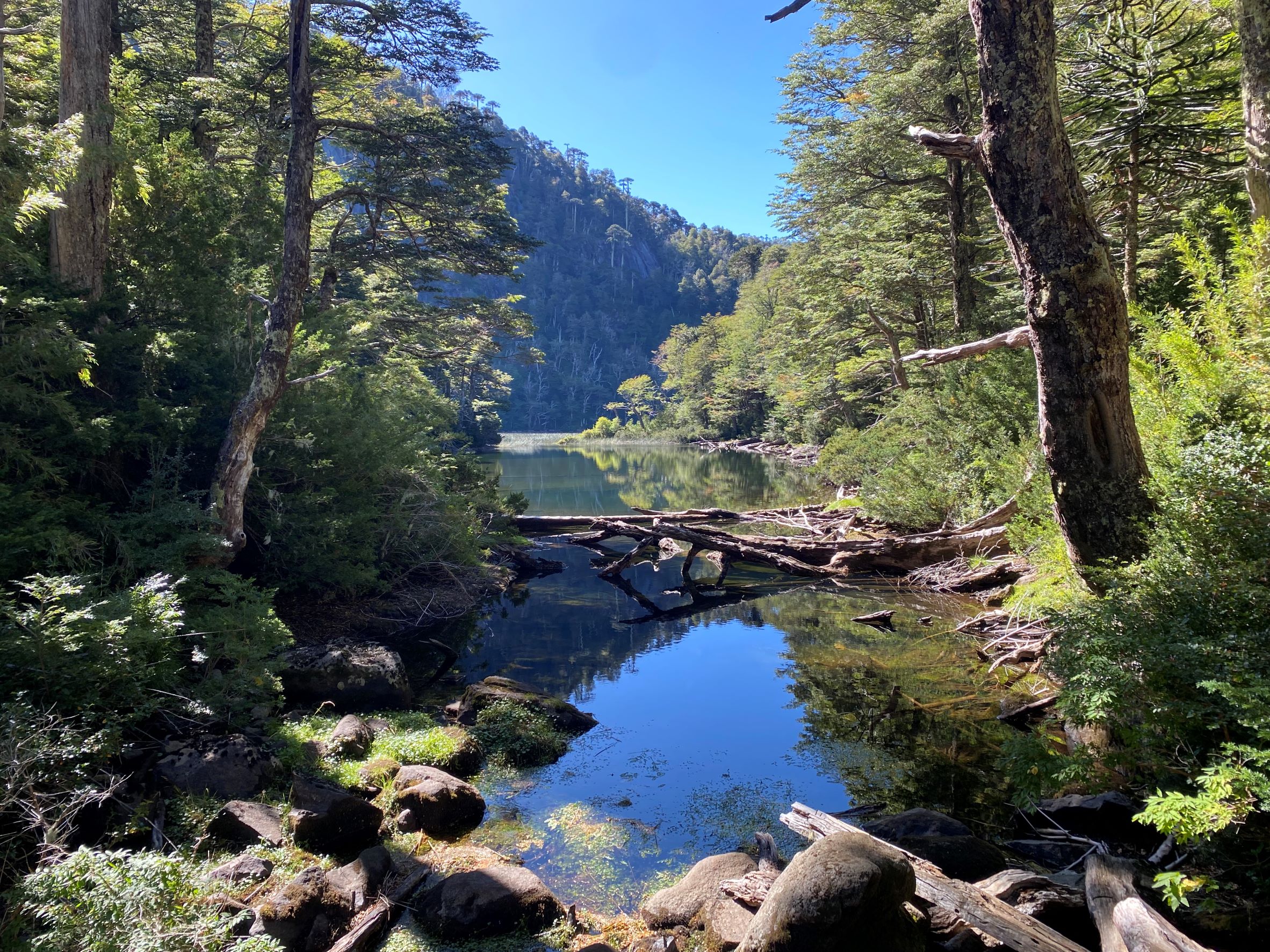
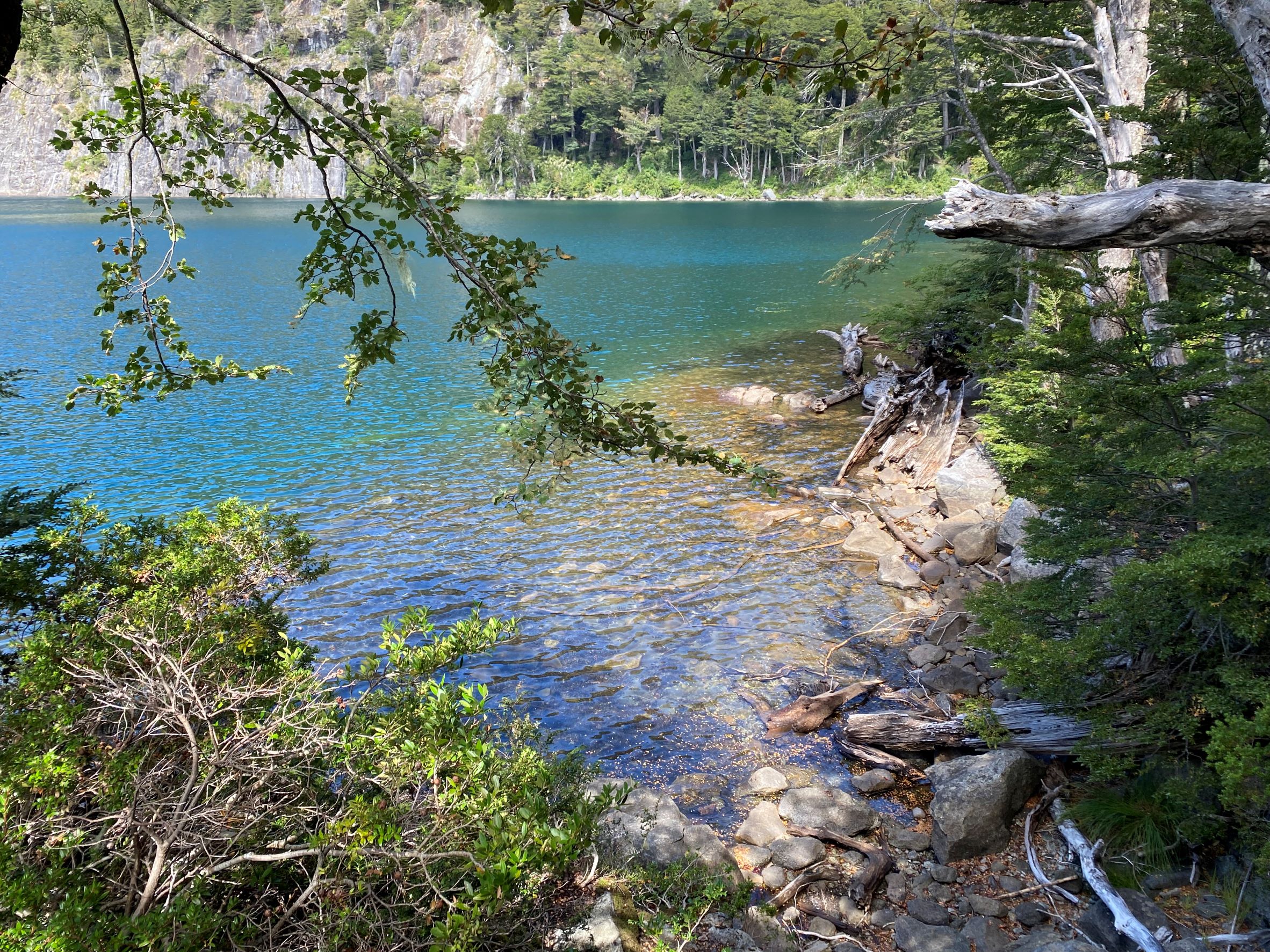
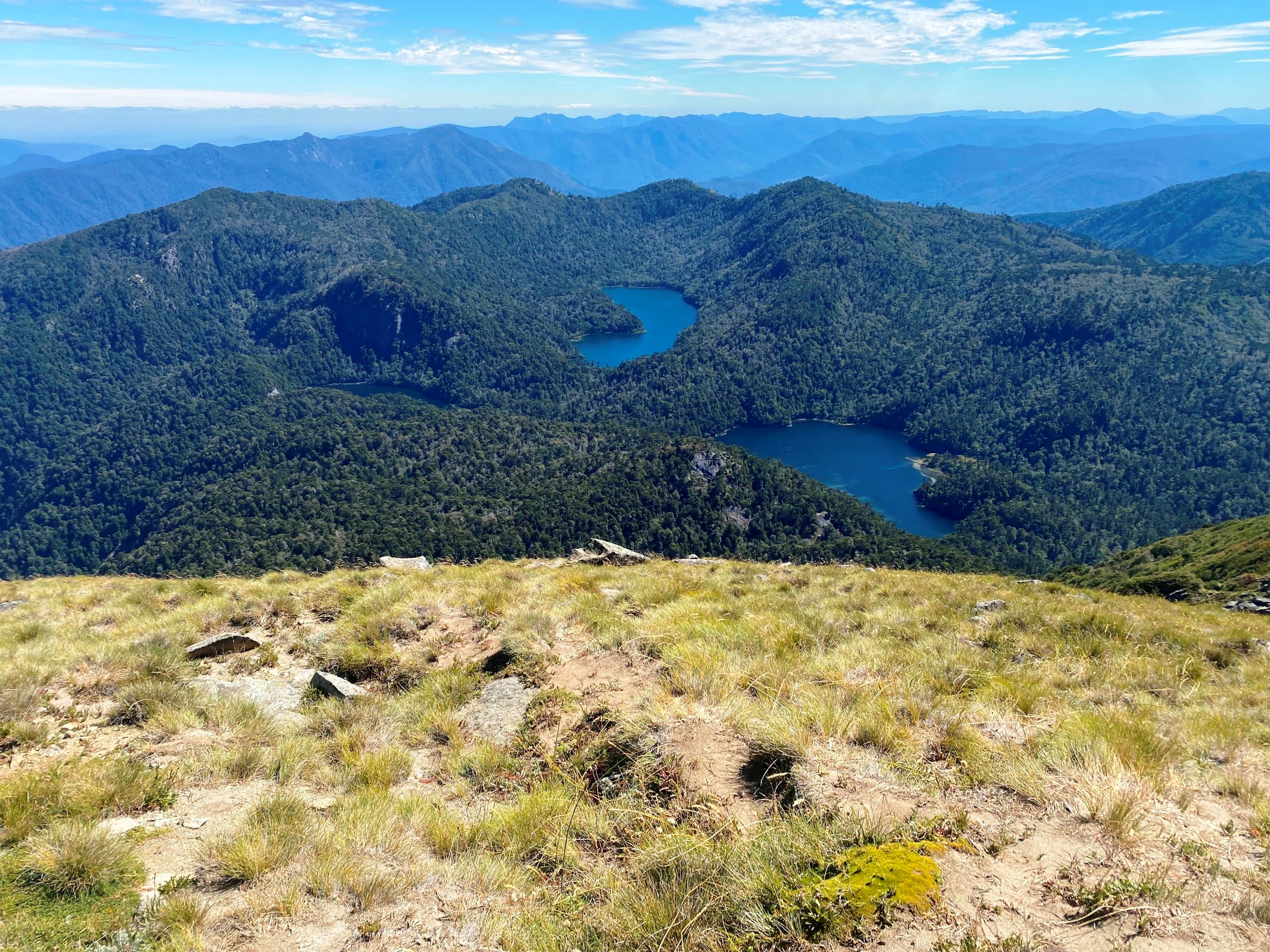
Once you reach the top, there are three lakes, each of which can be seen through a circular trail. We decided to walk it widdershins, so the first one we saw was Lago Chico.

Followed by Lago Toro.

And, finally, Lago Verde.

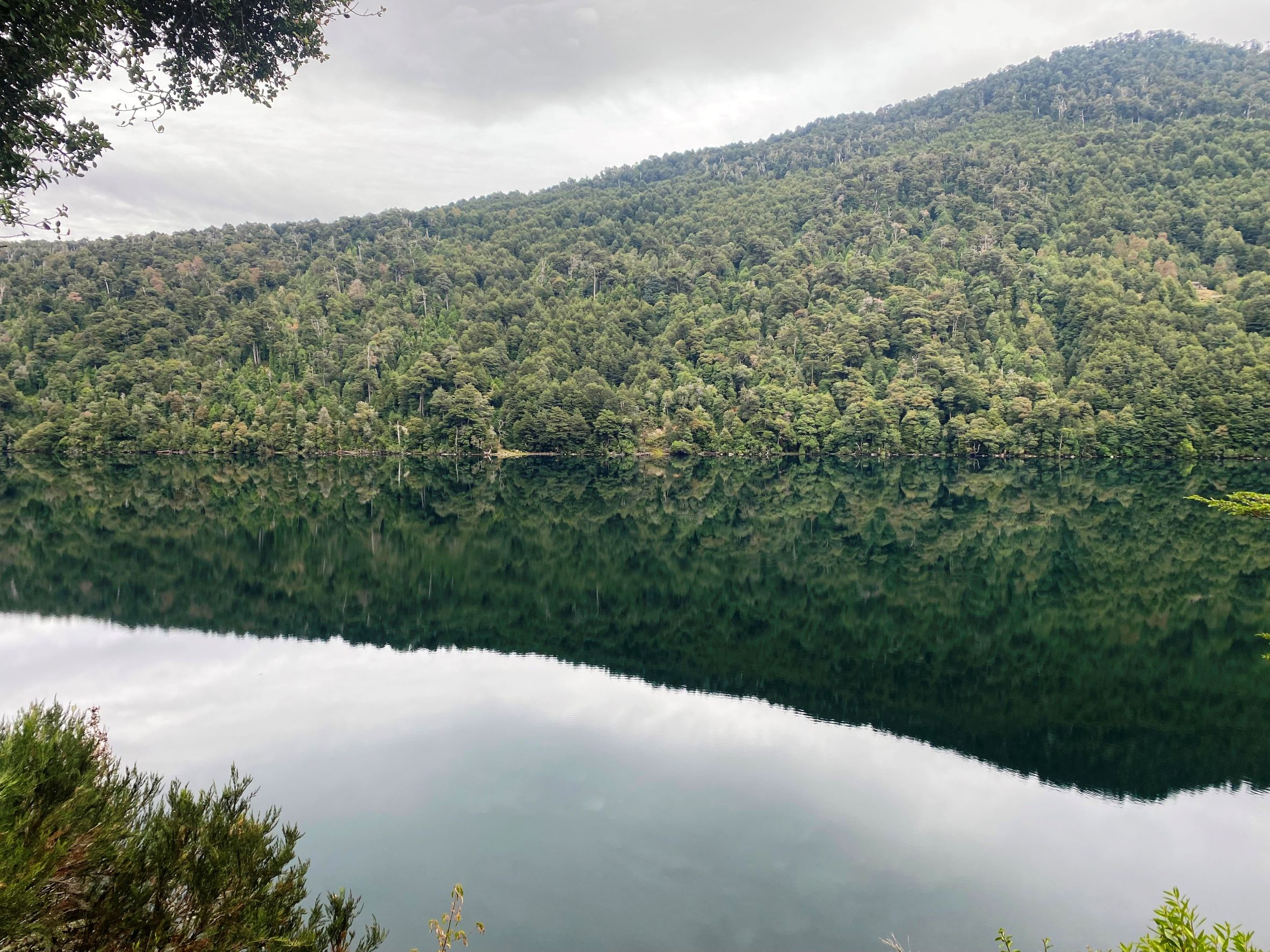
Each of these was stunning. The forest, its trees, and the way the lakes are so clear and still that they reflect it all is just magical. I will also say that, whilst the pictures I took later that day – after the sun came out – made for more eye-catching photos, there was a gloomy eeriness before that which I preferred and can’t quite be captured on camera.

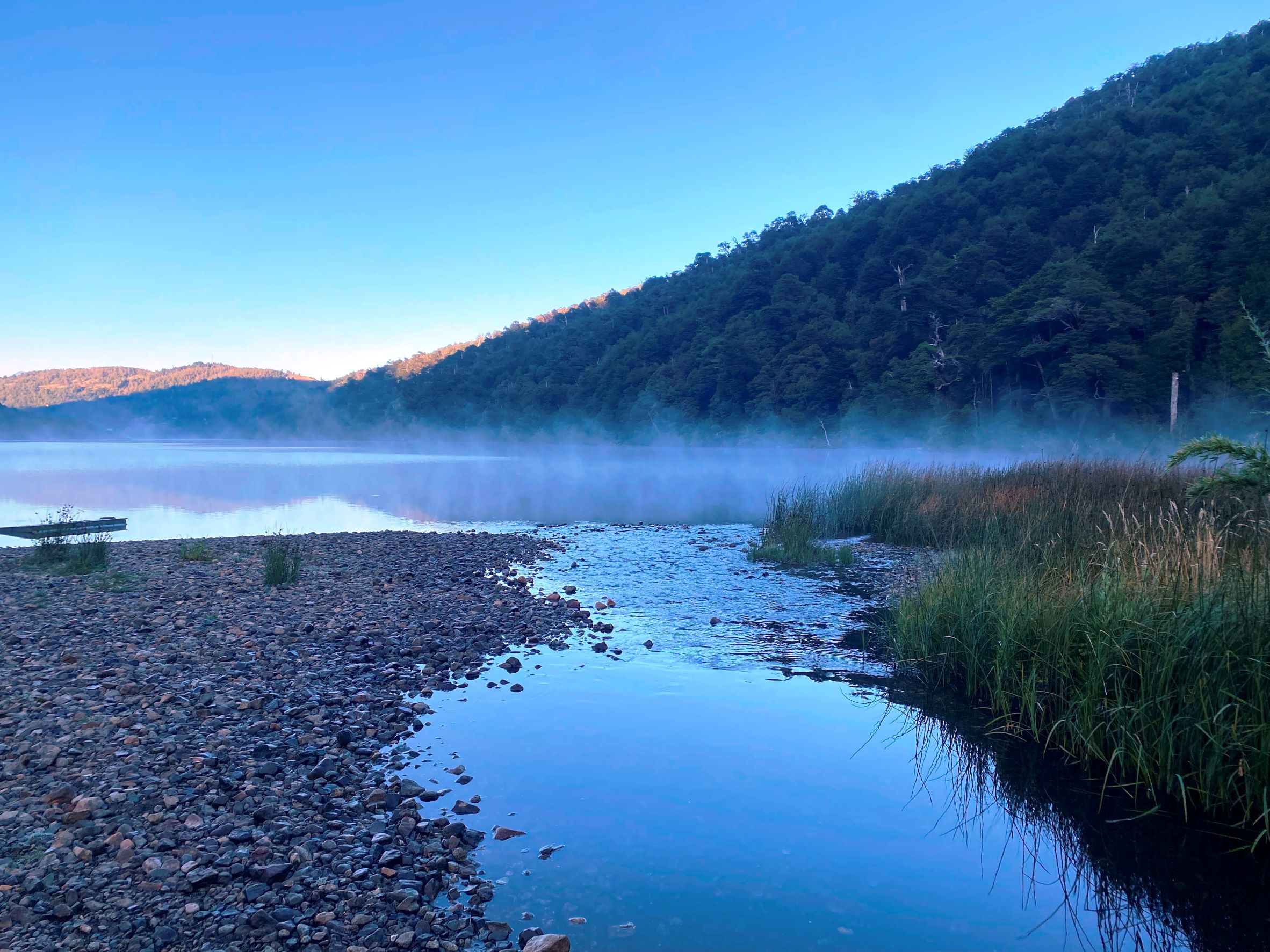
The following morning, I got up early and went to the lakeside in time to catch the mist rising from Lake Tinquilco. After that, I ate breakfast and set off for the second hike of the weekend: Sendero San Cristobal.

In hindsight, I am glad that I wasn’t permitted to do this hike on the first day. It is much harder going than the Los Largos trail, and heading straight from the campsite in the morning meant we had more time. Another tip I will give to other backpackers heading this way is that – unlike Los Largos – there isn’t a ranger checkpoint at the trailhead for Sedero San Sebastian, so if you are staying at one of the campsites past the headquarters you should be able to skip paying the park entry fee twice by saving Serdero San Cristobal for the second day.

(I don’t feel guilty giving this information considering the problems I have with CONAF trying to rip off campers and making foreigners pay twice the price of residents.)

Sendero San Cristobal was much tougher than I thought it would be. The first half of it is the kind of trail that most hikers will be all too familiar with. You know. The kind that is steep and zig-zags back and forth up the side of a mountain. The kind that – if you are foolish enough to check your satnav – you’ll be dismayed at how little distance you seem to have covered so far. The kind that feels like it will never end. The kind that you’ll spend the last fifty per cent of thinking, ‘WHY DO I FUCKING DO THIS TO MYSELF?!!!!’.

But, you are eventually given some respite once you reach a windswept moor dotted with trees; a place that is not only stunning visually, but also where the trail levels out for a while into a gentle incline.

It is also here that you begin to glimpse some of the incredible views this trail has to offer.

From Senero San Sebastian, you can not only see Villarica Volcano.

But also, another one further to the distance. One that I looked up online and discovered is called Quetrupillán.

One can also see the lakes from the Los Lagos trail.

As well as many other things. San Cristobal is the highest point for quite some miles, so the panoramas up there are numerous and spectacular.

But, it is also tough. Shortly after the windswept moor you reach the trees again and the trail gets steeper. At some points, you are not even hiking anymore but rather climbing. I can completely understand why the rangers forbid this trail when it has been raining because in some parts you are clambering over rocks, and some sections made me – as someone with a fear of heights – wince. A slip in the wrong place here could be fatal. I did however see quite a lot of children and elderly people among the hikers, so I will say that it is overall doable for most able-bodied people as long as they are careful and prepared to take their time. It is certainly a trail to take care during.

Once we reached the summit we took lots of photos, and then Florencia, myself and several others all took shelter on the side of the bluff facing away from the wind to eat a quick lunch before making our way back down again.

Overall, I was very impressed with Huerquehue national park. Patagonia is vast and was a very special place for me during my last trip. I had previously believed myself to have already seen the best of it, but Huerquehue exceeded my expectations and made me realise that many treasures are still left unexplored.

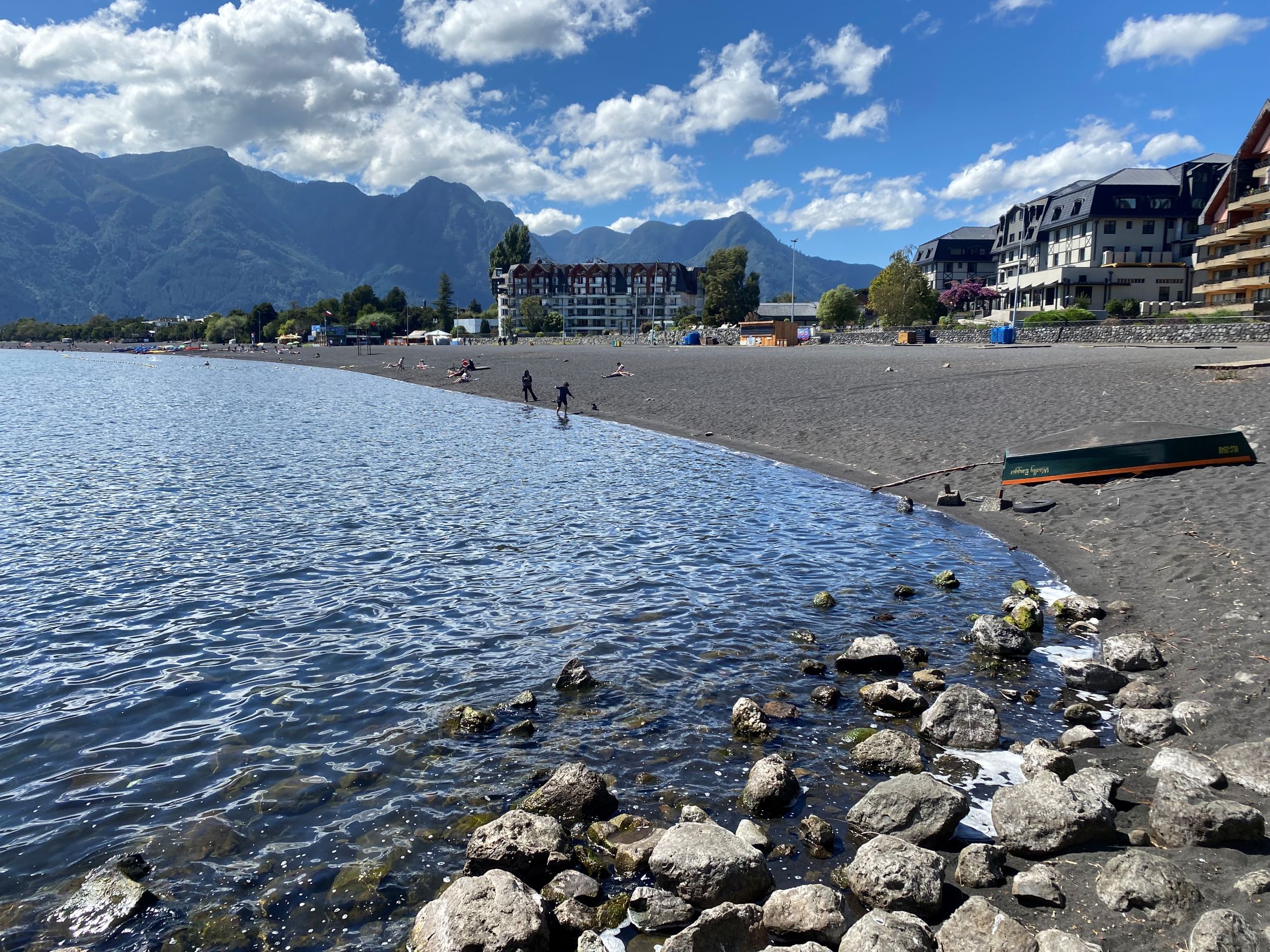
After my time in Huerquehue, I spent five days in Pucón, a picturesque town nestled between the base of Villarica Volcano and a lake of the same name. Francisco and Cristobal (my friends from Santiago) had arrived by then, as they had a family event there that week. They were busy most of the time, and my legs were aching from the hikes in Huerquehue so I took it easy and spent much of my time relaxing, enjoying the little cafes and going for little wanders at the shore of the lake.

The three of us did, however, go on a couple of little day trips. First, there was one up to the nearby city of Temuco, passing miles and miles of farmsteads and old Mapuche lands, and then Cristobal took us to see an old farmhouse where his grandparents lived and he spent many summers during his childhood; a charming, dated yet grand, and homey place. It was very interesting for someone like me to see, but I refrained from taking photos as it would have felt a bit weird treating the family home of a friend like a museum.

On another day, we went to see Salto El Leon, a huge waterfall over 92 meters high and just a short drive from Pucón.

After my time in Pucón was over I caught the bus back to Santiago, where I stayed for one more night before flying to Ecuador.

It will probably be a while until you hear from me again as I am about to return to Merazonia Refuge (the wildlife rehabilitation centre I volunteered at during my last trip) for five weeks. You can read about my previous time spent there by clicking here.

After that is over, I will be crossing the border into Colombia, and that is when the adventures will truly begin, my blogs will be more exciting, and you will hear from me more!

Click on the following links for more photos from Huerquehue National Park and Pucón.