
NOTE: Out of convenience for the different readers of this blog, I am including a section at the end with Practical Information intended for other travellers thinking of doing Ciudad Perdida. The main body of this blog will focus mainly on the experience.
21st – 24th May, 2023
Day 1
A bus picked me up in Santa Marta early in the morning and took me to the office for Magic Tour, where I met some of my companions for the coming days. We were a mixed bunch; Germans, French, Israelis, Americans, Dutch, a Brazillian and a couple of other Brits (along with various Spanish speakers assigned to a different group as they did not need a translator). All of us excited to be heading to – what is said to be – one of the highlights of Colombia. Ciudad Perdida.
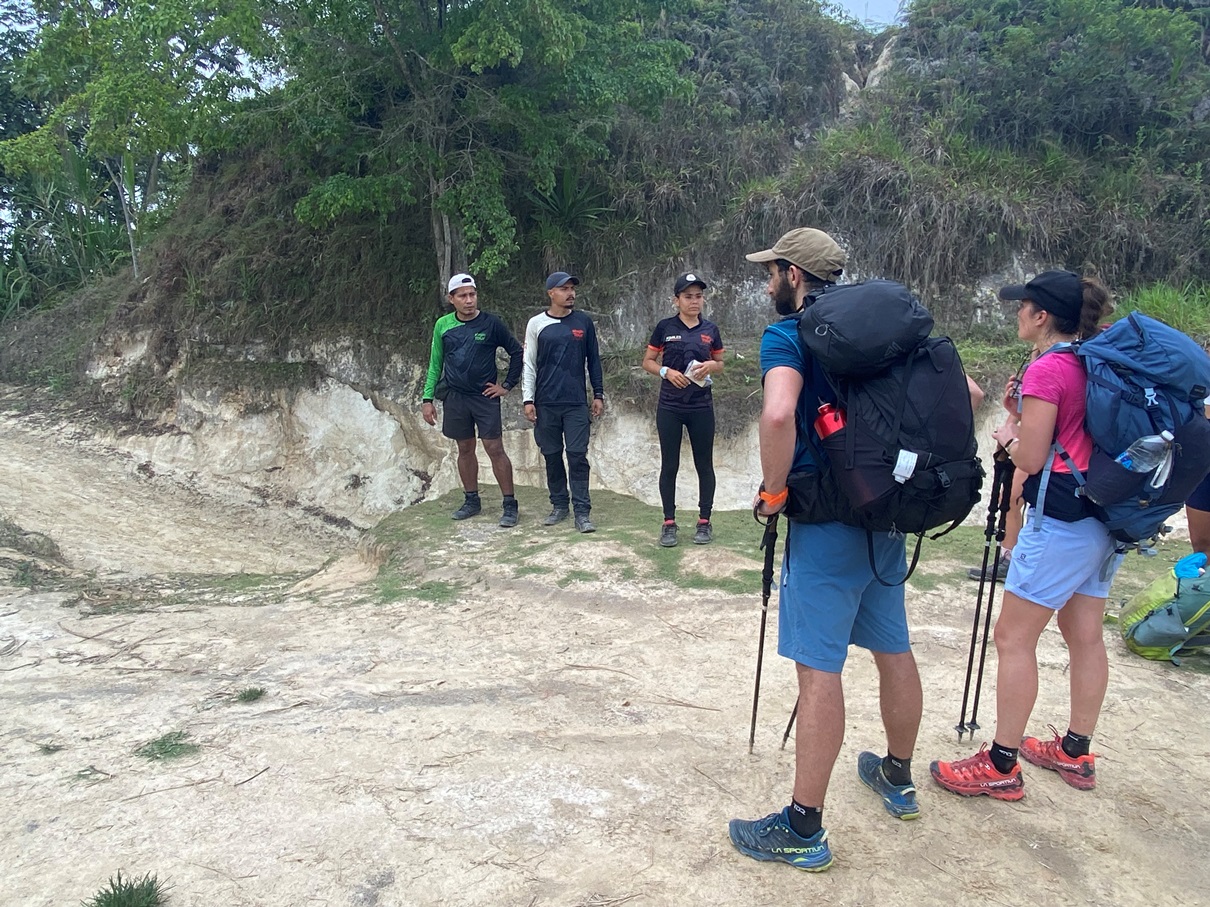
The bus towards the Sierra Nevada de Santa Marta mountain range was a rocky two hours, after which the driver dropped us off at a village called El Mamey, where we met our guides.
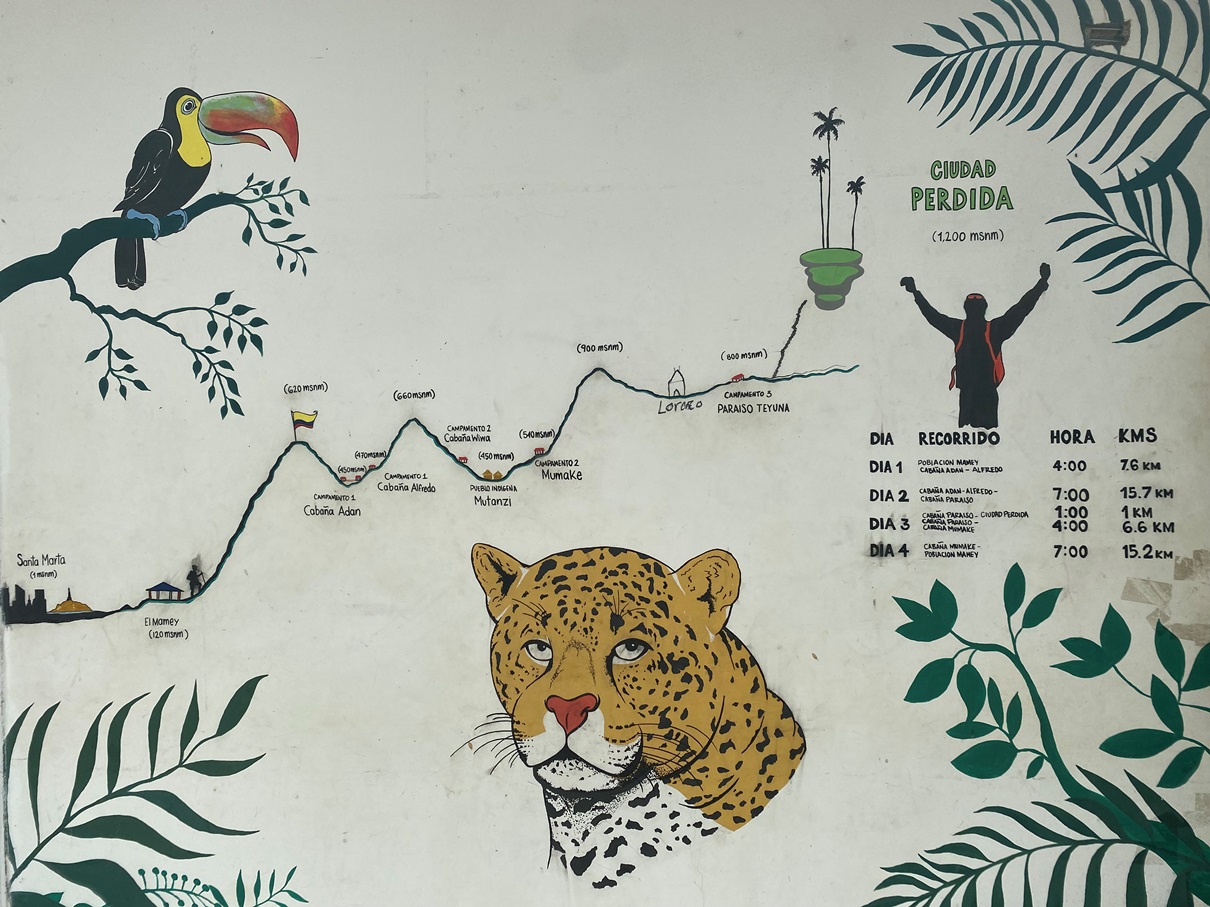
As we were eating lunch, we looked at the map painted on the wall and discussed what we had to come. We had all heard stories about this trek, but as the guide explained the distances to us we were surprised by how easy it seemed. The longest day was a mere eighteen kilometres, and this first afternoon we just needed to hike eight to reach basecamp. Sure, a lot of it is uphill (especially for the first two days), but Magic Tour providing all the accommodation and food meant we only had to carry small backpacks. No problem, we thought.
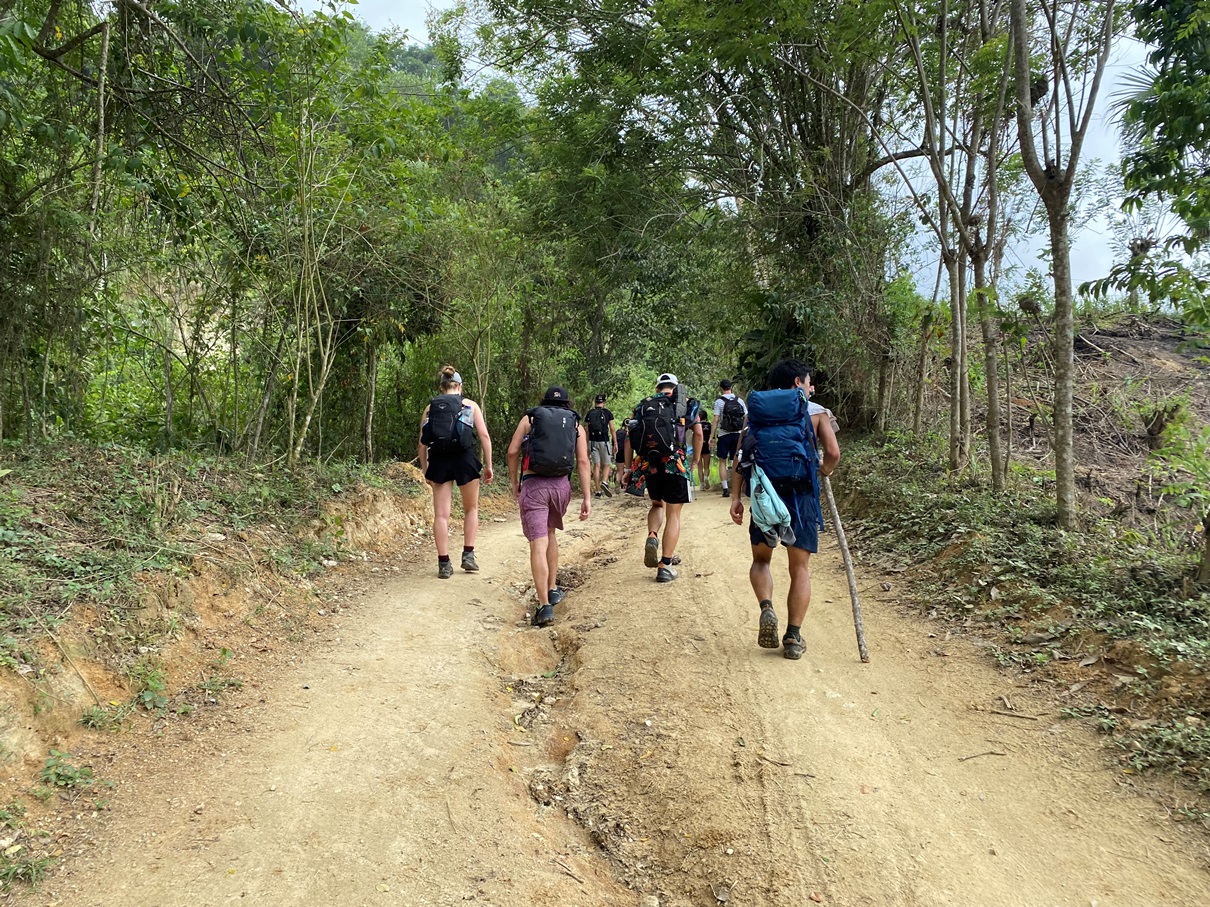
And it was within the first hour that we discovered what our nemesis during this trek would be.
Before I continue, I want to say something. I have done a lot of hikes and travelled to some of the places considered among the hottest and most humid places in the world. Egypt. Indonesia. Malaysia. Burma. Laos in the ‘super hot’ season. I could go on, but I am sure you get the idea.
I am telling you this not to brag, but so you know that when I say what I am about to say next, you know it comes from a place of somewhat authority.
I have never – in all my travels – sweated like I have during this hike.
It is hard to put into words. We were all just dripping. Constantly. All day. Every day. I couldn’t wear sunglasses because I couldn’t see through the sweat dripping down them. My eyes stung from all the salt. Within the first hour, I had to pack my electronics into my dry bags, but not because it was raining – alas, I often PRAYED for it to rain in the coming days – but because I was sweating so much that it was leaking into my bag. Throughout the rest of this hike, I averaged about six litres of water each day but seldom needed to pee.
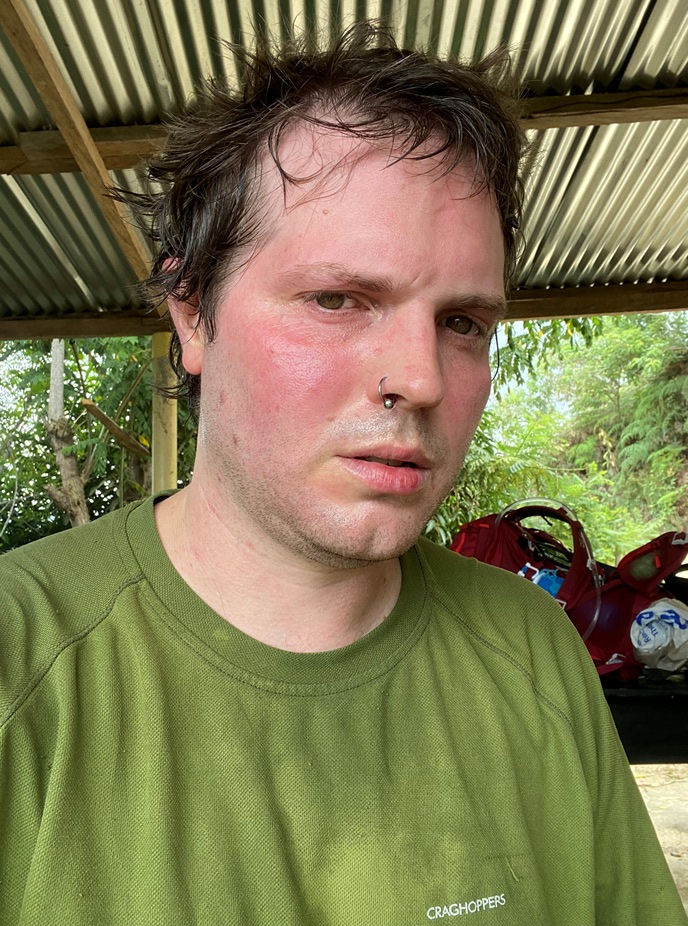
You probably now think I hated this hike, but I didn’t. And if you are someone considering it, I hope this doesn’t put you off, as it is – and will probably remain – one of the toughest things I have ever done, but the scenery was beautiful, and it all turned out to have been worth it by the end. I had a group of companions with me all going through the same torture. We bonded as we marched under the hot sun, oozing, leaving a trail in our wake.

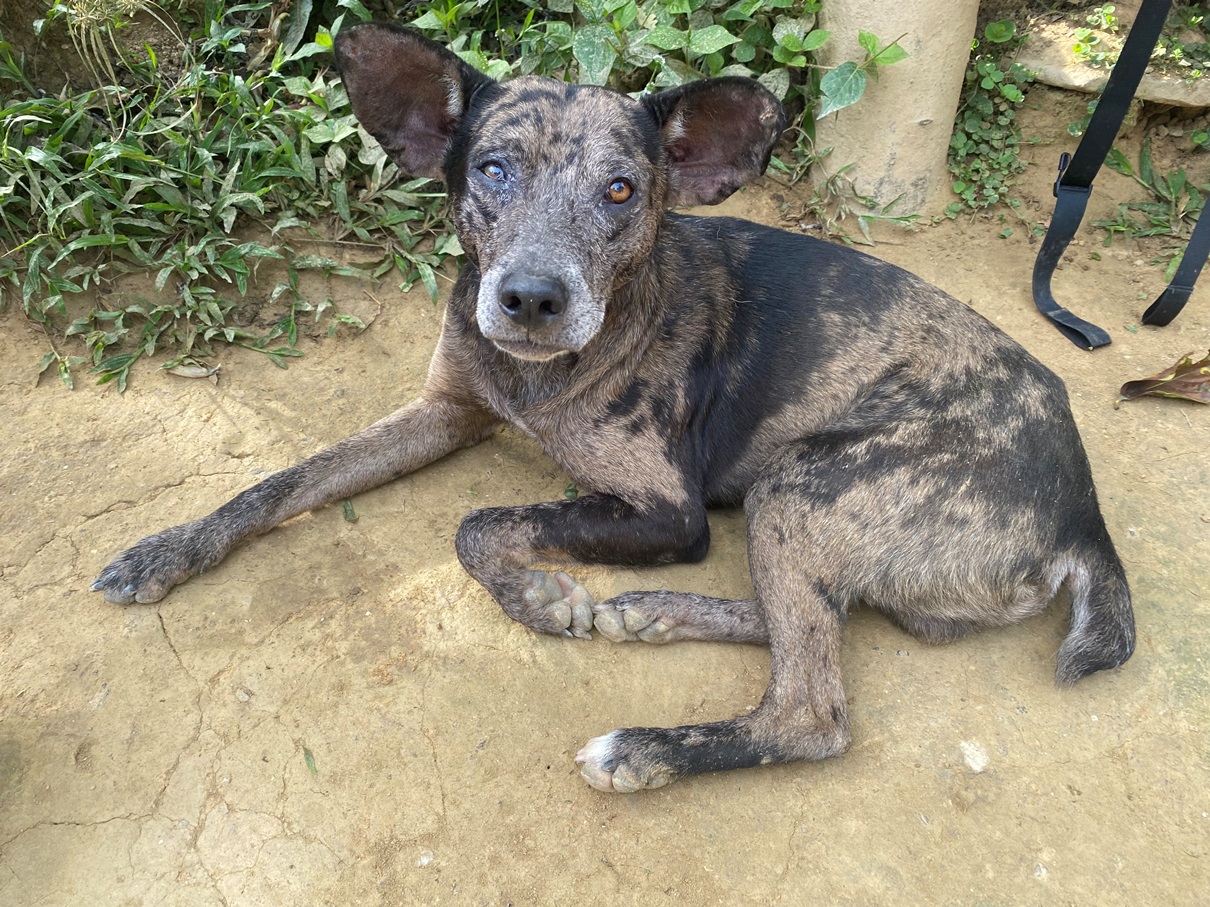
We also found ourselves with an unexpected companion; a dog that followed us from the start of the trail. We named him Marble, and he stayed with us for most of the first two days.
Once we reached the top of that first afternoon’s ascent, we stopped for a while, and our guides gave us our first history lesson; this day told mostly from the perspective of the campesinos (migrants that moved here during the 1950s to escape from a lot of the troubles that were happening in Colombia’s cities at the time). Initially, they believed this area to be uninhabited, but as they began to build their farms some occasionally noticed mysterious people dressed in white appearing from the mountains. And, as they cleared away the trees, many discovered artefacts made from gold and precious stones. They initially made some money from selling these artefacts, but other than that, they discovered farming in this area to be mostly unprofitable. Despite the richness of the soil, it was so remote they could never transport any of the food they grew to nearby cities before it began to spoil, so most of them slipped into poverty.
They did experience two relatively prosperous periods. The first being in the 1960s when they started to grow marijuana – which grew quickly, stored well, and was very transportable – but this economic boom ended in 1975 when new legislation made it illegal. The second prosperous period was in the 1980s when they started to grow cocoa, but then Colombia’s Guerrilla groups and army began to fight over this area in the 1990s and turned this area into a very dark place to live. It was only in 2004 that they began to prosper again, largely thanks to the influx of tourism after the fighting ended.

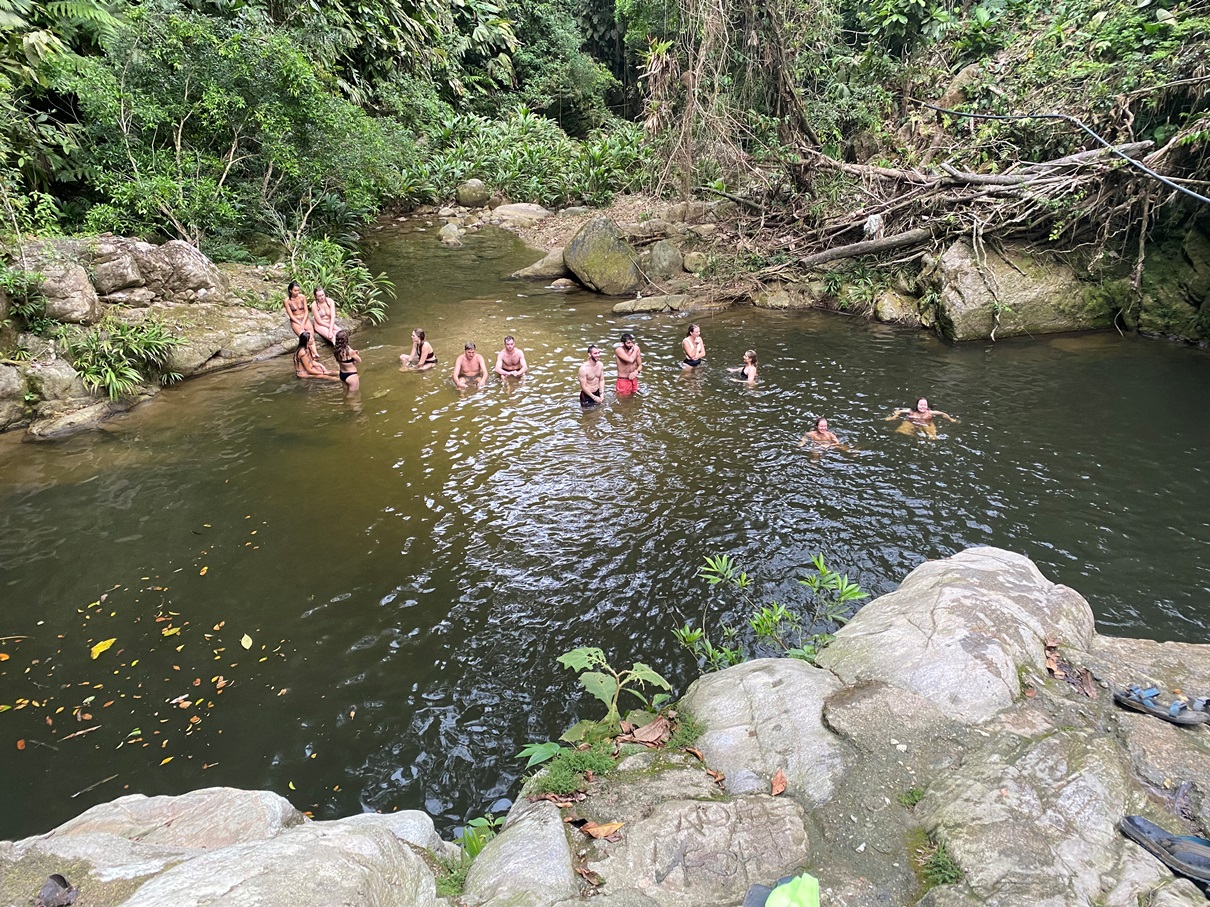
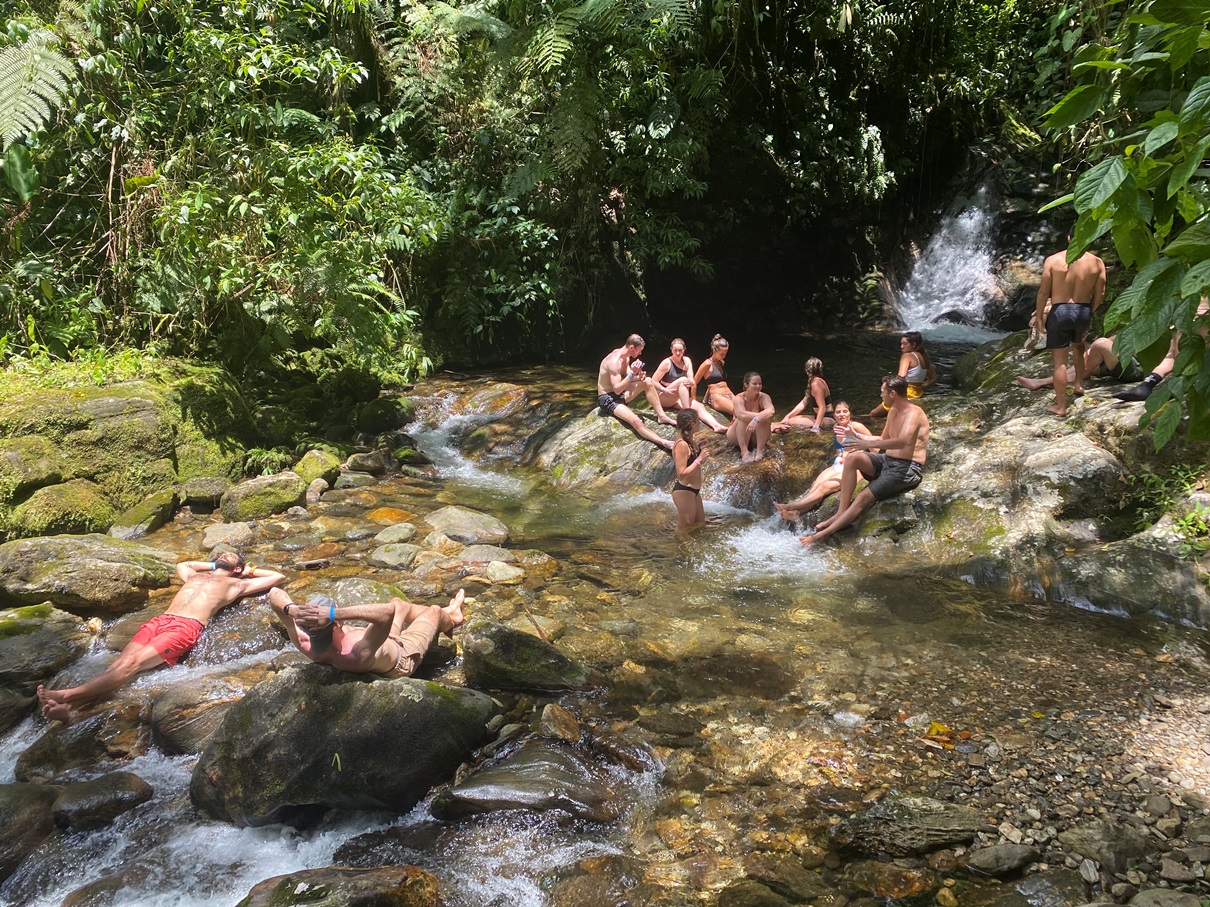
After this history lesson, we descended towards Cabana Adan, where we stayed the first night. There was a nearby swimming pool in the river which we all eagerly jumped in. I did so with my t-shirt still on – as it was still drenched from sweat anyway – and then hung it up to dry. That night, we ate fried fish with rice and vegetables, and I went to bed shortly after that.
Day 2
Waking up at 5 am, we all crawled out of our bunk beds, ate breakfast, and hurriedly packed our things, ready to leave within an hour.
We saw our first Tairona people that morning – something that would become common as we headed deeper into their territory – and an hour or so later, we passed our first indigenous village, Mutanzi.
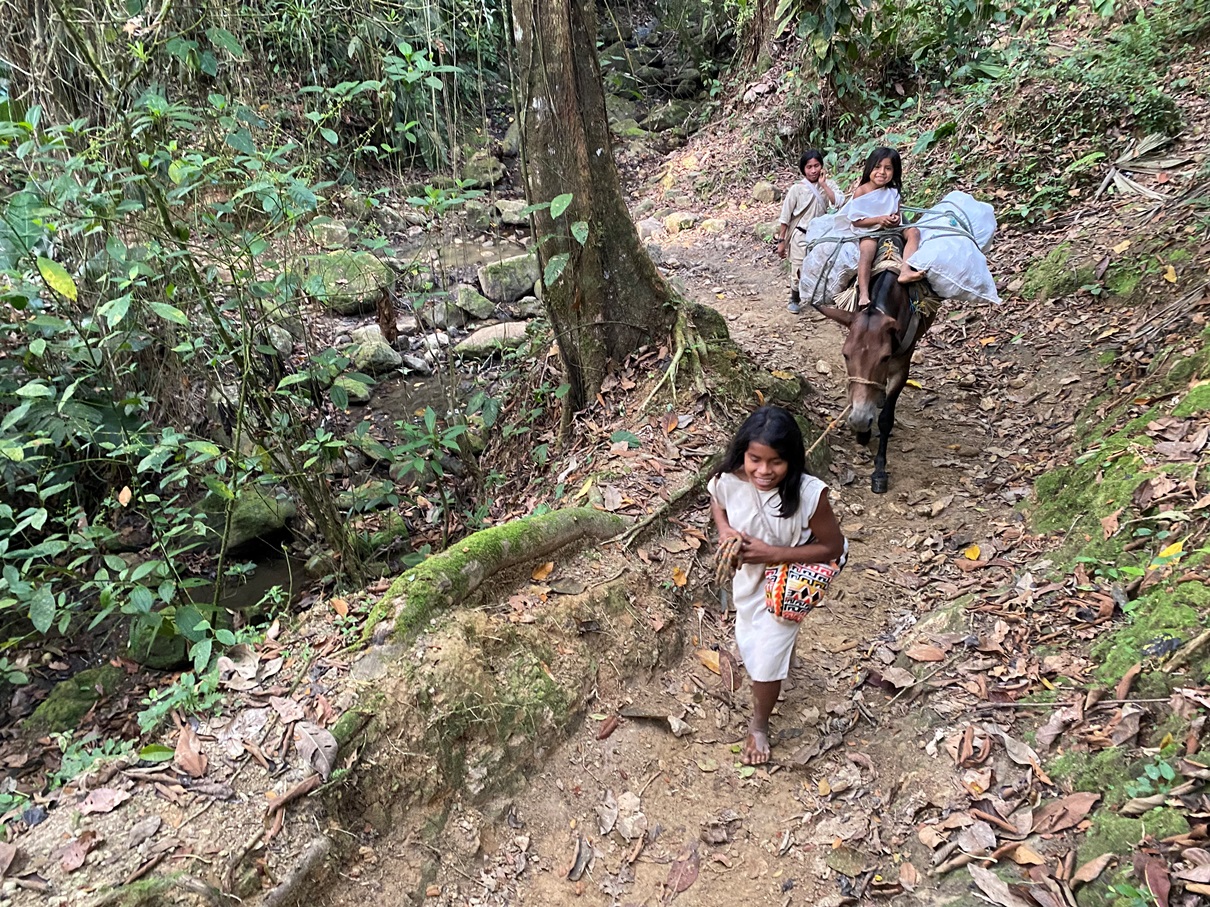
We stopped for a while and our guides told us more about the Tairona. They are comprised of four different subgroups, and this particular one belongs to the Kogi people. Most of the time, only three or so families live here – acting caretakers – as the Kogis are nomadic and move between different places throughout the year. This is the place where they gather for meetings and ceremonies.

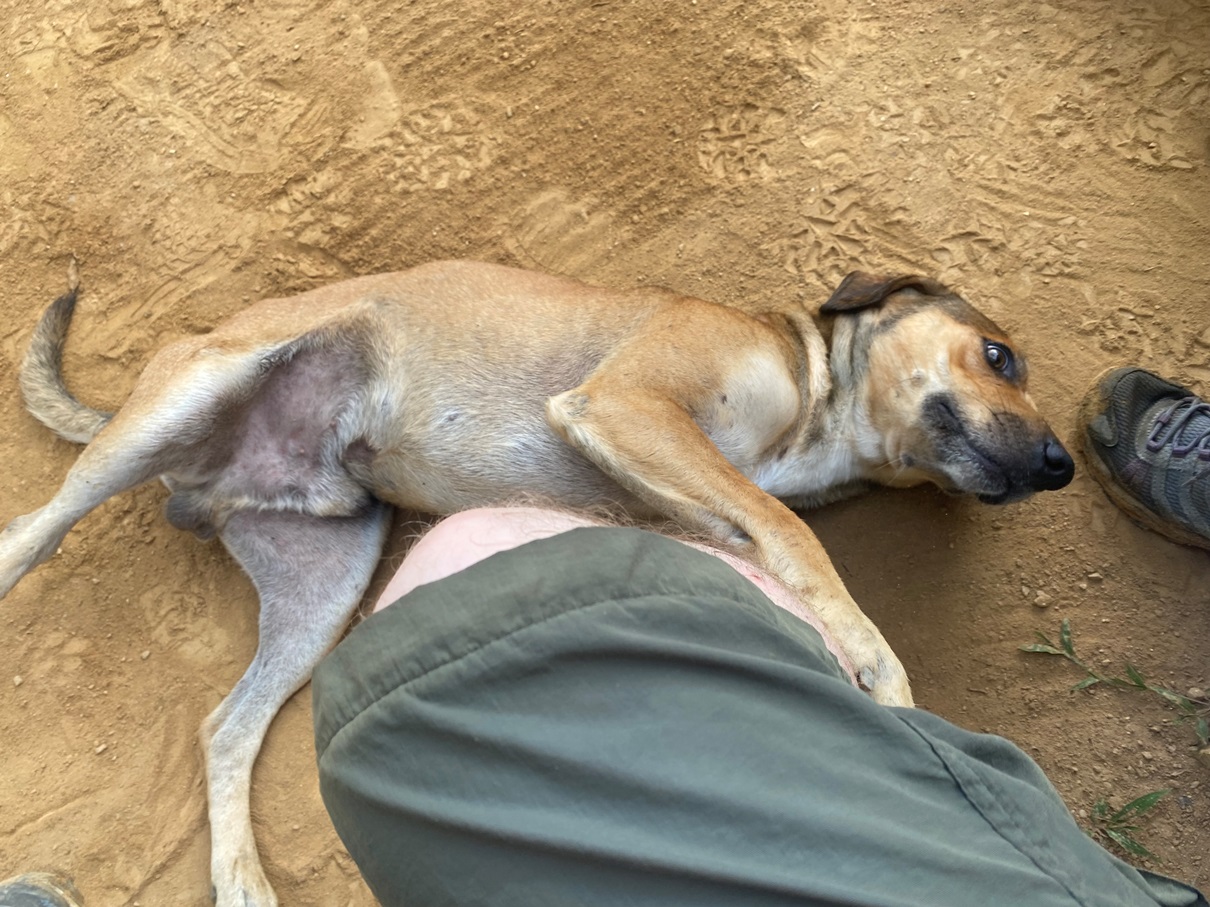
After lunch at Campamiento Mumake, Marble chose to stay behind there but we were joined by two new companions that I named Sandy and Marbolo. I believe Marbolo to be Marble’s brother because he looked remarkably similar and appeared to be the same mix of breeds as him, but whereas Marble had half his tail missing, Marbolo had a gimpy front leg (but still had no problems outpacing us).

Later that night – after we arrived at Campamiento Lorenzo, had our customary swim in the river, and ate – we had a more detailed lecture about the Tairona people and the history of Cuidad Perdida.

As I relate some of this to you, please bear in mind how it has been passed down. The guide who told it to me was told it verbally by one of the spiritual leaders of the Tairona several years ago and has been repeating it to others over the years, and when I heard it, I hurriedly wrote as much down into my phone as I could. With that – and the fact that it has been translated between at least three different languages – in mind, please take what I am about to relate to you with a grain of salt. I did try my best to record it as accurately as I heard it. Also, I just want to say that I suspect – from some of the details – that this version is not traditional and has been revised since colonial times. Out of respect to the Tairona people, I will retell it as it was told to me.
The Tairona people are polytheistic, but their main god is the sun, Sentada, and they call themselves the ‘children of the sun’. Once, Sentada had a son with the face of a monkey and the body of a human who was initially hidden for fourteen years but eventually revealed himself to the Tairona people. He told them, “My name is Senanqua. I have come to man, and I am going to explain how my father made the planet. My father gave life to the world and created the mountains, seas, oceans, and creatures. And once everything was made, humans were created, and their purpose is to take care of the planet.”
The people of Tairona asked the boy how to take care of the planet, and he told them to offer black stones to mother earth, carnelian for the blood of mother earth, jade for everything green, quartz for sources of water, blue stones for the ocean, and gold for the sun.
The community went away for four years to gather the stones and during that time made an armour of gold for Senanqua. When he put it on, it made him shine like the sun, and he elevated to the sky, becoming a shining light, guiding the Tairona people from Asia to South America.
When they arrived here, they started building their houses out of stone. They made them round to represent the sun and the moon and with nine poles to represent the planets. The cone shape of the roofs represents the different parts of the world they dwell within; the bottom symbolising the coast, the upper parts the highlands, and the two points at the top for the peaks of the two highest mountains in the Sierra Nevada. These two points also work as antennas for the spiritual power of their homes.

In Tairona culture, when someone dies, their body is initially placed in a large pot in the middle of the house so that they can connect with the gods and the nine planets. After some time, they are taken out of the pot and buried in the ground beneath the house with their possessions. And then, their son will add another layer of stones and build a new home on top of it.
The lesson then switched from mythology to the history of Cuidad Perdida itself, but I first want to say that it seems to me that this transition involved some blending of folklore with archaeology. The guide mentioned that the people of Tairona believe that they arrived in this area (from Asia) in 100CE, and began to build Cuidad Perdida five hundred years later. To them, it is called ‘Teyuna’, and it is believed to have taken them four hundred years to complete it. The population of Teyuna is estimated to have been around three thousand, but only the upper classes lived there, while everyone else inhabited a network of villages around it. They lived and thrived here until 1495 when Pedro Heredia arrived.
The people of Tairona seemed to have fared a bit better than many other indigenous peoples in the early colonial times. This hilly, forested terrain was difficult for the Spanish cavalry, and the Tairona used their knowledge of poisons to tip their arrows. Heredia found himself forced to retreat and requested the help of Rodrigo de Bastidas, a conquistador who came to believe the people of Tairona possessed a hidden city of gold. Initially, he tried to establish trade relations with them, but when he brought some of their treasures back to Spain was angry to discover they were mixed with bronze and silver. This led to more conflicts, but the people of Tairona were never really conquered. It was rather – as with many indigenous people – diseases such as smallpox that brought an end to their civilisation. They abandoned Cuidad Perdida during the 1600s, and the surviving Tairona dispersed and migrated higher into the mountains. Over time they evolved into four different groups – the Kogi, Wiwa, Kankuamo, and Arhuacos – all with similar dialects and traditions, living out their lives relatively unknown to the rest of Colombia’s new inhabitants.
In the 20th century a man by the name of Florentino Sepulveda became curious after meeting a group of Kogis wearing elaborate jewellery. He found a way to communicate with them and was told – by their spiritual leader – that they came from a place on one of the mountains.
Florentino spent twenty years searching, but there were a lot of mountains in this area, many of them covered in thick vegetation. One day, he and his family got caught in a storm with trees falling all around them, so they took shelter by the river and in the morning realised that they were lost. He climbed a tree to try to get their bearings and heard a waterfall, so told his son Julio Caesar to investigate. He crossed the river, and it was he who first came across a set of ancient steps leading up the mountain. He had found Cuidad Perdida.
The Sepulveda family had control of his area for some years and found many riches, leading others to become curious and eventually follow them there. When Florentino discovered other people within the ruins, it resulted in a gunfight with casualties on both sides, including Florentino’s son Julio Caesar whom they buried within one of the terraces. It would be the first of many skirmishes, and eventually, people came to call this place the ‘Green Hell’ as different groups of looters came, all willing to risk their lives for a chance to find some of Ciudad Perdida’s treasures.
This ended in 1976 when the authorities became aware of the situation, and the army and the archaeologists moved in. Interestingly, some of the people who used to raid Ciudad Perdida were later hired to help restore it, and now it is open to tourism and that brought new wealth and opportunities to the area. They have done so by working closely with the Tairona people, who want to preserve the area, and that is why visitors are limited to just one hundred and fifty people per day. Each September, the site is closed for a month so that the spiritual leaders can hold ceremonies and purify its energy.
Day 3
Day three was a glorious day. Not just because this was the day that we would see Ciudad Perdida, but it was glorious for me in particular because we were halfway through the trek, meaning that I could put on my one (and only) spare set of clothes.

I got to feel (somewhat) clean and dry for the first twenty minutes or so – until they, too, succumbed to The Sweat.

It took around an hour of following the river before we reached The Steps (trust me, they deserve the capitalisation and not just because of how many of them there are). A lot of the paths we had walked over the last three days had steps, but these Steps were different, and I could tell – when I first saw them – that they were very old.

It was a steep climb, but I didn’t mind as much because I was excited and could feel a change in the air. They kept on going and going, corner after corner. Eventually, I saw sunlight and peeked around one last corner to see the first terraces.

We gathered in this first area for a while and were told a little more about this place.
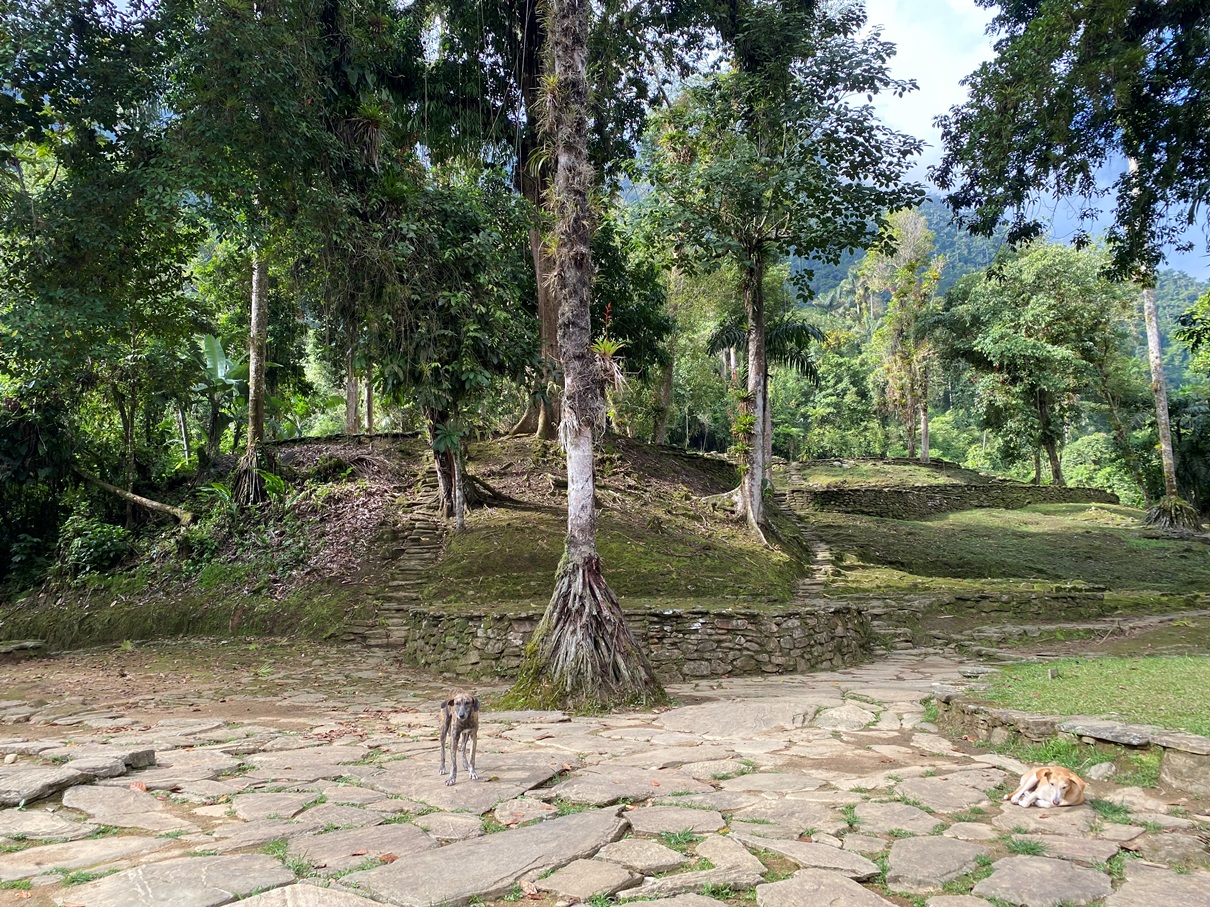
You’ll notice that there are lots of circular shapes on the ground; these are believed to be the bases of homes similar to the ones that the Tairona people still live in today.

Our guide showed us a pair of stones with markings believed to be maps. The first indicates the local mountains, trade routes, and lagoons near the peaks (where Tairona people traditionally leave offerings to their gods).
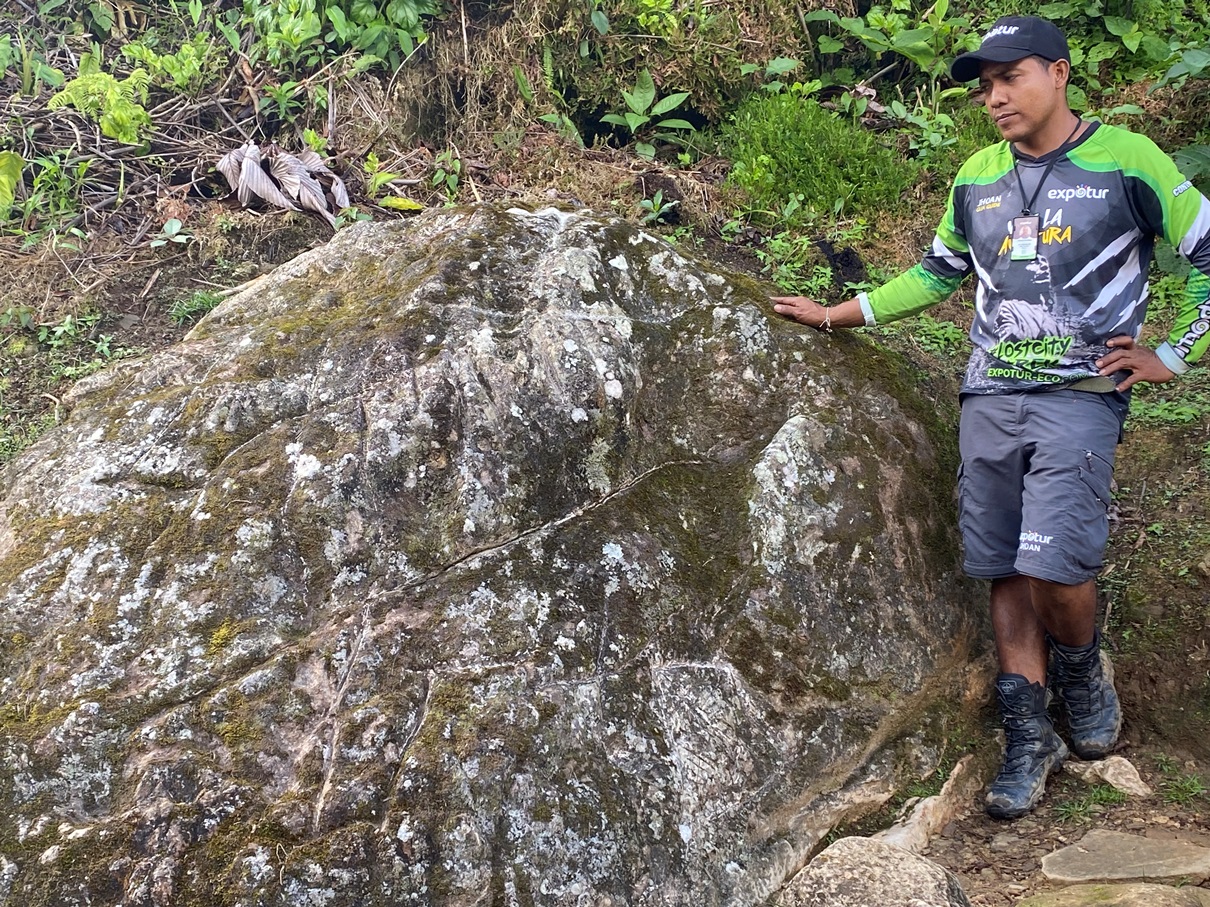
The second is of the thirty-six rivers of the Sierra Nevada. This one is the wrong way up because the raiders turned it upside down when looting.
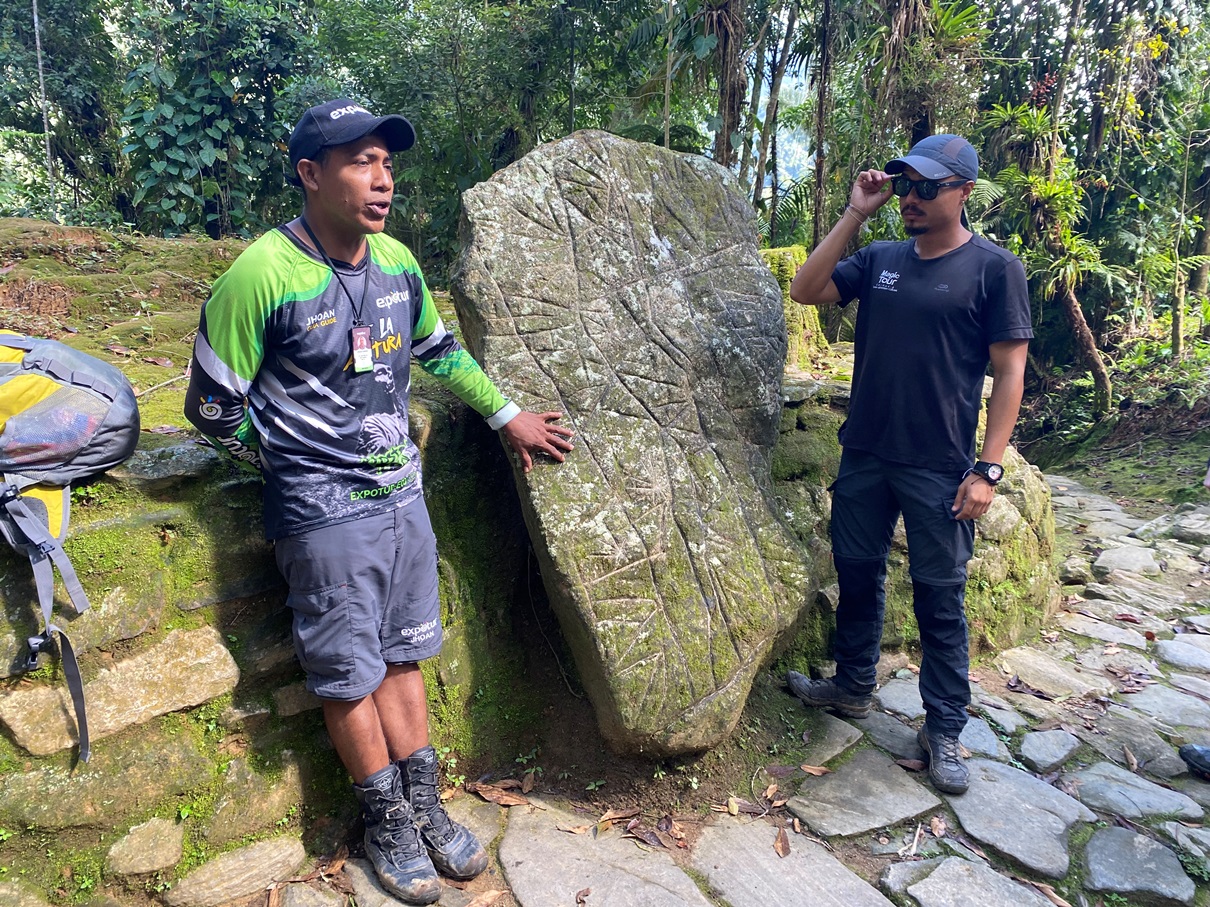
This first area is believed to have been mostly residential and served as a marketplace, but eventually we wandered up some more steps and past more trees.
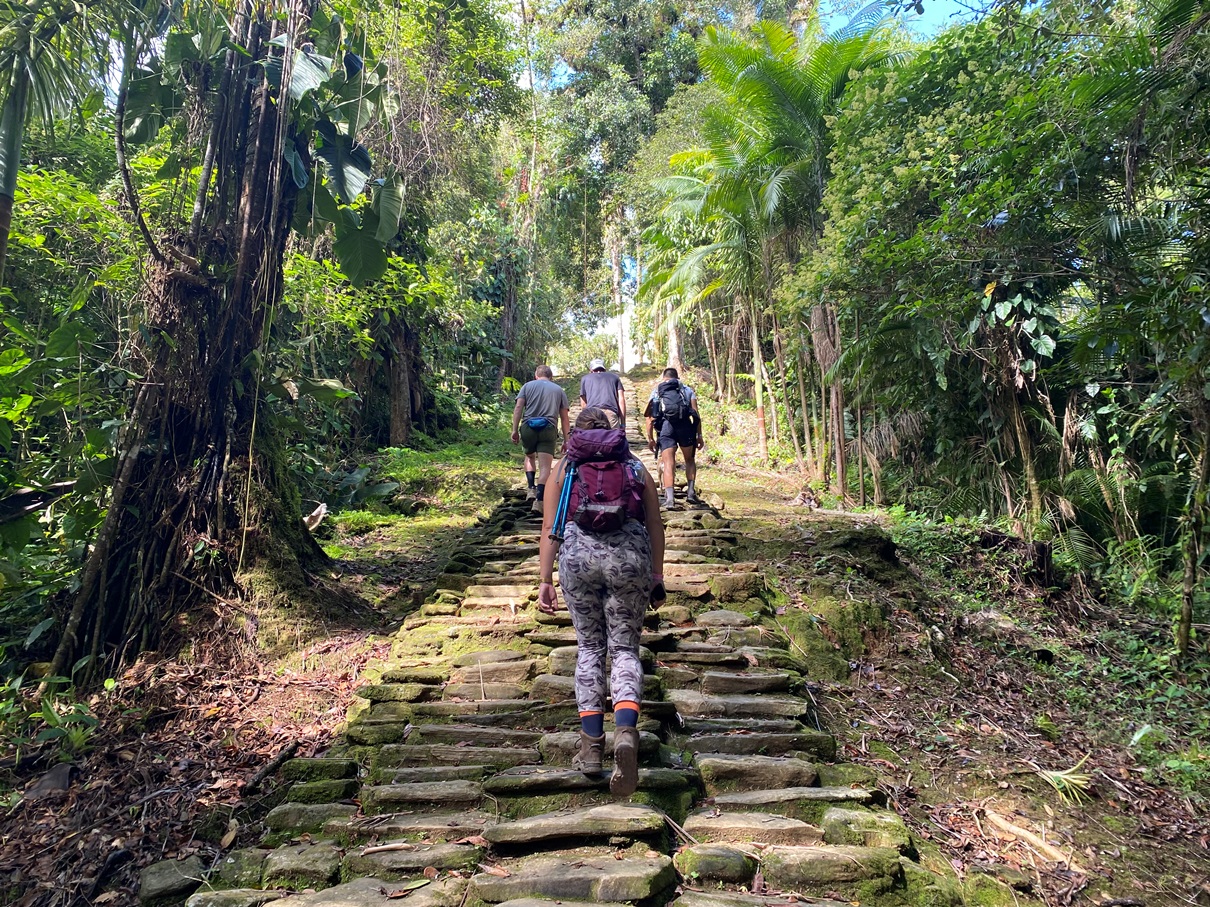
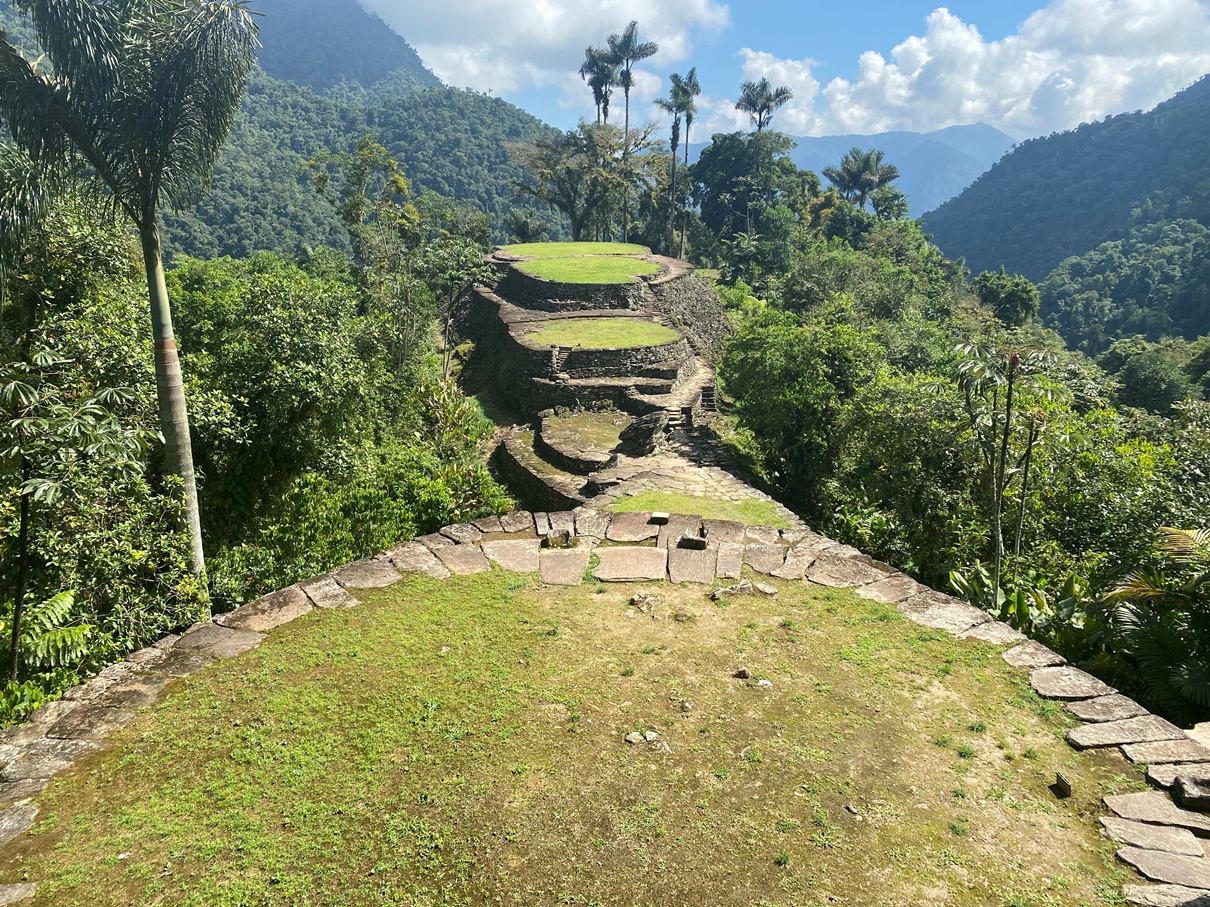
And it is here that we reached the main terraces (the place where most of the famous photos of Ciudad Perdida are from).

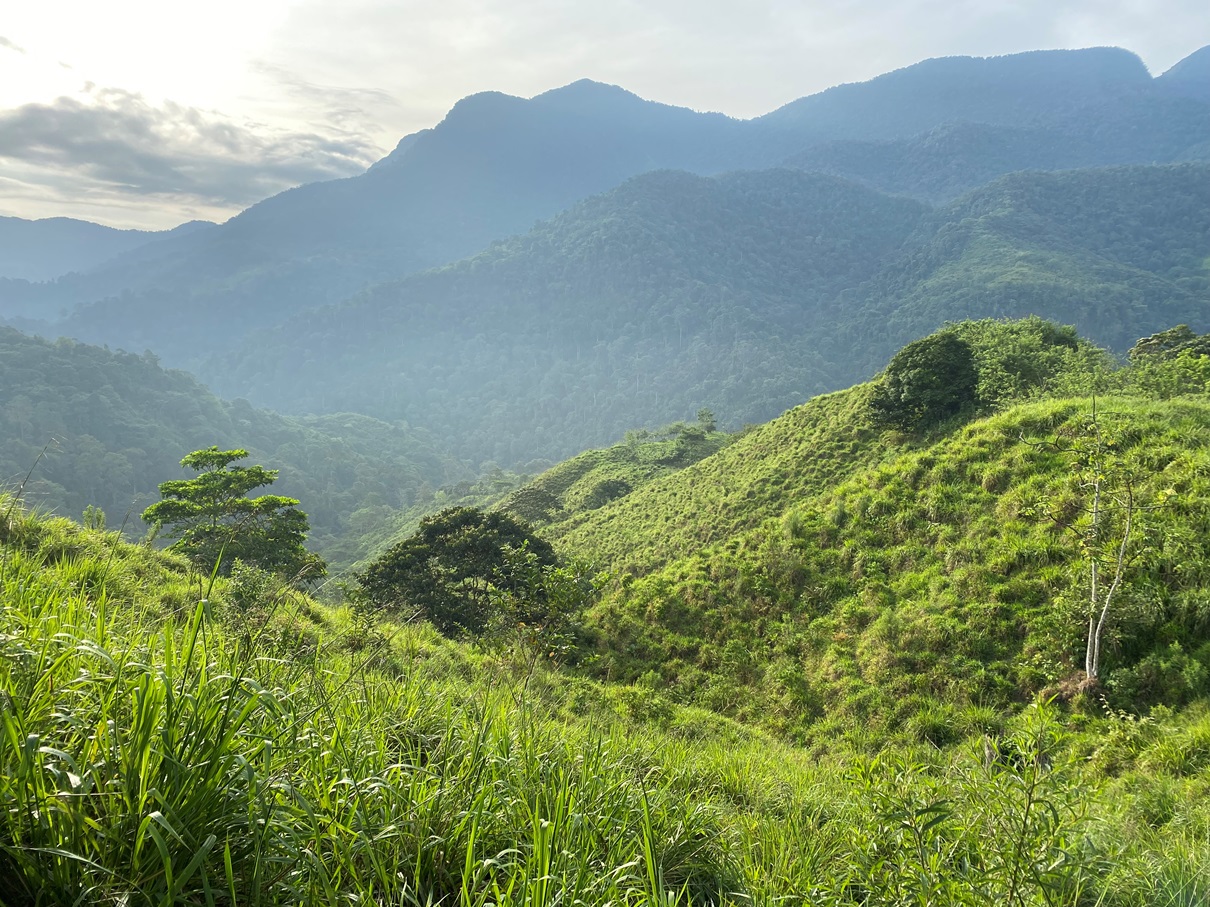
We made our way up gradually, taking photos not only of the terraces but also of the stunning scenery around us.
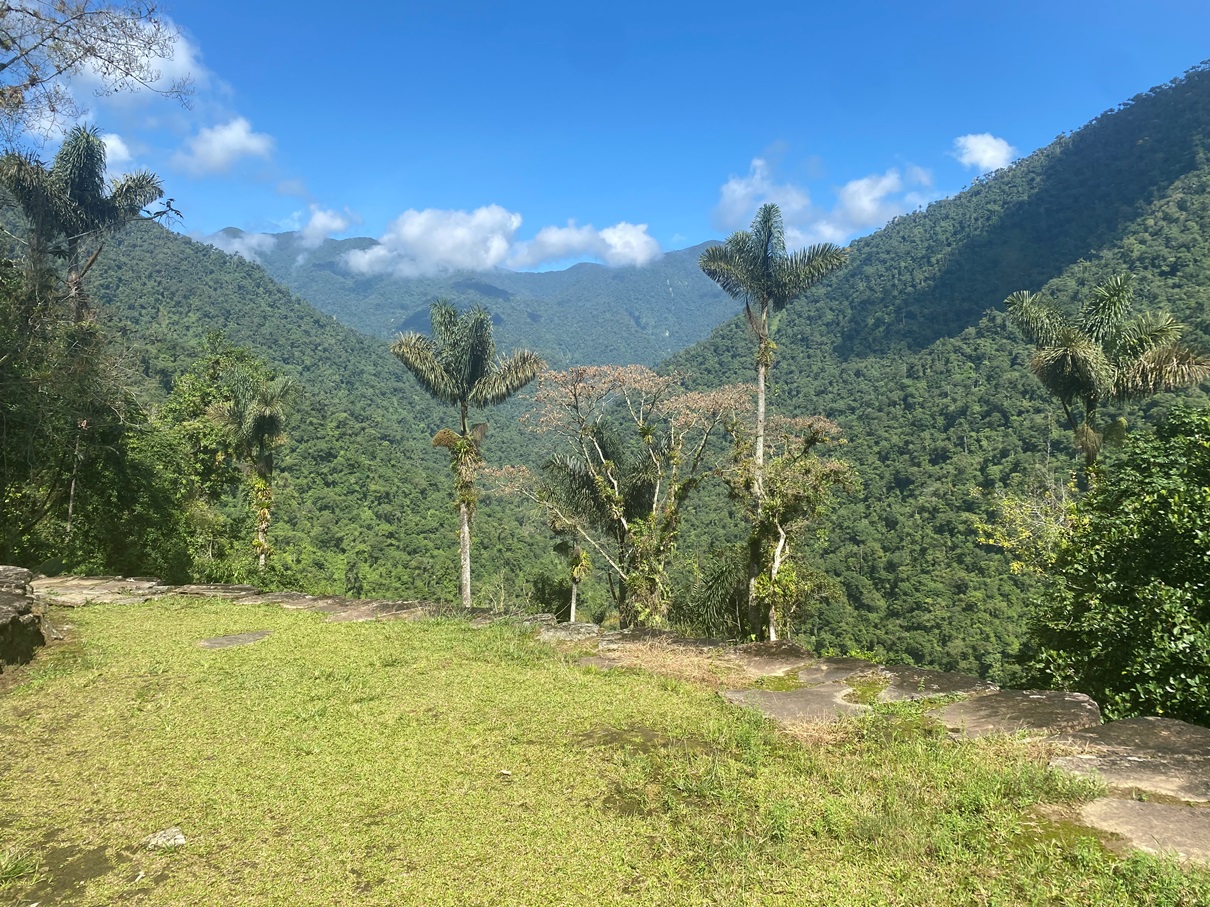
Although I had previously seen pictures of this place, I had not realised quite how big it is.

These photos that I am posting – and all the others online – don’t do it justice because none of them can quite make you appreciate the scale of this place or the feeling you have whilst walking through it and seeing all the mountains around you. It almost feels like you are walking into the sky.
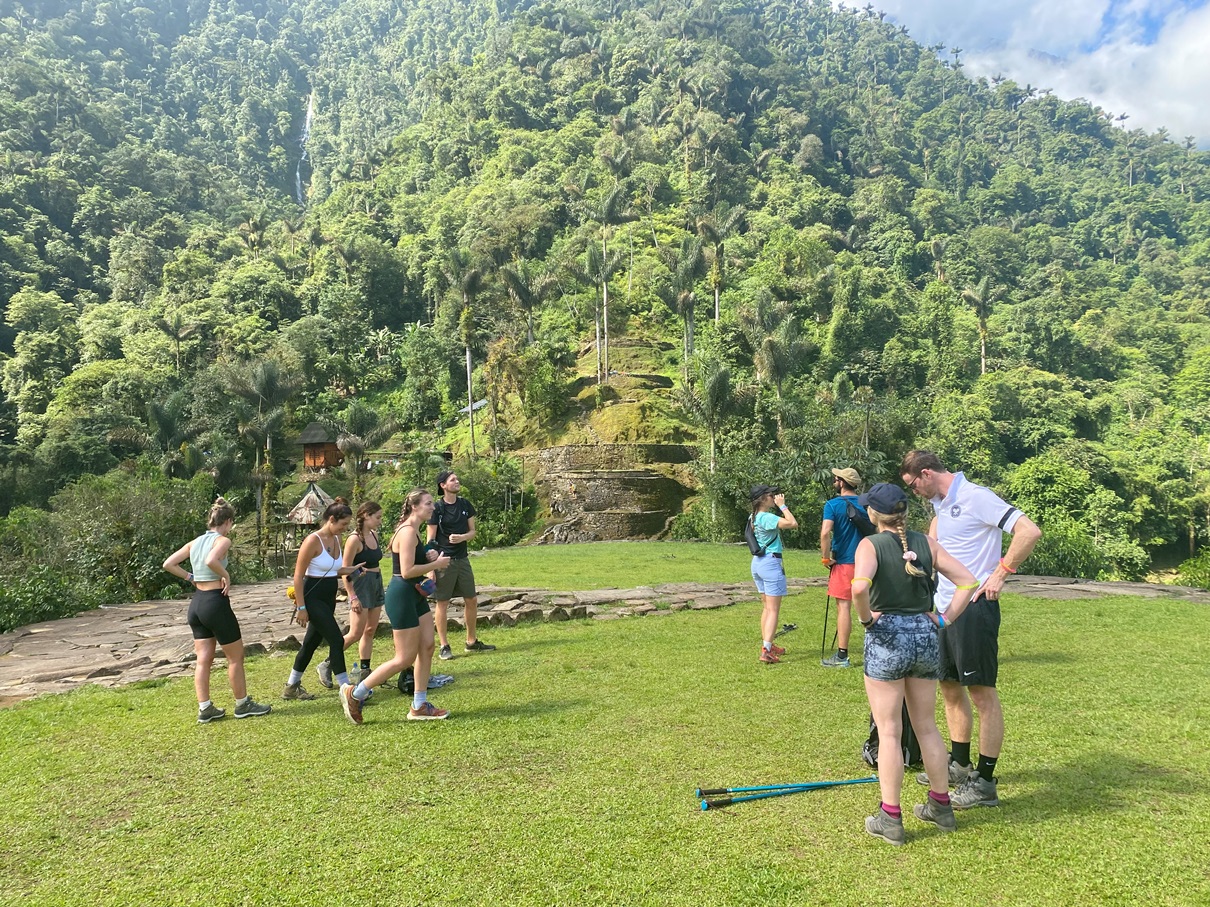
On our way up, there is a large open area that is said to have been where they held ceremonies, shortly followed by a smaller terrace looking over it with a throne.

And then, several terraces later, you reach the top (where we had snacks waiting for us). This is probably the place where one can take a photo that does this place the most justice (but still doesn’t quite capture how vast it is).
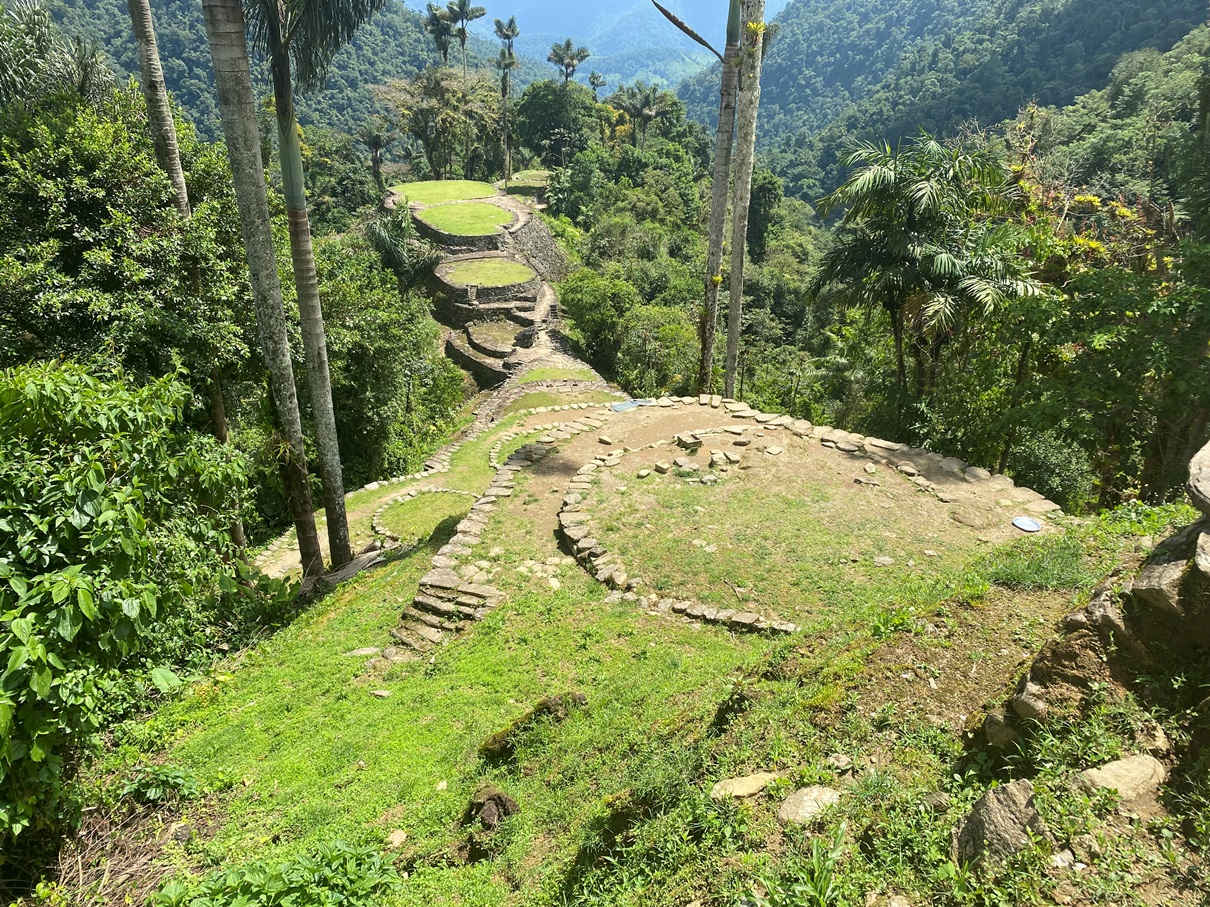
We spent quite a lot of time there and then went for a dip in a waterfall believed to be where the priests would go to purify themselves before ceremonies. Then we made our way back down again.
Both Sandy and Marbolo disappeared as we left Cuidad Perdida, but we almost immediately found ourselves with a new mascot. We named him Papi.

That afternoon, we hiked back to Campamiento Mumake (where we ate lunch on the second day, but this time we stayed the night). After eating, we all gathered around the fire, where we met Basilio, an indigenous man who told us a bit about his life and the customs of his people. He was holding his Damborro, an item that the men receive at the age of around sixteen, after a ceremony where they have to fast from eating and drinking for four days and nights, and – similar to some Native Americans in the north – they receive a new name; his being Wilmako.

The Domborro is something that I had seen several of the other Tairona men holding over the past few days. The stick protruding from the top is detachable, and within the opening is a compression where they make a paste out of crushed-up sea shells, chewed coco leaf, and spit, which they use to write along the sides of their Domborro (the part that looks like a scroll). They do this not only to express themselves but also believe the Domborro to be a vessel for which they connect to the spirit world. As they write onto it, over and over again, they are constantly adding new layers, and apparently that no other man will be able to read the Domborro of another (which I am guessing means they all develop their abstract form of writing personal to them).

Basilio also told us about one of the other customs among his people concerning relationships. When he was eighteen, he was assigned a woman twice his age as his ‘wife’ so that she could teach him about sex, relationships, and how to be a good husband. The same thing often happens to the women in their culture, and this is usually a temporary placement (after which they are assigned a new pairing with someone closer to their age). When it came to questions at the end, one of the things I asked was what happens if the people in this initial pairing end up liking each other enough to want to stay together; is that allowed, or forbidden? He said that it wasn’t forbidden – or even unheard of – but considered unusual, and that, in his case, he ended up staying with his first wife for longer than usual (half a year instead of a month) but eventually her family intervened and said that he needed to leave her as he was too young.
Day 4
Out of all the days, this was the longest we covered in terms of distance, and I didn’t take many photos. Partially this was because we were coming back the same way that we came (although the parts that were uphill seemed much longer than I ever remembered going downhill), and also because this was the sweatiest day of them all, and I ended up putting my phone in a drybag out of concern it could end up being damaged.

Papi – the dog who joined us just after we left Ciudad Perdida – was the companion that we ended up finishing the last leg of the trek with us, and the first half of it went quite fast. As we got closer and closer to the end, time started to drag. By this point, we had all seen Ciudad Perdida, were exhausted, and just wanted to return to first-world comforts. As we descended the last hill, I found myself looking at each corner longingly, wondering if this would be the one where we would reach the café where we started this whole thing four days before. Where this journey would end.
We talked about all the things that we were looking forward to. Air conditioning, wifi and pizza. Clean clothes. The times before The Sweat. It felt so long ago.

Some of you might think you have an idea of how much we sweated, but you don’t. Unless you have hiked Ciudad Perdida – during a heatwave, no less – you will never understand. You had to have been there.

Once we finally reached the end, most of us had a well-deserved beer and swapped details whilst having our lunch. I don’t think any of us regretted going on this trek, but we were all relieved it was over. We got into the van, the doors closed, and the feeling of the AC blowing into my face was heaven.
But then, a few moments later, someone asked what everyone else was thinking.
“What is that smell?”
It was us. We were the smell.
For more photos from Ciudad Perdida, click here.
Practical Information
The first piece of advice that I would give if you are about to do Ciudad Perdida is to prepare to be wet. It will happen no matter what you do. My hike was at the tail end of a heatwave along Colombia’s northern coast, so for us, the wetness was coming from ourselves but – from my understanding – most people will experience more rain than we did. With that in mind, bring lots of dry bags to keep your electronics and other valuables safe.
Usually, when it comes to photos, I use my phone for most things and have a digital camera (with zoom) for wildlife. I regretted bringing this, as the lens started to play up due to the dampness, and this is not the kind of trek you encounter much wildlife anyway – as much of the land is pastoral, and the jungle is mostly secondary. My advice; just bring your smartphone with you as they are less sensitive to dampness.
I brought two power banks with me, but if I could go back, I would have only brought one. All of the accommodations had charging stations anyway.
When it comes to clothes, I would suggest the following: a hat, three shirts and three pairs of shorts (two sets for hiking and one set as something clean to wear in the evenings), and a change of underwear for each day. I did bring a pair of trousers (as I was worried about insects), but the path is well established so you are never really walking inside the jungle. A raincoat is pointless; you will be too hot to wear it. Just accept you are going to get wet and bring dry bags to protect your valuables. Magic Tour told me to bring a sweater, but I never used it as even the nights are hot (I found it hard to sleep most of them and didn’t use the blankets they gave me).
Sun cream and mosquito repellent are essential.
Bring plastic bags to separate your dirty and clean clothes.
A towel. I usually drip-dried during my swims, but the accommodations have showers with (implausibly) cold water.
I brought a torch but didn’t end up using it. The accommodations had lights anyway, and I just used my phone if I needed a flashlight.
Swimwear. Every camp has a waterfall or pool you can swim in.
Finally, bring a pack of wet wipes with you. Trust me on this. It is easier than carrying a roll of toilet paper anyway – as you don’t have to worry about them getting wet – and they are also useful to wipe away sweat before reapplying suncream (which you will need to do several times a day).
I had heard there were river crossings during this trek, but all the ones we passed either had bridges or stepping stones. I am not sure if that means wading through rivers is a thing of the past or we just hiked during a drier period, but bringing sandals is useful anyway to wear whilst swimming and in the evenings.
Finally, I would recommend that you bring either a book or a Kindle, as there is a surprising amount of free time in the evenings.
When it comes to water, I was using a hydration pack with two litres, and it was always enough to get to each place where I could refill it. Some people were carrying less and there were plenty of little huts along the way to buy water and other drinks from, but that can get expensive and is also quite wasteful in terms of plastic. Each place that we stayed at or ate lunch had a water filtration system that you can use. Some of the guides tried to encourage us to buy the bottled water (claiming it was better) but I drank the filtered water for the whole journey and experienced no problems.














 Tej Turner