Travelblog LA#20: Cobán Folklore Festival (Rabin Ajaw) – Guatemala

26th – 30th July, 2023


Those of you who follow me regularly and have looked at a map will have perhaps noticed that my route has been a bit strange recently. After spending a couple of weeks in Belize I have reversed direction again and returned to Guatemala (instead of continuing north to Mexico like most gringos do). I am planning to go to Mexico, but not until September. For now, I am heading south for a while to explore Honduras, Nicaragua and Costa Rica.
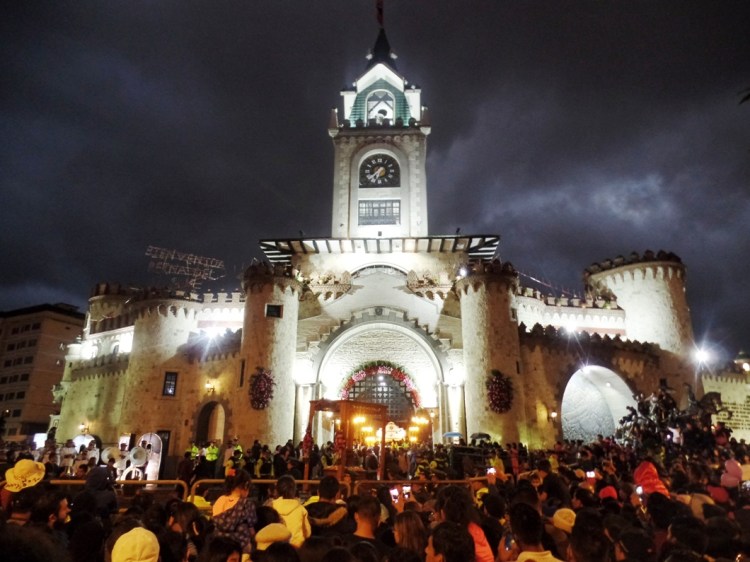
The reason for this strange route is I often look into local festivals that might be taking place in the countries I am visiting when planning my itinerary. I did this successfully in 2018 and managed to be in Loja for its Fiesta de la Virgen del Cisne and in Puno for Fiesta Jubilar. For this trip, I am saving Mexico for the end so that I can be there for Día de los Muertos, so that is why I am saving that for later, and I have just returned to Guatemala for another event.
When doing my research over a year ago, I came across the mention of a festival called Rabin Ajaw that takes place every year in a city called Cobán. There was scarce information about it in English, but from what I could glean it appeared to be a celebration of indigenous culture and involved people from all over the country gathering for a week of parades, Mayan ceremonies, and a pageant to crown a young woman from Guatemala ‘Daughter of the King’.

I am now, to my knowledge, the first person to blog about this event in English. I found a couple of articles about it online – concerning its history and other details – but nothing that gave an account of what it is like to attend it as a foreigner. So, if you have an interest in indigenous cultures or are considering attending this event, this blog should be interesting for you. If not, then I guess… why are you here?
Before I describe the event, I will first go into some details about the process of figuring out how to attend it, as such information wasn’t the easiest to come by, and perhaps others can learn from my mistakes and successes.
I am guessing that most of the announcements concerning this event are made locally. When I tried to find information about it online (in terms of a specific date and/or itinerary for 2023), I could only find vague references to it being sometime around the end of July or the beginning of August. I eventually took to social media and started asking questions on places such as community pages, and a local photographer kindly responded and gave me the dates 27th-30th of July. So I booked accommodation for those dates and hoped this information was accurate.
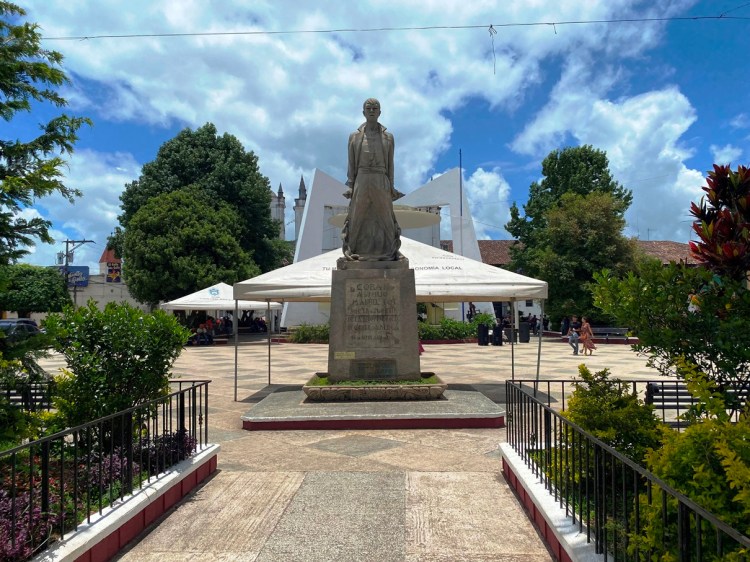
When the end of July came, I arrived the evening before and the family who ran the hotel reassured me there was indeed a festival. They didn’t know anything specific about the itinerary, but I figured this city wasn’t big enough for it to be too hard to find. The first morning I went for a wander to get my bearings and see if I could spot any activity, and as I was passing by the plaza, I received an alert on my phone from one of Cobán’s community pages. It was to a live stream where – in a village about twenty kilometres away – a Mayan ceremony was being conducted outside a beautiful church on the hill. It was interesting to watch on the screen but also frustrating. I had planned much of my route around attending this festival, and here I was: where I thought I should be yet somehow missing the first event. I began to wonder whether the next few days would be a wild goose chase.
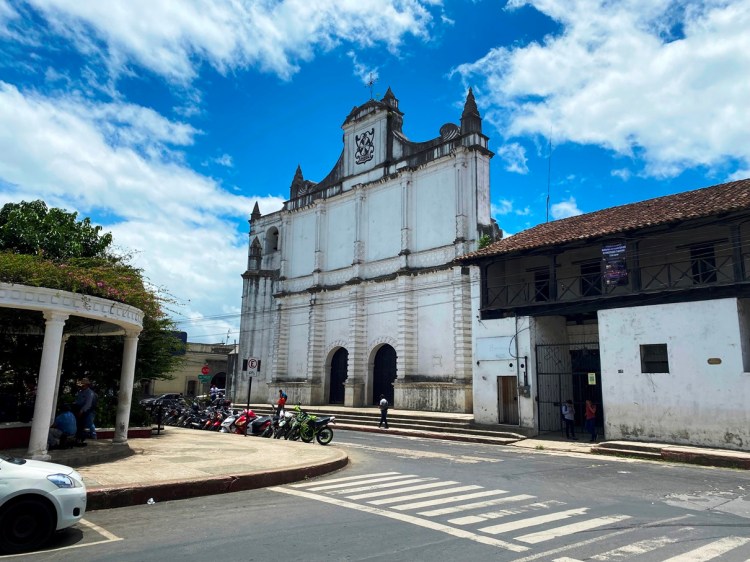
This spurred me to be more proactive. First I walked into the Palacio Municipal. The people there couldn’t help me but directed me to a smaller building on the other side of the plaza. There I found people who seemed to be connected to the event in some way, and… well, at first they shrugged and told me to look for the itinerary on the Municipalidad de Cobán Facebook page – duh, where else would it be? – but this was somewhere I had already scanned several times, so I demonstrated to them on my phone that it most definitely wasn’t there. They seemed surprised by this revelation, and after a bit of conferring, one of them asked me to give them my phone number so they could send it to me by WhatsApp. I finally – after all those hours and hours of searching – had an itinerary!
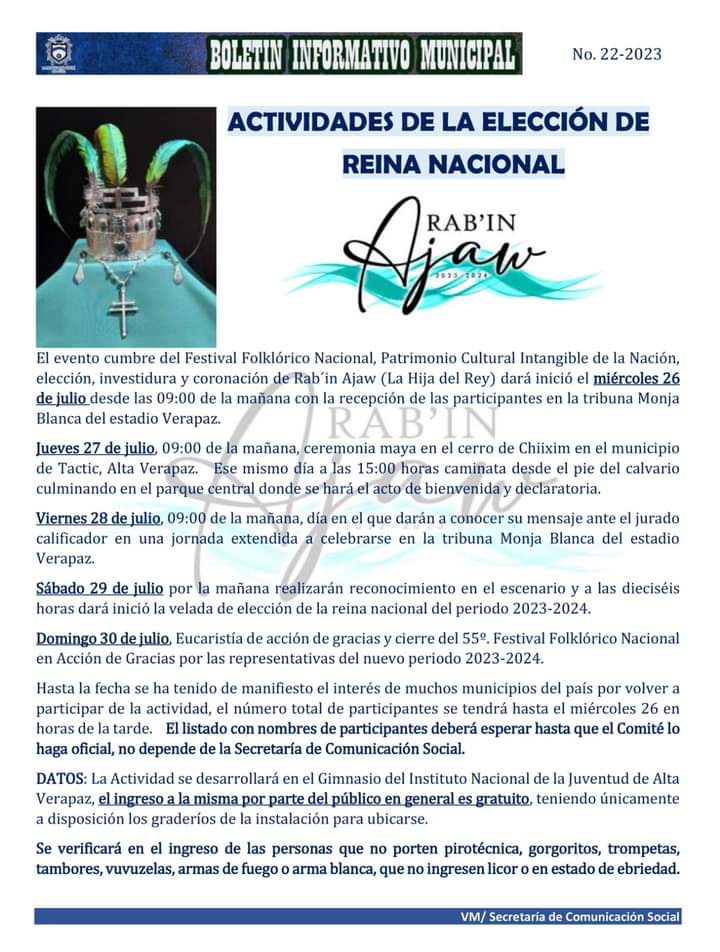
And, according to it, a parade was due to begin in two hours. Its starting point was very close to my hotel.
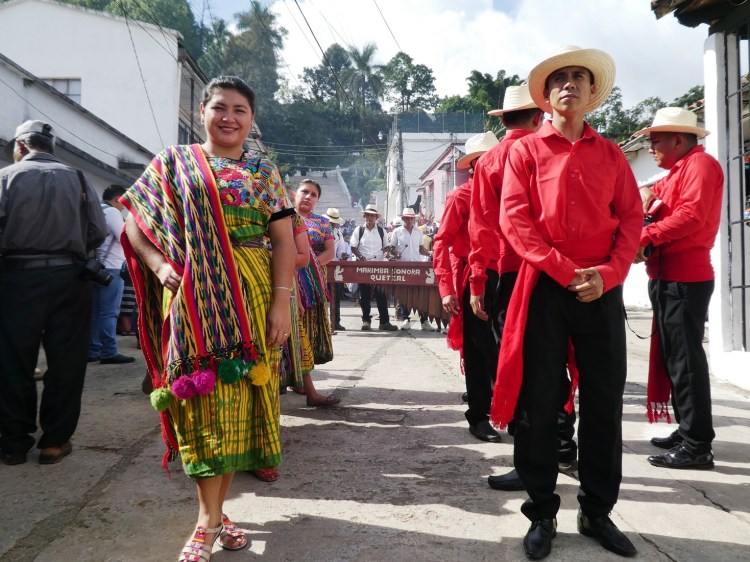
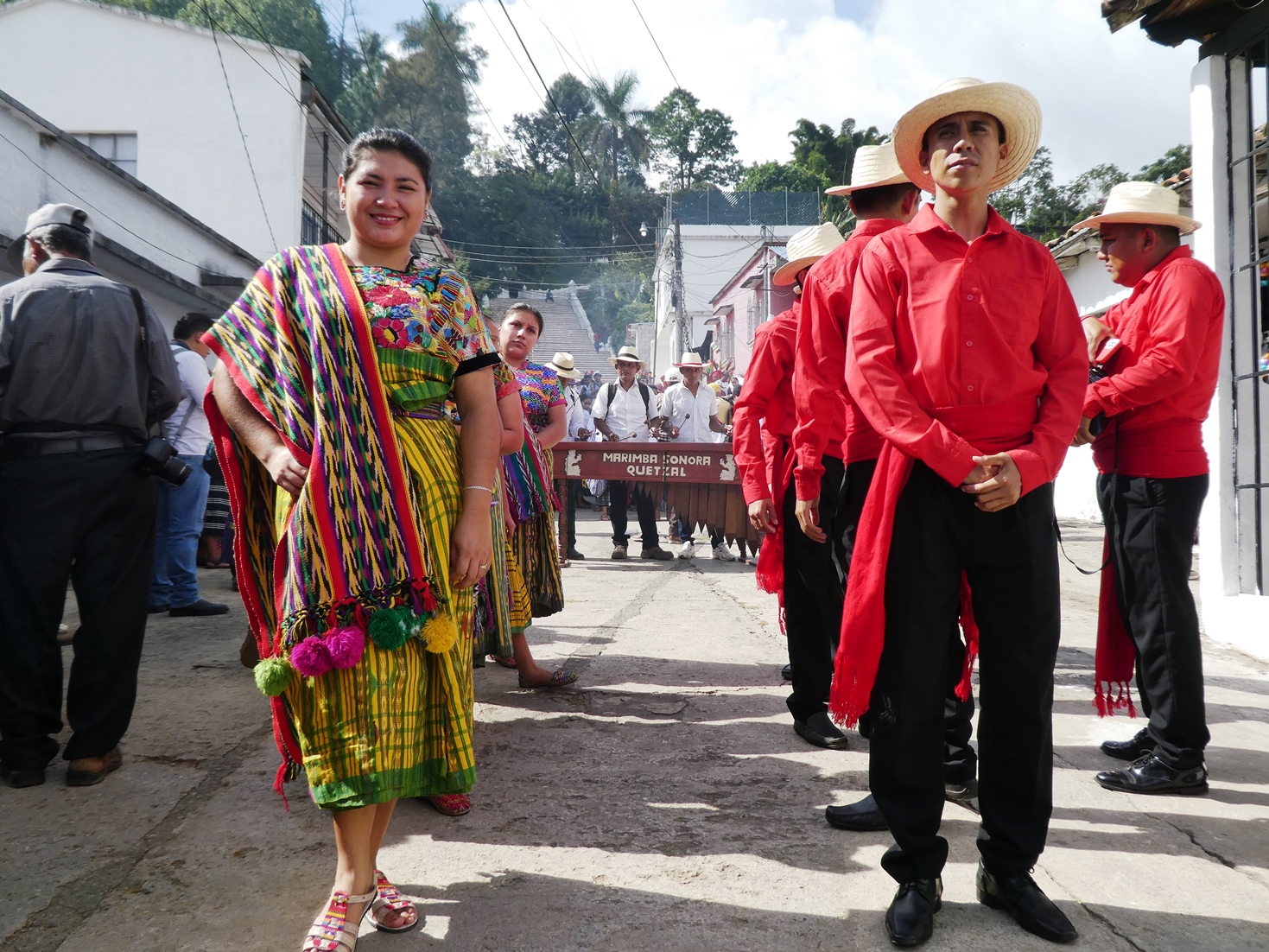
I arrived just as they were preparing. Teenagers were climbing into their costumes from the backs of trailers before their parents drove away, women were fixing on their headdresses, and the musicians were warming up. I saw another gringo and chatted with her between taking photos. She was an ex-pat from France who comes here every year because she finds this festival fascinating but is usually the only foreigner. She also happened to be the author of one of the articles I had read about it.
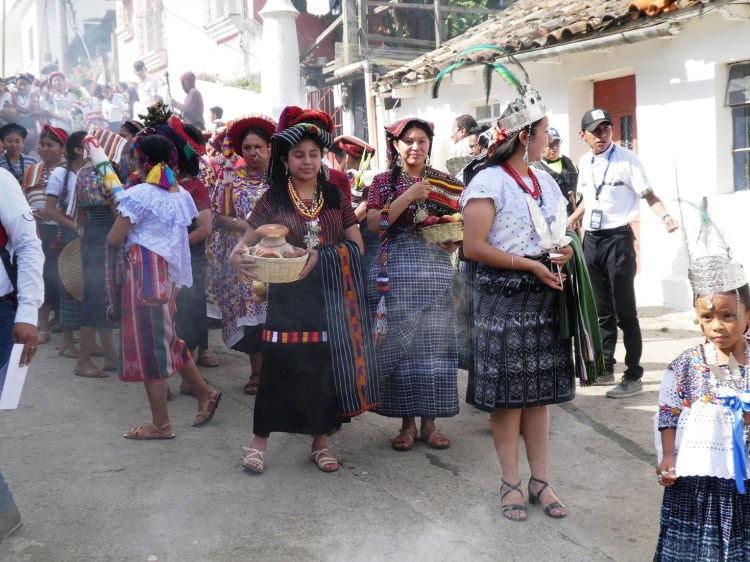
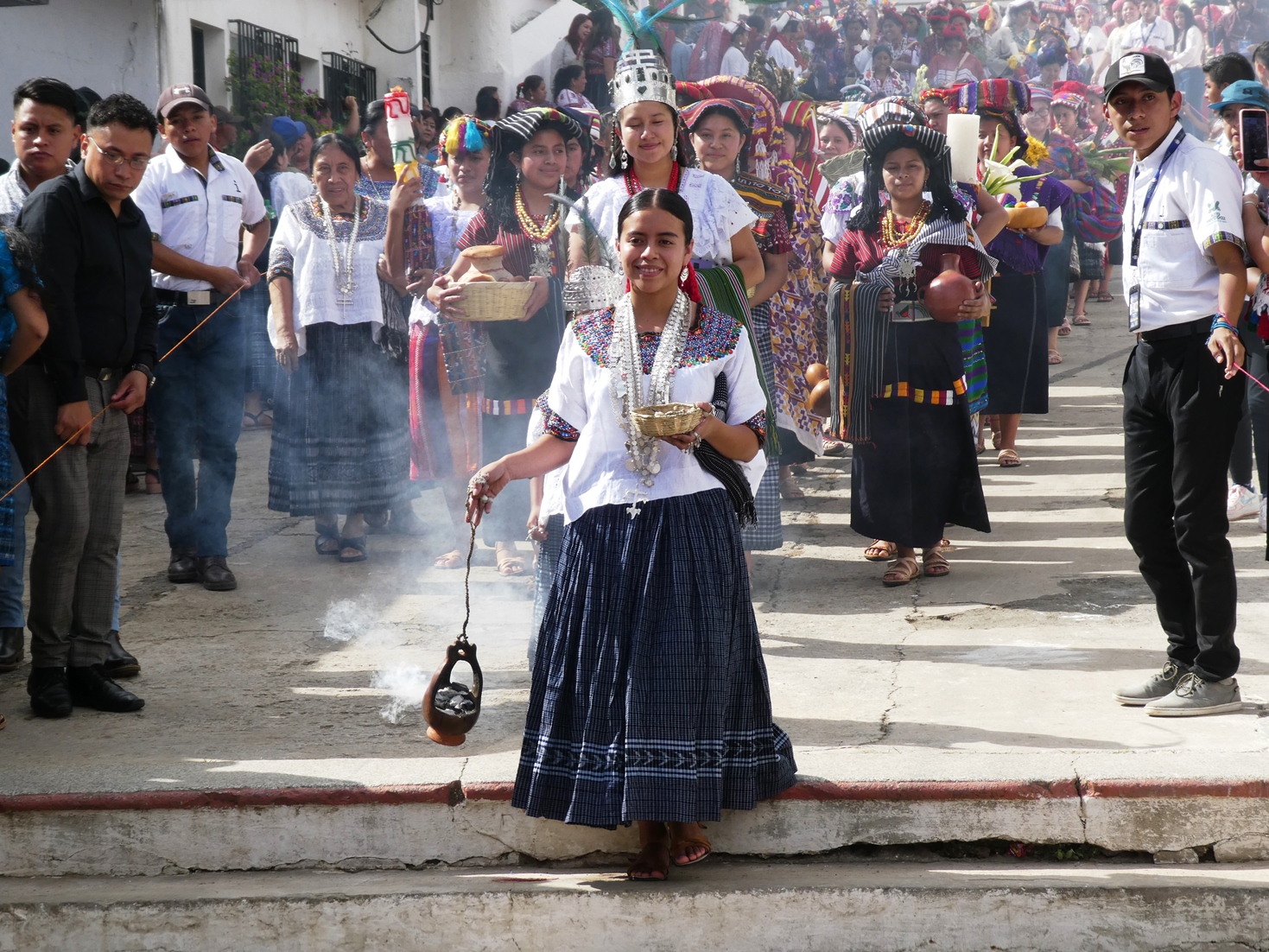
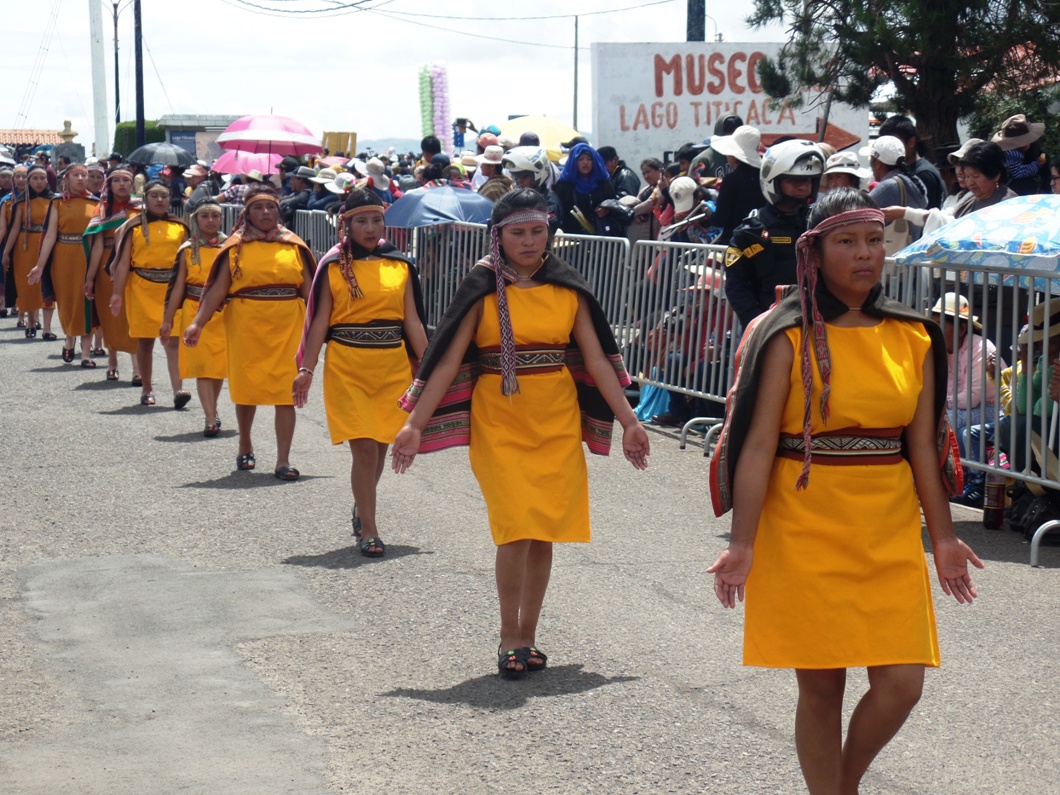
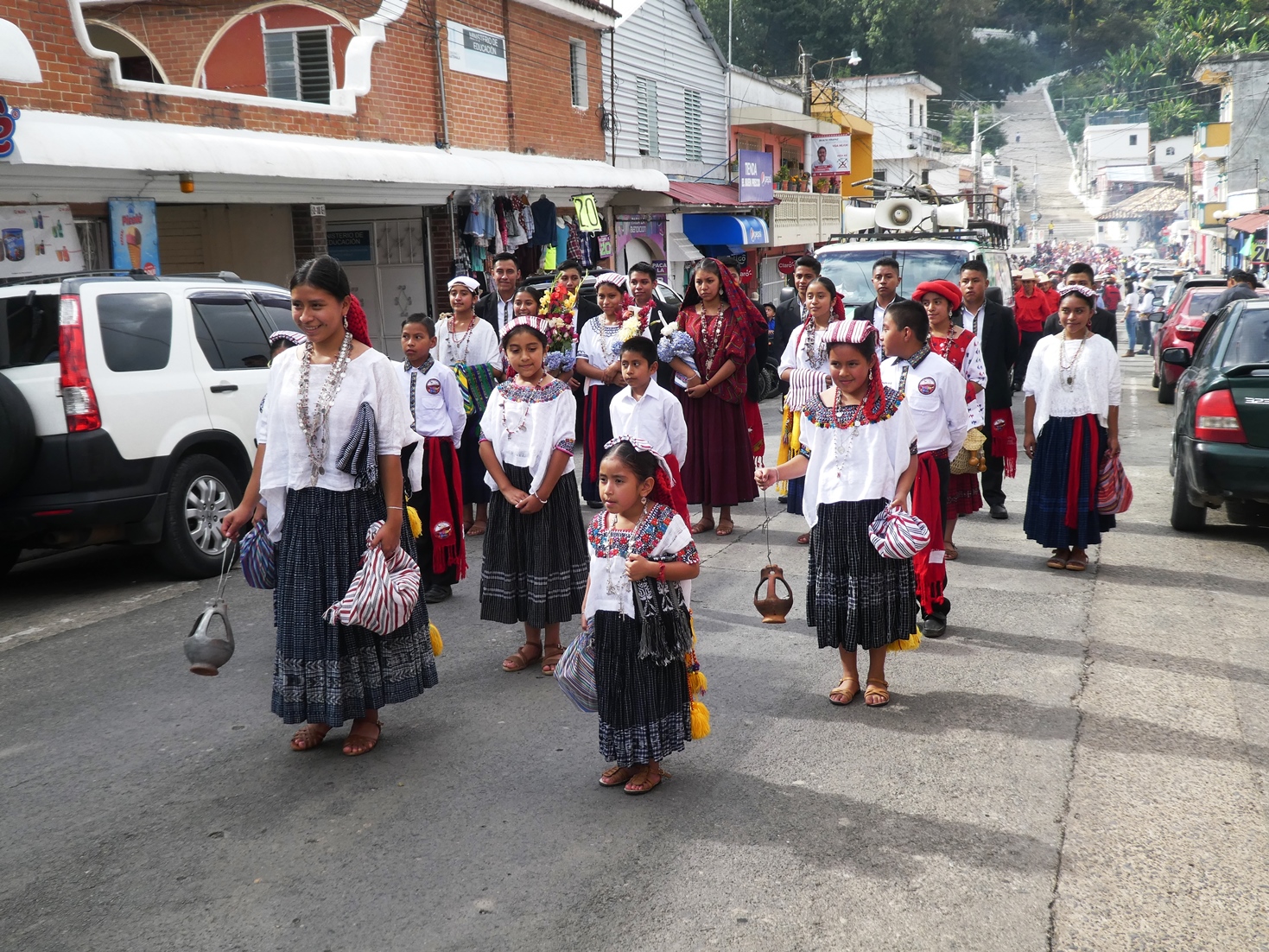
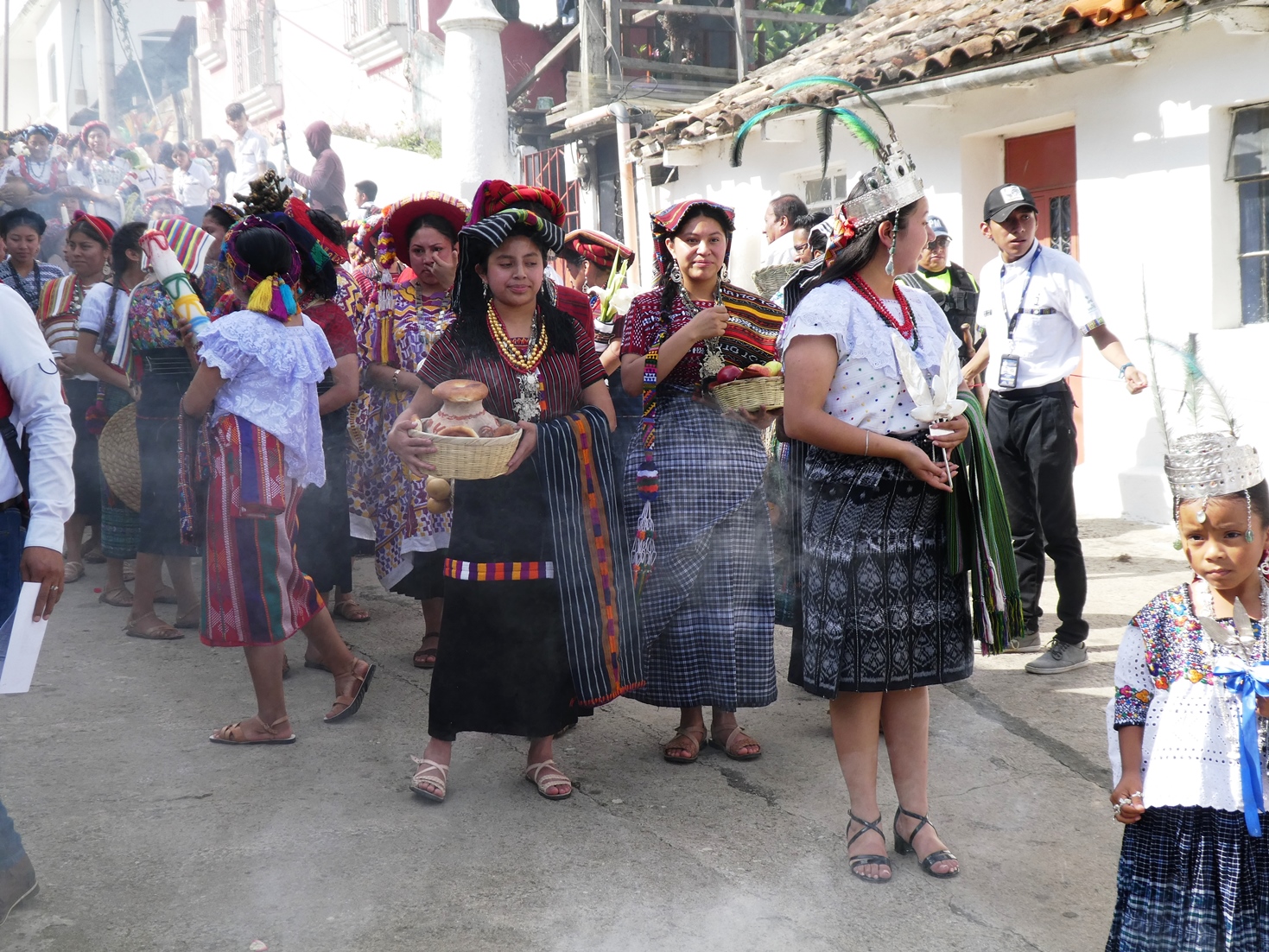
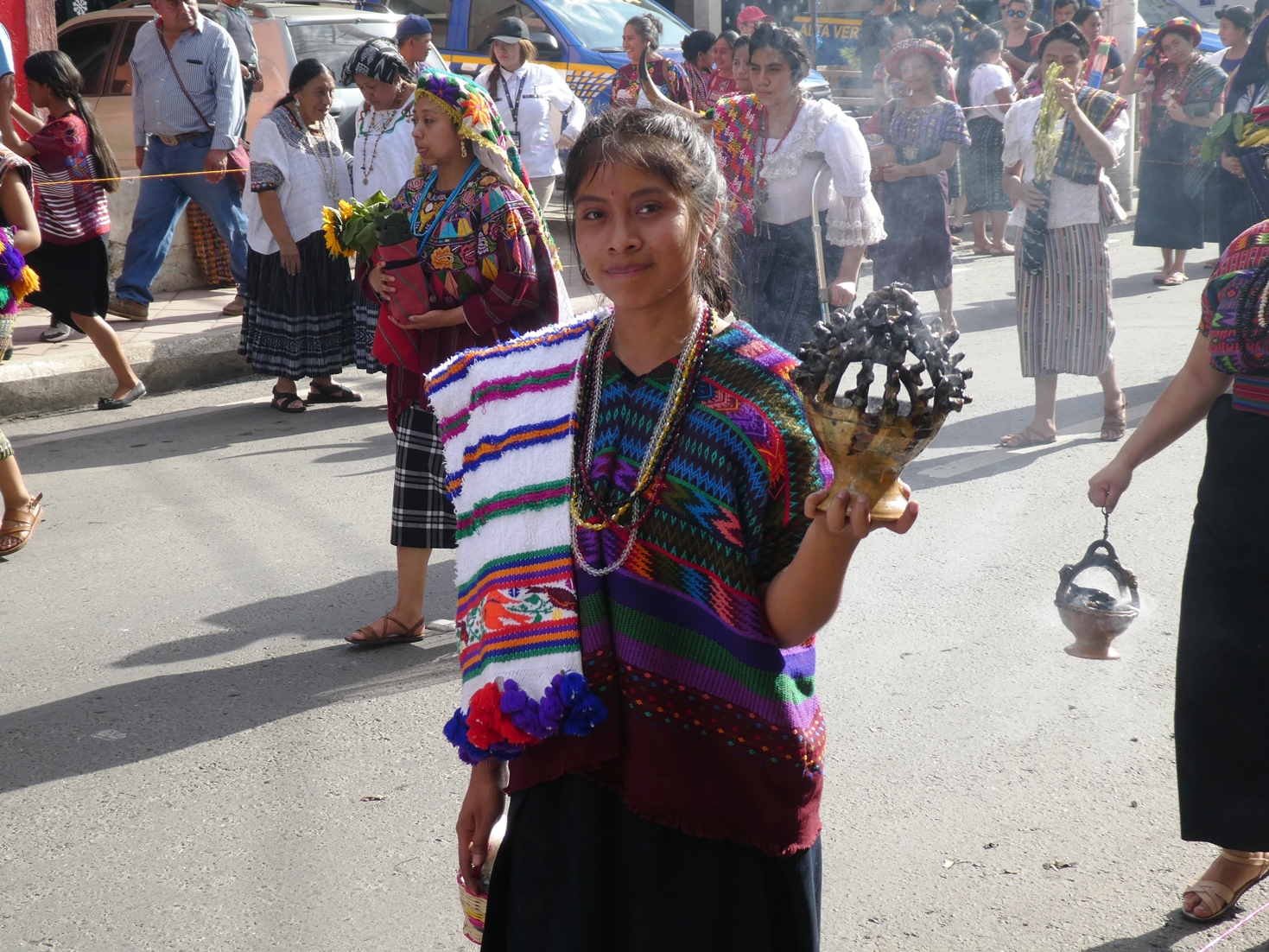
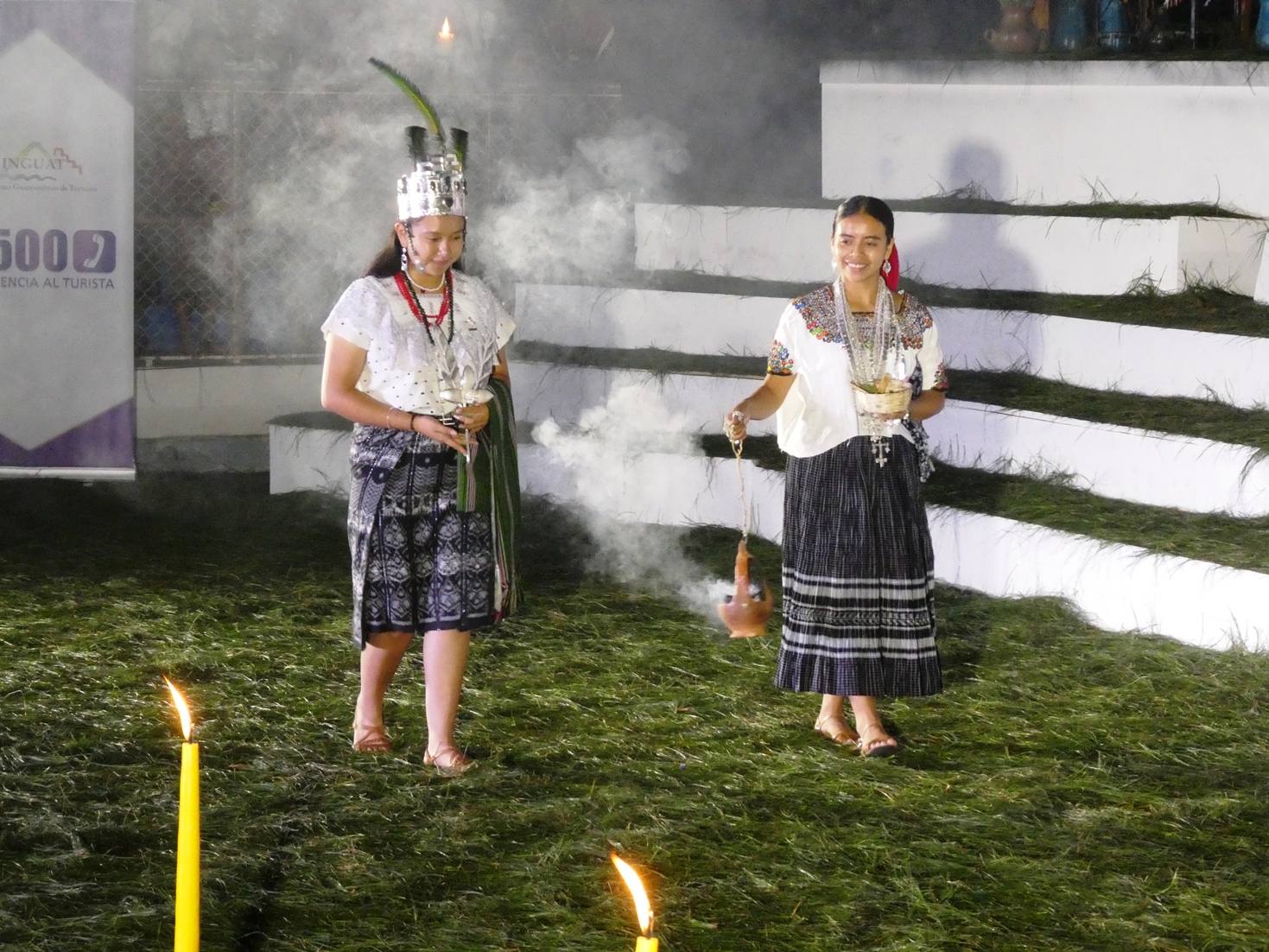
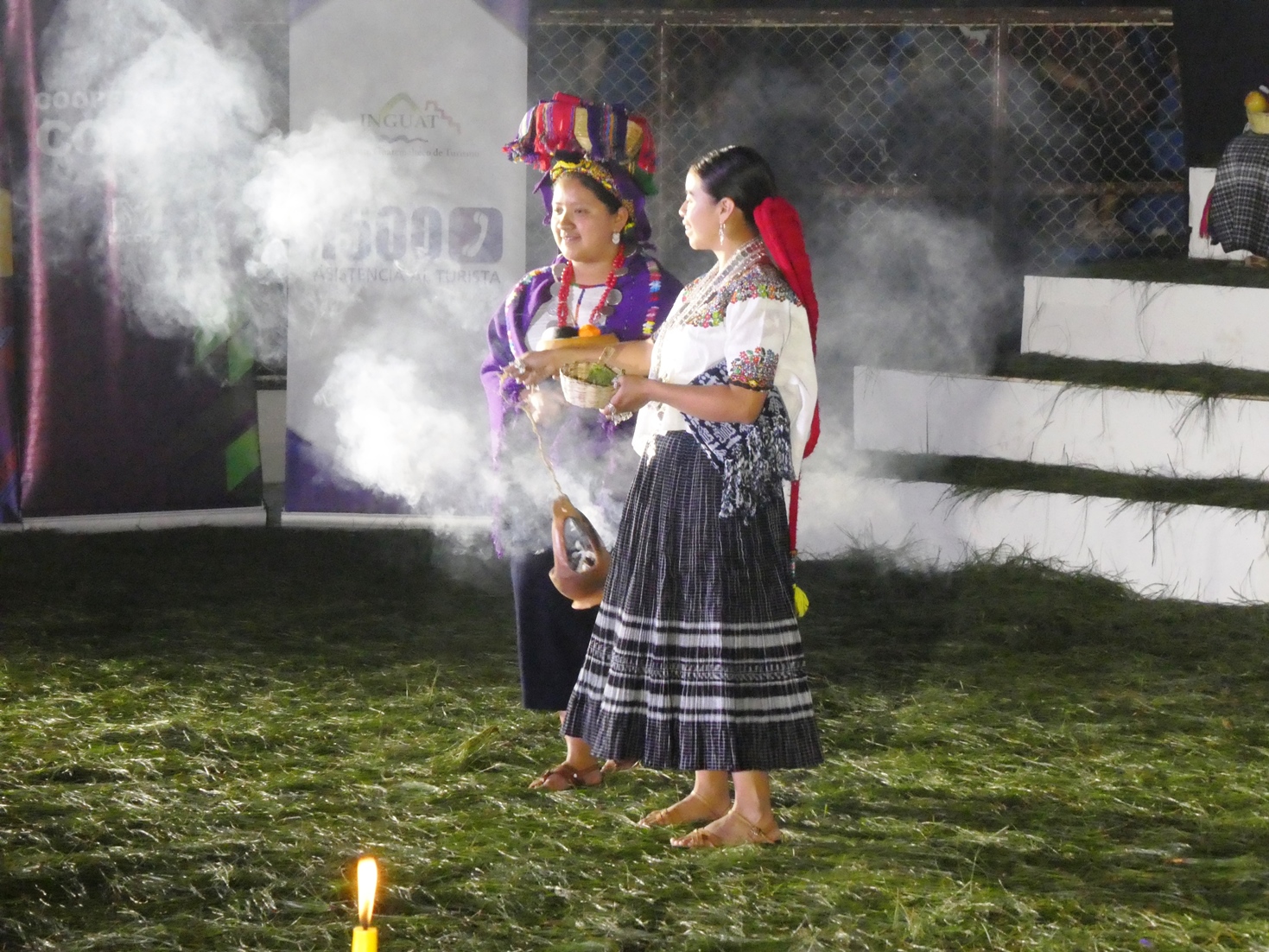
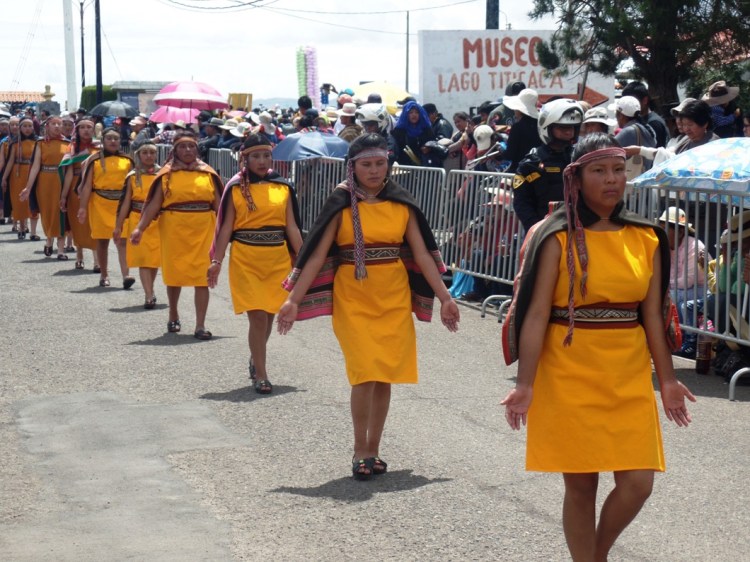
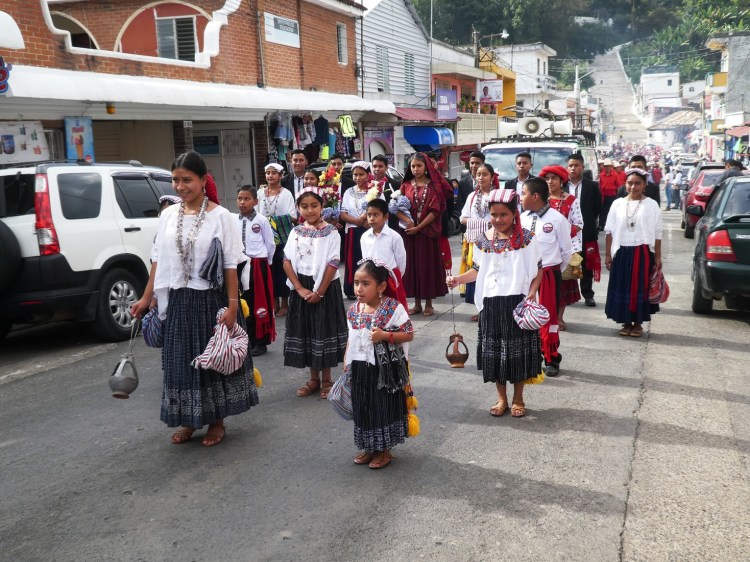
When the parade began, it was nothing short of spectacular. Zumba dancers led the way, shortly followed by a group of men playing the xylophone. And after that, the reigning Rabin Ajaw was chaperoned by a young girl and another young woman with a censer wafting with smoke.
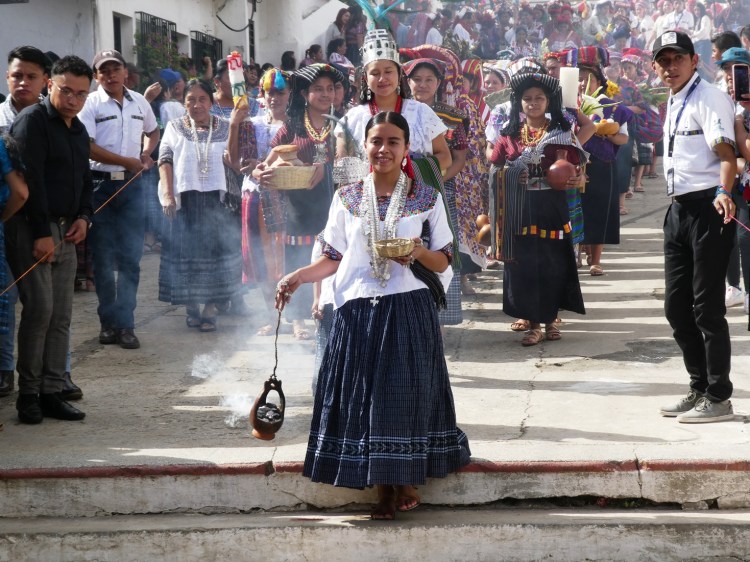
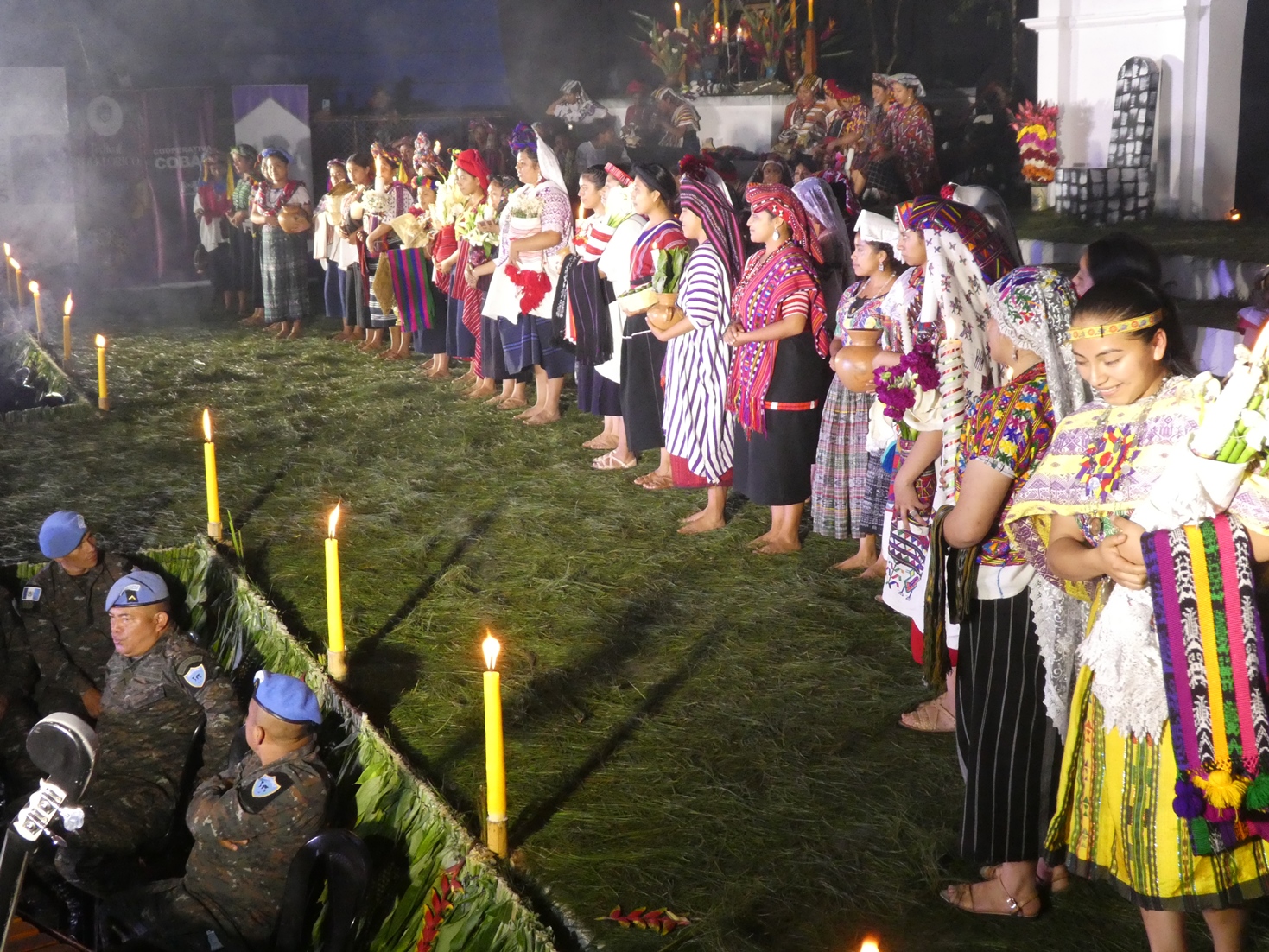
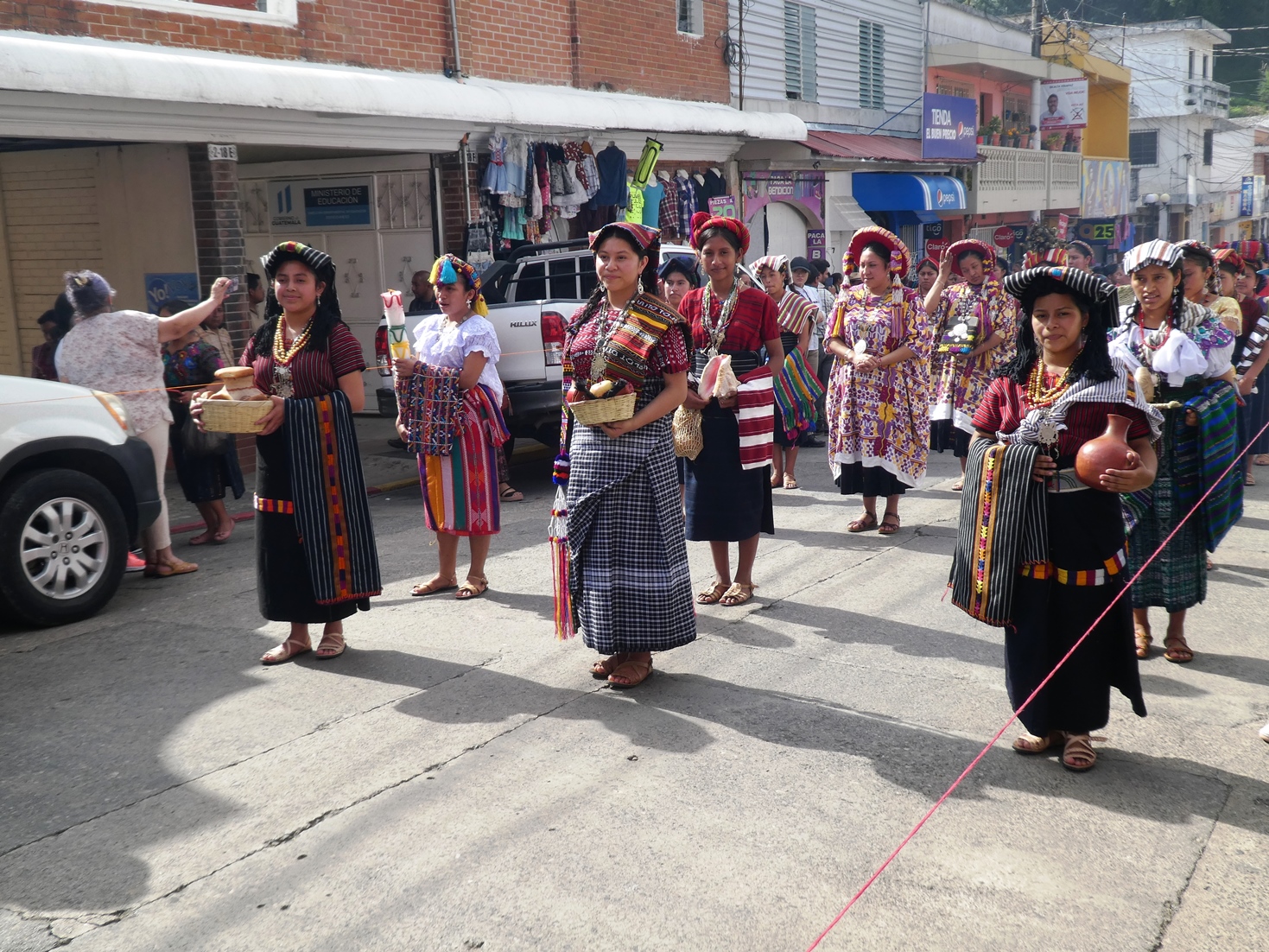
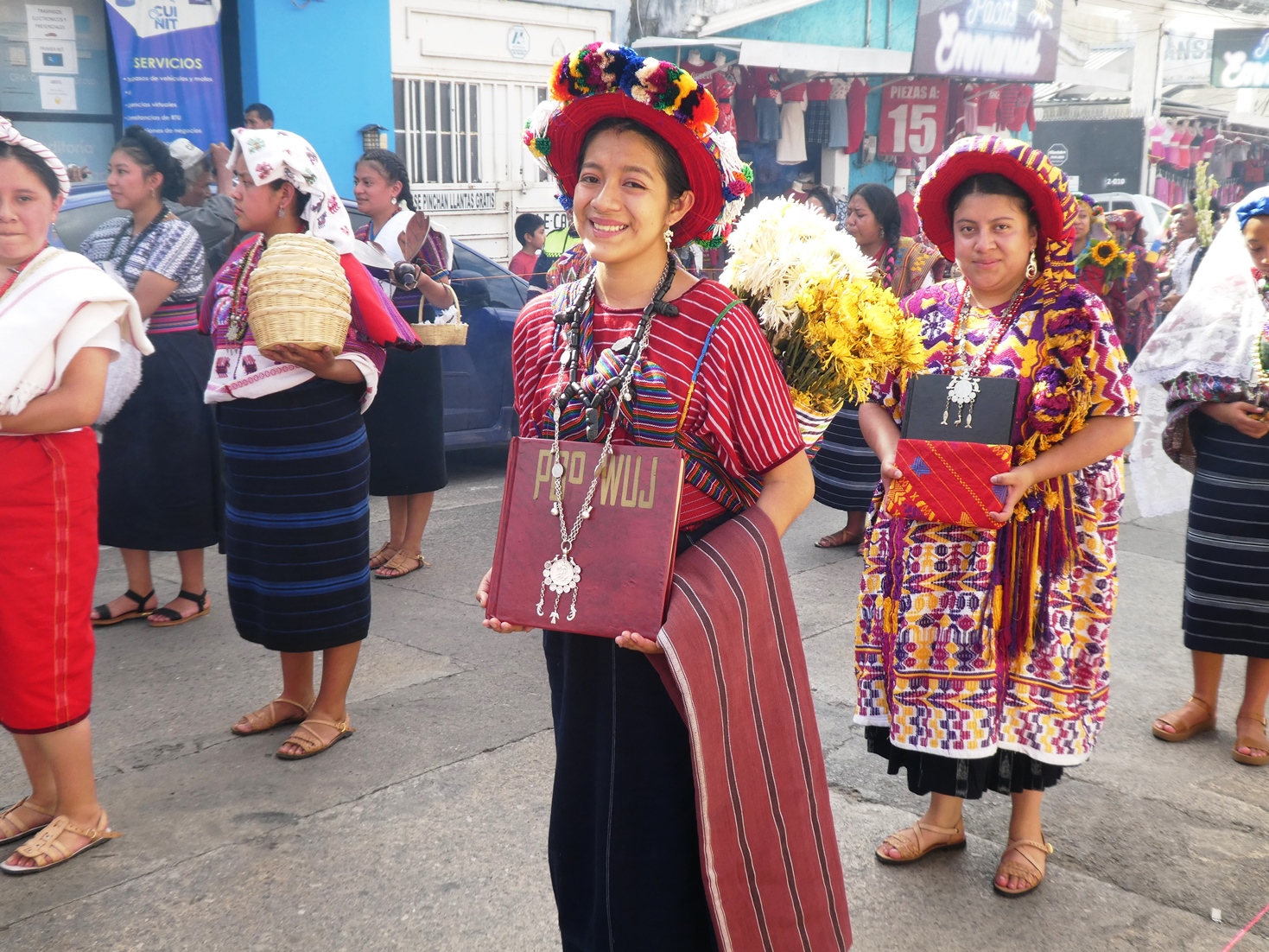
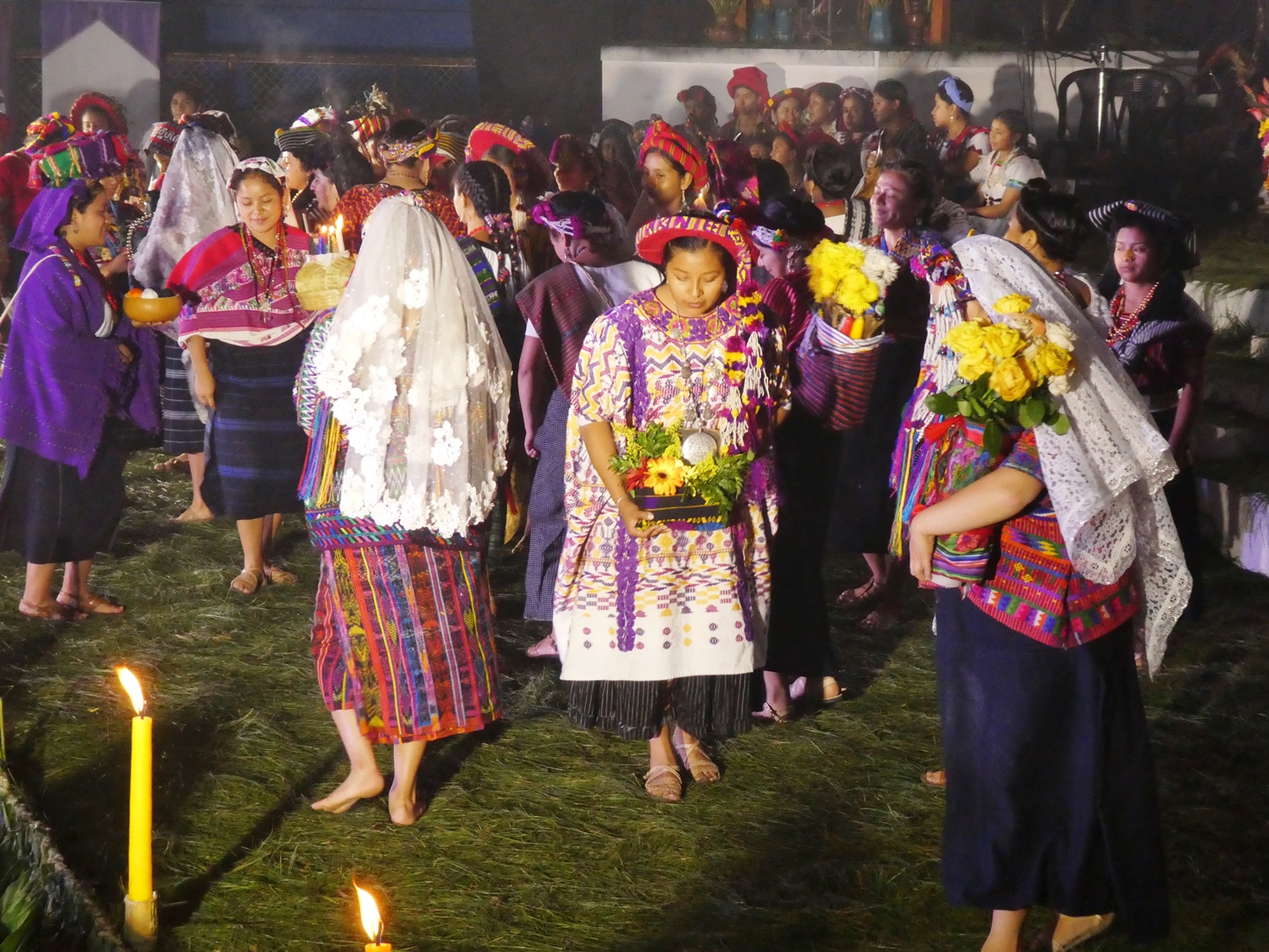
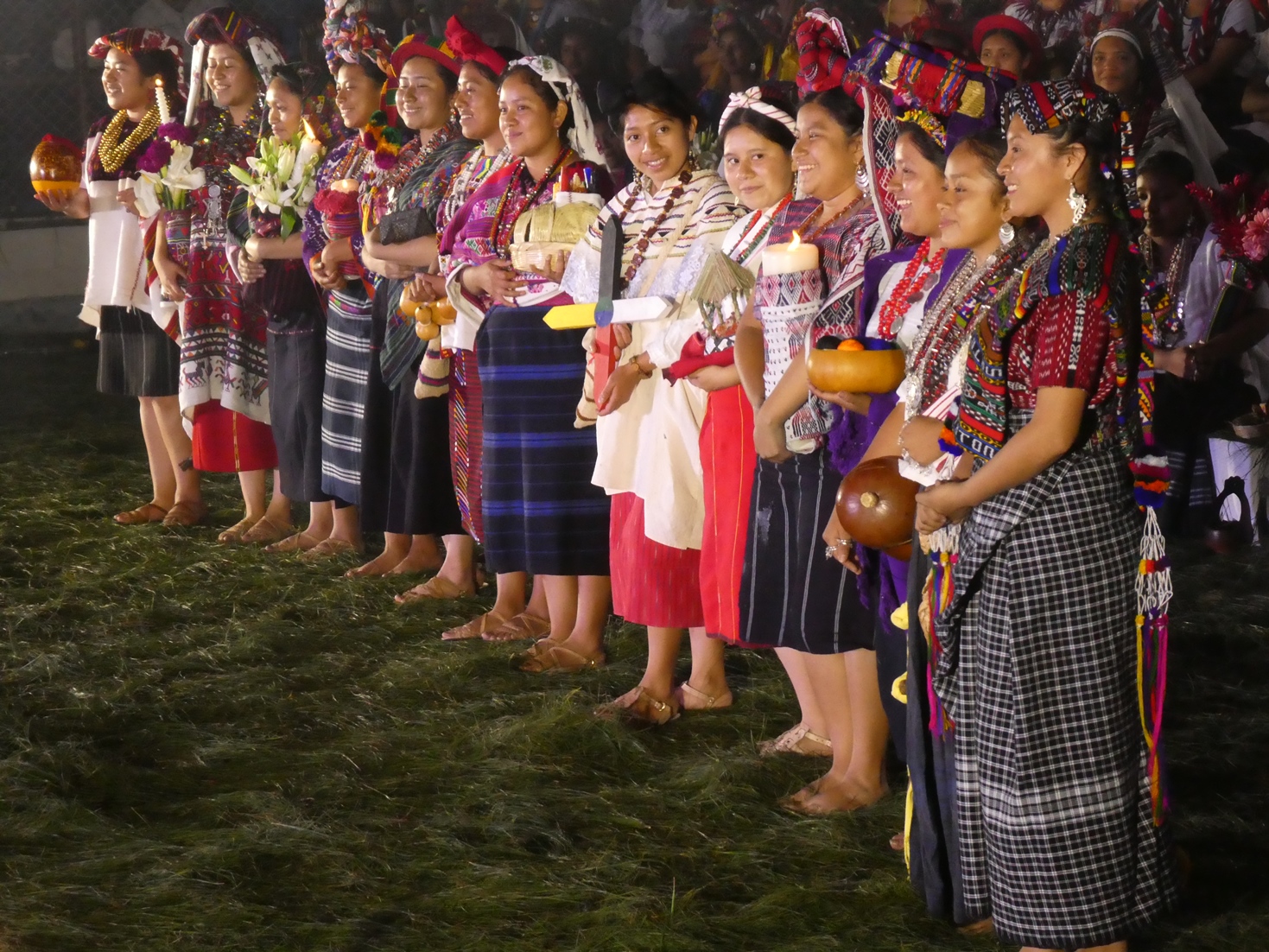
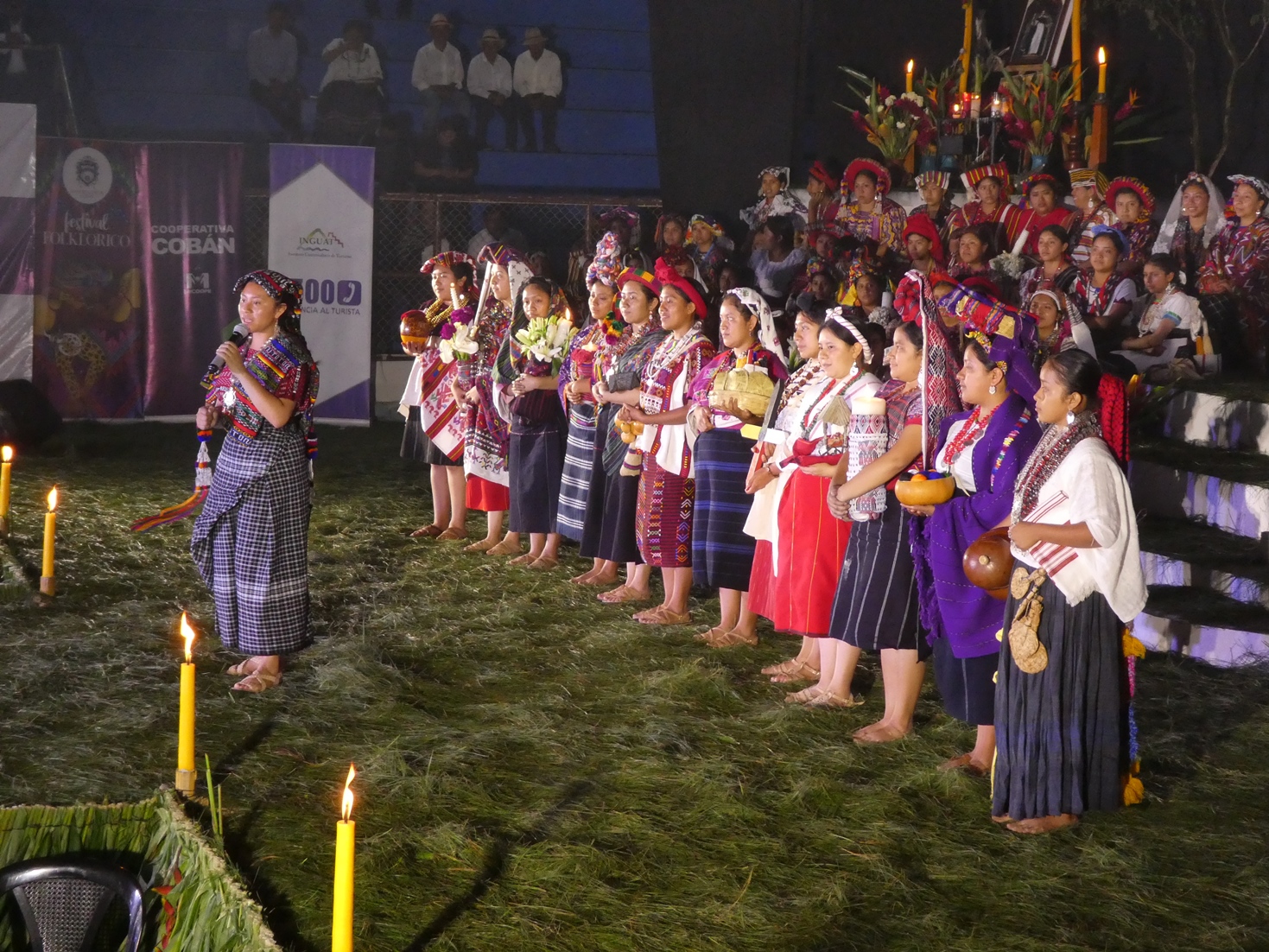
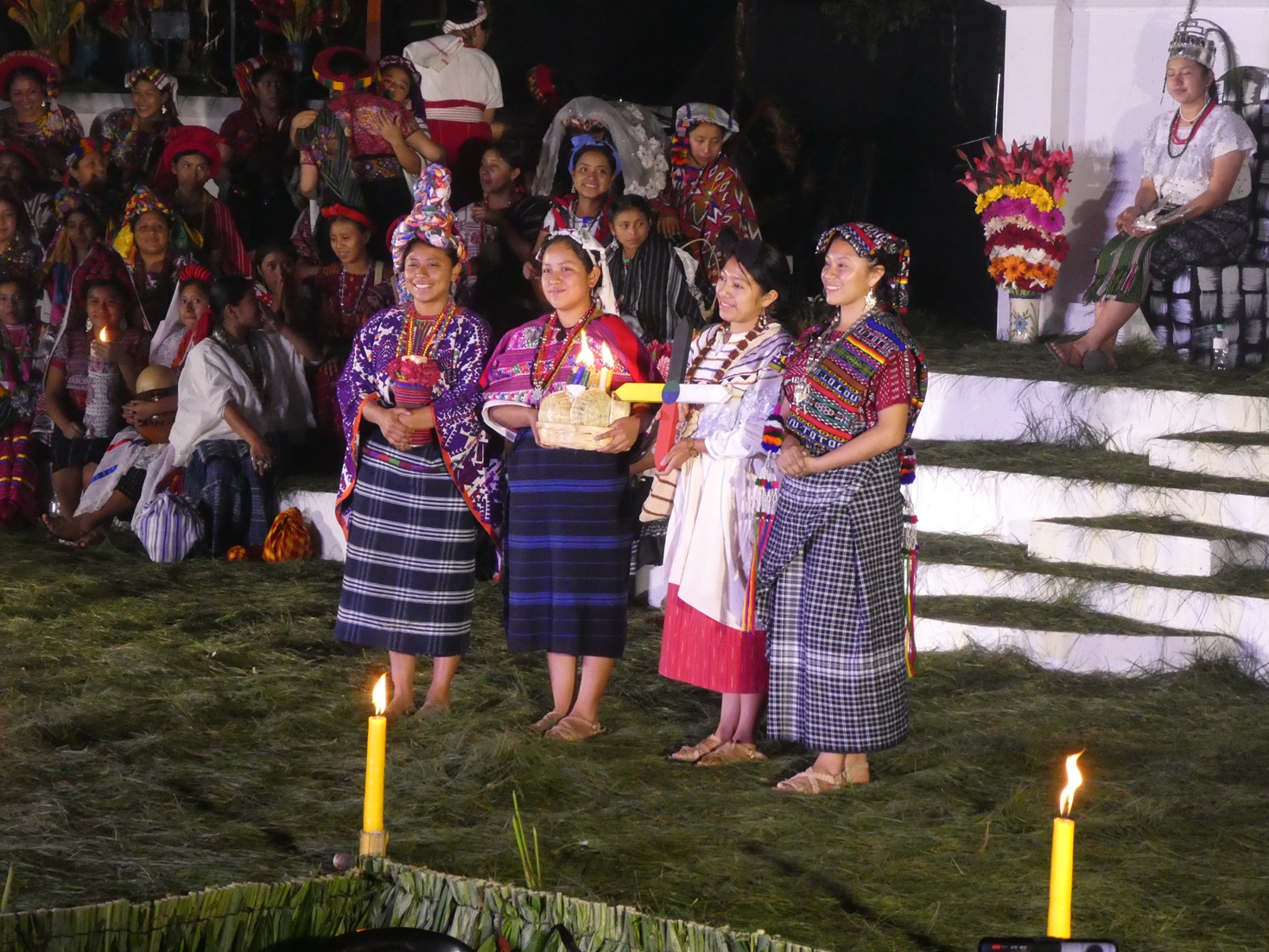
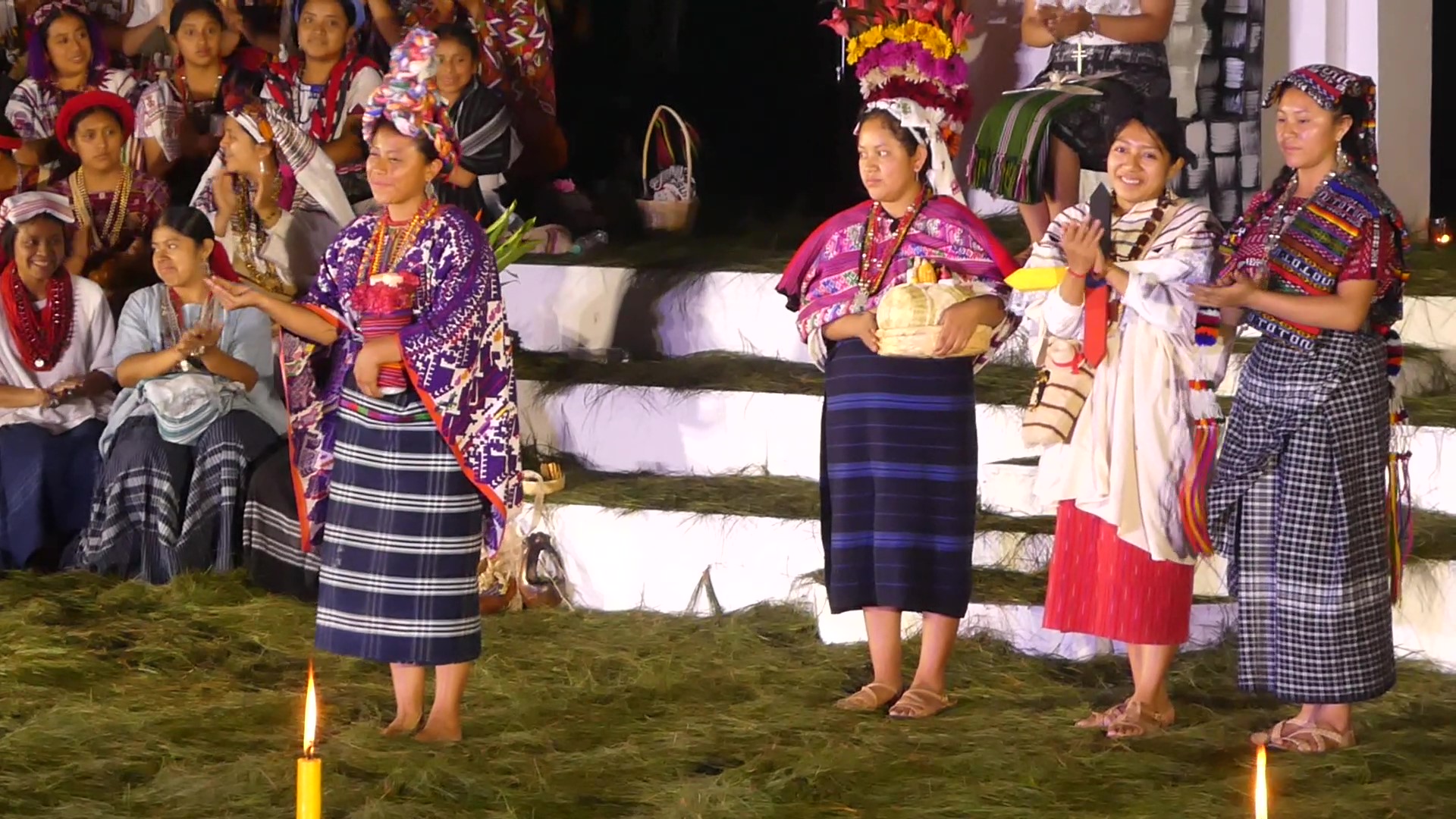
And behind them walked the contestants to become this year’s Rabin Ajaw, each clad in beautiful garments and carrying symbolic items to represent their community. Some bore flowers, whilst others had fruits, pottery, baskets, or other crafts. Many of them had already won local pageants as part of a pre-selection process, and they had all come from different parts of Guatemala, hoping to bring the crown home with them.

This event is simultaneously called Festival Folklórico Nacional de Cobán and Rabin Ajaw, something that confused me at first but I think I understand it now. It is a folklore festival because it is very much – in its essence – a celebration of Mayan culture, but many activities concerning the event centre around the pageant. The words Rabin Ajaw mean ‘Daughter of the King’ in Q’eqchi, and it is the title the winner assumes each year before passing the crown to the next winner.
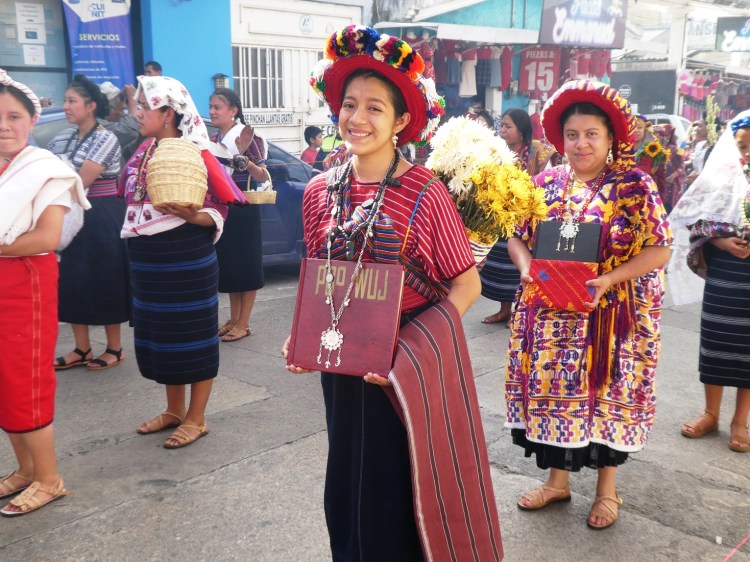
I won’t go into too much detail about the technical details of this and its history (as there is an excellent article about it here, and I don’t want to plagiarise someone else’s research) but Rabin Ajaw is a bit different to what most people would consider a ‘pageant’. They place far less emphasis on outside beauty and more upon things such as their knowledge of Mayan culture and their skills as an orator. The judges do not see their faces during the first stage of the competition – when the women deliver speeches on a series of topics concerning societal issues that affect present-day Guatemala – and from that, they will pick just thirteen as the semi-finalists.
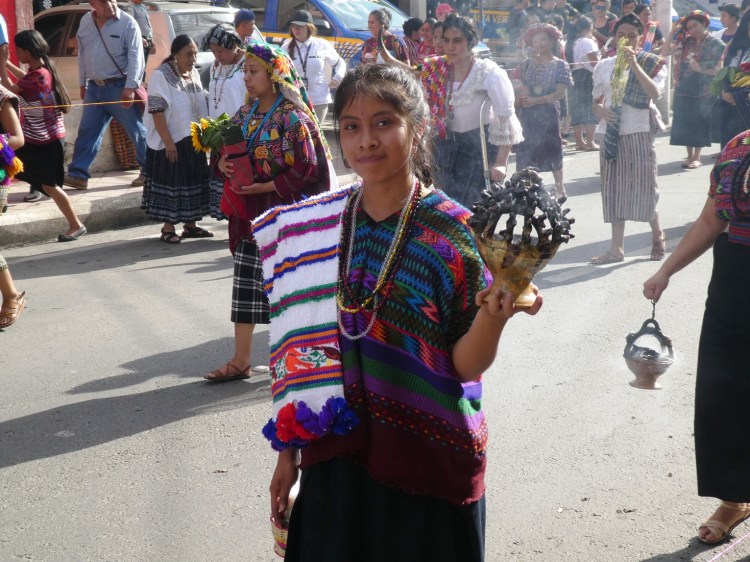
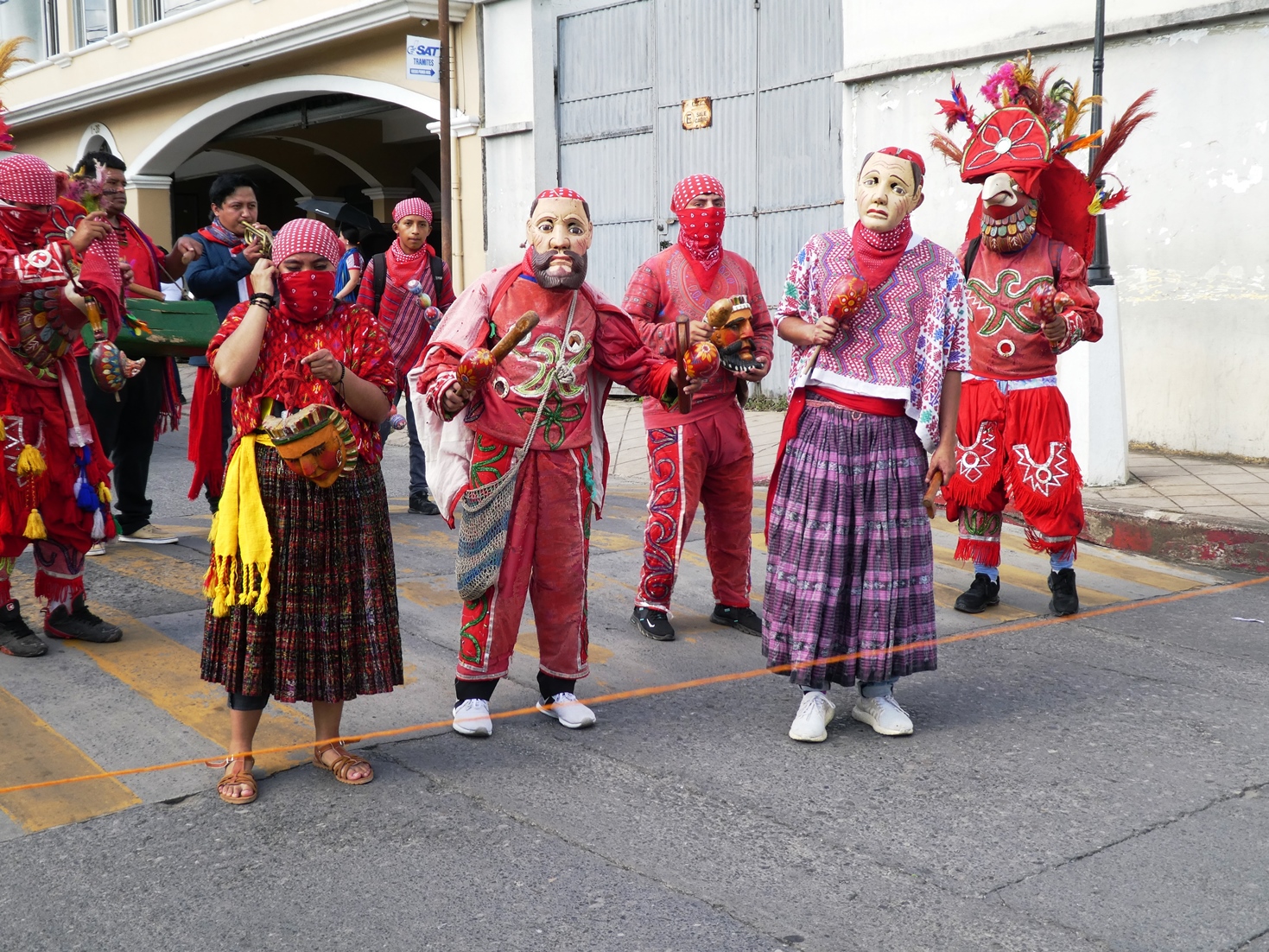
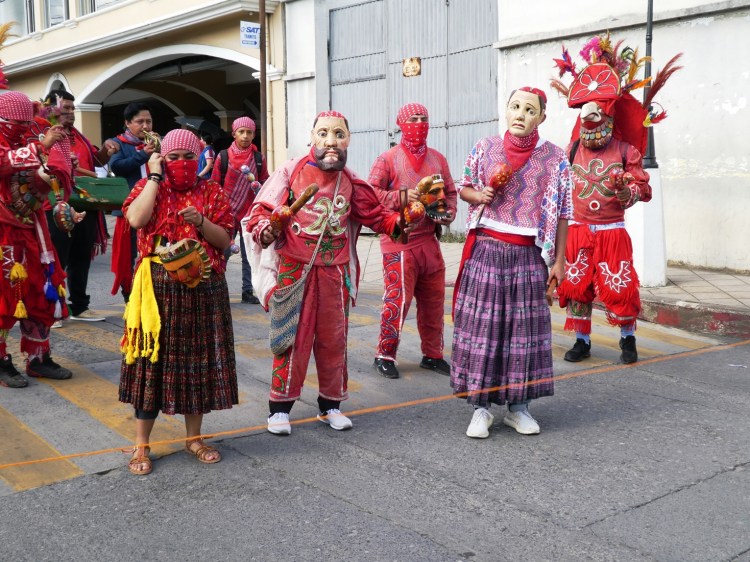
Behind the contestants marched various other groups, including scores of musicians, other women in traditional clothing, and groups wearing colourful, anthropomorphic masks, dancing wildly. This event was everything that I had hoped it would be.
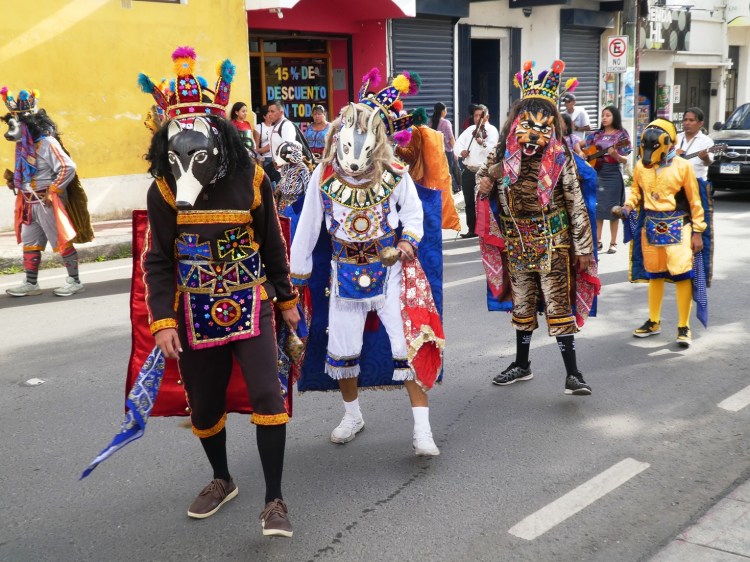
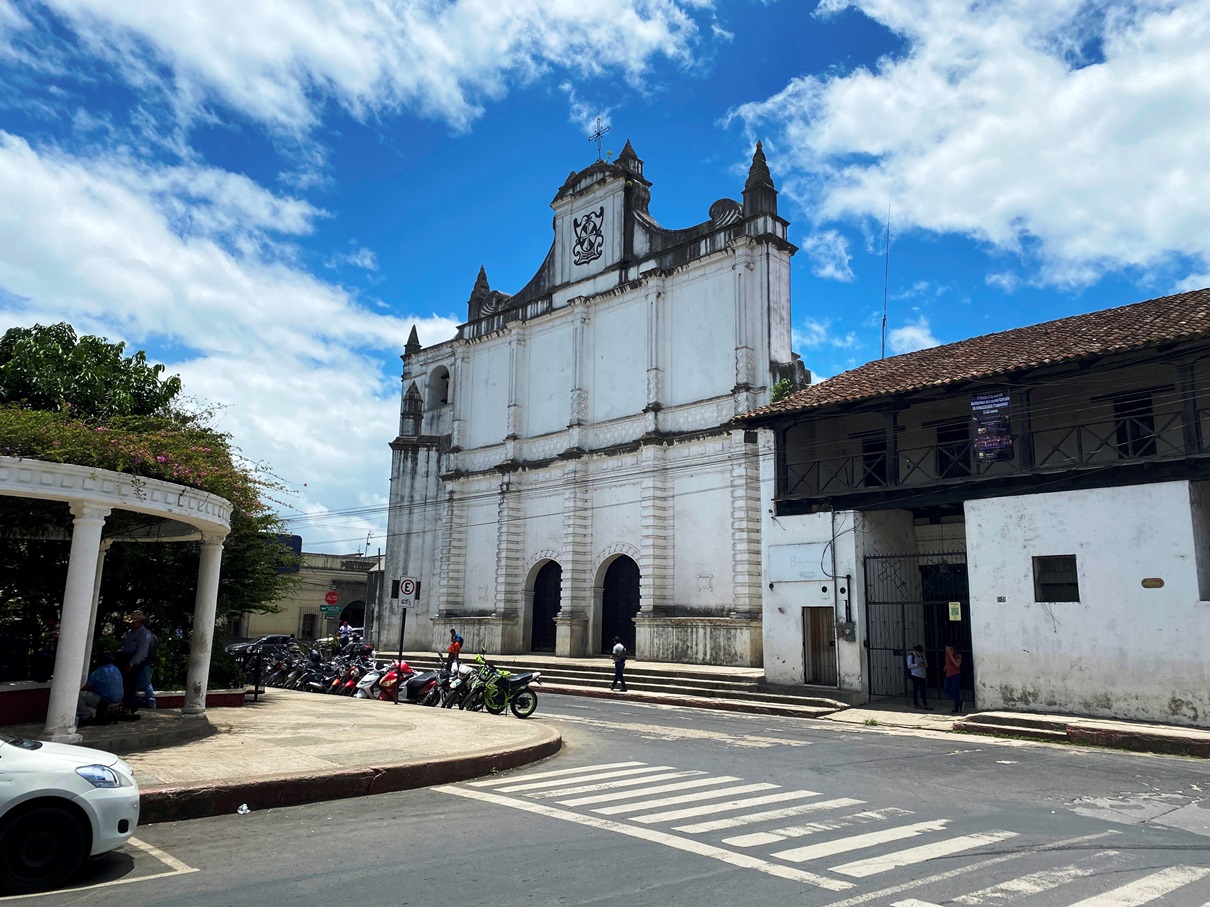
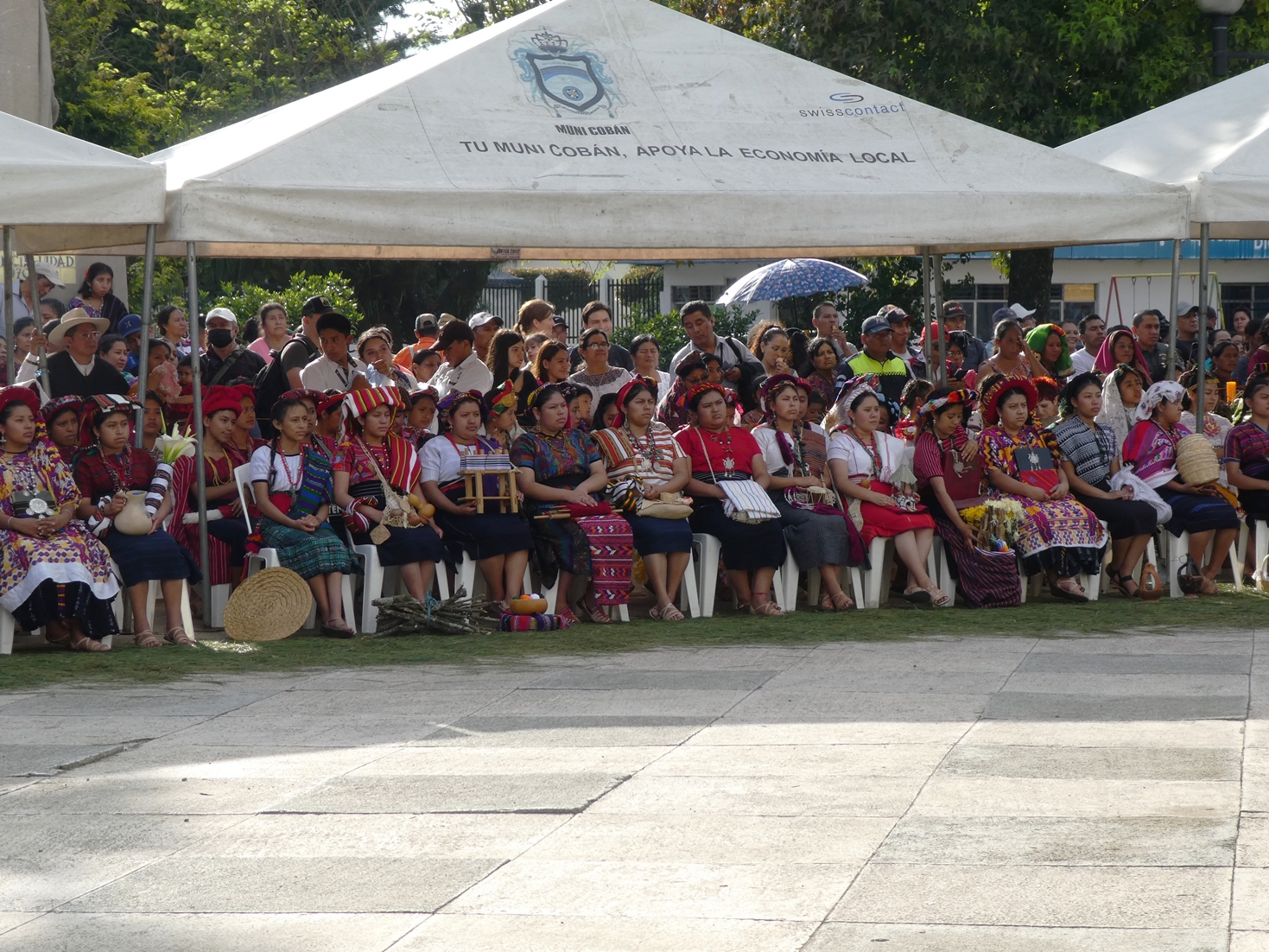
The procession marched from the Iglesia El Calvario to the Catedral Santo Domingo in the main square, where, once they arrived, the contestants claimed seats whilst friends, family, observers and other people from the city gathered around.
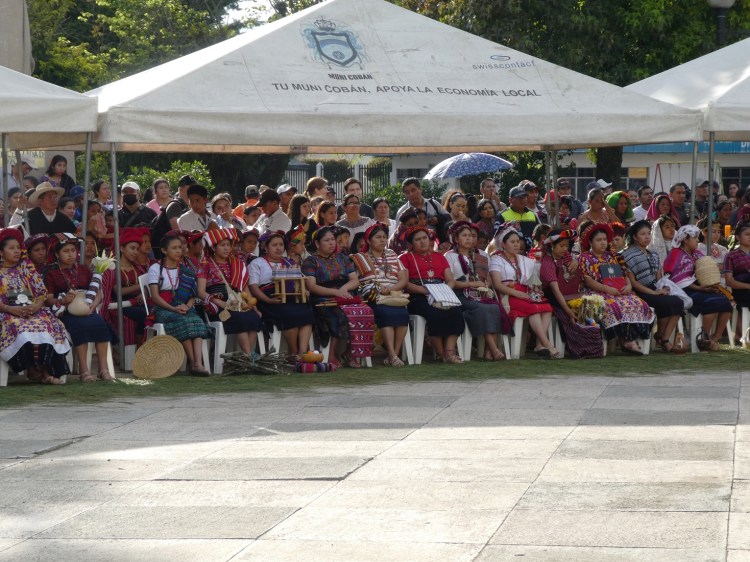
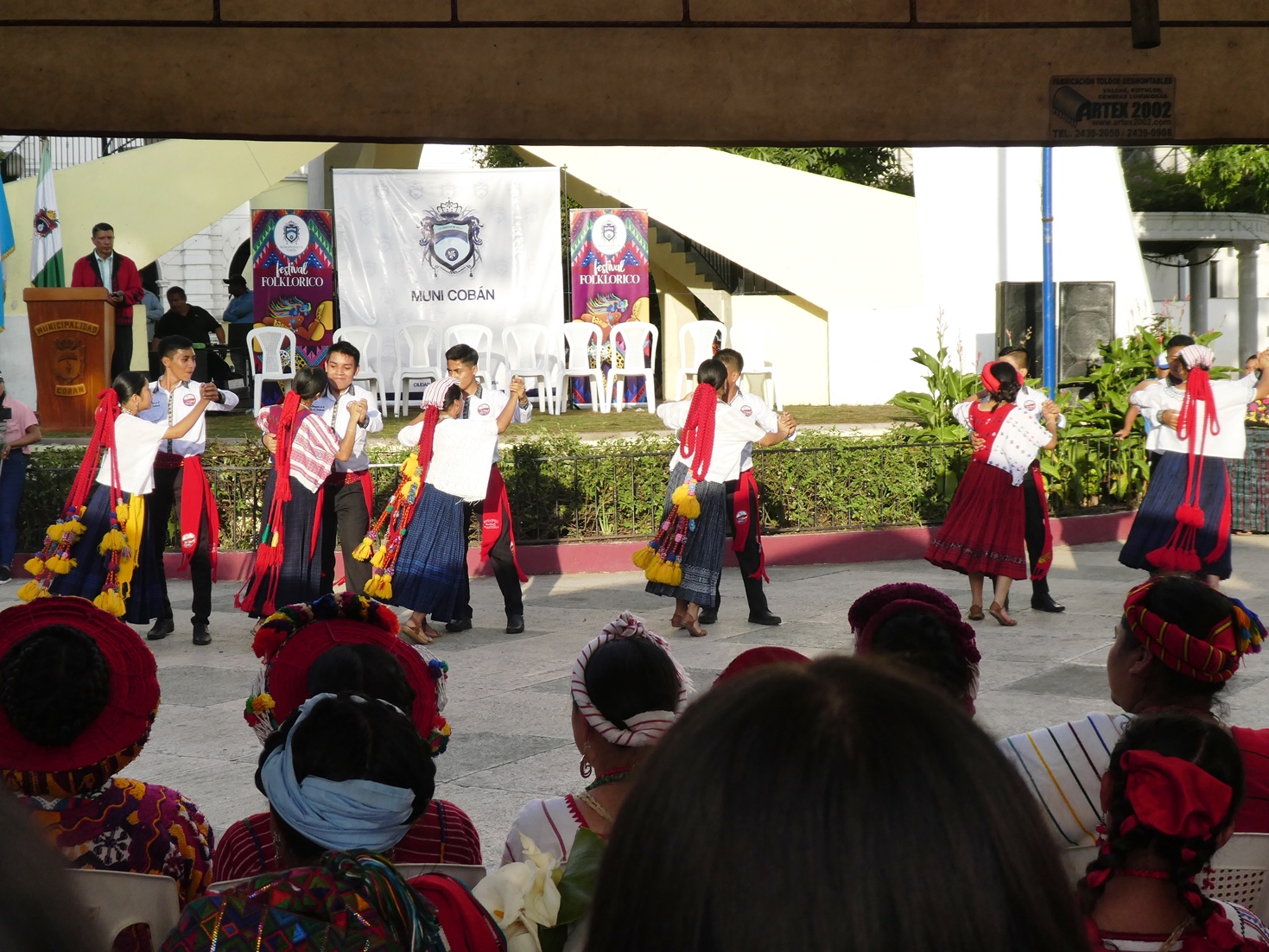
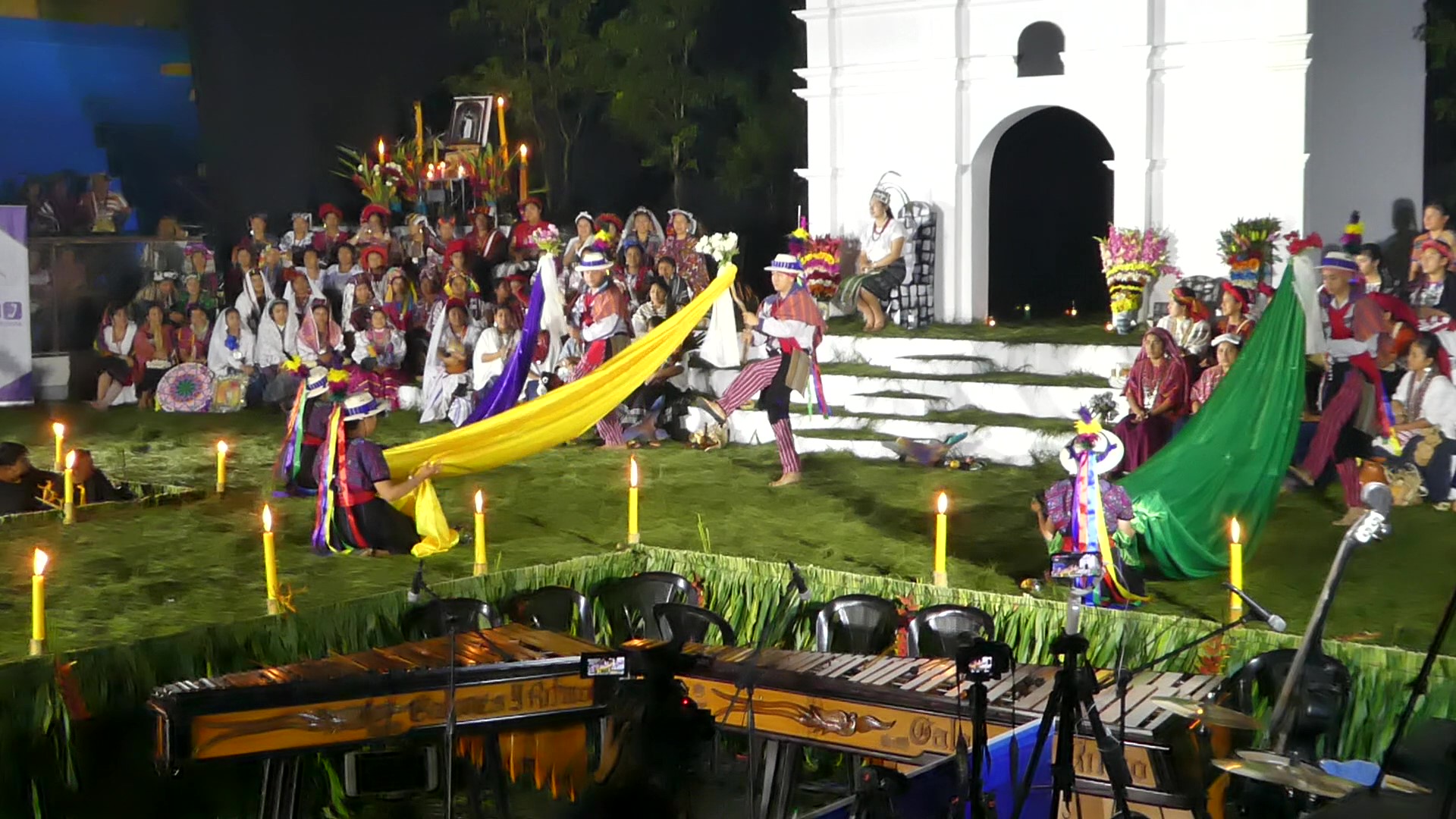
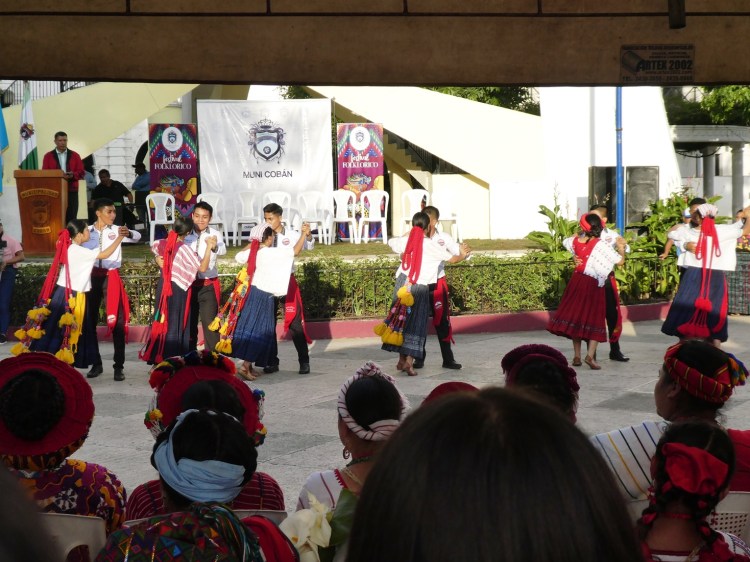
People made speeches, and then there was some entertainment in the form of dancers.
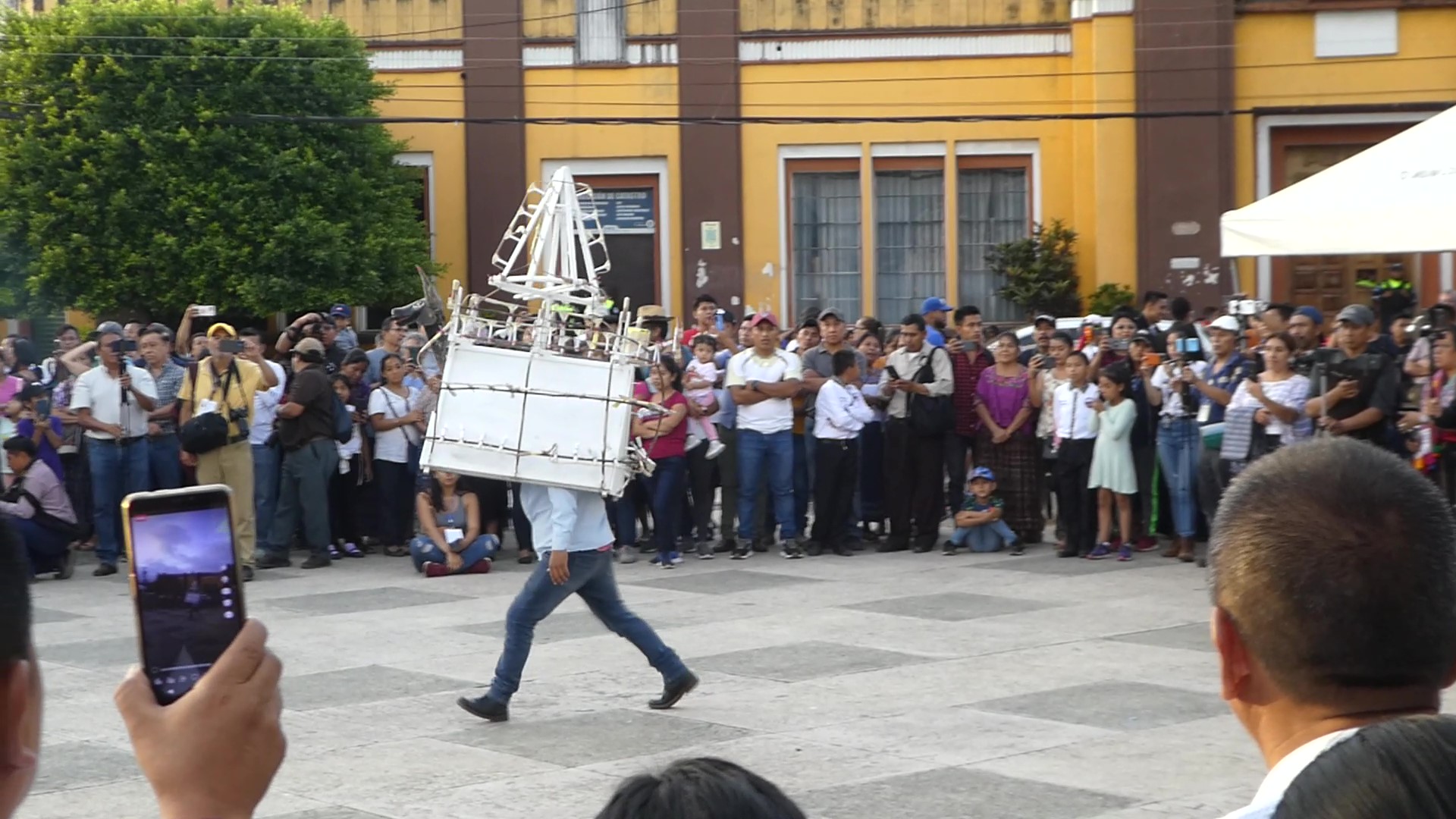
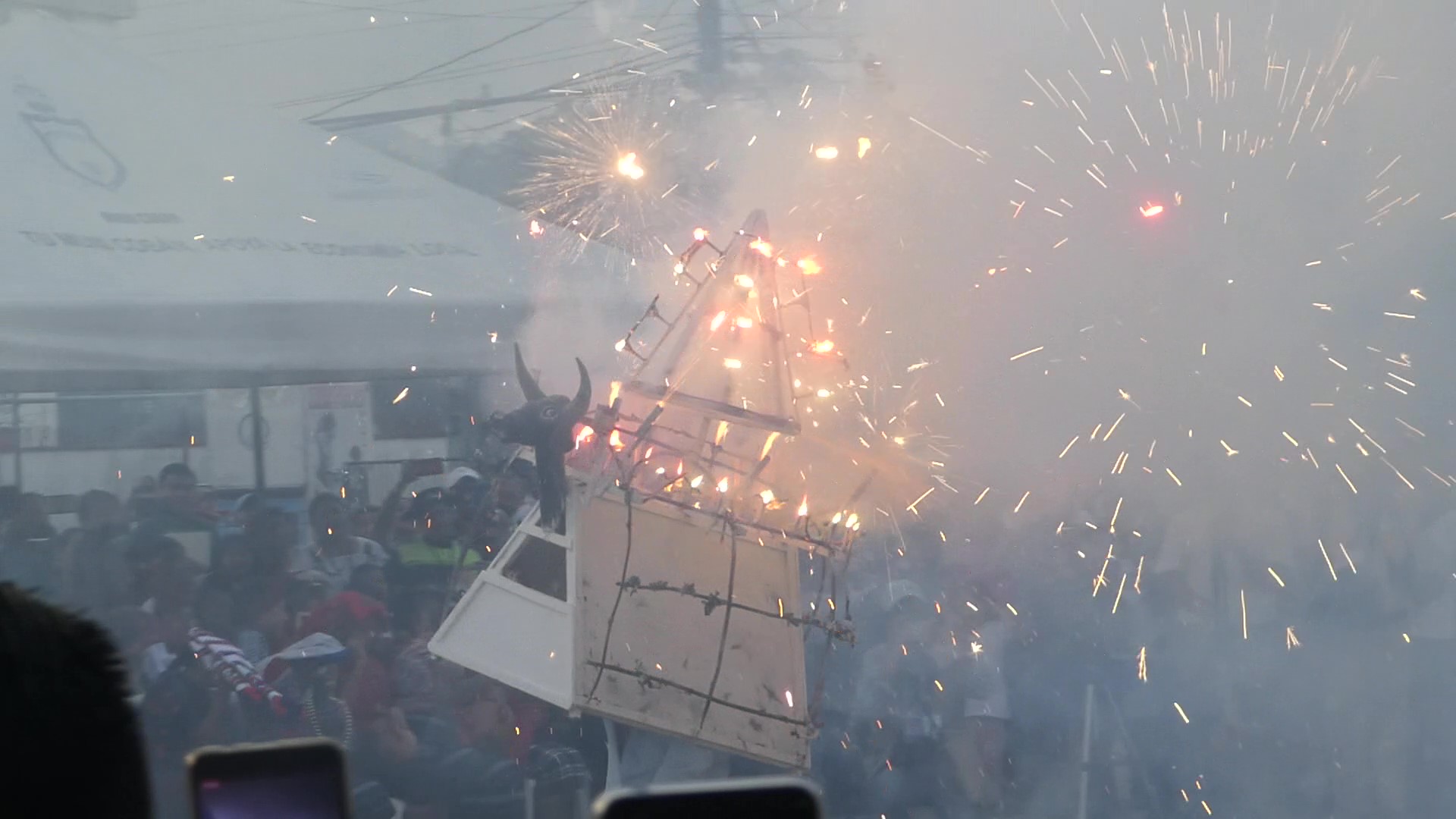
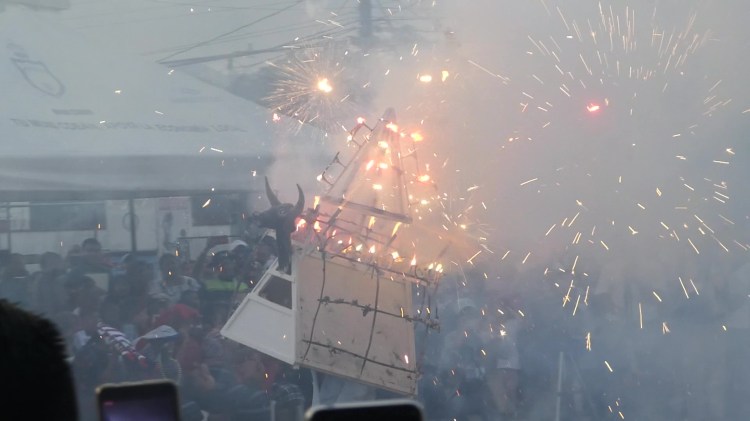
And then, just before everyone dispersed, a man appeared with this strange contraption on his head. They played some music from a speaker, and he began to dance around in circles. I was initially a little confused by this – as it seemed like a strange and almost tacky end to what had been a very impressive first day of the festival – but then someone came and lit a fuse, igniting fireworks.
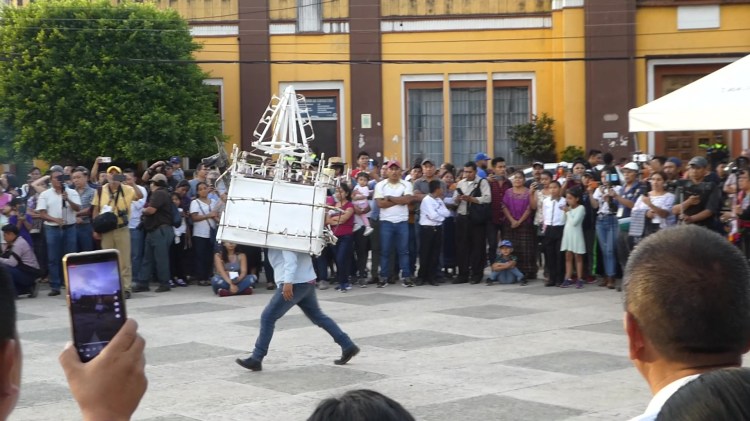
I am not sure how much risk assessment had been done here, but the contraption he was wearing seemed to protect him from the brunt of it all, and the fuses had cleverly assembled so they ignited gradually. He continued dancing for quite some minutes until the light show sparkling around his head came to a climactic end (which I have a video of here).
The second day of the festival didn’t have any public events. The contestants for Rabin Ajaw were giving their speeches in a building somewhere. This was – like most of the festival – live-streamed on Cobán’s community page. Perhaps if I had turned up and explained that I was writing a blog they would have let me observe – as I could see a handful of people taking photos from one of the balconies above – but I wasn’t feeling very well that day so decided to save my energy for the crowning ceremony the following evening.
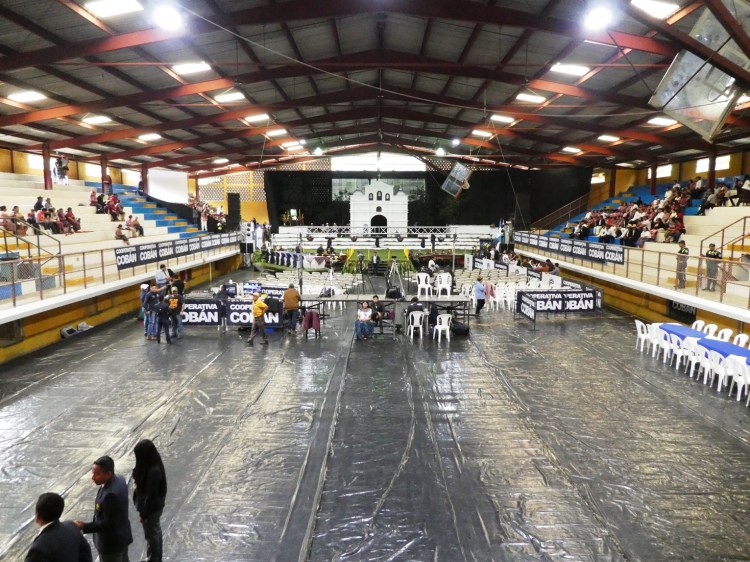
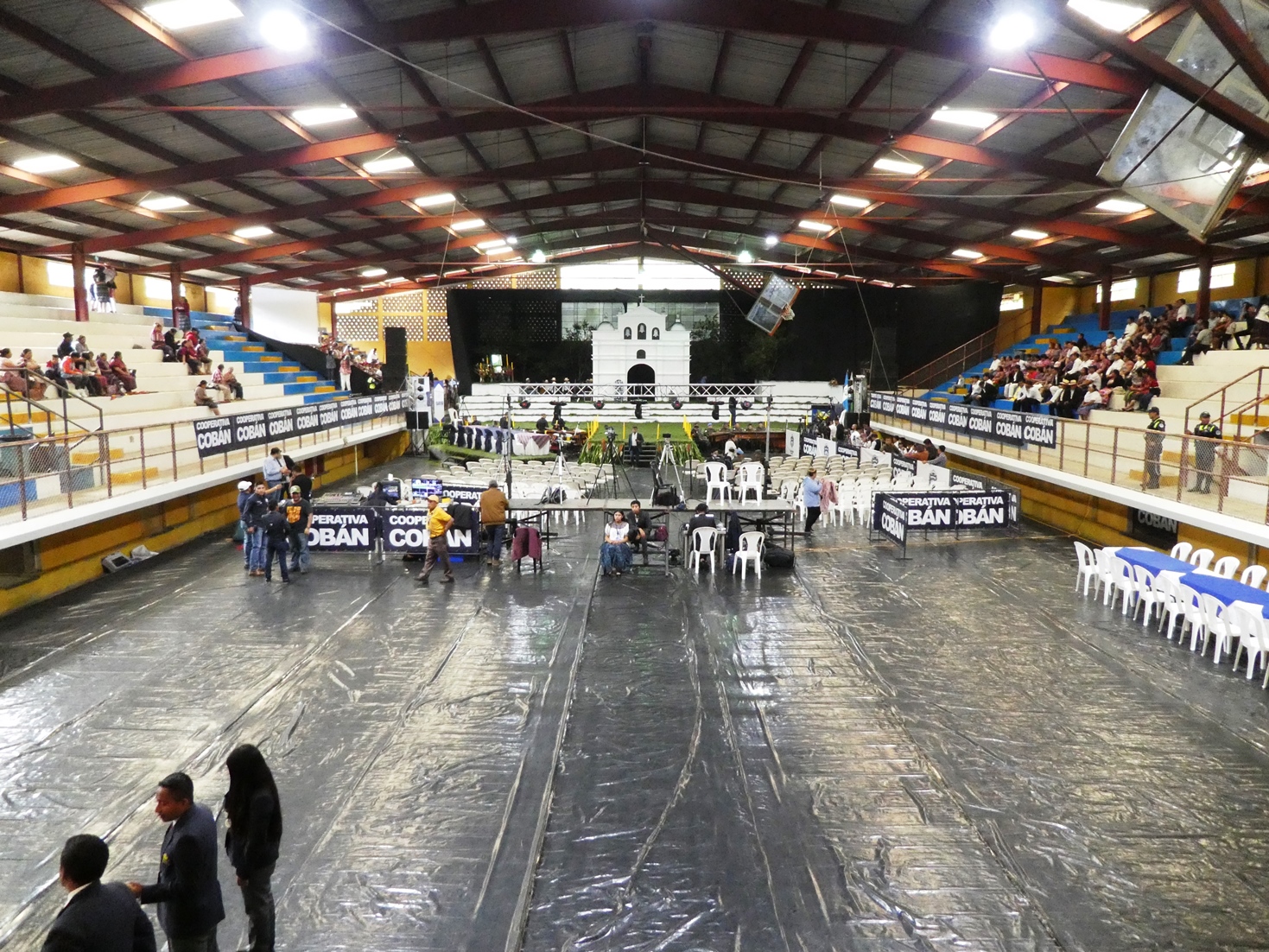
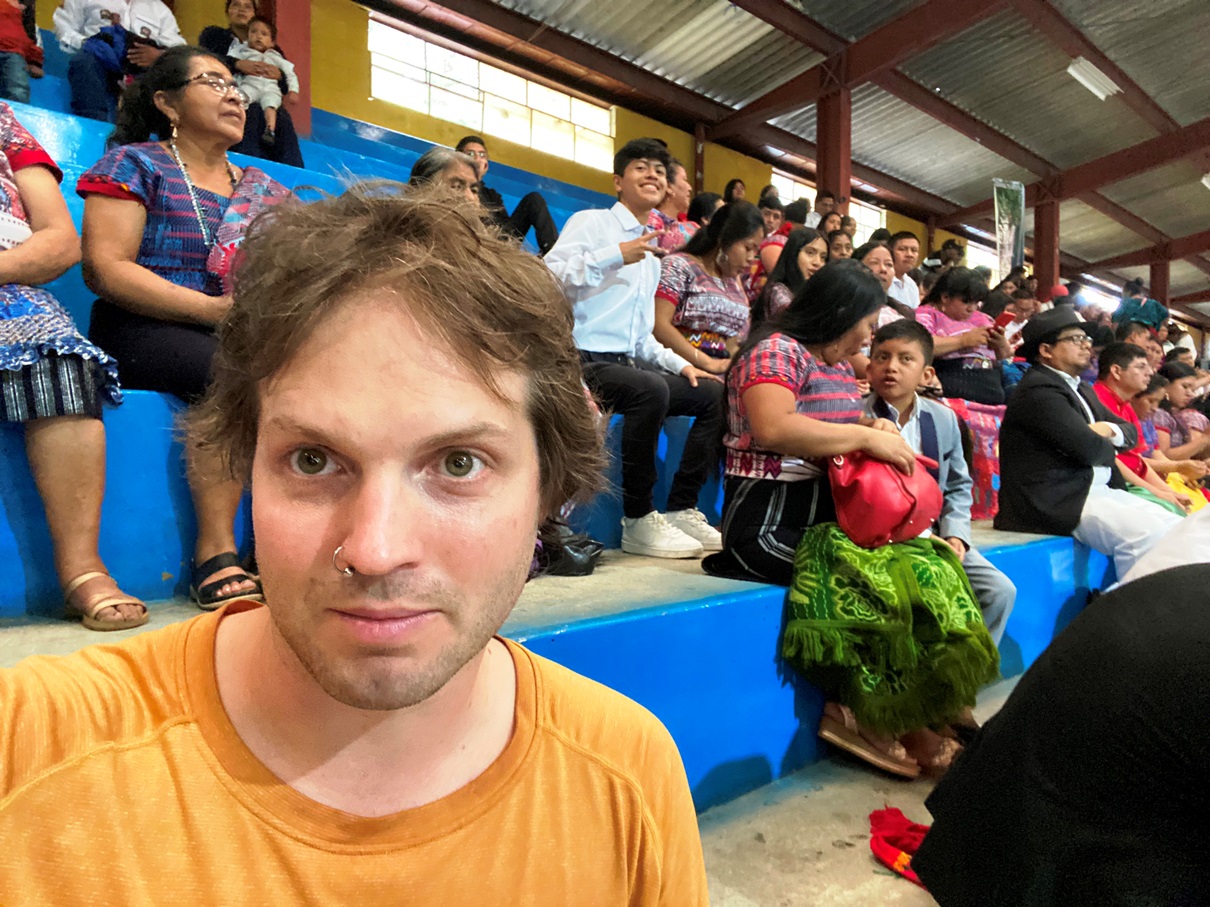
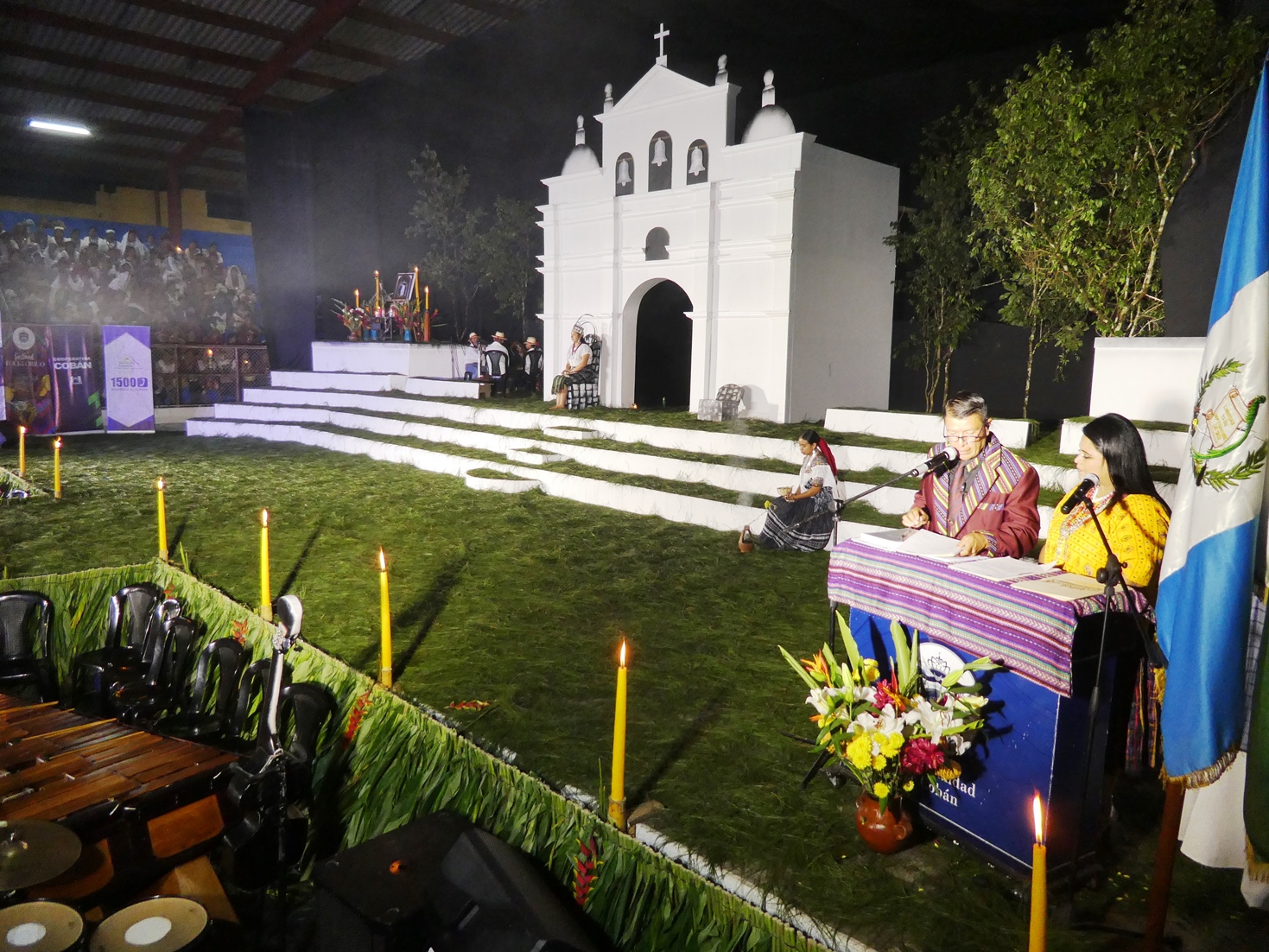
This took place at the Instituto Nacional de la Juventud Alta Verapacense, and the doors opened at 4 p.m. I turned up bright and early to claim a seat close to the front, but the ceremony didn’t begin until over two hours later.
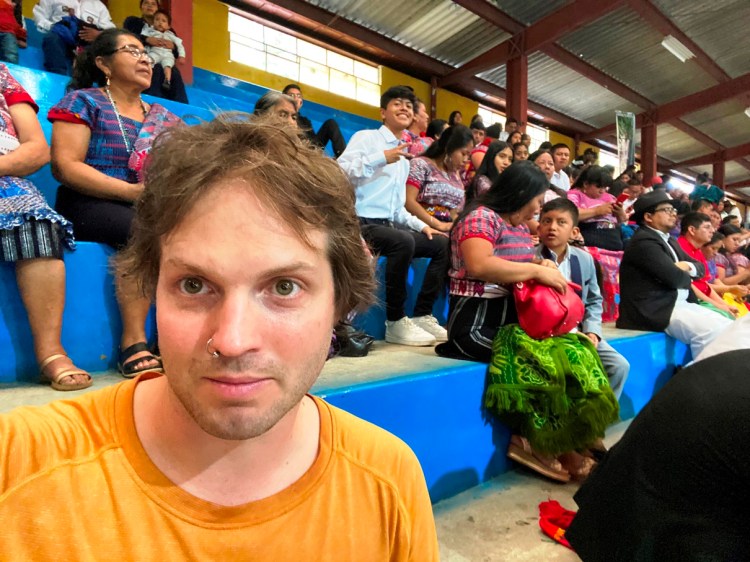
Now, one thing I will say is that I did not realise quite how long it would be. I had not eaten since lunchtime because I thought I would be back at my hotel after a few hours, but this turned out to be a big mistake. I do not regret going. It was an amazing experience and very interesting, but I definitely would have done a few things differently if I had any idea just how long it would be (such as eating a late lunch and bringing some snacks).
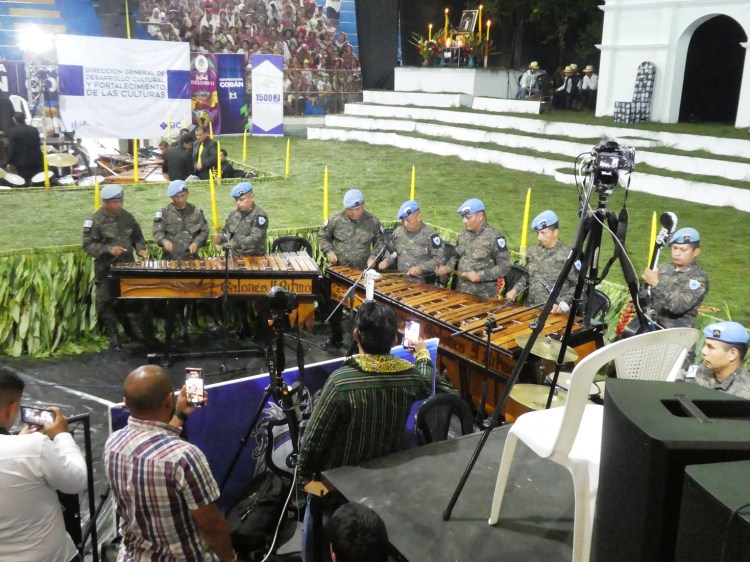
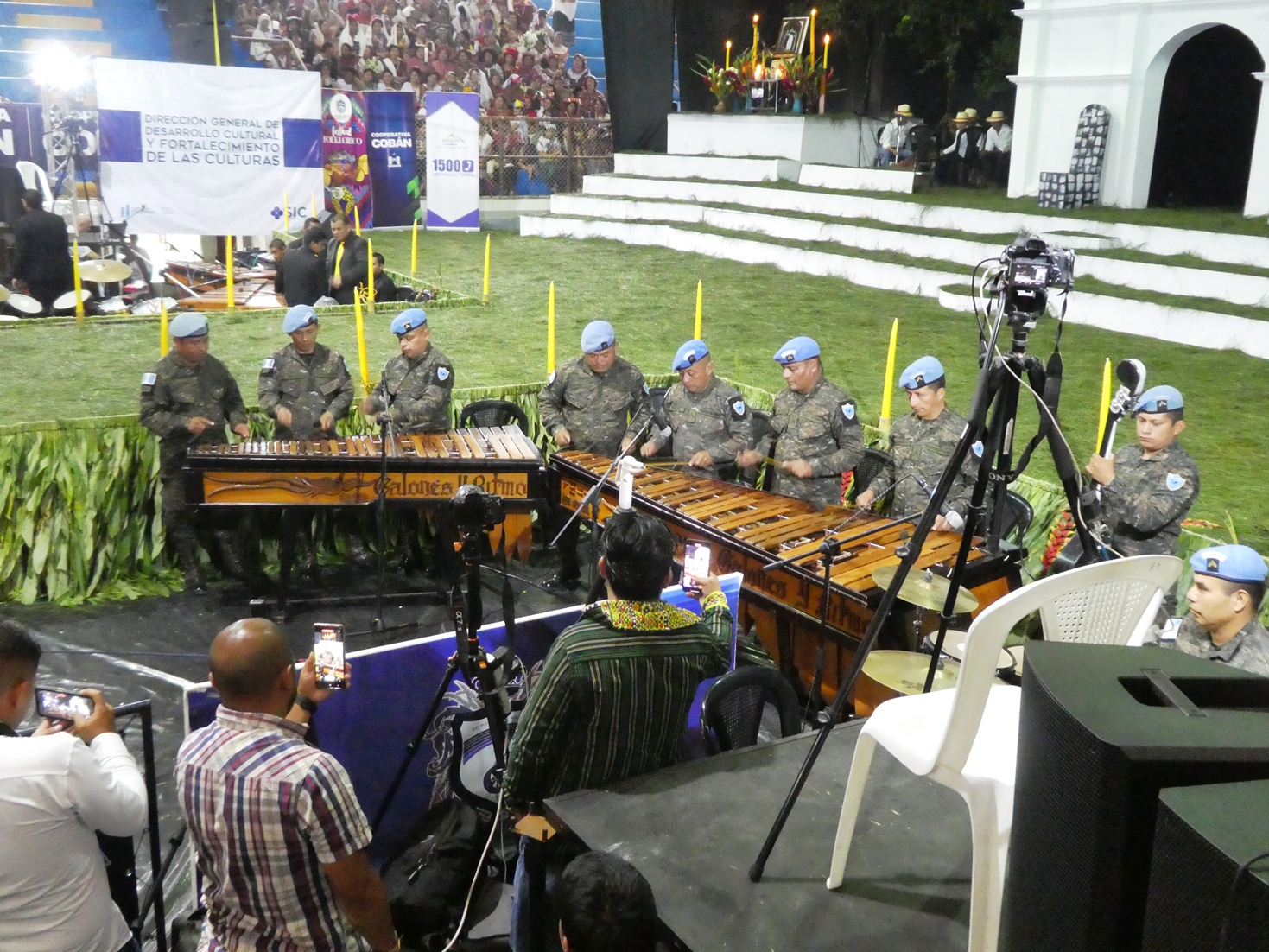
As we waited for the ceremony to begin, some men dressed in camouflage gear walked up to a series of xylophones. I was initially confused because they looked like the same security guys who had frisked me and other attendees when we entered, but they started playing (video here). Perhaps they are military men by day and xylophone players by night? I am not sure. Guatemala. It is an interesting place.
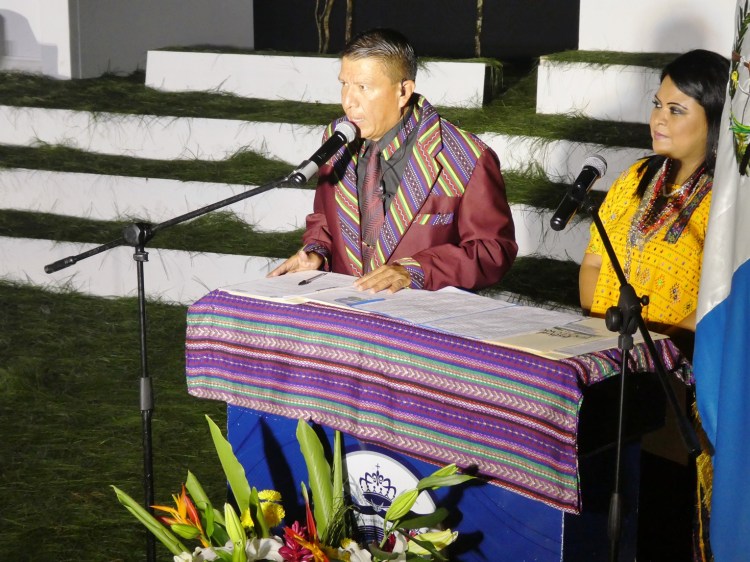
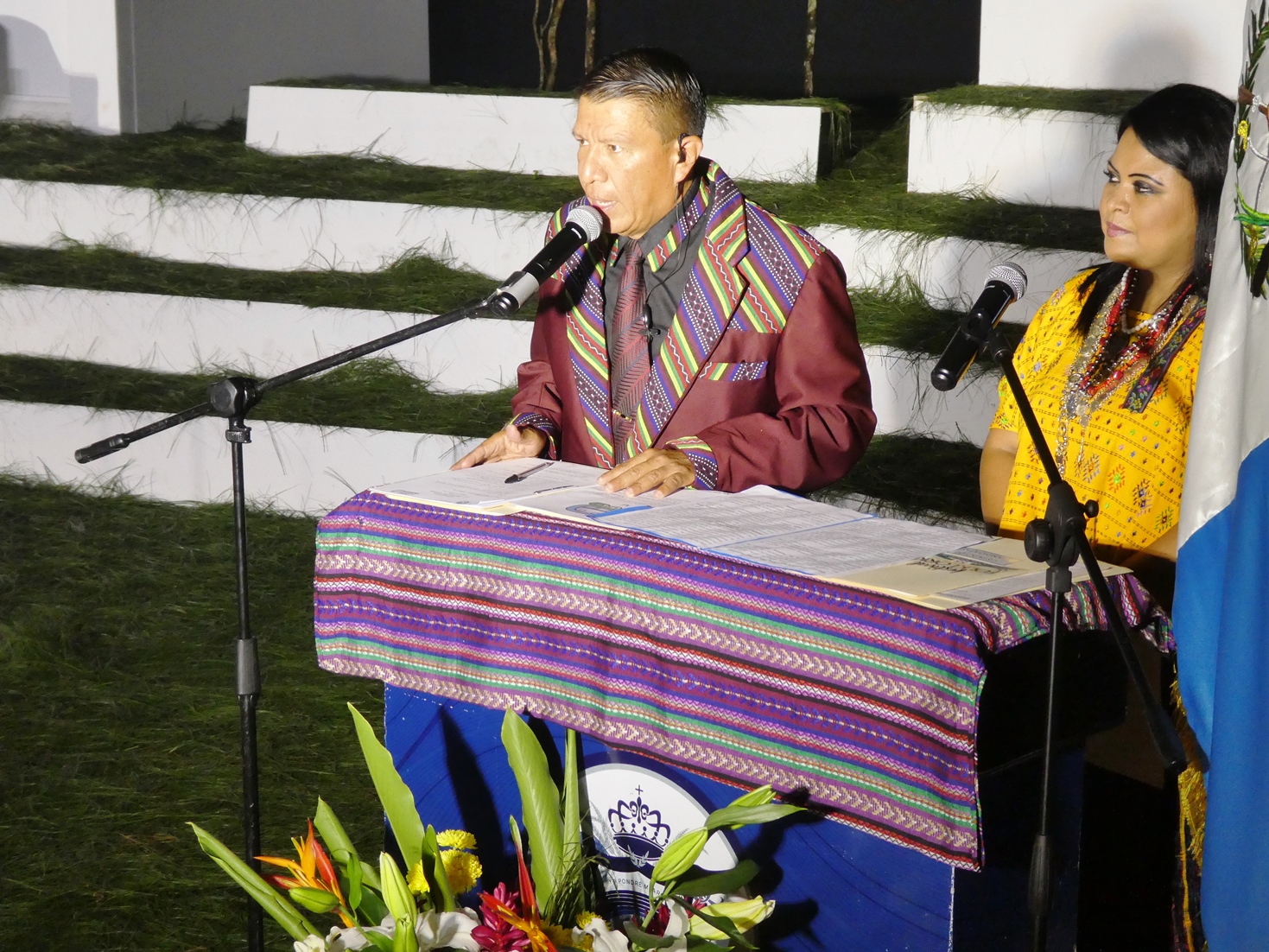
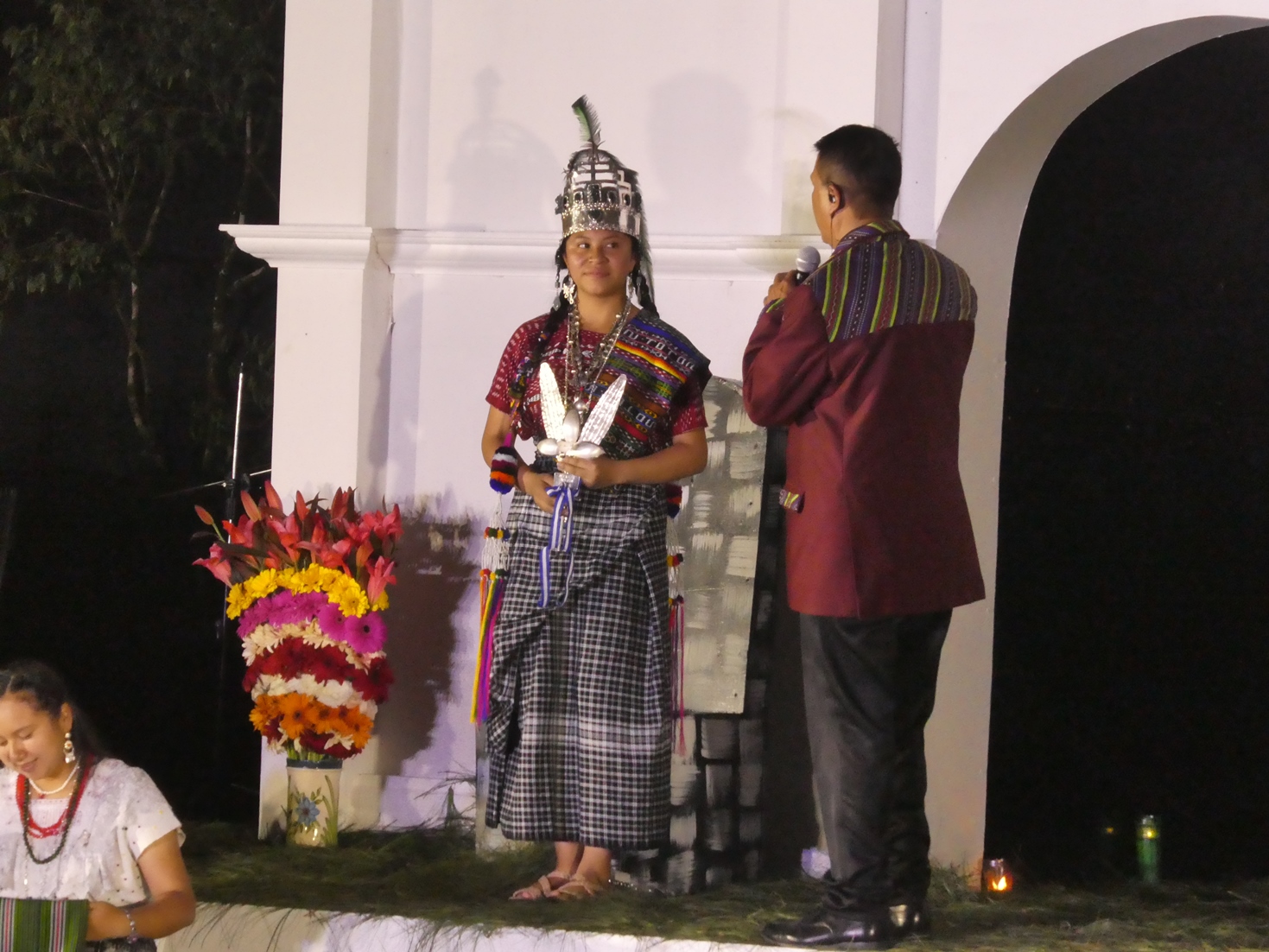
The two presenters made a series of long speeches and greeted some of the notable people who had come to the event. This included previous winners of Rabin Ajau, local politicians, and even a woman who I think might be this year’s Miss Guatemala.
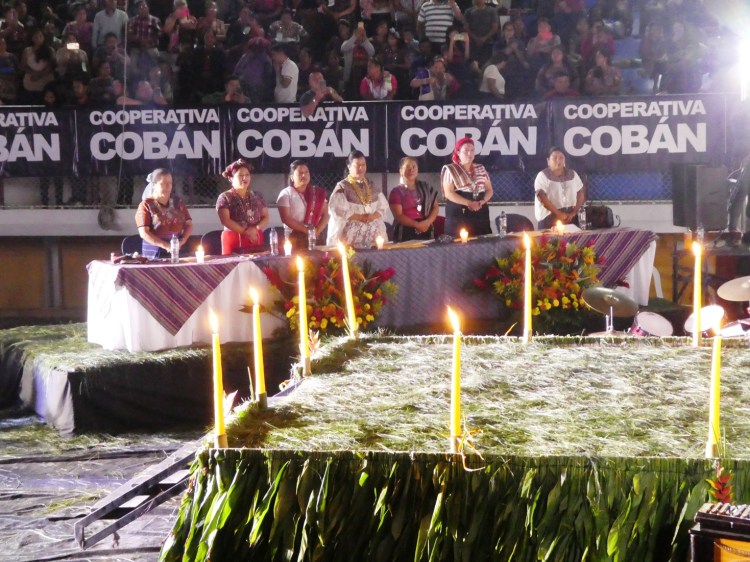
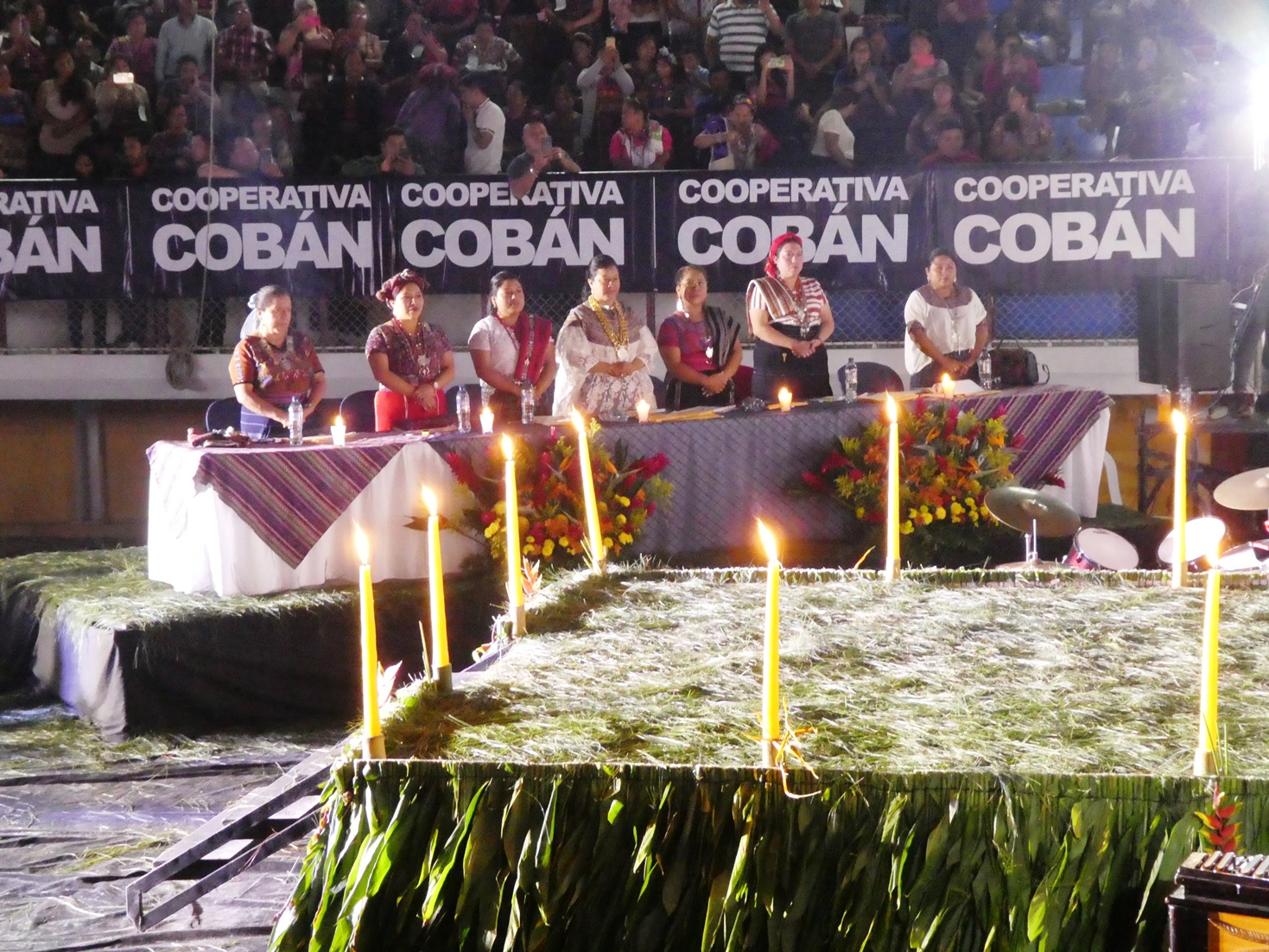
They also introduced the judges, listing their various qualifications and achievements. The recurring theme seemed to be that they were all heavily involved in community projects throughout Guatemala and were all previous Rabin Ajaw contestants. None of them were winners, but they were all finalists, which I found interesting.
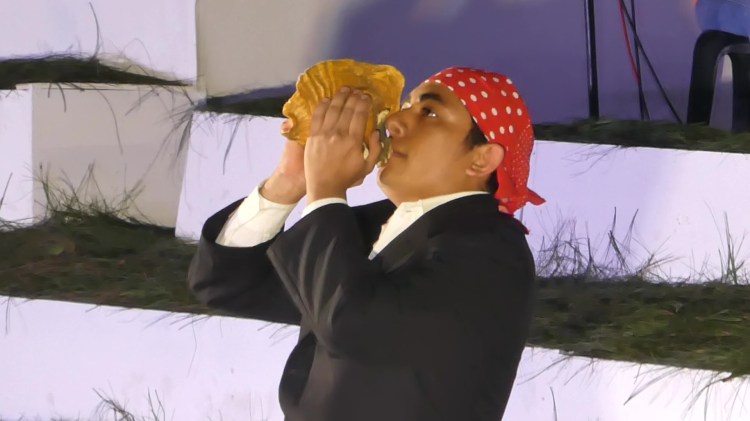
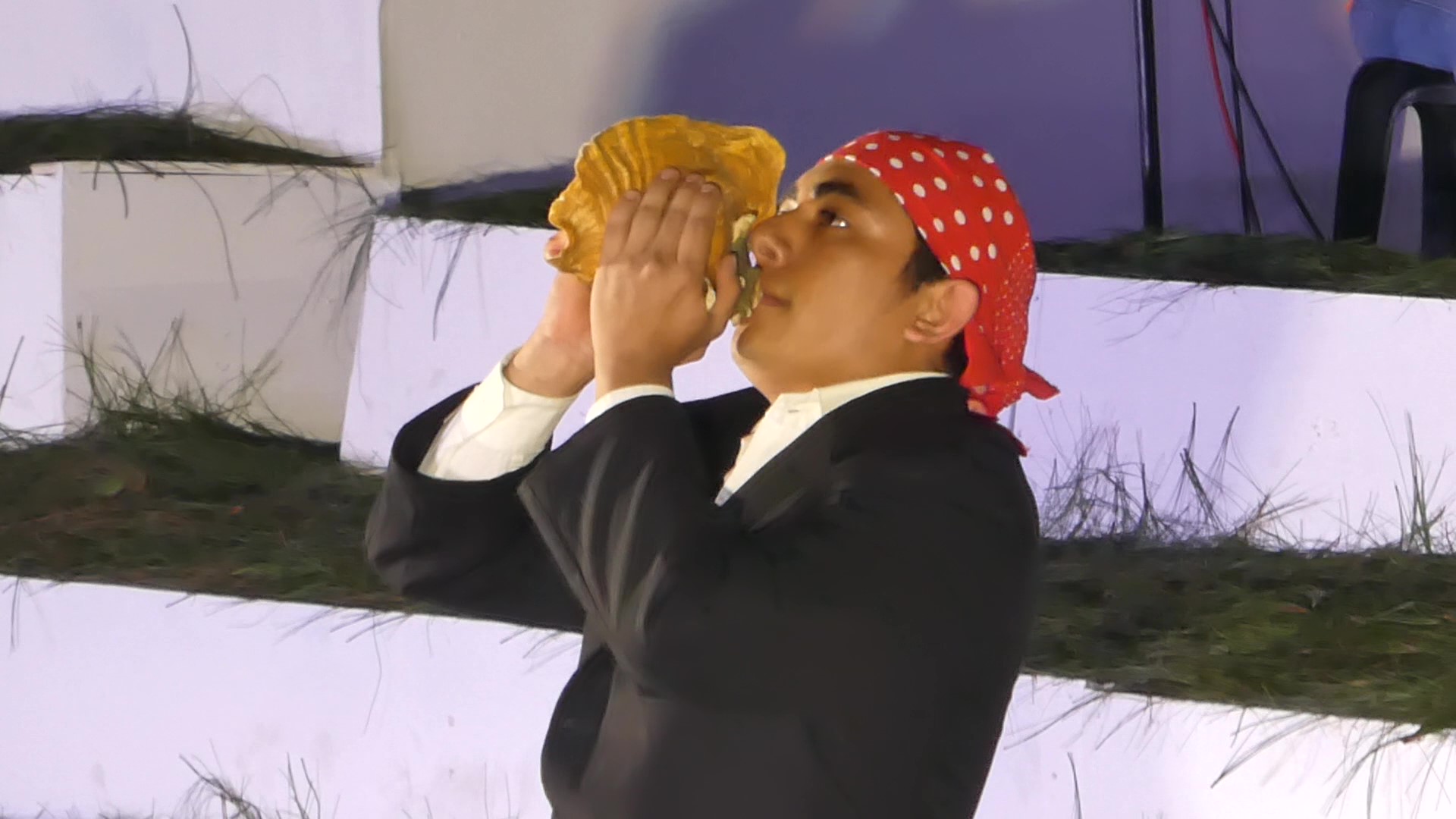
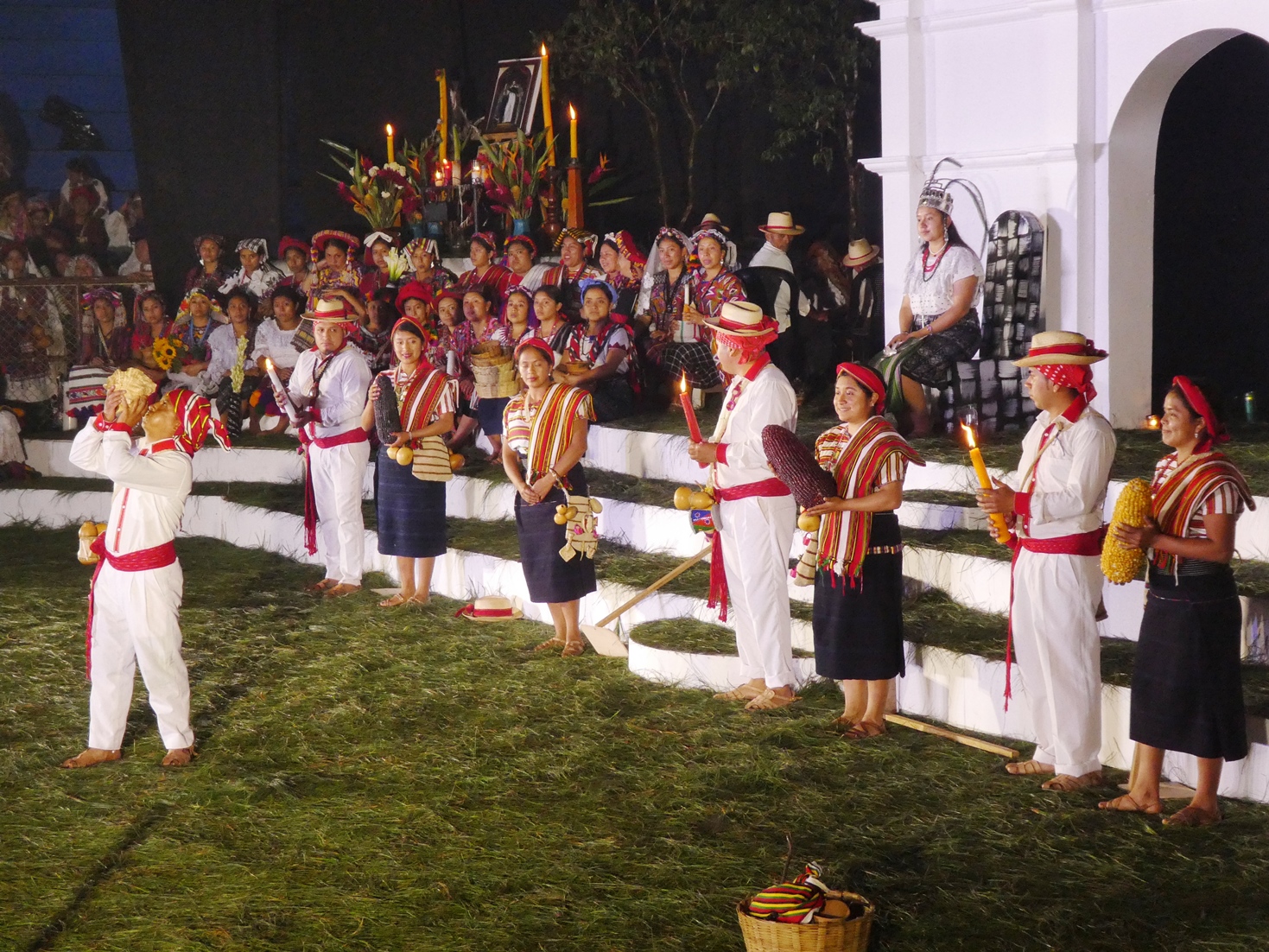
Eventually, a man stepped onto the stage and blew through a large shell, opening the ceremony. Everyone rose and sang the national anthem.

And after this, the reigning Rabin Ajaw – Alma Irene López Mendoza – made a speech, once again chaperoned by the same woman who had led the way during the parade a couple of days before.
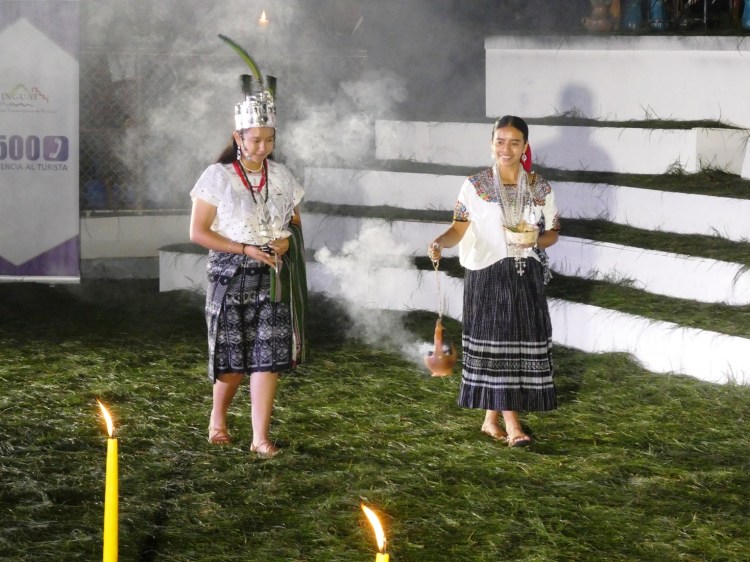
Both she and the Rabin Ajaw had chairs at the back of the stage, but hers was a little smaller. I suspect she was the runner-up in the previous year’s competition.
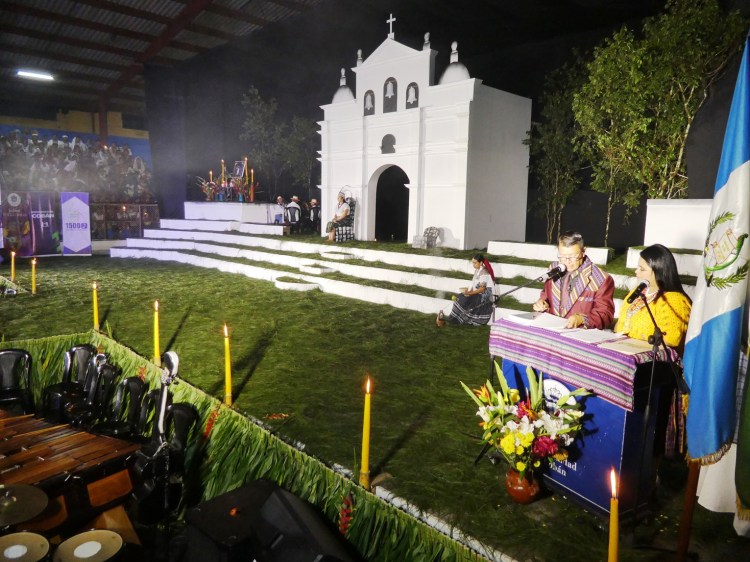
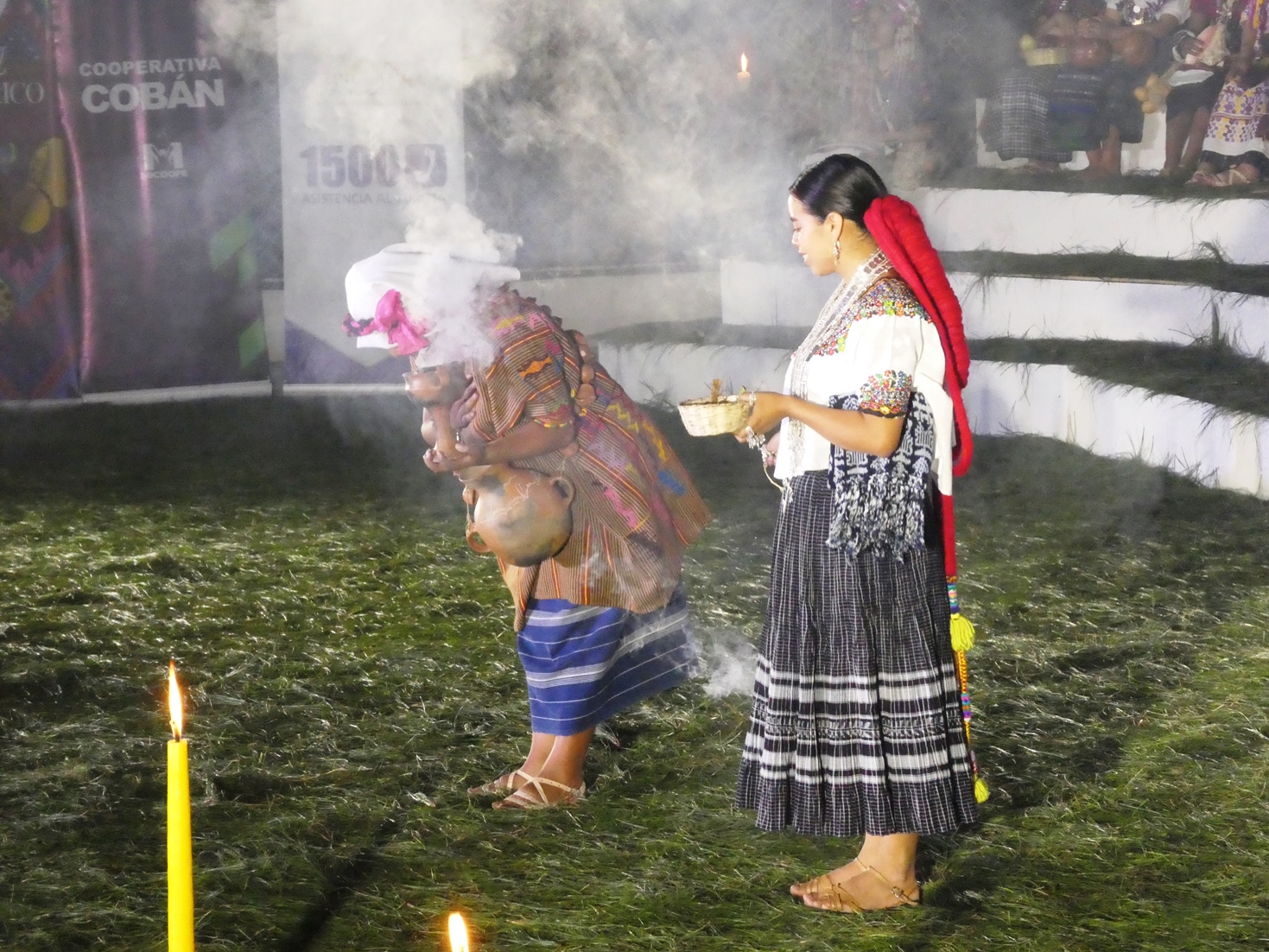
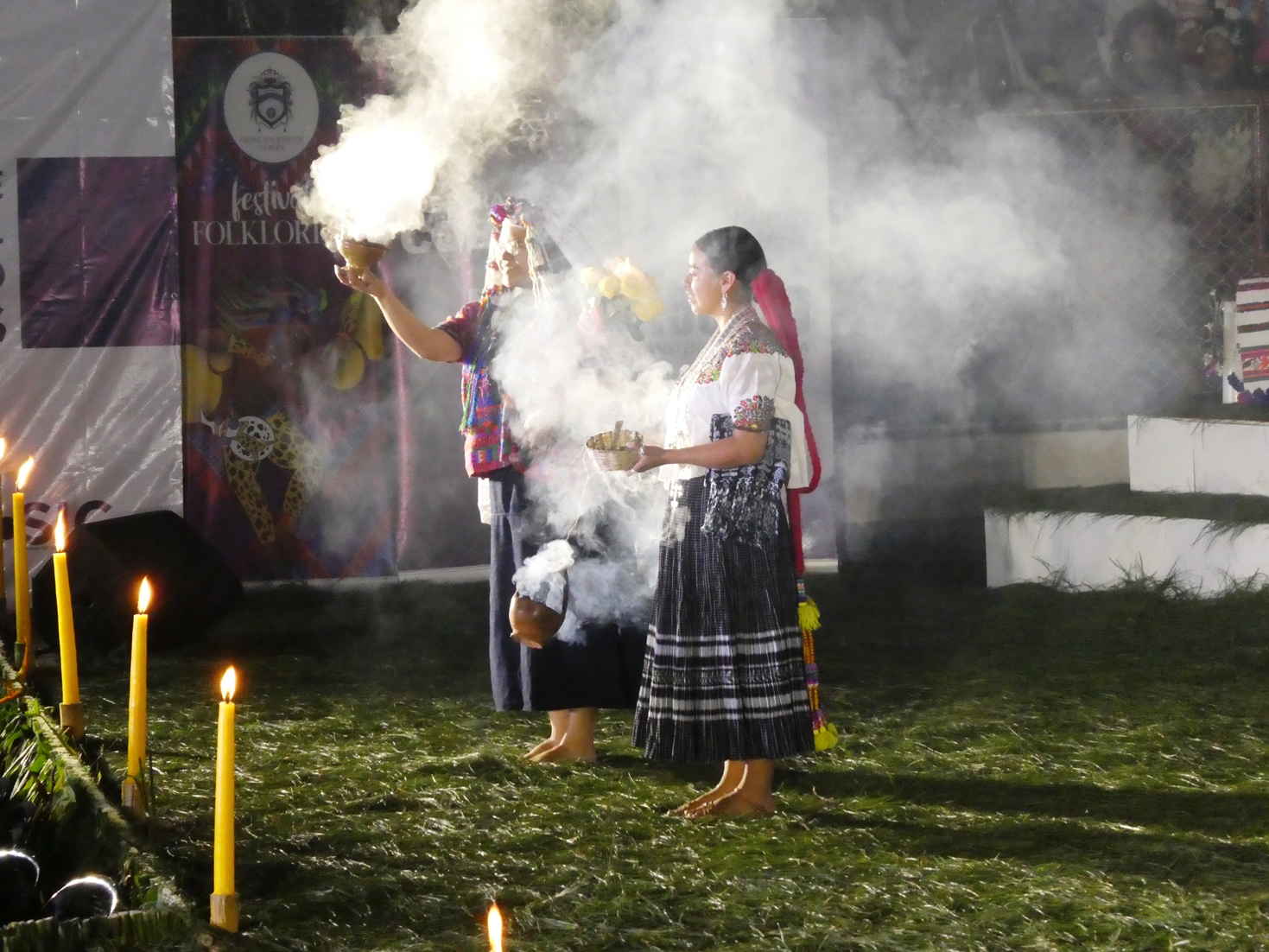
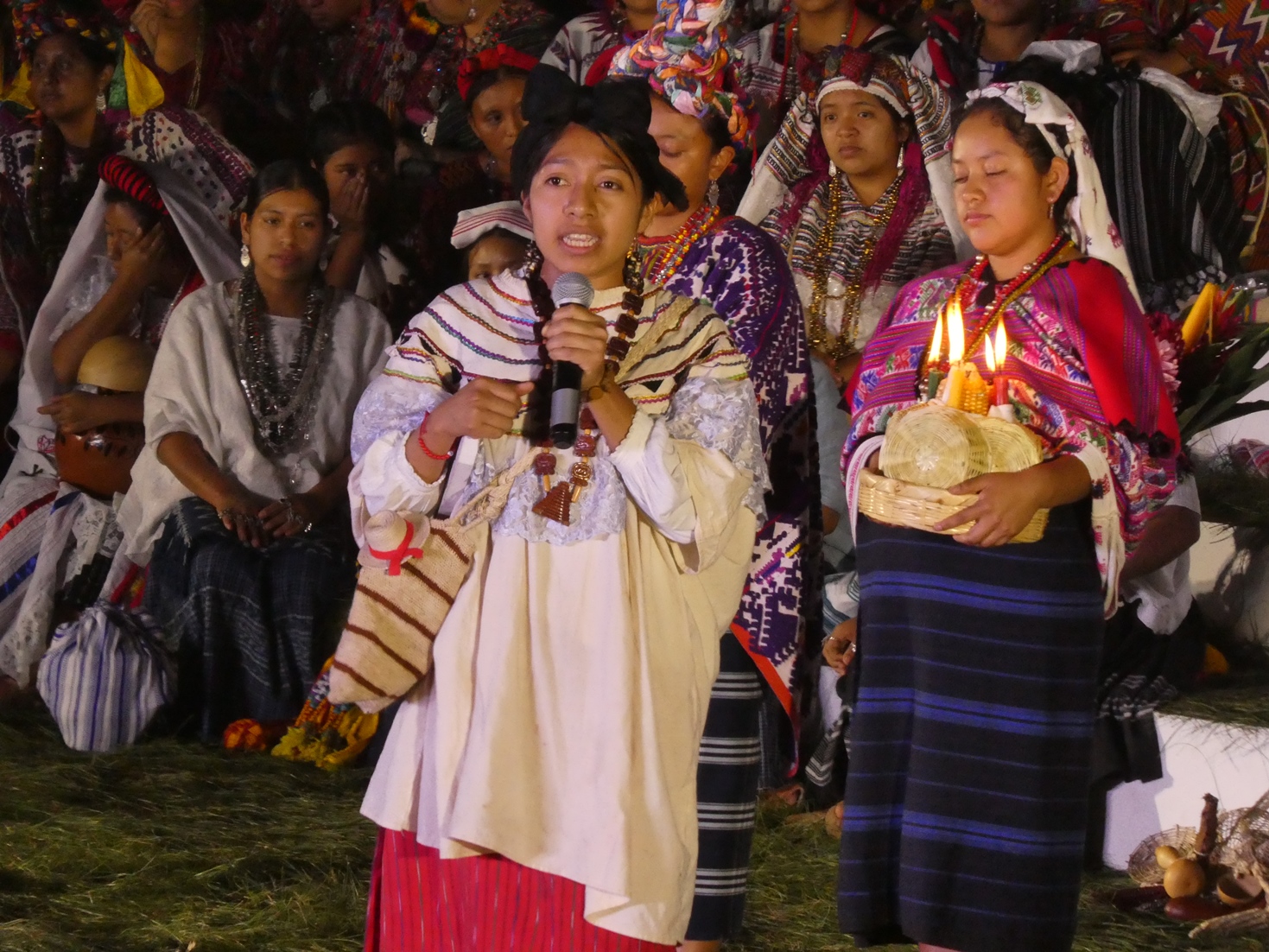
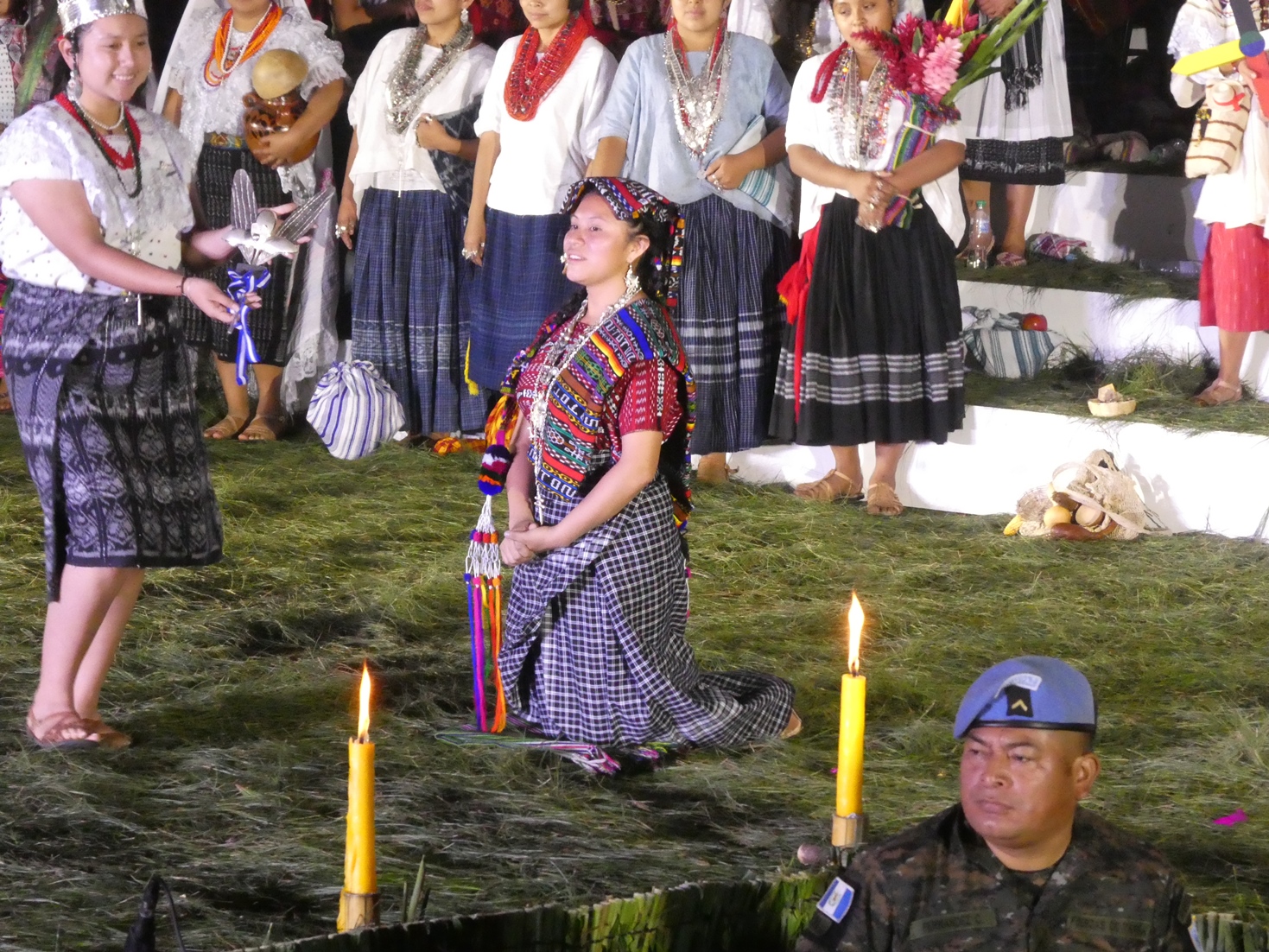
After reigning Rabin Ajaw seated herself, the contestants came onto the stage one at a time, each greeted by the young woman who wafted a trail of smoke from her censer as she guided them across the stage. The contestants would dip their heads first at the crowd, then the judges, and then the reigning Rabing Ajaw before taking a seat on one of the steps beneath her (example here). Meanwhile, the presenters narrated, telling us their names, where they were from, who their parents were and what languages they spoke, along with other details.

I then began to realise how long this ceremony was going to be. I had already been there for three and a half hours by that point (two hours waiting for it to begin and another hour and a half of opening speeches). It took somewhere between one to two minutes for each contestant to make their way across the stage, and there were one hundred and ten of them. It didn’t take much maths to figure out that I was going to be there for quite some time.

This is not a complaint. The ceremony was beautiful, and I liked that they gave each contestant a moment in the limelight. I do not regret going. Watching it was memorable, rewarding, and a very authentic experience. It will undoubtedly be one of the things I look back on in years to come.
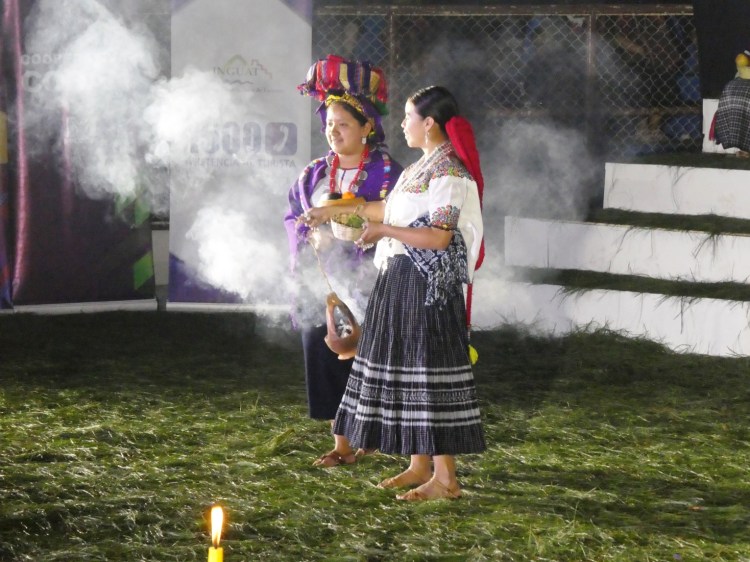
But I would also be lying if I said that I didn’t start to feel impatient an hour or so in. Rabin Ajaw is a festival that deserves more attention – I am still surprised that I was the only gringo there – but parts of it are quite slow, so it can feel like an endurance challenge at times. At one point, one of the contestants fainted and had to be carried off the stage, and I found myself worrying about the young woman escorting them. Being close to the stage, I could see that she was getting tired, and I hated to imagine how her arm must have been feeling after swinging that censer around for hours and hours. She truly was the hero of the evening.

Luckily, about halfway through, they did have a brief interlude where dancers came onto the stage and performed. I have a video you can watch here. The woman with the censer returned, looking a bit more refreshed, and the ceremony continued.
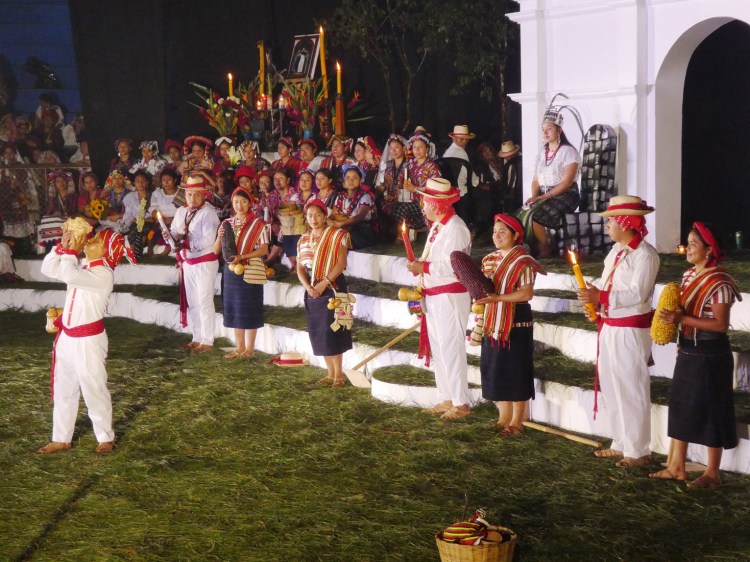
Once, some hours later, all of the young women were finally on the stage, the presenters made more speeches, and the crowd cheered. They also made the contestants get up and dance for a while in three groups.

I did not get the impression that this dancing part bore much weight in the competition, as it was neither technical nor did it seem rehearsed. I think it was part of the ceremony. I could be wrong, though.
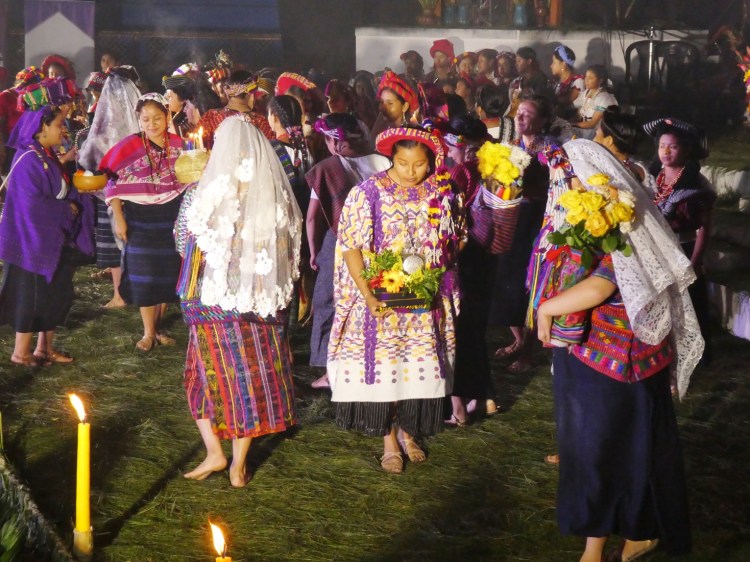
Shortly after this, the contestants returned to their seats for a while, and the judges handed the presenters an envelope with the names of the semi-finalists. Thirteen names were called, and each rose and walked up to the front of the stage whilst the audience applauded.
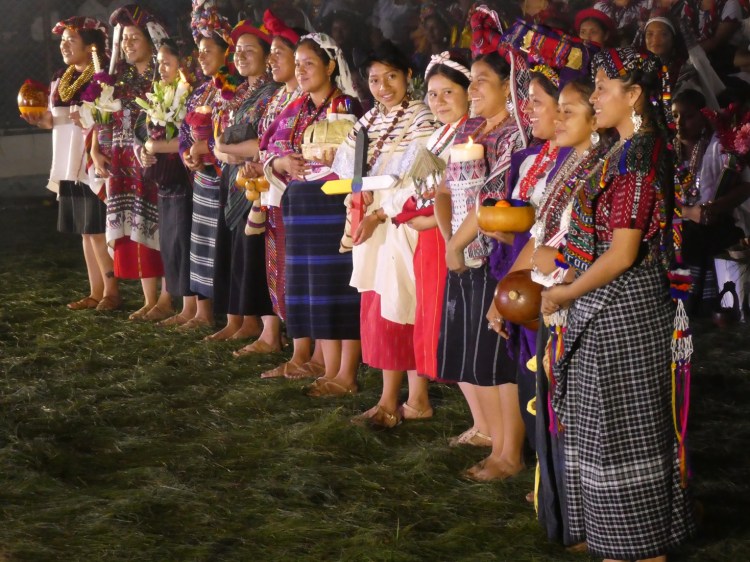
Each of them was given a question to answer. They ranged from topics such as, “What are your opinions on the use of plant medicine?”, “What wisdom can we learn from our elders?”, and “How should women uphold Mayan traditions in the modern world?”. Most of the contestants gave their speech first in their mother tongue and then a second time in Spanish.

After this test, the judges walked away to a hidden room, and another group of dancers stepped onto the stage to entertain whilst they conferred (video here).
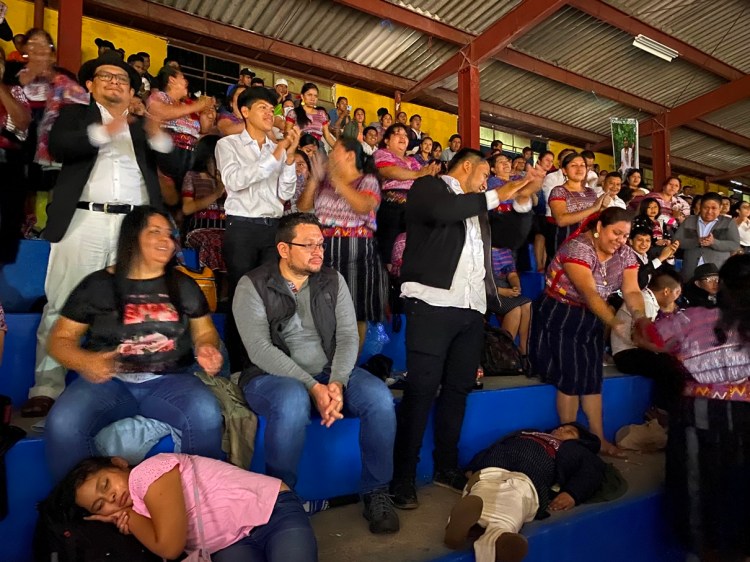
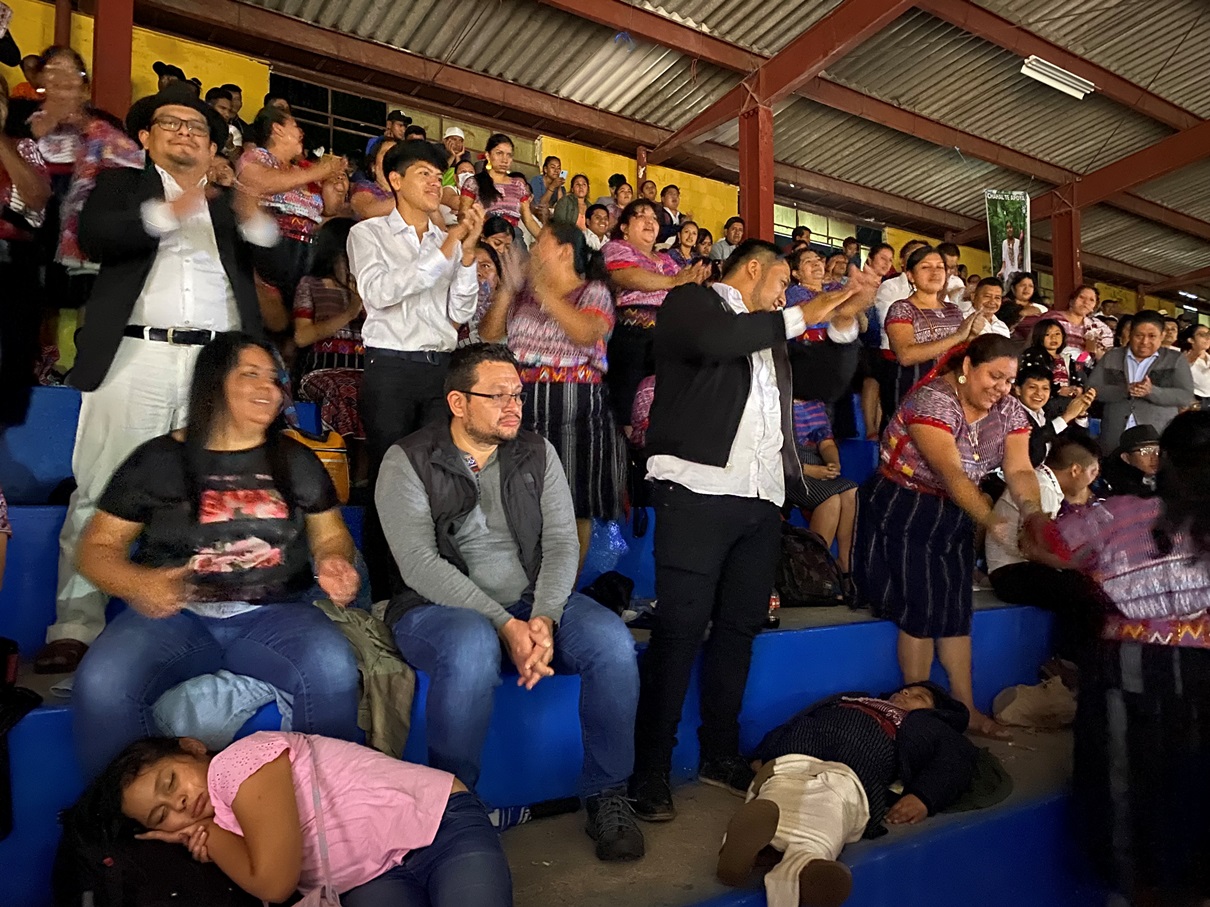
After the dancing was over, many of the audience took it upon themselves to entertain as we waited for the judges to return. They chanted, sang, and swayed back and forth. I have a video of it here. Fair play to them for their energy because they had more of it than me. It was past one o’clock in the morning by then, and it had been twelve hours since I had eaten. I had also been on my feet for most of the evening so that I could take photos. Needless to say, I was very, very tired.
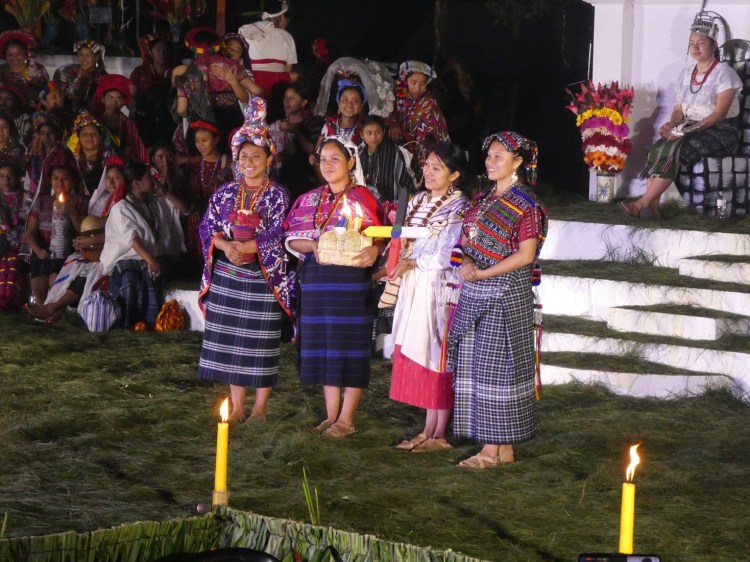
When the judges returned, four more names were announced as the finalists, and each was tested one final time with another question.
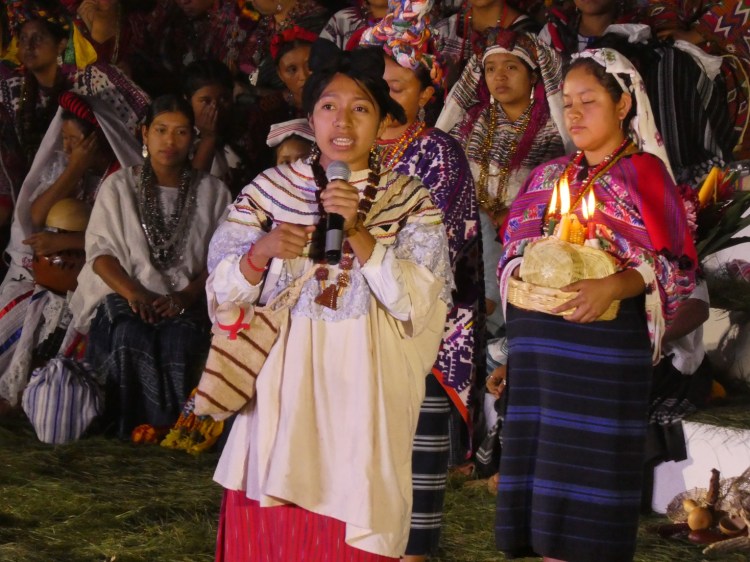
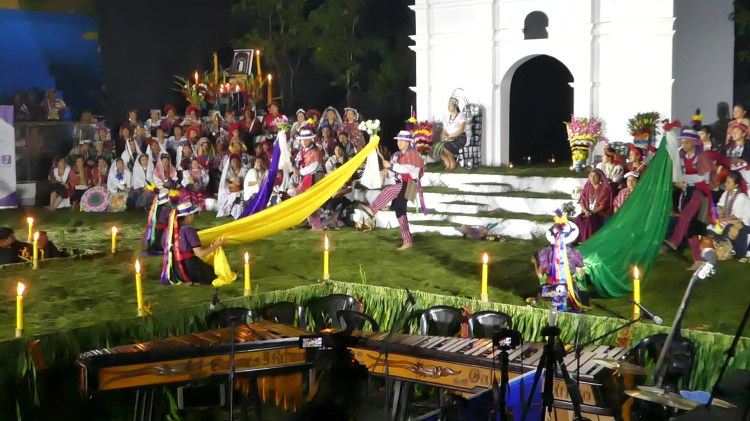
After this, the judges huddled together for a while to discuss as more dancers came onto the stage. By the time the performance was over, they were ready to announce the winner.
The four girls braced themselves as the presenter read the testament of the judges. The first announcement he made was not the winner but the runner-up (video here) – which he called ‘la primera finalista’. Her name is Jenifer Melissa Gutiérrez Subuyuj. If my theory is correct, she will be the one who escorts the contestants next year.
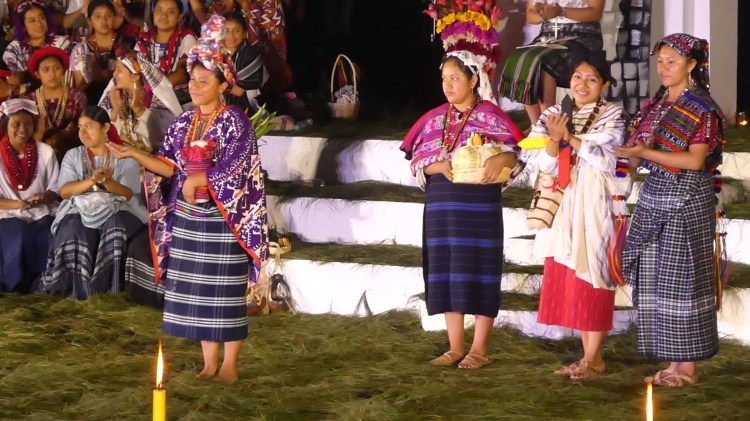
And then, finally – at half past two in the morning – he announced the winner.
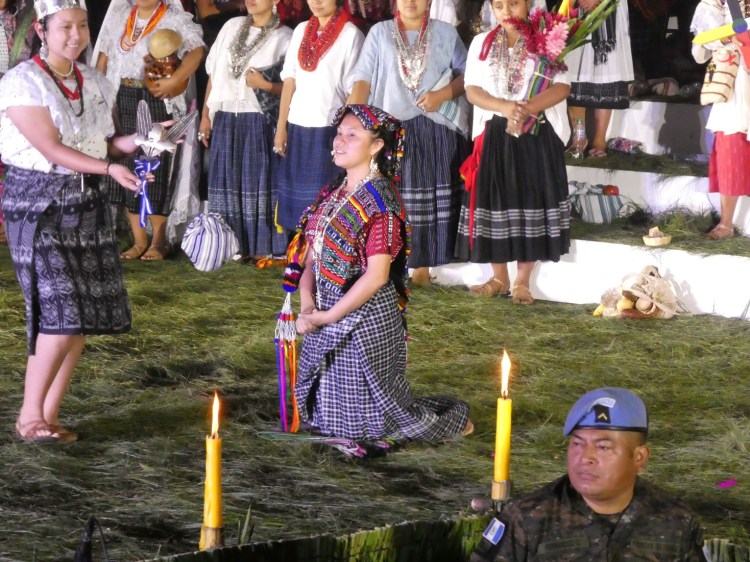
Her name is Marleny Miranda Toyom Canastuj, and I have a video of the moment she found out (that can be watched here).
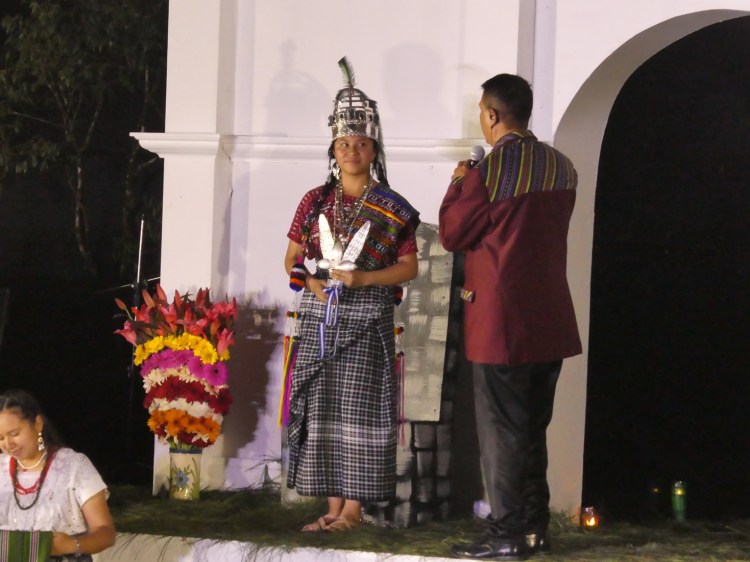
Thank you for reading this blog. I know it has been one of my longer ones but there was a lot to get through, so if you made it this far, well done and I hope it was interesting.


More photos and videos from this amazing event can be seen by clicking here. There are a lot of them!


Travelblog LA#19: Actun Tunichil Muknal – Belize

23rd July, 2023


Actun Tunichil Muknal – which translates roughly as “Cave of the Crystal Sepulchre” – is something that I almost missed. My day-to-day budget as a backpacker is relatively lean, but I have a pot of extra money put aside for activities and allow myself to do one expensive thing in each country I visit. In Ecuador it was a tour into the Amazon, in Colombia it was The Lost City, and in Belize I intended to use it to visit either Lamanai or Caracol: both impressive Mayan sites that are hard to get to because they are deep into the jungle.

However, when I looked into options for reaching them, I discovered that – with it being low season – there was scarce interest from other travellers, and the price I would have needed to pay for a company to take me to either of them alone was staggering. Most of the other backpackers trickling through San Ignacio during my stay were going to a place colloquially known as ‘ATM Caves’, and they all kept returning from there looking dirty, wet and like they had just had an adventure. And, also, with nothing but good things to say.

This piqued my interest, so I did some reading and discovered that Actun Tunichil Muknal is a Mayan archaeological site located within a cave, and National Geographic included it on its list of the top ten sacred caves in the world. Its location beneath the ground meant it never got buried by jungle but rather remained frozen in time, and the archaeologists who have excavated it decided to leave most of it as found so the place is still full of artefacts and human remains in their original positions. This also means that access is tightly controlled. Only a few dozen specially-trained guides are permitted to escort visitors through whilst enforcing many measures to preserve its integrity.

The more I read the more I realised that perhaps it was fortunate that Caracol and Lamanai were unfeasible for a solo traveller at the time of year I visited Belize. I think sometimes we get caught up within our specific zones of interest, so when I was skimming the travel guides all those months ago I circled all the places that immediately appealed to me whilst places such as caves were often dismissed.

I am still a bit disappointed that I didn’t get to see Lamanai or Caracol, but let’s face it; I have already seen several Mayan ruins by now, and there are more to come in the coming weeks. But caving? That isn’t something I do all too often. And a sacred cave used by the Mayans for hundreds of years that is still a living archaeological site? That is a once-in-a-lifetime opportunity.

I was surprised by how quickly I got wet during this tour. I had been warned. I was wearing swimming shorts beneath my trousers, a quick-dry T-shirt, and hiking shoes, and that was all I had brought with me. My pockets were empty. No camera. Even if I had not worried about drowning it, you aren’t allowed to bring them into the cave anyway as several years ago, a tourist dropped one onto a human skull and damaged it. The photos featured in this blog were all kindly donated to this blog by PACZ Tours.

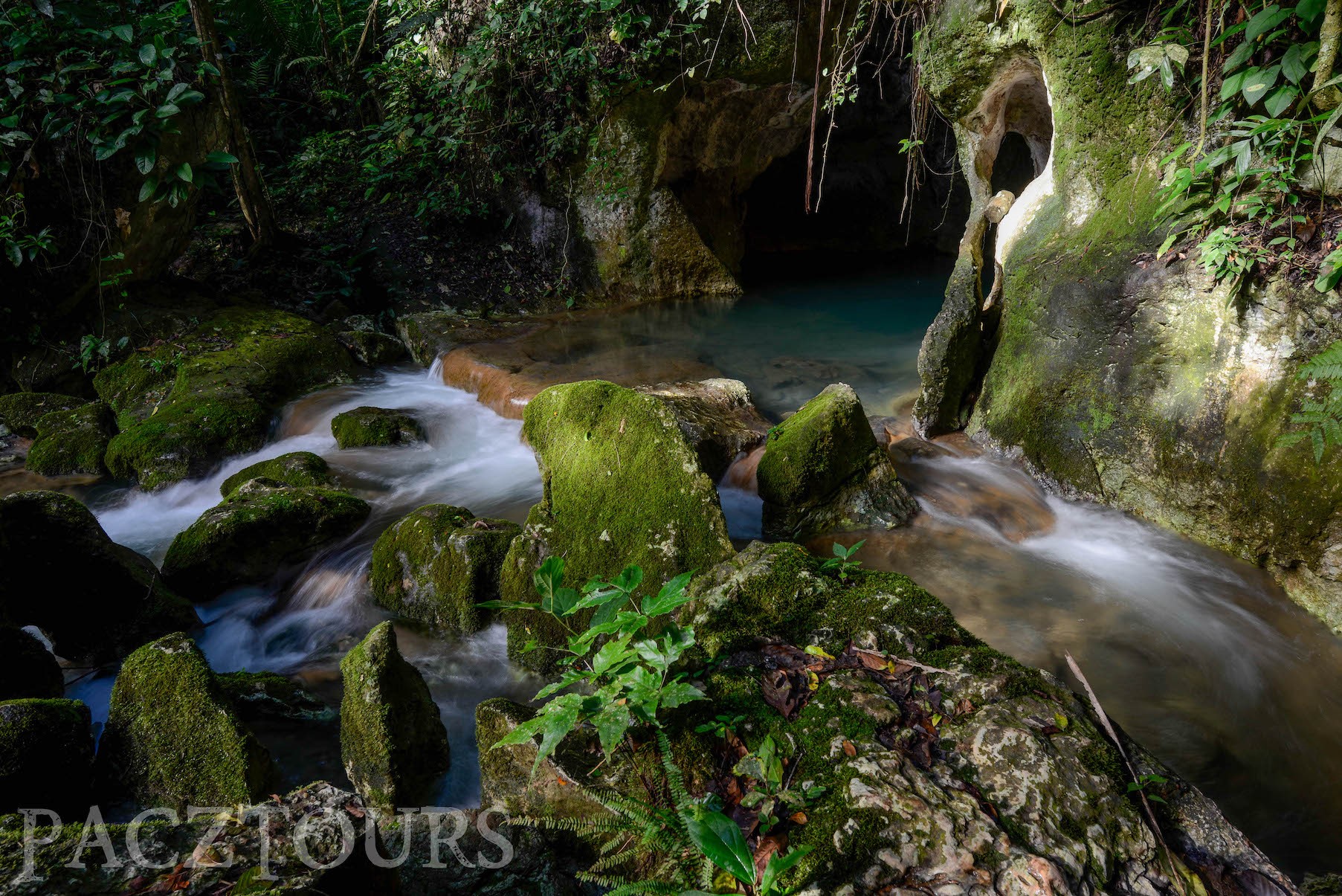
There is a forty-minute walk through the jungle before one reaches the entrance to the cave, and this involves three river crossings, the first being immediately after you leave the car park. The trail itself is well-maintained and reasonably flat. It seems a bit strange that they have not built any bridges between this perfectly made pathway, but I guess anyone who comes here will get drenched as soon they enter the cave anyway, so bridges on the trail leading up to it would be a bit redundant. As soon as you reach the entrance to the cave, you once again immerse yourself, but this time into a subterranean river. You are swimming against the current, but it isn’t too difficult, and this first section is only about twenty meters or so until you climb onto the first resting point.

Each time we stopped, our guide – Oscar – would tell us about the cave and show us some of its features. I know it sounds silly, but being told shortly into the journey that this system has four different entrances was reassuring. It certainly made me feel less claustrophobic as we made our way deeper. The part of my brain that works overtime – pondering what would happen if there was a rockslide, the river started to flood, or some other misfortune of nature cut us off – was placated to know the cave has several evacuation routes. Speaking of claustrophobia, if this is something any of you also experience: I didn’t find it a problem. There are some very brief parts where you need to squeeze between some boulders or duck into a pool and swim to a new chamber, but there are no tunnels you need to worm your way through or anything like that.

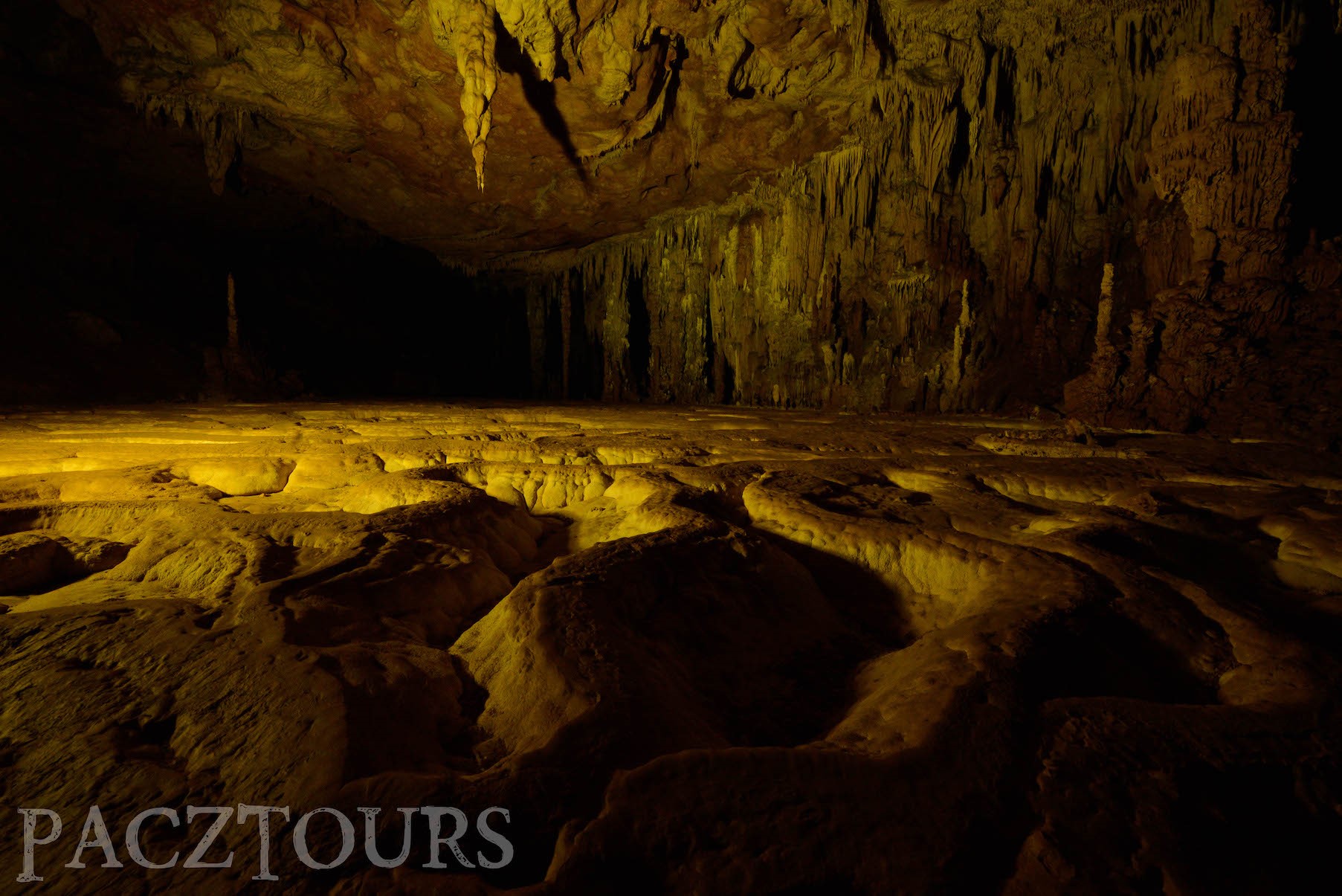
It took us just under an hour to reach the chambers where the archaeological remains are but to be honest, I was not at all in a rush to reach it because this cave was amazing in itself with beautiful features and rock formations. I am not a massive caver, but as someone who casually does it now and then, this one would rank somewhere in my top ten even if it wasn’t historically notable. The journey is also fun. You don’t care about being wet as you don’t have any valuables on you to worry about and it feels like you are on a Goonies-like adventure. A part of me was glad I didn’t have my camera with me as I got to live in the moment.

Eventually, when we reached the entrance to the chamber, there was a bit of a climb, and we were required to remove our shoes when we reached the top. I understand this to be a request the archaeologists made to help preserve the site.

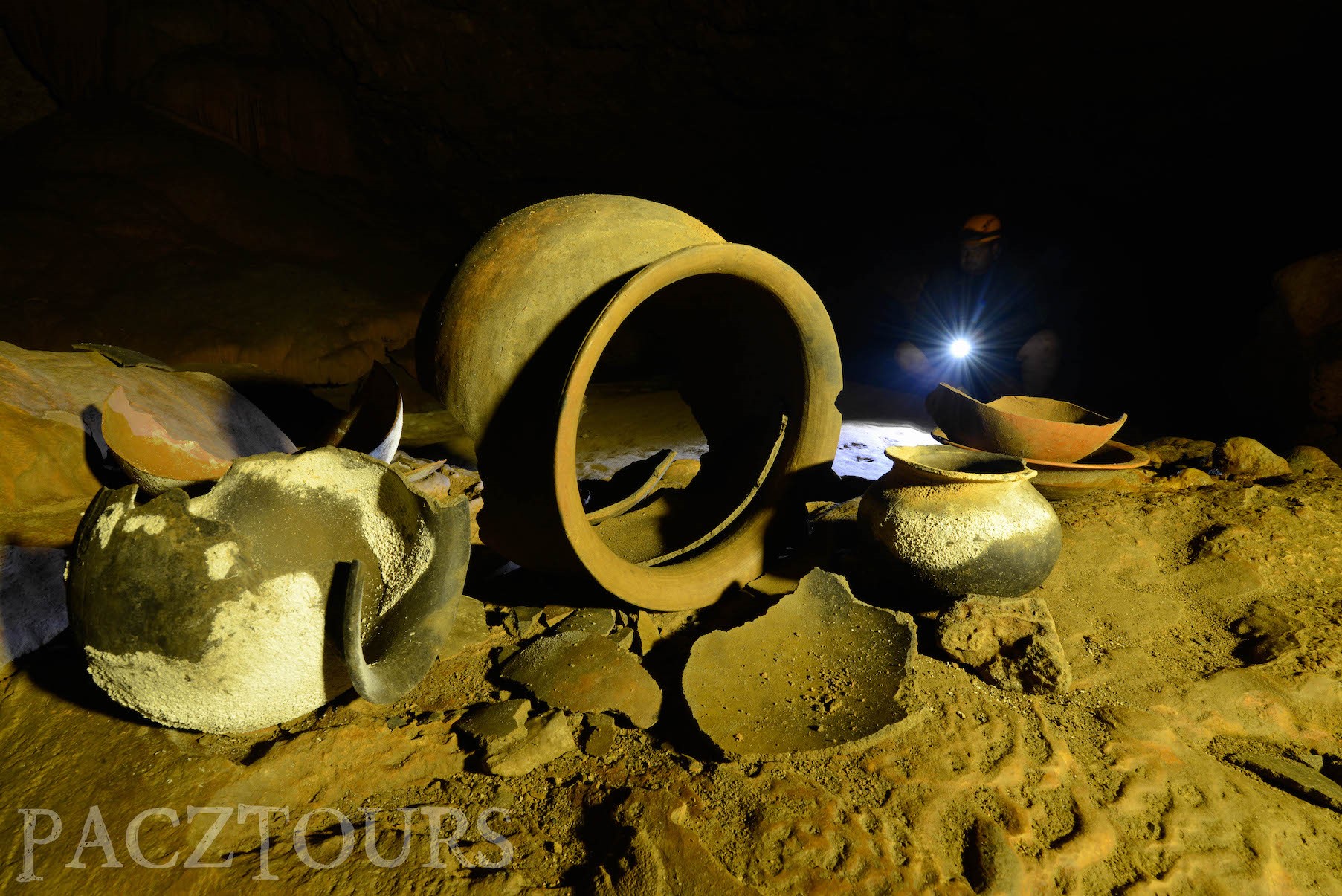
This part of the cave is elevated from the subterranean river but still receives a steady trickle of water that drips from the ground above. Some of the places where these leaks happen have created extraordinary textures on the walls over millions of years, and you can understand how the Mayans – lacking our understanding of the natural processes involved – would have come to see it as something miraculous. This light flow of water has occasionally displaced some of the objects within these upper chambers, but seldom washed them away completely. When you first step into the first chamber you initially see piles of broken pottery that suffered this fate but the further you go the more unchanged everything is. You never see any completely intact pottery, however – even the ones that seem whole have cracks or a chip missing somewhere if you look closely – and Oscar explained that this is because they were offerings and because the Mayans were animists, the act of breaking them was to release their essence.

Early into these chambers there are also remains of fireplaces and even evidence of food preparation, indicating that at one point this was a place where shamans would have held extended ceremonies. There are also two stalagmites which – when you shine a light upon them – cast shadows on the wall that resemble a crone and a maiden. This is a very eerie experience, and it was interesting to learn afterwards that both of those stalagmites show signs of modification.

Archaeologists have dated many of the remains and found this cave was used by the Mayans for hundreds of years, all the way from the pre to post-Classic. One of the prevailing theories for the decline of their civilisation in the 10th century was that they endured drought and could no longer sustain their population. We also know from inscriptions that Chaac (the Mayan god of rain) was also associated with caves and believed to dwell in them, so it makes sense this cave – with its subsurface river and water dripping from surreal formations – would become a place that the Maya visit to when they wanted to appeal to Chaac. The oldest artefacts are closest to the entrance – so the Mayans ventured further throughout the generations – and it is in the deeper recesses that you find the evidence of them becoming desperate enough to start making the ultimate sacrifice: members of their population.

The human remains do vary in age, but most are estimated to be adolescent, and there are a few that have appeared to have undergone artificial cranial deformation – an act where someone would have their head bound from a young age so that it grows into a distorted shape – indicating that they were of a particular caste. Many of the sacrificed have signs of blunt-force trauma, and there is one whose position suggests their arms were bound behind their back.

The cave’s final feature is also its most visually iconic; where lays the skeleton for which it gets its name. Water oozing from the walls and occasionally pooling over the years has caused its bones to calcify, but it remains in its original position. Perhaps this is projecting, but to me, his pose indicates that this final plea to Chaac was the act of a society that had grown desperate and no longer had time for pomp and ceremony.

If you are reading this and interested in visiting ATM caves, I can recommend PACZ Tours. They can be contacted on Whatsapp at +501 623-2385.


Travelblog LA#18: Caye Caulker – Belize

16th – 21st July, 2023


‘Go slow’ is the motto on this island. There are placards dotted all around the place reminding you to do so, and many establishments feature it as part of their name. Once during my stay I found myself legitimately in a rush to get somewhere and paid the price of being heckled the entire way by locals telling me off for pacing too fast. “Where you goin’?” several of them asked me rhetorically.

The journey here was an uncomfortable one (which I covered at the end of my last blog), but one good thing that came about it is that I made some friends, and some of them turned out to be staying at the same hostel as me. The others weren’t too far away. This is a small island so you are never too far away from anywhere, and everyone seems to know each other. On the evening of my arrival the island was bustling with activity as it was the last day of the Lobster Festival and the well-known ‘Sunday Funday Sunset Cruise’ was due to set off: an event where young backpackers board a series of party boats that they can swim between whilst drinking an unlimited supply of rum punch. Despite not being an exactly ‘young’ backpacker anymore I was briefly tempted until I found out the price and realised that it was very much what I would consider a ‘flashpacker’ event.

Caye Caulker used to be a single island, but Hurricane Hattie divided it into two when it devasted the area in 1961. When the people recovered they filled the gap between the island with bars, loungers and diving platforms and named it ‘The Split’, and it is now a popular place to hang out. Boats pass between all day long, but you can swim across it if you are strong enough to outmatch the currents. This was where me and my friends passed by much of our free time in the coming days; drinking in the shallows, chatting, and occasionally doing some – perhaps unwise – halfcut snorkelling.

It was also here that one of my friends got talking to one of the local boatmen and negotiated a day trip for us to the nearby Hol Chan Marine Reserve (part of the world’s second-largest barrier reef). Many tour companies offer snorkelling trips here, but they were a bit more expensive than we would have liked, and this worked out a bit cheaper. I will mention now that there were some positives and negatives to doing this the way we did, and I will cover that in my Practical Information section at the end of this blog.

We numbered five, but there was room on the boat for one more. At first it seemed it would stay vacant as everyone else we knew already had plans but as we were preparing to leave the following morning I happened to bump into Mara – someone I hiked Acatenango with a few weeks ago – and the serendipity of this encounter seemed to be a sign. I asked her if she wanted to come, and she said yes.

As our boat was cruising towards the marine reserve we noticed that some of the other boats heading that way had stopped and went to investigate. It is the breeding season for manatees and I was hoping that luck was on our side, as I had never seen one before. We asked our boatman to stop, put our snorkels on and jumped into the water.

I could see why people call them ‘sea cows’. Despite his size, he was a very relaxed creature and didn’t seem bothered by the swarm of people who had suddenly leapt from their boats to swim around him. At one point he even turned to me and swam close up to my face, seemingly curious.

I know this sounds a bit jaded, but this was the main thing I wanted to see that day. Over the years I have seen dozens of sharks, turtles, rays, and other creatures, but this was something completely new. Everything else that I saw from here was a bonus.

When we reached Hol Chan Marine Reserve a few minutes later it certainly did not disappoint. It had beautiful coral, rock formations, and plenty of fish.

We spent quite a lot of time in the water here and during that time saw rays, sharks and all other kinds of creatures. The water was crystal clear, and the currents were calm. It was the best snorkelling I have done in quite some time.

By the time we got back onto the boat, the guide told us that we only had enough time left for one stop, and this was to a place called Shark Alley.

Now, I do have some opinions about this place, so forgive me, but I am about to get onto my soapbox for a while.

This has become an essential stop for the snorkelling trips at Caye Caulker. I believe that it has always been a place where sharks can be spotted if you are lucky but now sightings are guaranteed because some of the tour companies are feeding them, and, trust me, this is not good for the animals. When you feed wild animals, they often forget how to feed themselves as they come to rely upon it, and creating an association of humans with food can be dangerous, too, because some animals will become aggressive when they do not get what they expect. There have been cases of this happening in places such as Sharm El Sheik in Egypt.

The boat we hired for the day did not do this – it was something we specified when we hired it – and some of the tour companies at Caye Caulker have also adopted a more responsible stance and do not feed the sharks (I will mention a couple of them in the Practical Information at the end of this blog). However, even if you make sure you choose a tour that is not engaging in this behaviour, they will still probably visit Shark Alley, and you can’t blame them for it as they would lose a lot of business if they didn’t. It is still – in my opinion – worth going with an agency that doesn’t feed the sharks as it helps to discourage the practice but bear in mind that there seems to be no way of completely disassociating yourself.

And unfortunately, Shark Alley is not the only instance of this behaviour going on at Caye Caulker. When we boarded the boat we did so at a place called the Tarpon Feeding Dock, where tourists are taken to watch them jump out of the water to catch fish.

And every day, at sundown, people gather at Stingray Beach because they too are being lured there with food.

I don’t blame people for being curious. We are all human. When I passed by Stingray Beach and the Tarpon Feeding Dock, I couldn’t help but take a look and watch for a little while, but someone tried to sell me fish to feed to them I said no and I did not buy any drinks at the Iguana Reef Inn (the place that is feeding the stingrays).

I am unsure if the creatures here have been humanised to the point of dependence yet, but it is concerning. The tourism industry at Caye Caulker is creating a problem that will likely come back and (quite literally) bite them at some point, and I am not qualified to know what the answer will be when it does. I just want to mention it here so that those visiting are aware, and I hope some of you consider being discerning about which activities and tours you take part in. If enough people boycott Iguana Reef Inn and the companies feeding the sharks it will send a message and force them to be more responsible.

And please don’t let everything I have mentioned in the last few paragraphs stop you from going from Caye Caulker because it is a great place full of wonderful people. If you are looking for either a short holiday or a Caribbean interlude during your trip around Latin America, this is a great and unforgettable place to do it.

The underwater photos were kindly donated to me by Milz who is also on a trip around Latin America. They are doing a lot of scuba diving and also own a GoPro so you should give them a follow on TikTok (@ADHDbackpacker)

I will now give some Practical Information for those who might be visiting, so keep reading if that is you.


Practical Information


Accommodation

If you are a budget-conscious traveller there are two options on Caye Caulker; Bella’s Backpackers or Tropical Oasis. They are of a similar price, but Tropical Oasis has much better facilities. They have a great social area, a communal kitchen, and each bed has an individual fan. At present they can only be booked on Hostelworld so make sure to reserve early as they have limited spaces. Also, try to get into the eight-bed dorm instead of the four-bed dorm if you can (they are the same price, but the eight-bed dorm is cooler).


Food

Check out Wish Willy. It doesn’t look like much when you arrive – just some benches set up in a dude’s garden – but I think that is part of the magic. Willy does enjoy a bit of banter, so it might take a while to get around to telling him what you want to eat, and the food might take a while, but once it comes; it is delicious, authentic, and much cheaper than the other restaurants. Have a couple of beers and remember to go slow.


Tours

As I mentioned in this blog, the tours (like many things in Belize) are expensive. Me and my friends did manage to independently hire a boat and saved some money because of it, but bear in mind this came with some drawbacks. We had to bring our own food and drinks, and our ‘guide’ was in a bit of a rush to get us there and back as quickly as possible, so we did have to renegociate our itinerary a bit. I do not regret what we did because we still had a good day and got to see everything we wanted, but if you do have the money you will almost certainly get more perks and have a fuller day if you splash out on one of the conventional tours. This will also ensure you have more certainty about the service you will get as the companies rely on their reputations (whilst a boatman has other means of income). I spent some of my first day on this island scouting out the different companies and saw many of the boats whilst we were on our trip (as we went to most of the same spots). Salt Life Ecotours and Ragga Sailing are two that do not feed the sharks, and they are the same price, but Ragga Sailing has a much better boat with fewer people on it. Also, if you go with Ragga Sailing your guide will probably be Captain Shane who is an absolute legend. If you end up staying at Tropical Oasis you will probably meet him as he is friends with the people who run it and often hangs out there.

Ragga Sailing can be contacted by WhatsApp at +501 627 7273.