Journeys along the road of author Tej Turner, as he travels across the world.
Travelblog SA#11: Saraguro – Ecuador

17th-19th August 2018
A common theme within the travelling scene is people striving for encounters along the road they consider ‘genuine’, but the truth is that these days truly authentic experiences can be hard to come by. For almost everything you want to do or see, others have come before you with the same expectation. Patterns form and the people who live in the areas you visit are always anticipating your arrival and preparing for it. When a place reaches a certain level of popularity, infrastructure has to adapt to cope the numbers, and often artificial versions of cultural experience are created especially for tourists. The influx of money too – for better or worse – changes places which become part of the tourist trail.
And who can blame people for changing when they have more money? Or even sacrificing some of the things we travellers consider ‘authentic’ and ramping up the costs? Most travellers are people from the first-world, roaming across areas filled with people with far fewer opportunities than themselves, and yet, I sometimes hear people complaining about ridiculous things. Such as the native village they visited having electricity. Or an indigenous man wearing jeans. That’s a rather entitled way of thinking. Are these people really expected to turn down some of the comforts of advanced age just so it can feel quaint when you stroll through their life like it is a living museum?
One of the things I think people should always be aware of when they travel is that you are, in a sense, taking advantage of a worldwide monetary system which is unfair and venturing to places which – by some rigging of the system most of us don’t even understand – our money is worth more and goes further. I don’t think that it should stop people travelling though – because you are doing a bit to help in a way, by injecting money into developing economies and, of course, cultural interaction is beneficial for everyone, as it opens up minds to different ways of living and thinking – but it is something you should be conscious of.
So… back to where I began…
When travelling, how do you guarantee that the experiences you have along the way are genuine?
The truth is, you can never fully but are a few things you do to make it more likely. Such as learning the native language, as it opens up more options for you and makes the locals treat you less like a tourist. Another way is to go, as we call it, ‘off the beaten track’. That can help, but you need to remember that a lot of places are popular for a reason. I have met travellers before who seem to make a point of not going to places they consider ‘touristy’. They roam all of Cambodia without going to Angkor Watt, or Peru without seeing Machu Picchu, or Thailand without going to its beaches… and they will often seem rather smug when they tell you all about it too.
Sometimes, while you are on the road, authentic and genuine experiences just happen to fall upon your lap, and it is just down to nothing but sheer luck or meeting the right people. It is what happened to me once in Cambodia, when I met a stranger and got invited to a wedding, and in Burma, when Roy and I went to Mount Popa and came across a random festival, as well as other occasions…
And recently, it is what happened to me in Saraguro, where I had one of the most memorable two days of my life…

I booked a homestay with an agency called Saraurku who I had heard good things about. I didn’t really know what to expect of my time there as they don’t tell you which family they have selected for you till you arrive. I did know that Saraguro is in the highlands and surrounded by traditional rural villages though.

I was driven to Pukara Wasi, a brand new homestay owned by Mama Luz and her son Antonio. I was their first ever guest, and I suspect the agency matched me with them because my Spanish is not yet fluent and there was a man living there who spoke English called Luis. Luis is originally from Quito but is an indigenous rights activist and been living with Luz and Antonio while helping to build the extension to their home for guests. The room I was given was only recently completed and it had a great view from the window.

It just so happened that on the day of my arrival there was a demonstration going on to mark an occasion three years ago when the people of Saraguro blocked the highway running through their town as an act of protest for indigenous rights. This civil disobedience was eventually brought to an end by police, who arrested dozens of people. Some of them were even facing jail sentences for a while, but they were eventually repealed.
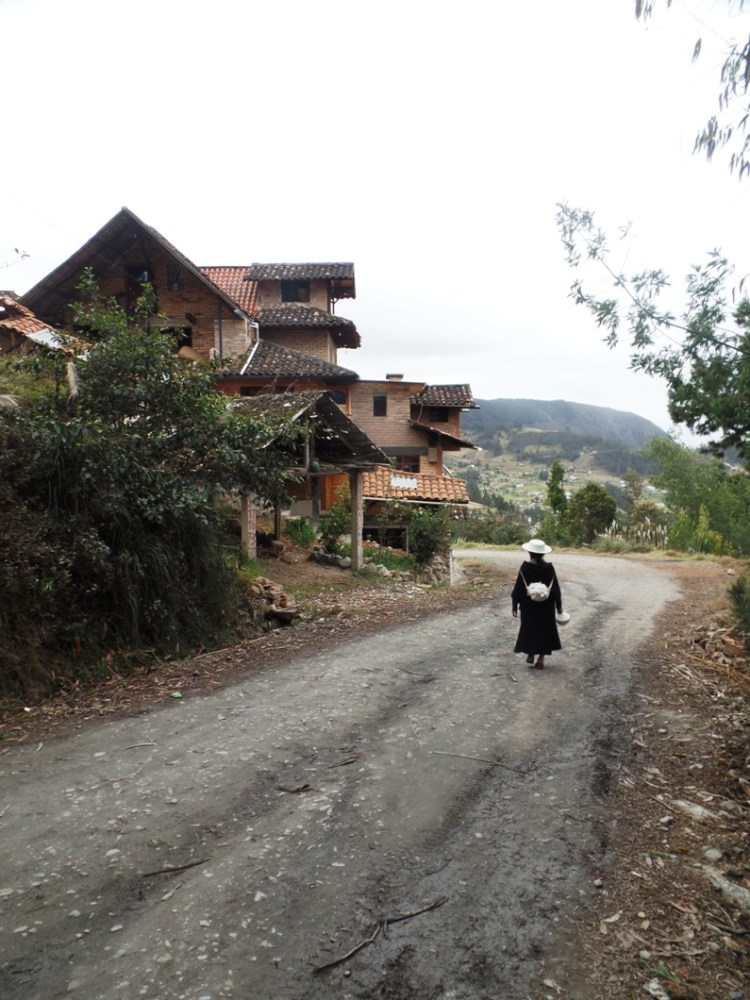
Luis asked me if I would like to go, and it sounded both interesting and worthy cause so I didn’t need much persuading. He, Luz and I walked down the mountain, towards the meeting point outside a small church. We were among the first to arrive, but throughout the next hour, numbers grew.

It had a rather uplifting atmosphere for a protest. Men were playing music, and later on, after everyone had arrived, a shaman performed a ceremony outside the church which involved prayers, burning of leaves, and everyone making a salute south, west, north and then east.
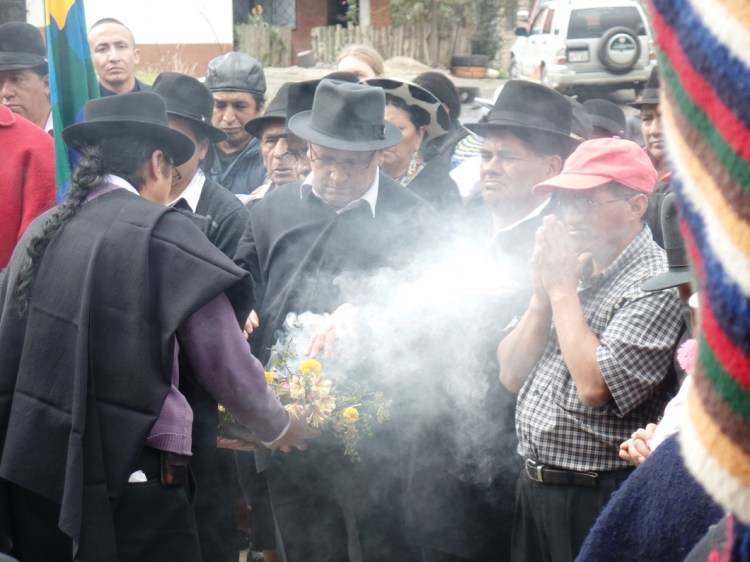
And then we began to march towards the town.

People were chanting, but it was mostly in Kitchwa so I didn’t understand any of it, but I did enjoy the energy. Numbers grew as time went by and when we reached the main square in Saraguro we filed into the town hall where speeches were made and I got to see a traditional Saraguro dance (a video can be viewed here). I began to realise that this wasn’t just a protest, but also a celebration of Saraguro culture.
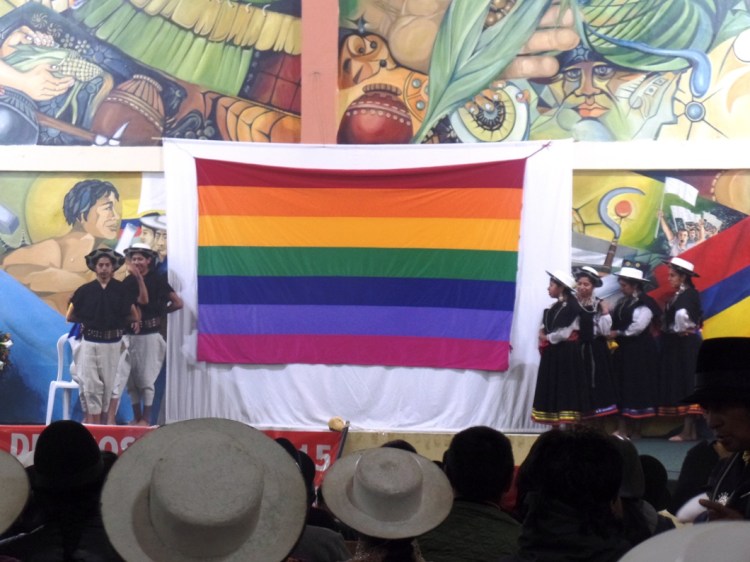
In the end, the shaman conducted another ceremony. Offerings were laid out within the middle of the circle. A wreath was lit and smoke clouded the air. Prayers were spoken, and he blew into a large shell which made a resonating horn-like sound. He then sprayed liquor from his mouth onto some of the people around him as a form of ritual cleansing, and then everyone was given a piece of banana and some chicha. Music played, and everyone danced.

Later on, Luis, Luz, and I walked back to the little church where everyone had assembled earlier but this time it was a more intimate gathering. Leaders from Ecuador’s indigenous communities were there – some of them had come from as far away as Cotopaxi and the Amazon – and everyone brought some food, which was laid out upon the table. We ate together and, at first it was just small talk and I joined in the conversation too, but later on, they went onto more serious topics involving inter-tribe politics so I kept quiet and observed. They were speaking Spanish (and Kitchwa) far too fast for me to follow much of it anyway. It was certainly interesting though.

The next morning, I got up early and followed Antonio up the mountain to their plot of farmland which was twenty minutes away. They had recently harvested their crop of corn, which was hanging up in bunches outside their home, but the cows still needed to be tended daily. I was happy to see that they gather milk in a way which is both humane and sustainable. The cows were grazing in the field, and the calf (who looked quite big and not like she was going to be a calf much longer) was allowed to drink some of her mother’s milk before Antonio gently coaxed her away so he could fill some into a bucket.

All of the vegetables, dairy and eggs which are produced by Luz and Antonio (and most of the other farmers who inhabit the Saraguro region) are organic. Big business has tried to make them adopt the modern industrial model, but so far they have resisted. Saraguro is an area which has taken on some of the trappings of the modern world – such as cars and electricity – without letting it change them. Even though Luz and Antonio have electricity, they only really use it for lighting and, as far as I know, they don’t own a television. Their kitchen is still mostly traditional, and the only electric appliance I saw was a blender they use to make juices and smoothies. They have recently acquired wifi, but I think that is just for the guests.

Once Antonio and I returned to the house, Luis introduced me to his son (Cidro) and nephew (also called Antonio). They had just arrived from Quito and Luis was going to take them out sightseeing for the day. He asked me if I would like to come along.

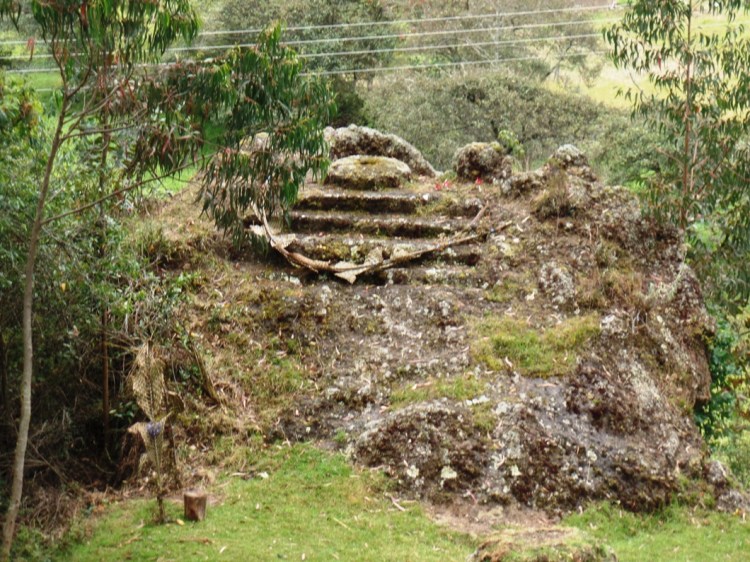
He began by taking us to a sacred waterfall near a village called Lagunas. On the way, we saw some wonderful views of the valley and passed by an old ritual space still used by many locals to this day for ceremonies. It was becoming ever so clear to me that animism is still deeply embedded in their culture.
When we reached the waterfall, Luis coaxed us all to plunge into the waters beneath the cascade and to do so three times so that we would be spiritually cleansed. We were high up in the Andes, so the water was freezing but, once the original shock was over I got used to it. As Cidro, Antonio and I emerged from the water, Luis was waiting with a bottle full with a botanical mixture and he sprayed us all with it in the same manner I saw the shaman do the night before. We dried ourselves and got dressed again.

After a brief walk through Lagunas village, we hopped onto the back of a truck which trundled through a series of bumpy mountain roads, towards a village called Gena.
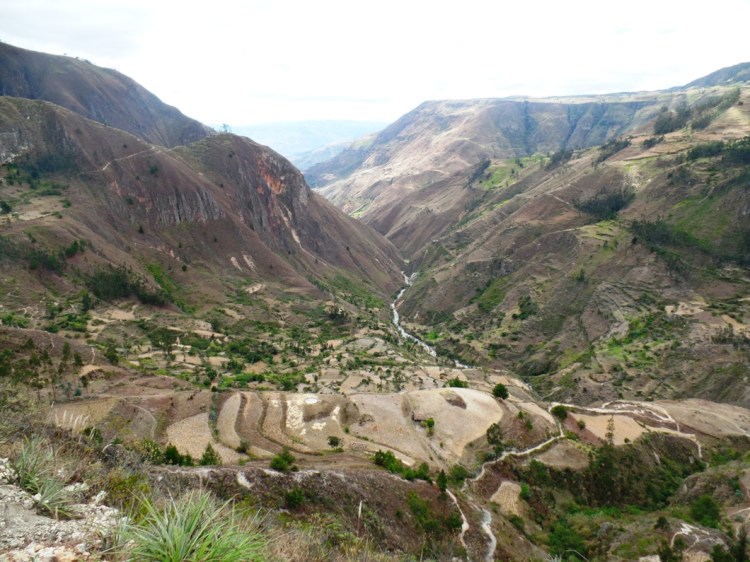
Gena was beautiful. Situated where a series of valleys and plateaus met and had all these huge green plants which some of the locals use to make a drink with a similar taste to sambuca. We met a woman called Rosa, who invited us into her home and let us all try some of her homebrew while she told us about the village.
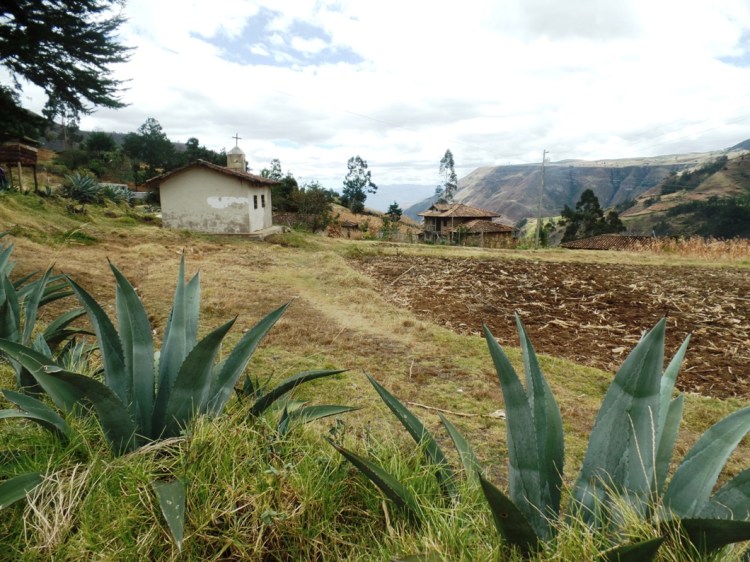
Luis, Cidro, Antonio, and I made our way along a trail towards a peak nearby which had stunning views and, upon our return, Luis performed a limpia (cleansing ritual) upon all of us with boutiques of leaves known locally as ‘shamana’. He also performed one upon Rosa too, as a thank you for introducing us to the area and allowing us passage.

That night, when we returned, we ate a delicious supper of quinoa soup, corn, homemade cheese, and vegetables prepared by Mama Luz, and then Luis took me to Inti Wasi, where the resident shaman (also called Luis) performed a ceremony upon me to connect me with the energy of the area and cleanse me. He also called upon his ancestors and asked them to help see that the rest of my journey goes safely and I meet good people upon the way.

Inti Wasi is still in the process of having renovations done, but I was given a little tour of its premises. It seems like it will be a great place to check out when it opens its doors again. Residential rooms with wonderful views overlooking the mountains, herbal steam baths, and ceremonial spaces –where they will be offering retreats, accommodation, limpias, and other ceremonies for very reasonable prices.

The next morning, Mama Luz met me outside and sang a song because she was sad I was leaving, which was a very touching end to my time in Saraguro. We embraced, and then shortly after the taxi came to take me to the bus station.

Saraguro is one of the most memorable places I have ever been to, and one I wholeheartedly recommend future travellers. If you do go there, go without any expectations. Just arrive, talk to people, and see what happens.
Pukara Wasi is one of the homestays available through the Saraurku agency in town, but it can also be booked directly if you ring (+593) 3030 189 or 093938834.
For more photos and videos, click here.
Travelblog SA#10: Cajas National Park – Ecuador

12th-14th August 2018
I am much more kitted out for this trip than my previous ones. I have a tent, camping stove, sleeping bag, and all the other gear needed to go off-grid, but I have hardly used them so far as they are mostly intended for when I reach Patagonia. Until then, there are only a few opportunities to put them to good use, one of them being Cajas National Park.
So, leaving most of my possessions at a trusty hostel in Cuenca and gathering all I needed for a few days away from civilisation, I hopped on a bus destined for this unique part of the Andes.

When I arrived at the station, I was very surprised when the ranger told me they had a basic kitchen I could use and also that, for no extra cost, I could sleep in one of their bunk beds in the cabin. A part of me was disappointed – and I was tempted to stay in my tent anyway, as I had been excited about using it out for the first time – but, considering the fact Cajas sits on an altitude of 4,000 meters and that, at night, temperatures drop below freezing, I saw no merit in putting myself through discomfort to prove a point.
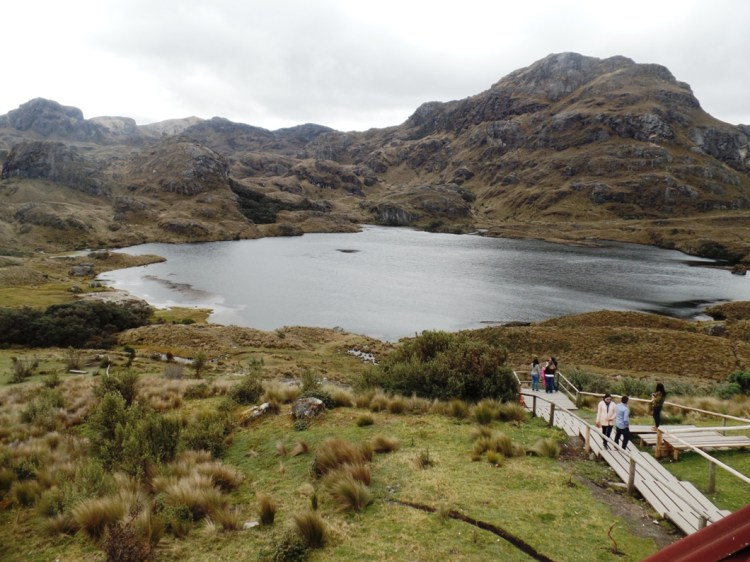
Once I dropped my things off into the cabin, I put on my coat and began exploring.

Beginning with a stroll around Laguna Toreadora, which was right outside the station, I met a group of Americans along the way and we wandered along a trail. Soon, we found ourselves in a strange, eerie, almost Tolkeinesque forest.

These trees are actually a form of quinua polylepis, which are specially adapted for this terrain, and Cajas’ forests, which only exist in little pockets where the curvatures of the mountains protect them from the brunt of the winds, are among the highest altitude in the world.

But it is not just the forests which are strange about the Cajas; the entire páramo is home to all kinds of unique flora, including shrubs, grasses, fungi and plants. And, with almost eight hundred lagoons dotted across its surreal, green landscape, over 150 species of bird can be spotted here.
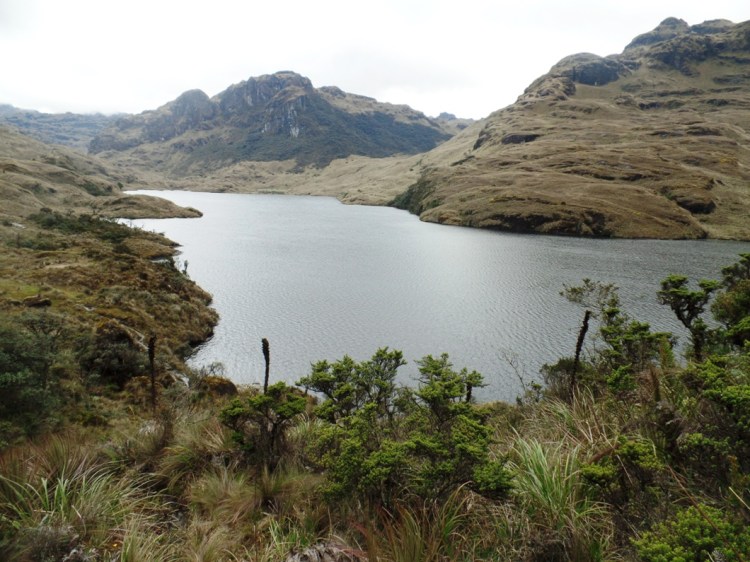
After my first day of wandering around some of the smaller trails close to the headquarters, I made myself soup for dinner and got into my sleeping bag early, as the temperature plummeted. The winds made the cabin rattle during the night as I drifted in and out of sleep.
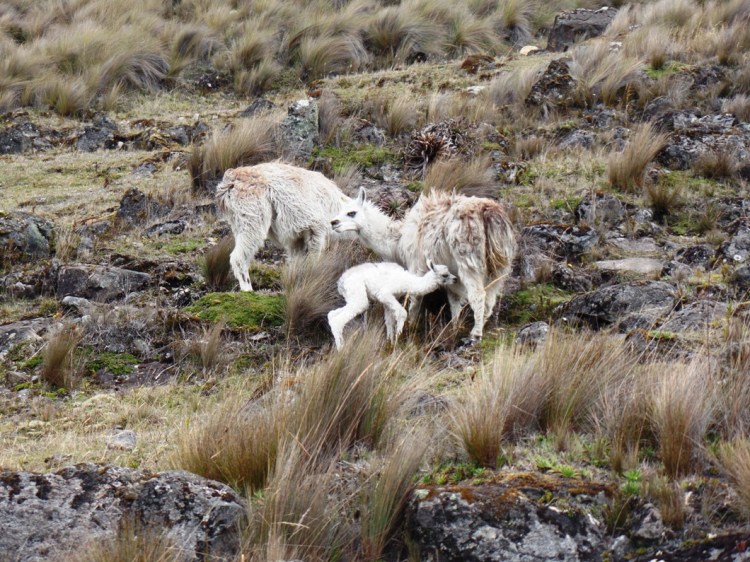
The following morning, I left early. I had already negotiated with the rangers which of Cajas’ many trails I was permitted to go alone and we agreed upon a route which was satisfyingly challenging, and yet well enough marked to have a small chance of getting lost. People do get lost in Cajas, so the rangers are very safety conscious, but they can also be flexible if you have the right attitude and approach them in the correct manner. I found them very accommodating – and I guess that was because I turned up early, had all the right gear, and seemed like I knew what I was doing – but I witnessed a completely different side to them with some of the other people who showed up. A group of youngsters were sternly forbidden to even walk to the nearby lagoon because they came late in the day, dressed in completely wrong attire and generally seeming like they had ventured to the park at a whim. And a pair of girls turned up one evening who actually did have all the right gear with them, but the ranger who was on duty was very rude to them and only let them set their tent up in the car park after a long altercation. He did not offer them to bunk in the cabin or tell them about the communal kitchen either. So my advice for any readers considering going to Cajas; make sure you turn up early and are prepared.
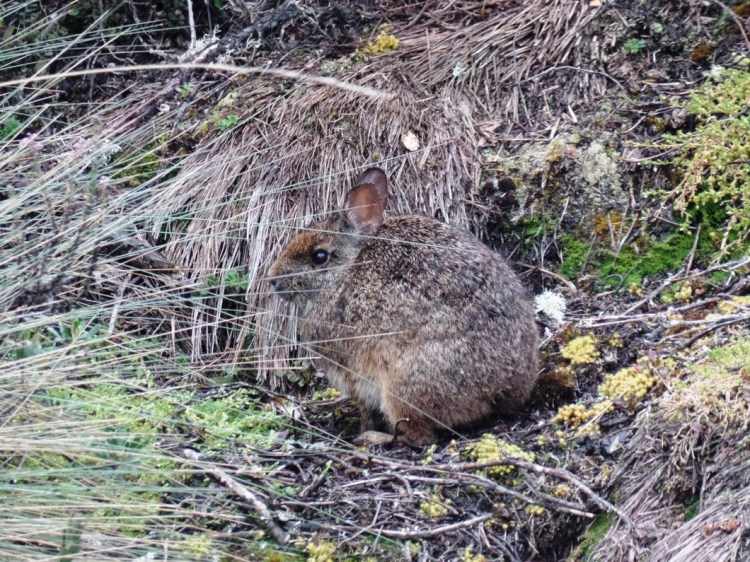
As soon as I left the cabin I saw a wild Andean rabbit, and I stopped to take some photos of it before I made my way towards the trail. I had to walk along the road for a little while, but then I saw the trailhead and turned off, making my way up to the ridgeline of a series of mountains.

Once across, I found myself looking down into the heart of Cajas National Park. The headquarters, road, and all other signs of civilisation were far behind me, and the only sounds were the wind and occasional bird.
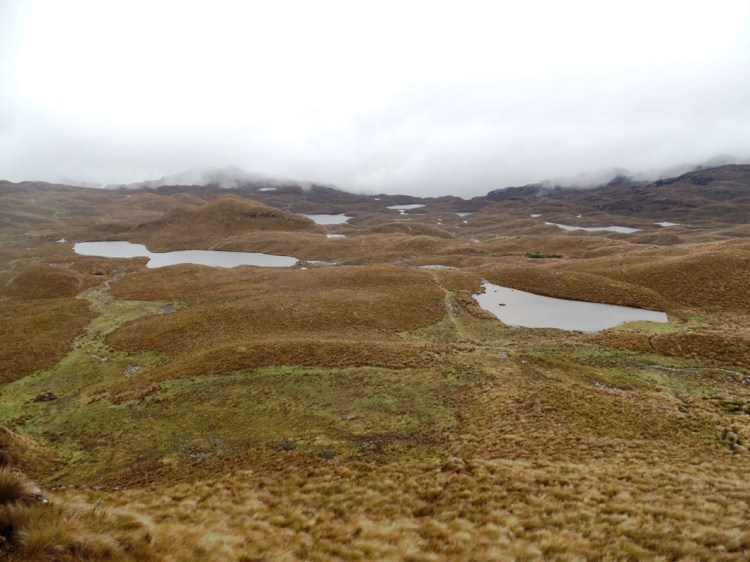
The trail snaked between a series of lakes, and then an hour or so later I reached a valley and followed the course of a river as the trail plunged into lower reaches of the plane, with mountains and waterfalls all around me.

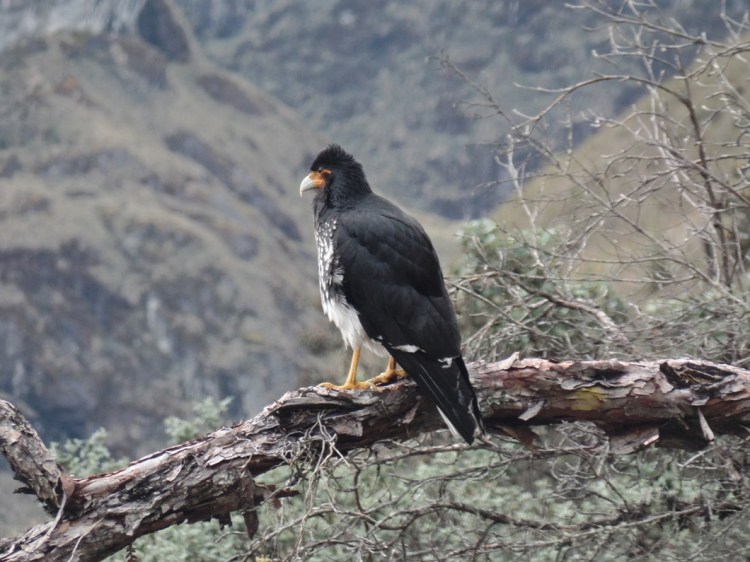
At one point I saw a wild fox, but I didn’t manage to get my camera out in time to get a photo of it. I did, however, catch a few snaps of this falcon.
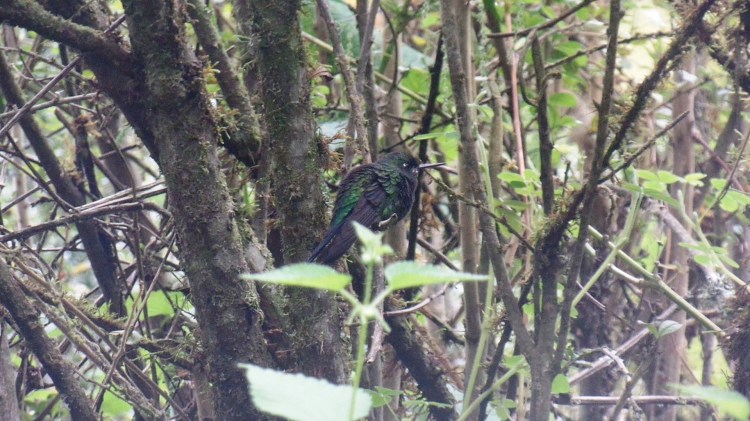
And also, later on, a hummingbird. I saw dozens throughout my time there but this was the only one which stayed still long enough to get a picture.
I arrogantly believed that, as this trail was mostly descending in elevation rather than ascending, it would be easy, but I was mistaken. A lot of it was very boggy and steep. Towards the end of the day, progress became slower as I had to be really careful to not trip. To have an injury in this wilderness could be very unfortunate, as I hadn’t seen another soul all day. I reached laguna Taitachugo later, and had to climb up one last ridge before I descended through a forest into another valley. The climate warmed.
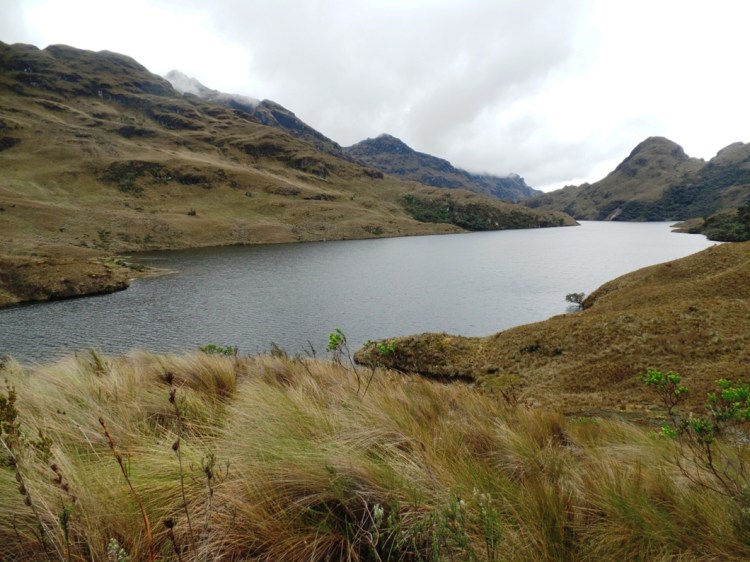
When I finally reached the end of the trail, it was late in the afternoon and I was at a lake filled with birds. This was another campsite and I called into the office there to let them know that I was fine and had finished the trail. Then, I made my way to the road nearby and flagged down a passing bus to the main headquarters.
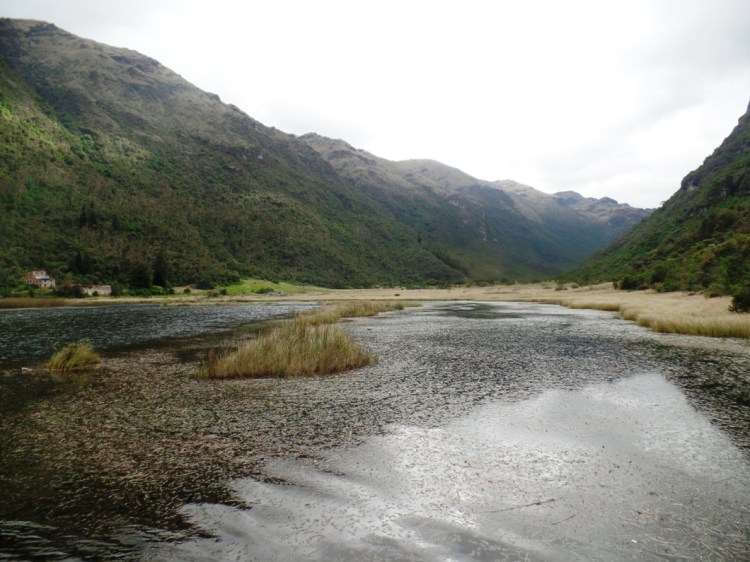
By the time I reached the cabin back at Laguna Toreadora, it was almost dark and I was tired. I made myself some supper and went straight to bed. I left Cajas the next morning and returned to Cuenca.
For more photos from Cajas National Park, click here.
 Tej Turner