Travelblog SA#18: Chavin de Hauntar, Chan Chan & Huaca de la Luna – Peru

23rd-27th September 2018

It had only been a night since I returned from my trek in the Cordillera Blanca, and already I was on a bus again. This time on a day trip Chavin de Hauntar, home to one of several pre-Inca ruins I would be visiting during the following week.

SAMSUNG CAMERA PICTURES

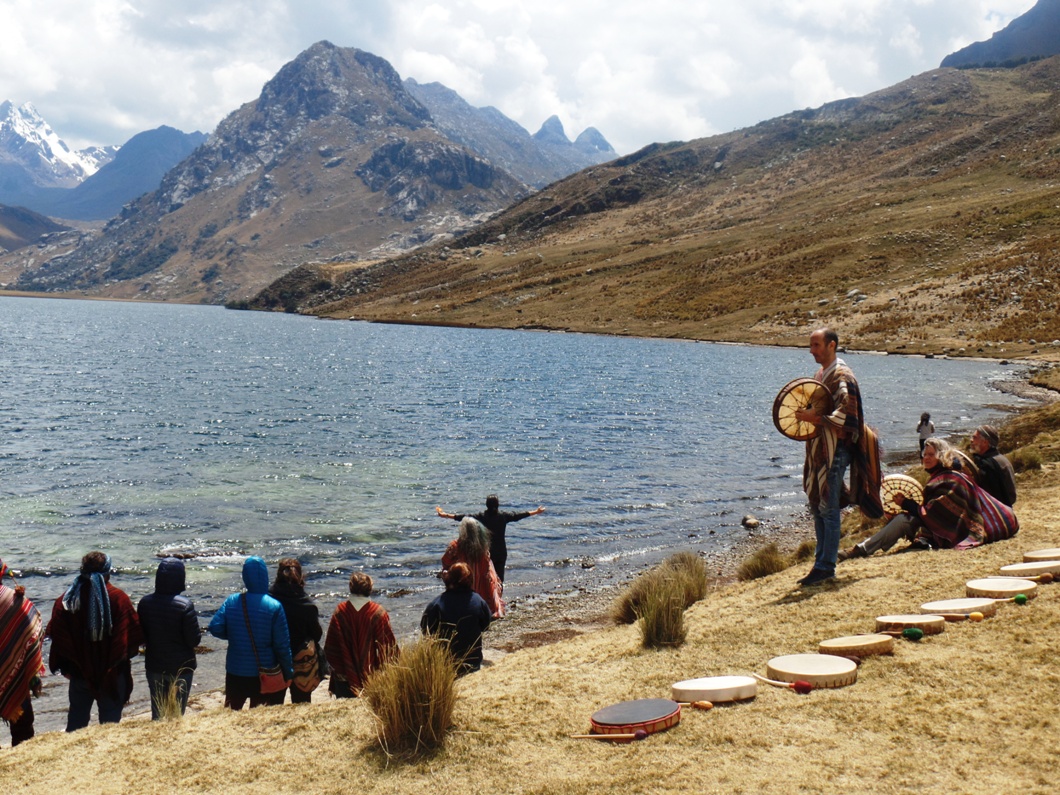
We stopped at Laguna Querococha along the way, where there just so happened to be a shamanic ceremony going on. People were gathered at the edge of the lake with their arms raised to the sky, while men, sat at the back, played drums. I was curious as to what the occasion was but I also didn’t want to disturb them so I climbed back onto the bus.

SAMSUNG CAMERA PICTURES

The road to Chavin climbed through a landscape of ice-capped mountains, more lakes, tunnels, and we even passed a large statue of Jesus before we arrived at the site around midday.

SAMSUNG CAMERA PICTURES

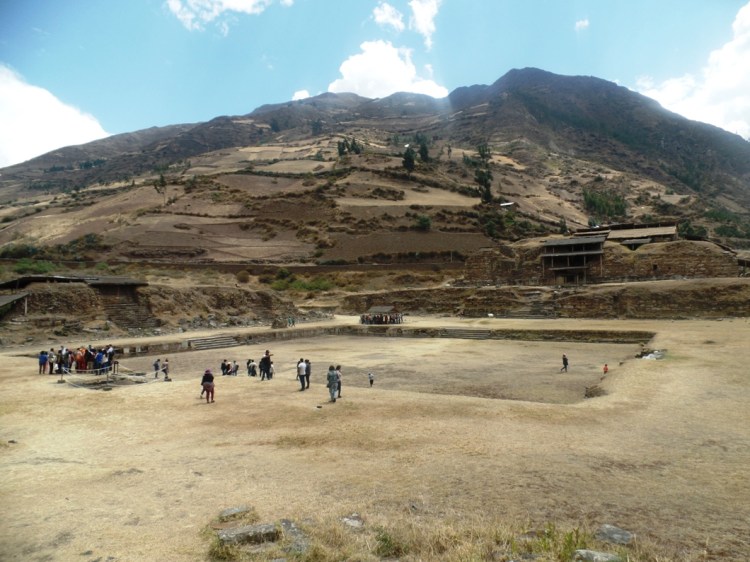
Chavin was certainly an enigma. I had mixed feelings about the way the tours there operated though. Still yet to gain fluency in Spanish, a tour in English wasn’t an option so I had to make do. There were several other non-Spanish speakers on the tour and, shortly in, some of them walked away to explore the ruins by themselves, which led to an altercation between them and our guide who wished for us to all stay together. I could see both sides of the argument: our guide was responsible for us, and it can be annoying hunting everyone down when people stray too far, and yet if I didn’t know any Spanish I would have found it frustrating being forced to listen to lengthy speeches which made no sense to me.
SAMSUNG CAMERA PICTURES

Luckily I was able to understand about 50% of what she was saying, and I made a Brazilian friend who filled me in on the rest.
SAMSUNG CAMERA PICTURES

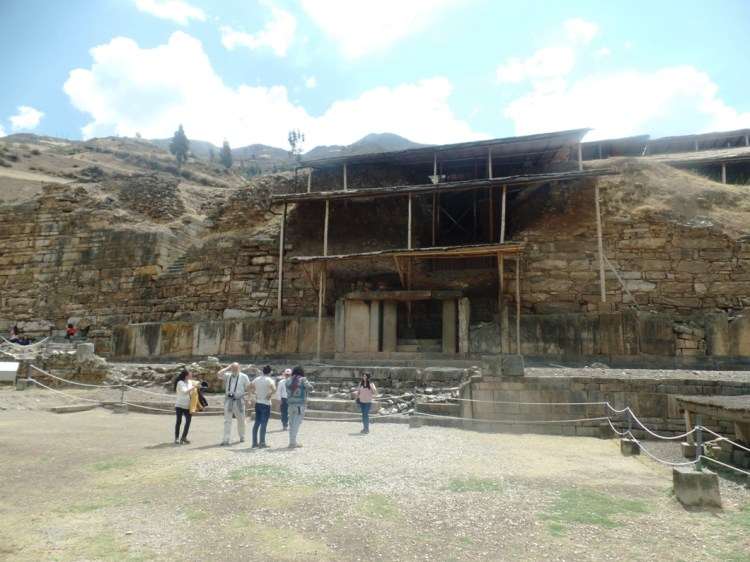
Dating from between 1200-5000 BC, Chavin was once the nucleus of a culture which flourished in the Andes for hundreds of years. It was a home to priests, shamans, and rulers, and a place of pilgrimage for farmers and other common people who would flock there for celebrations throughout the year.
SAMSUNG CAMERA PICTURES

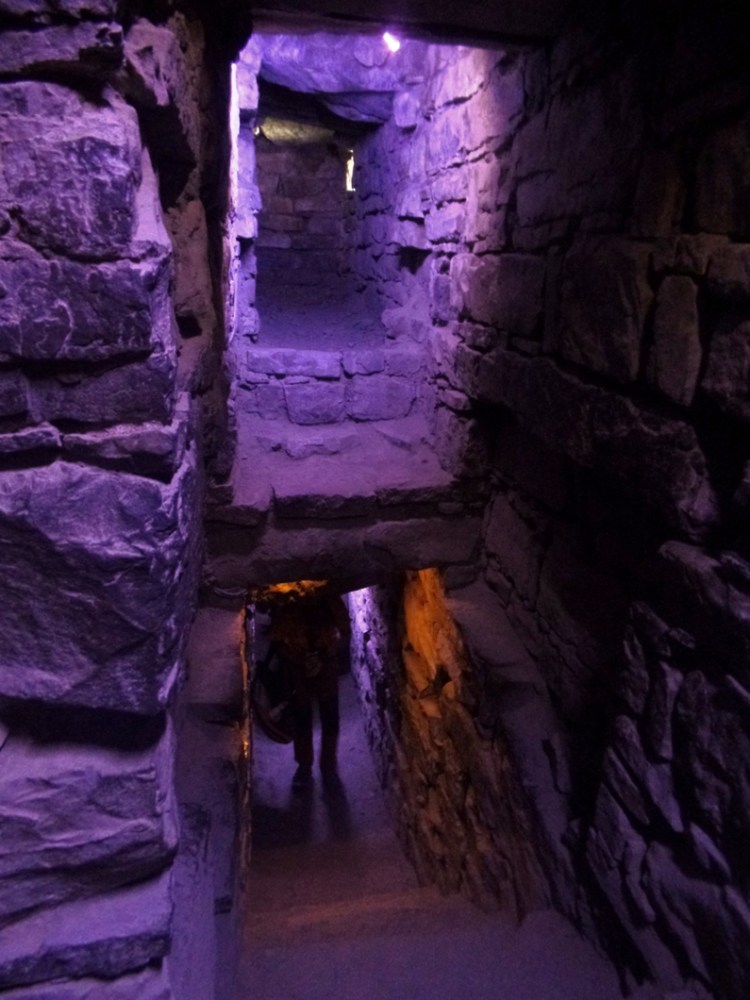
The central plaza, thought to have been the main gathering point during festivals, has astronomical correlations relating to constellations in the sky and the rising of the sun at certain times of the year. We were also permitted to wander around the labyrinth of chambers beneath the main temple, which are thought to have been where more exclusive ceremonies were held and where initiates – who had just imbibed San Pedro or Ayahuasca – were sent for religious experiences.
SAMSUNG CAMERA PICTURES

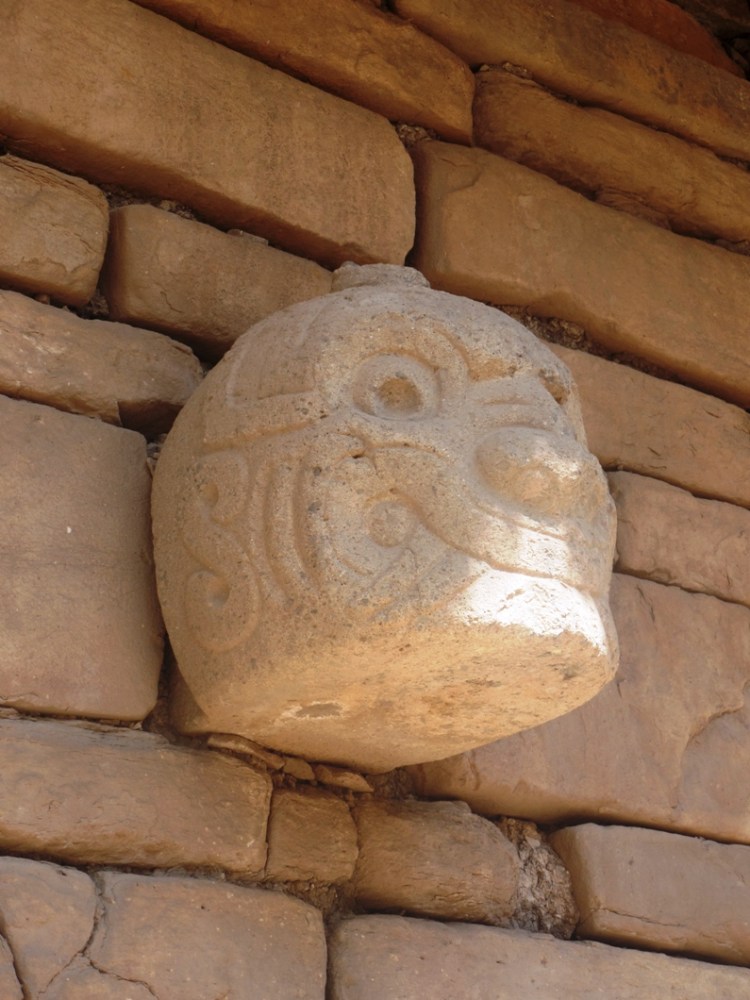
My favourite moment was seeing the Lanzón, a huge stone pillar covered with engravings of a smiling god. It is the most sacred object within the whole complex and still rests today in the very same place down in the tunnels where people can only reach it after queuing and walking in single file. Above it, there is a small opening where archaeologists believe pilgrims dripped blood and libations as offerings. We were not allowed to take photos, but there is a reconstruction of it in the museum.

SAMSUNG CAMERA PICTURES

I am still a bit confused as to why Huaraz is not learning from all the other significant attractions in Peru and offers tours in English. Several buses make the trawl there every day and, on each one, around 25% of the tourists within are people who would be better with English rendition, so the numbers are there to make it both obvious and viable, but for some reason no one from the tourism industry there have figured out the math yet. Until then – and despite this – I still think Chavin is a must-see for those passing through the area.

SAMSUNG CAMERA PICTURES

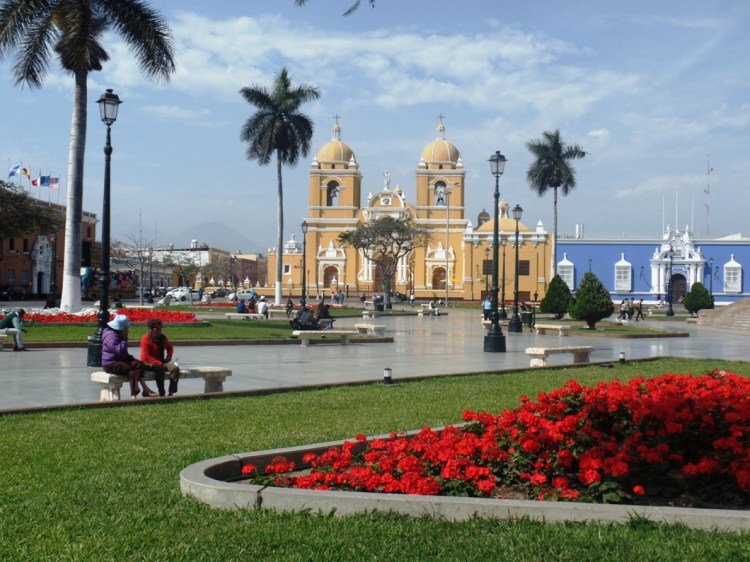
After finally having a day to rest, I caught an overnight bus to the coast. The city of Trujillo, which was once the epicentre of two consecutive civilisations.
SAMSUNG CAMERA PICTURES

I stayed in a village on the outskirts called Huanchaco. It was once a tiny hamlet populated primarily by fishermen until the gringos and surfers moved in. Now it is also a suburb of Trujillo which still retains a distinctly different energy to the centre and is a pleasant place to stay while exploring the area.

SAMSUNG CAMERA PICTURES

Chan Chan was the first site I visited. Fragments of this ancient city can be found across a vast area and it is thought to be the biggest pre-Colombian city in all of the Americas, but much of it has been either eroded or buried beneath the sand due to the harsh desert winds.  The site people walk around when they come to visit ‘Chan Chan’ is the Tschudi complex which has been partially excavated and restored.

SAMSUNG CAMERA PICTURES

There isn’t much information in neither the site itself nor the nearby museum, and the guides are hired on an individual commision basis, making them expensive if you are on a budget and travelling alone, so I had to make do with wandering around and seeing what I could discern for myself until I could find information elsewhere.

SAMSUNG CAMERA PICTURES

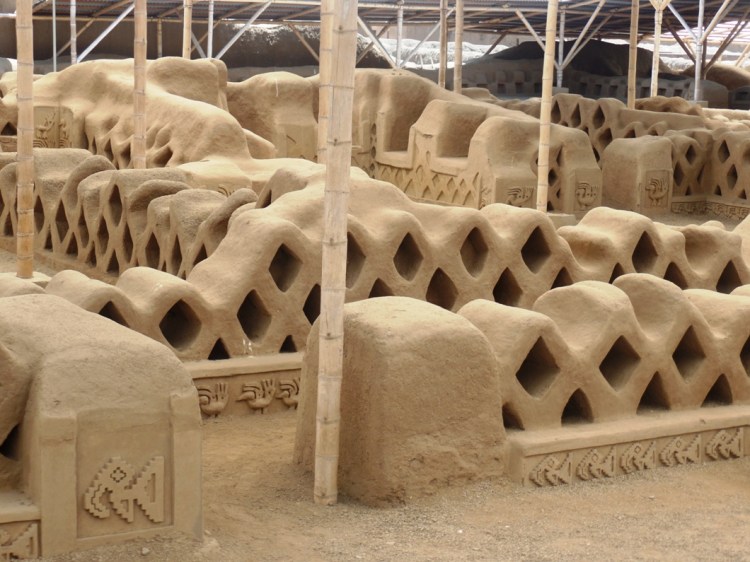
It is very clear that the Chimú people who dwelled here were heavily invested in the sea from the nautical theme. The whole place is covered in friezes of waves, fish, and birds, and there is also a reoccurring net-like design dividing the rooms at the back of the ceremonial courtyard.
SAMSUNG CAMERA PICTURES

The ticket for Chan Chan also allows entry to two other smaller sites around Trujillo. Huanca Esmerelda is not much to write home about but Huanca Arco Iris is covered with yet more very interesting friezes of rainbows (believed to be a symbol of fertility) and other strange creatures.

SAMSUNG CAMERA PICTURES

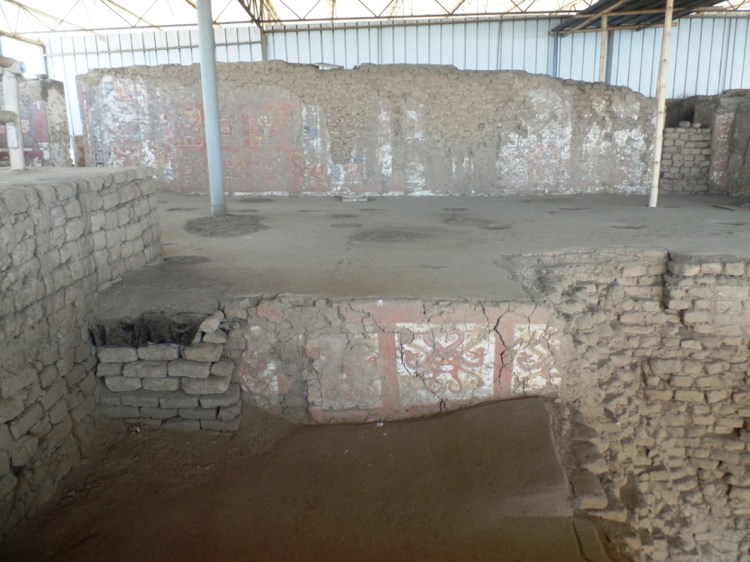
For me though, the highlight of this area was Huaca de la Luna, which I went to visit on my final day. It is actually older than Chan Chan, and a relic of the Moche people.
21.JPG

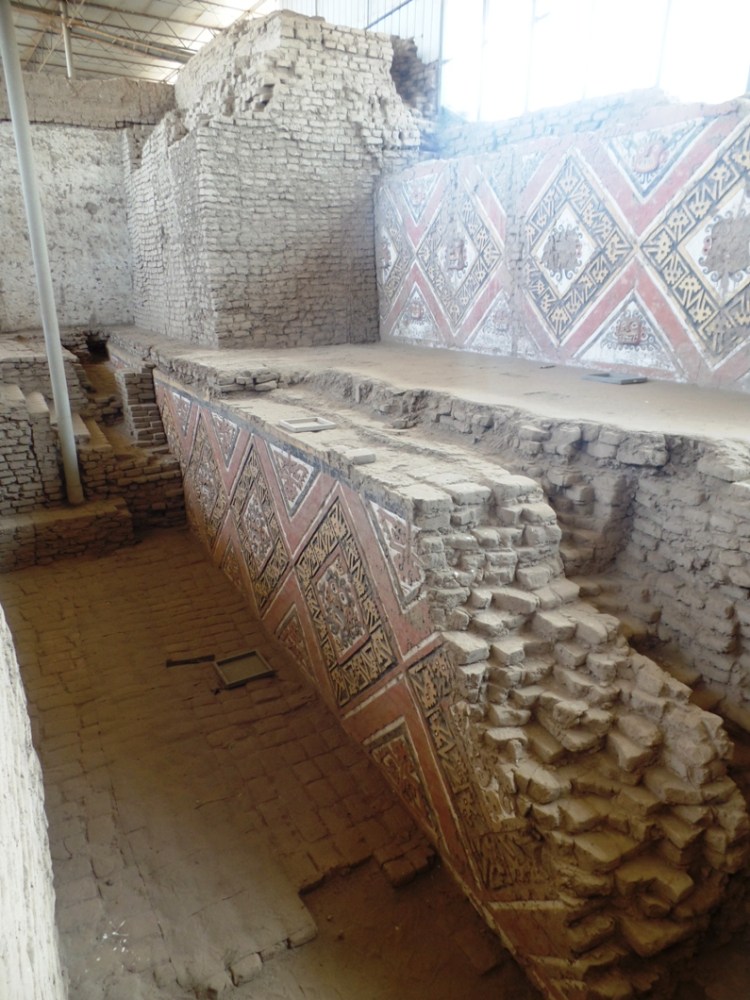
Although not as stand-out photographic as Chan Chan, Huaca de la Luna is a much more engaging experience to visit. The museum has a wealth of engaging information and visits come with a free tour. Huaca de la Luna is a living archaeological site which is still being excavated to this day, and it is interesting to see the process of all of its layers being discovered as you are guided through the different levels.
SAMSUNG CAMERA PICTURES

For a site which is so old, they do actually know quite a lot about what occurred there. Human sacrifice was practised by the Moche. They existed within a harsh, desert environment and only managed to sustain themselves through fishing and the ingenuity of creating a system of canals to channel water from the Andes, allowing them to irrigate the land for farming, but they were constantly at the mercy of the El Niño phenomenon which occurred around once every twenty years and brought catastrophic disruption to their way of life. It was during these times they most felt the need to appease their gods, and the Moche held festivals where men from high-ranking families would duel each other to decide who would be sacrificed. During the tour, you enter via the back entrance and one of the first things you see are the chambers where these unfortunate – and yet also, to the Moche mentality, honoured – young boys would be taken to imbibe San Pedro and other narcotics before being escorted to the rocks where they would be mutilated. All in vain. El Niño ended up being the downfall of the Moche people, just as it would for their future Chimú descendants who rose shortly after them.

SAMSUNG CAMERA PICTURES

All of the friezes at Huaca de la Luna are original (whereas much of Chan Chan is actually a reconstructed fibreglass representation) and it is interesting to see how the anamorphic features of their principal deity evolved over the years. With each generation, a new level of this temple was constructed, and the interior walls to all the previous levels were repainted, meaning archaeologists can go back in time by peeling back the layers.

SAMSUNG CAMERA PICTURES

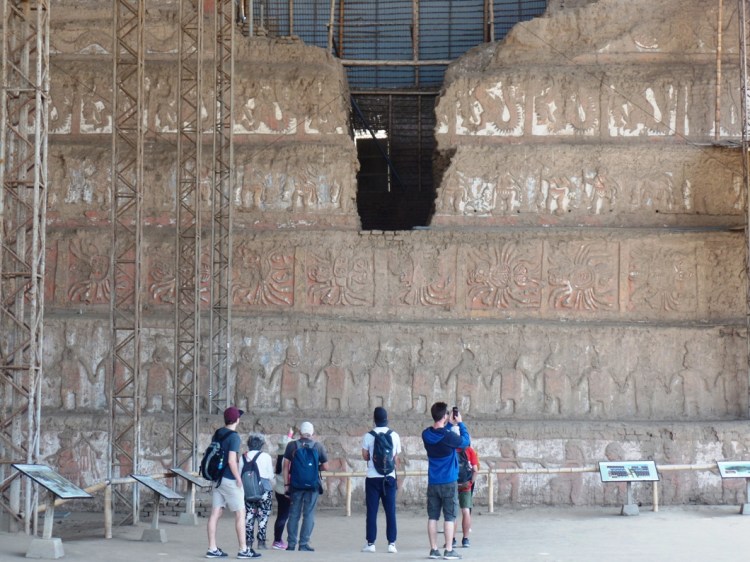
It is not till the very end of the tour that you see Huaca de la Luna’s most visually impressive feature; the outer wall, which is pyramid-shaped and covered in even more friezes, some of which have stunning detail. You can only begin to imagine what they would have looked like in their heyday.
SAMSUNG CAMERA PICTURES

Another thing which adds to the allure of this place is the presence of its twin, Huaca del Sol, which is only a stone’s throw away and can be seen from peering over Huaca de la Luna’s walls. It is actually bigger and remains buried beneath the sand, yet to be unearthed. Who knows what they may find there one day.

SAMSUNG CAMERA PICTURES


For more photos from Chavin check out the latter half of my Huaraz album. Photos of Chan Chan and Huaca de la Luna can be found here.

Travelblog SA#17: Hiking the Cordillera Blanca (Santa Cruz Trek) – Peru

20th-22nd September 2018

I didn’t sleep too well the night before leaving. Partly because I knew I had to get up early, and I think I was also excited and a little nervous too. I have done high-altitude treks before (such as Langtang Valley in Nepal and, more recently, the Quilotoa Loop) but during those, there were lodges to stay at.

This was my first time going it alone, carrying everything I needed to survive upon my own back. Still, Santa Cruz is supposed to be quite safe as far as altitude treks go, and it is also quite popular, so I knew I was likely to meet people along the way…

SAMSUNG CAMERA PICTURES


Day 1

By 4am, I gave up on sleep. It was only an hour till I needed to leave anyway, so I showered, checked my backpack one last time to make sure I wasn’t leaving anything behind, and headed for the bus station.

SAMSUNG CAMERA PICTURES

I first had to catch a colectivo to Yungay, and then I transferred onto a minibus. The road to Vaquería – where the trek began – was rocky and narrow. It twisted through the Andes like spaghetti and took over three hours just to reach a distance no more than 40 kilometres away as the crow would fly. The views were incredible but unfortunately, we only made one stop during the whole journey, when a group of climbers departed, destined for something much more adventurous than myself. I took a photo of this view of Orkoncocha and Chinan Cocha Lagunas.

SAMSUNG CAMERA PICTURES

Once the bus pulled up into Vaquería, me and the other gringos got off and began hiking. A German guy called Simon seemed to have a similar pace to myself so the two of us walked together.

SAMSUNG CAMERA PICTURES

Most of that first day was a steady upward climb. We passed through a village and then into a valley. We reached Paria (the campsite most people stay the first night) at around 2pm and decided that, as there was plenty of daylight left, we would go further to give ourselves a head start for the next day.

SAMSUNG CAMERA PICTURES

The trail became steeper. The last hour was gruelling, but eventually we reached a campsite. An unofficial one recommended by previous hikers on the app Maps.me. A Spanish couple was already there, and later on, we were joined by a pair of Canadians.

SAMSUNG CAMERA PICTURES

I was feeling dizzy, so the first thing I did was make myself a big cup of cocoa tea with ginger. It made me feel better, but the altitude was affecting me. I discovered – after speaking to the others – that everyone else who had hiked this far up the mountain the first day had been in this area much longer than me, and some of them had even done other hikes. Two days ago, I had been in Lima (which is at sea level). I had jumped to over four thousand meters.

We ate supper together. They laughed when they saw my sleeping bag (which only had a comfort temperature of 4-8 degrees) and saying I wouldn’t survive the night, but the cold wasn’t a problem. I happen to know that an inflatable mattress – when inserted into a sleeping bag rather than placed beneath it – adds a few degrees of warmth.

No. The cold was the least of my worries that night…

As soon as I got into my tent, I had a splitting headache. I couldn’t sleep because my brain was all fuzzy. I realised I had altitude sickness. Which surprised me as I have broken the rules for acclimatisation much more dramatically in the past and always got away with it. I had a temperature too. I actually panicked for a while, because I took out my thermometer and it gave me a reading which was off the scale, but then I realised it must be broken. Otherwise, I would already be dead.

I took a paracetamol, but it didn’t seem to help. Later, I remembered that the Spanish couple had altitude sickness pills, so I woke them up. That made me feel a little better, but it was the early hours of the morning by then, and I realised I had passed almost the entire night without sleep.


Day 2

By dawn, my headache had gone and I no longer felt short of breath. I had begun to acclimatise. I ate a breakfast of porridge and began to get ready. It rained during the night, so I had to pack away my tent still wet.

SAMSUNG CAMERA PICTURES

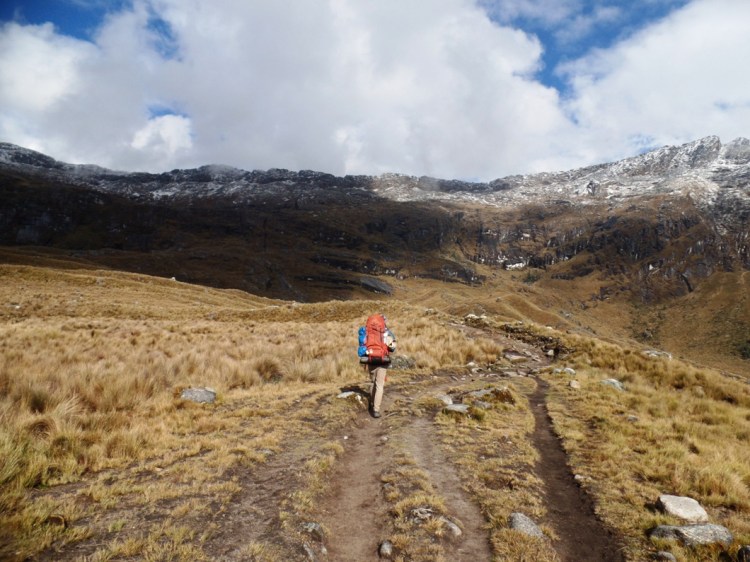
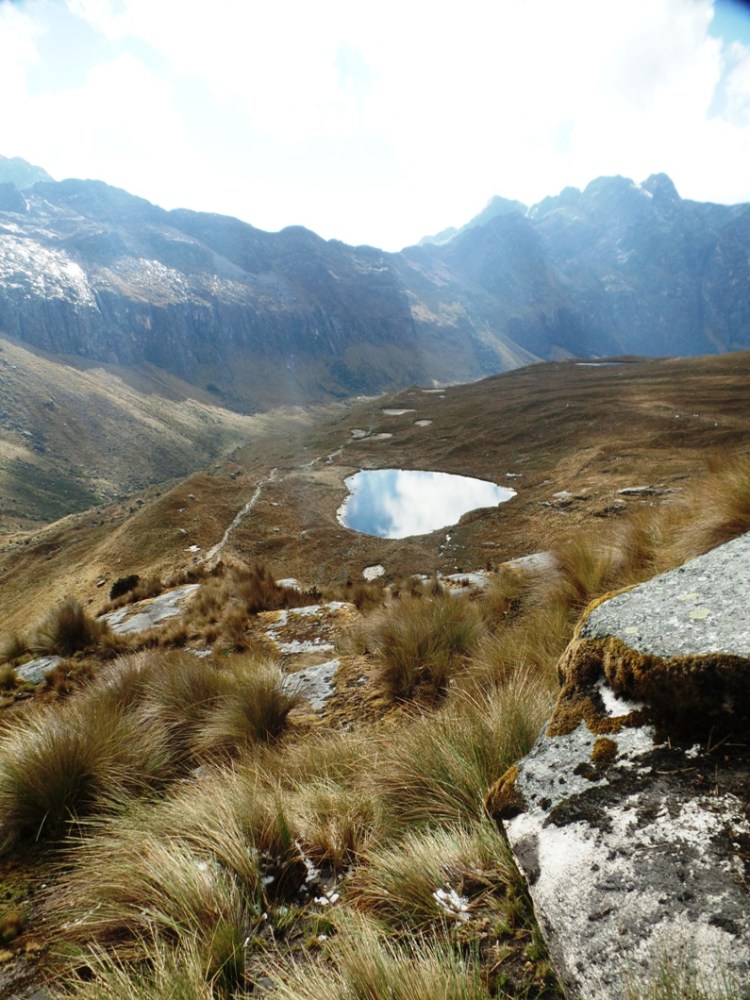
Simon and I carried on up the mountain. It was a steep two-hour slog up to Punta Union Pass – the highest point of the entire trail, at 4750 meters. We passed many lagunas on the way.

SAMSUNG CAMERA PICTURES

When we finally reached the top, we took a break and admired the view from both sides. I believed, back then, that most of the hard work was over.

SAMSUNG CAMERA PICTURES

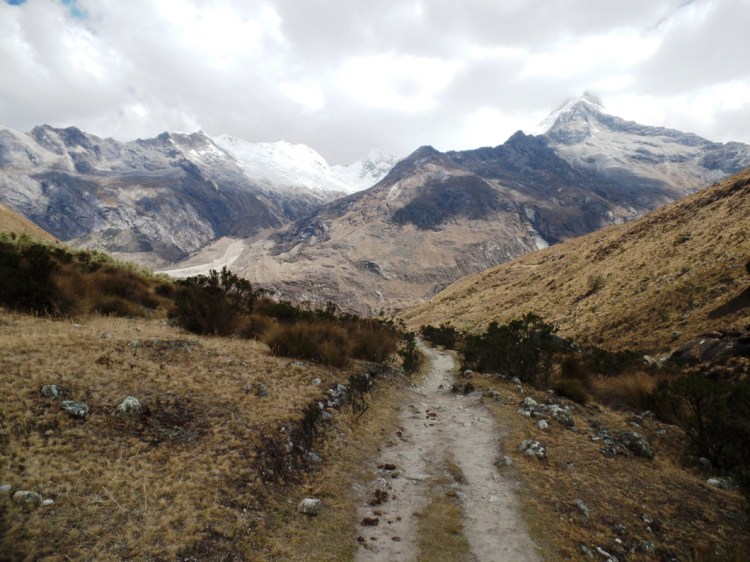
The views were spectacular that day. Towering white summits surrounded us as we made our way down the valley. We saw the iconic Artesonraju, the peak said to be the one used on Paramount Picture’s logo.

SAMSUNG CAMERA PICTURES

We reached Taullipampa campsite at around lunchtime. It was very windy, so putting up our tents was a frustrating process, but they needed to dry.

SAMSUNG CAMERA PICTURES

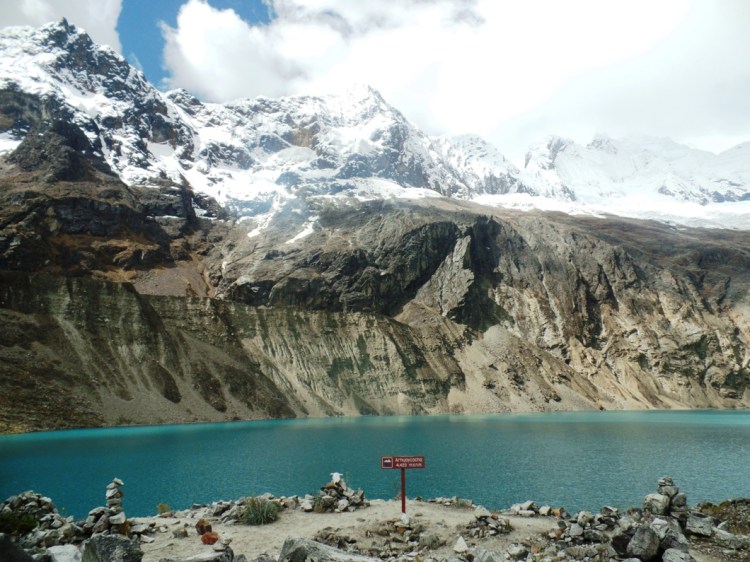
Being able to leave our things at Taullipampa that afternoon was a blessing, as it meant we could make the side-trek to Laguna Arhuaycocha with a much lighter load. This part of the Santa Cruz circuit turned out to be both a highlight and one of its most difficult challenges…

SAMSUNG CAMERA PICTURES

Skirting around the side of a mountain, we passed through into a grassy plateau. Beyond the trees, in the distance, I saw a steep incline ahead and I began to feel weary. I realised we were going to have to climb it.

SAMSUNG CAMERA PICTURES

The altitude was giving me a hard time again and I kept having waves of dizziness and having to catch my breath. I told Simon to go on ahead. I would catch up. I considered giving up a few times, but I wasn’t going to have come all this way to just turn back.

SAMSUNG CAMERA PICTURES

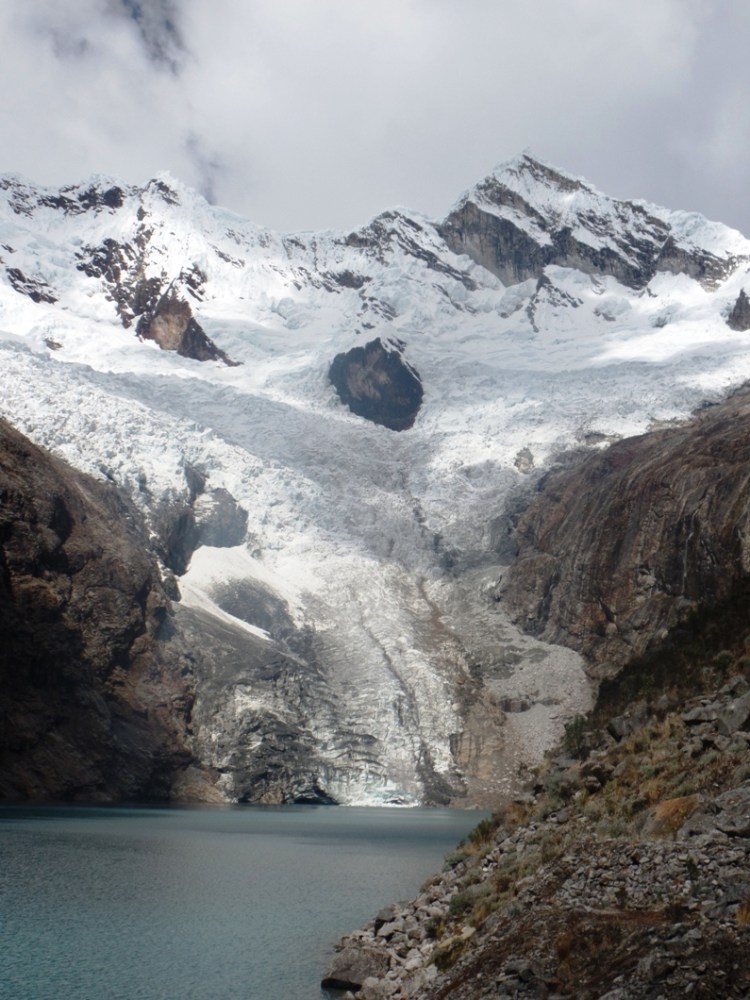
It was worth it in the end. I reached the official mirador and looked for Simon, to see him waving at me from up a steep ridge he had climbed to appreciate the view from a higher angle. I wasn’t well enough to join him so I rested for a while and watched the lake. Every now and then, I kept hearing loud noises as chunks of ice from the glacier fell into the water. It sounded like thunder.

SAMSUNG CAMERA PICTURES

Simon stayed there a little longer than I did. I decended, hoping the lower airs would clear my head. We reunited by a stream in the plateau and refilled our bottles using my filter before heading back to camp.

SAMSUNG CAMERA PICTURES

After another cup of cocoa and ginger tea, I was feeling much better. I made a dinner of quinoa, sweet potato and peanuts in a spicy sauce, and ate it all. I climbed into my tent and slept very well that night.


Day 3

I had to pack away my tent wet again in the morning. And I couldn’t be bothered to make porridge or tea, so I ate a breakfast of bread and cheese. Simon and I carried on making our way down the valley. Cashapampa – the village at the end of the trek – was just over twenty kilometres away but it was all downhill, so it was possible I would be drinking beer back in Huaraz that evening.

SAMSUNG CAMERA PICTURES

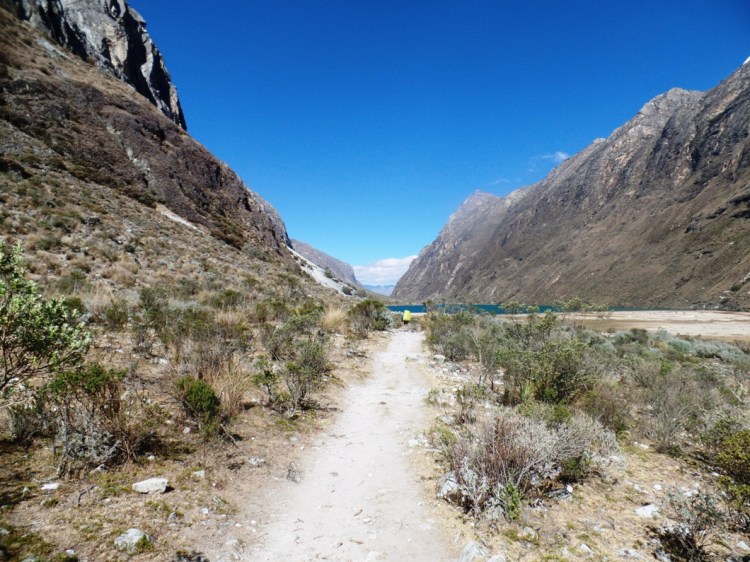
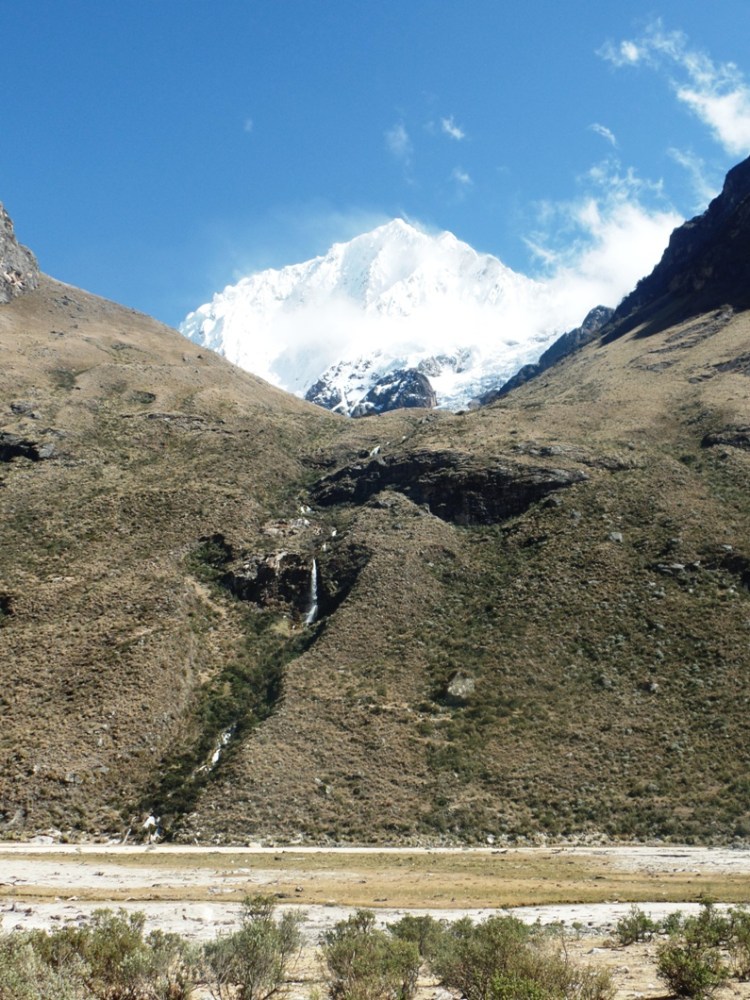
I passed through many different landscapes that day. Deserts. Moors. Forests. Dried up lakes filled with reeds. Even the remains of old villages which had been abandoned. The icy peaks of the Cordillera were replaced by waterfalls cascading down the steep ridges of the valley.

SAMSUNG CAMERA PICTURES

At some point, Simon and I parted ways. He wanted to camp by the river and relax for a day before returning to civilisation, whereas I decided to keep on going. Cashapampa was only a couple of hours away, and the weather had cleared. I wanted to see the rest of this valley while the sun was still shining and it was at its most picturesque.

SAMSUNG CAMERA PICTURES

I reached Cashapampa in the afternoon and bumped into a tour group who had just finished too and were having a celebratory drink outside a hostel. They had space on their minibus heading back to Huaraz and offered me a ride.


For more photos from the Cordillera Blanca, click here.

Travelblog SA#16: Lima & Huaraz – Peru

13th-19th September 2018

After my jaunt into the rainforest, I spent a couple of days relaxing in Iquitos before I left the Amazon behind and boarded a plane for Lima.

SAMSUNG CAMERA PICTURES

My time in Peru’s capital was enjoyable but ultimately uneventful. I stayed in Miraflores; a modern district with clean streets and international restaurants. It was a pleasant respite but not all too interesting, so I wandered around other parts of the city, enjoying the cool air as I explored the coastal parks and the civic centre, where I wandered around its museums and churches. I made a friend who took me to a market in Barranco where I tried ceviche.

SAMSUNG CAMERA PICTURES

Apart from the Lugar de la Memoria – a poignant memorial for Peru’s violent period during the Sendero Luminoso uprising – Lima’s museums weren’t much to write home about, but the Cathedral Basilica had the best collection of religious art I have seen so far in South America.

SAMSUNG CAMERA PICTURES

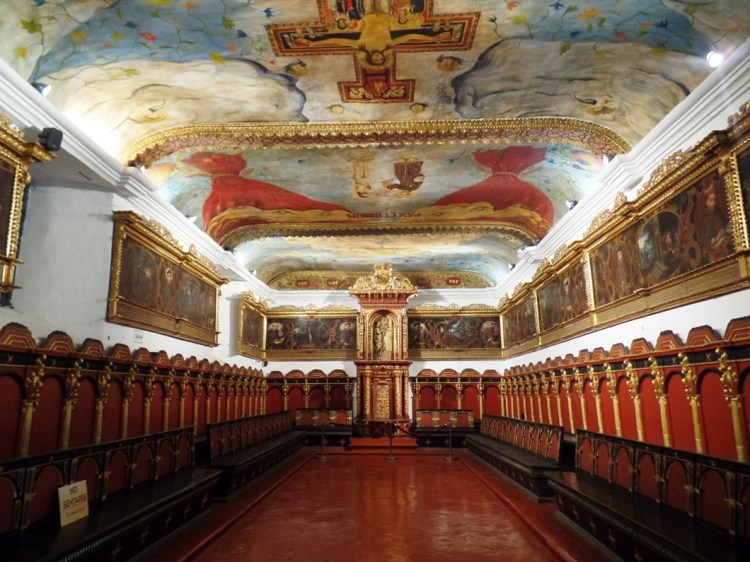
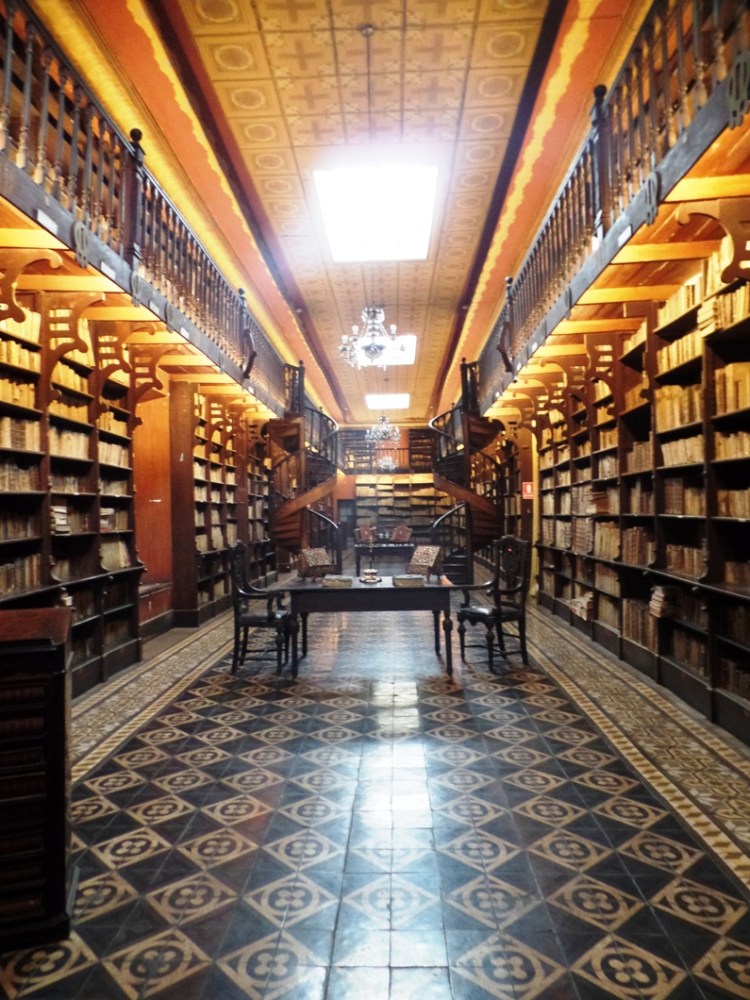
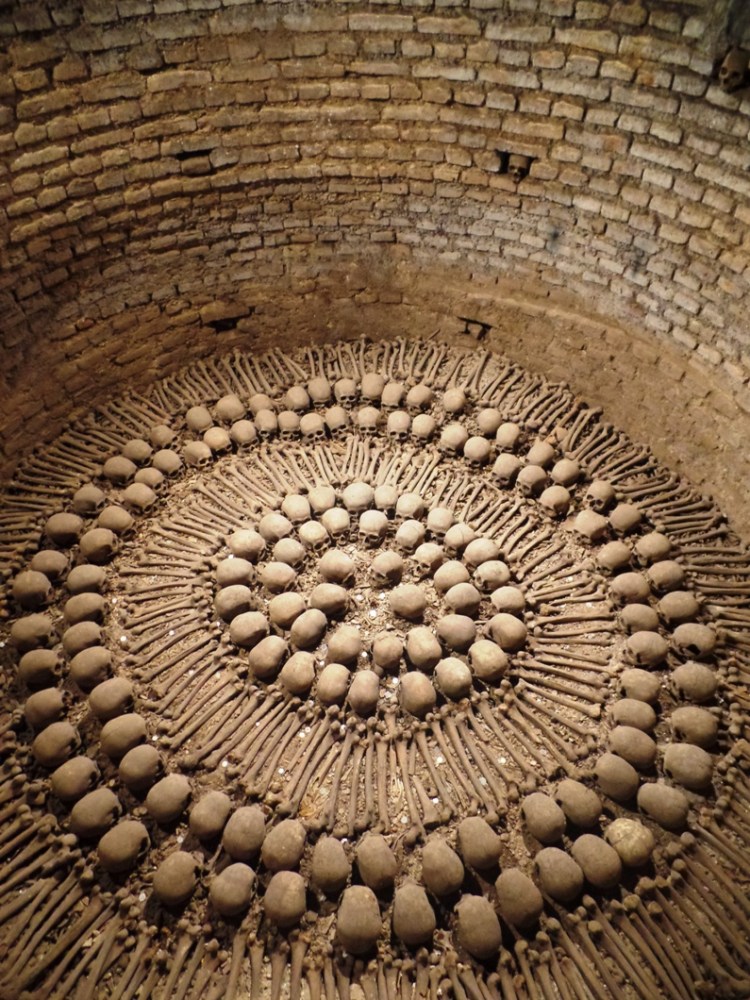
Another highlight was the Monasterio de San Francisco, which is over three hundred years old and has a library which looks like something out of a Harry Potter film.  As part of the tour, I also got to see its catacombs, which was home to thousands of human bones.

SAMSUNG CAMERA PICTURES

I also took a day trip to Pachacamac – a pre-Inca site on the outskirts of the city – which is not the sort of place which photos do justice, but I am glad I went there as it was interesting to see the crumbled ruins of an old civilisation scattered across the desert.

SAMSUNG CAMERA PICTURES

After a few days I ran out of things to occupy myself, so I left Lima and hopped on a night bus destined for Huaraz.

SAMSUNG CAMERA PICTURES

At over 3000 meters above sea level, Huaraz is the capital of the highlands and a launching point for exploring this region. My intention was to embark upon a trek but first I needed to acclimatise, so I passed the time by seeing some lighter attractions such as Wilkahuain; a nearby village which is home to a remarkably well preserved series of ruins dating from 600 AD, where people of the Wari culture people used to store their deceased ancestors.

SAMSUNG CAMERA PICTURES

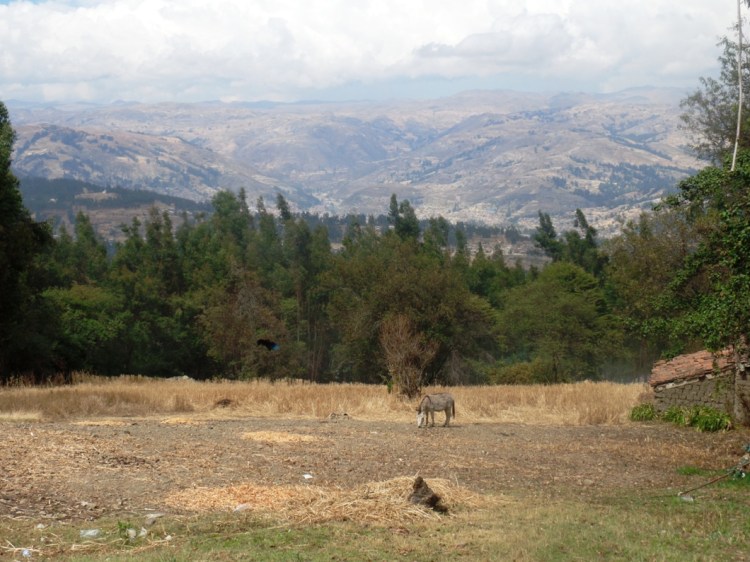
I also went for a hike to Antacocha Laguna. I was joined by a German girl called Lisa that day, and together we caught a bus to Ayacayana and hiked up the mountain, passing through quaint Andean hamlets, farms, and forests on our way to the lake.

SAMSUNG CAMERA PICTURES

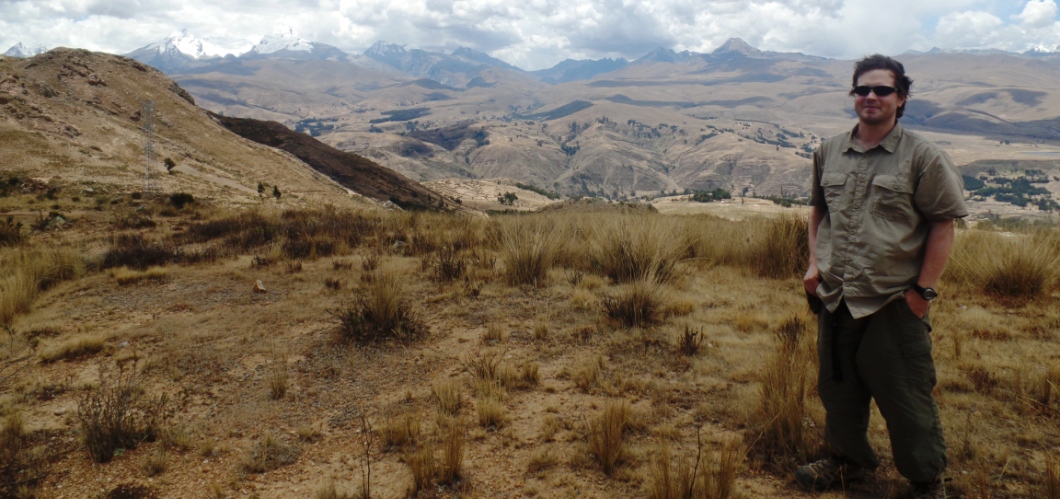
When we reached the top, we ate lunch together while admiring the view of the Cordillera Blanca. It was the place I was destined to venture the following morning when I embark upon the Santa Cruz trek.

SAMSUNG CAMERA PICTURES


Click on the links for more photos from Lima and Huaraz.