Travelblog SA#21: Cusco & The Sacred Valley Part 1 – Peru

15th-18th October 2018

SAMSUNG CAMERA PICTURES

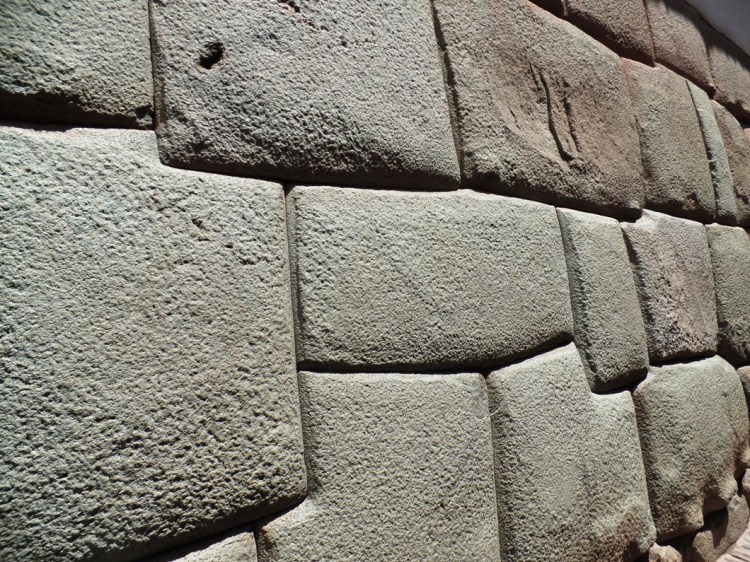
You would think that I’d have grown bored of historic highland cities by this point, but I was certainly glad I saved Cuzco for later in my trip because it topped them all. Once the old capital of the Incas, and then after, a colonial centre, it is a city with multiple layers and, as you wander around its streets and alleys, there is always something which catches your eye. Some of its original walls, built by the Incas, still stand today, and they were so masterfully shaped to fit into each other they baffle historians. I have not been to a city that I can be so happy to just freely wander and get lost within, since Kathmandu in Nepal.
SAMSUNG CAMERA PICTURES

Cuzco has many sites to see but most are ones you need the boleto turistico for. This ticket is initially expensive but allows you to wander around dozens of museums and ruins not just within the city itself but the entire Sacred Valley. It has a time limit though, so it didn’t make any sense for me to buy one yet as I was heading to do the Salkantay trek in just a few days.

SAMSUNG CAMERA PICTURES

There were a few places within the city which can be visited independently of the boleto turistico though, such as the Museum of Pre-Colombian Art, which I was very impressed by. Regular readers of my blog will be aware that I have a fascination with history but even I have to admit that sometimes endless cases filled ceramics and artefacts can bore me. This museum is one of those places which manages to make ancient relics engaging. They concentrate on quality rather than quantity and every single item they put on display is fully annotated with information of its context.

SAMSUNG CAMERA PICTURES

They also have an audio guide (which costs extra but I highly recommend) and have divided the rooms of the museum in a way which takes you on a journey through Peru’s different pre-colonial civilisations. Many ones I had encountered before during the last six weeks. It was great to have a museum which brought them all together into a meta-narrative.
SAMSUNG CAMERA PICTURES

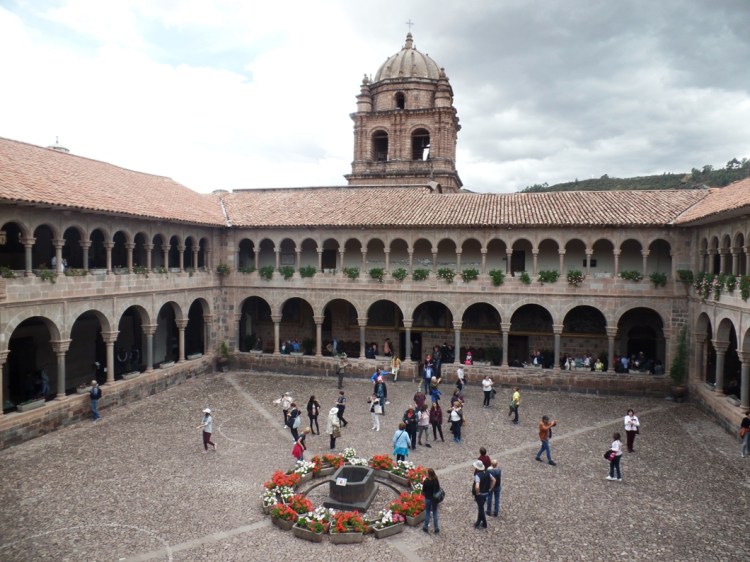
Qorikancha was another attraction I went to see. Being a Christian monastery built over the ruins of an old Inca palace, you could almost say it is the very epitome of Cuzco itself.

SAMSUNG CAMERA PICTURES

Although they might not look like much now, these bare-looking stone chambers within what is now one of the central courtyards of the monastery were once an astronomical observatory and series of temples. All of them were completely covered in gold, the recesses in the walls were filled with offerings to the gods and even the space in the middle was filled with shining statues. When the conquistadors arrived they were said to have been awestruck but that didn’t stop them having all of the gold melted down as part of the ransom for Atahualpa’s – the last Inca emperor – life, and building a church on top of its foundations.
SAMSUNG CAMERA PICTURES

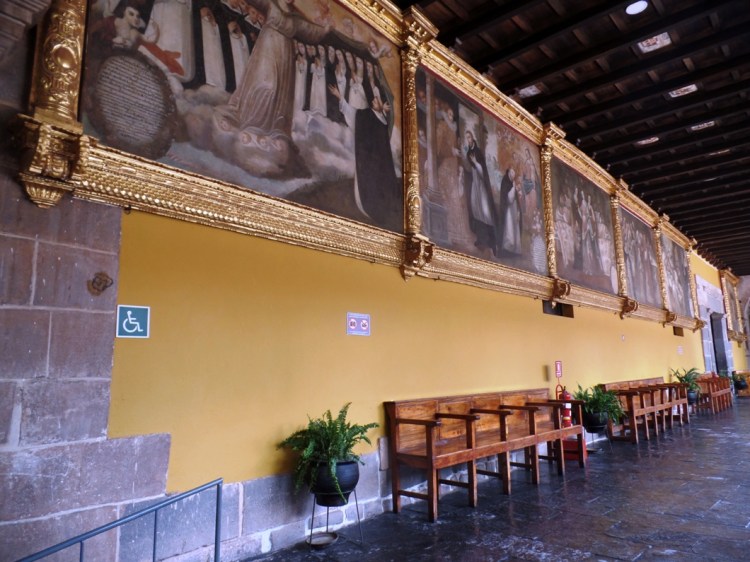
Interestingly, despite the Convent of Santo Domingo’s shady beginning, the monks of this place eventually took a more humanitarian approach later down the line and became advocates for indigenous rights and even helped to catalogue some of their myths and traditions. The modern convent, as it now stands, is host to a collection of colonial religious art where one can see some of conscious steps the clergy made to lure the natives into Christendom as part of the development of Peru’s mestizo culture, such as paintings depicting Jesus as dark-skinned, several examples of Incan deities assimilated with Christian saints, figures such as Mary chewing cocoa leaf, and even Inca-presenting women (in both features and attire) present in the biblical scenes.


SAMSUNG CAMERA PICTURESUnfortunately, I can’t show you any examples of this as I was not permitted to take any photos of the artwork, nor the church of Santo Domingo itself (which is unfortunate, as it has a wonderful interior and great atmosphere), as well as a few other religious spaces within Convent grounds. This is probably the only criticism I have of the place, but I did find it to be a bit of a double-standard on their part, as they have no problem at all with you taking snaps of the ruins of a sacred Inca site they built over.
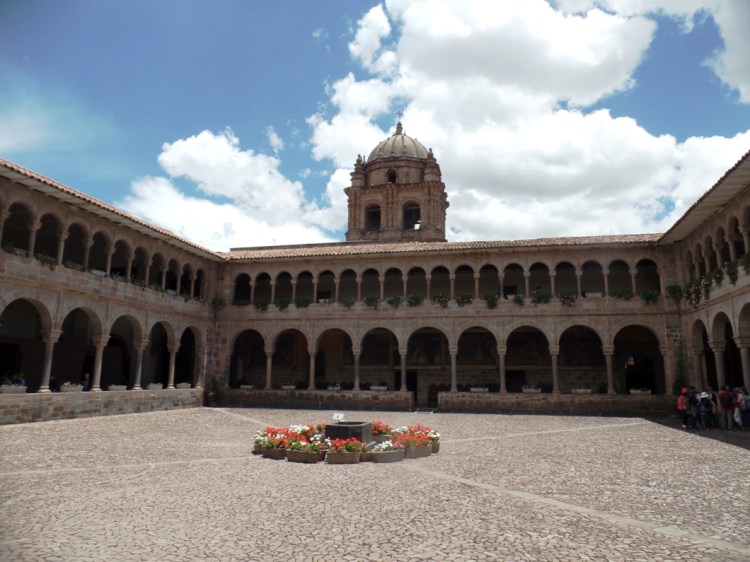
SAMSUNG CAMERA PICTURES

Otherwise, I found Qorikancha a wonderful attraction. It is a great place to help gain insight into the history of not just the grounds, but Cusco itself, and the addition of an audio-guide you can download onto your phone enriches the experience. It is one of the cheaper attractions to see in Cusco and great value considering the amount of effort they have put into making it engaging for people.

I wish I could say the same thing about Cusco’s cathedral, which I had planned to visit that too but decided against it when I found out the quite frankly disgusting entry fee they are charging people now.

SAMSUNG CAMERA PICTURES

Not many people pass through Cuzco these days without going to see Rainbow Mountain, which says something of its allure considering it is a very new attraction and not even made it into the current version of the Lonely Planet yet.

SAMSUNG CAMERA PICTURES

All the tours which go there leave very early in the morning as it is quite far away. During the journey you from an altitude of 3400 meters to over 5000, and almost everyone will feel some degree of altitude sickness when the bus arrives at the car park where they have to finish the last leg of the journey by foot. All of the tour guides carry oxygen tanks and medication with them and the walk takes about one to two hours depending upon your fitness level. Many people end up hiring a horse to carry them and some even have to turn back.
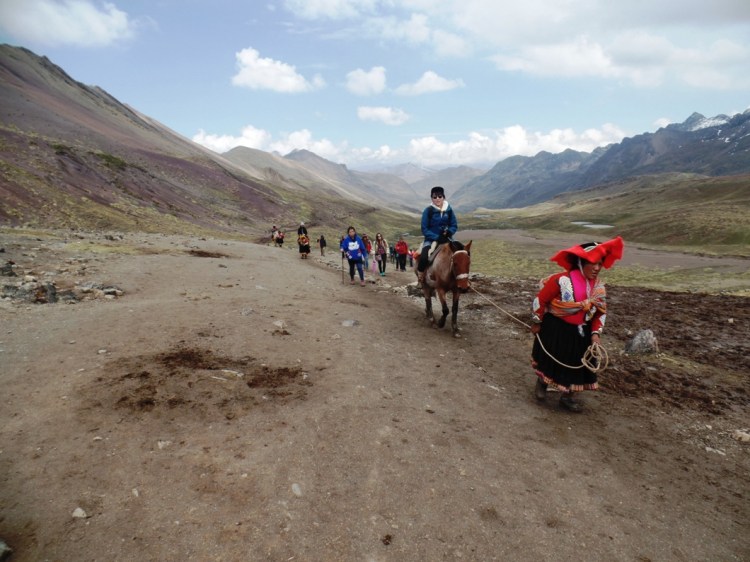
SAMSUNG CAMERA PICTURES

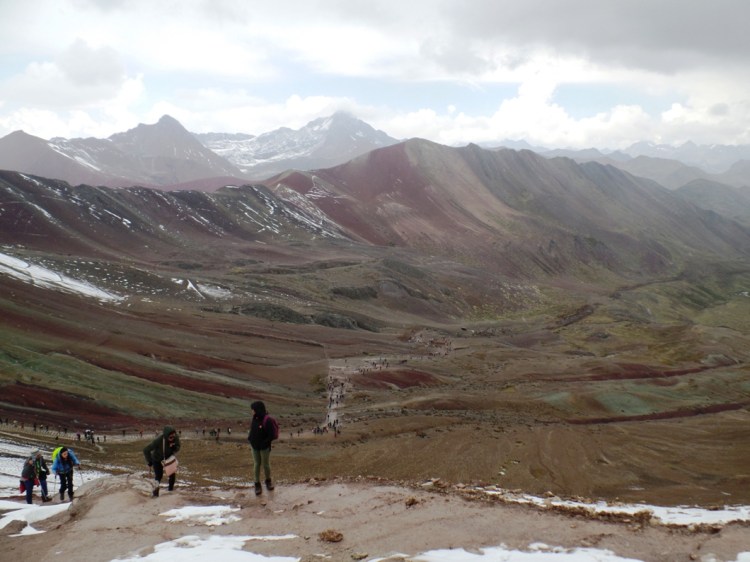
The views, before you even reach the ‘rainbow’ part, are stunning. Which is good, as taking photos gives you an opportunity to catch your breath.
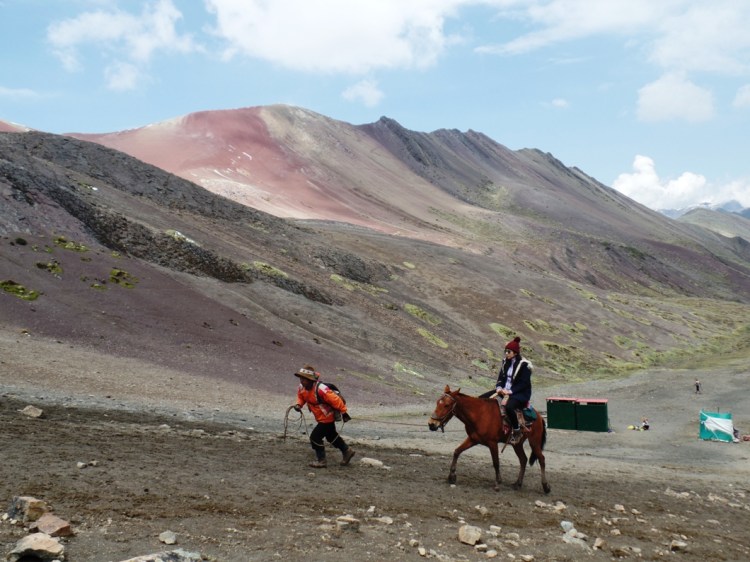
SAMSUNG CAMERA PICTURES

When you reach the top, the real struggle is then managing to get a decent snap of the view between all the crowds of people posing in front of it
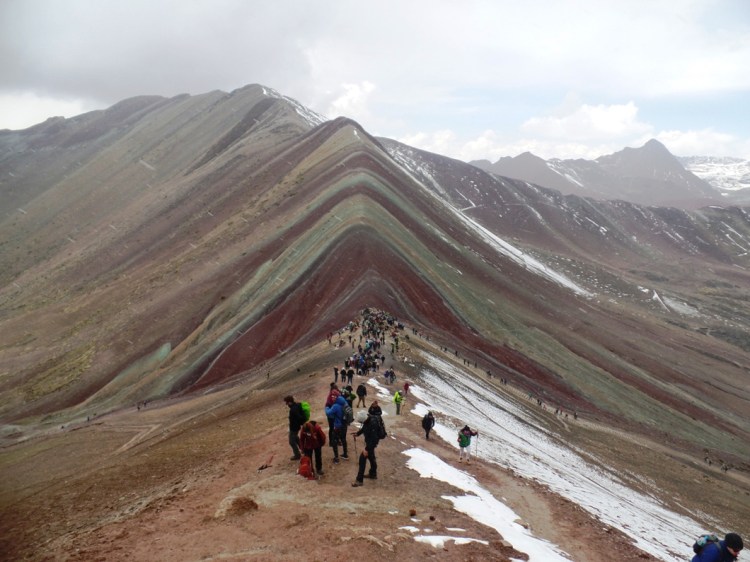
SAMSUNG CAMERA PICTURES

It was shortly after this photo was taken that something I was certainly not expecting happened to me.

SAMSUNG CAMERA PICTURES

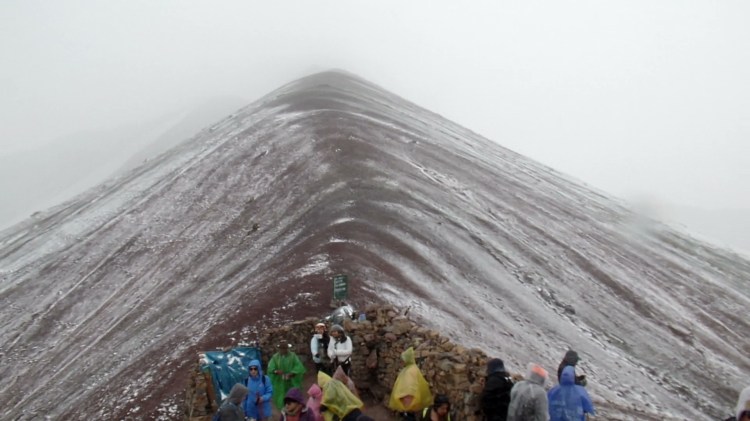
A storm was approaching – we had heard some rumbles nearby just a few moments ago – we were suddenly enveloped within a cloud of mist. The rumbling repeated, this time directly above us.

And then I felt something strike my head. There was a snapping sound, and it was followed by a weird sensation. I put my hand to my head where I’d felt it and a weird crackling sound spread across my scalp. Several people were staring at me and it took me a few moments to realise what had just happened.

I had been struck by lightning.

I mean, it obviously wasn’t a particularly big one, otherwise I would have been in trouble, but still, I think it’s quite cool that I am now one of a small number of the population who can say such a thing.
15.JPG

It happened so quickly and I didn’t really have too much time to dwell on it because we were then engulfed in a snowstorm. Cold winds came, and with them, heavy snow. I wrapped myself in my coat and covered up my backpack. Within a just a few minutes, the Rainbow Mountain was white and its colours could no longer be admired. The winds were so bitterly cold I decided to start making my way back down to the car park. On my way, I passed people who were still on their way up and felt sorry for them, not only were they having to finish the ascent within a storm but they were not going to be able to see the mountain at its best.
SAM_8533_Moment

The next day I got ready for the next step of my journey, the Salkantay trek, which will involve four days of hiking through mountains of the sacred valley and ultimately conclude with me seeing Machu Picchu.

I will be returning to Cusco though, and when I do there are plenty of other sites I plan on seeing.


For more photos, click here.
Travelblog SA#20: Arequipa & the Colca Canyon – Peru

5th-12th October 2018

Two weeks spent in the desert and now here I was, back in the highlands again. And not only in the highlands but in yet another historic UNESCO city.

SAMSUNG CAMERA PICTURES

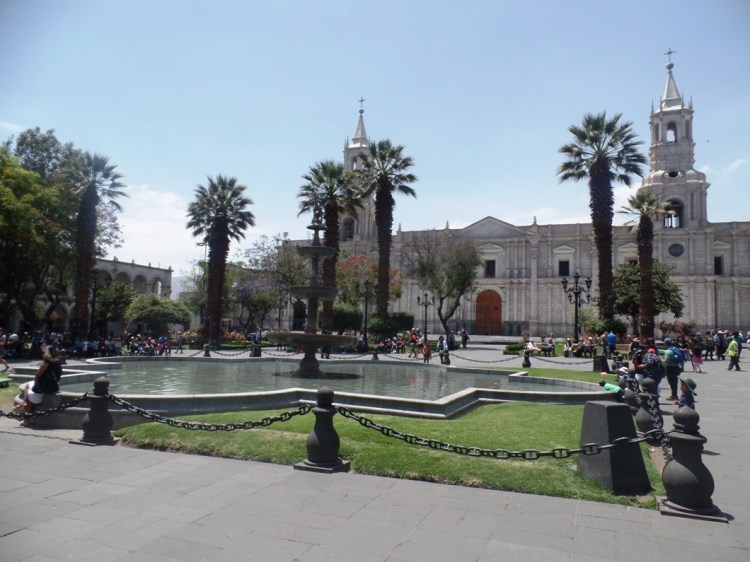
And of all of them, this was probably the most charming so far. Its central plaza was a large space, filled with colourful gardens and surrounded by colonial buildings made of sillar (earning Arequipa its name, ‘The White City’) which comes from volcanic mountains nearby.

SAMSUNG CAMERA PICTURES

Admittedly, the city itself didn’t have too many attractions which called out to me. There are a few small museums, but none of them seemed interesting enough to pay the entrance fee, but I did enjoy the atmosphere and the cool mountain air as I spent time wandering its streets, filled with cafes, artisan shops, churches, and the market, which was one of the oldest in the country. Even the place I was staying at was a rickety building which had been converted into backpacker digs.

SAMSUNG CAMERA PICTURES

The reason that I had come here – like many others before – was mainly because what lies just outside. So, after a couple of days, I took just a small bag of possessions with me and headed out for the Colca Canyon.

SAMSUNG CAMERA PICTURES

The bus left at the ungodly hour of 3am and it was mostly full of daytrippers who were on a tour. I wasn’t paying full price though as I was just along for the first part of the journey. By the time the sun came up, we were entering the valley and I watched it through the window.

SAMSUNG CAMERA PICTURES

The bus made a few stops before dropping me off in Cabanaconde, but I didn’t mind. One of them was to see ancient terraces which had been built by the Incas and the valley’s earlier inhabitants, the Collaguas and Cabanas, for farming.

SAMSUNG CAMERA PICTURES

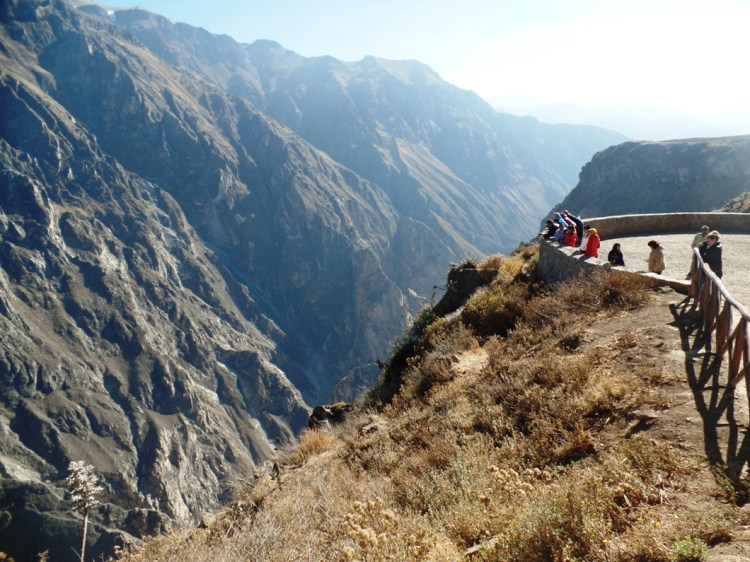
We also called at the ‘Cruz del Condor’, but unfortunately, I didn’t see any condors in the ten minutes I was given before asked to get on the bus again. Just a lot of tourists taking selfies. Apparently, we were there at the wrong time of the year.

SAMSUNG CAMERA PICTURES

When I was dropped off in Cabanaconde, I thought it quite a charming town and made a mental note to make sure I spend a bit of time there when I passed through again. An American guy called Sam got off the bus too and together we began the hike to Llahuar.

SAMSUNG CAMERA PICTURES

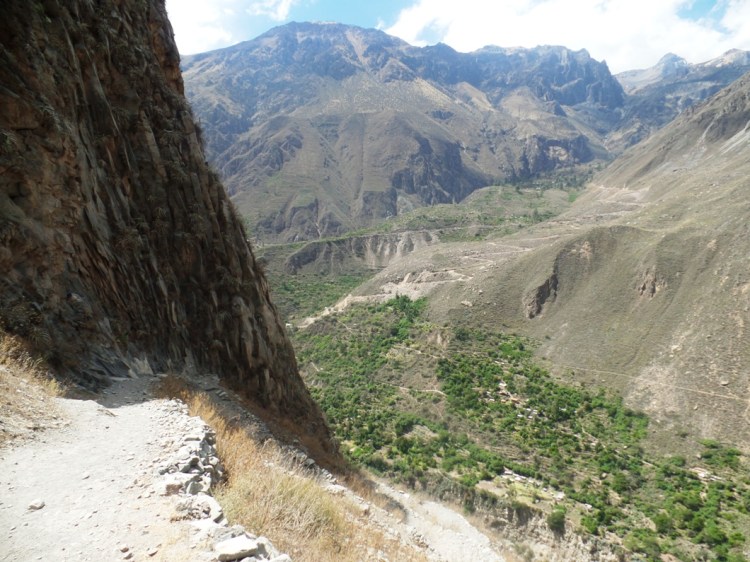
The first day was harder than I was expecting, considering it was mostly downhill. The views were great as we plunged into the canyon though. A few hours in, we reached the river at the bottom where there were a series of geysers. I have videos of them here.

SAMSUNG CAMERA PICTURES

We stopped there for lunch. The area smelled of sulphur and I could feel the earth beneath my feet humming as I ate. It was a strange place. The ground was white, covered in ash, and warm. When I went to the river to refill my water I had to be careful as parts of it were scolding hot.

SAMSUNG CAMERA PICTURES

After lunch, it only took another hour to reach Llahuar. On our way in a dog tried to bite me, which took me completely by surprise. You get a lot of bother from dogs in rural parts of South America – especially if you are white – because they don’t recognise you and are being territorial. Usually, you just need to slowly back away, wave a stick, or pretend to throw rocks at them to get them to leave you alone, but this dog didn’t give me any warning or make a sound. He sneaked up on me while I was walking and I only realised when I became aware of something pulling upon my trousers. I snatched my leg away just in time and luckily, he didn’t break my skin. It was very odd behaviour though.

SAMSUNG CAMERA PICTURES

Most people who stay in Llahuar stay at Llahuar Lodge, and there are several reasons for that. It visually stands out as you approach the village and has a wonderfully placed restaurant area over-looking the canyon.

12.JPG

The main reason, however, is the hot spring pools they have built by the side of the river. They are at an almost perfect temperature of 39 degrees, and a perfect way to unwind after a hike. I spent a good couple of hours relaxing in them while enjoying the view.

SAMSUNG CAMERA PICTURES

One thing I will say about Llahuar Lodge though is that the food is not great. The dinner option is quite cheap but not very tasty and definitely not what I would deem to be a ‘hiker’s portion’. I was glad I brought some of my own supplies with me to supplement their meals.

SAMSUNG CAMERA PICTURES

The following morning, Sam went off in a different direction as he wanted to hike to Huaruro – a side-trek which can be added on to the canyon trail – but I decided to leave it out as I had heard it was an arduous journey and only a mediocre waterfall. I began walking towards San Juan de Chucho, my destination that day.

SAMSUNG CAMERA PICTURES

For the first half of the walk, I shared my path with some other people who had also stayed at Llahuar, but most of them were heading to Sangalle – also known as ‘The Oasis’ – so later on I was mostly alone. I had heard Sangalle was a little touristy and I wanted to see some of the other side of the canyon too.

SAMSUNG CAMERA PICTURES

I passed through several villages, including Belen, Matala, and Cosñirhua. By the time I reached San Juan, it was around noon. I was surprised it was that early in the day. I could have happily stayed there, as it looked quite scenic – and Gloria Hostel, in particular, looked inviting with its pretty gardens – but eventually, I decided that I might as well just finish the trek. The hike back to Cabanaconde was said to only take three hours from there.

SAMSUNG CAMERA PICTURES

I greatly underestimated how difficult the climb back up would be. In the past few months, I have done many treks – most of them have been much higher in altitude than this – and I therefore believed I was prepared. The truth is when climbing out of the Colca Canyon you are ascending over a thousand metres in altitude in just a few miles. It is so steep that most of the trail is a relentless zigzag up the mountain and there is very little relief. I actually think the lower-attitude may have made it harder because it was very hot and a lost a lot a water through sweating. I carried 1.5 litres with me and it was not enough.

SAMSUNG CAMERA PICTURES

By the time I reached the top, over three hours later, I was dehydrated and every part of my body was aching. I had climbed out of the canyon, but I was still on the outskirts and about a mile away from Cabanaconde. Luckily, a bus was passing by and I managed to get a ride. When I did finally reach Cabanaconde, the first thing I did was go into a shop to buy two drinks full of electrolytes.

SAMSUNG CAMERA PICTURES

I had a well-deserved beer that night and even treated myself to a pizza at Pachamama Hostel which had a wood-fired stone oven. The owner also told me that even though it is more difficult to see condors at this time of the year, if I headed back to Cruz del Condor in the morning and stayed for an hour or so I was guaranteed to see at least one, so I got up early and went back. It seemed luck was on my side because I didn’t just see just one but several this time (videos here).

SAMSUNG CAMERA PICTURES

Originally I had planned to head to another village called Yungay that day so I could experience Colca Canyon life at a more relaxed pace, but during my time looking for condors I began to feel ill.

It started with cramps in my stomach and waves of nausea. I was feeling drained and my limbs were in pain too, but I didn’t know if that was just because I had overdone it the previous day. By the time the bus arrived, I realised that I was coming down with something and it was best to get back to Arequipa.

The bus ride was hell. It should have taken three hours but ended up taking five. It was one of those coaches with no air conditioning and the few windows it had were tiny. The sun was out and every seat was taken, so it was unbearably hot and there was no air circulation. My seat didn’t recline and I was in the aisle so I couldn’t get comfortable no matter how tired I was. During the journey, my temperature rose. It was one of the most unbearable few hours I have ever been through in all my years of travelling.

When we finally arrived into Arequipa, I was very weak. I caught a bus straight to my guesthouse and claimed a bed in their dorm. They only had top bunks left, so I had to make do. I had a full-blown fever by then and I didn’t sleep much that night. I tossed and turned and kept having to get up to use the toilet. My body was aching so much that climbing in and out of that bunk was an ordeal.

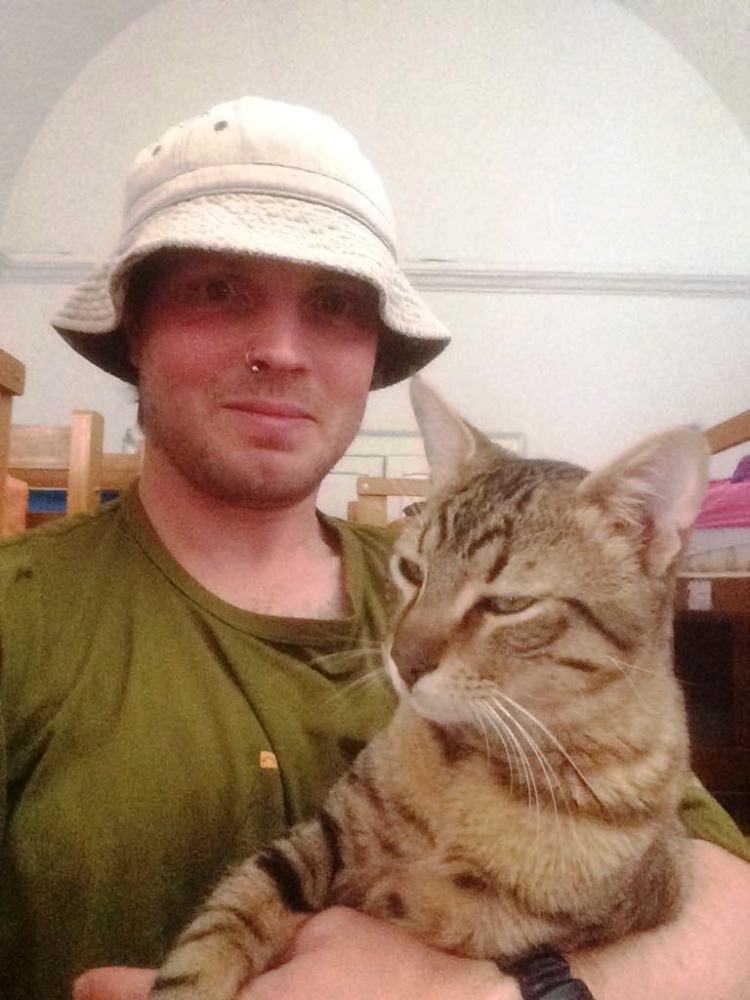
By the next day, I was feeling a bit better. My temperature dropped a little and a lower-bunk became free so I changed beds. The hostel’s resident cat became my companion and was almost constantly curled up with me throughout the next few days which followed, as I rested. Recovery took a while. I am still not quite sure what was wrong with me, but it seemed most likely either a flu bug or water poisoning.

21

I originally planned to climb El Misti (a nearby summit of 5900 meters) but it seemed I was going to have to give that a miss. I was booked to do the Salkantay trek in a week’s time, and I wanted to make sure I was fully recovered by then.

SAMSUNG CAMERA PICTURES

When I was feeling well enough to walk again I went to see the Convento de Santa Catalina. Known as Arequipa’s ‘city within a city’, it is over four hundred years old and has been the home to hundreds of cloistered nuns over the years. Most notably Ana de Los Angeles, who was sent to the convent as a child by her parents to be educated before they found a husband for her, but she defied her parents’ wishes and instead devoted her entire adult life to the order. She was said to have performed miracles and made many prophesies which came true. She was beatified by Pope John Paul II in 1985.

SAMSUNG CAMERA PICTURES

Once recovered, I said goodbye to Arequipa and booked a night bus heading to Cuzco.


For more photos and videos, click here.
Travelblog SA#19: Paracas, Huacachina & Nazca – Peru

30th September-4th October 2018

After my week spent exploring ruins in the north I was forced to return to Lima to see a dentist because one of my fillings had fallen out. I initially tried to get it sorted in Huanchaco, but I didn’t do my research and ended up with a dodgy dentist who did a really bad job. The experience was almost a parody and there were several warning signs which should have sent me running. First, I was told to meet him at a dimly-lit street in Huacachina at night – that should have been the first giveaway. He greeted me by getting out of a car, and there was someone else inside of it whose face I never saw and who just sat there throughout the whole procedure – which was rather ominous. The ‘dentist’ escorted me into a house, where a family was currently eating dinner and through to a ‘clinic’ at the back, which was just some dingy room. The equipment looked passable, but a little old. He did wear gloves and apply all the correct cleaning agents, but he kept texting someone on his phone between drilling at my tooth, which wasn’t very hygienic. By the time I realised he was not fit for purpose it was already too late – he had drilled further into my tooth and I needed him to fill it so that the nerves were at least covered till I could get a proper job done. I suspect that the ‘filling’ was done with bad ceramic as it was coarse and he didn’t bother to shape it out properly. It fell out a couple of days later.

I was told by a friend to go to Lima where the dentists are more professional, and I was passing through there any way on my way to the south, so it just meant spending an extra night. The lady recommended to me was very meticulous and did a great job.

So, lesson learned. Always do some research if you need to get dental work done in Peru as some of the smaller, older clinics – especially in the more rural areas – can be a little sketchy.

SAMSUNG CAMERA PICTURES

The following morning I was back on the road again on a bus heading south, to one of the driest deserts in the world. Throughout the next few days, I would be passing through one of Peru’s busiest tourist trails and visiting places mostly frequented by those on a short holiday. I noticed the difference in the atmosphere immediately. There were not as many local restaurants, instead lots of pizzerias and steakhouses. Streets were lined with travel agencies selling tours at laughably inflated prices. The people were different too. The locals were pushier, and the tourists a different demographic. One thing I have noticed in South America is that whenever I go off the beaten track and do something a little adventurous most of my companions are German, French, and other backpackers from the mainland of the European continent. As a Brit, I am a minority. But, as soon as enter the tourist trail, I suddenly find myself swarmed with other Brits (as well as Americans and Aussies). I am not mentioning this in a judgemental way but rather as matter-of-fact, as I do find it interesting that people from different nationalities tend to be more drawn to different places and activities.

SAMSUNG CAMERA PICTURES

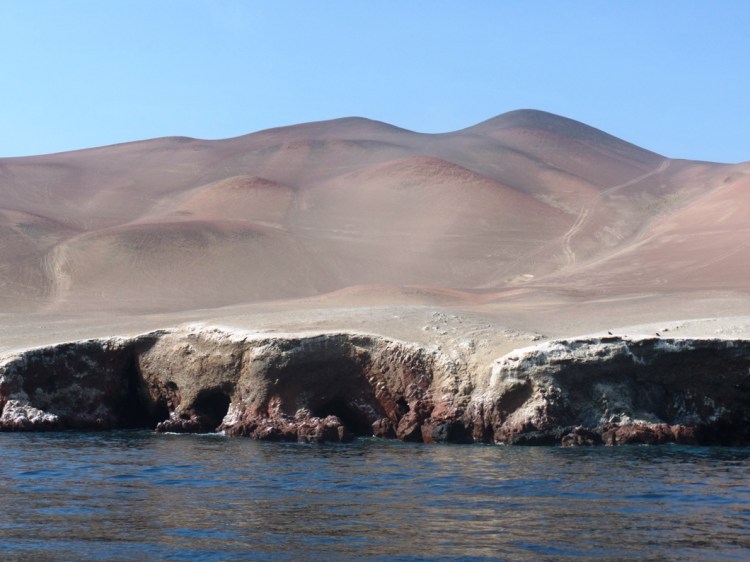
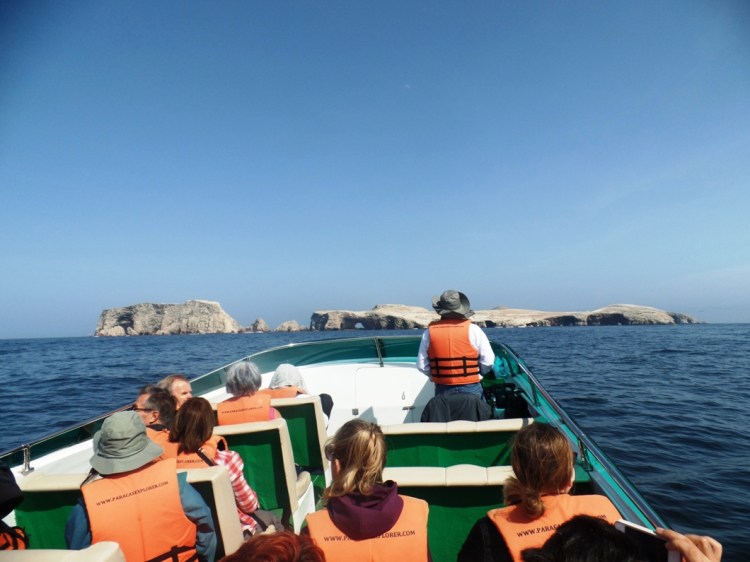
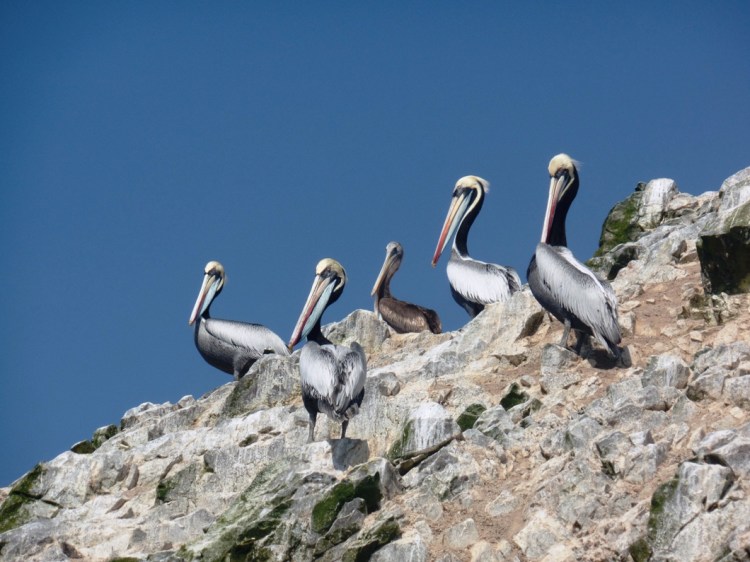
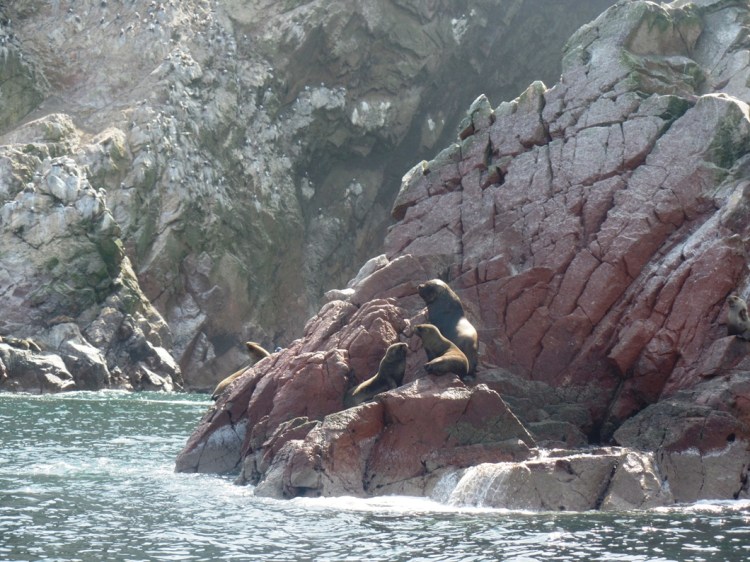
My first stop along my route through the desert was Paracas, a seaside town which is a launching point to the nearby Ballestas Islands, known for their birdlife. I was loaded up onto a boat with a dozen or so others and taken to the islands the next morning. As we approached, I was already seeing lots Peruvian boobies soaring through the sky. By the time we actually reached the island, there were so many species it was impossible to register them all. Cormorants, pelicans, Turkey vultures, snowy plovers, and many others, as well as sea lions.

SAMSUNG CAMERA PICTURES

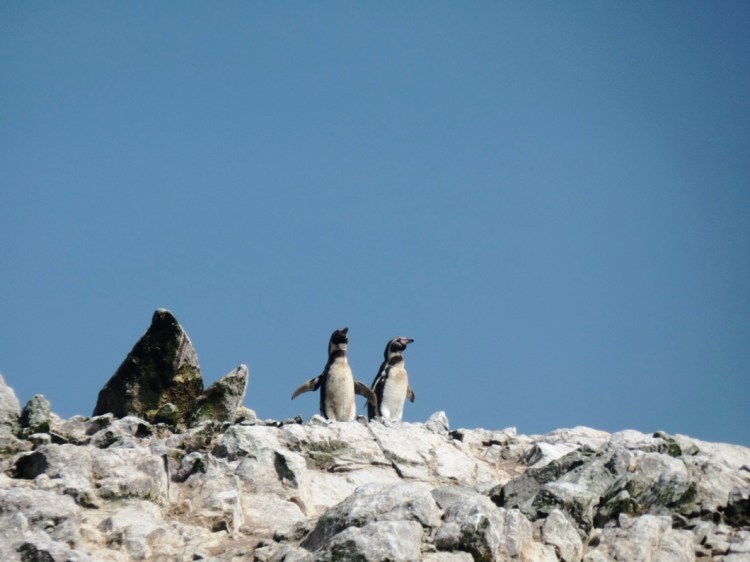
But my attention was mostly drawn to the Humboldt penguins (video here).

SAMSUNG CAMERA PICTURES

It wasn’t just about the wildlife though. There were some interesting rock formations too, and we passed by a mysterious geoglyph whose origins remain unclear to historians.

SAMSUNG CAMERA PICTURES

When the tour was over, I packed my bags and left. There wasn’t really anything else in Paracas which interested me now that I had seen the islands. There were some other lighter attractions, but they were all quite expensive and none of them seemed worth the money nor the time. I felt like I had seen the best of this area and it was time to move on. I got onto a bus heading to Huacachina.

SAMSUNG CAMERA PICTURES

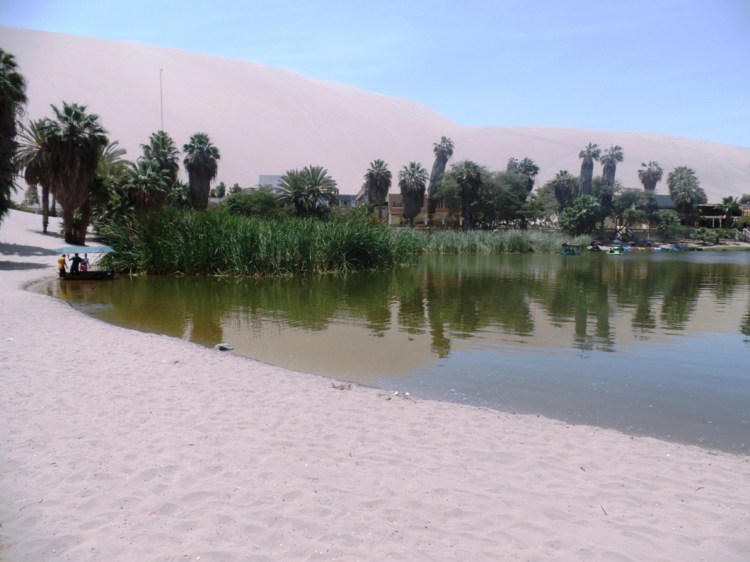
Huacachina is an oasis. I arrived around noon and took some time to wander. The oasis is quite pretty, even if it looks like it is being strangled by the collection of hotels, shops and restaurants competing for space around it.

SAMSUNG CAMERA PICTURES

I wanted to go on a ride in a sand buggy – which seems to be the main activity here – but most of the touts by the side of the water tried to sell me tours heavily-loaded with gringo tax, so I walked away and I climbed one of the nearby sand dunes to admire the view.

SAMSUNG CAMERA PICTURES

On my way down, I happened to get chatting to one of the dune-buggy drivers themselves, and he gave me an offer which was much more reasonable.

SAMSUNG CAMERA PICTURES

The ride through the dunes was thrilling if a little terrifying. The drivers purposefully accelerate across bumpy ridges and plunge down the slopes to make it exciting. They seem to know what they are doing and enjoy their job. I have a video here.

SAMSUNG CAMERA PICTURES

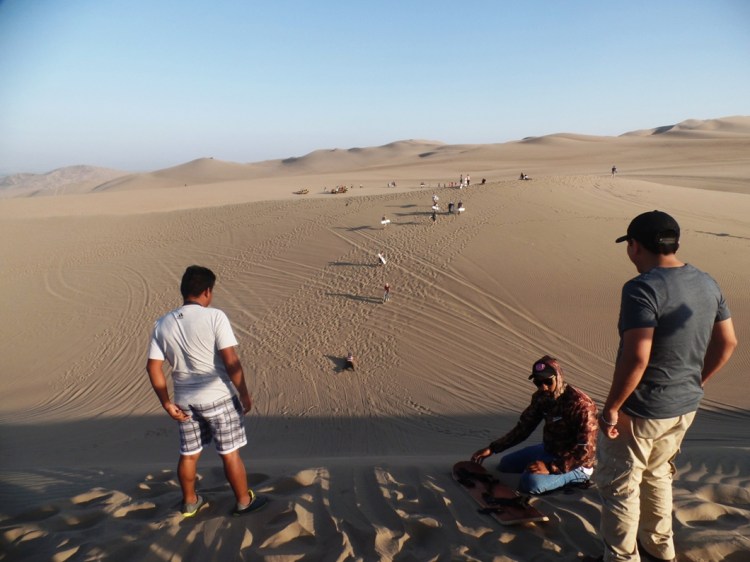
We were also taken sandboarding, of which I have another video.

SAMSUNG CAMERA PICTURES

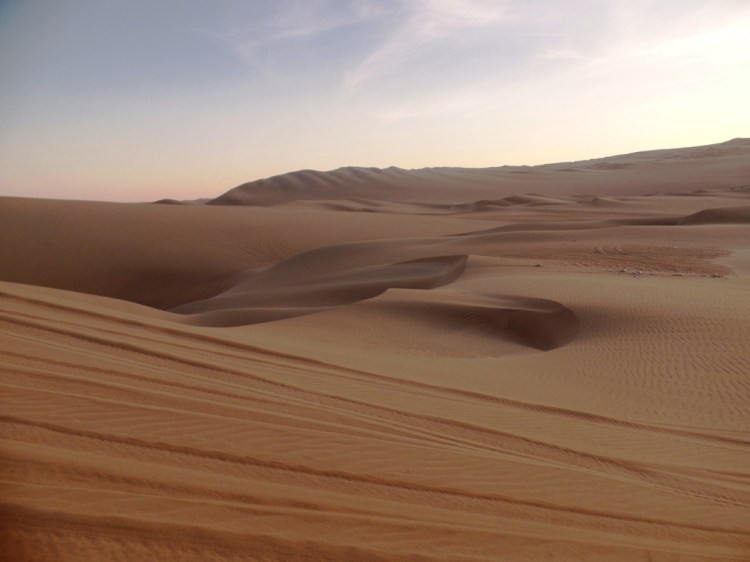
And then, after another ride through the desert, we were taken to see the sunset.

SAMSUNG CAMERA PICTURES

It was only later on, once I had returned to my hostel, I found out there was a controversy surrounding these trips not too long ago. Apparently, there was an incident where some tourists died and all the dune-buggy rides were halted for a while as the authorities performed an investigation. They have since introduced some regulations to make it safer, but it is something to bear in mind if you are considering taking one of these trips.

I had a good time in Huacachina but, just like Paracas, I found it a little soulless and once I had finished my tour I didn’t feel any need to stay. I moved on the next morning.

SAMSUNG CAMERA PICTURES

In Nazca, I finally found somewhere in this desert I didn’t mind the idea of kicking back and spending some time relaxing as well as sightseeing. Unlike Paracas and Huacachina, it had personality and seemed to have other industries outside of tourism. I wandered around the town that first day and went to the local market to buy some groceries. I was staying at Nanasqa, a new hostel on the outskirts, which had a lovely atmosphere and a great range of tours run by their son, Roy.

They also sort out trips to fly over the Nazca Lines (and unlike most of the other hotels in Nazca they do not rip you off, they give you a reasonable price without any bargaining) which was what I did the next morning.

SAMSUNG CAMERA PICTURES

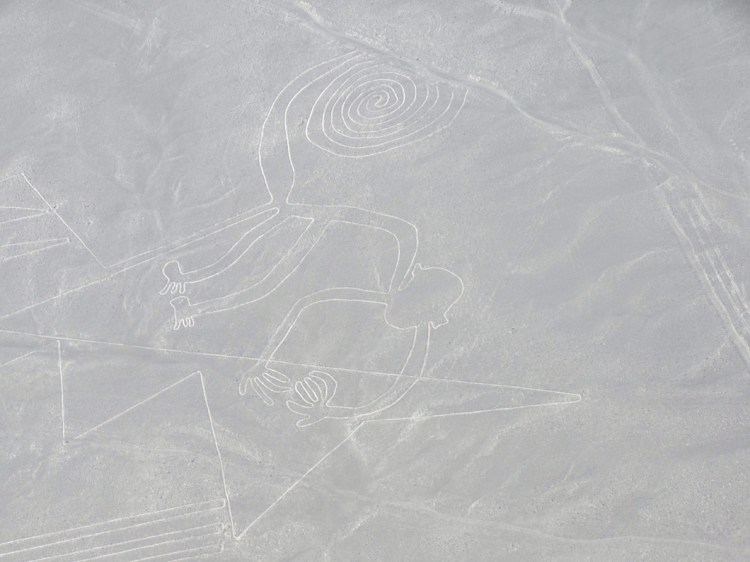
It is an interesting experience. Not just seeing the lines themselves – of course, seeing one of the world’s greatest enigmas is memorable – but I have never been on a small aircraft before. It was tiny, with only four passenger seats, and it was a rocky journey as the pilot had to pivot to get the best angles for us to see the geoglyphs. I very rarely get motion sickness but even I was glad I had a small breakfast that morning.  I have taken a series of videos which can be viewed on these links (The Monkey, The Hummingbird, The Condor and The SpiderThe Condor and The Spider, and The Tree, The Hands and The Lizard).

SAMSUNG CAMERA PICTURES

Later that afternoon, I and some of the other guests at Nanasqa were loaded up into a van and taken to see some of Nazca’s lesser-known sites.

SAMSUNG CAMERA PICTURES

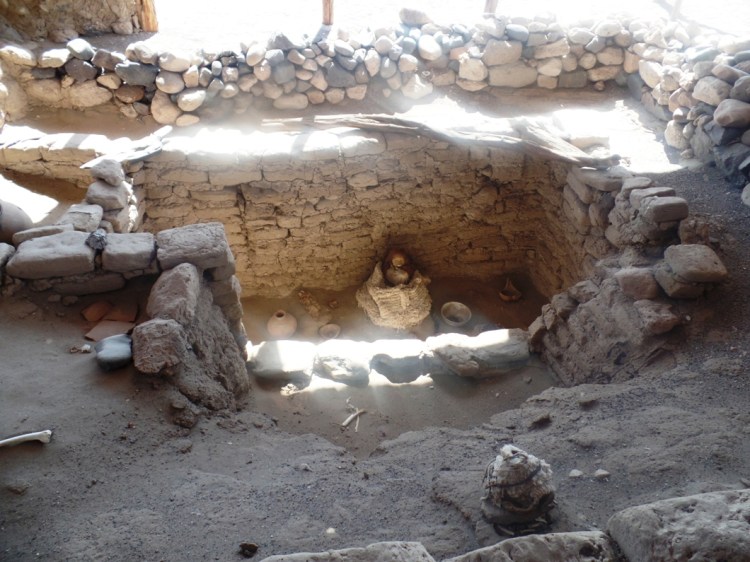
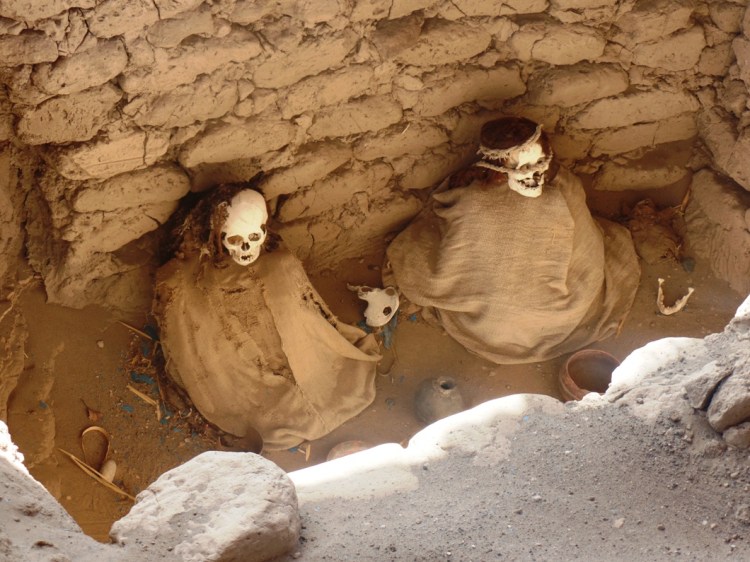
First up was Chauchilla Cemetary, which is the only place in South America one can glimpse ancient mummies still within their original graves.

SAMSUNG CAMERA PICTURES

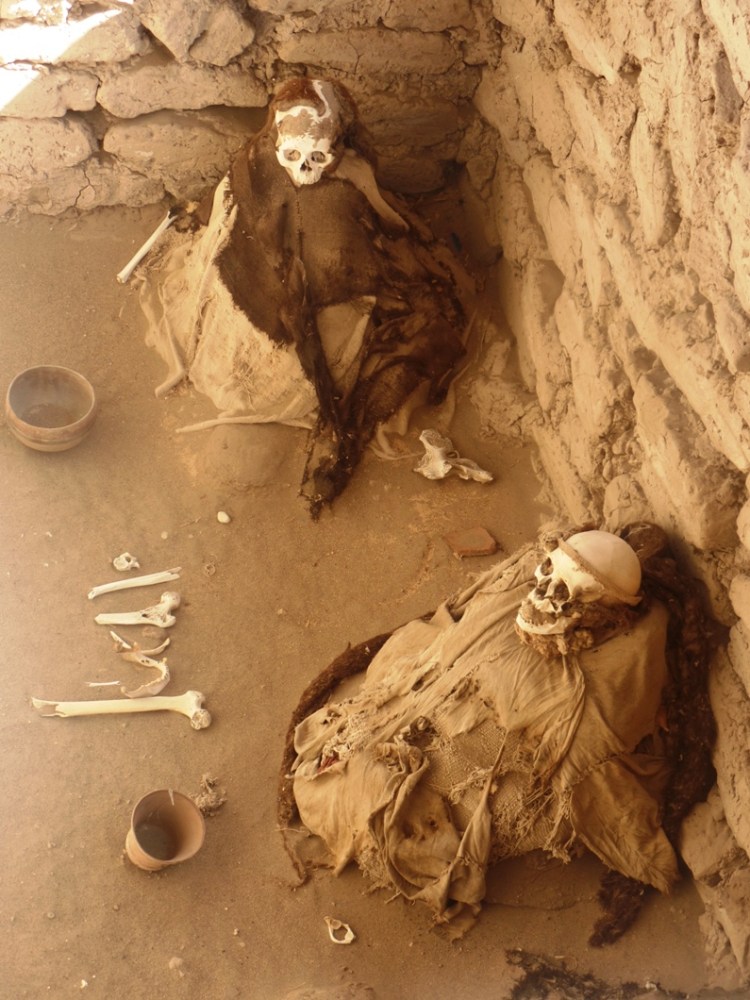
People of the Nazca civilisation were buried in the foetal position, facing towards the sunrise and surrounded by many of their possession. Some of the pottery found with them by the archaeologists even contained food. All of these factors suggest that the Nazca people believed in reincarnation. Curiously, most of them have very long dreadlocks. Historians surmise that the only time in their adult life they were permitted to cut their hair was if they got remarried after being widowed.

SAMSUNG CAMERA PICTURES

Much of this site was actually trashed by graverobbers, who took many of the artefacts and left the skeletons behind. Archaeologists have done their best to repair the damage but, even now, the future of this site’s preservation seems questionable as everything is exposed. Let’s hope they come up with a more long-term plan one day. I think this is one of those occasions where more tourism might actually help, as paying visitors give the Peruvian government more incentive to ensure its longevity.

SAMSUNG CAMERA PICTURES

Next, we were taken to Cahuachi which was the former capital of the Nazca civilisation. Excavations have revealed a series of chambers and pyramids, and it is believed that this place was mostly populated by intellectuals, artisans and priests during a time when the distinction between science and religion was blurred, and its people were the masterminds behind the geoglyphs and Nazca’s aqueduct system. Just like the Moche and Chimú peoples (whose relics I visited last week), the Nazca civilisation was at the mercy of the El Niño phenomenon, and it led to their demise.

SAMSUNG CAMERA PICTURES

Roy brought out a bottle of locally-made pisco for us to try and we took a little break to drink some before we moved on to our final attraction; Cantalloc.

SAMSUNG CAMERA PICTURES

Cantalloc is part of Nazca’s aqueduct system, which is the secret as to how they managed to exist in one of the driest deserts in the world. It very rarely rains here but once in a year water flows from the Andes through a series of rivers, and the Nazca people found an ingenious way to stem its flow so that they could use it to irrigate their land all year round. It has – unlike many over vestiges of their civilisation – withstood multiple earthquakes because they discovered a technique of using curved stones and still remains functional today which is very impressive.

SAMSUNG CAMERA PICTURES

To finish off my time in Nazca, I made a visit to the Astronomical Observatory, which had a slightly blurry but informative presentation about the geoglyphs and the many interesting theories as to why they were created. The resident astronomer was very enthusiastic and took us outside to show us some of the constellations. We also got to peer into his telescope when he showed us Mars, Saturn’s rings, and Titan.


For more photos and videos, click on the following links: Paracas, Huacachina and Nazca.