
24th December 2018 – 3rd January 2019
I spent Christmas in Puerto Natales, a little town by the banks of Señoret Channel where the Magellan Strait begins to ford. After months of staying in dormitories (and on occasion, my tent) I treated myself to my own a room and spent a few days drinking wine, watching movies and catching up with friends and family, as well as taking occasional walks along the water front. It was a time of recuperation, but I also prepared for my upcoming trek, the Torres Del Paine Circuit, an eight-day journey through Patagonian forests, mountains, lakes and glaciers.
Day 1
It was a two-hour bus journey to reach the headquarters and then I had to queue for ages while the rangers checked everyone’s reservations and documents to make sure all was in order. They are very strict and spaces are limited. The park’s growing popularity has caused it to become infamously difficult organise if you want to stay there overnight, and the situation is not at all helped by the fact that the campsites are privately-owned and have separate (and confusing) booking systems. I reserved my spaces several months ago and even then the process was so hair-tearingly frustrating that I almost gave up.
But I was glad I didn’t. I had to wait behind a French guy for twenty-minutes because he had a night missing from the bookings he needed for the three-day trek and thought he could just make do, but they were having none of it and wouldn’t let him in. It made me realise that I was very lucky, for I had a full eight day to explore this natural wonder.

Despite how many people were at the headquarters, once I began on the trail I found myself almost completely alone for most of the day because most of the visitors to this park are only here either for day trips or a shorter trek known as ‘The W’. This northern region I would be spending the first few days in is quieter.

My backpack was heavy. Carrying not just a tent, sleeping bag, stove and all my other gear, but also eight days worth of food. Luckily this first day was fairly short, taking me just four hours, and the terrain was reasonably flat. I passed through meadows, intermittent patches of woodland and snaked along the side of the River Paine for a while. There were strong gales, but I had expected that. This area is famous for the bitterly cold winds which peak during the summer months.
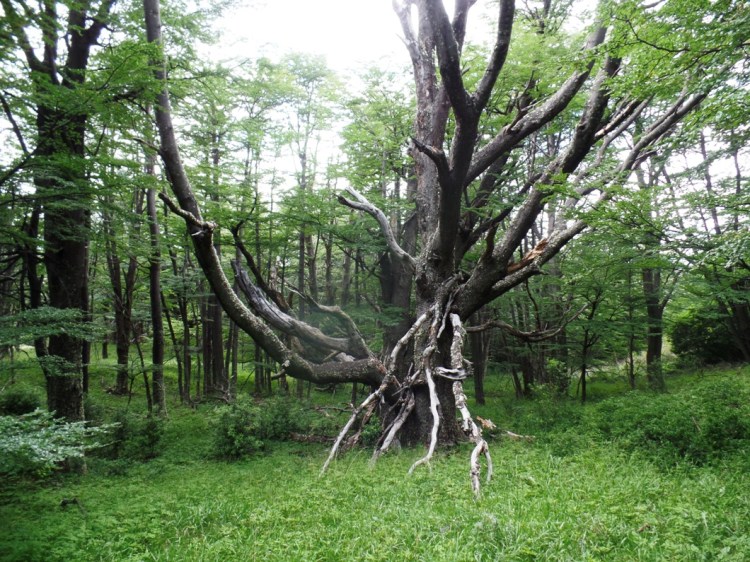
I reached Serón by the mid-afternoon, set up my tent, prepared dinner, and started getting to know the other people who were also trekking the same route as me. It is called ‘The O’ and it circles around the quieter regions of the park before joining up with the more trodden ‘W’.
Day 2
I slept well that night and was awoken by rain. I waited for it to break before I started to get ready but I was still forced to pack my tent up wet.

It was a tougher hike that day. The terrain wasn’t as flat and there was intermittent rain. The gloomy light created an eerie atmosphere and, a few hours in, I reached Lake Paine and the sky cleared, revealing ice-capped mountains in the distance.

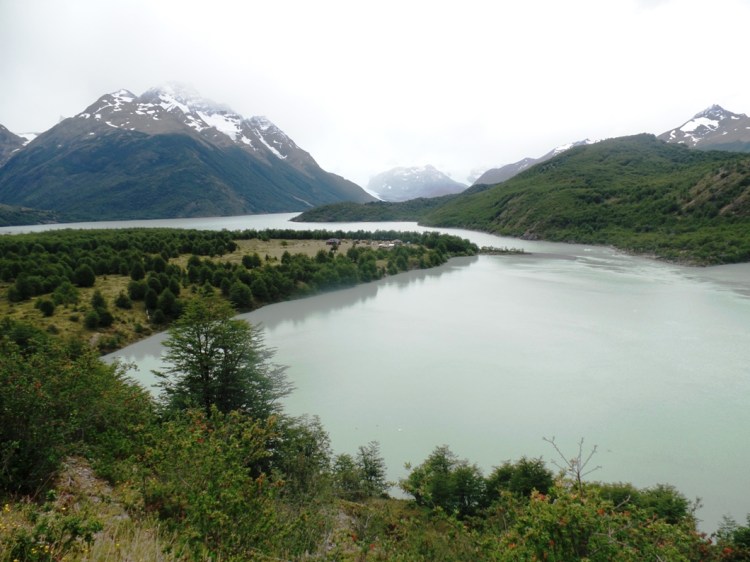
The highlight was at the end when I curved around the side of a mountain to find myself looking down upon Camp Dickson, where I was staying that night. It was beautifully perched upon a peninsular jutting out onto a lake of the same name.
Day 3
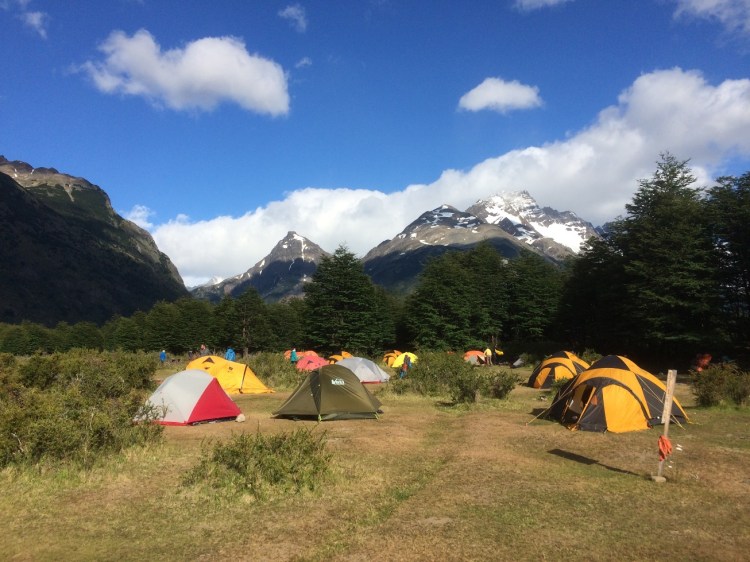
This was my favourite day so far, waking up in Camp Dickson to sunshine and a backside view of the Torres. Finally, we had good weather. I lingered for a while, taking a walk along the lake after breakfast.
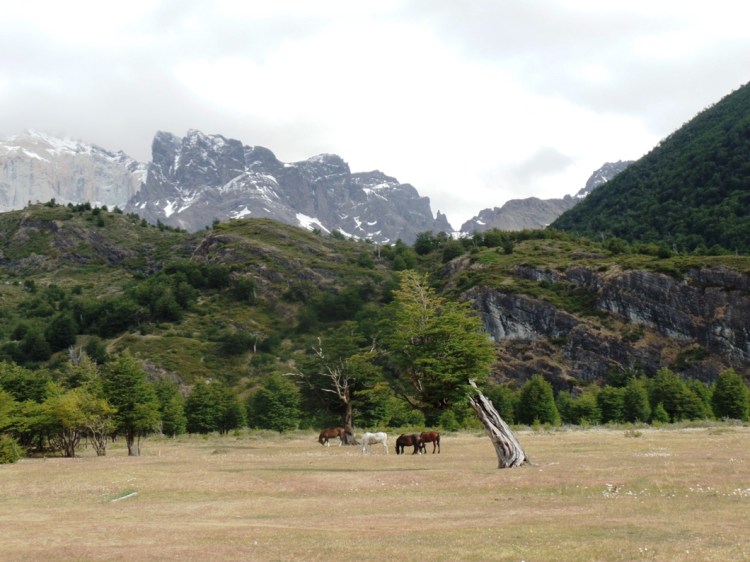
The air got colder as I reached higher climbs and the bitter winds returned in the afternoon. The trail went through lots of different kinds of forest and I saw many wonderful views.

Not just of Lake Dickson, behind me, but glacial mountains and Los Perros ahead, which I reached just after lunchtime.

I took some photos but didn’t linger for too long as it was very windy. As I walked away, I heard a thunderous roar of ice breaking from the glacier into the lake.

Of all the campsites, Los Perros was not my favourite. Despite how close it was to the lake, you couldn’t actually see it as there was a huge mound of earth in the way, but I guess it was sheltered from the extremes of the weather, clustered within the trees. A good thing, as not long after I settled it began to rain.
I was, weather permitting, crossing Paso John Gardner the next day. It is the most challenging part of the entire trail and it is not uncommon for the park to close it if it gets too windy.
Day 4
I woke up at 5am. As it turned out, it was windy that morning but none of the rangers came out to stop me and the other early birds as we left the campsite.

So far, during this journey, I had hiked alone and enjoyed solitude. The lack of noise meant I saw lots of birds, but I had been getting to know some of the other trekkers during the evenings and that morning I decided to walk within the company of a group of Americans I had befriended.
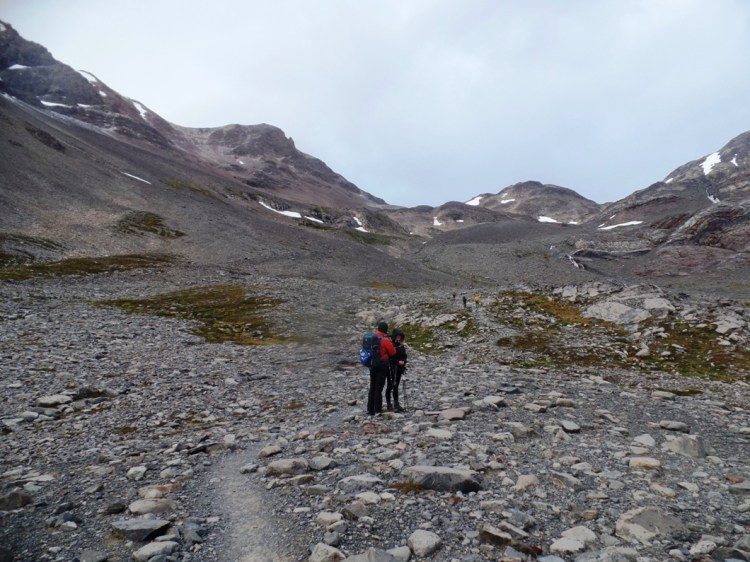
The first hour was uphill, through wetlands and alpine woodlands, but as we got closer to the peak it was rocky, exposing us to winds. The trail was slippery and, combined with the winds, you had to be careful to maintain balance. I could see that it would have been quite easy to slip, but it wasn’t anywhere near as dangerous or difficult as the Rangers made out.

When we reached the top we were rewarded with a breathtaking view. We had reached the Patagonian ice field of Glacier Grey.
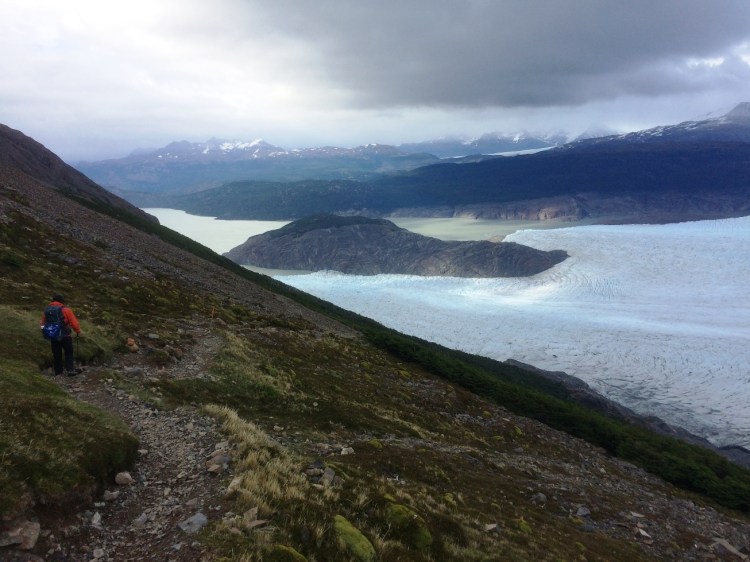
According to the rangers the trek was supposed to have taken us six hours that day but it actually took us not much longer than four – and that is including plenty of stops along the way to admire the ice-field. When we reached Camp Paso, our destination, it was still morning so we ventured to a nearby viewpoint for a while but otherwise spent the rest of the day chatting and relaxing.

I ate dinner early that evening and went to my tent to read a book. In some ways, I actually like the way I had to book all the campsites in advance and follow the park’s strict rules because it forced me to take my time and enjoy the experience. I have, in the past, had a tendency to rush through treks.
Day 5
Much of this morning was spent trailing alongside Glacier Grey. There were several viewpoints along the way so I got to see it from all angles as I got closer to where it merged with the lake.

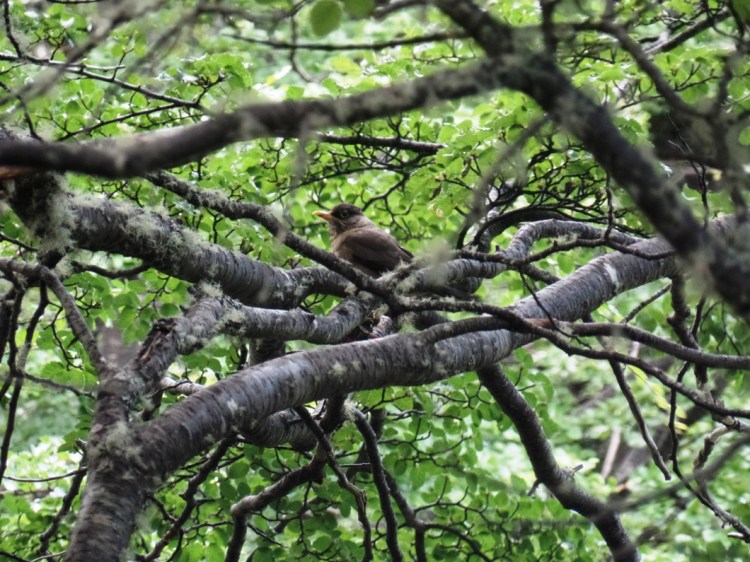
I was hiking alone again that day and saw lots of wildlife, including a caracara and even a giant woodpecker, both of which I have videos you can watch. For the first few days of The O Circuit, everyone stays in the same campsites but once we across the pass it joins up with The W where we have more options. That morning I said goodbye to some of the friends I made.

As I passed Lake Grey, with all of its icebergs and views of the glacier, the wind picked up. It became so strong by the afternoon that I actually felt it pushing me along the top of hills. I felt sorry for the people heading the opposite way, having to fight against it.

It began to rain too shortly before I arrived at Paine Grande. I saw a rabbit which I managed to catch for a few seconds on my camera but as the downpour got worse I rushed to the registration desk where I sat for a while waiting for the winds to calm down so I could set up my tent. They never eased completely and the day transitioned to a blustery evening. I did manage to set up my tent in the end though, and then I had my first shower for three days.
It turned out that some of the friends I said goodbye to that morning were at Paine Grande too, using the ill weather as an excuse to not venture further. Despite having strict rules concerning reservations before you enter the park – as well as several check-points along the way – the actual campsites themselves can actually be quite flexible, particularly when it comes to safety concerns.
We were on ‘The W’ trail now, and it was much busier than the northern reach of the park. The Refugios were bigger and more modern. Most of them even had hotel rooms and restaurants.
But those weren’t the only changes. There was a different energy in the air. There were a lot of people wearing trainers and tracksuit bottoms and carrying just small day packs. I hate to be snobby, but there was a greater sense of comradery between people who trek The O circuit, there being so few of us and most being quite experienced hikers, whereas a lot of the people who trek The W seemed a little out of place. Many of them were – for reasons which I will never understand – walking through the park with earphones in (or in some cases, rather annoyingly, playing their music on loudspeakers) instead of enjoying the sounds of birdsong and the wind stirring the trees.
It was New Year’s Eve and the communal kitchen was packed with more people than I had seen for while a while and, after days spent on The O trail, I found it jarringly loud. I and some of The O People sat in the corner together and I think some of us missed the serenity we’d become accustomed to.
Day 6
I was woken up a few times that night, both by strong winds and drunken people stumbling around the city of tents. I couldn’t really afford to binge at the prices the campsite was selling their beers so I just had a couple of and went to bed early. It was very quiet in the morning because most of the people were hungover. I spotted an Andean Colpeo fox wandering through the campsite, looking for food.
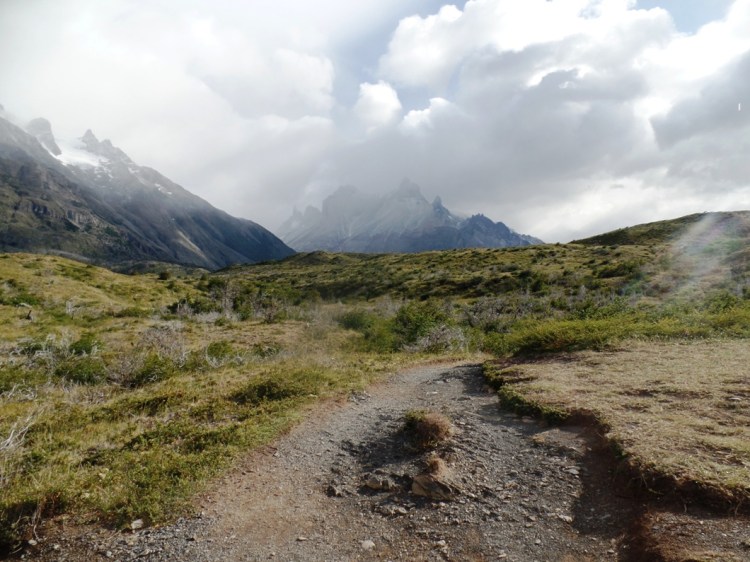
The wind calmed a little since the previous day and I had the trail mostly to myself. It only took a couple of hours to reach Camp Italiano and, once there, I set up my tent and ate a quick lunch before setting on the trail into Valle de Franco. I got to leave my backpack behind and just take a bottle of water in the pocket of my jacket, which was heaven after six days of carrying the thing.

An hour in, I reached a viewpoint for Glacier Franco. I have not just photos of but also a video (which can be viewed by clicking here) to appreciate it in its full glory.
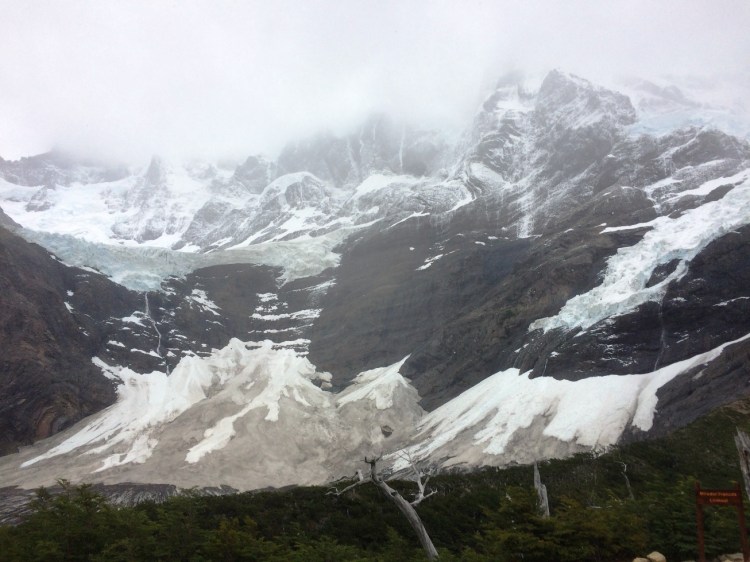
It was another hour or so to reach Mirador Britanico, climbing through rough rocky terrain and patches of woodland. It was snowing, and the wind, which I had become all too familiar with by now, was persistent.

Unfortunately, because of the clouds, I didn’t get the best view of it, but the Britanico range was very impressive. I took a panoramic photo, but it doesn’t quite capture its full majesty or the awe you feel seeing it surrounding you from all sides.

Day 7
By this day, I was spoiled. And I knew it too.

I had reached a point where I had seen so many breathtaking sights that the azure waters of Lago Nordenskjöld, with views of Bader Valley along the way, woodlands, and everything else I saw that day did not awe me as much as they would have a week ago. Magical, surreal landscapes had become the norm for me.
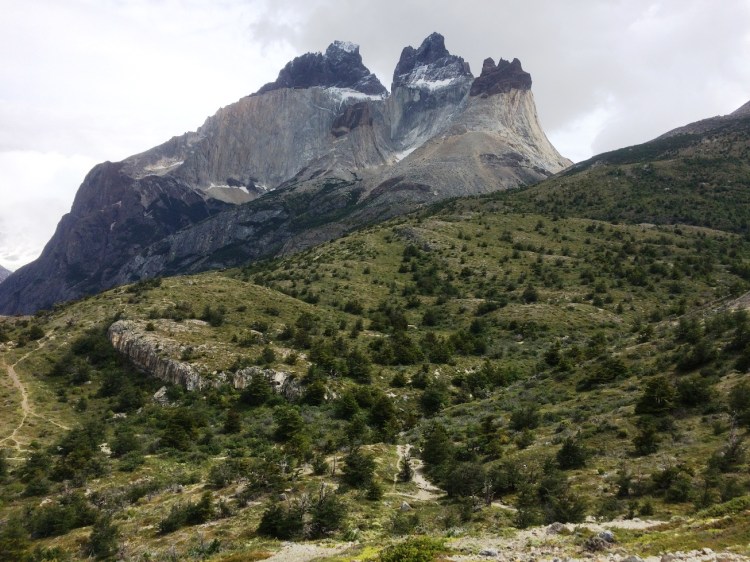
This was one of the longer days and the last couple of hours were a bit of a slog. For some reason, despite the fact I had eaten most of my food by that point and it had been getting lighter, my backpack felt heavy. I was happy by the time we reached Central for my final night of camping. My friends and I sat and made ate dinner together one last time.
Day 8
My alarm went off at 2am, and I started to get ready for my walk up to the Torres. I met my friends outside and we left, lighting the trail by torchlight as we made our way up the valley. It was steep, but we were quite fit after a week of hiking and this day we weren’t carrying our backpacks.

First light was at 5am, and by then we were at the final part of the ascent. When we reached the Torres they were partly obscured by clouds. We waited, and it was very cold. I found a little niche within all the rocks which was sheltered from the wind. A French guy who had brought his stove with him gave me a little bit of his coffee to warm me up. The clouds began to clear and, later on, sunlight hit the rocks, illuminating them.

For more photos and videos from the Torres Del Paine, click here.














 Tej Turner