Travelblog SA#33: San Pedro de Atacama, Santiago & Valparaíso – Chile

5th-19th December 2018

Chile was a bit of a culture shock. After months spent within Ecuador, Peru and Bolivia, I was suddenly in a much more modern country. The buses all had air conditioning, the streets were cleaner and everything just seemed more polished.

But there were consequences to having these new comforts and conveniences. Chile is one of the most expensive countries in South America. Not only that but of all the regions of Chile, San Pedro de Atacama was probably the priciest of all. Partly because it is in the desert, so water is scarce and supplies need to be brought in, but also because it is touristy and thus everything comes loaded with hefty amounts of gringo tax.

The town of San Pedro is quite small. Originally just a village which expanded rapidly when it became a holiday hotspot, everything is within walking distance and the central square is a hub of restaurants, hostels and touts.

I couldn’t afford a dorm bed in a place like this, so I got out my tent and pitched it in the garden of a hostel. Once settled, I began to look into some of the tours available into the nearby Atacama Desert. My anxiety began to rise when I found out how much they cost. If all of Chile was going to be like this, I would be flying home much sooner than I intended.

To be honest, I spent much of my first day stressing about money as a lot of the costs were a shock to me. To top it all, when I went to get cash I discovered that the ATMs in this country charge hefty fees to withdraw money. I ended up exclaiming, ‘fucking bastards!’ in the middle of the bank, drawing many people to stare. Which made me also learn another thing about this country; many more people understand English here.

I eventually decided to try to try to not worry about money too much and enjoy it while I am here.
SAMSUNG CAMERA PICTURES

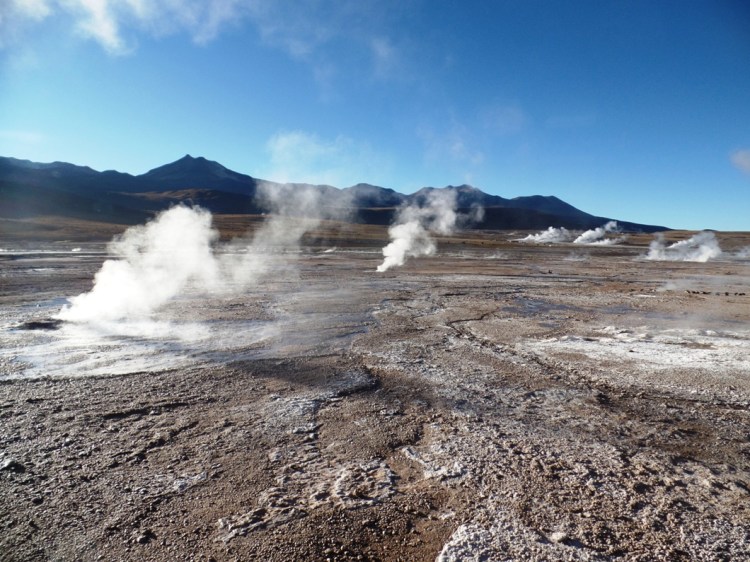
The following morning I got up at 4am for my first tour; to El Tatio, the world’s third largest geyser field. It was still dark so I dozed while the bus climbed through the mountains of the Atacama. By the time we reached the car park, it was sunrise and plumes of steam were rising from the ice which had gathered across the field overnight.

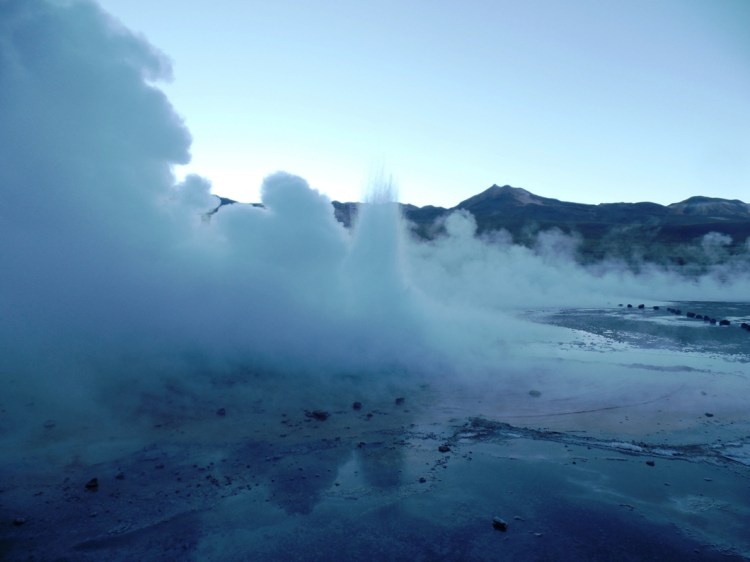
There are two different fields to visit, both of which have a wide range of geysers. I didn’t realise how cold it was going to be though and should have worn more layers. I kept having to blow onto my hands to warm them up and my toes were numb.
SAMSUNG CAMERA PICTURES

The second field had a hot spring you can swim in but it was only at a temperature of 30 degrees so not all too inviting despite the novelty of it being in such interesting surroundings.

SAMSUNG CAMERA PICTURES

Overall I am glad I went to see this place while I was passing through the area but I don’t think I was as awed by it as I would have usually been, having just seen Sol de Mañana a few days ago in Bolivia which, while not as large, was a little more atmospheric.

7.JPG

As expensive as this tour was, I did enjoy it. The guide had a great attitude, spoke both in Spanish and English, and it also came with a free breakfast.

SAMSUNG CAMERA PICTURES

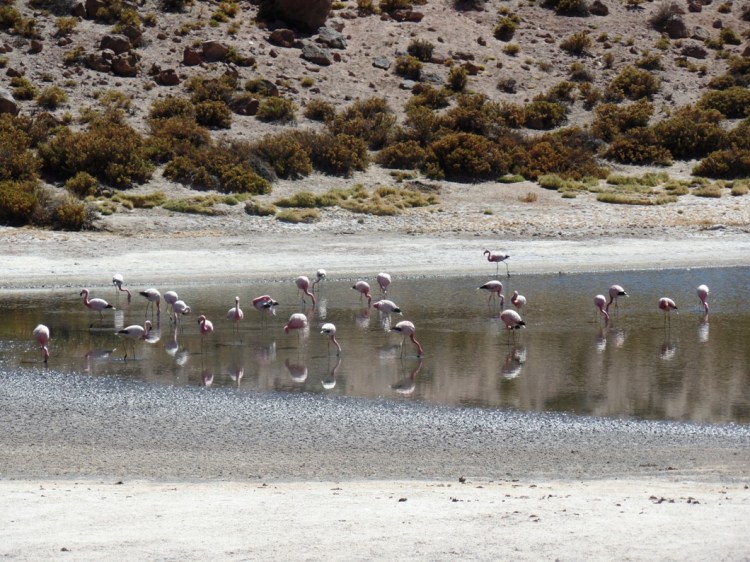
After the geysers, we made a few other stops on our way back to San Pedro. First, to see the fording of the Putana River, which had flamingos.
SAMSUNG CAMERA PICTURES

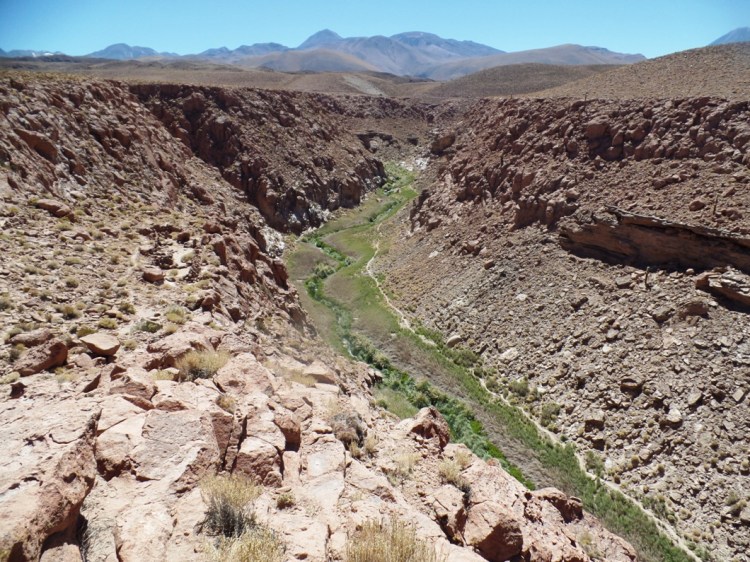
And later, a canyon.

SAMSUNG CAMERA PICTURES

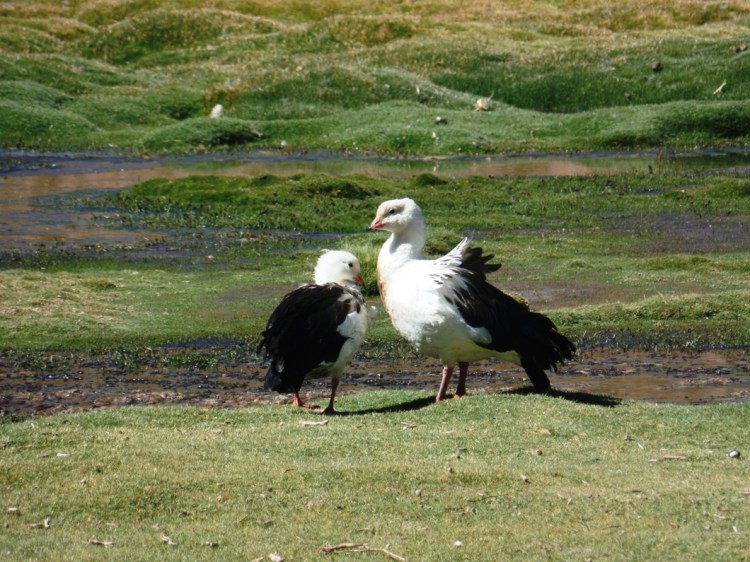
There was also the usual obligatory stop where they encourage you to buy some tat. It was at a village, and you could also either have your photo taken with a llama there, or eat one, depending on what mood you were in. I decided upon neither and wandered off for a while, finding a local graveyard and several species of bird on the side of the river, including this pair of Andean geese.
SAMSUNG CAMERA PICTURES

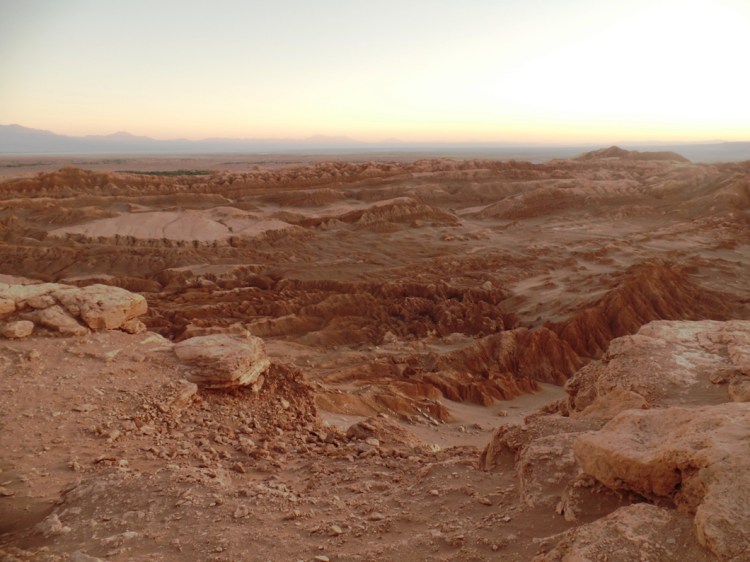
In the afternoon I went for my second tour, to see Valle de la Luna.
SAMSUNG CAMERA PICTURES

The first hour or so we were clambering through a series of caves which were formed thousands of years ago from subterranean tunnels.

SAMSUNG CAMERA PICTURES

We also went to see the remains of old salt mines, along with some other viewpoints throughout the Atacama.

SAMSUNG CAMERA PICTURES

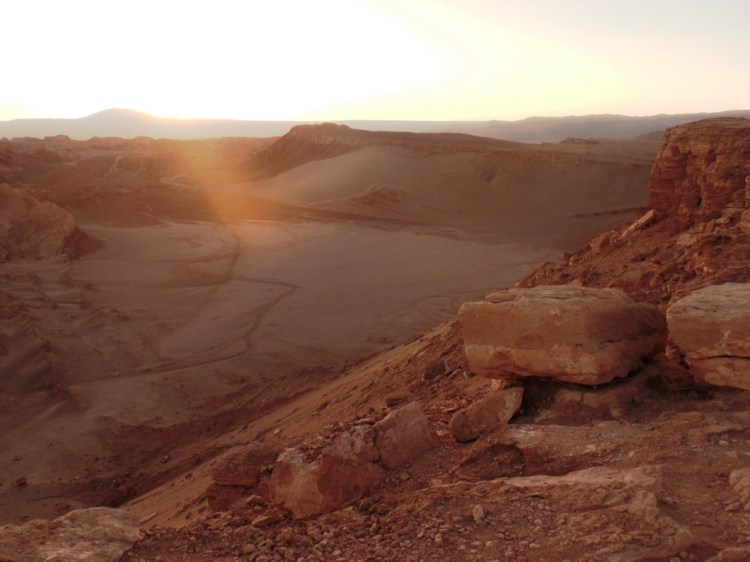
The highlight of this tour though was watching the sunset over the valley.
SAMSUNG CAMERA PICTURES

I left San Pedro de Atacama the following morning, destined for Santiago. There are plenty of other tours available to see sights in San Pedro area but they were all way out of my budget.

The journey was over twenty hours long but I enjoyed it. My seat was comfortable and spacious and the air-conditioning was suitably cold. I read a book and watched some videos on my laptop while watching the desert go by through the window.

SAMSUNG CAMERA PICTURES

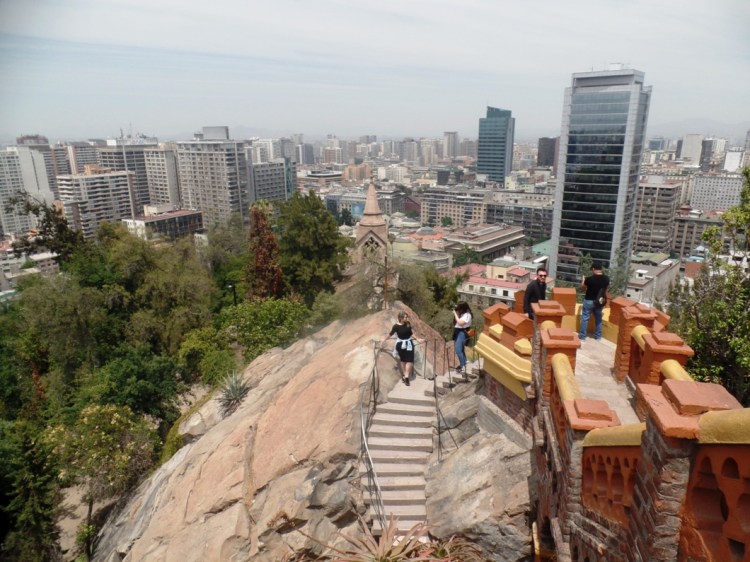
I liked Santiago. Which is a good thing, as I ended up spending almost two weeks there. There isn’t too much to say of my time there which will be of interest to you, to be honest. I made some friends and recharged my batteries. I needed to prepare for my next destination, Patagonia, where I will be spending the next couple of months, so supplies needed to be bought and some of my camping gear needed servicing.
SAMSUNG CAMERA PICTURES

I did manage to squeeze in some time to see museums, of which Santiago has many, most of which are free. My favourites were the Museo de Arte Pre-Colombino and the Museo de la Memoria y Los Derechos Humanos which gave an account of some of the atrocities committed during the Pinochet regime.

15.JPG

And I also went for an overnight trip to Valparaíso, a bohemian, arty city famous for its hilly neighbourhoods covered in graffiti.

SAMSUNG CAMERA PICTURES


I have plenty more photos, not just from Valparaíso, but Santiago and San Pedro de Atacama too.

Travelblog SA#32: Salar de Uyuni – Bolivia

2nd-4th December 2018

To finish off my time in Bolivia I embarked upon a three-day journey through Bolivia’s crowning jewel, Solar de Uyuni.

SAMSUNG CAMERA PICTURES

Salar de Uyuni is the world’s largest salt flat and to enter this natural wonder you need to go on a tour in a 4×4 vehicle. Lots of packages are available if you head to the town of Uyuni – the main launching point – but the most common is the three-day excursion which takes you all the way down to the south-west corner of Bolivia.

SAMSUNG CAMERA PICTURES

The only problem is getting the right guide as they seem to vary in quality. Whoever you get is not just your driver, they are also your cook, and a good one will provide you with some information about the area too. Although most of them seem to do a good job there are stories of some behaving badly, not delivering full itineraries, and even drinking while driving. Booking with a good agency is no guarantee as a lot of them will transfer you to another company if they can’t fill all the seats. It can be complete pot luck who you end up with.

SAMSUNG CAMERA PICTURES

I decided to book with Andes Salt Expeditions. They had some of the best reviews out of all the companies and were reasonably priced. They were also one of the bigger ones so I was less likely to be transferred. It paid off, as I was lucky and ended up with a guide called Vladimir who went out of his way to make it a fun experience for myself and the five other people I was matched with.

SAMSUNG CAMERA PICTURES

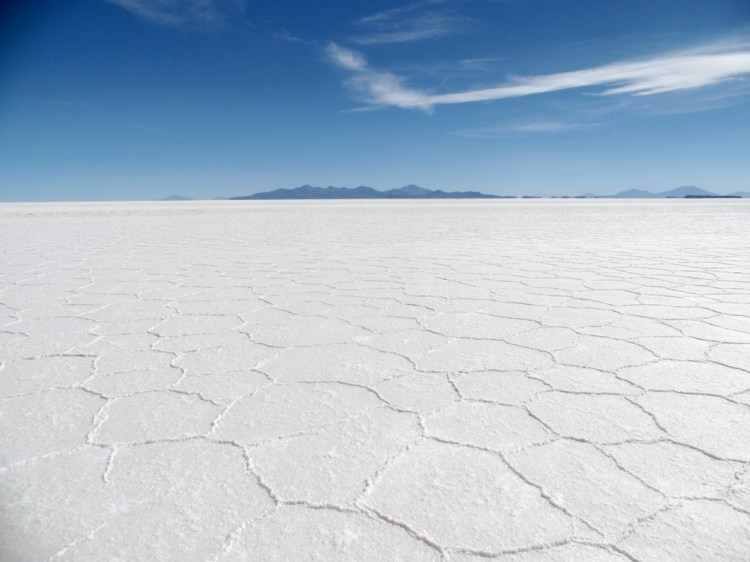
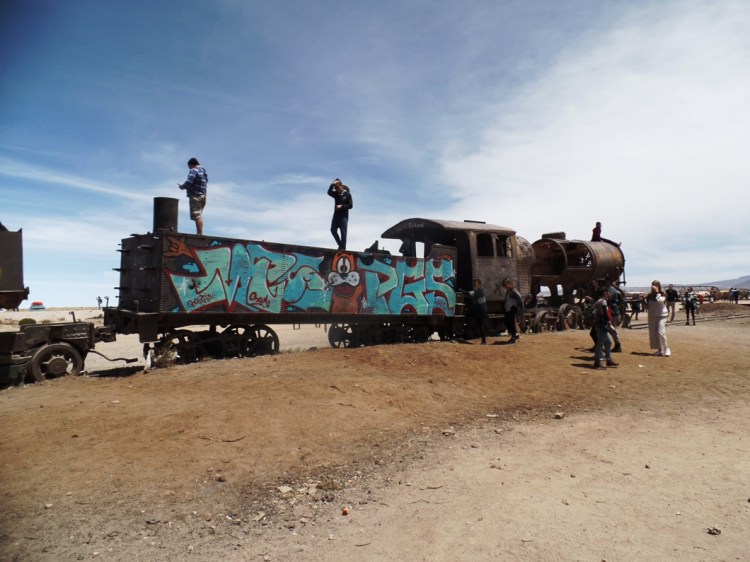
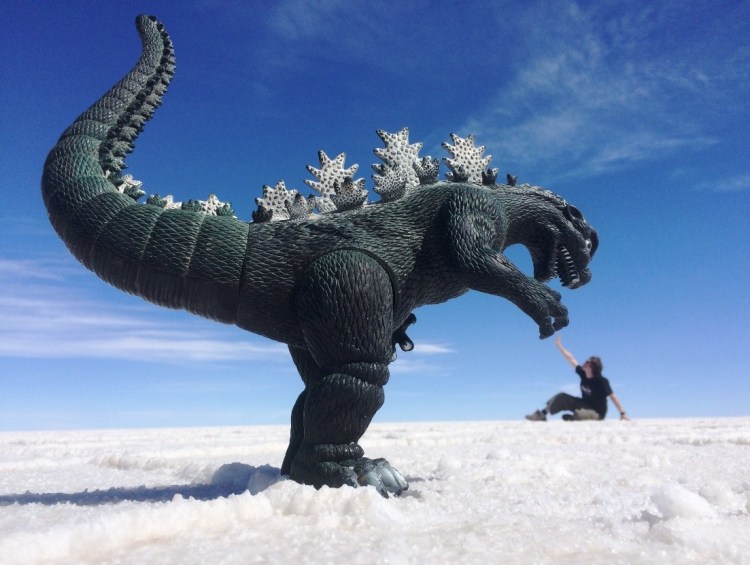
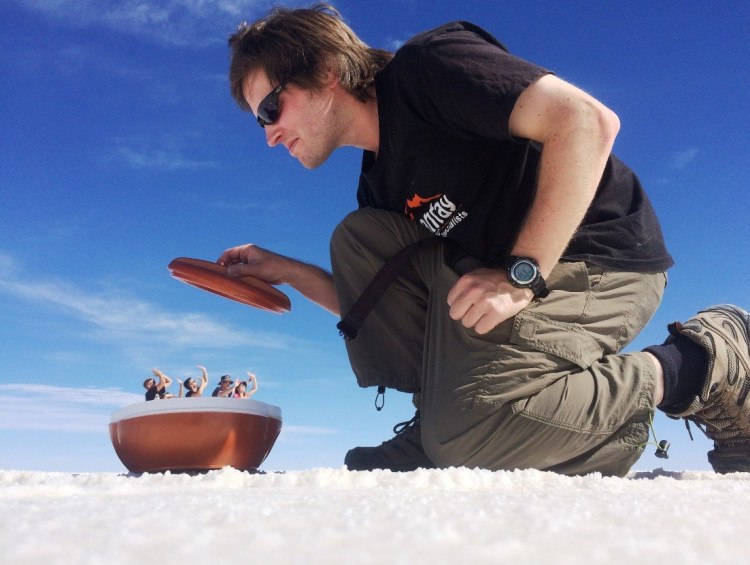
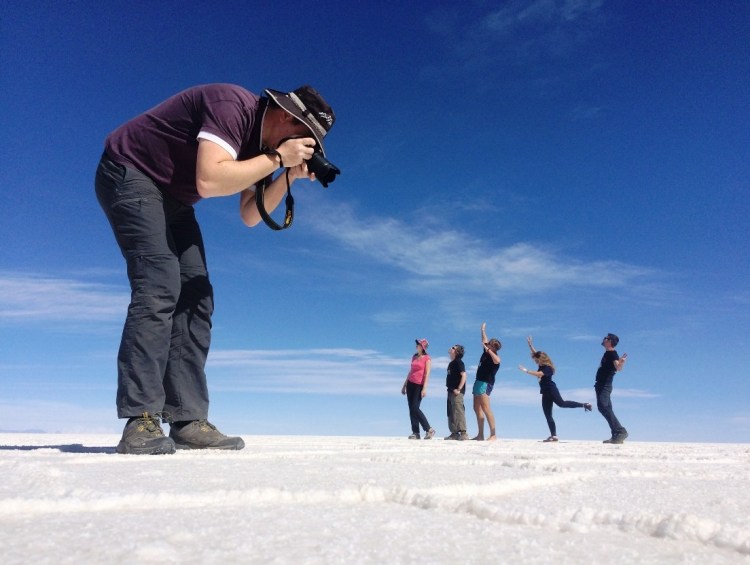
The first day, after a quick stop at the ‘Train Cemetary’ – a graveyard for the carriages which were abandoned when Bolivia transitioned from steam to diesel – we reached the salt flats. It took hours to drive through the entire expanse, but we stopped a few times to have some fun with the optical illusions you can create there. Such as this encounter I had with a dinosaur.

3

And this.

1

We also made a couple of funny videos, one of which you can watch by clicking here.

2

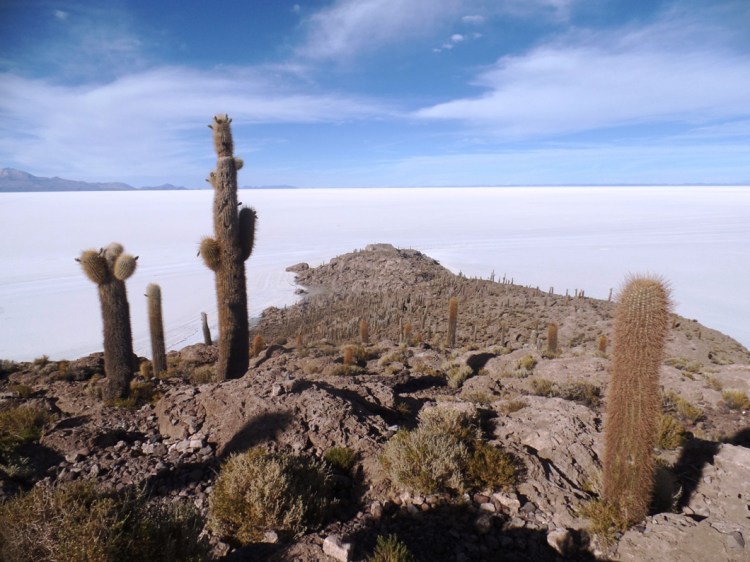
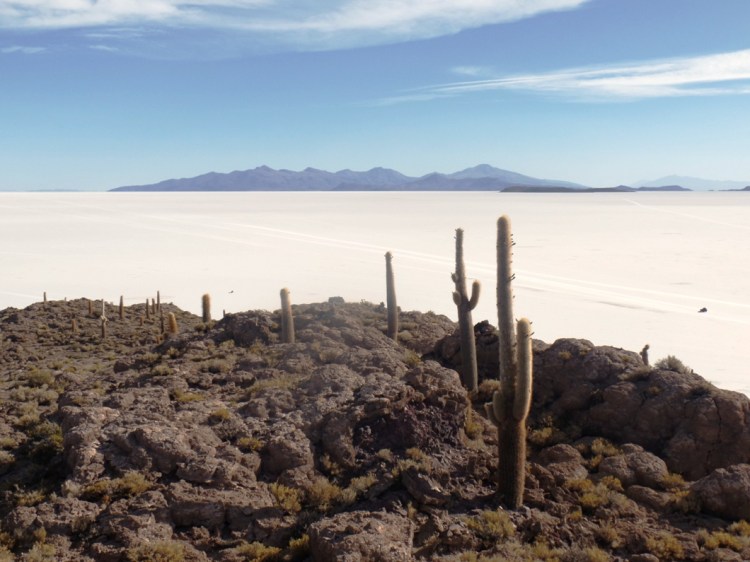
In the afternoon we reached Incahuasi, a rugged island of cactuses which rises up from the plane of white. It was actually once a massive colony of coral, back when this area was a vast sea, but when the bed dried up it rose to the surface and fossilised.

SAMSUNG CAMERA PICTURES

Not only is it an interesting place to walk around but it also gives you an opportunity to get some wonderful views of the plane.

SAMSUNG CAMERA PICTURES

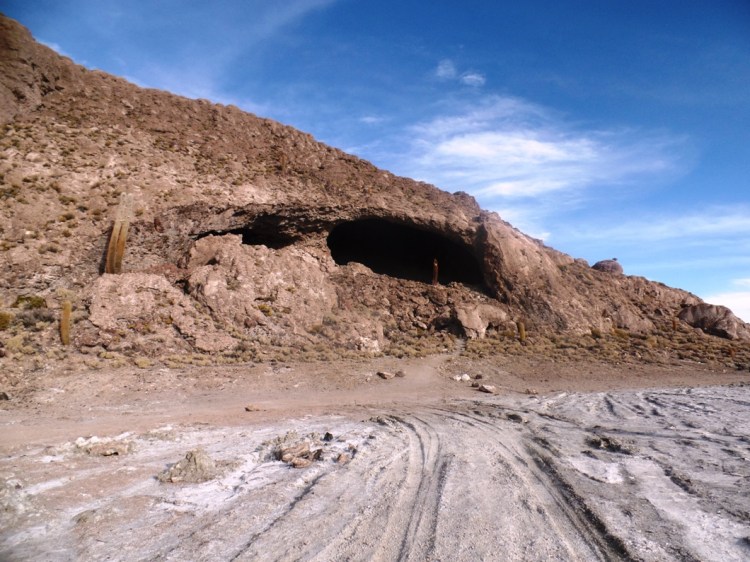
To finish the day, Vladimir took us to a cave whose name I have forgotten. It was a bit quieter than the rest of the places we visited that day as most of the other groups go to a different set of caves. It was home to some interesting inner textures formed from fossilised algae. According to Vladimir, part of the latest Star Wars film was recorded here.

SAMSUNG CAMERA PICTURES

We stayed that night in a hostel in San Juan. It was just a place to eat and sleep at the end of the day and a little basic, but it was an interesting novelty that most of the furniture and fixtures were made of salt.

SAMSUNG CAMERA PICTURES

The following day the landscape changed. It wasn’t so flat anymore and the road became rocky as we entered the Eduardo Avaroa Andean Fauna National Reserve, passing through yellow mountains.  Our first stop was at a place with some very interesting rock formations and views of Ollagüe, a volcano with active fumaroles.

SAMSUNG CAMERA PICTURES

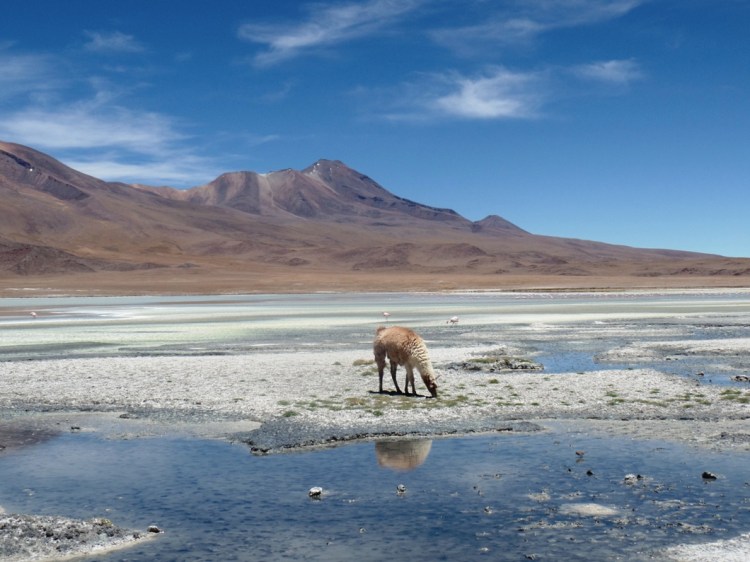
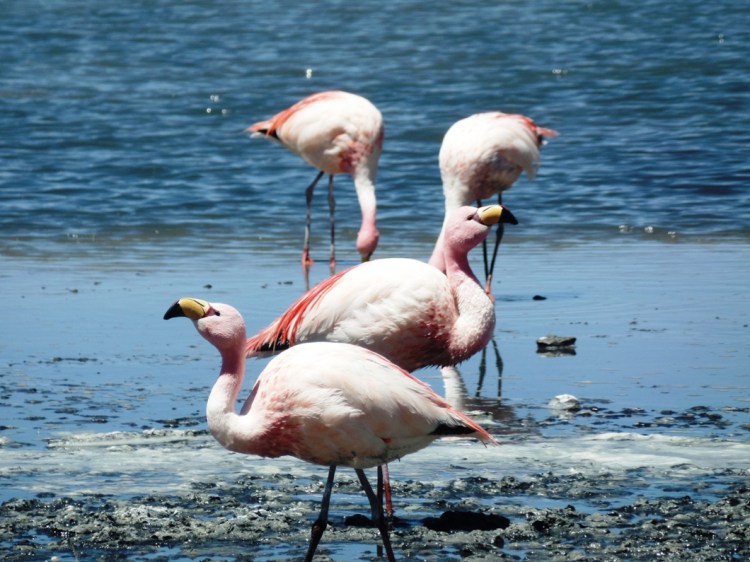
After that, we spent much of the day passing by lakes filled with flamboyances of flamingos, stopping every now and then to take photos.

SAMSUNG CAMERA PICTURES

There are three different species of which live in this area, Chileno, Andean, and James. They thrive here because the saltiness of the water creates algae that they thrive on and, apart from the occasional fox, this area doesn’t have many predators. One of the lakes we saw later that day, Laguna Colorada, was red because of the algae. I have uploaded a series of videos of the flamingos here.

SAMSUNG CAMERA PICTURES

We saw lots of other forms of wildlife that day. When we reached Laguna Ramaditas there was an Andean fox.

SAMSUNG CAMERA PICTURES

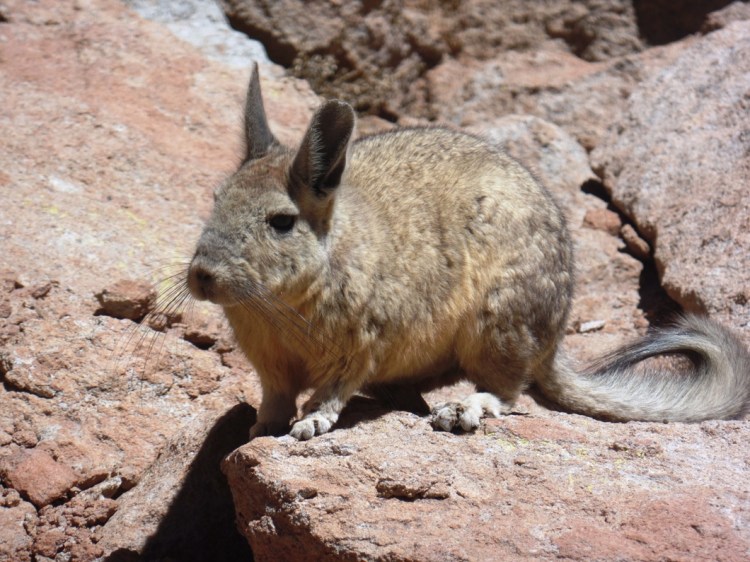
There was a pair of viscachas on the side of the road and we stopped for a while to feed them carrots.

SAMSUNG CAMERA PICTURES

I saw so many vicunas throughout this trip that I actually forgot to take any photos of them, which is a huge shame. We did end up having a roadside chase down with a pair of ostriches. I have a video of it here. Sorry for the shaky camera.

SAMSUNG CAMERA PICTURES

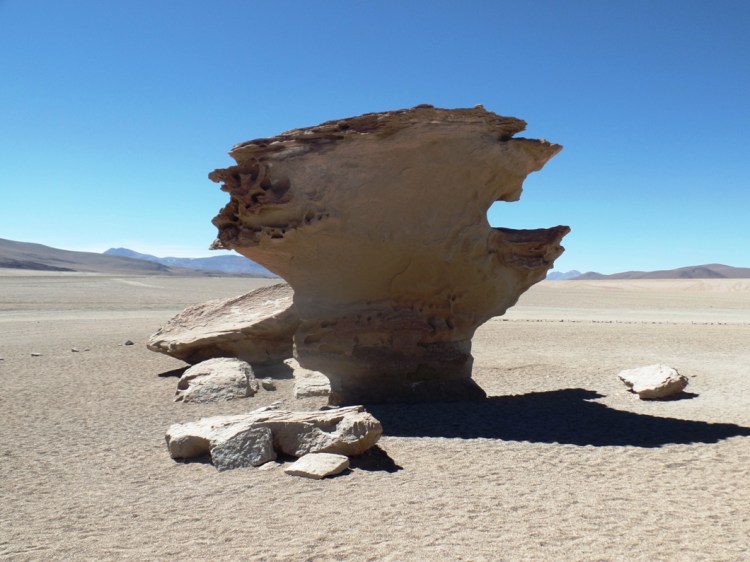
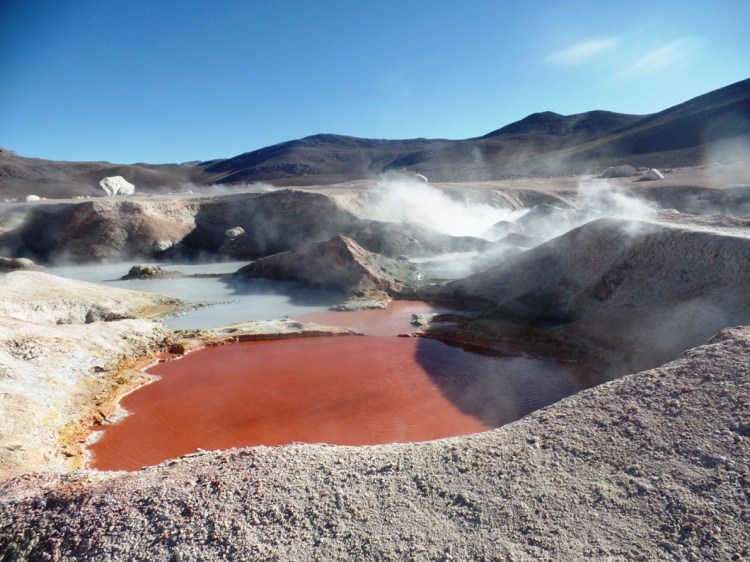
In the afternoon we went to see Arbol de Piedra, a series of other interesting rock formations. More exciting was Sol de Manana, the geysers. I have plenty of videos here. It was a surreal place, with clouds of smoke wafting out from crevices in the ground, water bursting out from holes like lava, and bubbling pools of grey mud.

SAMSUNG CAMERA PICTURES

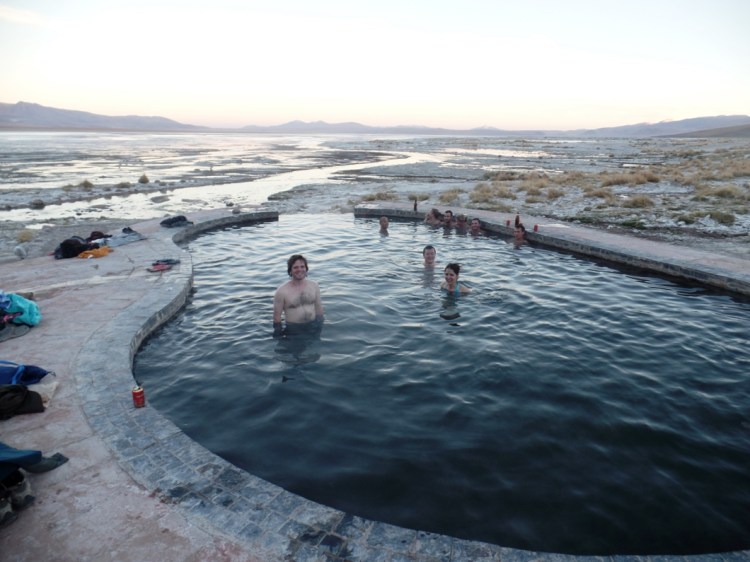
To finish the day we went to a hot spring by the side of a lake in Chalviri just before sunset.

SAMSUNG CAMERA PICTURES

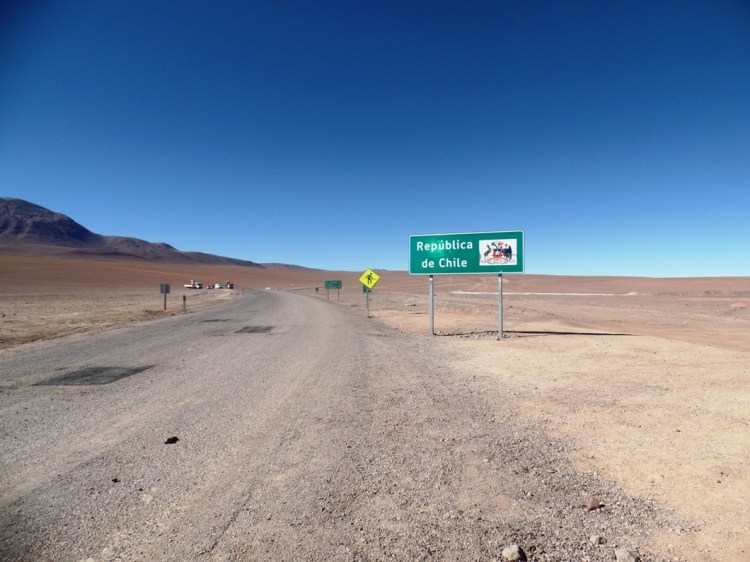
On the third and final day, some of the people on my tour were driving back to Uynui and making a few stops along the way, but for me and a couple others, it was a shorter itinerary because we were being dropped off at the border of Chile. We did make a little stop by Laguna Verde though, which wasn’t actually that green at this time of the year but still pleasant to see. From its shore, we also got a view of Licanabur Volcano and the border for not just Chile but Argentina too. This was true frontier land.

SAMSUNG CAMERA PICTURES


For more photos and videos from my last days in Bolivia, click here.

Travelblog SA#31: Cochabamba, Sucre & Potosi – Bolivia

23rd-30th November 2018

Coming to Cochabamba felt like my travelling had come full circle because it is possibly because of this place that I am in Bolivia now. Years ago, I watched a documentary called The Corporation which covered the story of how the people of this city rioted in against the rise in their water rates shortly after their supply was privatised in 1999. It escalated over the course of several months and the army had to be called in. There were several injuries and even a death but the people never backed down and eventually won. To this day, Bolivia remains one of the few countries in the world to retain a publically-owned water supply.

I remember feeling inspired because I saw a nation whose people had something that my own country lacks and I wanted to go there one day.

SAMSUNG CAMERA PICTURES

And now here I am. Although, I admittedly didn’t do much during my time in this city. The cold I had been suffering from over the last couple of weeks had gone to my chest and I wanted to rest to make sure I was well enough for the ayahuasca ceremony coming up.

I did go up to see the Cristo de la Concordia one afternoon though. It is the second largest statue of Jesus in the world and it is set within a park overlooking the city. The cable car to reach it was near to my guesthouse so it was a nice way to spend a couple of hours.

SAMSUNG CAMERA PICTURES

Eventually, the night of the ceremony came. I still had not got over my cold but decided to go ahead with it anyway. It was in a house on the outskirts of the city and there were about a dozen other people there, most of them locals from Cochabamba.

The shaman was a man called Miguel Kavlin, and he has been a practising scared medicine for several decades. He spoke to us for a while about some of the experiences we were likely to have before the ceremony began and then commenced with a long period of meditation and prayer. We were each called up to imbibe some of the liquid.

What happened over the hours which followed I will not go into too much detail, as it was very personal. Almost everyone who drinks ayahuasca will experience contact with spirits and entities. They will also relive moments from their past – some of which they thought they had forgotten – which helped shape the person they are, and they will do so in a way which helps gain a sense of clarity. It is an emotional rollercoaster, but most people come out of it feeling a sense of catharsis.

I cannot compare Miguel to other shamans because this was my only experience with ayahuasca but I can say that I was very happy with the way he worked. When I arrived I was nervous and he said some things to me which put me at ease. He has a very comforting presence about him and he worked hard all night to create a great energy in the room. While I was fading in and out of awareness, between all the visions I experienced that night, he was playing drums and other instruments and their rhythms helped ground me.

SAMSUNG CAMERA PICTURES

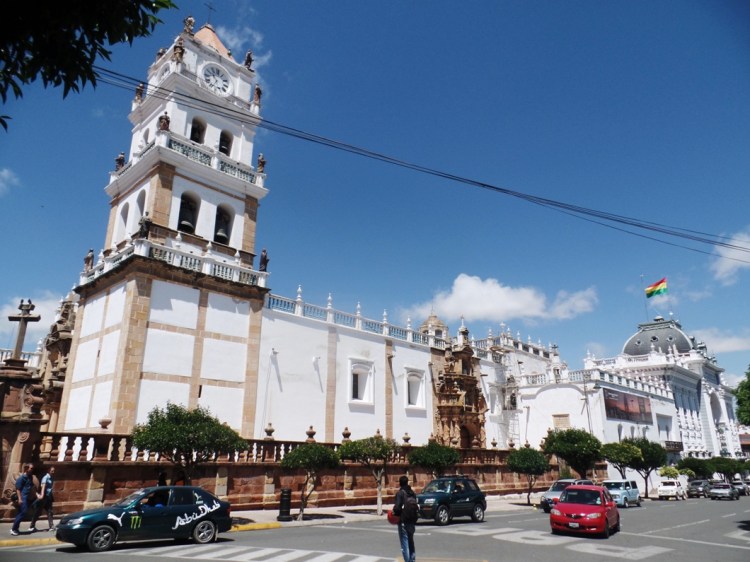
I didn’t sleep at all the night of the ayahuasca ceremony and then the following night I caught a bus, so I was very tired by the time I reached Sucre. It was a great place to kick back and rest, having well-maintained colonial streets, a laid-back atmosphere and lots of great restaurants.

SAMSUNG CAMERA PICTURES

After resting, I spent a couple of days touring around Sucre’s museums. The Cathedral and the Museo de Charcas had great collections of colonial religious art, and I also particularly enjoyed the Museo de Arte Indigena which had old lots of old tapestries which were excellently crafted. There are some outdoor activities one can embark upon from Sucre, including day trips to mountains and waterfalls, but I was quite happy to spend my days there languidly. My mind was still contemplating a lot of the things that I saw during the night of the ceremony and it was going to take me a while to feel ‘normal’ again.

SAMSUNG CAMERA PICTURES

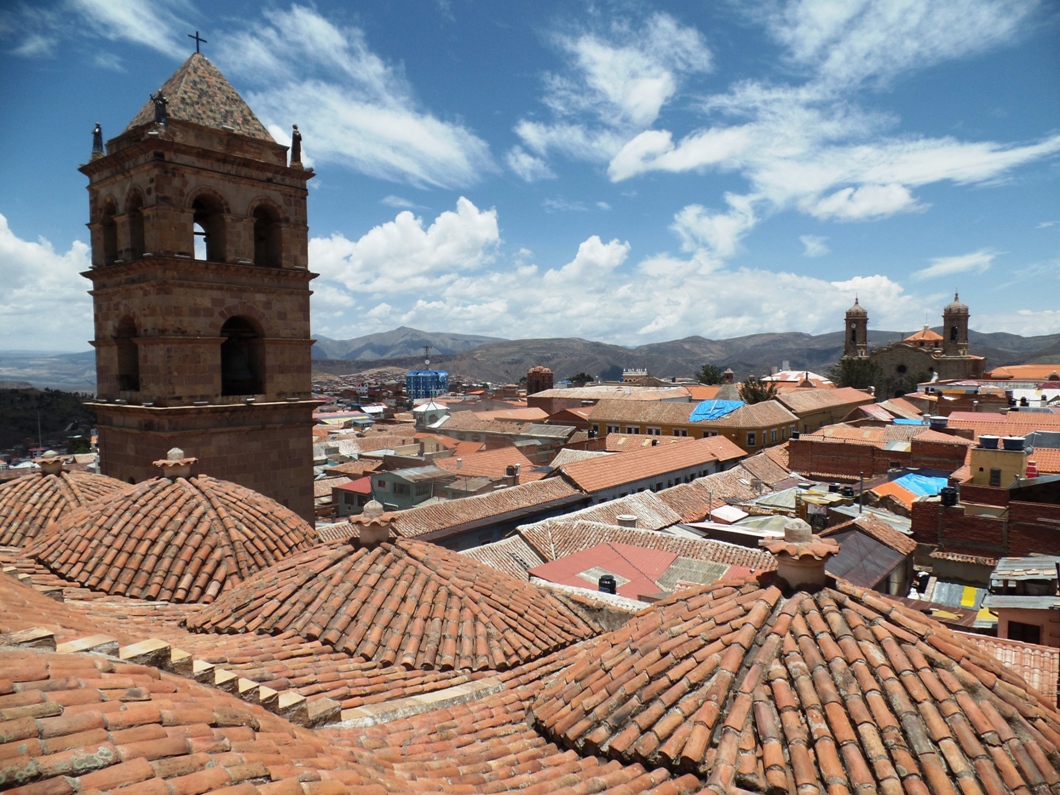
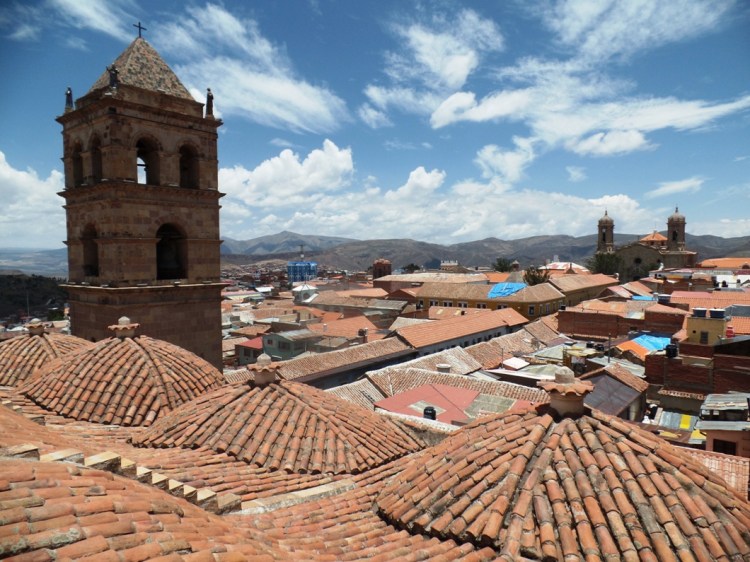
After a couple of days in Sucre, I moved on to Potosi, one of the highest altitude cities in the world. It is a historic place, nestled beneath Cerro Rico, the world’s largest known silver deposit which people have been mining for over four hundred years.

SAMSUNG CAMERA PICTURES

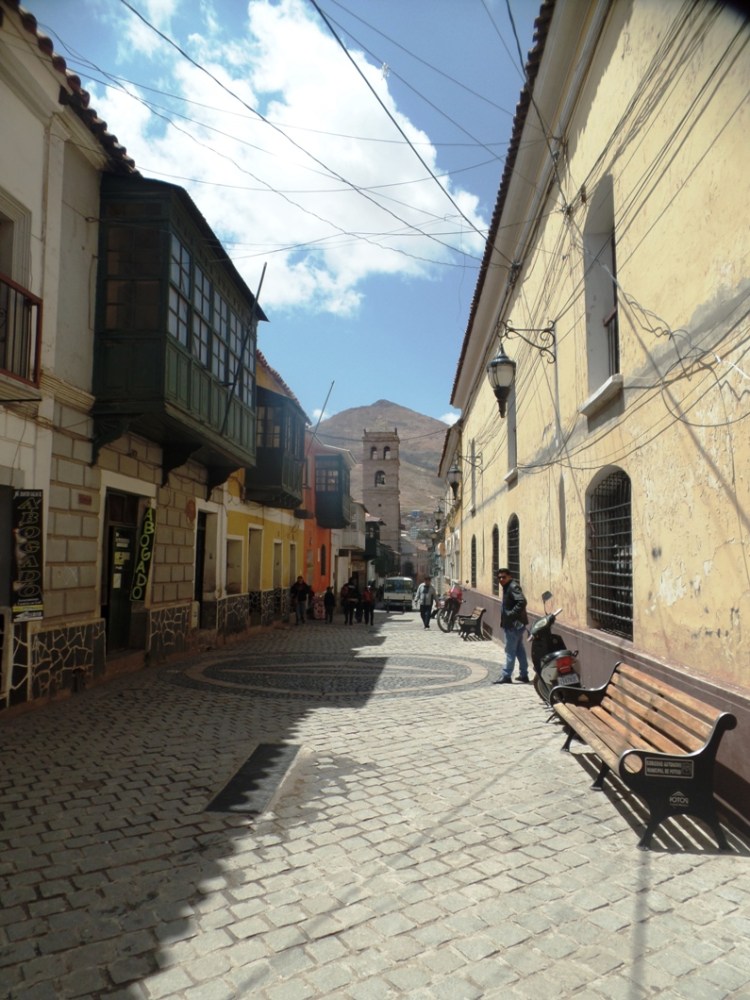
I spent my first couple of days in Potosi still pursuing light activities. I had to acclimatise again as I was at 4100 meters. I wandered through its UNESCO awarded streets and I visited its Convento de Santa Teresa, which has been home to Carmelite nuns from affluent families for centuries and is now also a museum.

SAMSUNG CAMERA PICTURES

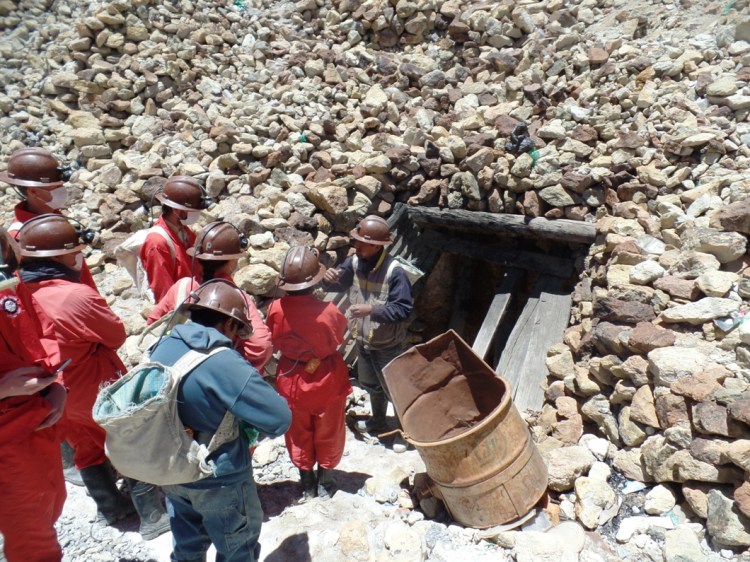
A visit to Potosi isn’t complete without going down the mines though. It is not one of those things you do for enjoyment but it is illuminating and part of the experience of Bolivia. There are some dangers involved, as the mines still largely operate the same as they did hundreds of years ago, so you are at a slight risk of cave-ins and breathing in noxious gases.

SAMSUNG CAMERA PICTURES

First, we all needed to be kitted up in red over-garments, rubber boots, and helmets. We even had to wrap our feet in plastic bags for some reason. Our guide then took us to the market so that we could buy snacks, drinks, dynamite and coca leaves as gifts for the miners. It was surreal seeing how easy it is to buy dynamite in Potosi. It only costs $3 a stick and you can buy them alongside groceries.

SAMSUNG CAMERA PICTURES

In the first few minutes descending into the caverns, a couple of the people in the tour turned back. Apparently, that is normal, and I could understand why. The initial tunnels were quite narrow which forced us to climb and crawl, and the air was dusty. All the silica in the air combined with the altitude makes it difficult to breathe.

SAMSUNG CAMERA PICTURES

Despite this being one of the most gruelling work environments in the world, the miners seem quite proud of their job and fairly happy considering that their life expectancy is so short. Most of them don’t die from accidents but from a condition known as silicosis, where the lungs fill up with the silica dust. They say that once you start working down there you have twenty years before the disease either kills you or forces you into retirement. At one point we met a man who was on his twenty-fifth year, currently the oldest miner.

SAMSUNG CAMERA PICTURES

One of the most interesting things we saw were the effigies for El Tio, a local deity whom the miners leave offerings and pray to daily. I have videos of our guide explaining this tradition to us here.

SAMSUNG CAMERA PICTURES

It is true that there is a slightly voyeuristic element to first-world people paying to be taken on a tour down these mines, but I also feel that if you enjoy some of the trappings of the modern world – such as a smartphone – you owe it to these people to see the price of obtaining the necessary materials. It is sad that these people live such gruelling and short lives but, having lived many of my years in Wales, I know that simply closing these industries down without giving people other means of income is not the answer. I have seen what happens to such communities. I am not going to pretend I am smart or knowledgeable enough to know what the answer is though.

SAMSUNG CAMERA PICTURES

For now, I do think that tourists going for trips down these mines are mostly a good thing. The gifts that they give to the miners help supplement their income and the more people who are aware of the poor conditions, the more likely things are to change. Most of the guides are former miners who have now found a source of income which doesn’t require them to spend as much time down in the caverns so it has probably prolonged their life spans.


For more photos from Cochabamba, Sucre and Potosi, click here. This album also includes much more videos from down in the mines.

If you are interested in taking part in an ayahuasca ceremony with Miguel then you can contact him via email (miguelkavlin@gmail.com) or WhatsApp (+91 82642 44598).