Travelblog LA#37: Mérida Part 1 (Uxmal, Izamal & Solar Eclipse) – Mexico

8th – 15th October, 2023


A solar eclipse.
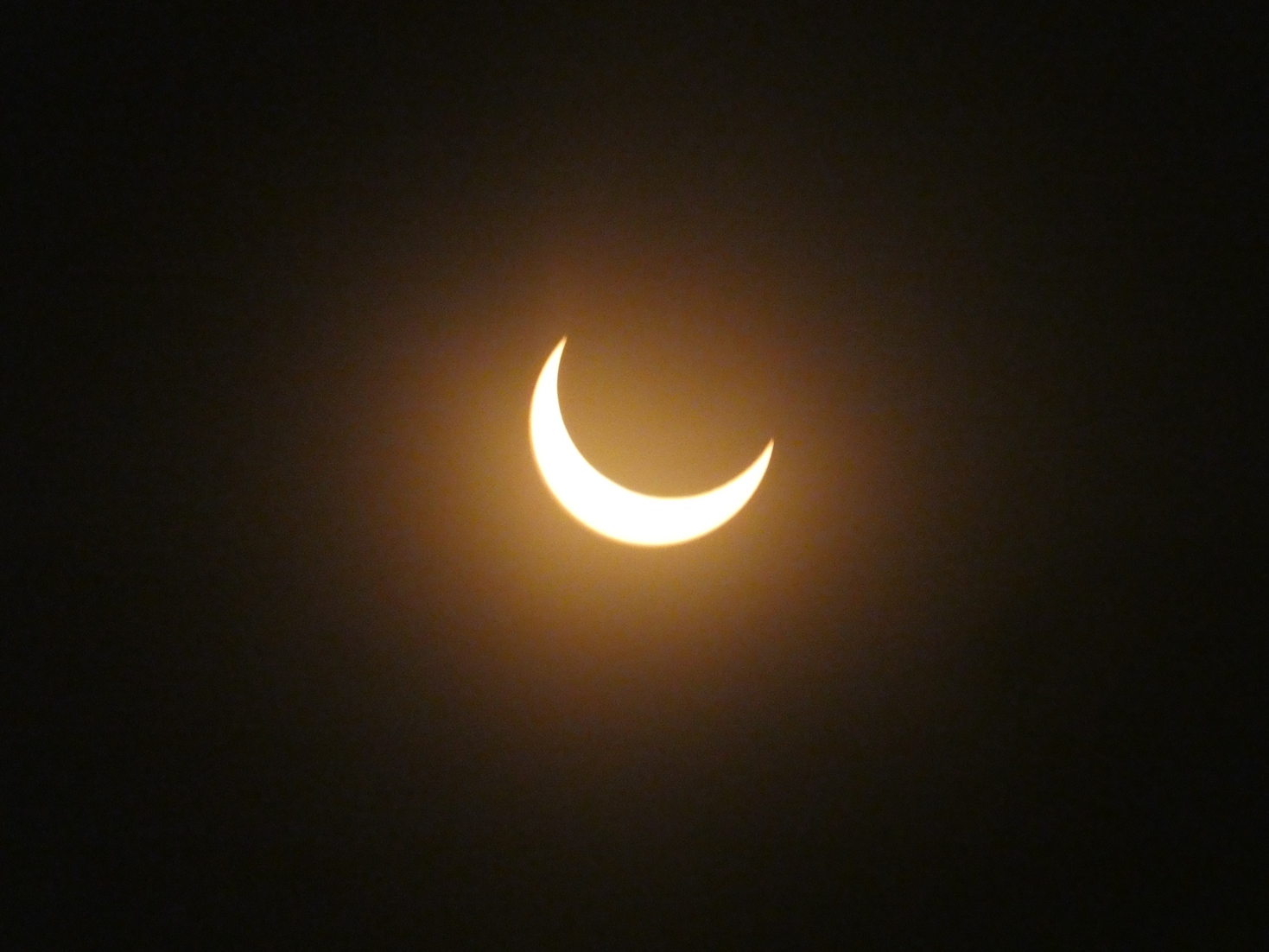
This is one of the reasons that I planned my trip this way. I had heard that it was due to happen when I was plotting my itinerary in 2022, and – with Dia de Muertos also just a couple of weeks away – it seemed like the Yucatán peninsular of Mexico was where I should be at this point of my journey.

We actually had a solar eclipse in the UK back in 1999, and back then I thought it would be a once-in-a-lifetime thing so I think this will be a highlight of this trip that I will look back on in years to come.

And this eclipse was also a different kind to the one I remember back when I was thirteen years old and sat on a cliff in Dorset. I am not quite sure of what the science behind it is – perhaps something to do with both the Earth and Moon having elliptical orbits, if I were to guess – but this type of eclipse was what they call a ‘halo’, so it didn’t completely cover up the sun and plunge us into darkness. It was a very different experience, and quite eerie. My surroundings were still lit by the kind of yellow light that you get at midday, only greatly dimmed. I even needed to reapply some mosquito repellent, because some of them had come out again, the change in the light of day confusing their cycle.
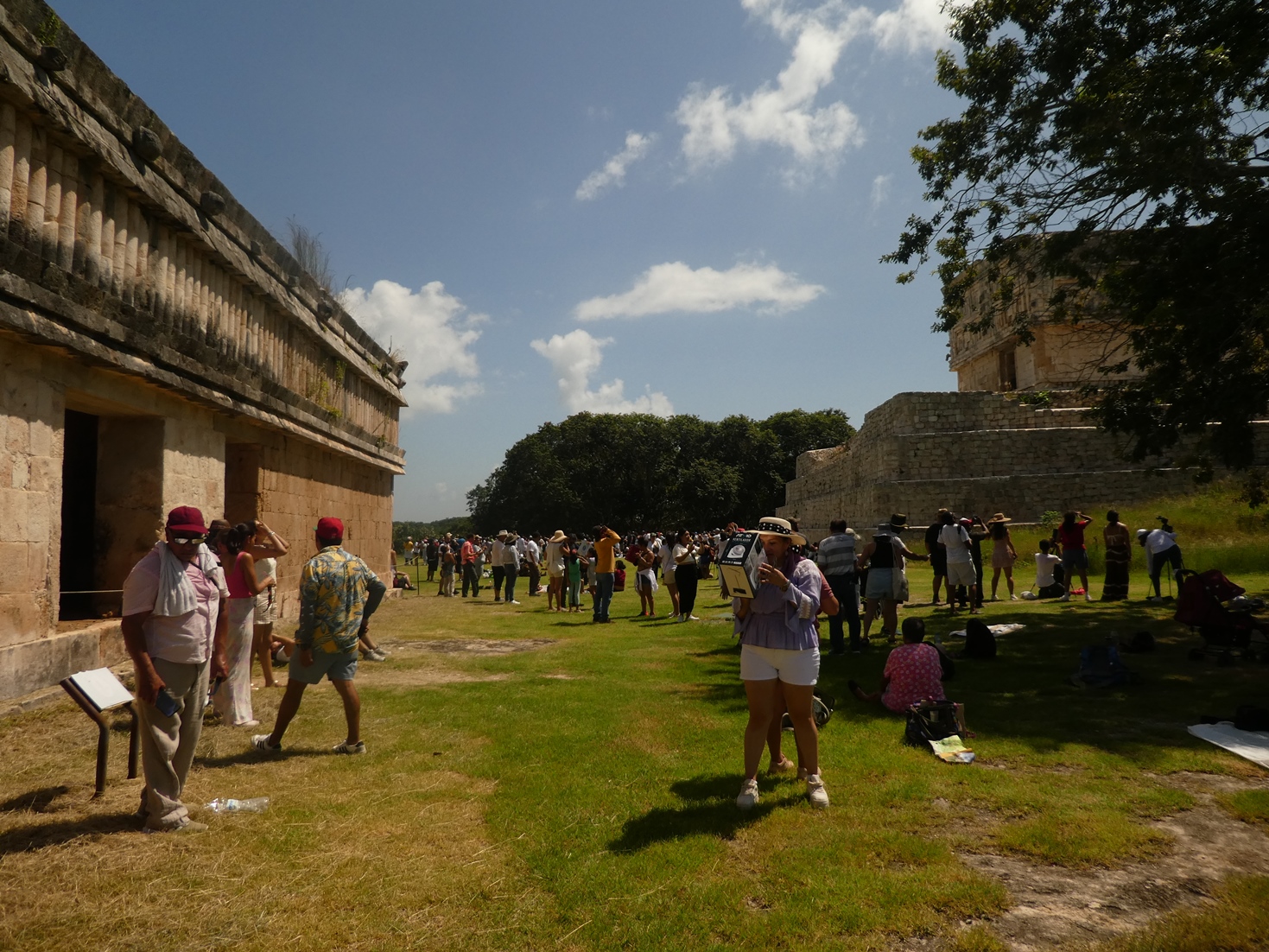
And, as you can probably see, I chose the site of another Mayan ruin to watch this event from. This one is called Uxmal, and it is sixty kilometres south of Mérida.
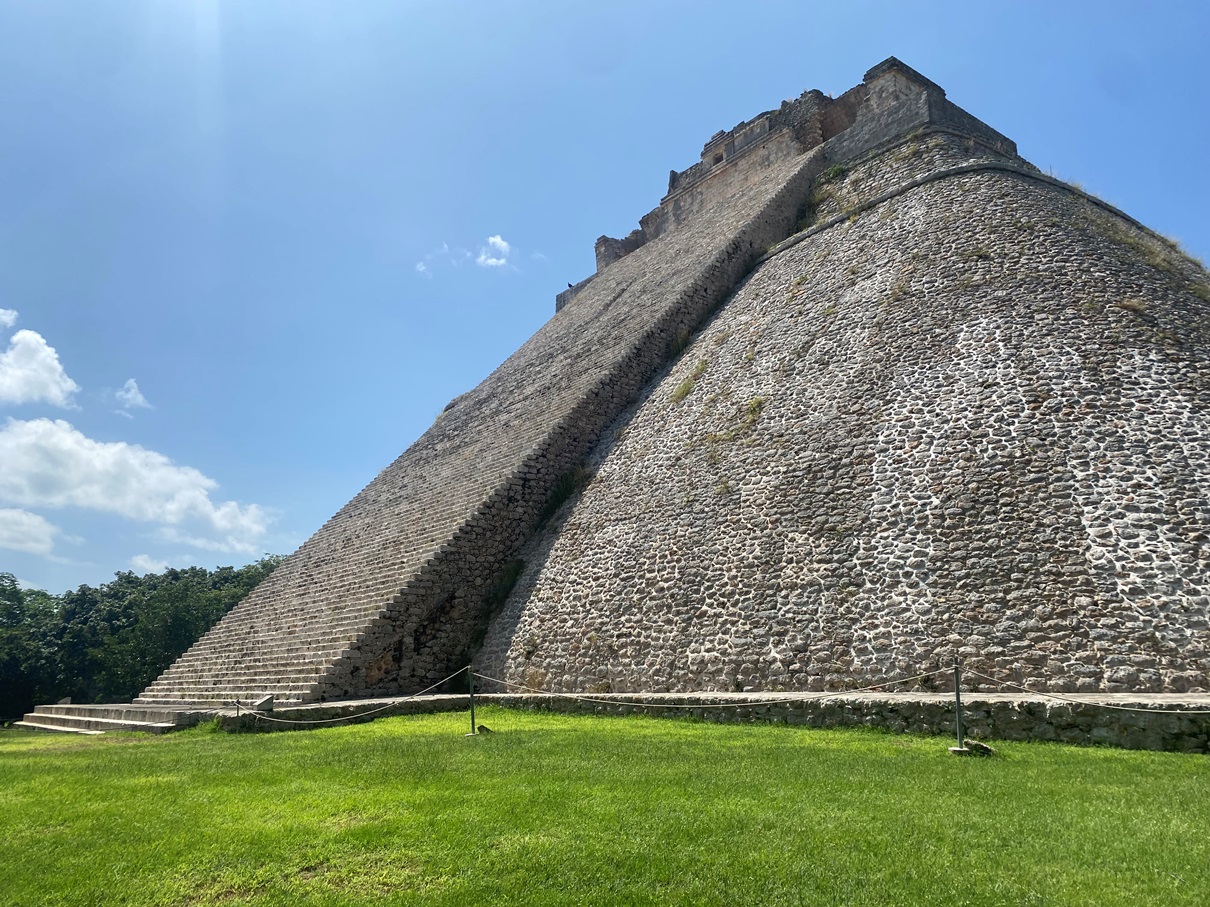
I came here early in the morning, rising at 5 a.m. to ensure that I would get a seat on the bus and into the site on time. This turned out to be a good idea because when I arrived at 7:30 a.m. – half an hour before the site opened – there was already a queue forming.

I managed to be among the first fifty or so people to enter, meaning that I got to have a quick walk around whilst the place was reasonably empty and take some photos. Uxmal is an impressive place and I am glad that I came here for the eclipse, but one thing I will say is it came with an expensive entry fee of almost 450 pesos for foreigners. And of that, only ninety pesos actually went to INAH – the body that runs most of Mexico’s archaeological sites – whilst the rest is just a fee that the local government have slapped on because they know lots of tourists will pay it and it is easy money for them.
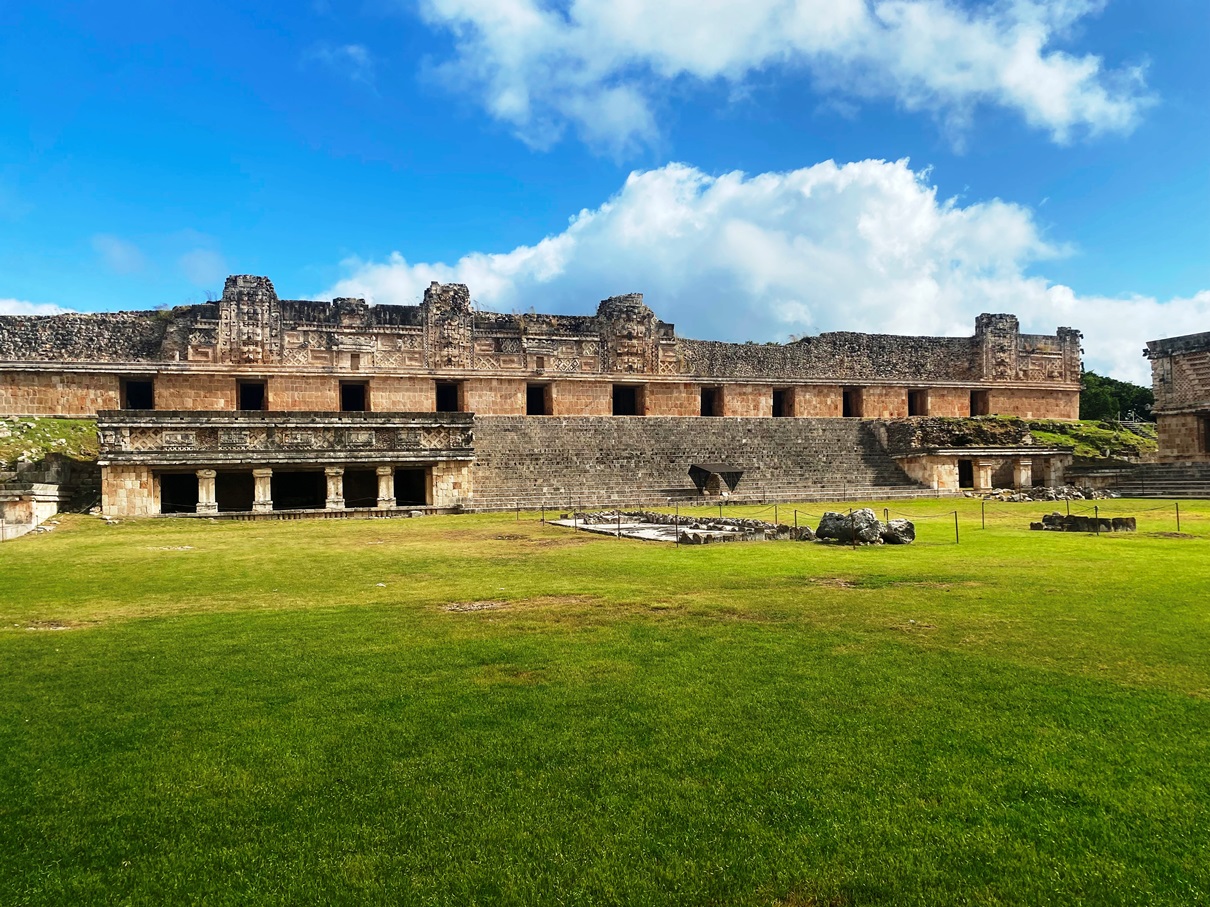
Although relatively unknown internationally – perhaps due to its proximity to Chichen Itza – Uxmal was a big player during the Mayan Classic period and is now widely considered the best example of the Puuc-style architecture common in this region. Perhaps one of the reasons it isn’t spoken about as much is that there has been a disappointing lack of research done here. This place is a favourite among locals – who want to avoid the crowds of tour buses that swamp Chichen Itza each day – so it seems that INAH have focussed almost all of their resources on restoration and maintenance, and very little on excavation.

Overall, I did enjoy this site. It now holds the special status of being the place where I saw the Yucatán Eclipse of 2023, but I did find the amount of Gringo Tax I paid a hard pill to swallow when the people running this place had done very little to enrich the experience for me. Unlike most archaeological sites in Mexico, this place doesn’t have any informational displays for its visitors.

To put it into perspective, the price paid was a similar price to what people pay to see Stonehenge back in the UK – a price I also don’t agree with as I don’t think these monuments should be exclusive to those with money – yet at least when you go there the price comes with access to audio guides available in a variety of languages and a museum. I understand that most Gringos who come to visit Latin America are privileged, but sometimes the extra charges imposed upon us just seem to be slapped on in a manner that is just a bit thoughtless and lazy.

Moving on; some of you have probably noticed that it has been a while since I last posted and are wondering where I have been. Well, the answer to that is Mérida.

This place is not as well known internationally as Cancun, but it is the de facto capital of the Yucatán peninsula. When I arrived I still had some days to wait for the solar eclipse and I didn’t want to move east until it had passed. Mérida was a great place to pass some time as it had just enough attractions to keep me entertained, whilst also being quiet and laid back enough to be a pleasant choice for one to lay low for a while.

As usual, the main plaza is the place to be in a lot of Latin American cities, and in Mérida, this is especially true as there are lots of free events here that happen in the evenings. I discovered this during my first few days when I went to meet a friend there and we heard music coming from the cathedral and went to investigate to find ourselves watching dancers performing.

The women were wearing mestizo garments. I had previously seen examples of these in one of Mérida’s museums. They are popular here and very representative of what modern Mérida is like as a city; a place where the pre-Colombian and colonial cultures have finally – after years of strife – fused into something new. The white material and cut of the design are more Spanish-inspired whilst the colourful patterns are reminiscent of Mayan culture.
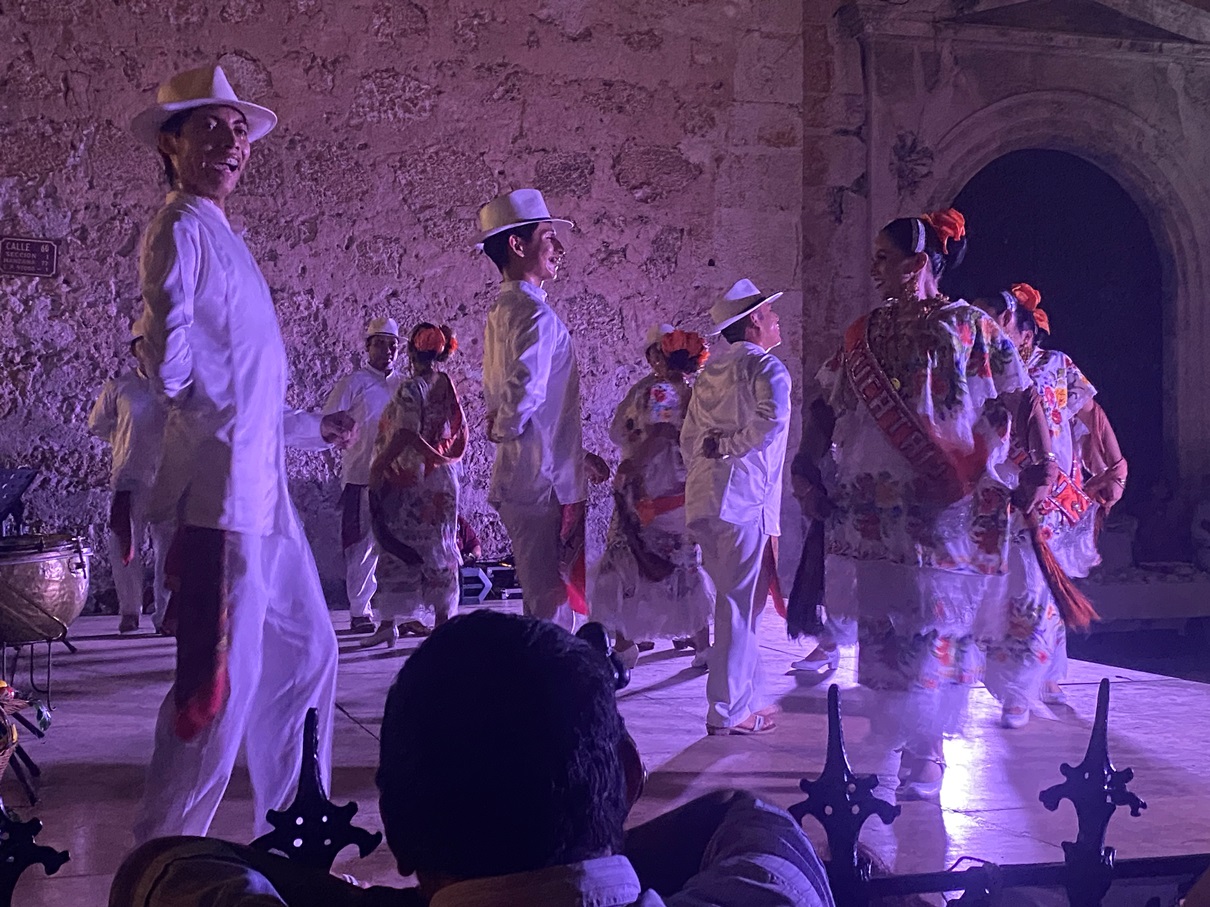
I have seen my fair share of public performances in Latin America now and one thing that really struck me about this one was how enthusiastic the performers were; you could tell that they were not just doing this for the money or out of duty but were passionate and enjoying themselves. Here is a video here.
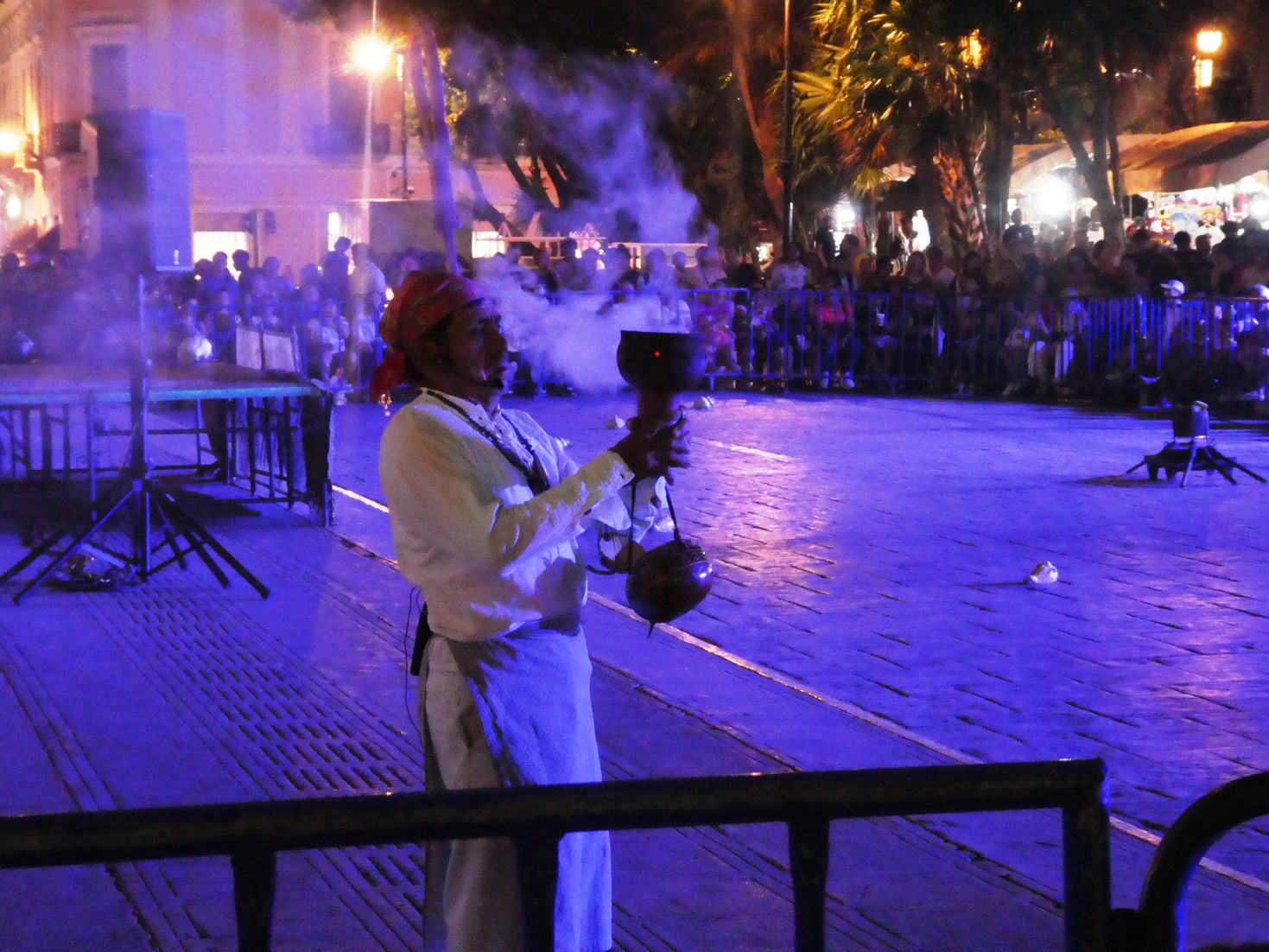
Another evening I went to see the ‘Juego de Pelota’, which happens most Saturdays at 8 pm.

This began with a short ceremony involving music, incense, and the players dancing around a fire.
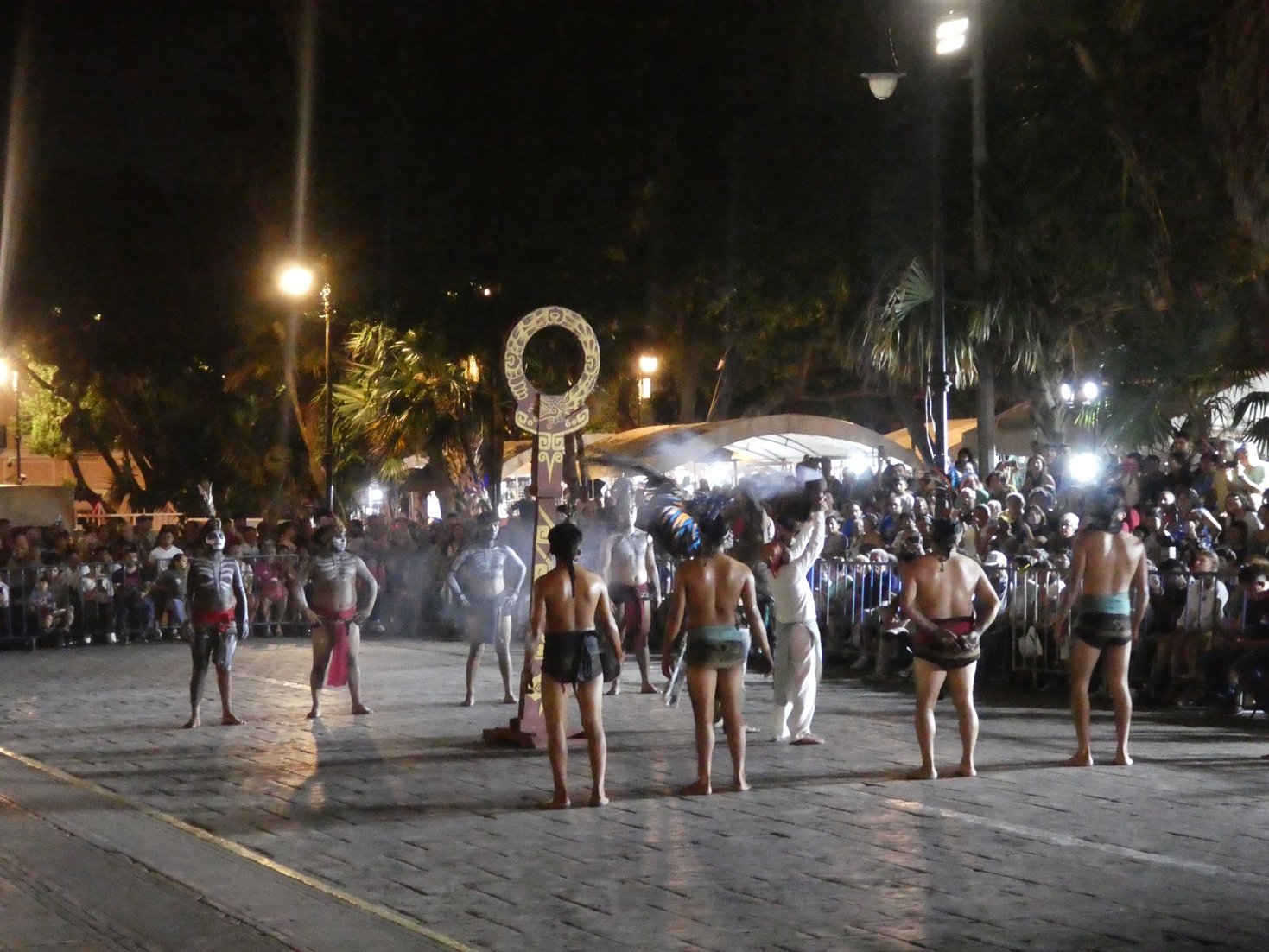
And then, they began to play. I will be honest here and say that it is my understanding that we don’t quite know how this ball game was actually played. I do know, however – from the ruins that I visited – that the courts usually had two hoops on opposite sides of the court. Here they just have one in the middle and the players seemed to be treating it like a game of volleyball (only with the players not using their hands but rather their hips; something that does appear to have been traditional practice).

Despite it being very questionable about how ‘authentic’ this modern interpretation is, it was still an impressive show. It is no simple feat to get that ball into the air let alone through a hoop with the players only allowed to use their hips, yet in the space of thirty minutes or so they managed to do this twice. It involved a lot of diving and skidding across the ground. Click here to watch a video.

After a while, the game was changed a little and they introduced a flaming ball. This time, they did allow themselves to use their hands, and – once again – this is clearly not traditional, but still very impressive (click here).
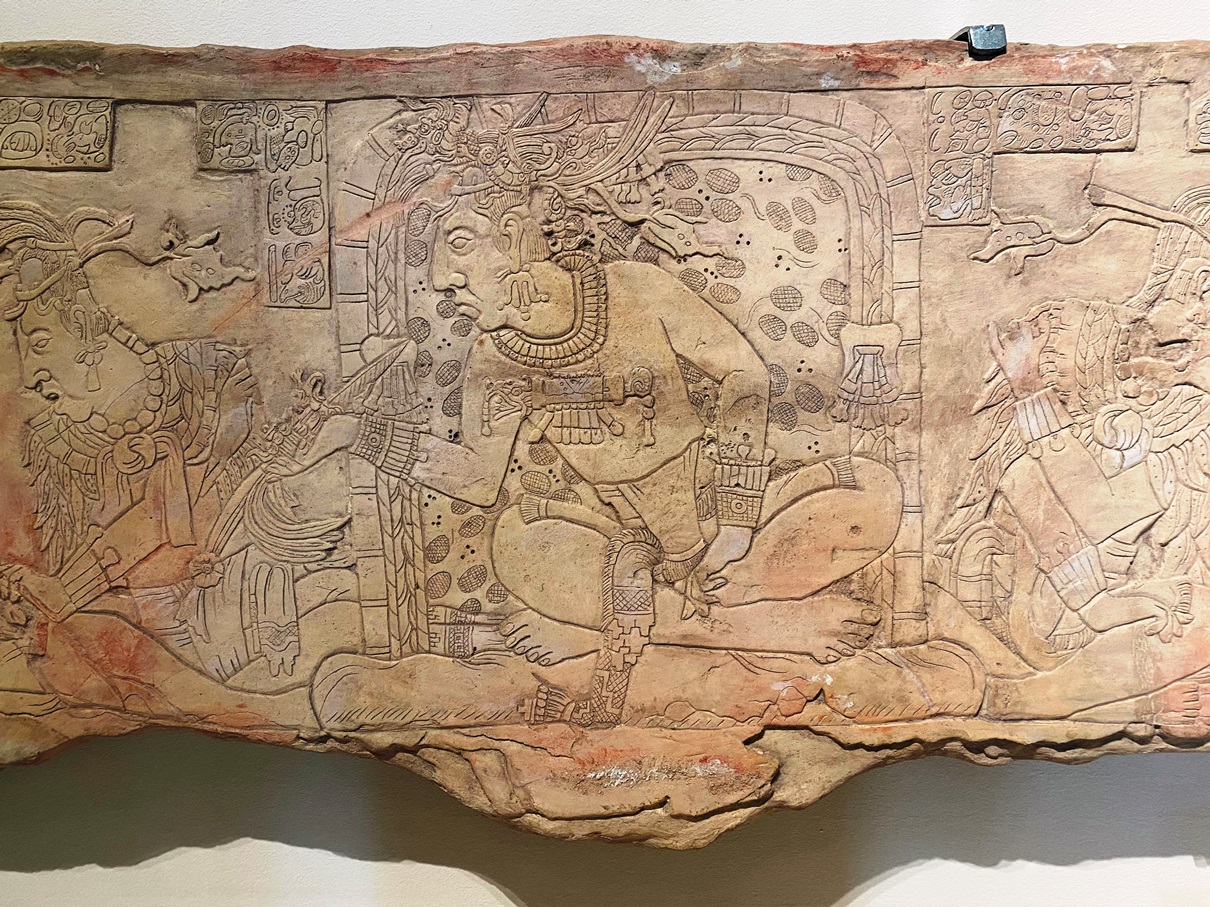
Mérida does have a decent selection of museums too. I won’t bore you by covering them all but I will say that they are more on the provincial side so are smaller than the ones I have visited in places like Mexico City. Most of them are free and it is a good way to spend a day if you find yourself in Mérida with some time to burn. One that should get a special mention is the Gran Museo del Mundo Maya, which is a bit far away from the centre and slightly more expensive but worth both the money and the journey.

One thing that I particularly enjoyed about this museum is that it covers not just the history of the Mayan civilisation during pre-Colombian times but also details about the Mayan people still living today. This is by no means the only museum that has attempted to do such a thing, but it will often be just a small section towards the end and feel a bit like a lip service. Here it is placed at the forefront and occupies a substantial section at the beginning of the museum. It also does not shy away from telling the story of the abuse that the indigenous people of the Yucatán suffered under colonial rule yet does so in a way that chooses empowerment over pity and highlights their strength as a people. Covering the plights of marginalised groups can often be a precarious subject but this museum has done a great job of getting the tone right.

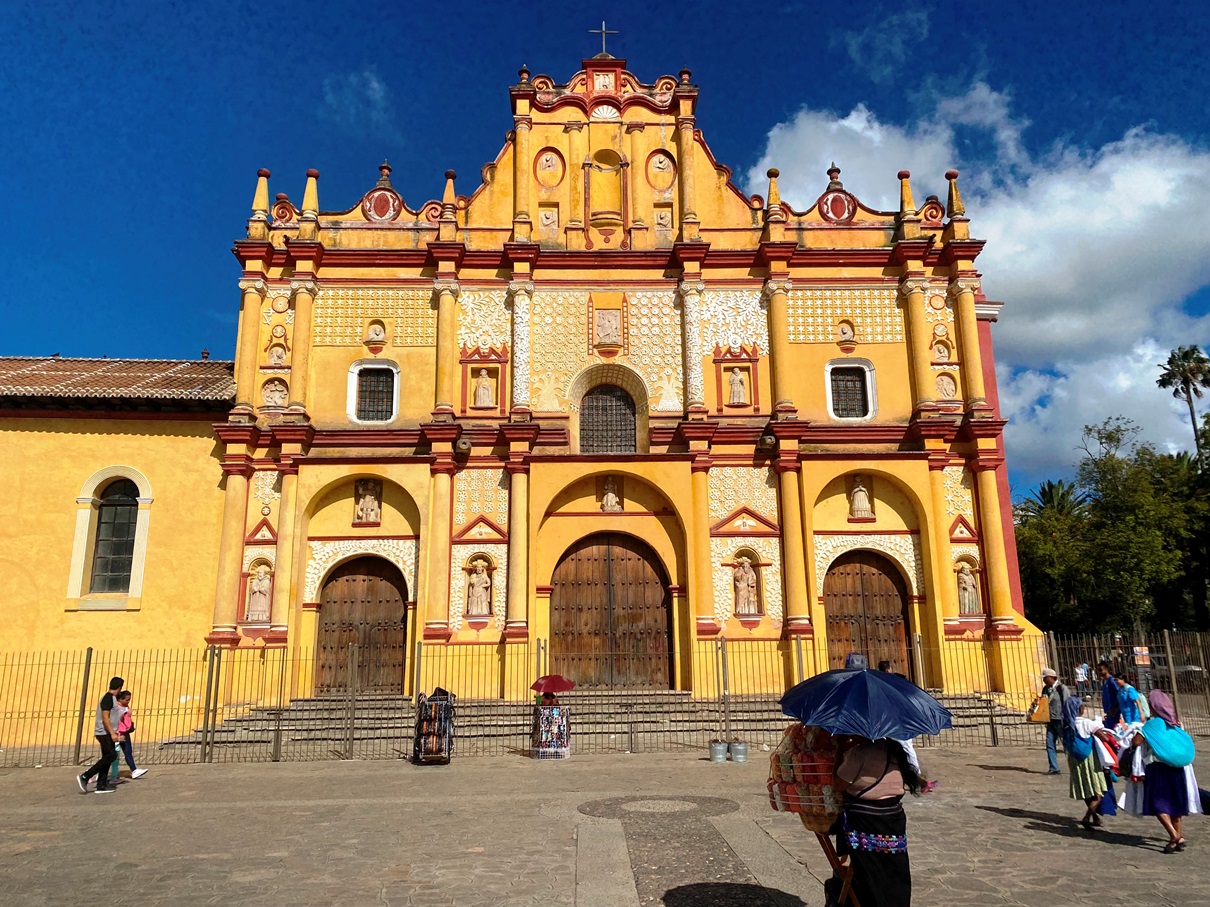
Uxmal is not the only day trip that can be made from Mérida. One afternoon I went to visit a place called Izamel with a friend. Many of the locals refer to as a ‘Puebla Magica’, but I didn’t see any magicians there. It is certainly very scenic with its yellow colonial style buildings and cobbled roads.
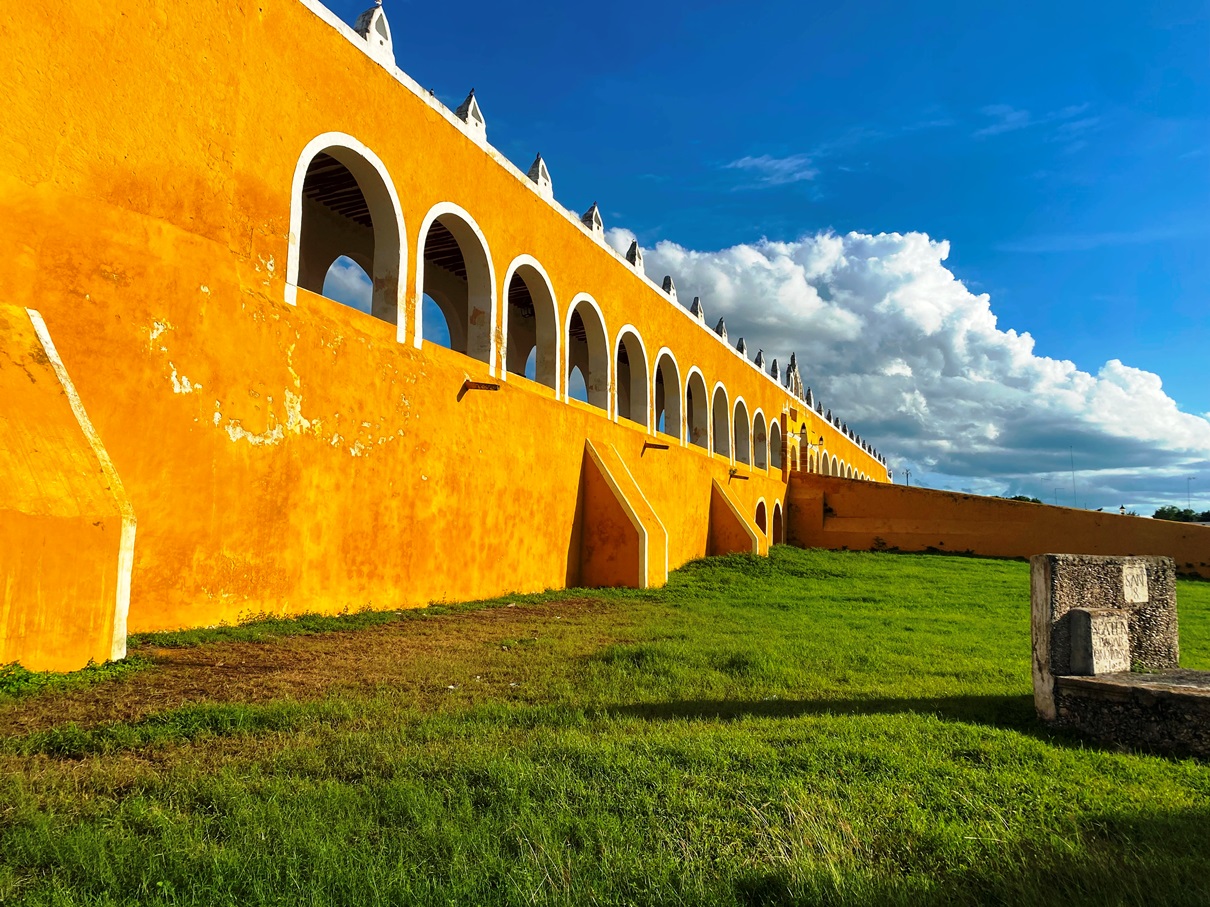
What makes this town stand out is that it is home to vestiges of both pre-Colombian and colonial periods, both of which are majestic and overlook the town. When you arrive there is first the San Antonio de Padua Convent close to the plaza, with its iconic, rectangular atrium.

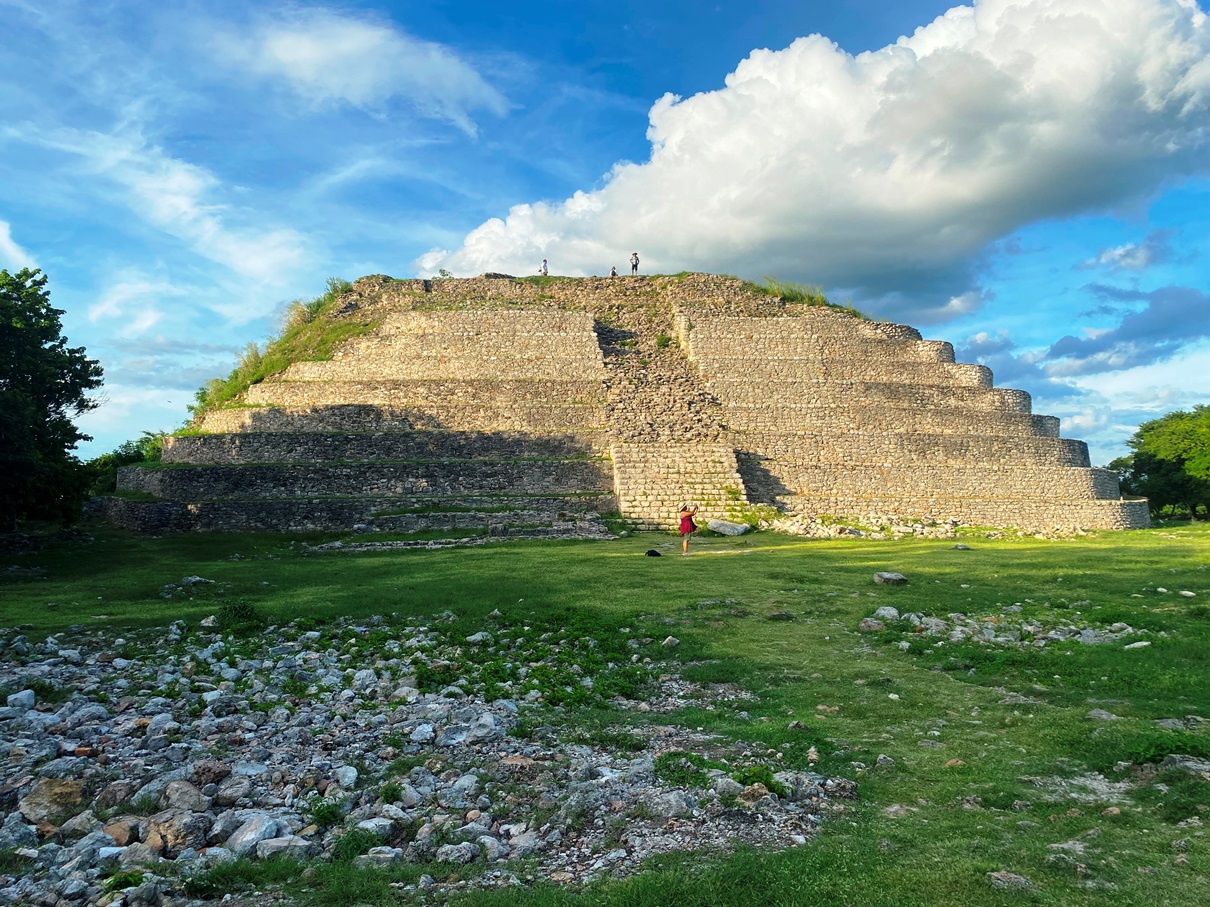
And then, just a short walk away, there is a Mayan pyramid called Kinich Kak Moo. It is actually a pyramid in two stages, but if you measure them together as a whole it is technically the biggest pyramid in the entire Yucatán peninsula by volume.
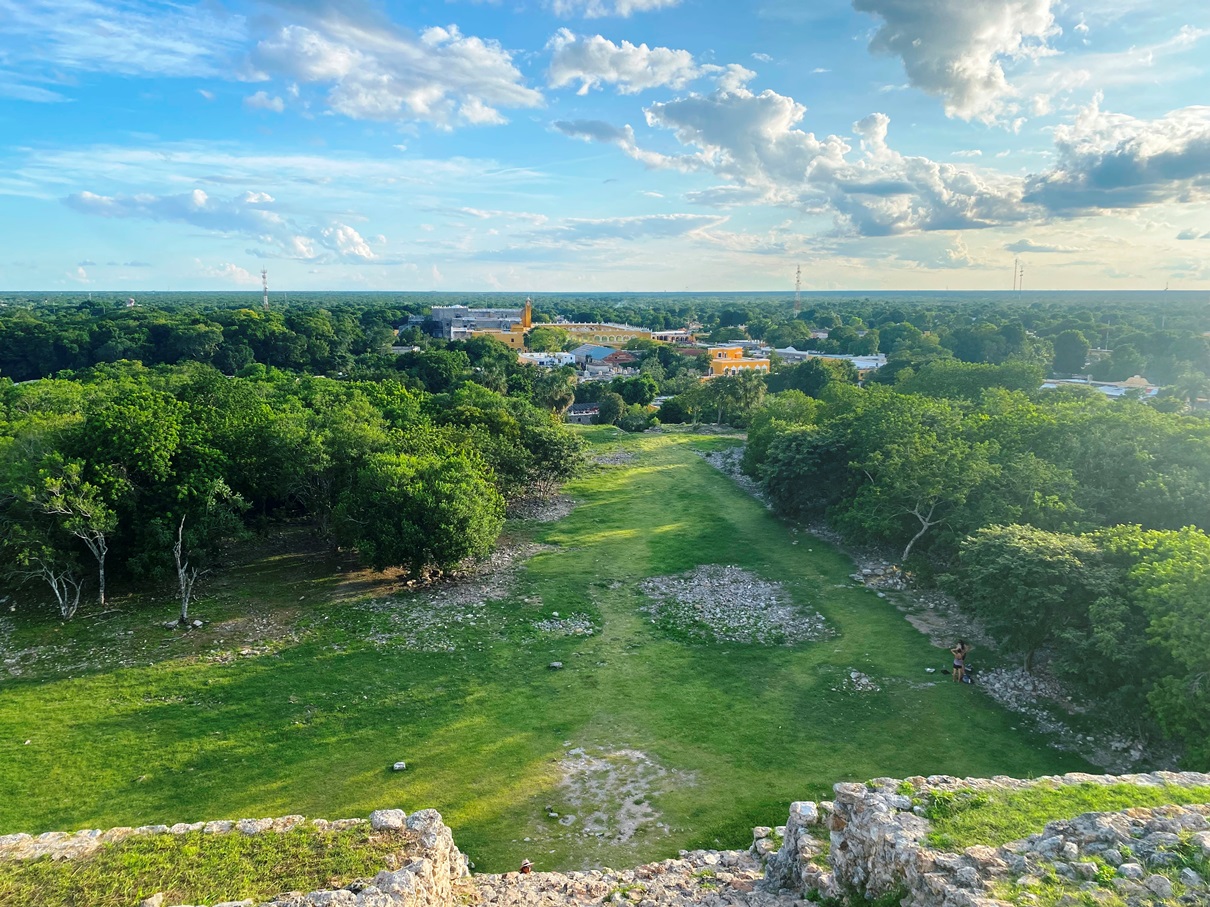
There is a great view of the town from its peak.
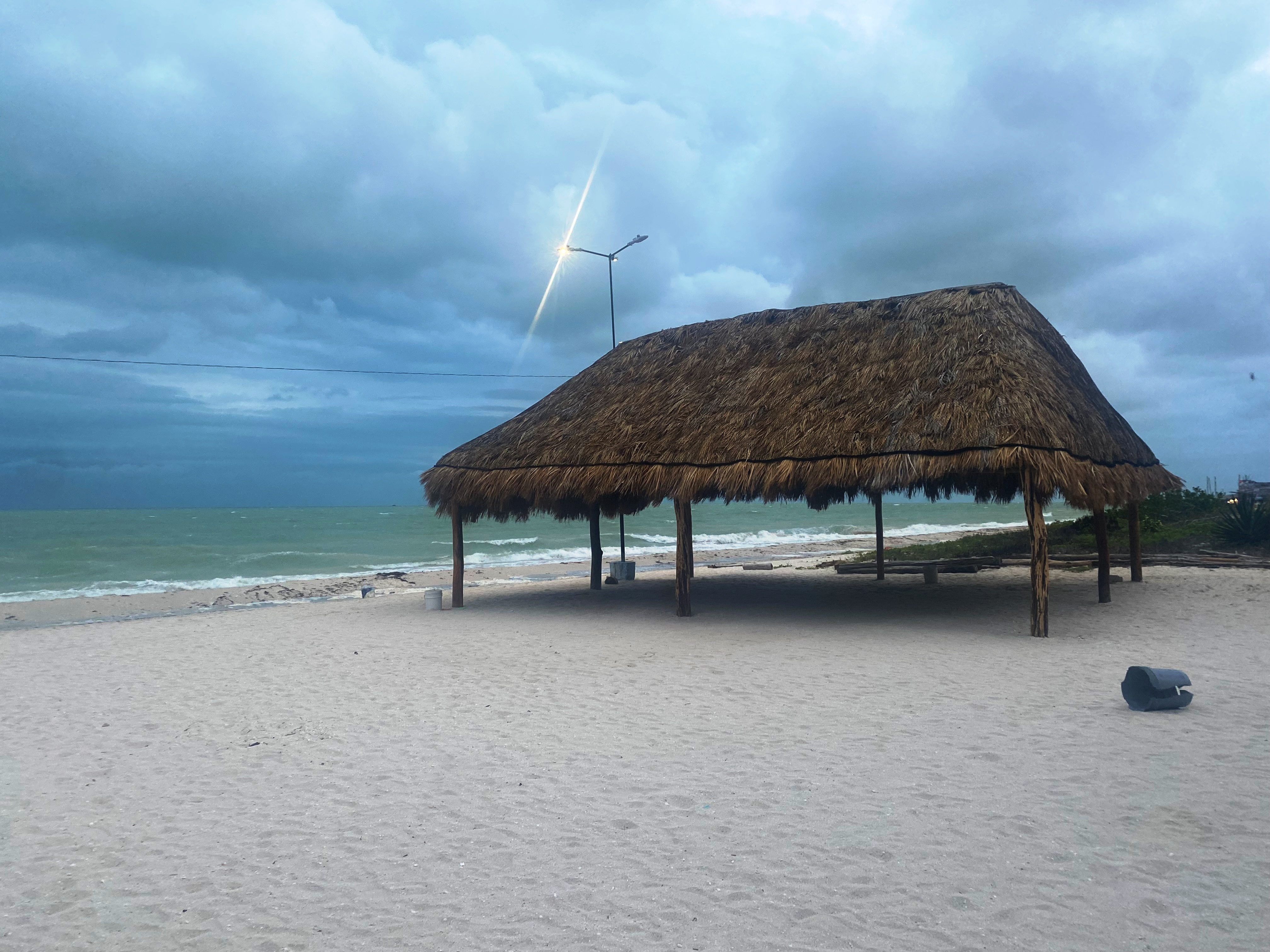
For my final day in Mérida, a friend I made called Ariel invited me to go on a road trip with him and some of his colleagues and we went to a place called Celestun by the coast. This is a place that a lot of people go to for boat trips around the mangroves to see flamingos but once we arrived we found the prices for these tours a little steep so decided to spend the day at the beach instead. I am glad we made this decision. I know this sounds a bit jaded I have seen plenty of mangroves and flamingos over the years and I am starting to feel a bit lazier now I am over eight months into this trip. Also, I have often found that you will often remember the people you meet over the things you see when you travel anyway. So, although this might not be very exciting for you to read nor do I have lots of photos to show you; I had a wonderful day having a few beers by the beach with good company. Mérida isn’t just a place with things to see but a place full of great people.

The next day I caught a bus to Valladolid, which will be my base for a few days whilst I go visit the ruins of Chichen Itza and Ek Balam (and maybe a cenote or two), but my time in Mérida is not over; this is the city I will be returning to for the Dia De Muertos celebrations at the end of the month.
For more photos and videos of my time in Mérida, click here.

 

Travelblog LA#36: Palenque, Campeche & Edzna – Mexico

4th – 7th October, 2023


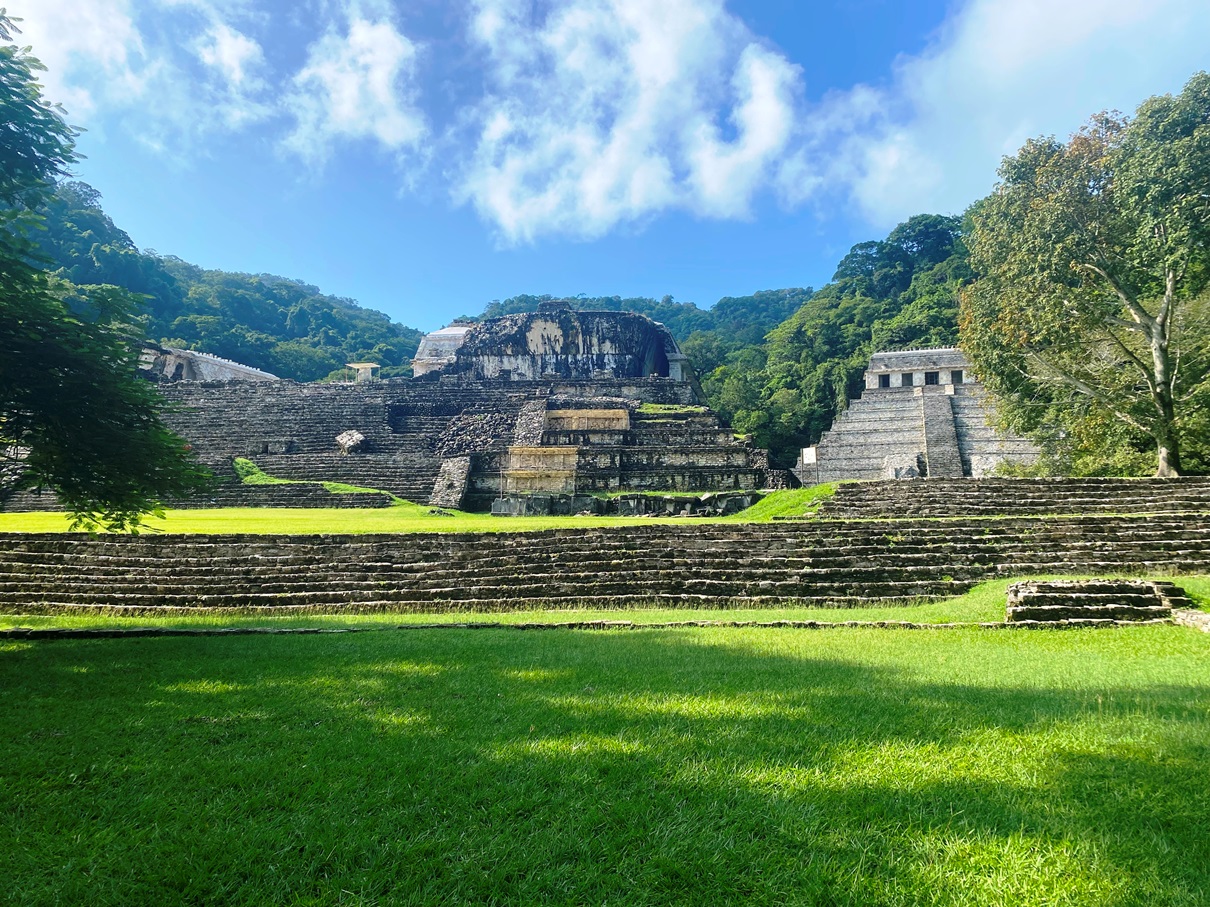
Yes, more ruins.

And I am not going to apologise. If you don’t like ruins, why are you even here? I have a feeling that those who don’t have either unsubscribed by now or have started skimming whenever my blogs feature pictures such as these.

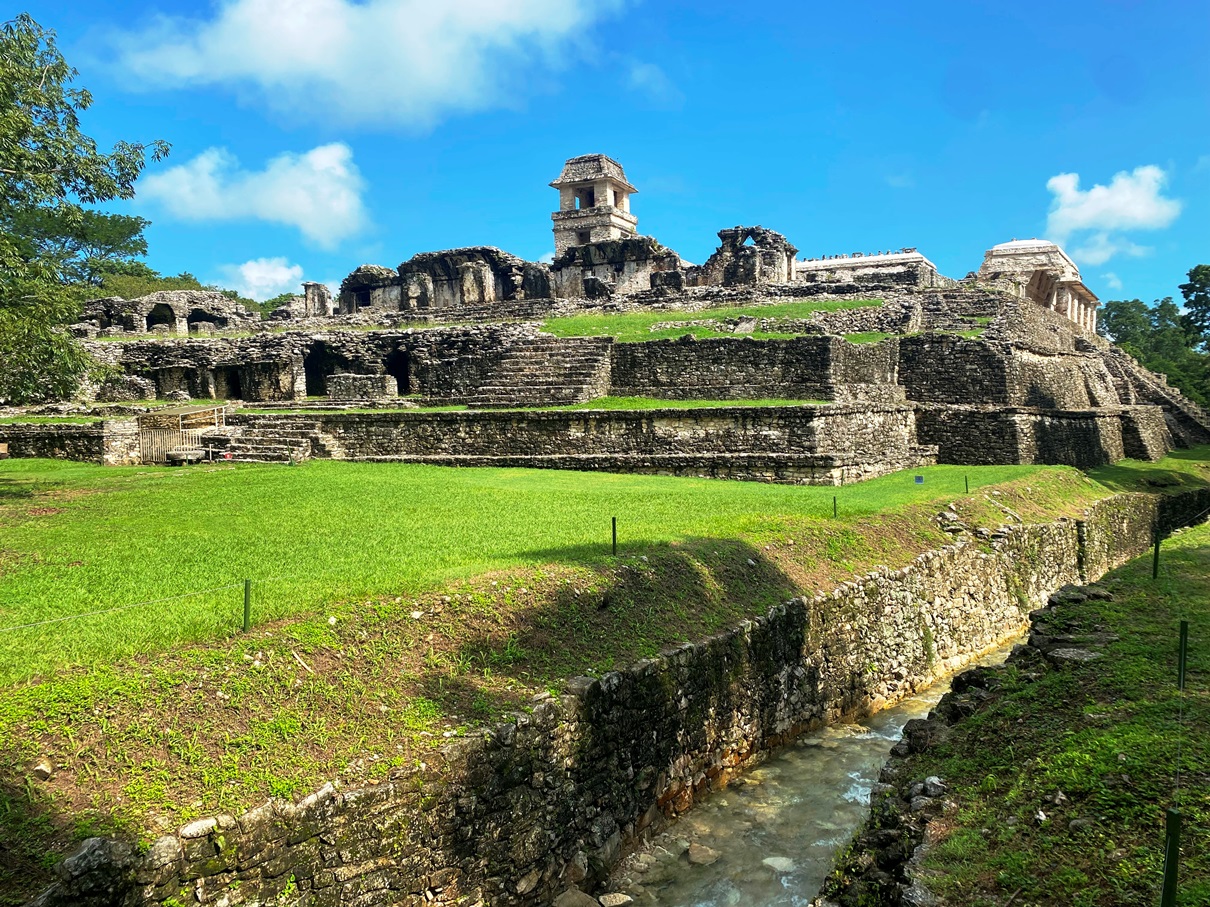
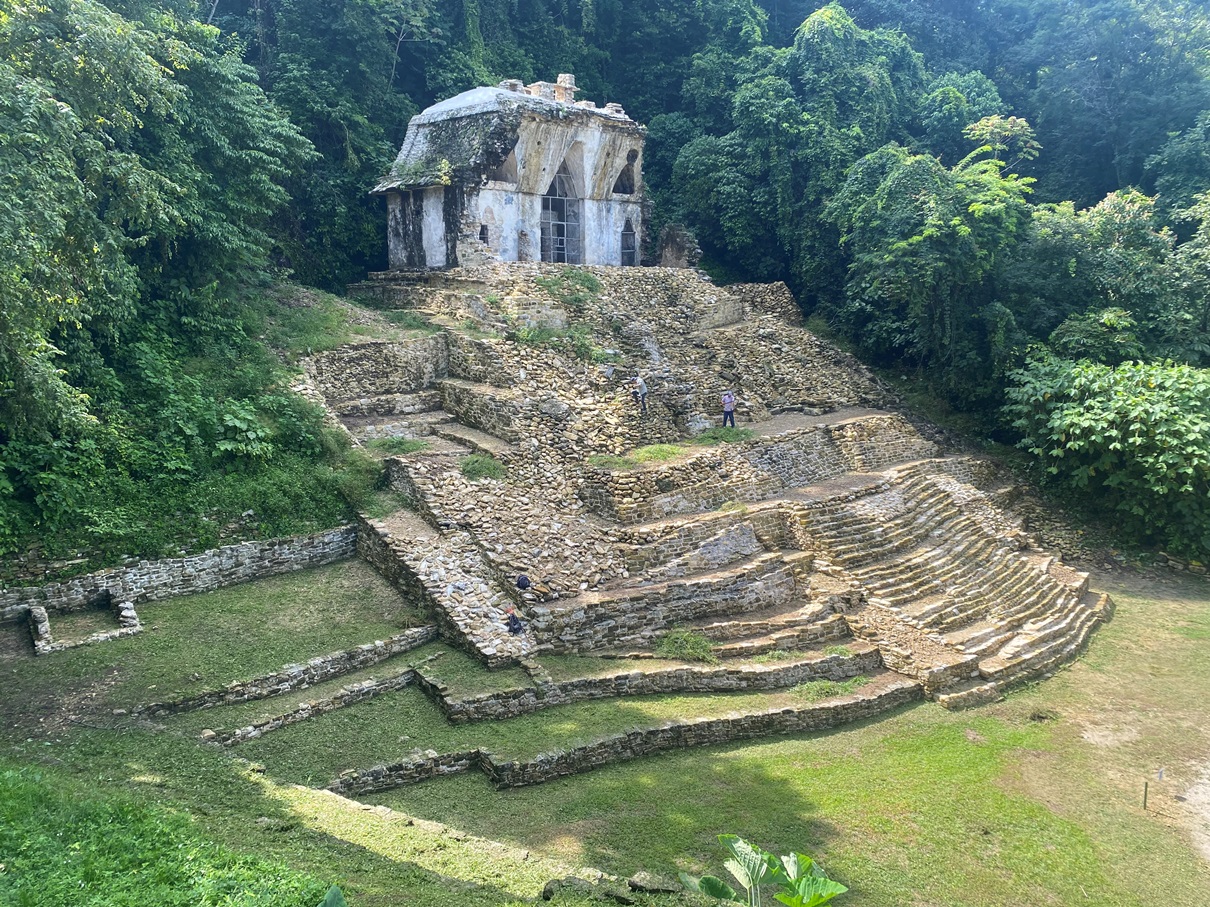
So, for those of you still here, this place is Palenque, which is located in the Chiapas region and was historically another big player in the Mayan Classical period.

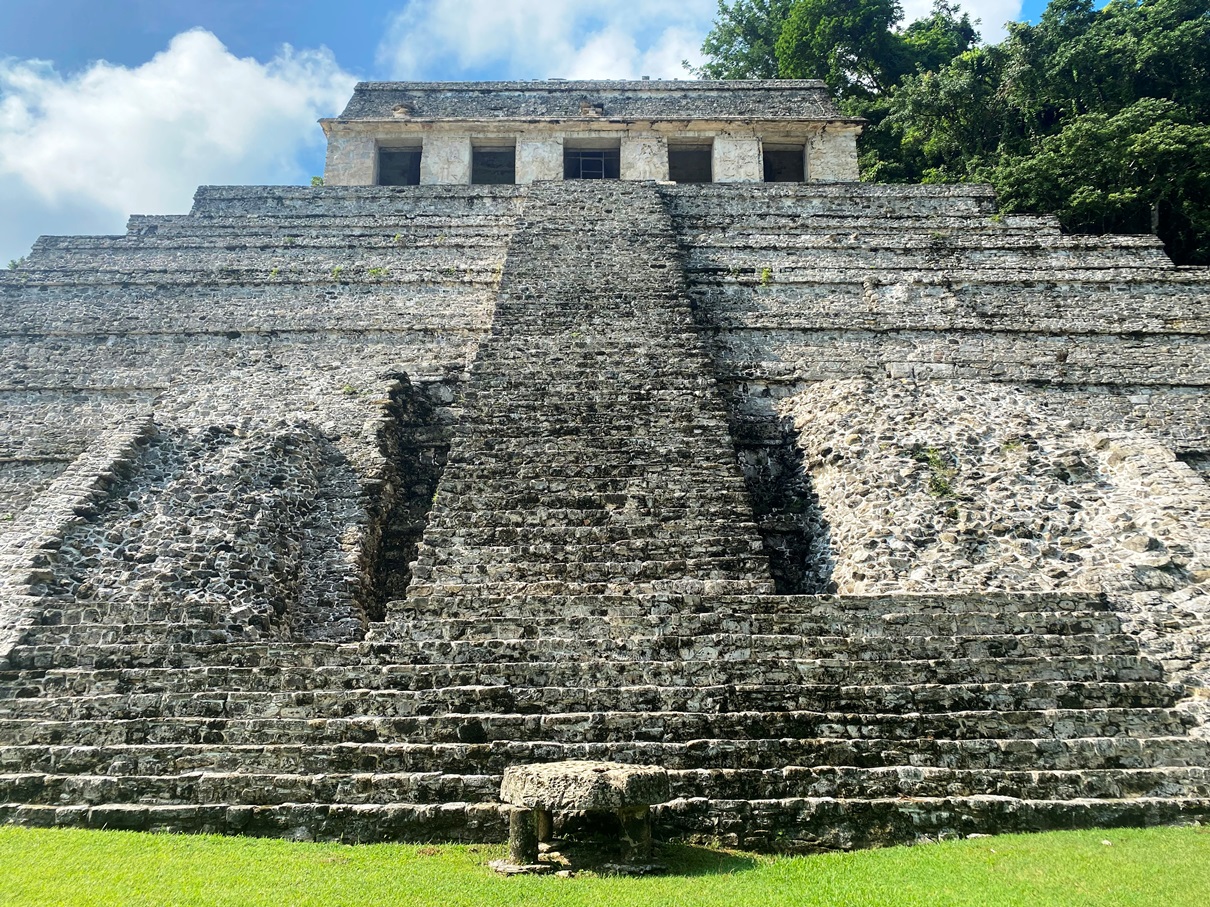
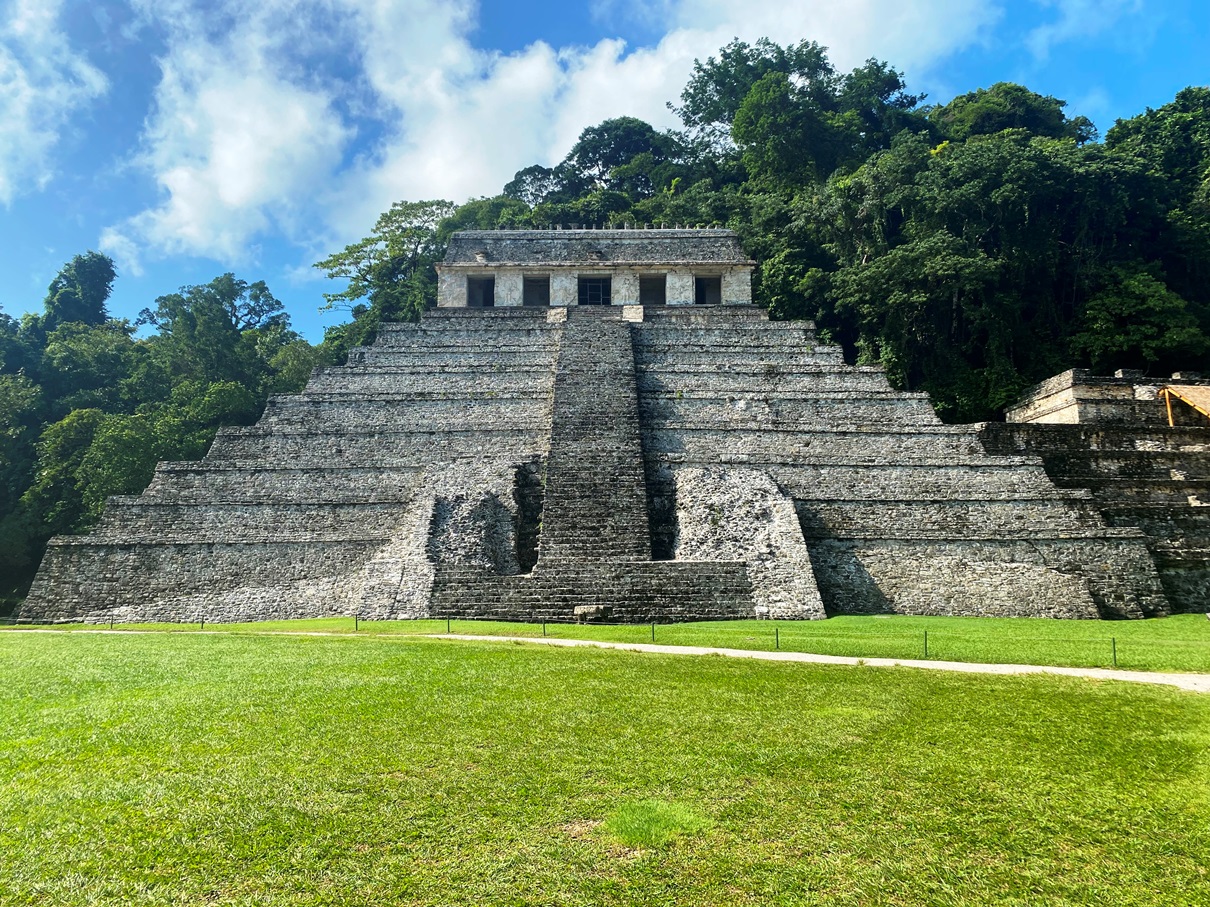
It is mostly known for its Temple of Inscriptions, a site which has been studied extensively due to the hieroglyphic texts found on the tablets on the upper tiers. It is one of the primary sources for Mayan history.

Unfortunately, people are no longer allowed to ascend the pyramid so I was not able to see them myself. I did, however, use my digital camera to zoom in on some of the carvings upon the façade.

The Temple of Inscriptions is also known for being the burial place of K’inich Janaab’ Pakal, who has quite an interesting story. He came to rule as a child king during a time when Palenque was still recovering from being sacked by the rival city of Calakmul. With some initial aid from his esteemed mother – Queen Sak Kʼuk, who served as regent and was a very effective ruler in her own right – he then went on to rein for over seventy years, restoring Palenque to a golden age. The construction of this pyramid began towards the end of his life and was later finished by his son, K’inich Kan B’alam II.

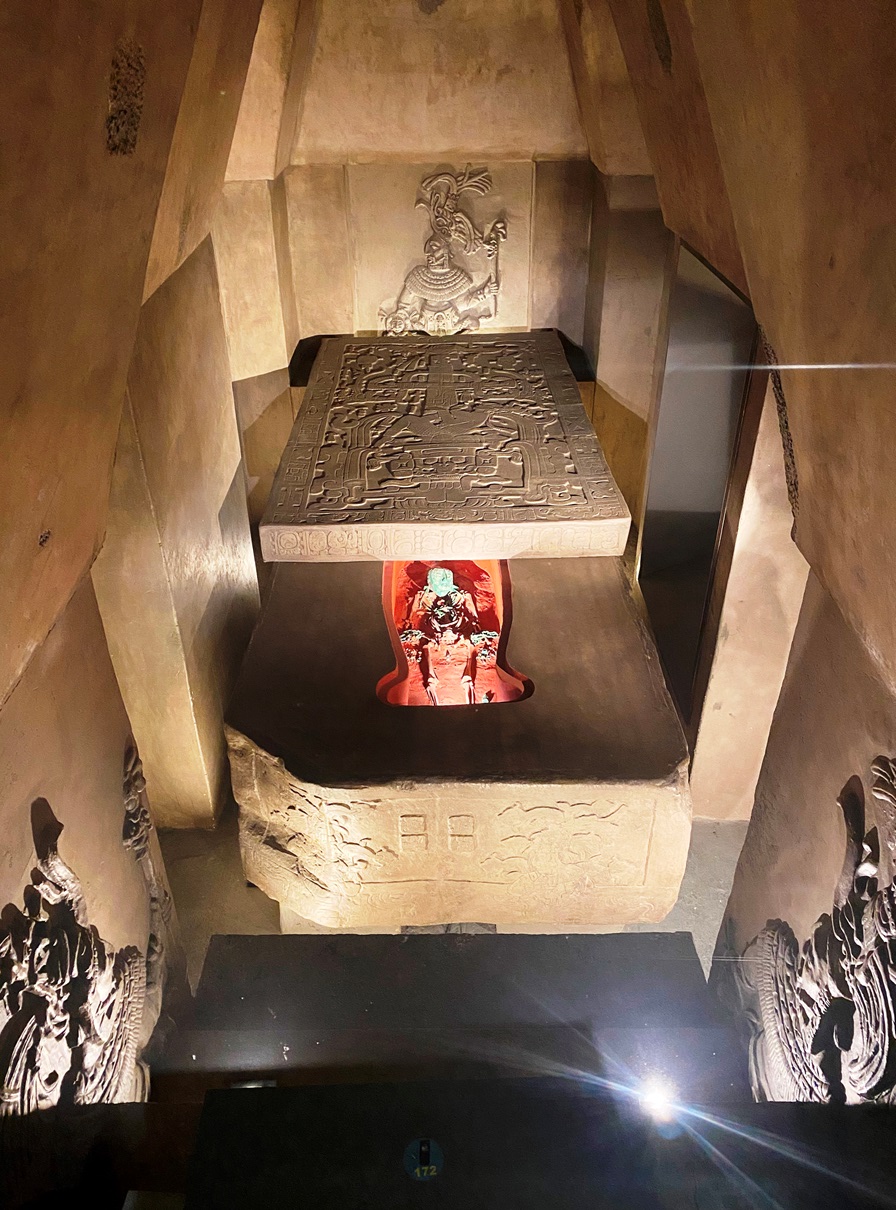
It is also the home to Pakal’s tomb, which was discovered in 1952. Those of you who follow me regularly might remember that I saw a recreation of this when I visited the Museum of Anthropology in Mexico City.

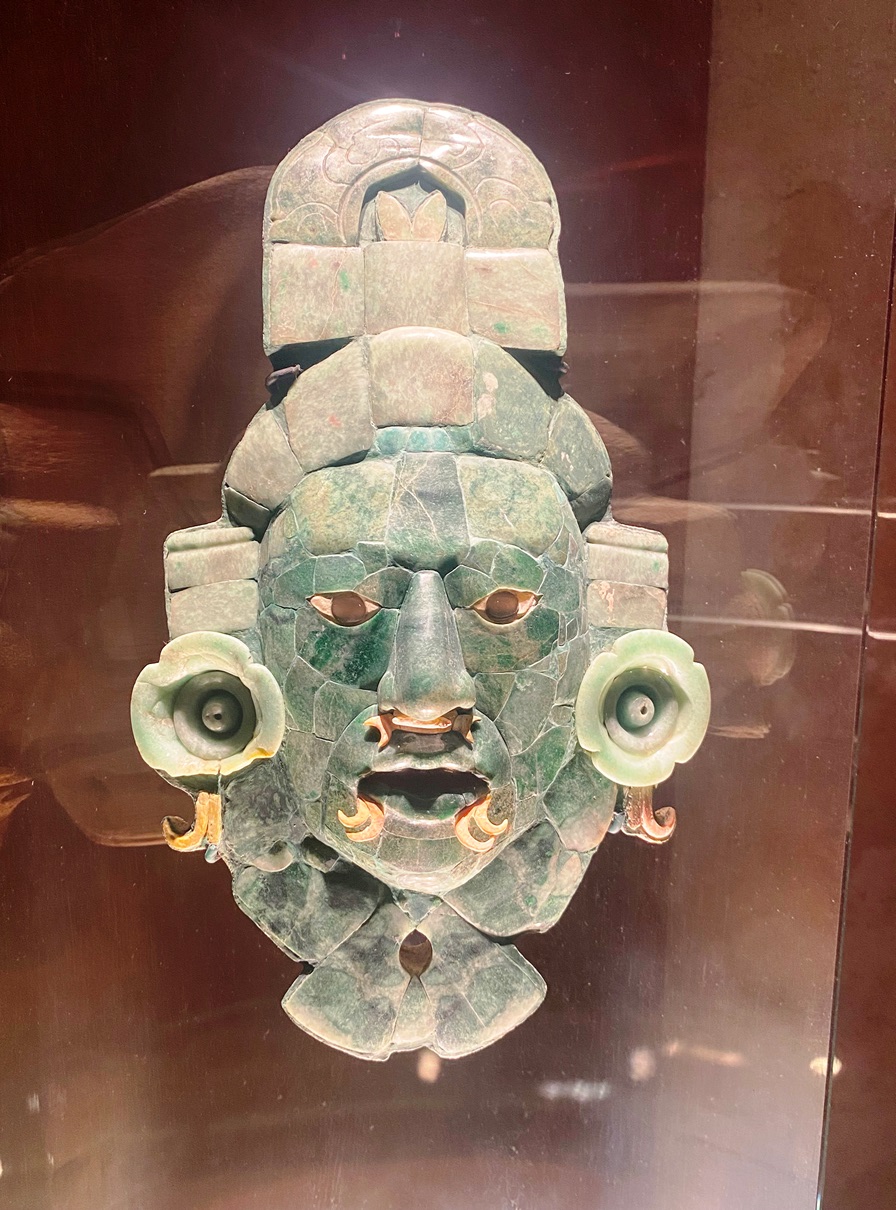
I did not get to see the famous mask that was found within it. I am not quite sure where it is kept. There is an on-site museum at Campeche but it was closed for renovation so perhaps it is there. I can imagine that wherever it is they are taking very particular care of it as it is quite a special archaeological find. Here is a picture of it that I found online.

Jade was a sacred stone to the Mayans. It is bluish-green colour means that it can be associated with many natural things – such as water and trees – and those who wore it were believed to be connecting to all three levels of the Mayan cosmos; the sky, earth and underworld. It is quite common for rulers to be buried wearing such a mask to help them transcend.

When I reached my next destination – Campeche – a couple of days later, I was lucky enough to see a jade mask within its Museum of Mayan Architecture. This is one for a king whose name we do not know but he was from Calakmul, the rival city that sacked Palenque shortly before Palak was born.

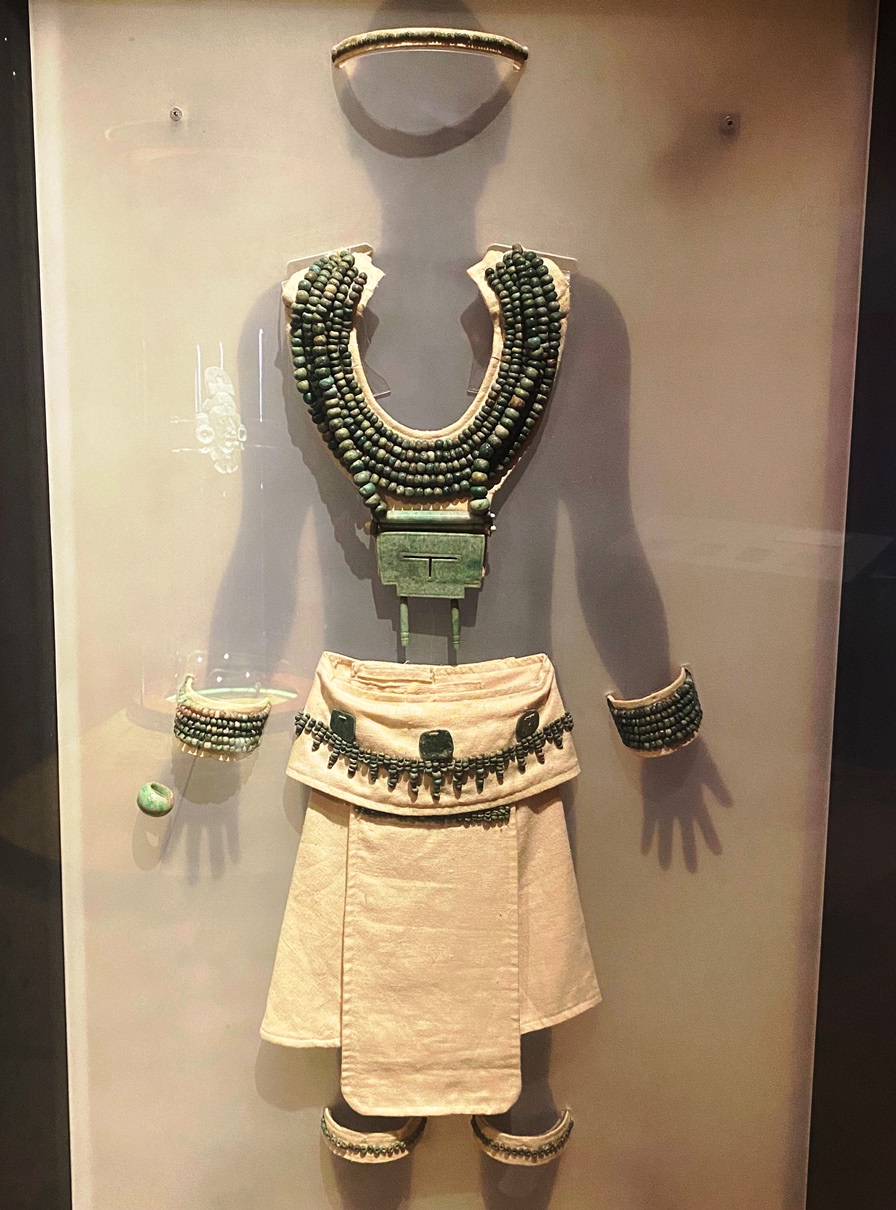
Along with the mask, this person was buried with an entire ensemble of necklaces, bracelets, and other jewellery, mostly made from jade.

I enjoyed Campeche and ended up staying there for a few days (despite its horrendous population of mosquitos that had no sense of boundaries). It is a colonial city which has been awarded UNESCO heritage status, surrounded by walls and several forts across its breadth that helped to protect it from pirates.

These days Campeche is a laid-back place which receives just enough visitors to have a selection of hostels, museums, cafes and gift shops, but not inundated enough to feel overwrought. Tourism is a sideline here, not the main source of economy, so this place still has all the feel of an authentic and ‘real’ Mexican city.

Another good thing about Campeche is that it is close enough to Edzna – another archaeological site – for it to be an easy day trip away. This was the first thing that I did when I arrived (are any of you surprised?).

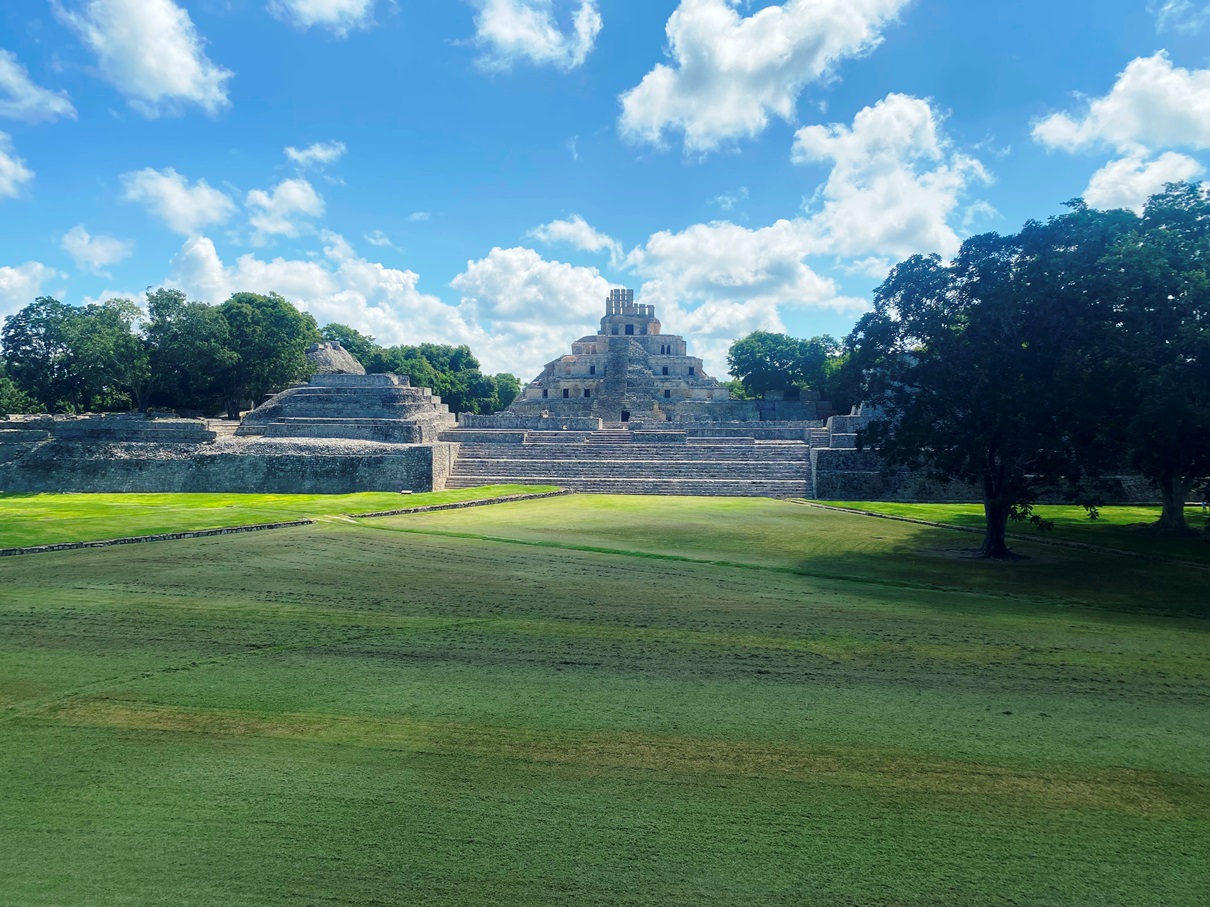
Edzna is not very well known but I think it deserves more attention. I didn’t mind having it mostly to myself, though.

Edzna was not the biggest player in the Mayan world – it spent most of the Classical age as a vassal to Calakmul. What makes it interesting, however, is that it managed to outlast many of the titans of the Mayan world, enduring way beyond the Classical age – when many Mayan cities were abandoned – and into the fourteenth century.

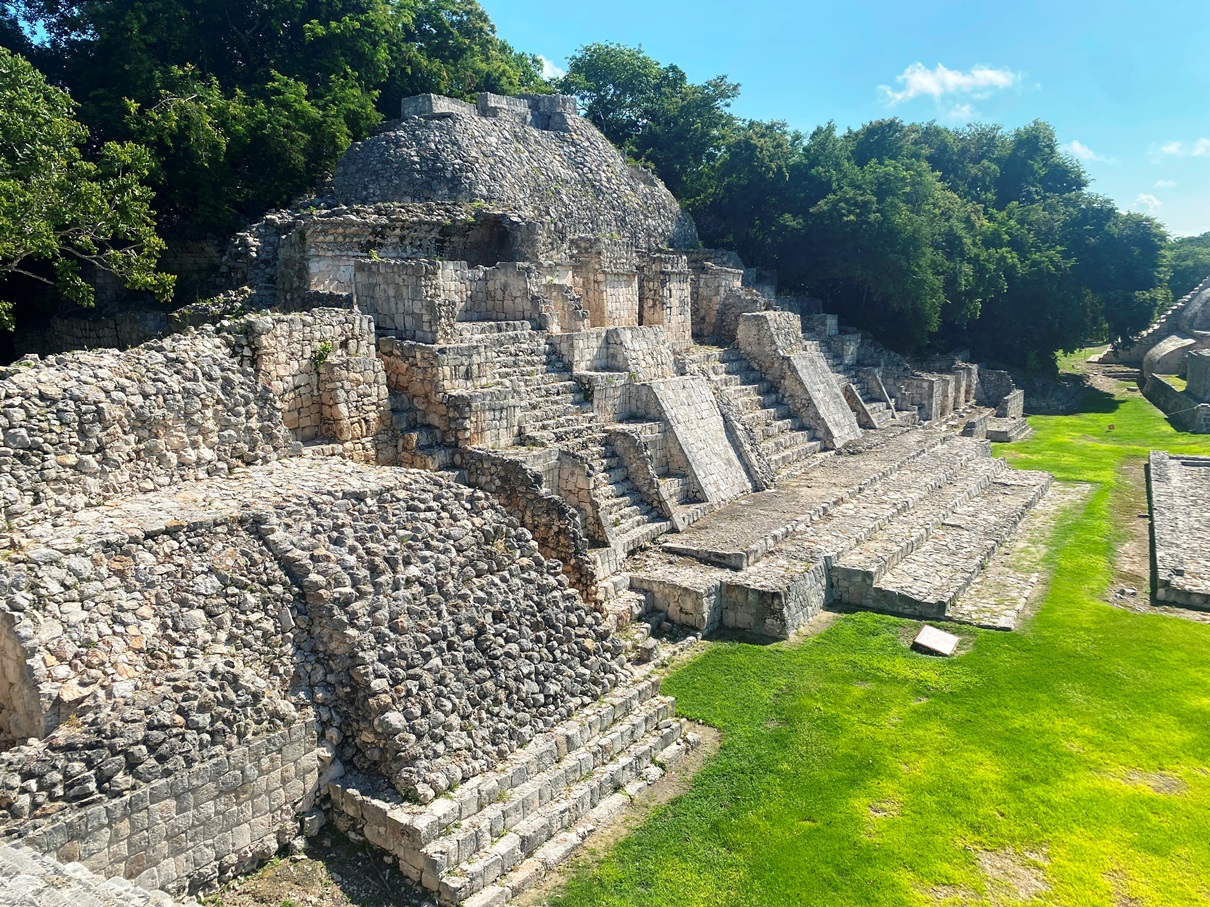
What makes this place stick out for me – as a visitor – is how open it all is. The people who dwelt here must have been a very close-knit community because almost all parts of it are visible to each other. The Nohoch – a 135-meter-long structure stretched across the main plaza – had four rooms within its upper tiers that are believed to have functioned as administrative centres and storage, while its nine meters of steps across its entire breadth likely served as seating during events.

From the Nohoch, one can see a clear view of the Acropolis, which served as the religious centre.

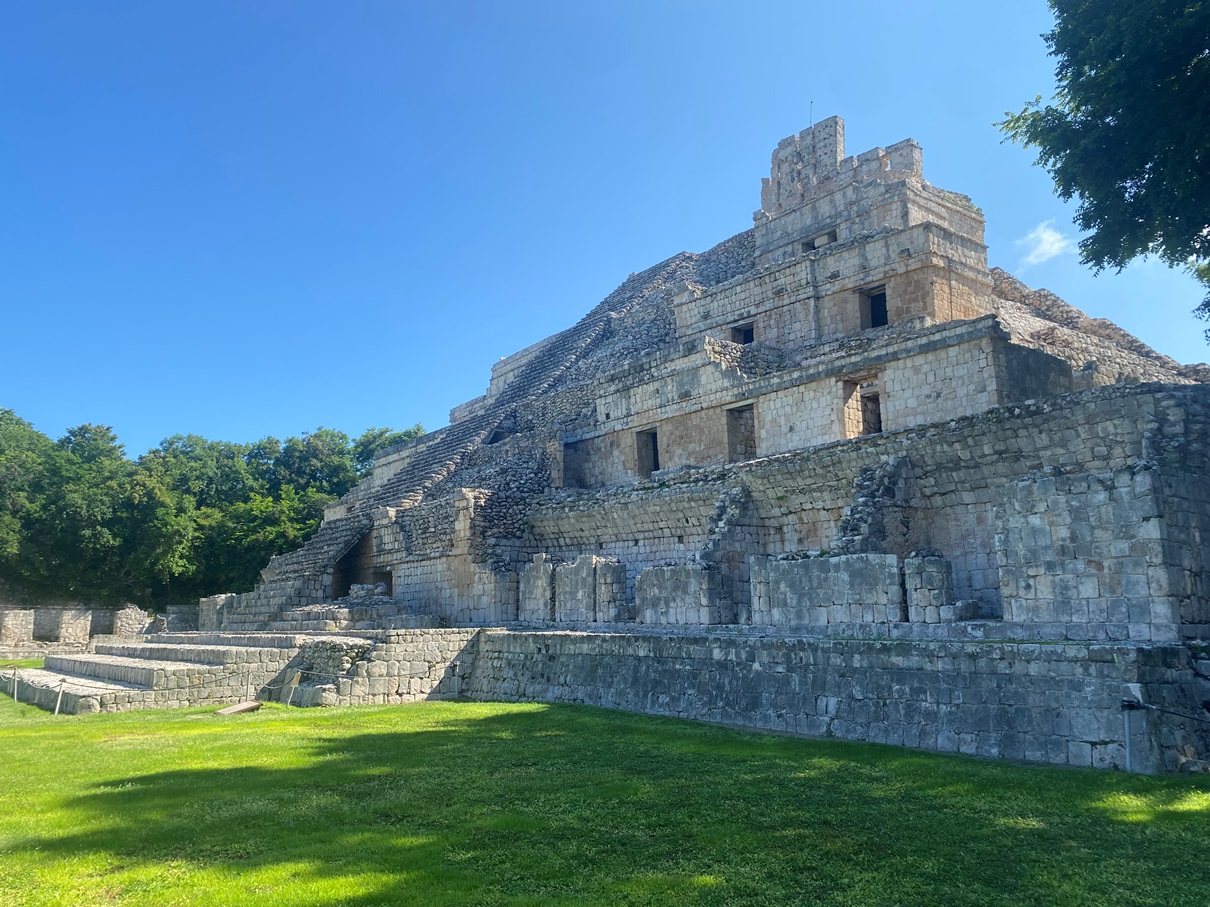
Its main temple is among the most impressive buildings I have seen from the Mayan world. Some inscriptions at its base indicate its construction began in the seventh century, but archaeologists have dated some of the upper layers to the fourteenth century. The fact that this city was still adding to their monuments way after many of the other Mayan cities had dwindled is very impressive.

Unfortunately, people are no longer allowed to climb this pyramid, but within all of those openings you can see exist twenty-seven different chambers that have been excavated.

One last thing I want to mention about this site is that in one of the plazas on the outskirts are the foundations of a temple with two stucco carvings still preserved in their original colours. They represent the sun god – Kinich Ahau – in both his rising and setting stages of the day. I love it when you find things such as these as they give you a glimpse of what a place might have looked like during its zenith.

For my final day in Campeche, I went for a wander around the historic centre. Most of the fortresses have been converted into museums that are free to enter. I also enjoyed the Palace Museum which had displays not only concerning the city’s history but also about boats and piracy.


Click on the following links to see more photos from my time in Palenque and Campeche.


Travelblog LA#35: San Cristobal de Las Casas – Mexico

30th September – 1st October, 2023


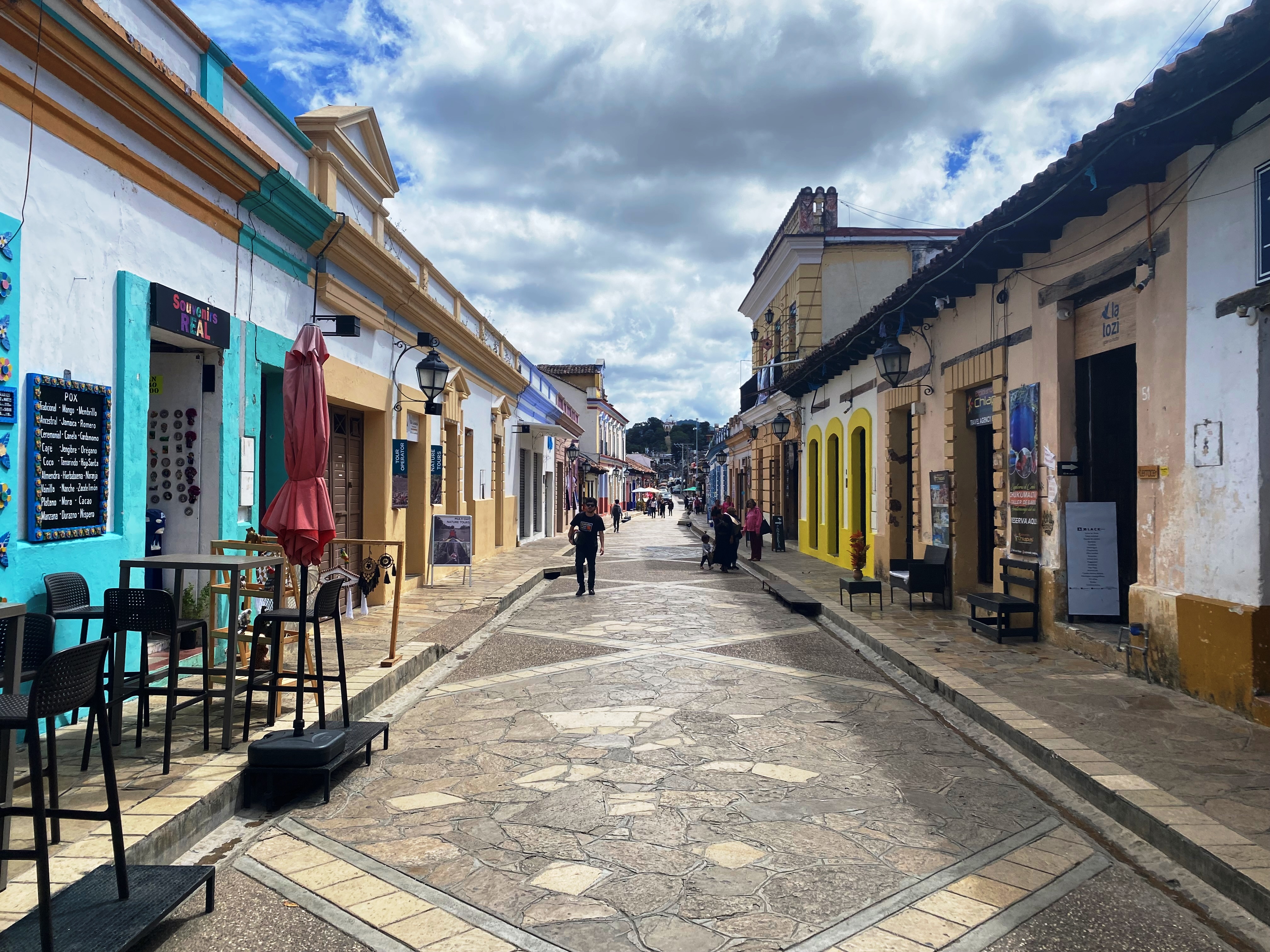
I arrived in San Cristobal De Las Casas on a wet and cloudy morning, after a night bus from Oaxaca. As soon as I stepped onto the street the architecture and ambiance felt oddly familiar; single-storey buildings and cobbled streets. It reminded me of Guatemala. This is perhaps not all that surprising considering that I was back in Mayan territory and this part of Mexico is close to the border. There was a time when the Chiapas region almost was a part of Guatemala back in the days before Latin America’s borders were finalised.

I didn’t do much that first day as I was tired from my journey. Once I had checked into my hostel I went for a little walk around the plaza to get my bearings and then to the market to buy some ingredients. Life seems to pass slowly here, and the other backpackers I met were mostly of two varieties; people staying just a night or two whilst passing between the Mexico-Guatemala border, and those who were staying much longer because they had come here as a place to lay low for a while.

This place also has somewhat of an expat population; something that I discovered my first day when I found myself wandering into places such as organic markets filled with artisan stalls, and a splattering of international restaurants. Most of them seemed to be of the more down-to-earth kind, and they have assimilated well; the city still has an air of authenticity about it. I think there are several reasons people end up moving here. The cool mountain air is certainly one of them; at over two thousand meters altitude, the climate is very agreeable. It also happens to be somewhat cheaper than the other parts of Mexico that I have visited so far.
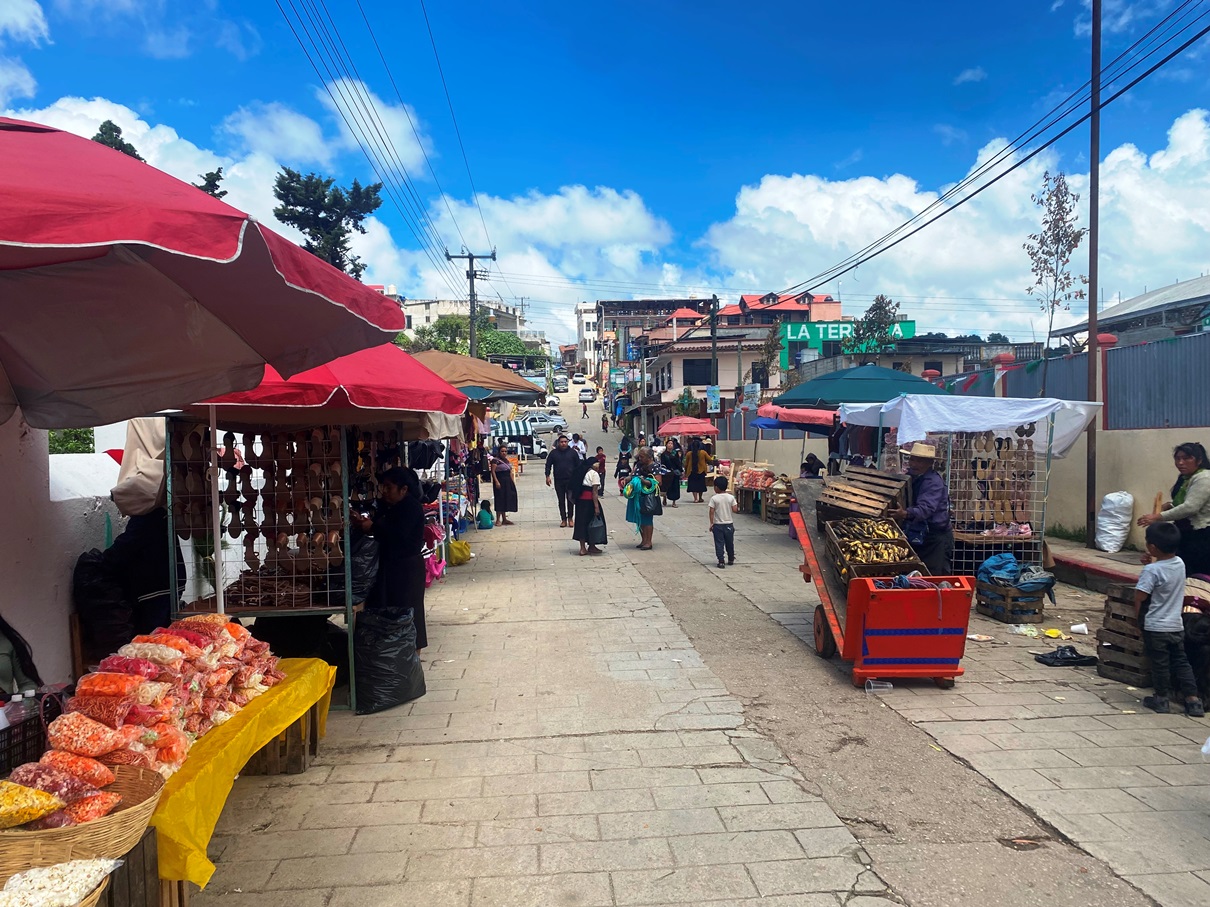
The following day I did what many consider to be the most rewarding activity in this area and went on a tour to some of the nearby villages. I decided to go with a guide on this occasion; both because the price was quite reasonable and visiting the communities around here is more of a cultural than scenic experience and it seemed like a wise idea to have someone from the area to explain the nuances to me.

The minibus picked me up from my hostel and I shared the experience with around ten other people. Most of them were Mexican but the guide also spoke English and translated his speeches for me and a pair of other English speakers. The first village that we went to was called Zinacantán, and it was mostly a sprawl of homes and greenhouses spread across a valley. Our guide explained to us that most of the men here cultivate flowers whilst the women work in textiles.

After passing through a checkpoint where we had to – like all visitors – pay a small fee, we went to a cooperative where we got to witness a young woman working a loom and the guide told us more about the people of this village. They speak a language called Tzotzil, which is a Mayan dialect, but most of the schools are bilingual now so the younger generation also speak Spanish. Here, it is normal for people to get married sometime between the ages of fourteen to eighteen, and these pairings were traditionally arranged by their parents but there is currently a cultural shift going on where people are now getting to choose their partners.

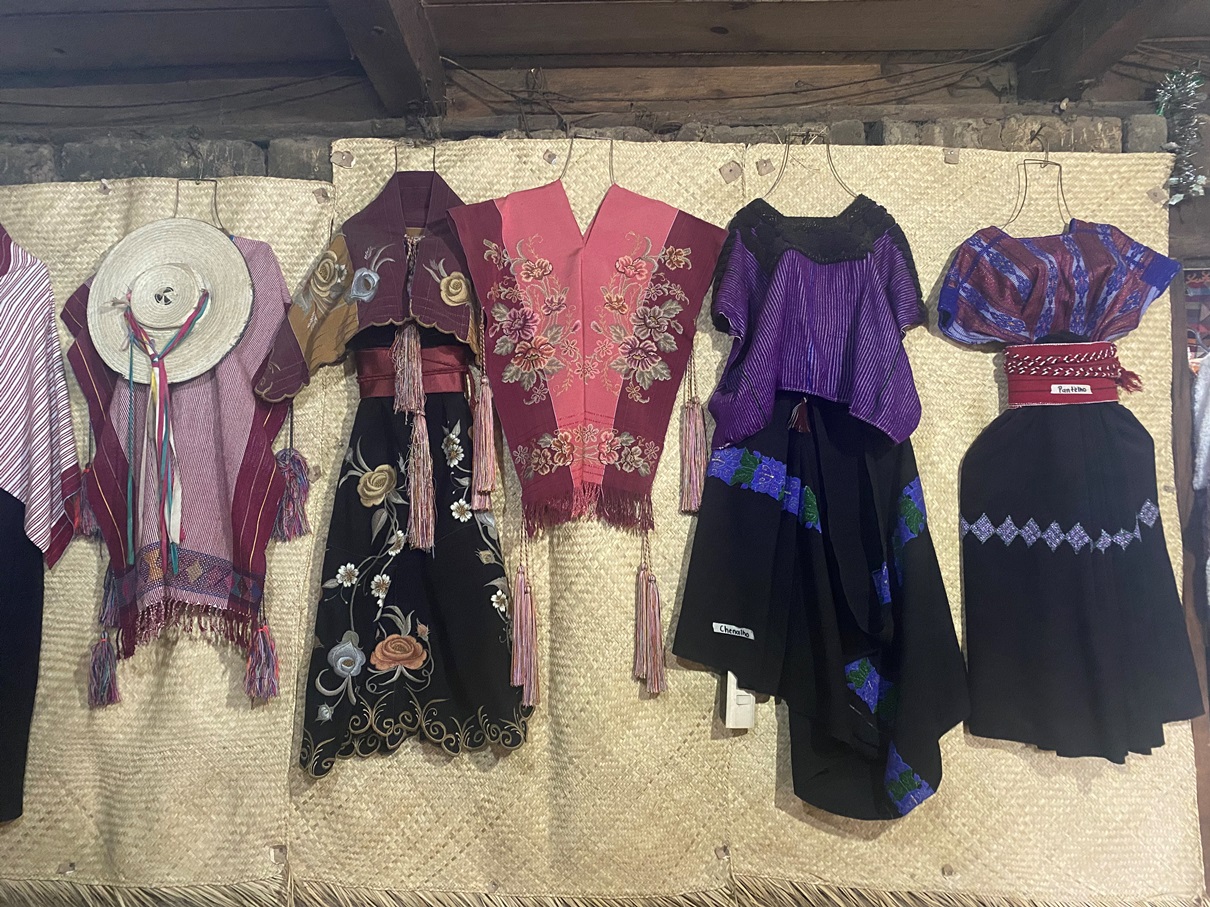
We got to try a local of kind of distilled alcohol they produce here called pox which is made from corn and sugar cane, and then we were taken to a room where we saw different kinds of attire the people in the area wear. Each village has its own kind of style of clothing so people can tell where someone is from by how they are clad. I got to try on the everyday attire of a man from Zinacantán.

Next we were taken to see an authentic kitchen where a pair of women were making homemade tortillas using a dough presser and cooking them over an open fire. They had a selection of ingredients out so that we could try then, including beans, crushed pumpkin seeds and locally-made goat’s cheese.

One last thing that I would like to add is that just as we were leaving we passed by a little procession of men making their way through the village whilst playing instruments. Our guide told us that it was to honour the saints (video here).

The second village that we visited was Chamula, and despite being quite close to Zinacantán, the energy felt very different here. As we entered the wealth gap within the population was obvious from the differences between some of the homes; varying from little huts to grand mansions. This is because some of them were farmers whilst others either worked in commerce or were part of the local cartel. Our guide also warned us that we needed to be a bit more careful here when it came to etiquette, particularly with the use of our cameras; taking photos of the town’s features was fine, but we were not to take pictures of the locals without their permission.
We parked up by a derelict old church that was built by the Spanish during the colonial times but the locals abandoned it in favour of a newer one on the other side of the town. The cemetery around it, however, was very much still in use and we could see people tending to it when we arrived. Apparently, with Día de Muertos coming up, they were clearing up the graves as it is believed that the spirits return during the festival.

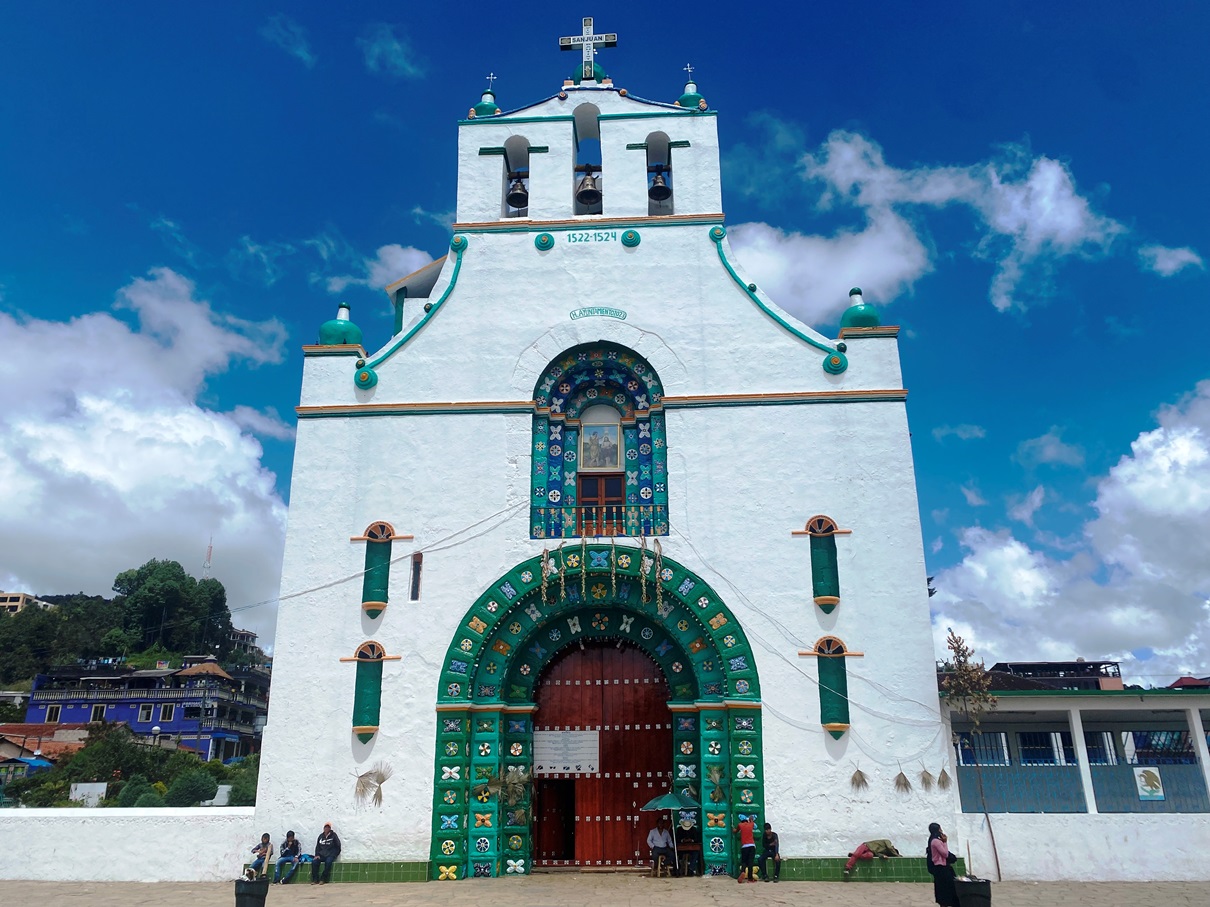
It was a market day and we got to wander through it all. I have seen plenty of indigenous markets by now and this one felt more authentic than most. The main event for visiting this village, however, was when we reached the Iglesia de San Juan Chamula.

Our guide reminded us that it was strictly against the rules to take any photos here, and when I entered, I could completely understand why. It was not like any church that I had ever seen before. There were no chairs, so most of the chamber was space where families and individuals sat on the floor burning candles and making offerings whilst chanting. The walls were lined with cabinets containing effigies of various saints, and covered in bouquets of flowers. And, in front of those, were tables filled with thousands upon thousands of candles, softly glowing and so numerous that standing too close would cause you to sweat. There was also fresh grass covering much of the floor – between all the spots where people were making their offerings – which gave the room a floral and musky smell.
I have rarely, in all my travels, seen such religiosity as did in this place. The fixated fashion that some of the people prayed was very moving. You could tell that, for them, at this moment, nothing else existed but them and the god or saint that they were praying to as they swayed back and forth, murmured, pressed their foreheads to the floor, or made other supplications.

Although this is technically a Catholic church, conventional mass is never held here and there are no priests. Only shamans, who practice similar techniques to what these people used to perform in places such as caves before the Spanish came. People come to them with their problems, and the nature of the problem will dictate which particular saint they appeal to (and this is just me guessing, but I think that the ‘saints’ have likely all been assimilated with pre-Colombian gods). Most of the time it is to ask for healing or boons but they do also sometimes offer darker wishes such as curses.

Besides this day trip, most of my short time in San Cristobal De Las Casas was spent enjoying the slow pace of life and relaxing before I continued to the next stage of my journey. I am back in Mayan territory now, but on the Mexican side, and I am heading towards the Yucatan peninsular. My next stop will be a place called Palenque.

One last thing I would like to mention before I sign off on this blog is I want to give a shout-out to Loving Hut; a tasty Asian-inspired vegan place close to the market. The food there is delicious and cheap, and Heaven – the young woman who runs it – is a lovely person. Make sure to visit if you are in the area.