Travelblog LA#35: San Cristobal de Las Casas – Mexico

30th September – 1st October, 2023


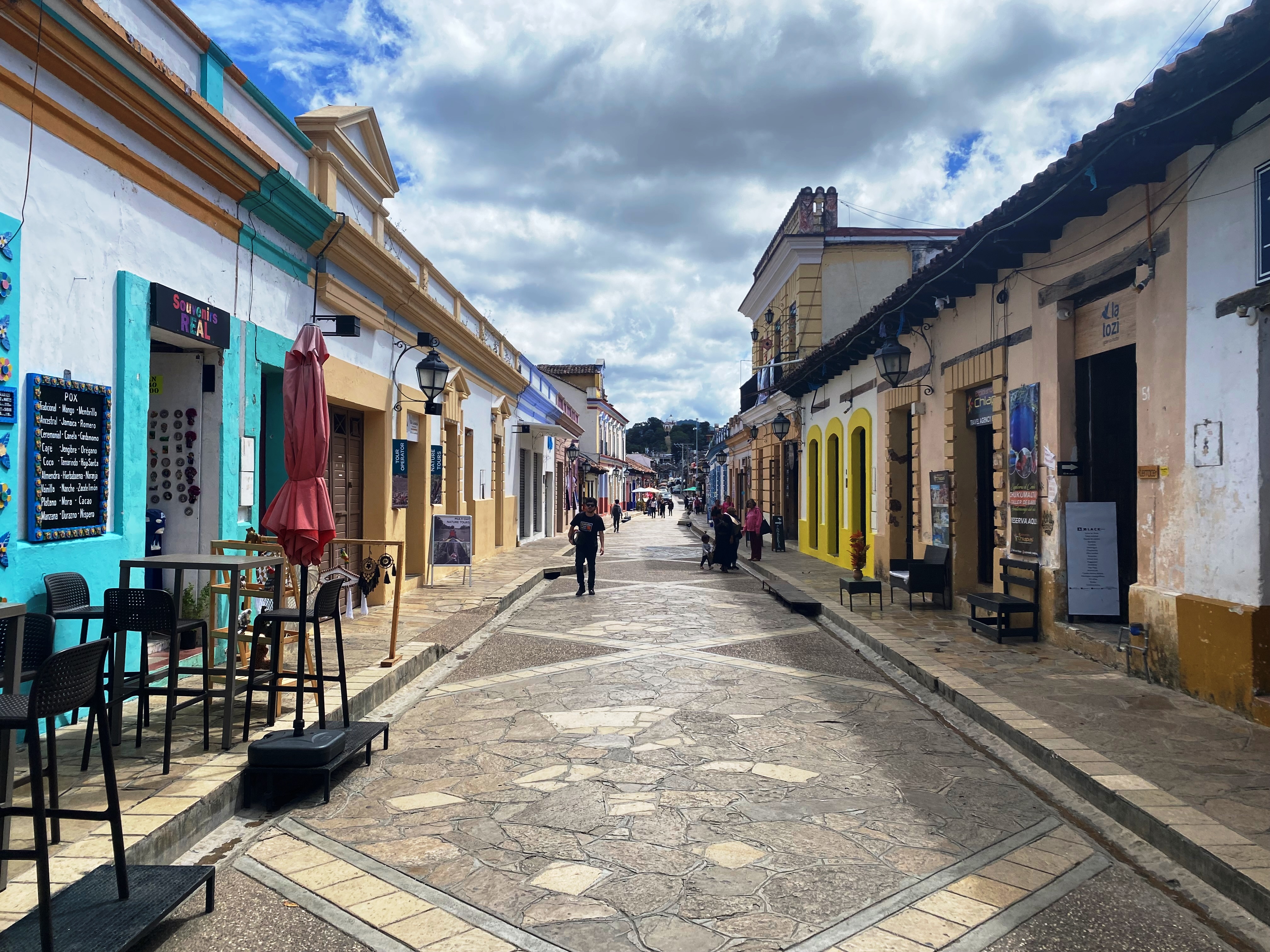
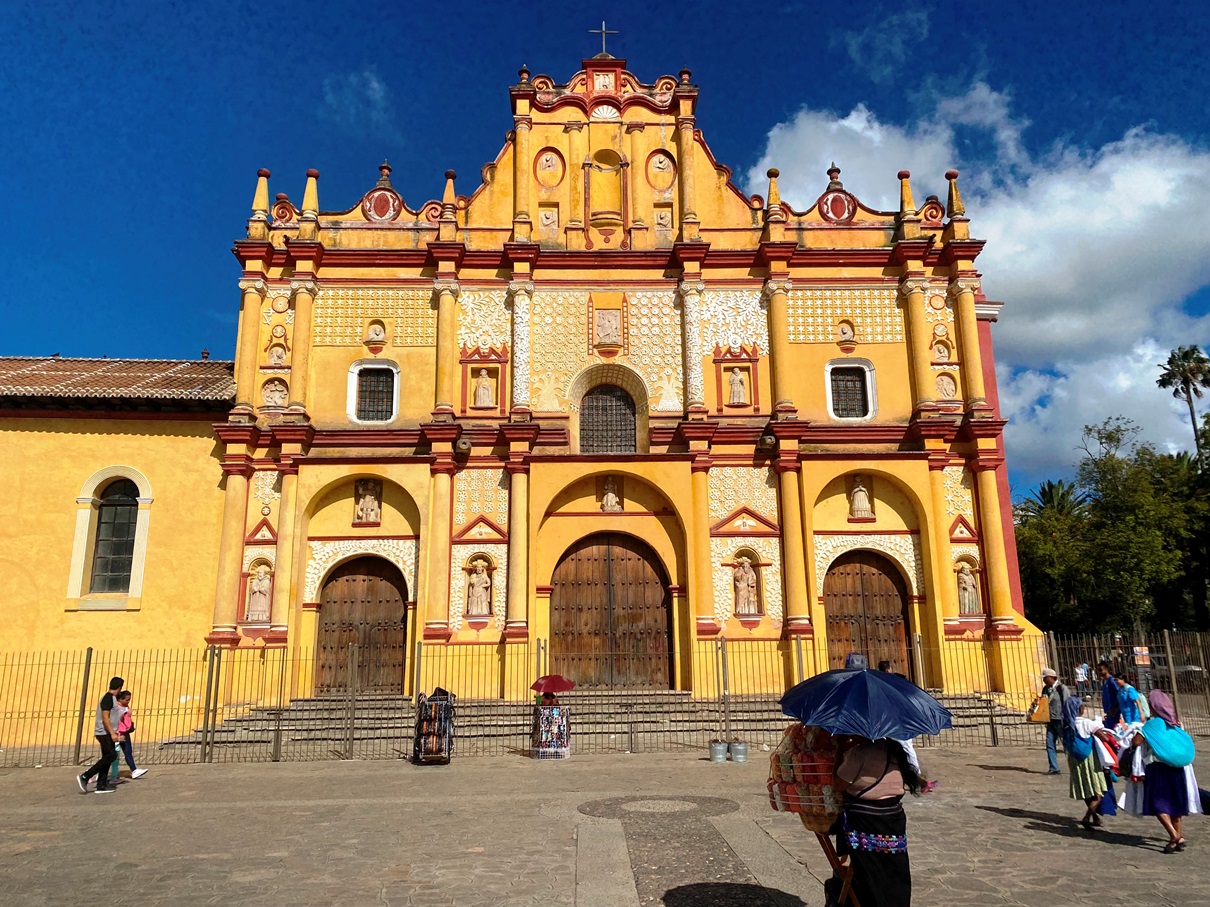
I arrived in San Cristobal De Las Casas on a wet and cloudy morning, after a night bus from Oaxaca. As soon as I stepped onto the street the architecture and ambiance felt oddly familiar; single-storey buildings and cobbled streets. It reminded me of Guatemala. This is perhaps not all that surprising considering that I was back in Mayan territory and this part of Mexico is close to the border. There was a time when the Chiapas region almost was a part of Guatemala back in the days before Latin America’s borders were finalised.

I didn’t do much that first day as I was tired from my journey. Once I had checked into my hostel I went for a little walk around the plaza to get my bearings and then to the market to buy some ingredients. Life seems to pass slowly here, and the other backpackers I met were mostly of two varieties; people staying just a night or two whilst passing between the Mexico-Guatemala border, and those who were staying much longer because they had come here as a place to lay low for a while.
This place also has somewhat of an expat population; something that I discovered my first day when I found myself wandering into places such as organic markets filled with artisan stalls, and a splattering of international restaurants. Most of them seemed to be of the more down-to-earth kind, and they have assimilated well; the city still has an air of authenticity about it. I think there are several reasons people end up moving here. The cool mountain air is certainly one of them; at over two thousand meters altitude, the climate is very agreeable. It also happens to be somewhat cheaper than the other parts of Mexico that I have visited so far.

The following day I did what many consider to be the most rewarding activity in this area and went on a tour to some of the nearby villages. I decided to go with a guide on this occasion; both because the price was quite reasonable and visiting the communities around here is more of a cultural than scenic experience and it seemed like a wise idea to have someone from the area to explain the nuances to me.

The minibus picked me up from my hostel and I shared the experience with around ten other people. Most of them were Mexican but the guide also spoke English and translated his speeches for me and a pair of other English speakers. The first village that we went to was called Zinacantán, and it was mostly a sprawl of homes and greenhouses spread across a valley. Our guide explained to us that most of the men here cultivate flowers whilst the women work in textiles.

After passing through a checkpoint where we had to – like all visitors – pay a small fee, we went to a cooperative where we got to witness a young woman working a loom and the guide told us more about the people of this village. They speak a language called Tzotzil, which is a Mayan dialect, but most of the schools are bilingual now so the younger generation also speak Spanish. Here, it is normal for people to get married sometime between the ages of fourteen to eighteen, and these pairings were traditionally arranged by their parents but there is currently a cultural shift going on where people are now getting to choose their partners.

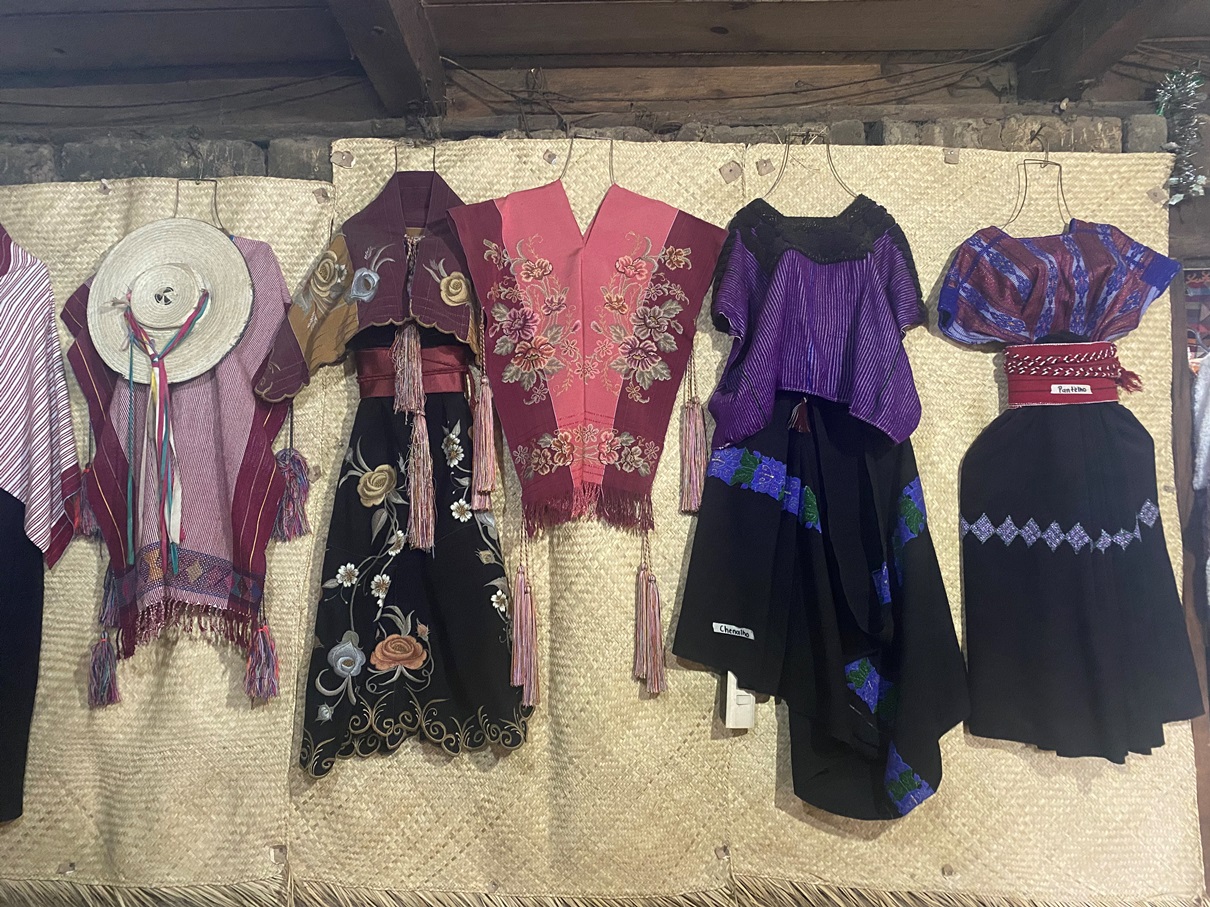
We got to try a local of kind of distilled alcohol they produce here called pox which is made from corn and sugar cane, and then we were taken to a room where we saw different kinds of attire the people in the area wear. Each village has its own kind of style of clothing so people can tell where someone is from by how they are clad. I got to try on the everyday attire of a man from Zinacantán.

Next we were taken to see an authentic kitchen where a pair of women were making homemade tortillas using a dough presser and cooking them over an open fire. They had a selection of ingredients out so that we could try then, including beans, crushed pumpkin seeds and locally-made goat’s cheese.

One last thing that I would like to add is that just as we were leaving we passed by a little procession of men making their way through the village whilst playing instruments. Our guide told us that it was to honour the saints (video here).

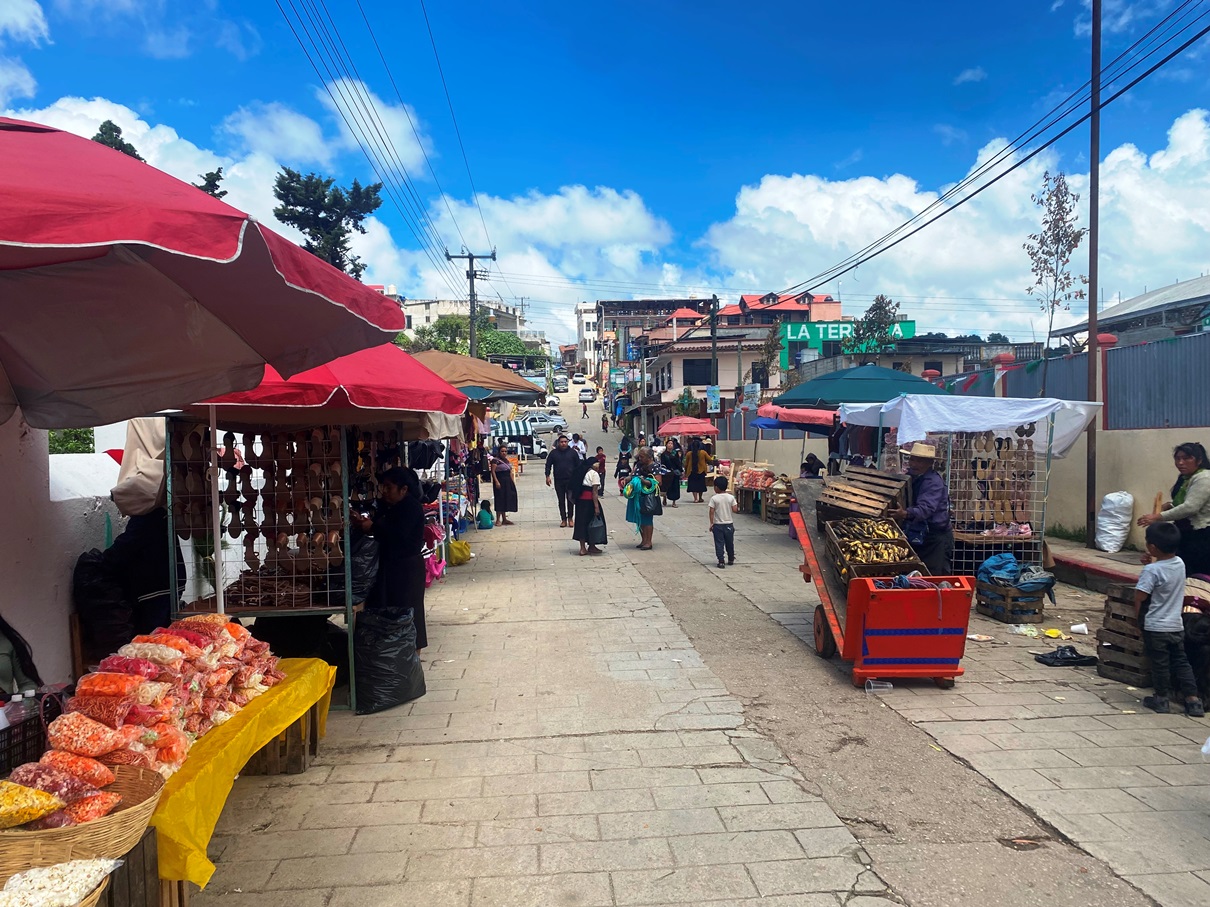
The second village that we visited was Chamula, and despite being quite close to Zinacantán, the energy felt very different here. As we entered the wealth gap within the population was obvious from the differences between some of the homes; varying from little huts to grand mansions. This is because some of them were farmers whilst others either worked in commerce or were part of the local cartel. Our guide also warned us that we needed to be a bit more careful here when it came to etiquette, particularly with the use of our cameras; taking photos of the town’s features was fine, but we were not to take pictures of the locals without their permission.

We parked up by a derelict old church that was built by the Spanish during the colonial times but the locals abandoned it in favour of a newer one on the other side of the town. The cemetery around it, however, was very much still in use and we could see people tending to it when we arrived. Apparently, with Día de Muertos coming up, they were clearing up the graves as it is believed that the spirits return during the festival.

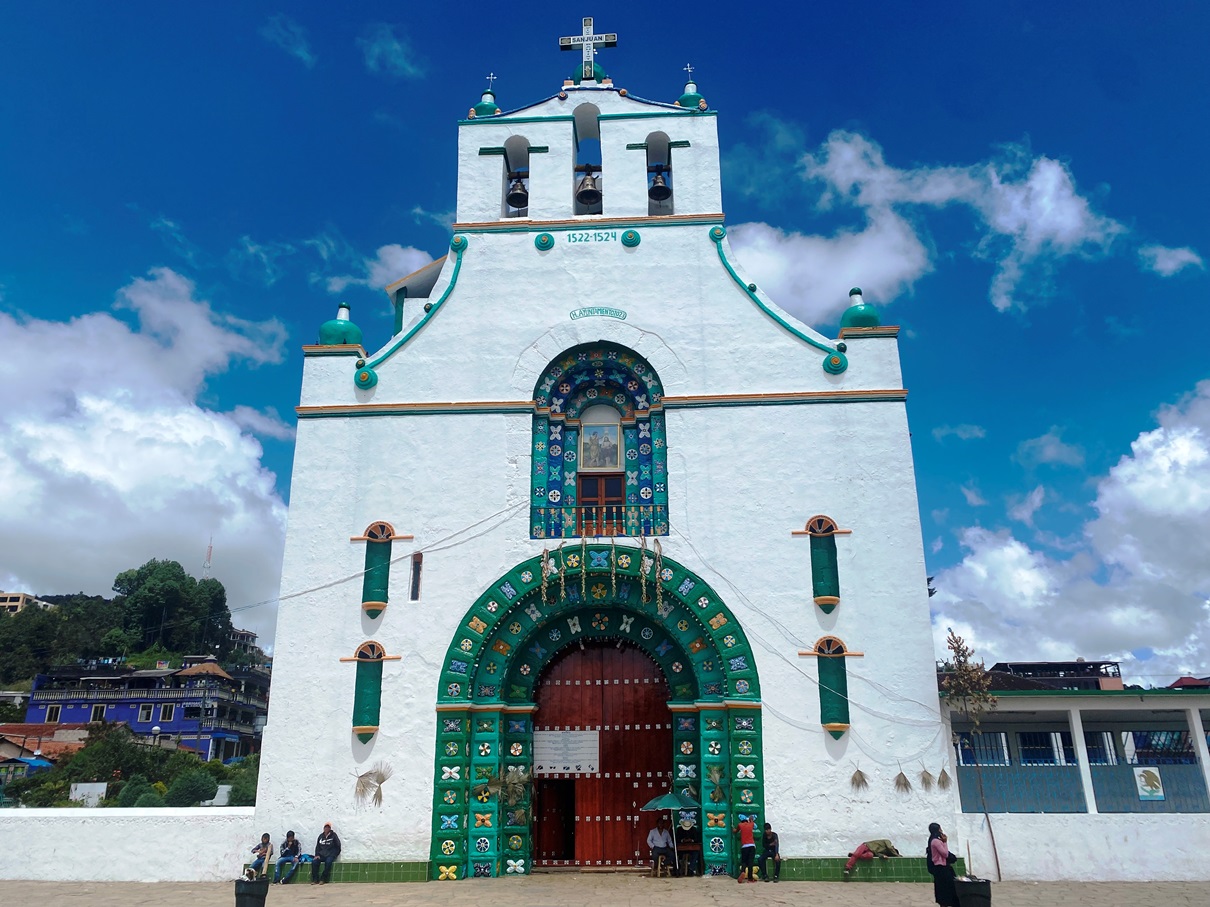
It was a market day and we got to wander through it all. I have seen plenty of indigenous markets by now and this one felt more authentic than most. The main event for visiting this village, however, was when we reached the Iglesia de San Juan Chamula.

Our guide reminded us that it was strictly against the rules to take any photos here, and when I entered, I could completely understand why. It was not like any church that I had ever seen before. There were no chairs, so most of the chamber was space where families and individuals sat on the floor burning candles and making offerings whilst chanting. The walls were lined with cabinets containing effigies of various saints, and covered in bouquets of flowers. And, in front of those, were tables filled with thousands upon thousands of candles, softly glowing and so numerous that standing too close would cause you to sweat. There was also fresh grass covering much of the floor – between all the spots where people were making their offerings – which gave the room a floral and musky smell.

I have rarely, in all my travels, seen such religiosity as did in this place. The fixated fashion that some of the people prayed was very moving. You could tell that, for them, at this moment, nothing else existed but them and the god or saint that they were praying to as they swayed back and forth, murmured, pressed their foreheads to the floor, or made other supplications.

Although this is technically a Catholic church, conventional mass is never held here and there are no priests. Only shamans, who practice similar techniques to what these people used to perform in places such as caves before the Spanish came. People come to them with their problems, and the nature of the problem will dictate which particular saint they appeal to (and this is just me guessing, but I think that the ‘saints’ have likely all been assimilated with pre-Colombian gods). Most of the time it is to ask for healing or boons but they do also sometimes offer darker wishes such as curses.

Besides this day trip, most of my short time in San Cristobal De Las Casas was spent enjoying the slow pace of life and relaxing before I continued to the next stage of my journey. I am back in Mayan territory now, but on the Mexican side, and I am heading towards the Yucatan peninsular. My next stop will be a place called Palenque.

One last thing I would like to mention before I sign off on this blog is I want to give a shout-out to Loving Hut; a tasty Asian-inspired vegan place close to the market. The food there is delicious and cheap, and Heaven – the young woman who runs it – is a lovely person. Make sure to visit if you are in the area.


Travelblog LA#34: Oaxaca – Mexico

26th – 28th September, 2023


Another week, another series of ruins to explore.

And let’s just face it, lately this blog – besides from a few intervals – has turned into Tej’s History of Mexico Tour, so for those of you who are regular readers; welcome back. And those of you who are new; hello, this next instalment is going to cover my time in the Oaxaca region of Mexico, which was historically the home of the Zapotec people.

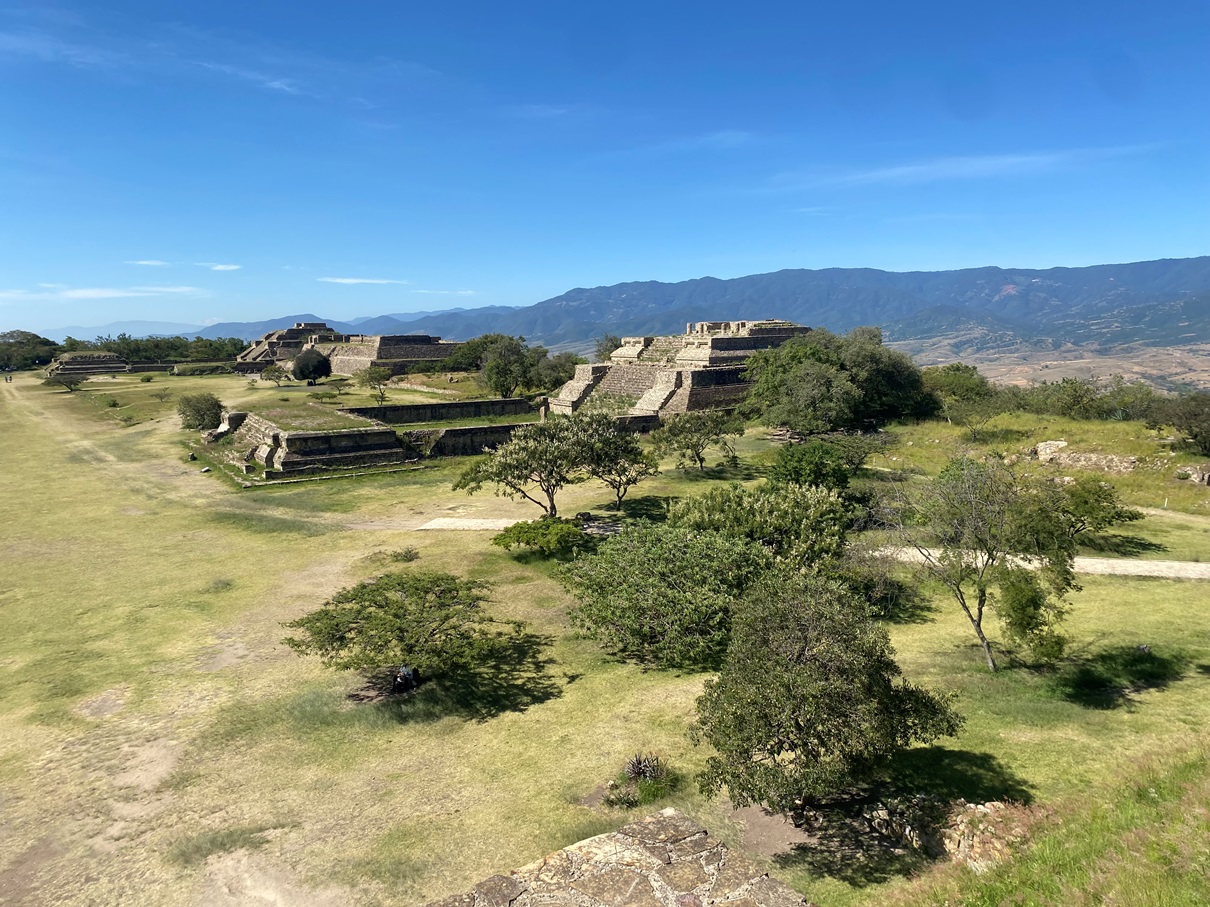
It is both predictable and fitting that I began my time here by visiting Monte Albán. This is one of the oldest known cities in Mesoamerica, and its timeline exists within a unique position; its founding shared an overlap that lasted for several hundreds of years with the decline of the mysterious Olmec civilisation and it then went on to enter a golden alongside likes of Cholula and Teotihuacan.

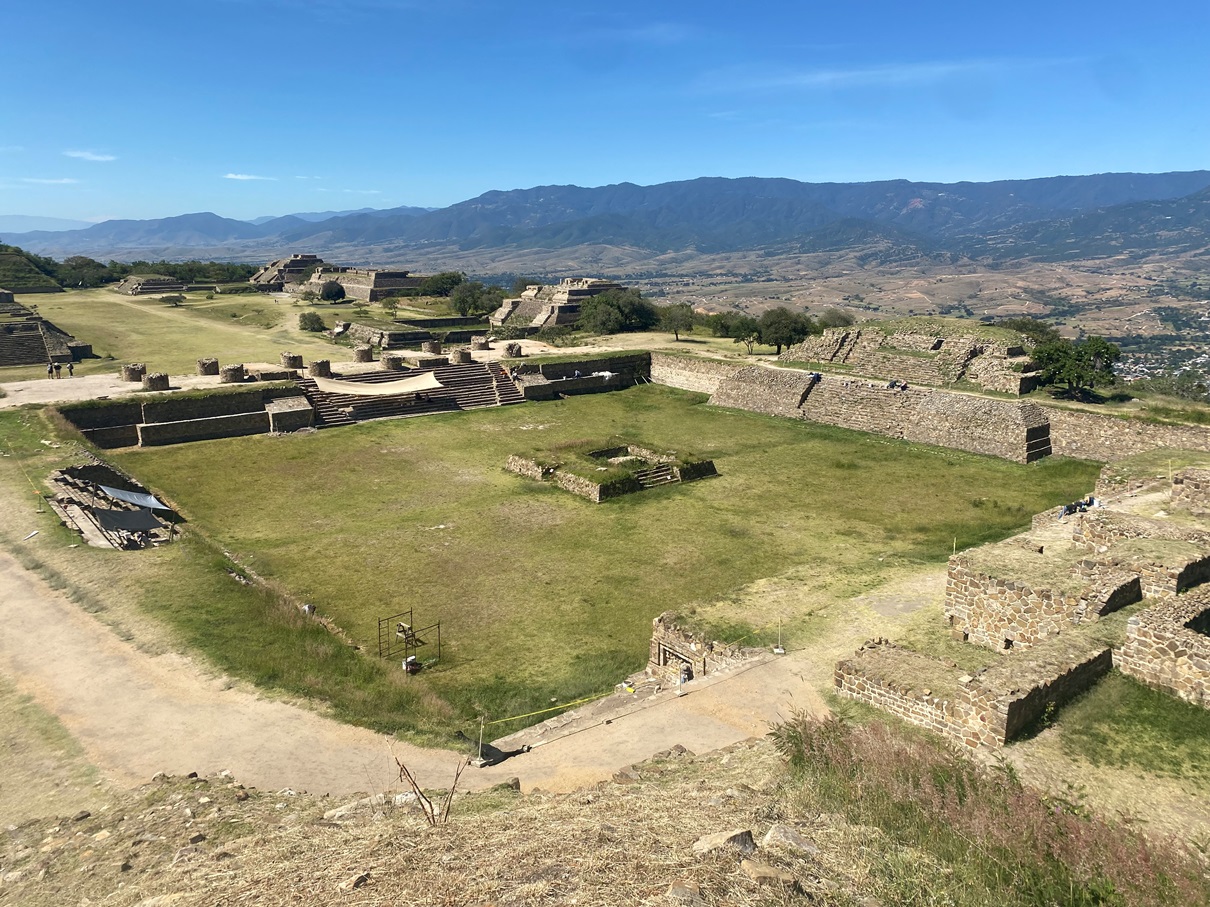
Its position at the meeting point of three valleys not only makes for some gorgeous views when one visits this place, but perhaps made its rise inevitable. At its height, this city had a population of almost twenty thousand people and it dominated most of the other settlements around it.

This place has many of the usual fixtures of Mesoamerican cities of the Classical era. Ones that you regular readers will perhaps be familiar with by now, such as pyramids, temples, plazas and palaces. So, on this occasion, I will simply tell you about some things that for me made this place stand out from the others I have seen.

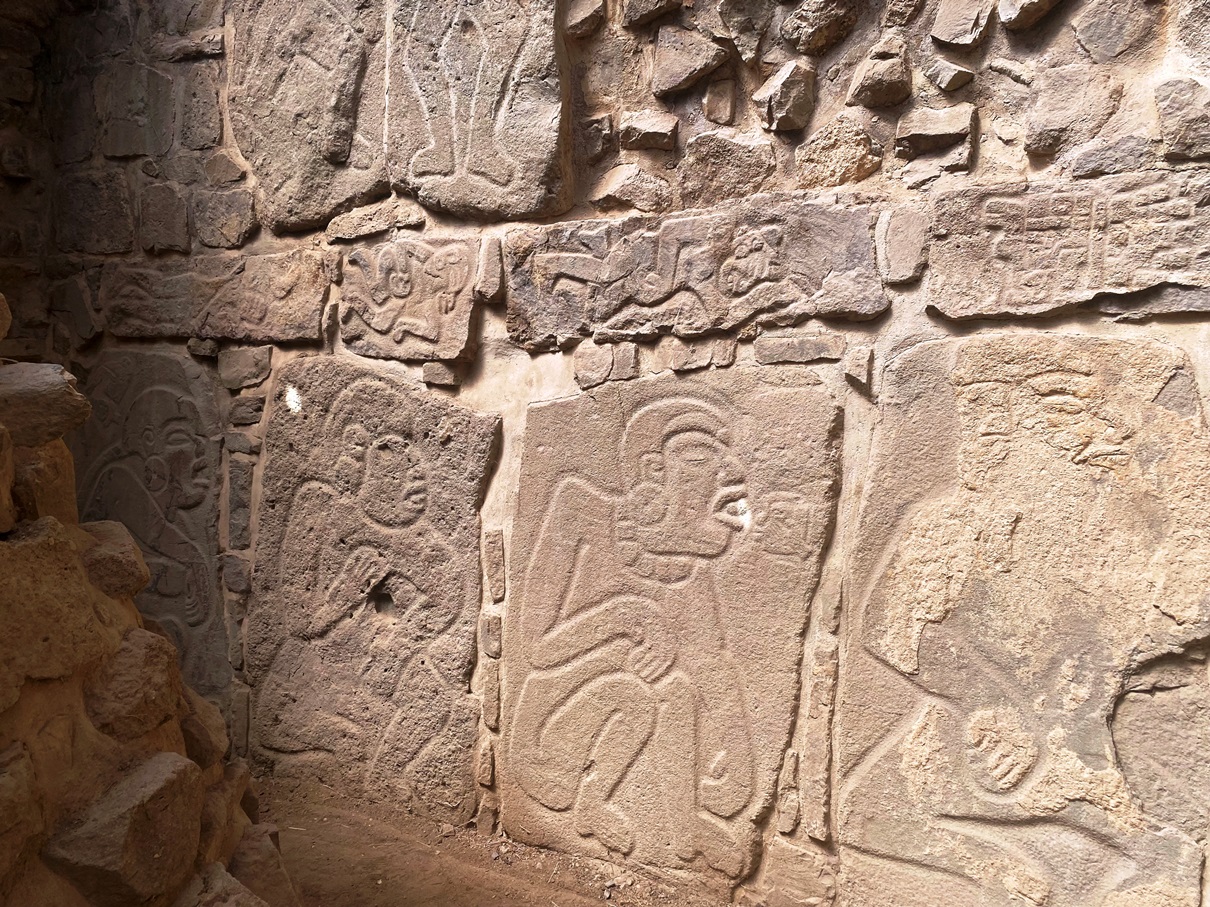
Its carvings. The broad noses and thick lips of the figures depicted in these steles have made archaeologists believe that the artists were influenced by the Olmecs. Many of these steles also feature depictions of genital mutilation, a practice that the Mayans were also believed to have occasionally engaged in.

Like most Mesoamerican cities this place has a court for the famous ball game, but interestingly this civilisation is believed to have not included human sacrifice as an element.

Within the main plaza, two buildings are believed to have been astronomical observations. One of them also features carvings on its façade which tells the story of their conquests over the other cities in the area.

There is also this inner chamber which has more Olmec-inspired carvings on its walls. It has been dated to the temple’s earlier years (500-200 BCE), making it one of the earliest parts of this complex. Originally it was called the Chamber of the Dancers as it was believed to depict indigenous ceremonies, but now it is thought more likely that these are representations of rulers from nearby cities who were captured and sacrificed during the years of Monte Albán’s expansion.

My second day in this area was spent exploring Oaxaca De Juarez, the charming colonial city that was my base during my time here. My hostel was within the historic centre so I was surrounded by lots of colonial architecture and close to many attractions. This place is home to not just one but two cathedrals. Firstly, the Catedral Metropolitana de Nuestra Señora de la Asunción.

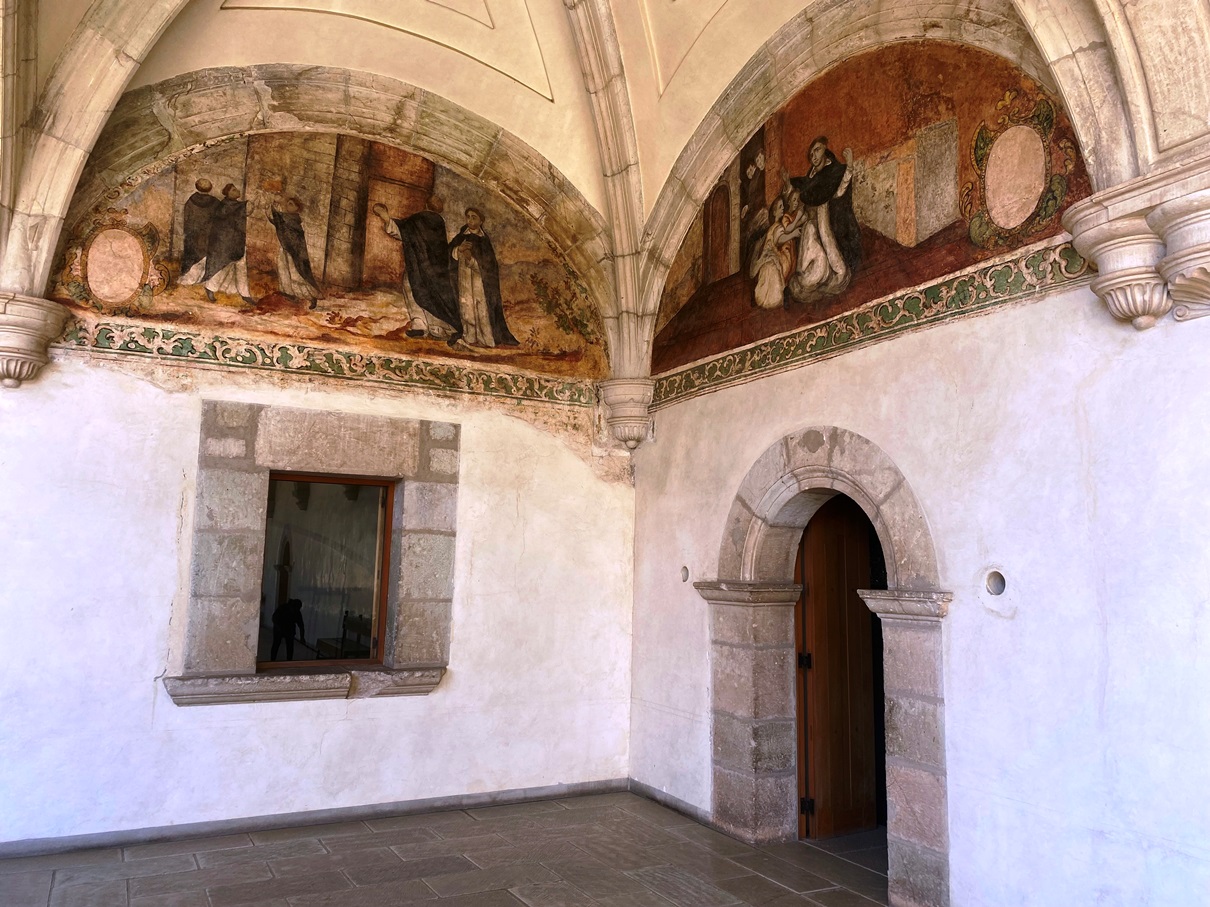
And the Templo de Santo Domingo de Guzmán, which also happens to be adjacent to the former Convent of Santo Domingo.

This is not only an amazing building in itself – with a columnated courtyard and original murals– but also home to an extensive museum concerning the history of this area.

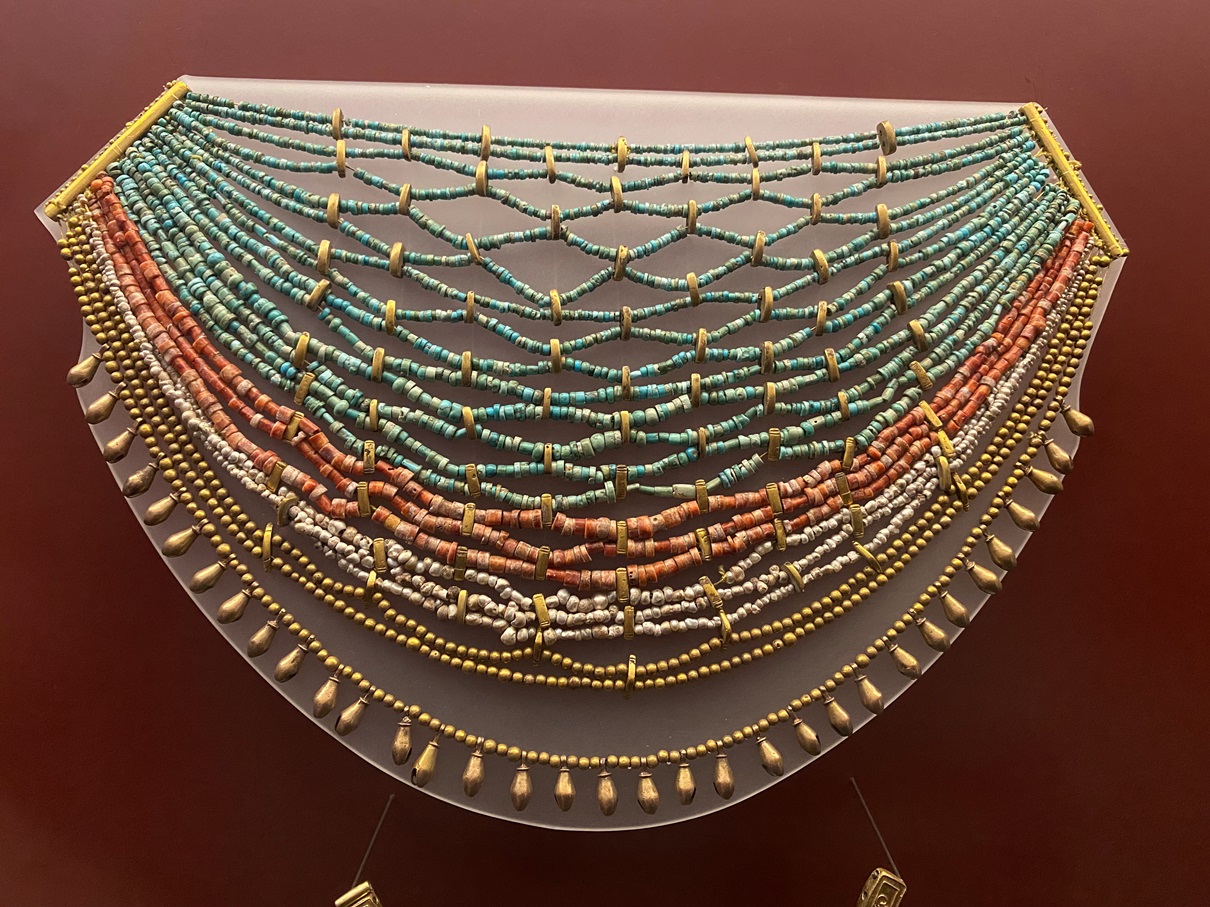
There is the usual collection of pre and post-colonial displays here, but perhaps its most notable exhibition is its collection from ‘Tomb 7’; a famous discovery made in 1932, when a pair of archaeologists unearthed a tomb filled with over six hundred treasures.

The tomb itself was Zapotec and dated from the Classical period but most of its contents were dated from hundreds of years later; meaning that the later Mixtec people who populated this area appropriated it.

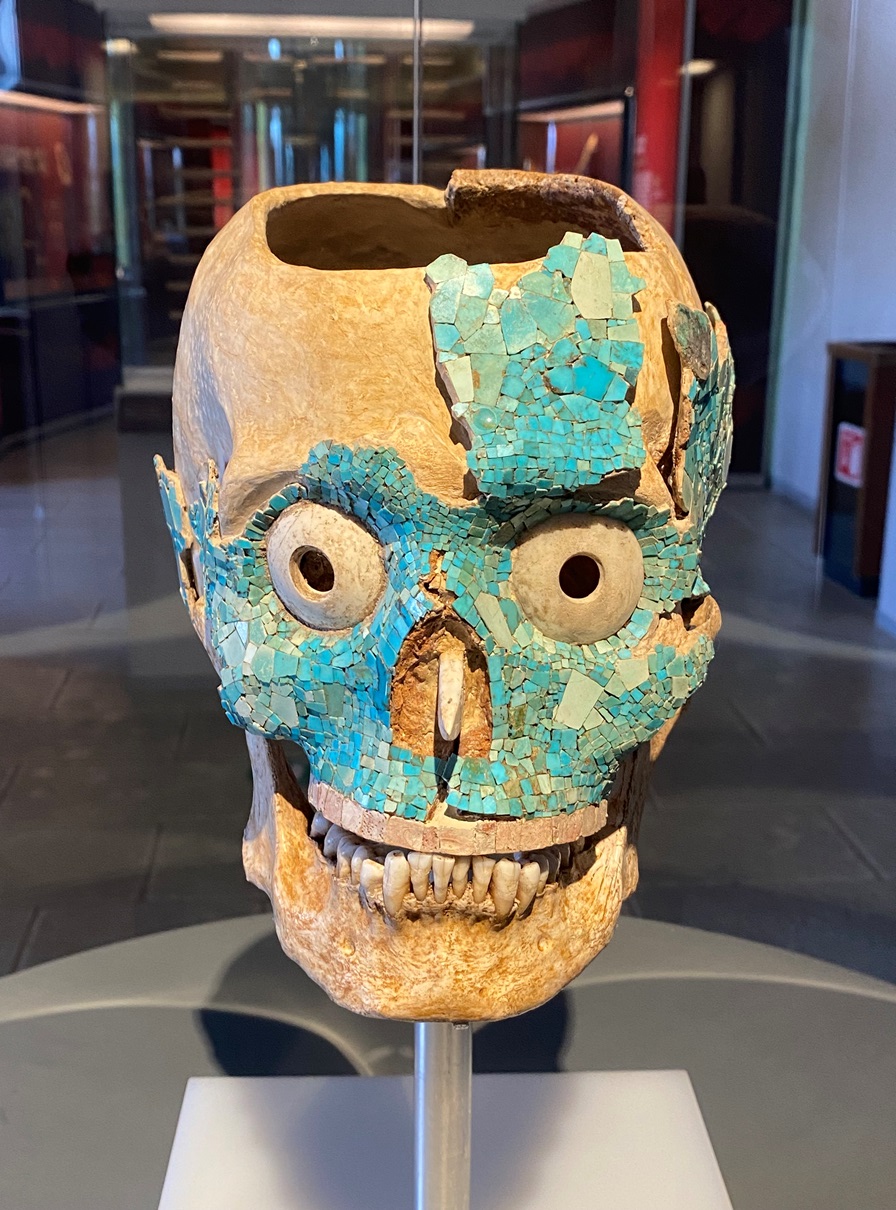
There are some truly amazing things in this collection, including this human skull decorated with turquoise. It is believed to have been a ritual object and representation of Mictlantecuhtli; the Aztec god of the underworld.

Also jaw-droppingly impressive is the collection of animal bones covered in intricate engravings. Most of them contain the foundational history of the Mixtec dynasties and folklore.

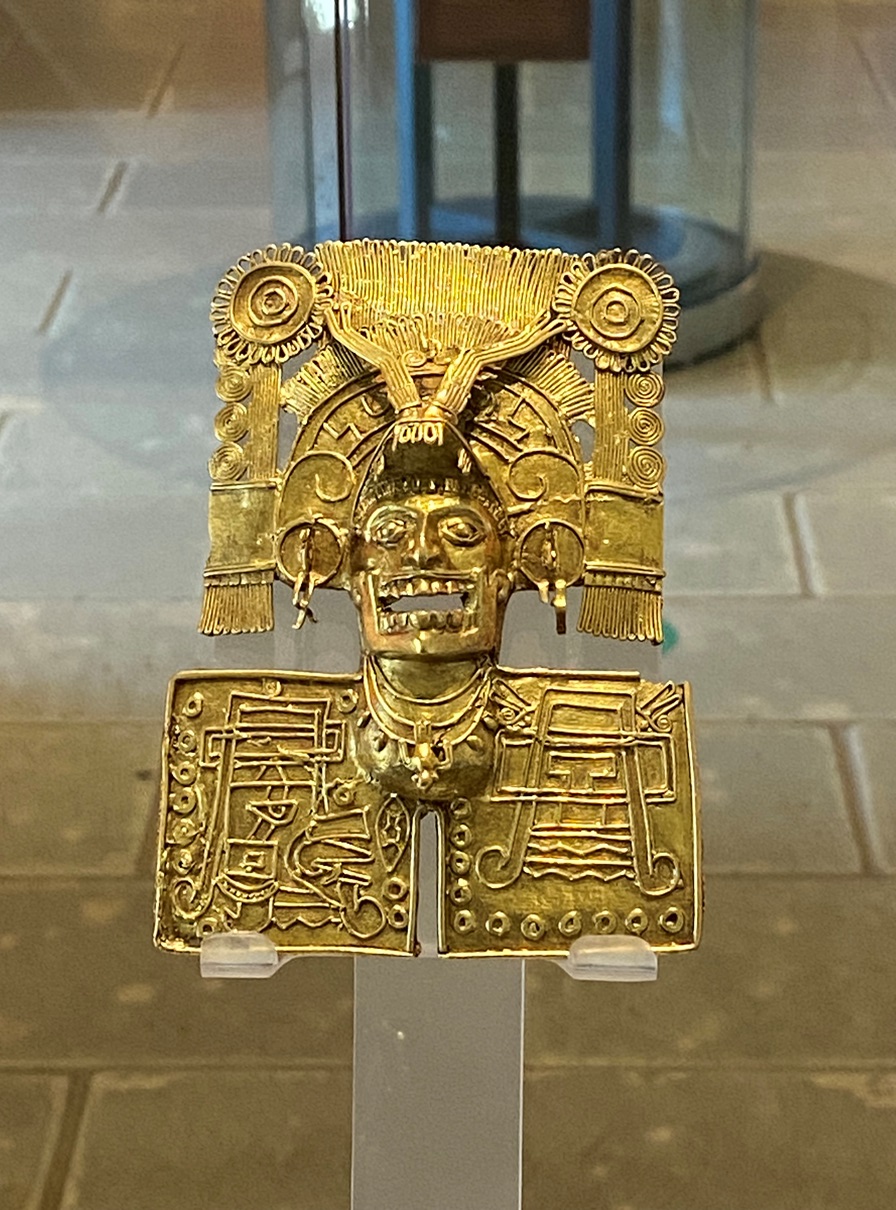
And this piece of metalwork that depicts someone who was part of the ruling class and very likely a shaman.

My final day of historical exploration in the Oaxaca area started with catching a bus to Mitla.

This was originally a satellite settlement contemporary with Monte Albán but it rose into prominence after Monte Albán fell into decline, and became the new religious centre of the Zapotecs. Its name means ‘the place of rest’, and it was believed that people who were buried here would become ‘cloud people’ who acted as intermediaries between humans and the gods.

People still live here to this day, and there is a new town surrounding what remains of the ruins. Its nucleus is the Church of San Pablo which is built on top of one of the original plazas.

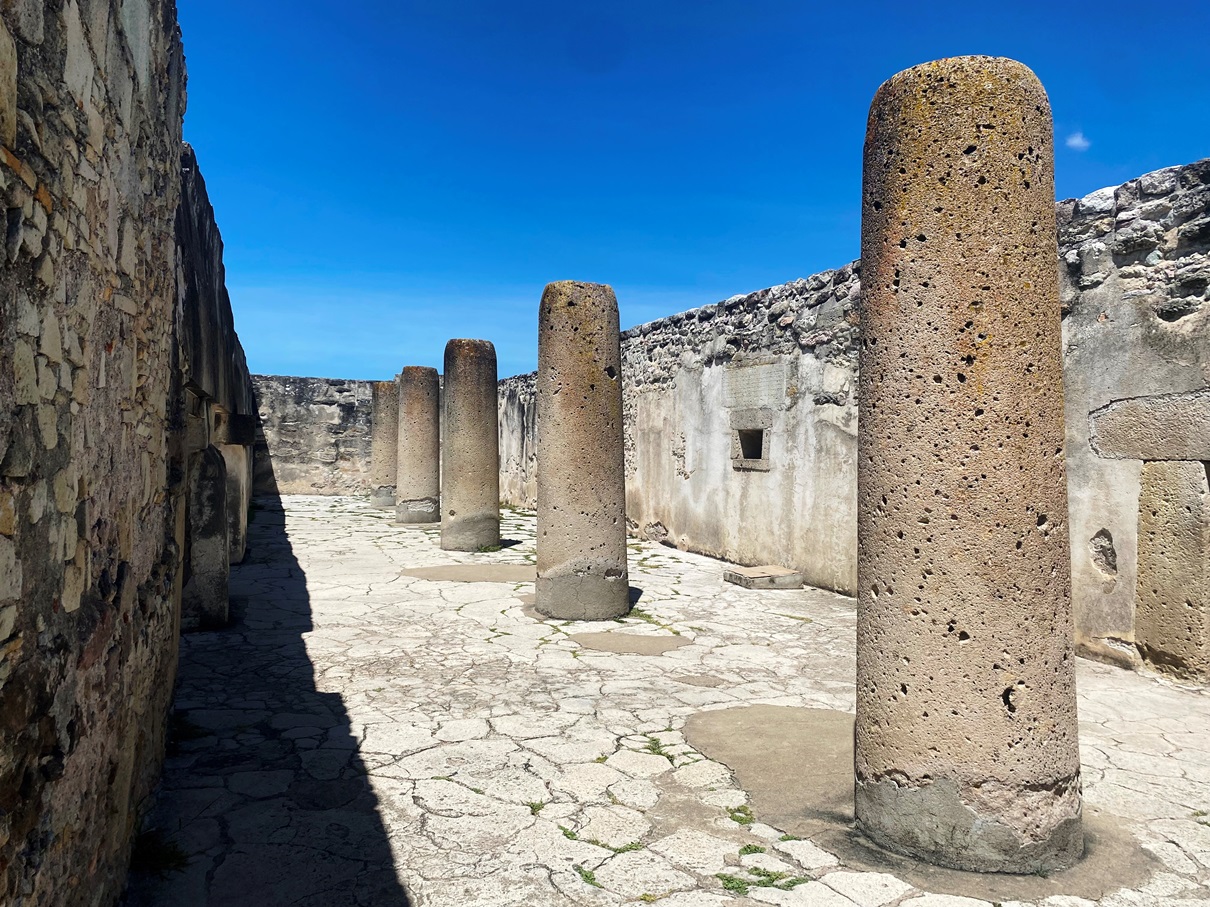
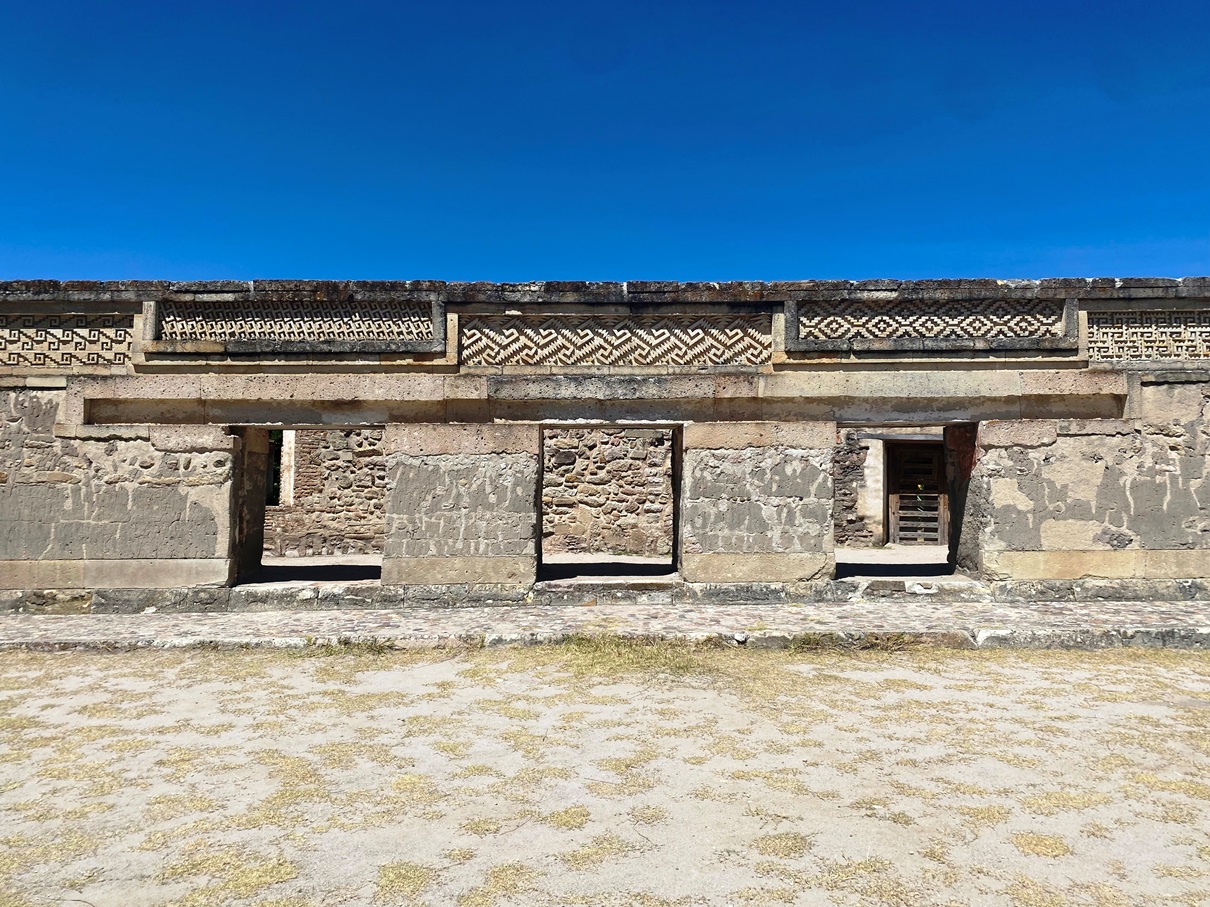
The architectural style here is somewhat of an anomaly and a mixture of both Zapotec and Mixtec styles. The most notable stylistic feature of this place is the friezes with geometric patterns.

I had read online that one of the highlights of this place is that you can enter a couple of the tombs which have original murals, but unfortunately they were closed on the day that I visited without any explanation. I am not sure if this is a permanent change or not.

After Mitla, I then went to visit another place called Yagul. This was not part of my original plan that day but I was inspired when I noticed that the bus drove past it that morning. I had heard of this place in the travel guides as a day trip one can make from Oaxaca de Juarez but none of them mentioned just how close to Mitla it was and how easy it is to see both on the same day.

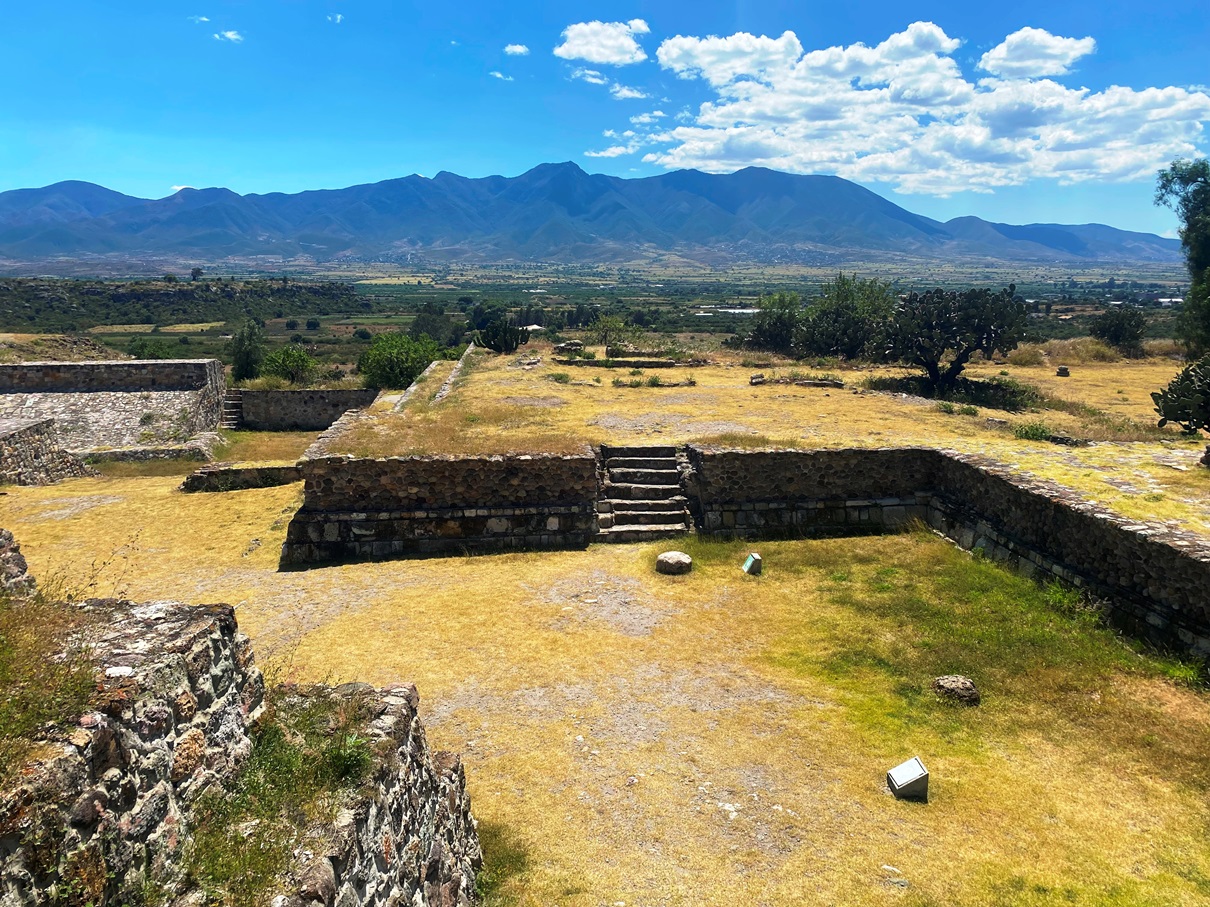
I guess one of the reasons this place isn’t as visited as Mitla is that the public buses do not take you all the way there but rather drop you off at a junction from which you have to walk a couple of kilometres under the hot sun. I didn’t mind as it was relatively flat – until the last few hundred meters at least – and there were some lovely views of the local mountains and farmlands.

I was the only visitor that day; something that somewhat bemused me when I saw how impressive this place was.

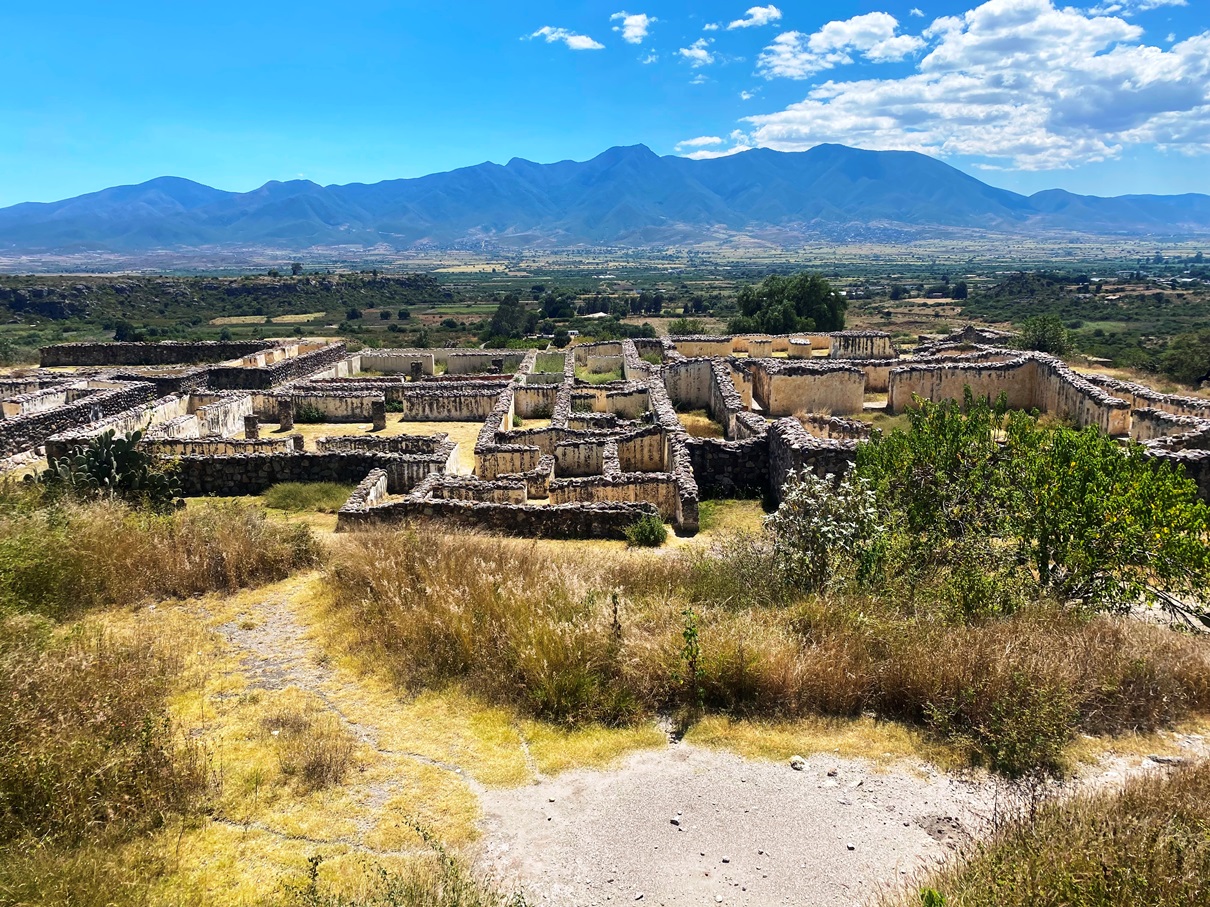
Yagul is yet another city-state that fell under the influence of Monte Albán, but they have found evidence that is likely much older, and even – like Milta – had a brief golden age after Monte Albán’s decline.

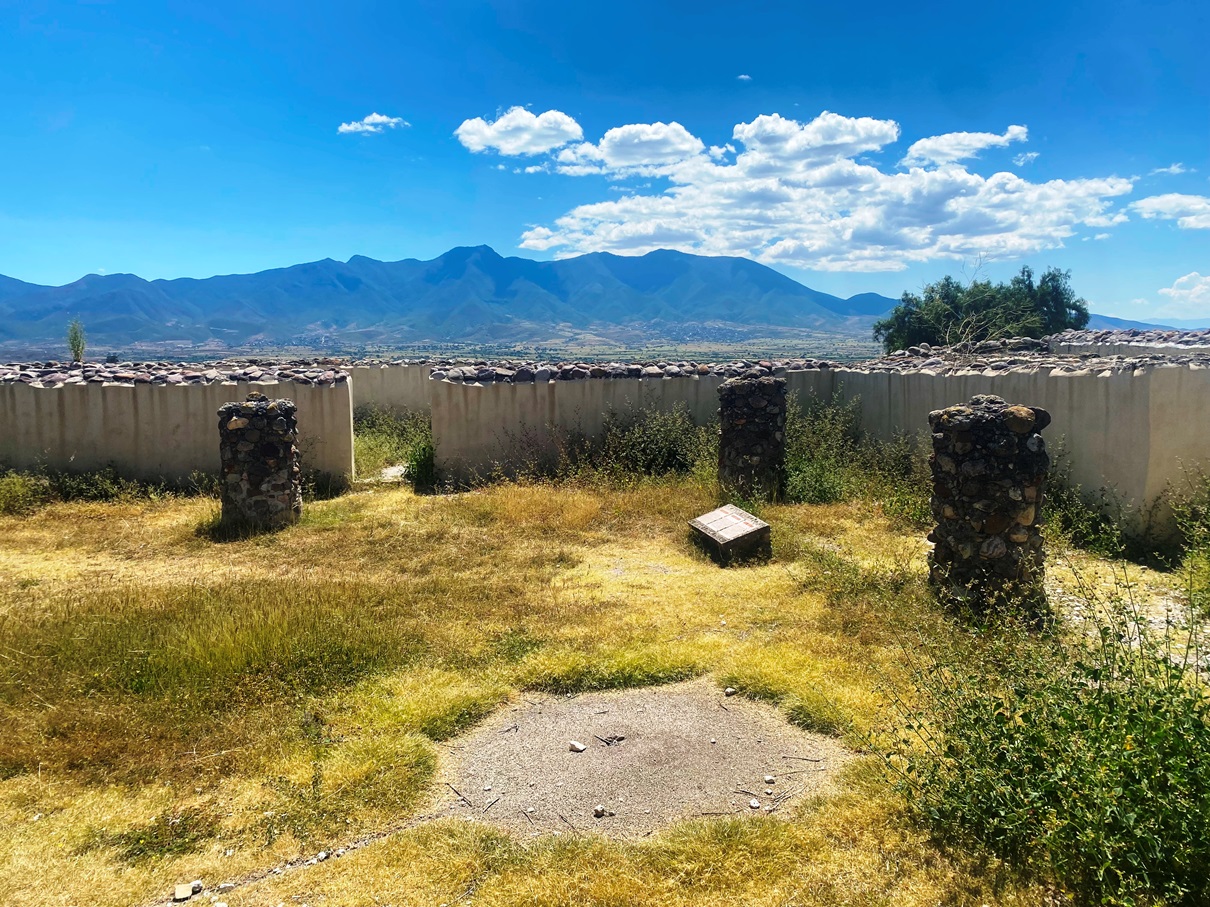
But I guess one of the reasons that it isn’t as visited is that this golden age only lasted for a couple of hundred years and it eventually fell into ruin. Mitla is more important historically, and it is also more unique in its style. Still, found it very strange that I shared Mitla with dozens of other visitors that day yet had this place entirely to myself. If you are like me and prefer older places Yagul is a much more rewarding site. It has it all. Plazas, pyramids, temples, and palaces. Even ball courts.

And it even – unlike Mitla – has a tomb that visitors are allowed to enter.

As well as a nearby hill that you can climb for even more amazing views.

So, if there is one thing I can take away from my visit to the Oaxaca region – apart from the little summary of some of its history I just gave you it is this; Yagul is underappreciated. More people should visit it.


For more photos from my time in the Oaxaca region, click here.


Travelblog LA#33: Huey Atlixcáyotl Festival – Mexico

24th September, 2023


Arriving at Atlixco at around 9:30 in the morning, I started searching for signs of activity. This is a festival that I had found out about at the last minute and made a quick change to my itinerary to ensure I could make it. The quick searches that I had done online had not wielded much information – at least not in English – so I had done what I often end up doing when I attend Latin American festivals; turn up and hope for the best.

When I reached the plaza, I could see signs that something was going on. There was a big screen set up beneath a gazebo, but it seemed – from all the empty chairs – that whatever was happening here was yet to come or had already passed so I made my way to the other place that my research told me I should check out; Cerro de San Miguel.

This hill looks over the town and – from what I had read online – seems to be an important place for the community. As I approached it I came across other people making their way up, and many were carrying drinks and snacks so it seemed that I was heading in the right direction. I asked if there was a festival going on and they nodded, directing me to a shortcut up the hill that involved lots of clambering over rocks. I raced ahead, but I think I might have gotten a bit lost at some point because I eventually had to navigate through bushes and crawl beneath a barbed wire fence. But I could hear music and a cacophony that was getting louder. I saw a crowd and followed them.

After a bit more walking, to my great surprise I reached an impressive amphitheatre perched upon the side of the hill.

Don’t get me wrong. I had figured that there must be something here – as I had read online that parts of the festival took place here – but I had not imagined it would be something this big.

And the location was also awe-inspiring, with its view of the nearby mountains and valleys.

Most of the spaces were taken but I managed to claim a seat that was not too far away from the front and waited for the festivities. There was a choir mostly made up of children singing but this was just a warm-up. It did not take long for the performances to begin.

I will not list all of them, as there were many, but I did notice that they seemed to have grouped them up by themes. The first few seemed very much to me like they were concerning courtship rituals, as they involved a lot of people dancing in pairs and other such displays.

I could also understand – from the introductions given – that each performance was by groups from different villages and towns nearby who had come to represent their community. It didn’t appear to be a competition though, as I never witnessed any winners announced.

After the ones about courtship, there followed two that both had more unique themes and were among my favourites. The first of them featured people in bright, red costumes. It was not quite as energetic as some of the other performances but something was mesmerising about the music, and the flowy movements suggested to me that the performance was about sowing and harvesting (click here to watch a video).

The second performance that made an impression on me was one about people escaping from slavery. Despite its dark theme, it very much felt like a celebration of black culture in Latin America (click here).

There followed a few that seemed to be concerned with the colonial history, as they involved a lot of groups dressed as caricatures of indigenous peoples and Spanish engaging in sword duels.

Another noteworthy performance involved dozens of people all wearing these large cone-shaped hats. They didn’t dance as such – it would have been hard to with what they were wearing – but the way their routine was coordinated in a way that made use of the bright colours (video here).

Before I tell you about the final performance – and trust me it is not to be missed – I just want to mention that there was some behaviour going on during this festival that made it a bit frustrating at times. Please don’t read this as a complaint; this was a free event so complaints would be in bad taste and I am also very aware of the nuances here. I live in a country that does not have many festivals like this and I think one of the reasons is that we have a lot of red tape which makes things far more complicated and expensive to organise. Countries like Mexico do not have as much red tape which means there is more freedom to hold events like this but the drawback is that they often have to be self-policed by the people attending. The reason I am bringing this up is because I always try to give a well-rounded account if my experiences, and this might help those who plan to attend this event in the future.

This event did suffer from poor crowd control. There were a few people in jackets located at certain points around the area but the only thing that they seemed concerned about was ensuring that the aisles between all the seats were clear. Some people had better spots than others so there were a lot of people walking around the arena in circles seeking a better view. I sat close to one of the exits, and people kept lingering there and blocking our view. There was barely a minute that went by without someone having to be reminded that they were not the main character in the story the rest of us were living in and be told to sit down, move on, or lower the umbrella they had just unfurled.

And also, some of the worst offenders were the people selling snacks. People who have travelled around Latin America will be familiar with traders who wander onto buses and other such places to sell food and drinks. These people possess no premises – and thus have fewer business expenses – and they are often given free rein because it is convenient for everyone else. They are unregulated merchants, and at this event, there were just way too many of them. Some were so fixated on selling their wares that they were not at all conscious about the fact we had come to watch a festival. I was not the only one annoyed by this, and being a foreigner, I was mostly quiet and let the other locals challenge poor behaviour. But even I found myself snapping at some of these people as the afternoon wore on.

So, if you are reading this and thinking of coming, don’t let this put you off. It is an amazing event. My advice would be to try to turn up early and try to get a spot as close to the front as possible and far away from any of the exits.

Eventually, as the festival was coming to an end, a group of people wearing birdlike costumes with wings stepped onto the stage.

I am sure you have noticed that there is a big pole in the middle of the stage by now. It was something that I did not know what it was for. This group of people formed a circle around it and started dancing around it whilst a single person played a flute.

At first, I was a bit confused. This performance was very dialled down compared to the others, and I could barely hear the flute playing because – unlike the other music so far – it wasn’t being amplified by the sound system. Despite this, I felt intrigued. I could feel an energy in the air, rising.

Eventually, they stopped walking in circles, and then – to my great surprise – one of them began to climb the pole (click here for video).

This was one of just a few surprises for me because shortly after they reached the top, another performer began to climb.

Watching this play out was very moving. Throughout the minutes that followed the whole amphitheatre went and still. Even the inconsiderate merchants stopped for a while. People occasionally applauded when each person reached the top but otherwise, they watched in silence.

The backdrop of the mountains behind them as they climbed made for a dramatic effect; there was something eerie about watching the moment that they passed the mountains and climbed higher in the sky. Someone began to play an instrument and this time it was connected to the sound system so it was louder.

In the end, there were five of them at the top and they each claimed a spot.

As a bit more time passed, I began to wonder what was going to happen next and when they were going to climb down. I could see them moving around occasionally and they appeared to be adjusting a series of ropes. Eventually, one of them rose and spread their wings. (video here).

And then, sometime after that, something else happened which blew my mind (click here for video).

I apologise for not catching the whole thing but I honestly didn’t see this coming. It took me a while to process what I was witnessing before I remembered to turn my camera on again.

Once the four of them reached the ground – to much applause – there was a final performance that came onto the stage but by then many people were leaving. I watched for a while, and it was certainly a joyous way to end the festival but I felt sorry for any performance that had to follow what I had just witnessed.

When I got back to my hostel later that night I did some reading to see if I could find out more about what I had witnessed. I could vaguely remember reading something about this event being connected to the Mesoamerican god Quetzalcóatl, which would explain why they are wearing winged costumes, but during my research, I discovered that this ceremony is called the ‘Danza de los Voladores’ and it is intended to beseech the gods for a good harvest. It is also performed during certain events in the Veracruz region. The person in the middle of the poll represents the centre of the earth while each of the four people who ‘fly’ to the bottom are the cardinal points.

After the ceremony was over, I decided to walk to the top of the hill and see the church there, and it seemed that other people had a similar idea as I found myself within a crowd. I usually don’t like big crowds but on this occasion it was nice because everyone was on a high and the atmosphere was great.

When I reached the top, people were queuing up to go into the church to be blessed with holy water, which is not quite my sort of thing but was interesting to witness. Shortly after, I began to make my way down again, passing through the amphitheatre and then along series of paths back to the centre of the town. On my way, I passed by lots of little street parties. A part of me wished that I could stay to soak up the ambience, but I had to get myself back to Puebla, so I headed to the bus station.


I would strongly encourage you to check out my Google photo album for this event, as I have many more photos and videos from it; click here.