6th-9th June 2018
I arrived in Quito in the afternoon. During my flight I made a friend called Stacey, and together we made our way out of the airport and towards the city. We got onto a crowded bus which kept lurching violently as the driver switched between the break and accelerate with full throttle. The locals seemed accustomed to it and were suitably braced. Stacey and I were holding onto the rails for dear life and swinging around like monkeys.
At one point a pair of young men got onto the bus and began to rap. Nobody seemed too fazed by it. I began to wonder what would happen if a pair of youngsters from my own country did such a thing. They were actually quite good, and Stacey and I applauded when they finished. And then it occurred to me that I had no idea what they were actually rapping about (and thus, what cause had I just inadvertently supported?). I trust it was a good one. The two young men seemed nice enough. After we got off, one of them helped Stacey get her suitcase through the turnstyle.
I didn’t do much that first day. I was tired and jetlagged. Stacey and I checked into a hostel and had a couple of beers. The next day, however, I got up early the next day and began exploring.
Day 1
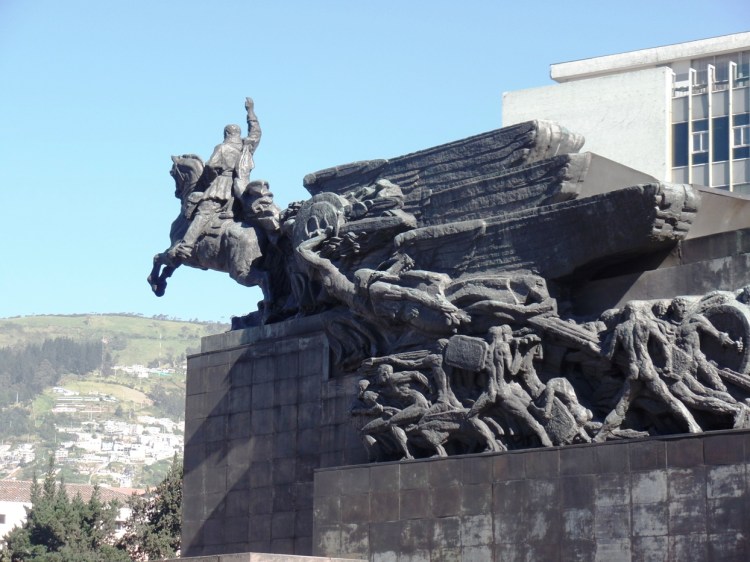
It seems rather fitting that the first photo I took during my travels in South America was a statue of Simon Bolivar. I passed it whilst on my way to Quito’s Old Town that first morning. Bolivar is a name I am going to encounter many times during the following months. He is a figure who echoes within the cultural consciousness of Latin America. Museums, streets, buildings, and even countries are named after him. Like many national heroes, he was far from perfect – there are episodes from his history which make him somewhat a grey figure to historians – but, in popular legend, he is mostly remembered as a hero.
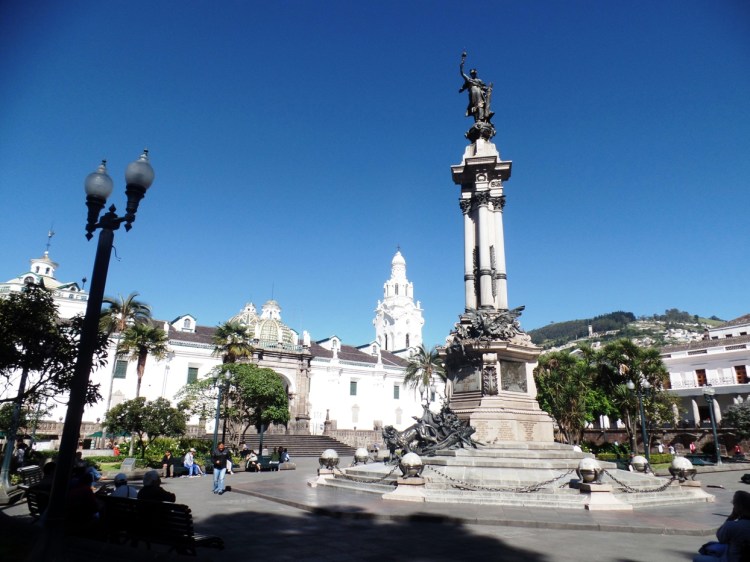
Upon reaching the Old Town, I began with the Plaza Grande. Quito’s main cultural square encompassing the President’s Palace, the former Archbishop’s Palace (now renovated into shops and restaurants), and a cathedral.

After that, I made a detour to the Centro de Salud where I got vaccinated for yellow fever. In Ecuador it is free. It doesn’t matter where you are from; all you need to do is just turn up at one of their nationally run clinics and show your passport.
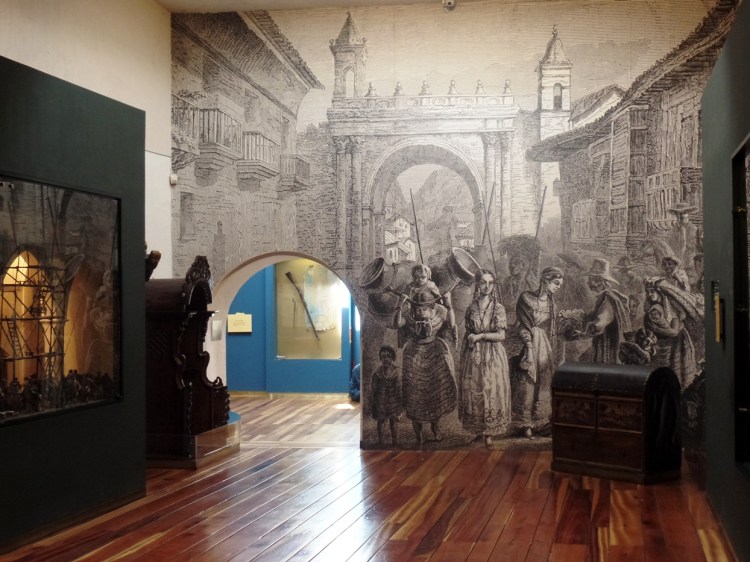
Quito’s clinic is conveniently located next door to the Museu de Cuidad. Held within a former hospital run by monks, it details the area’s history all the way from the first signs of human habitation thousands of years ago, the mysterious Quito people who gave the city its name, the Incas, colonial times, all the way to present. Most of the exhibitions weren’t in English, but I have been learning Spanish for the last few months and was surprised how much I understood. I even found myself learning new words, as many of the ones I didn’t know I could guess through context. I realised going to such exhibitions would be a good way to improve my vocabulary.
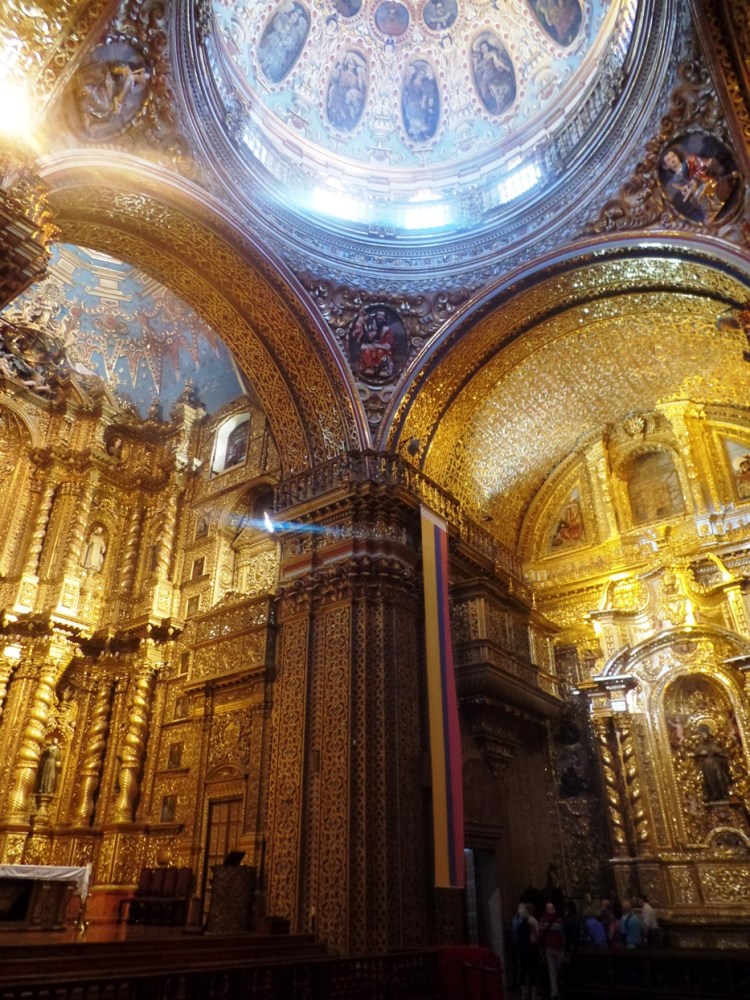
I then ventured on to see some of Quito’s churches. The golden-painted, baroque-style Iglesia de la Compañía de Jesús is the most well known – and regarded as the most beautiful in the city – and it is certainly impressive, but the staff who charge you $5 for admission are a bit abrasive.

I found Iglesia y Monasterio de San Francisco a much warmer experience. It is free entry, the churchgoers there are friendly and, as it doesn’t receive as many visitors, they don’t seem to mind people taking photos (as long you are respectful and discreet). Next door, there is a museum with fine examples of some of the church’s paintings and sculptures. It doesn’t seem to get many visitors either, but the ones who come are given a free tour.

One of the highlights of the tour included this sculpture, which has an actual human skull inside it.

What I also enjoyed about this museum was being informed about some of the local folklore. Such as the story of Cantuña; an indigenous man who was hired by the Franciscans in the 17th century to build the atrium of the church. When it seemed he wasn’t going to be able to complete it in time, the devil was said to appear to him and offer to finish it in exchange for his soul. Cantuña agreed, but after, just before the sun rose at dawn, he pried one of the stones loose and hid it. To this very day, Iglesia San Franciso remains incomplete, and Cantuña managed to keep his soul.

My guide also told me about the Virgin of Quito, who is a popular cult image in this area. She is a carnation of the biblical Woman of the Apocalypse, and is depicted with a moon below her feet, twelve stars on her head, and grappling a snake (representing the devil) with a large silver chain. Effigies of her are in almost every church, and there is even a large statue of her overlooking the city on El Panecillo hill.

I finished off the day by visiting Museo Nacional within the Casa de la Cultura. Which is huge and filled with artefacts, colonial antiques, information about indigenous history, and exhibitions of contemporary art.
Day 2
My second day in Quito I hopped on a bus and headed over to Mitad del Mundo (‘The Centre of the World’), the place which was estimated as being the location of the equator in 1736, by Charles Marie de La Condamine as part of the French Geodesic Mission.
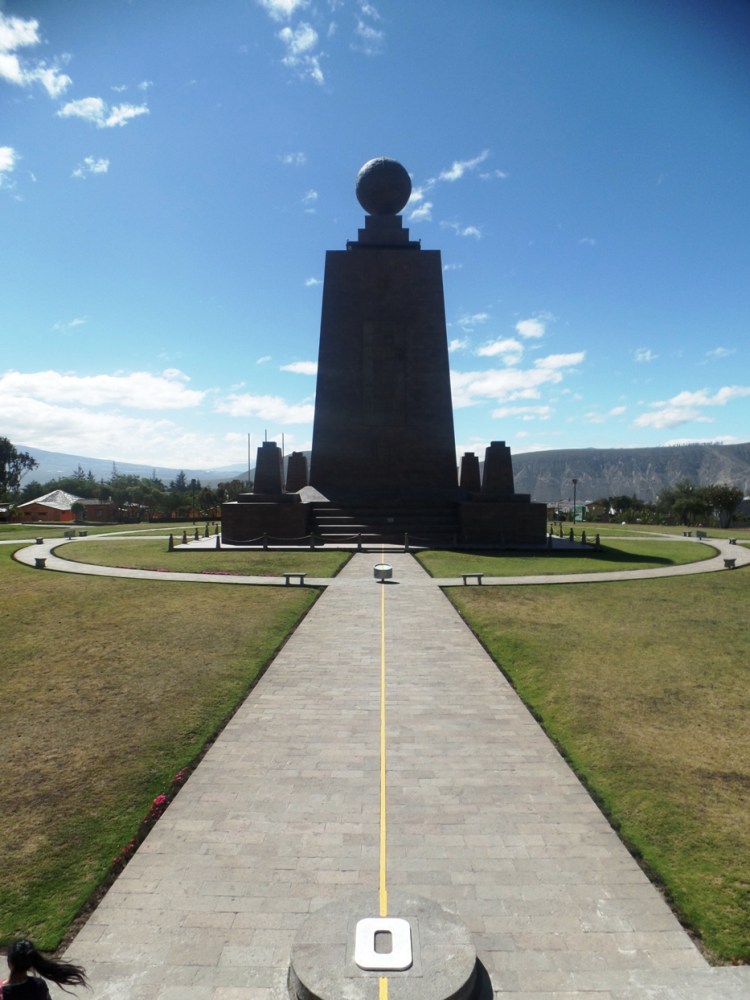
To be honest, it was a bit of a tourist trap. The grounds around the monument have been scattered with a collection of small museums which gloss over titbits of Ecuadorian history, astrophysics, and even the production of chocolate, but none of them are particularly informing. There is also, of course, tonnes of shops selling very expensive tat. The only worthwhile feature of this place is catching the elevator to the top of the monument and seeing the Andes.

I ventured on to the nearby Intiñan Solar Museum. Built later, when it was discovered (through the advent of technology) that actual line of the equator was two hundred meters away from Mitad del Mundo.
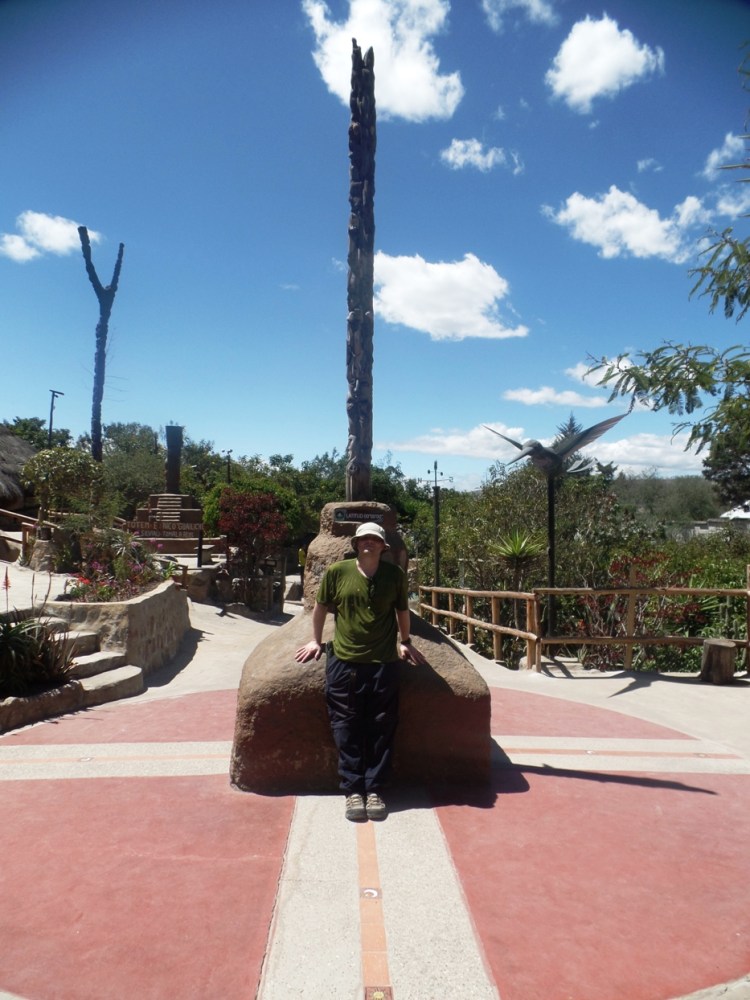
Entry comes with a free tour and was assimilated with a group. Our guide gave us a rather sensationalised rendition of some indigenous traditions – such as the Shuar custom of shrinking the heads of their enemies and kin to keep for ritual purposes and trophies.

And she also showed us the corpse of the infamous candiru fish. The reason why I am considering wearing a condom when I swim in the Amazon later this trip…

Eventually, we were taken to the main feature; Intiñan Solar Museum’s exact equatorial line. Our guide demonstrated some of its strange phenomenon’s. One curious example was that she drained a sink of water three times: first on the line (where it poured directly downwards), and then a few meters to the south (where it swirled clockwise) and north (anti-clockwise).

We were each given a chance to try to walk along the line with our eyes closed and arms extended. A video of my attempt can be found here. It was a very odd experience. You can actually feel your body being pulled in two directions and, no matter how hard you try to keep your balance, you eventually stumble and are pulled to one side.

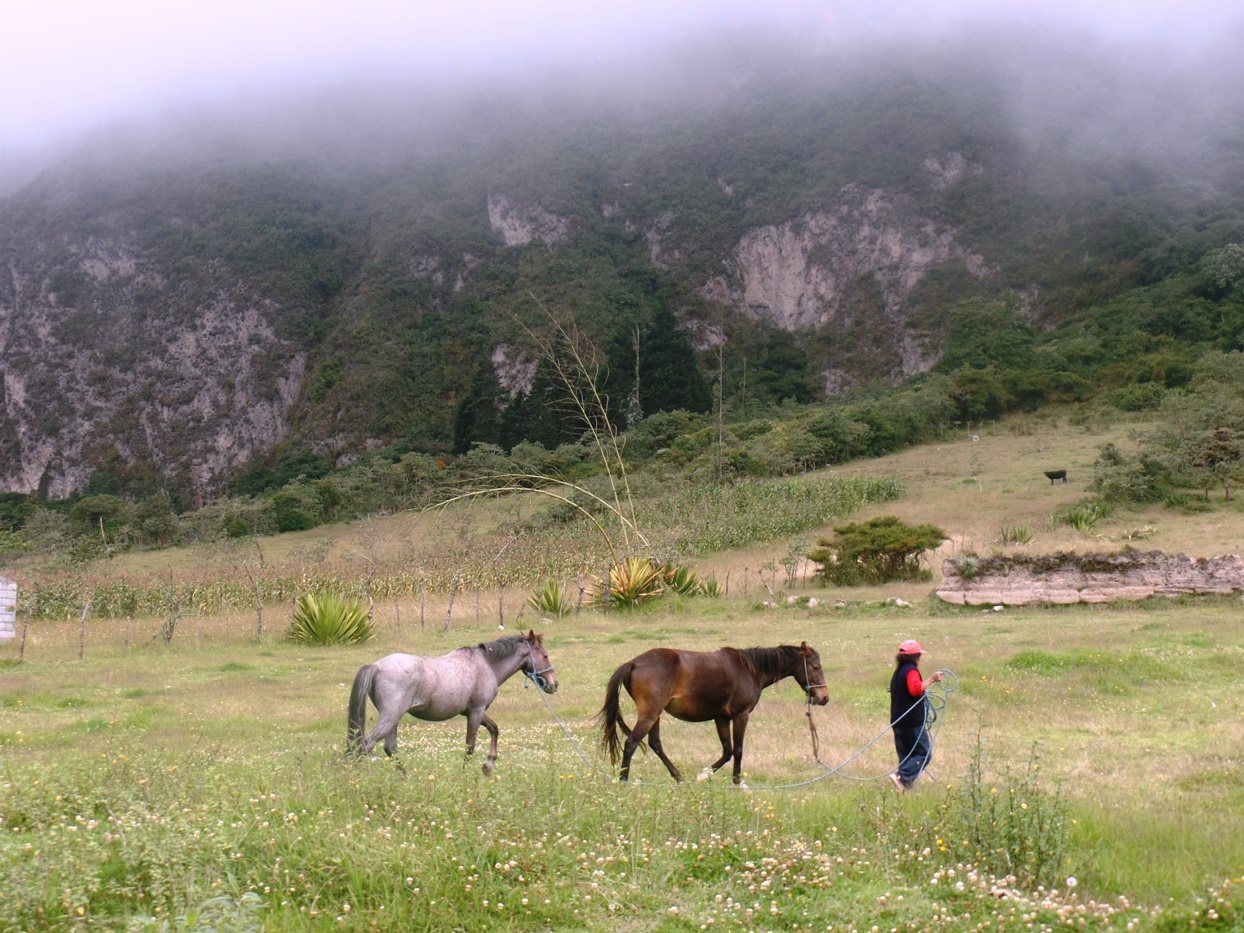
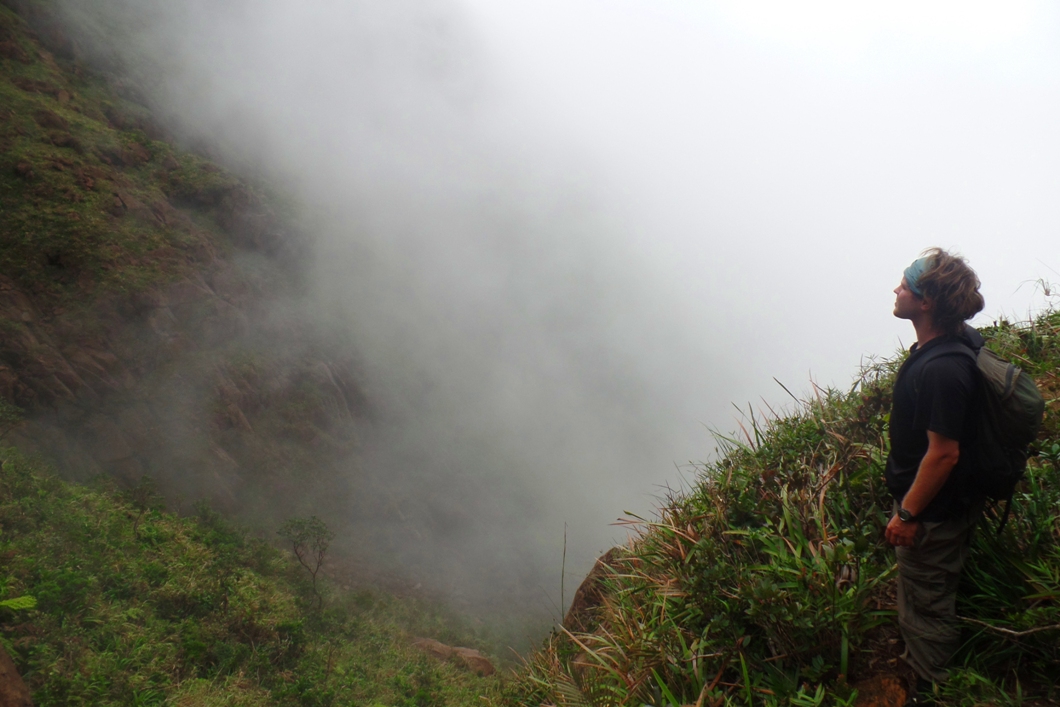
To finish off the day, I flagged down a bus and went to the Pululahua Geobotanical Reserve; an extinct volcanic crater. When I arrived it was shrouded with mist but it eventually cleared.
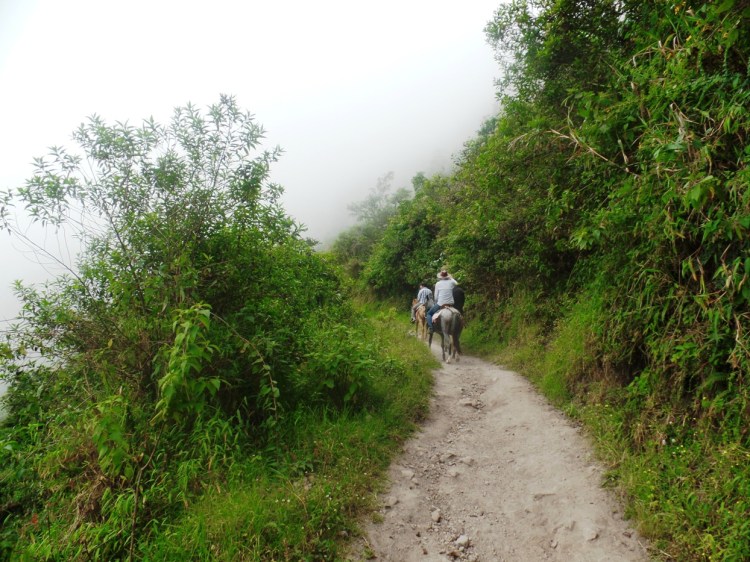
I hiked down via a steep trail to a quaint village at the bottom which was filled with farms. It was my first experience of seeing rural life in Ecuador.

Day 3
For my final day in Quito, I mostly relaxed. I did squeeze in a jaunt to the Minadalae Museum which was near my hotel and focussed mostly upon the shamanic traditions of native tribes of Ecuador.

In the evening I saw Stacey and said farewell. Since befriending each other at the airport that first day we had mostly done our own separate things during the daytime – as we had different itineraries – but we always met up in the evening to swap stories. We were both leaving Quito the following morning. Stacy was destined for the Galapagos islands, whereas I was venturing to the Quilotoa region.
For more photos, click here.







 Tej Turner