Travelblog SA#4: Galapagos Part 1 (Santa Cruz Island) – Ecuador

18th-19th June 2018

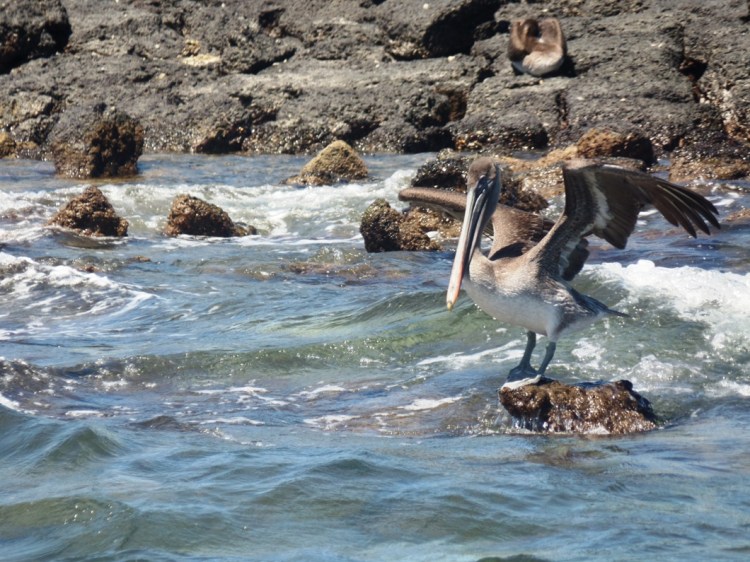
You don’t have to try very hard to encounter wildlife on the Galapagos, it finds you. That was something I learned very early during my time here. Even as I strolled out of the airport and onto the shuttle boat – towards the main island, Santa Cruz – I saw my first pelicans. Most of them were resting on the rocks, but I witnessed a couple of them circle the air above and then dive, head-first, into the water, and rise again with fish wriggling in their beaks.
SAMSUNG CAMERA PICTURES

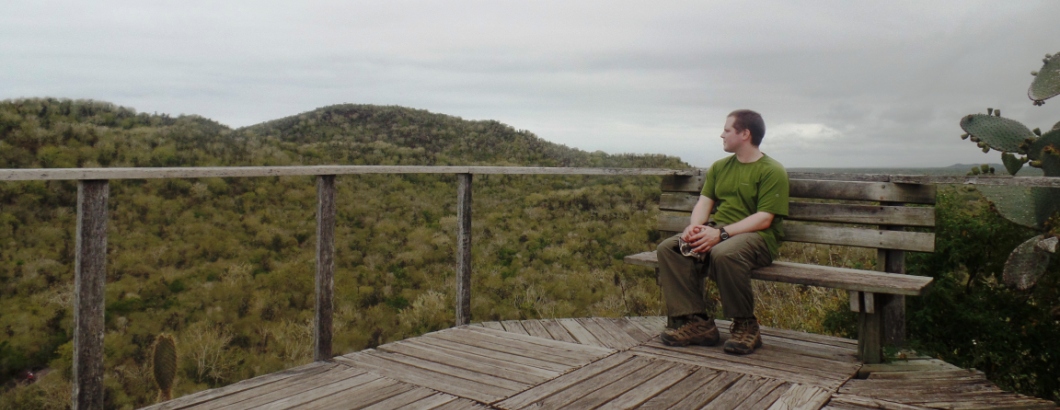
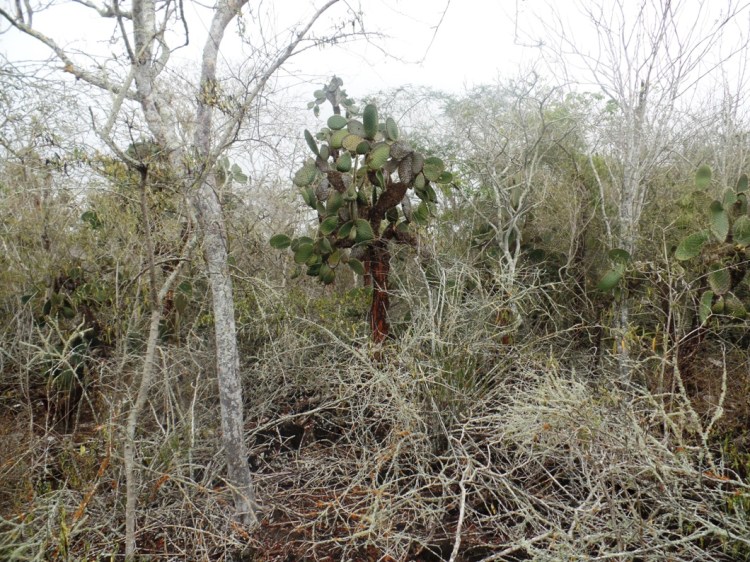
And then I got onto a bus which trawled across a strange, dry, and yet beautiful land of volcanic rocks, small trees and cactuses.
SAMSUNG CAMERA PICTURES

The Galapagos Islands are unique in a number of ways. They were largely cut off from the rest of the world from the day they rose up from the oceans and the species which did manage to make it here found their selves in a dry and barren place. But, even though the landscape was harsh, they didn’t have much competition, so they diversified – often in very strange ways – to survive.

SAMSUNG CAMERA PICTURES

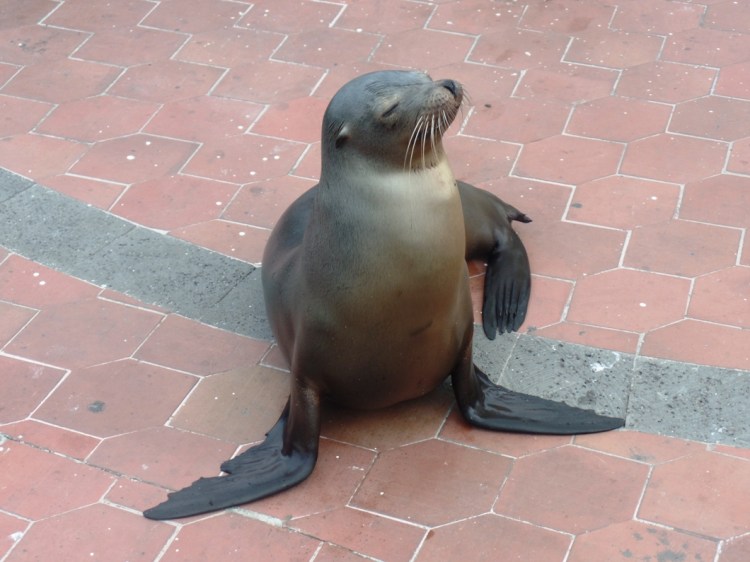
And there are no predators. Which is why the wildlife here are so tame and even playful. Over thousands of years, fear of other creatures has been bred out of them.

SAMSUNG CAMERA PICTURES

You soon get desensitised to the sight of sea lions and iguanas. They are everywhere, lazing on the beaches and piers, indifferent to the humans wandering around them.
SAMSUNG CAMERA PICTURES

On my first day, I only had enough time to visit the Charles Darwin Research Station. It was a good place to begin, for it had lots of information about the island’s history and the numerous projects of its volunteers to help maintain and restore the archipelago’s huge diversity. Much of their efforts are spent raising the number of land tortoises. When I said the island lacks predators that were true until the invasion of humans who – until recent decades – used to eat them. The sea-farers and pirates, who were among the first humans to visit these lands, learned that the hardy creatures could be stored on their backs and live for up to a year without any food or water, making them an irresistible food source while out at sea.

SAMSUNG CAMERA PICTURES

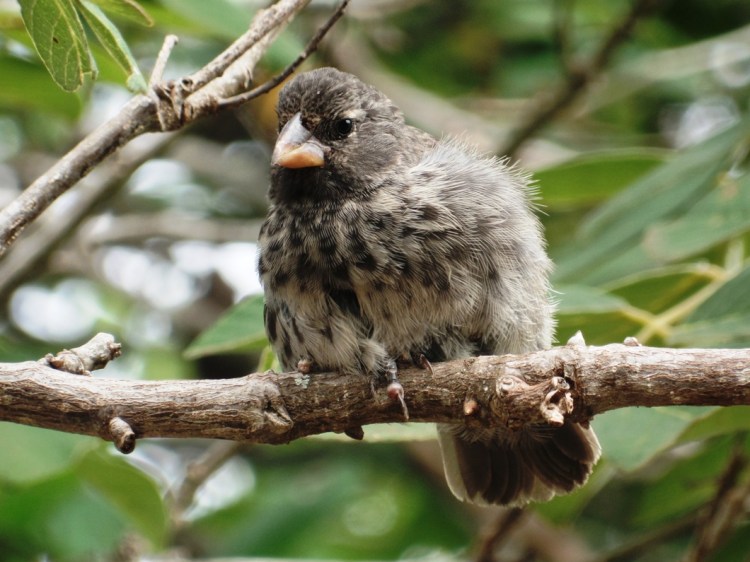
The Charles Darwin Research Station was also a great place to spot finches, and I spent much of my afternoon there wandering around with my camera, trying to get good snaps of them as they flew between the trees.
SAMSUNG CAMERA PICTURES

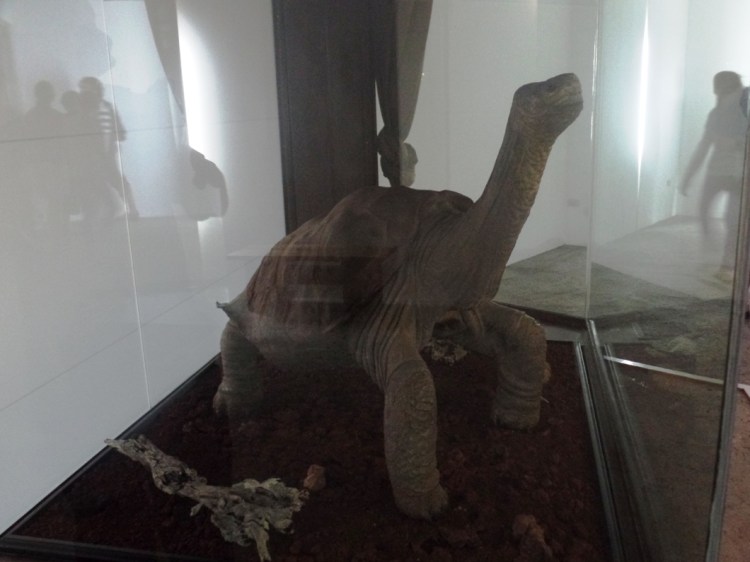
I also got to see ‘Lonesome George’, the sole survivor of a subspecies which were wiped out when feral goats were introduced to the island of Pinta. In 1971, he was taken to the Charles Darwin Research Station and given a comfortable life for his remaining years. A few attempts were made to try and breed him with females of a similar species, but none of the eggs were viable. He died in 2012 and was estimated to be over 100 years old.
SAMSUNG CAMERA PICTURES

Visitors are only allowed to see him in small groups at a time and are also made to acclimatise in cold rooms when they enter and exit so as to not let too much heat in to stop body decomposing.

SAMSUNG CAMERA PICTURES

During my second day on Santa Cruz, I went to see the rest of the sights around Puerto Ayora. Beginning with the walk to Tortuga Beach, I got to see more of the Galapagos’ strange vegetation.

SAMSUNG CAMERA PICTURES

I was one of the first to arrive at the shore and there were lots of iguanas. I also got to see a great heron up close.

SAMSUNG CAMERA PICTURES

I then walked to the far side and reached a mangrove forest which was full of crabs, more iguanas and pelicans and, possibly the highlight of the day, a blue-footed booby. I think I was very lucky, as most people have to go out on tours to see these creatures.

SAMSUNG CAMERA PICTURES

I also went snorkelling in the lagoon, which turned out to be a nursery for lots of young black-tip and white-tip sharks.

SAMSUNG CAMERA PICTURES

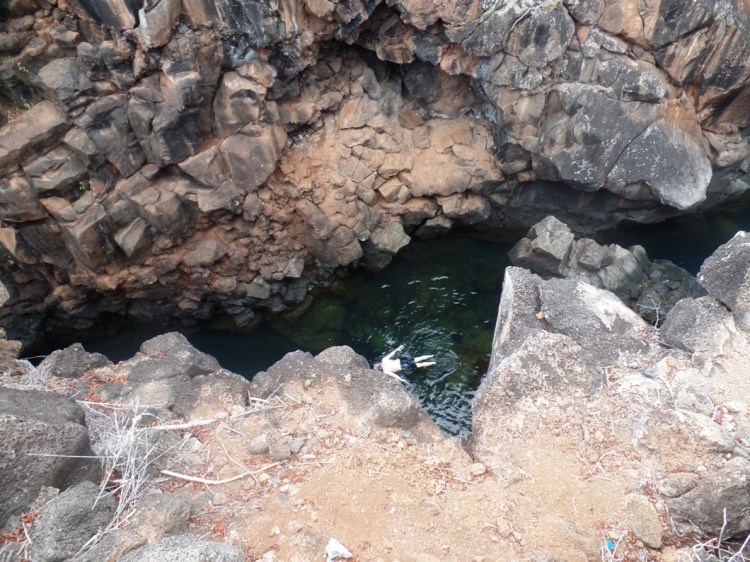
Las Grietas was another highlight of Puerto Ayora. It is a small canyon formed by tunnels of lava and its brackish waters are fed from both underground rivers and the sea. There are lots of tropical fish.
13.JPG

Tomorrow I am sailing to Isabela Island, where I am hoping to encounter even more wildlife from the Galapagos.


To read Part 2 of my time in the Galapagos, click here.click here.

For more photos, click here!

Review of Children of Artifice by Danie Ware

I was given the privilege of receiving an early copy of Danie Ware’s upcoming novel, Children of Artifice, which is available for pre-order on Amazon. Here is a review I wrote about it.

children

Children of Artifice is one of those novels where, from the very beginning, it is hard to know what to expect (and I mean that in a good way!).

Set within an enigmatic second world, where humans live within a secular city-state nestled within a gigantic crater, knowing nothing of what exists beyond the impassable ridge which surrounds them except for that they were placed there by a mythic race of mysterious beings known as the ‘Builders’ long ago, one could at first suspect that it is going to be a YA thriller of intrigue and discovery. The age it is set in appears to be historic, and yet the rich amalgam of technology and alchemy which sets the scene cannot be pinned to any particular age, and there is also magic. It has elements of fantasy and science fiction, but they have been blended together seamlessly and do not jar.

The author has described it as an ‘urban fairy tale’, which is very fitting. It does have that feel of old and new. It is quite gritty at times, and yet full of beautiful moments.

I do not want to say too much about the plot, because it is a novel which surprises you at every turn and right up until the very end, it is impossible to predict what is going to happen because there are always several paths it could take. So I will speak instead of its other features.

One of its focal themes is family – both the ones people are born with and ones they create for themselves – and the relationships between the characters are filled with nuances which are tender, tragic, uplifting and everything in between. Society – how it controls those within it, and the many ways (positive and negative) which people rebel – is another central theme, and there are some interesting parallels which can be drawn with our present day. It has a wonderfully crafted, vivid setting, and complex, believable characters that come alive from the pages and leave a lasting impression.

I am particularly pleased with this novel’s diverse voices. Both same-sex and heteronormative romances take place during the story but none are presented as being particularly shocking and the characters are never given labels, and yet it still examines issues of identity, prejudice, and sexual fluidity which are relatable to a modern day reader. It is refreshing to read a novel written in such a way.

Children of Artifice has a fantastic story, one I would recommend to readers of any genre and age. It conjures beautiful imagery and puts you in a state of living dream, taking you on an emotional journey which stays with you. I am looking forward to the sequel.


Travelblog SA#3: Quito (Part 2) & Otavalo – Ecuador

14th-17th June 2018

Back in Quito again. Although, this time I opted to stay in the Centro Historico; an area abandoned by most of the backpacker community who now prefer to stay in La Mariscal, with its modernised bars and international restaurants. Quito’s older district is a place most people dare to only venture during the daytime these days, and tourists, in particular, are warned not to wander around at night because knife-point muggings are common.

I have found it to be fine so far. When I venture out at night, I just take a few dollars in my pocket and nothing else. Nobody has given me any bother, apart from the occasional prostitute trying to lure me. The restaurants, shops, and just about everything are cheaper here and, even though it is a bit seedy, it has an atmosphere. It is a facet of Quito, and part of the experience.

I have been staying at Quito Backpacker Hostel. It has a friendly atmosphere, good wifi, and a terrace bar. It is quiet, but I didn’t mind, as I have spent much of the last few days relaxing and catching up with my blog. When I first arrived, I was their sole guest, but now we number almost in the double digits. I don’t understand why more people don’t stay here though; I checked out some of the other hostels nearby, and this place is much cleaner and better maintained, and yet it doesn’t receive as many guests as it deserves.

My evenings have often been spent visiting a vegetarian place a few blocks away called Govindas. It is run by a group of Hari Krishnas who have been helping me practice my Spanish. I also get to listen to them chanting their prayers from upstairs while I eat.

SAMSUNG CAMERA PICTURES

Over the weekend I made an overnight trip to Otavalo. A town to the north with a thriving market community going back hundreds of years. It is mostly known for its handicrafts and clothes but I didn’t buy anything because it is too early in my trip to be carrying excess stuff. I did enjoy wandering around though; soaking up the atmosphere and trying some of the street food.

SAMSUNG CAMERA PICTURES

I ventured to its animal market too. It was a little challenging, seeing all those chickens, guinea pigs, rabbits, and all sorts of creatures crammed in tight little cages while still alive, and sold like produce.

SAMSUNG CAMERA PICTURES

I guess one thing you need to remember when seeing sights like this is that, as a privileged person from the first world, it is problematic to judge. A lot of these people do not have luxuries we take for granted, such as fridges, so any meat they do eat has to be taken home alive so it doesn’t spoil. If you eat meat and live in a modern country, the only difference between you and them is that, for you, the cruelty occurs out of sight and mind.

SAMSUNG CAMERA PICTURES

The animal market wasn’t all a completely uncomfortable experience. There were some light moments there too. Such as seeing a young boy being taken there by his father to buy his first puppy, and seeing the smile on his face as he held the nervous creature for the first time. And not all of the animals were in cages, either. Some of them, even though they were being sold as food, seemed as though they had been well cared for.

5.JPG

I also went to see a waterfall in a village called Peguche, just outside of Otavalo. A place which is still, to this day, sacred to the local Indians.

6.JPG

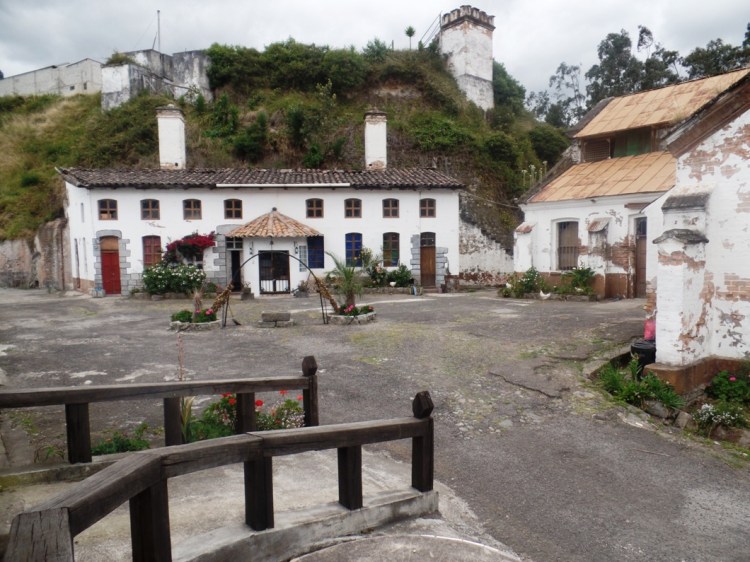
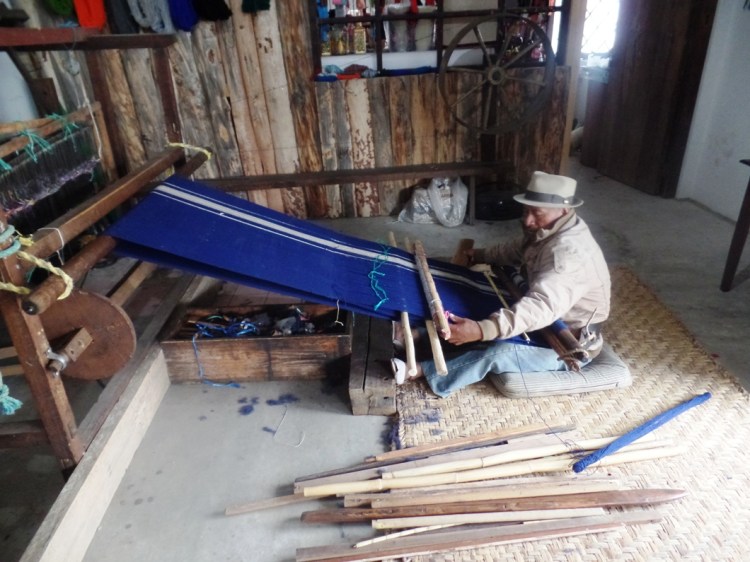
And, finally, I went to yet another museum. Although this one was not quite like any I had been to before. Museo del Pueblo Kichwa is set within a complex of old, abandoned buildings which used to be a textile factory. The Kichwa people were forced to work in horrible conditions there but, when it was closed (over a decade ago), a group of them bought it and turned it into a living museum.

7.JPG

I think I somewhat surprised them, coming on a Friday instead of the weekend, and thus the only person available to give me a tour who spoke any English was the young son of one of the owners. He wasn’t fluent, but his English was certainly much better than my Spanish. Sometimes, when he didn’t know the English words for what he was trying to explain, he gave it to me in Spanish, and I caught the general gist. He told me about their festivals, which seemed to always take place on the 21st of the month. And traditions such as the giving of twelve lashes to both parties as the penance for couples who divorce. He also told me about the yachacs; Kichwa shamans who have knowledge of herbs and will rub an egg across your forehead to diagnose ills.

I appreciated how hard he tried and, even though he couldn’t quite explain everything to my full understanding, it was still a rewarding visit. He and the rest of the people there were very warm, and I left there feeling like I’d had a genuine experience.

SAMSUNG CAMERA PICTURES

Venturing back to Quito again, I spent my last day there preparing. Tomorrow I fly to the Galapagos Islands.


For more photos of Otavalo, click here.