Travelblog SA#8: Tena – Ecuador

6th-8th August 2018

Having left Merazonia, which had been my home for almost six weeks, it felt strange to be back on the road again. I was no longer a volunteer but, once more, a backpacker. The transition was somewhat diluted because on the day I left some of the other volunteers were heading to Puyo to run some errands, so I was given a free lift to the bus station, where I said my farewells and climbed onto a bus to Tena.

2.JPG

Tena was a bit of a strange experience for me. Not at all what I had been expecting. My original reason for venturing there was because I believed I had a space on an ayahuasca retreat nearby but, shortly after my arrival, I found out that it had fallen through due to a rather scatty shaman’s miscommunication, and they no longer had space for me. I was disappointed, but maybe it happened for a reason and that centre just wasn’t meant for me. Taking part in a ceremony is on my bucket list of things I want to do by the end of this journey. I had already decided I didn’t want to do one in Iquitos – the place in Peru, which is most famous for it – as I did some research (as well as watching The Last Shaman, a documentary I highly recommend) and it seems that the ayahuasca industry there has become very touristy and inevitably been corrupted by greed, so I now have my sights set upon a centre in Bolivia.

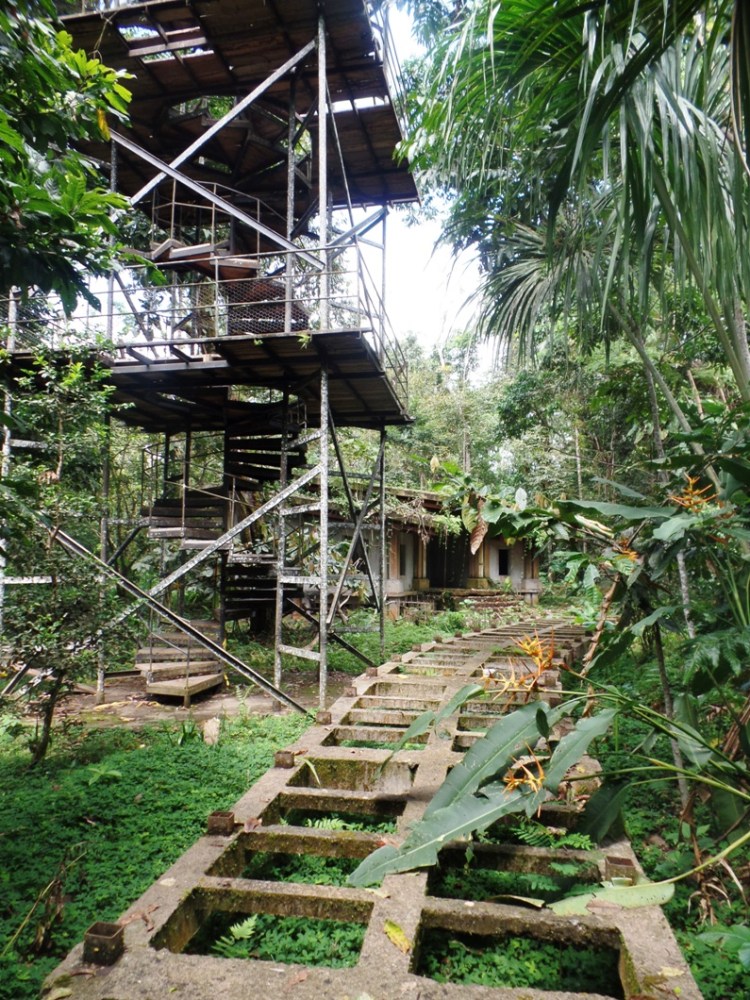
Despite this upheaval to my plans, I made the most of my time in Tena. Travel guides speak of the Parque Amazónico – an island within the river, which is home to a series of local plants and animal enclosures – but I guess they haven’t kept up with their research, because I arrived to find the place abandoned and, from the look of things, for quite some time.

SAMSUNG CAMERA PICTURES

But I actually thought of this as a nice surprise. I love scenes like this. It simultaneously conjures feelings of melancholy and awe to witness the tenacity of nature, and know that nothing is permanent. Eventually, everything withers and is replaced.

SAMSUNG CAMERA PICTURES

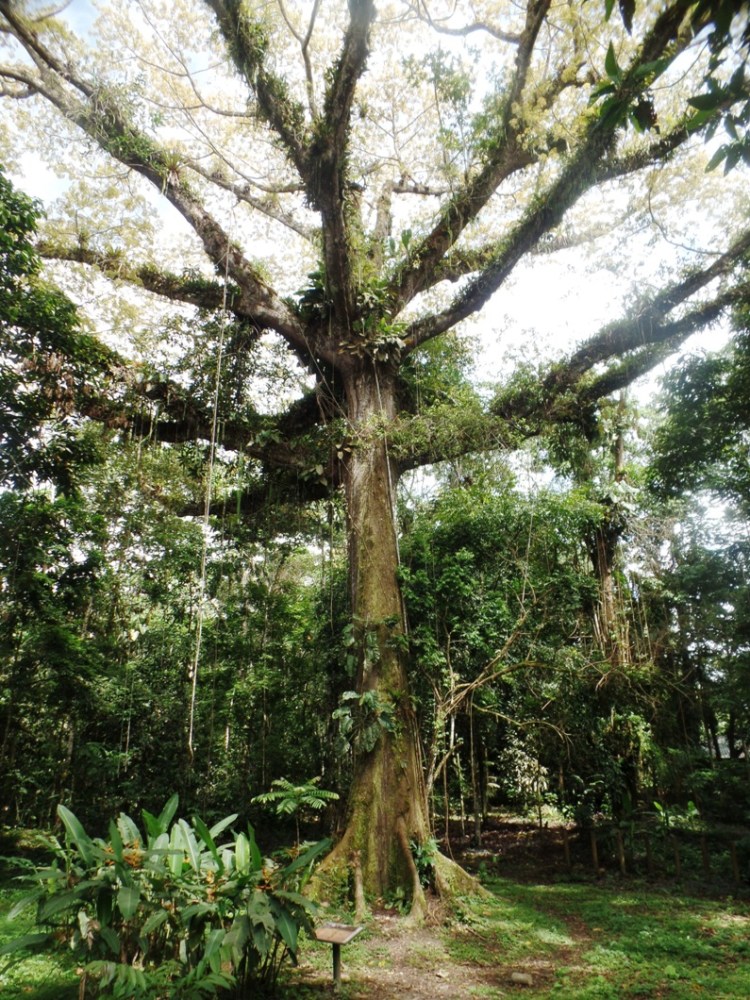
I also saw one of the most beautiful trees I have ever glimpsed. A ceibo, which are known as the ‘grandparents of the Amazon’ not only for the colossal size but also because as they grow they become hosts to all kinds of flora and fauna, and each one is a mini-ecosystem in itself.

SAMSUNG CAMERA PICTURES

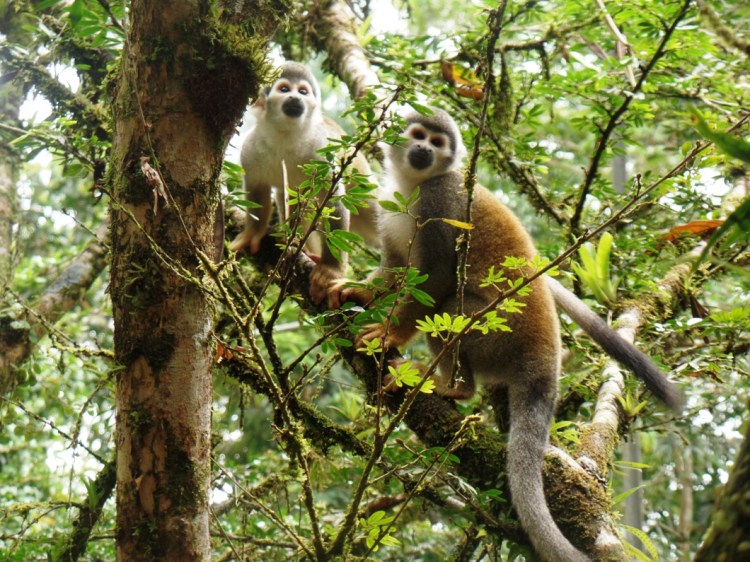
I also saw lots of birds. But they were all either too fast or far away to get a decent picture of them. I did, however, get some half-decent snaps of squirrel monkeys.

SAMSUNG CAMERA PICTURES

On my last day in Tena, I went on a day trips to AmaZOOnico as I thought it would be interesting to see a larger centre with a slightly different approach to the one I volunteered at. AmaZOOnico holds two licences, as both a refuge and a zoo, so it accepts visitors.

Unfortunately, when I arrived it was pouring down with rain, so I didn’t get to see too many of the animals, and the ones I did see I don’t have photos of. This was of no fault to AmaZOOnico, of course. I was quite impressed with the place. Being both a zoo and a rehabilitation centre can be a recipe for a conflict of interest, but they seem to tread the balance well. The animals which still have a chance of being released are kept away from the public.

SAMSUNG CAMERA PICTURES

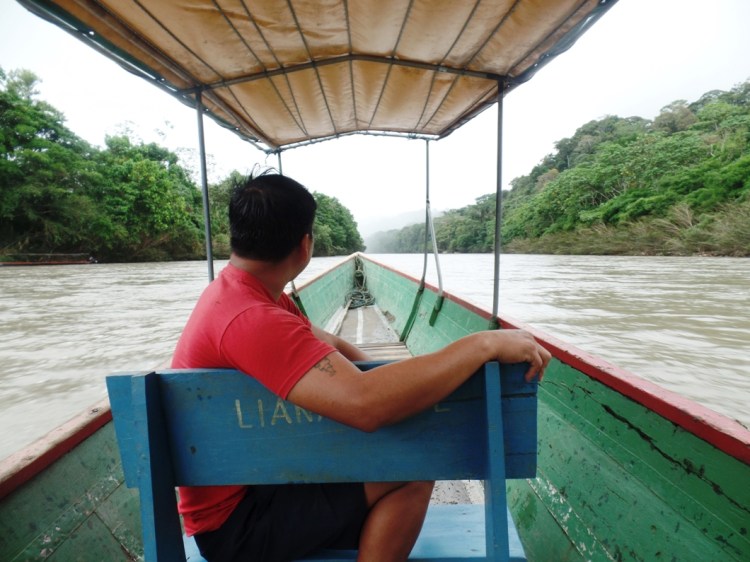
I rather enjoyed the journey to AmaZOOnico too; catching a rickety local bus which skirted along the Napo river, past some Amazonian villages, followed by a short boat passage where I got talking to a pair of men and surprised myself with how much Spanish I knew.

SAMSUNG CAMERA PICTURES

Later that afternoon, I gathered my things and caught a bus to Baños, feeling a little wistful as I went past Mera. I bumped into some of the friends I made at Merazonia when I arrived at Baños (they were on their day off) and we caught up for a while just before I hopped onto another bus; this time, an overnight one destined for Cuenca.


For more photos from Tena, click here.

Travelblog SA#7: Volunteering at Merazonia – Ecuador

28th June – 6th August 2018

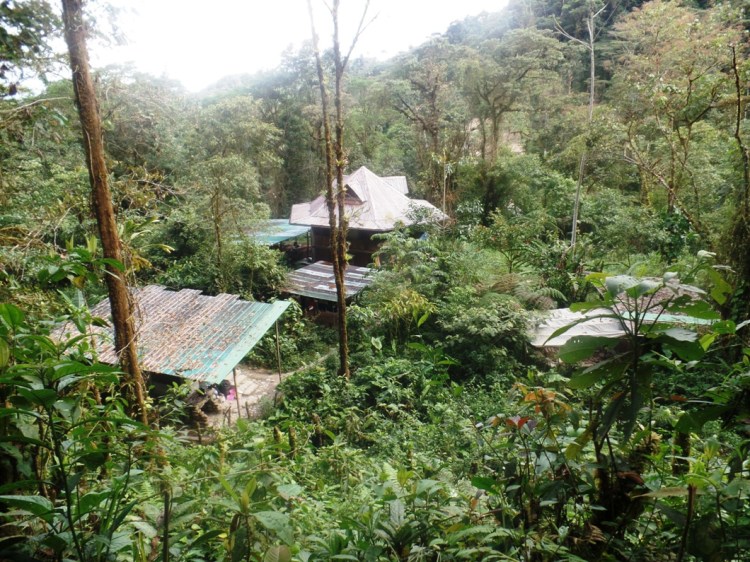
Merazonia is a non-profit wildlife rehabilitation centre nestled where the Andes meets the Amazon in Ecuador, and it has been operating for almost a decade. I had the privilege of staying there as a volunteer for a little over five weeks – which is actually not that long in the scheme of things as the minimum stay they ask for is two weeks but almost everyone who comes falls in love with the place and many end up staying for months, even years.
SAMSUNG CAMERA PICTURES

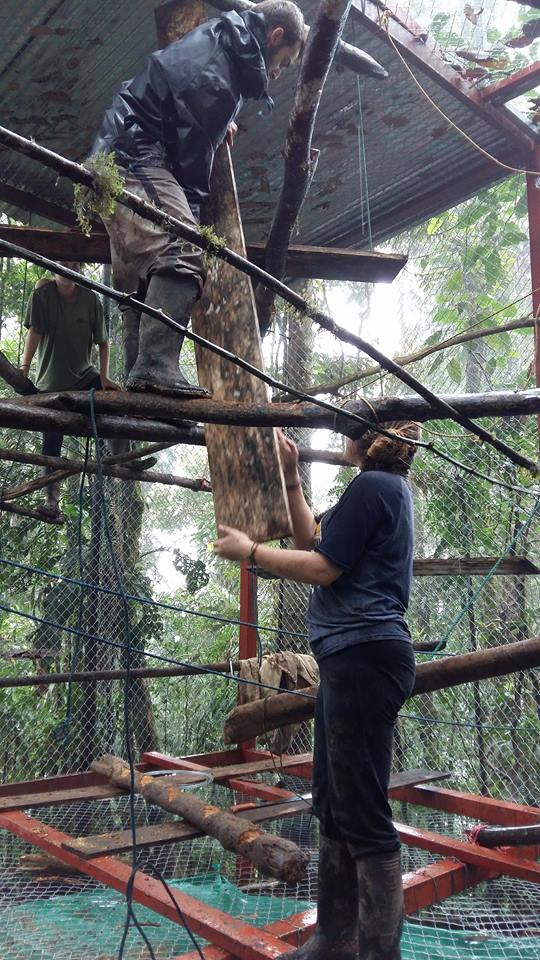
On my first day, I was introduced to everyone, given a tour, and designated a bed in their dormitory. They told me I could spend the afternoon in leisure, having only just arrived, but I was feeling motivated so offered to help them with enrichment activities. A few minutes later, I found myself traipsing through the jungle, towards a release site they were building, and I helped them construct feeders there. Most of Merazonia’s enclosures are just a short walk away from the main headquarters but this was a new one, purposefully built a little further away to help encourage a successful release for primates.
38701828_2101038143491673_5778546774968893440_n

I also met Whistler that night, who would end up being one of my favourites of all the creatures there. Merazonia is primarily a rehabilitation centre and, unlike some places which make such claims, they have a strict policy of minimum human contact for most of their animals because taming them can affect their chances of survival when set free. Their highest priority, however, is wellbeing, and in some cases, where release is not possible, they give them the best life they can.

Whistler is one of those creatures for whom release is not possible. He is a kinkajou; a nocturnal, tree-dwelling mammal that some people mistakenly believe can they can tame and keep as novel pets but end up having a nasty surprise later along the line when the animals reach maturity because detained kinkajous become aggressive out of infancy. Merazonia have been handed many such kinkajous in the past, and most have been successfully released back into the wild, but Whistler, however, is somewhat an oddity. He remains human-orientated, and they suspect he may have brain damage. He also has physical health problems, and one of the daily duties of Merazonia’s volunteers is to visit him at night and give him a spoonful of jam laced with medicine which helps keep him alive. As soon as you enter his cage, he leaps upon you, wraps his tail around your neck, nestles into your arms, and will simply not let you go until he has had a few minutes of attention. They call him Whistler because he once had his nose scratched off by another kinkajou and he makes a strange sound when he breathes. Everyone adores him.
38693334_700080020338252_7154650431136727040_n

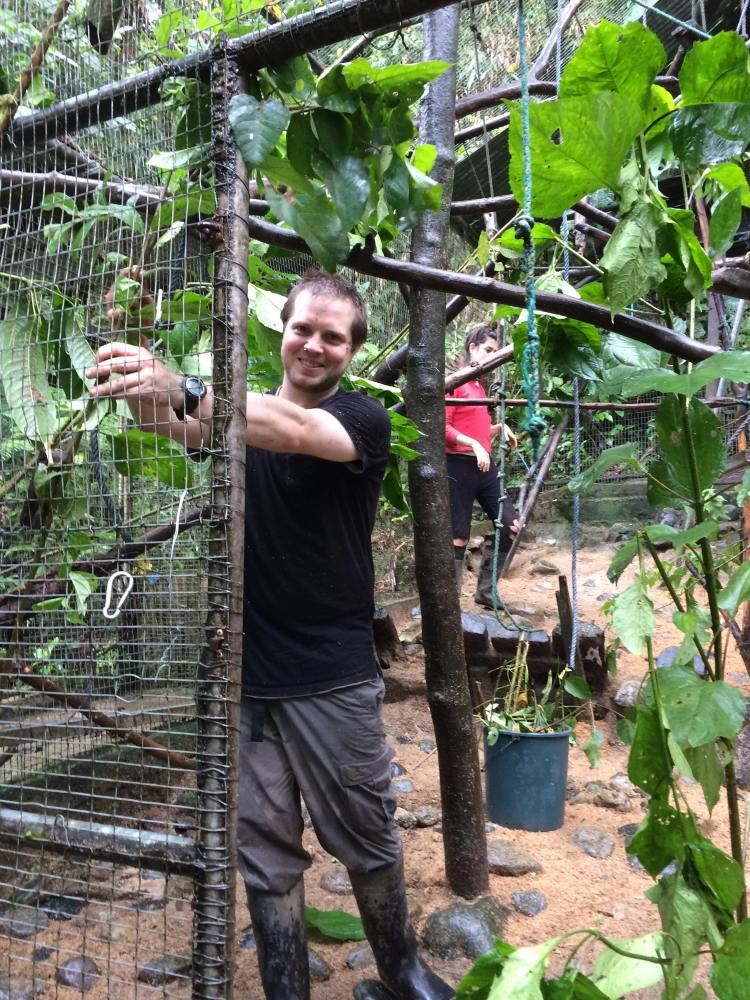
Of course, not all of the work at Merazonia is glamorous. Most of the time you are cleaning cages and it is not something I would recommend to someone with a strong adversity for monkey guano. You have to be quiet while performing these chores and avoid all unnecessary interaction with the animals because it is bad for them to get too used to humans.

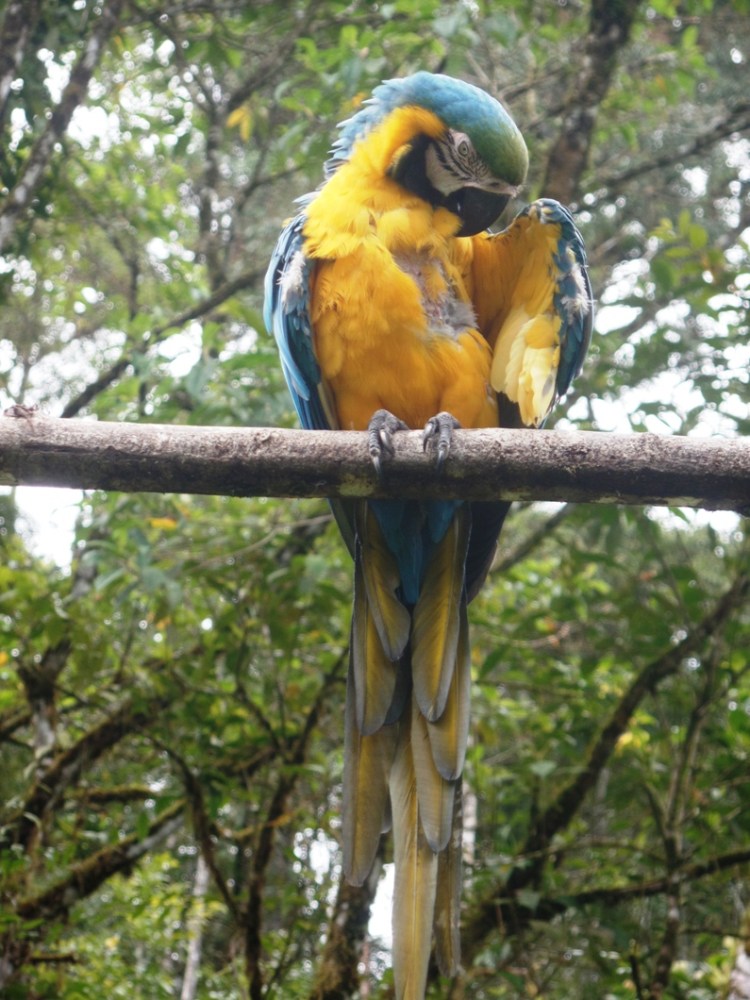
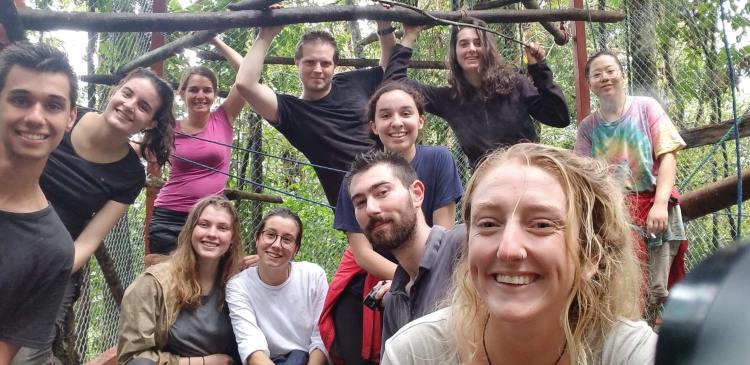
That said, volunteering at Merazonia is one of the most rewarding things I have ever done and I learned a lot about wildlife while there. One of my favourite days was when I helped extend the artificial branch system they have for Houdini and Margarita – a pair of macaws who cannot fly and thus roam around Merazonia by climbing along a series of beams – and watching them use it for the first time, knowing that I helped make a pair of creatures worlds’ a little bigger.
SAMSUNG CAMERA PICTURES

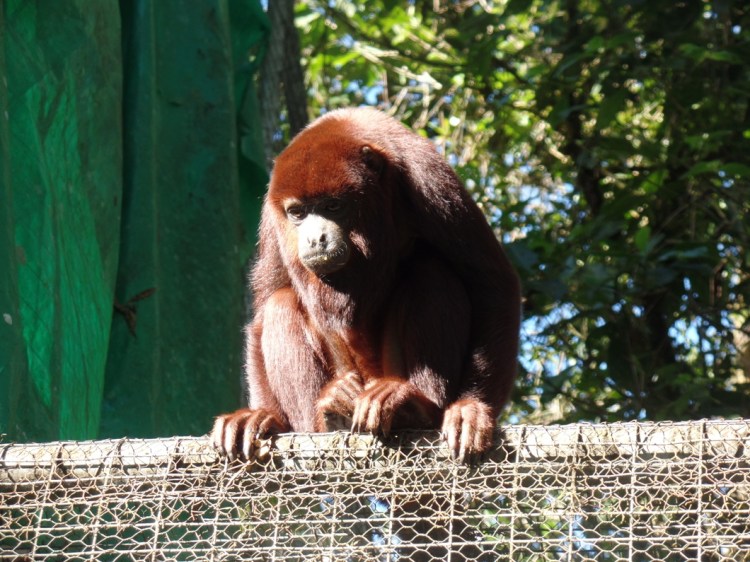
During my stay, a lot of attention was focussed upon their group of woolly monkeys. Each one had been brought to the centre individually over the years, and most often they were young, malnourished and traumatised, having just witnessed their mother being hunted for bushmeat and sold as pets to people who didn’t have a clue how to care for them. Each one has had to be nurtured back to health, raised, and introduced to the rest of the group once old enough. It has taken Merazonia years but they finally have a strong enough group to consider preparing for release and I admire the work of its staff and long-term volunteers who have such patience and dedicated their lives to such a cause. I will not be there for the actual release but feel honoured to have been part of the build-up and I hope it goes well.
SAMSUNG CAMERA PICTURES

Merazona also has a group of capuchins which, like the woolly monkeys, need to be fed and have their enclosures cleaned twice a day. They are a little more difficult to manage than woollies because they are highly intelligent and have a complex social structure but, despite how troublesome they can be, they are often amusing to watch and they do put a smile on your face. They have taken in some howler monkeys over the years too, but not so many because unfortunately, not many howlers sold as pets survive long enough to make it to a refuge as they are very specialised feeders and many die of malnutrition. Chiliana is one who was lucky enough to be saved in time, and she has to be taken out into the jungle every day to forage for very particular leaves, learn to climb, and build up her muscles.

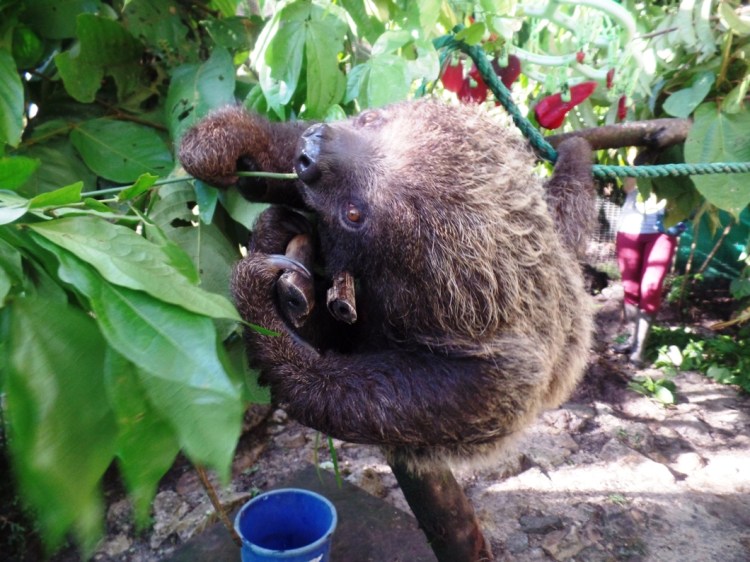
There are lots of macaws and other birds, some tamarins, a sloth called Stevie (who is shortly due for release), a puma and, last but not least, Tom the turkey (who has technically been released and is self-sufficient, but spends many of his days roaming around the grounds causing mischief).
SAMSUNG CAMERA PICTURES

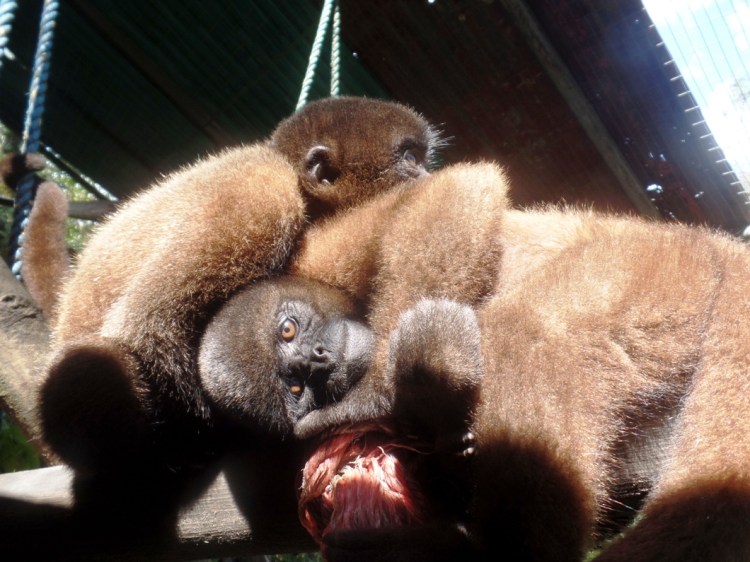
Another highlight of my time there was being given the privilege of becoming a ‘Baby Woolly Daddy’ and helping to look after two of Merazonia’s newest members, Fonzi and Chachi, who were adorable and hard to say goodbye to.
SAMSUNG CAMERA PICTURES

Just a little note, so that future volunteers don’t get the wrong idea: Merazonia only lets a limited number of its volunteers handle baby monkeys as, even though it is a necessity for them to have the care and attention their original parents from the wild can no longer give, it is not good for them to be handled by too many people. When Fonzi and Chachi are old enough they will start the rehabilitation process and will likely be the first members of a new group of woollies Merazonia will prepare for release. Who knows? Maybe I will visit Merazonia again in a few years and one of them will be the new alpha male. It would be nice to see them again, but by then the policy of minimum human contact will be in place and I will not be allowed to acknowledge them in the same manner. They will also have become wilder. I will certainly be following Merazonia closely online to hear about their progress.
38728052_215925282431271_6192325036662063104_n

I have uploaded a few more videos, highlighting some of my favourite moments in Merazonia. You can find them by clicking on the following links:

Visiting the nearby waterfall (I didn’t jump into it myself as I am way too scared of heights!), the woolly monkeys, Chilliana playing in the trees, Fonzi and Chachi montage, and releasing a sloth.


For more photos and videos from Merazonia, click here.

If you are interested in volunteering at Merazonia (or even just helping them out in some other way, such as adopting one of their animals) here is their website. This video on Youtube is also a good introduction to what they are about.


Travelblog SA#6: Galapagos Part 3 (San Cristobal Island & Santa Cruz Island) – Ecuador

23rd-26th June 2018

Some of my final days in the Galapagos were spent on the island of San Cristobal. Of all the inhabited islands, it had the best-maintained town and it was close to Tijeritas Hill; a spot famous in the archipelago for being a nesting zone for frigates.

SAMSUNG CAMERA PICTURES

Whilst walking around the area I saw something I was not expecting at all on the Galapagos Islands: a wild furry animal about the size of a small fox. I still do not know what it was for it was a little too big to be a cat and had an angular head. Unlike the endemic species of the Galapagos this creature was shy and slinked away, so I didn’t manage to get a photo of it.

SAMSUNG CAMERA PICTURES

The bay just below Tijerietas Hill had a lot of turtles, stonefish, huge schools of yellow-tailed grunts, rays, and also a colony of playful sea lions which got into the water and swam with me. On the Galapagos Islands there are some things which you get desensitised to – such as seeing iguanas and pelicans – because there are so many of them everywhere, but swimming with sea lions was one of the things I never grew bored of.

SAMSUNG CAMERA PICTURES

In the afternoon I set off for La Loberia, a beach a few kilometres away from town which is famous for its abundance of sea lions. By chance I found myself wandering into a street festival. I did not know the occasion or what they were celebrating but I watched for a while and soaked up the atmosphere while they danced, drank, sang, and played their instruments.

SAMSUNG CAMERA PICTURES

By the time I reached La Loberia, it was almost sunset and the sea lions were settling down for the evening upon the shore. It was a rather eerie moment, and I took some wonderful photos.

29.JPG

I left San Cristobal the following day but picked a boat leaving in the afternoon so I could spend some more time snorkelling with the sea lions at Tijerietas. I was feeling very content by the time I returned to Santa Cruz (the island my journey in the Galapagos both began and would end). I had achieved almost everything I intended. I’d seen so many things, including penguins, blue-footed boobies, frigates, tortoises, turtles, and so much of Galapagos’ strange, almost alien landscape. There was only one thing left on my list, and that was to see a hammerhead shark.

I heard stories of them being sighted in a set of mini islets off of Santa Cruz called Gordon’s Rock, but the sightings were not guaranteed. I only had one day left so I signed up for a day of diving, hoping that I would be lucky. I only had enough money in my tight budget for one shot anyway.

The first dive was a little ropey. The currents were being unpredictable so our instructor had to change our course and some of the other divers ran out of air early and had to go back up. It was my first time going underwater for over three years, and Gordon’s Rock is a drift dive with very strong currents so I was, quite literally, jumping into the deep end. I was a little disoriented at times and came back up with a headache. We did manage to see a hammerhead though, as well as lots of Galapagos sharks, turtles, and a huge school of barracudas.

30

The second dive went much more smoothly. The instructor knew what was going on with the currents by then and figured out how to work around them. We saw so many hammerheads that I stopped counting and the landscape of pinnacles covered in coral was beautiful. I was lucky enough to be buddied up with a dude with a GoPro, so here is a video.


If you would like to see more photos and videos from the Galapagos, click here.

Also, click on the following links if you would like read Part 1 or Part 2 of my time in the Galapagos.