**NOTE: During our hike to Inle Lake Roy and I discovered that the Singh brothers (whom we booked the expedition with) have been misleading their customers and exploiting their guides. We did manage to turn it around and still have a great experience, but I feel morally obliged to include a “Comments on the Singh brothers” at the end of this travelblog entry. I advise anyone who is considering going on a trek around the Kalaw area to read it.**
2nd-4th September, 2014
At 9am in the morning Roy and I met Hmin, a young man of Ghurkha decent who would be guiding us on our three day journey to Inle Lake.
After a short introduction we set off, leaving the streets of Kalaw behind. Within a few minutes we were walking through terrain of pine forests and Hmin already seemed to be a great source of knowledge; occasionally stopping to show us a certain plants and trees, telling us their names and ways in which they are used by the locals.
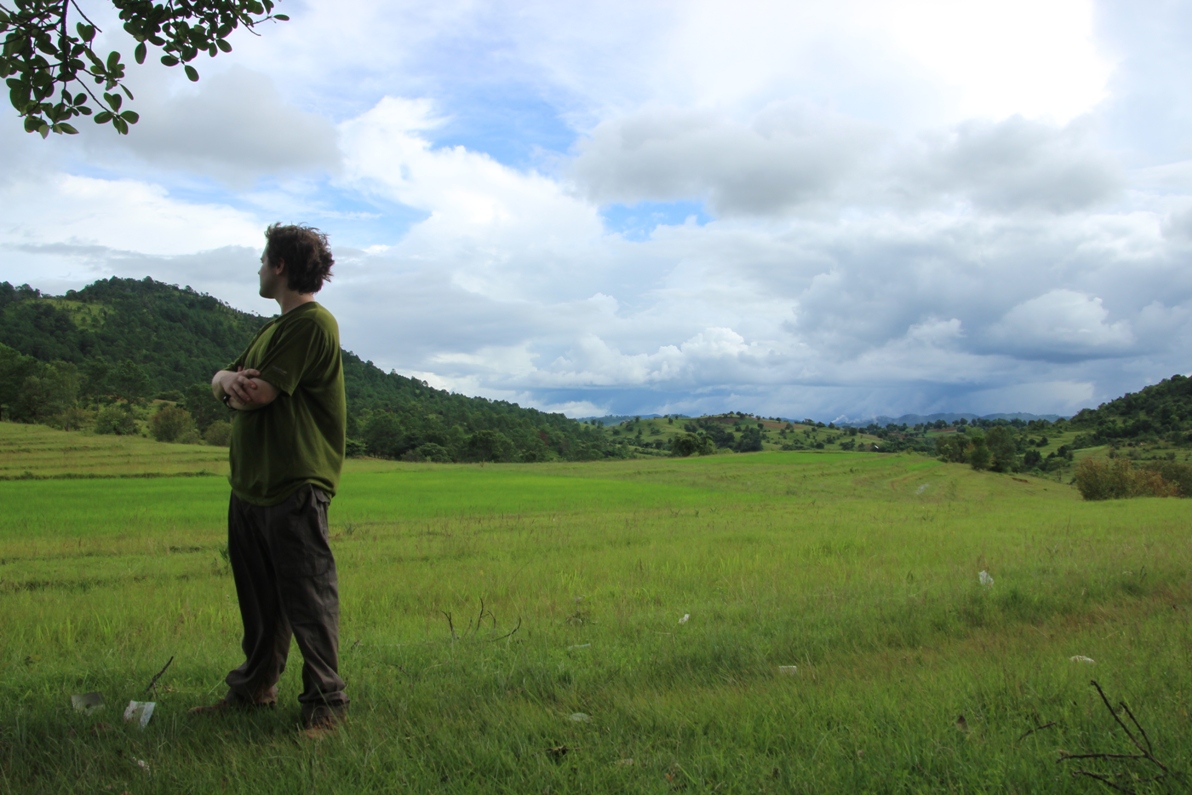
Eventually the trees cleared and we caught our first view of the nearby mountains.

An hour or so in we passed the first village and pine forests began to turn into rice paddies, farmlands and scattered homes. We had reached the lands of the Pa’O people; a Burmese tribal minority. We did take a few pictures but then it began to rain, heavily, so I had to put my camera away and get my anorak out.
We marched on through the downpour and the scenery gradually became evermore dramatic. The weather, although inconvenient, added to the atmosphere. Mist floated around us.
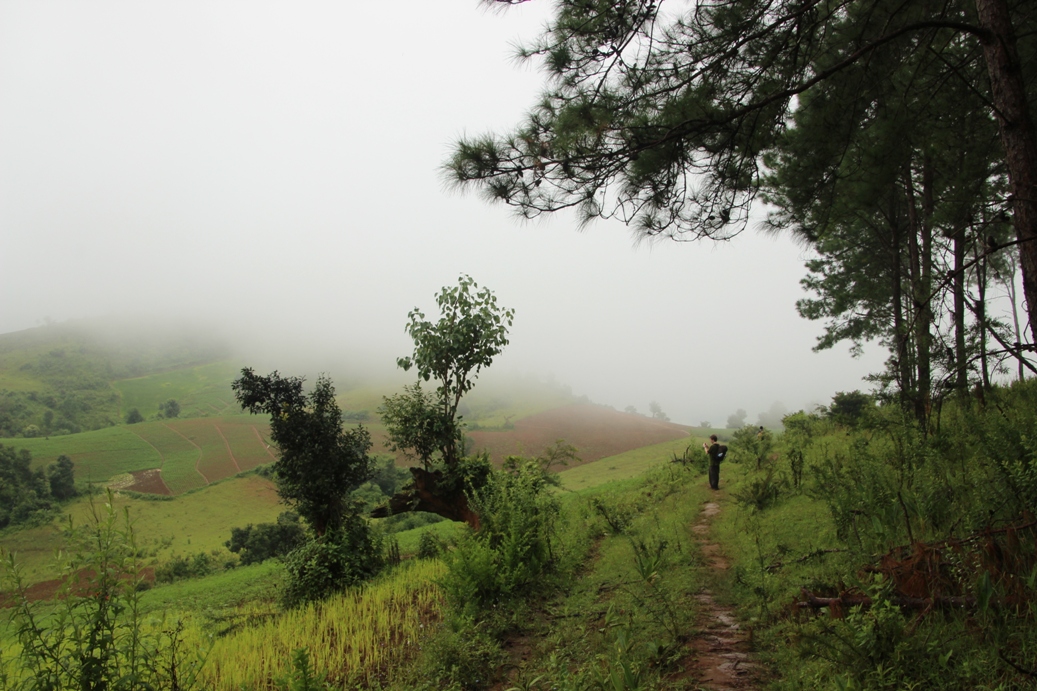
There were flashes of light followed by rumbling thunder. We were eventually caught in the middle of the storm and the rain hammered down on us. There were many wonderful sights I saw that day which I didn’t dare to photograph out of fear that it would be the last picture my camera would ever take.
We reached the village where we were staying at that night in the late afternoon.

We were given a room to sleep on the upper floor of a storehouse which was filled with sacks of garlic. “At least it will keep the mosquitoes away,” Roy joked.
I went outside for a quick wash.

You’d be surprised how refreshing a cold water bucket shower can be when you’re sweaty from a long day’s hike. After getting changed into some drier clothes, I eventually found Hmin in a nearby hut cooking us dinner in a large pot balanced over a fire.

After eating we drank locally made rice wine and Hmin told us about the Pa’O people. They are believed to have come from Tibet, originally, and they are the second largest tribal group in Shan state. These hills we were passing through are actually a semi-autonomous zone – there are no Burmese police here. The Myanmar government have tried to establish control over this region many times but the Pa’O and other tribes have their own armies and fight them off. They are currently under an uneasy truce.
Our journey was soured a little the following morning when Roy and I found ourselves being led away from the picturesque tribal lands to do a two hour stint along a concrete road. We eventually found out that that this diversion from the original route was for the purpose of picking up two more trekkers who would be joining us for the rest of the journey. This made both Roy and I raise our eyebrows, for many reasons, which are discussed in more detail at the end of this blog*.
At the end of the day though; it was not the fault of the two young French men who had just joined us. Neither was Hmin to blame. It was at this point that we discovered that out of the money Roy and I had paid for the trek, Hmin was actually being paid very little. He was not making any more money for having two extra people dumped upon him, either.
We decided that there was no point in letting this ruin our experience. Ben and Leo turned out to be good company and, shortly after collecting them, Hmin steered us away from the concrete road in favour of the plateau again. The weather was much better that day, and I was even lucky enough to have a reason to apply some suncream. We saw many Pa’O people out on the farms and many of them waved at us as we passed. They seemed to be quite pleasant and contented people.

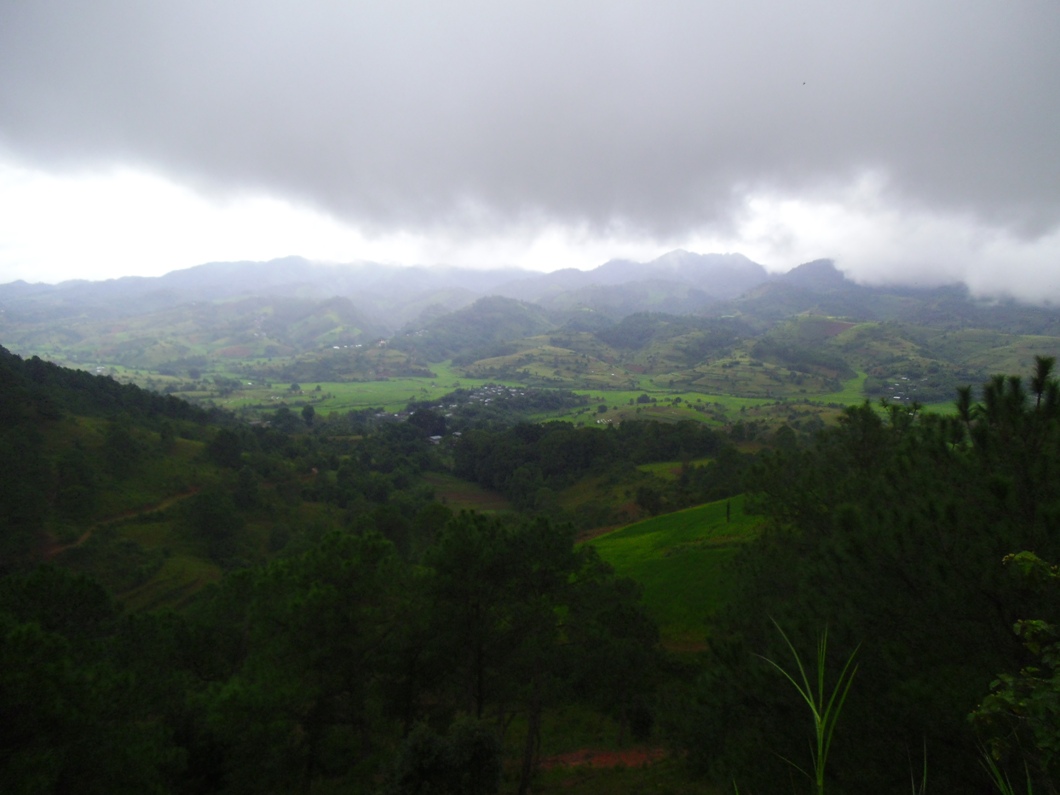
The views were consistently spectacular that afternoon.
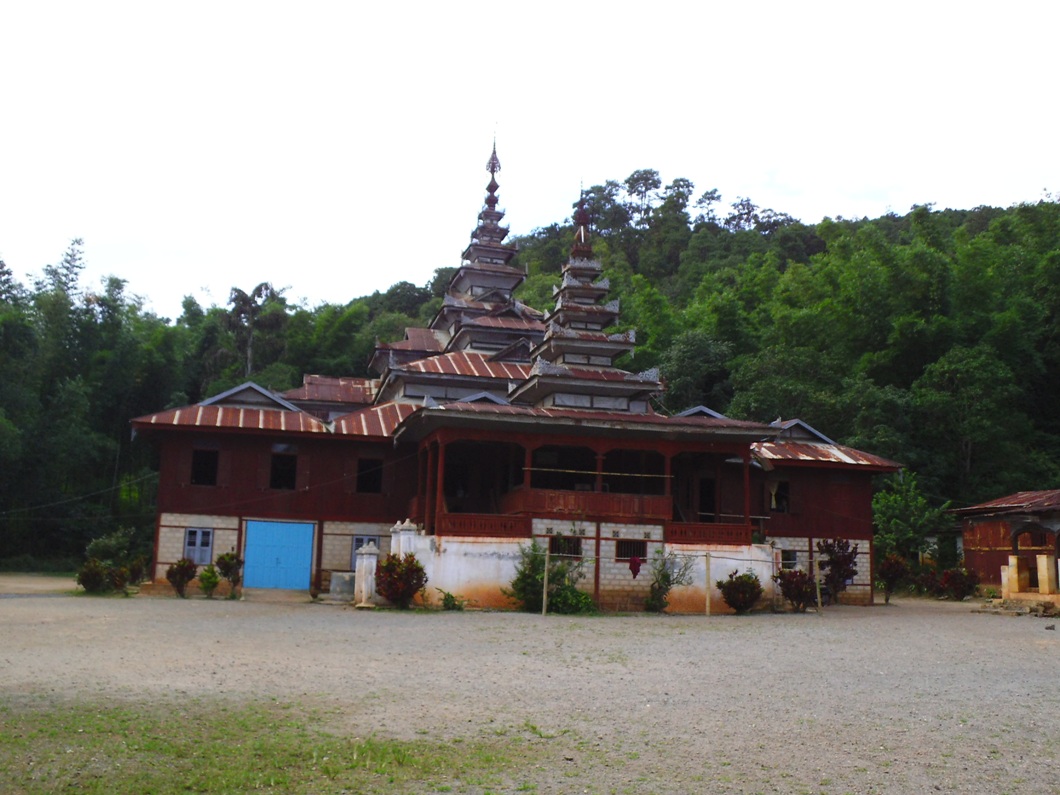
Later on, we reached the place where we would be spending our second night. An old-fashioned teak monastery.
I was feeling a little bit ill by then though. I had had a sore throat over the last few days and not thought much of it until then, but by that afternoon it had progressed to my chest and I was feeling generally quite ill. I shouldn’t have embarked upon on the trek really, but it was too late now. I dug up some ginger root from one of the fields we passed, and, when we reached the monastery I boiled it in a kettle, added some green tea and drank the whole of it down, cup by cup. I instantly felt a lot better, but I thought it best I go to bed early to get some rest.
Rain hammered upon the roof, all night. In the morning we were woken at 5:30 am to the monks chanting their morning prayers. In Burma, every man is expected to spend at least two years of their life as a monk; once as a child, and again as an adult. This monastery was mostly filled with younger ones, but there were a few adults to watch after them.
After eating breakfast of rice and vegetables, we set out again.

Because of the rain, the footpath was boggy. It was the kind of mud that stuck to your boots until it was over an inch thick and made your feet heavy. We kept trying to scrape it off, but it would only be replaced again after taking a few more steps. We slowly made our way down from the plateau, towards lower lands. The air began to get warmer.
At lunchtime we reached Inthein, where the boat was waiting for us.
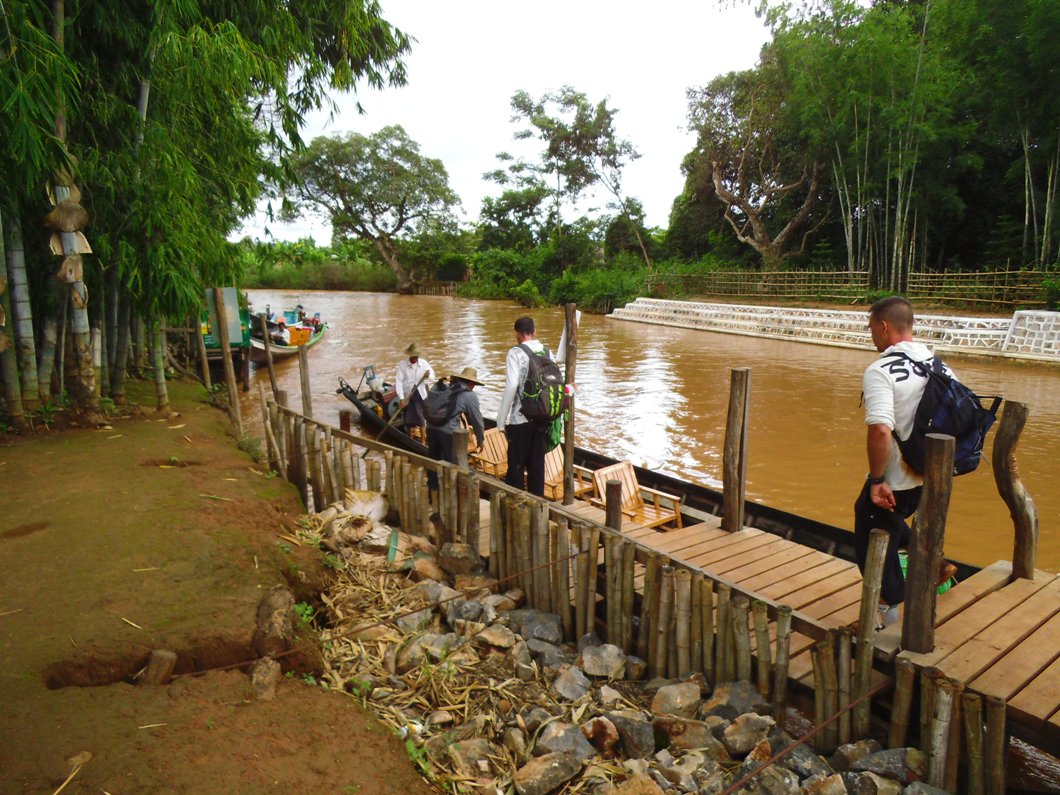
As soon as we got onto the boat, almost on cue, it began to rain again. We put on our anoraks.
“Blue skies to the left, blue skies to the right,” Roy said. “Where is he taking us?!”
He pointed to the black clouds ahead.
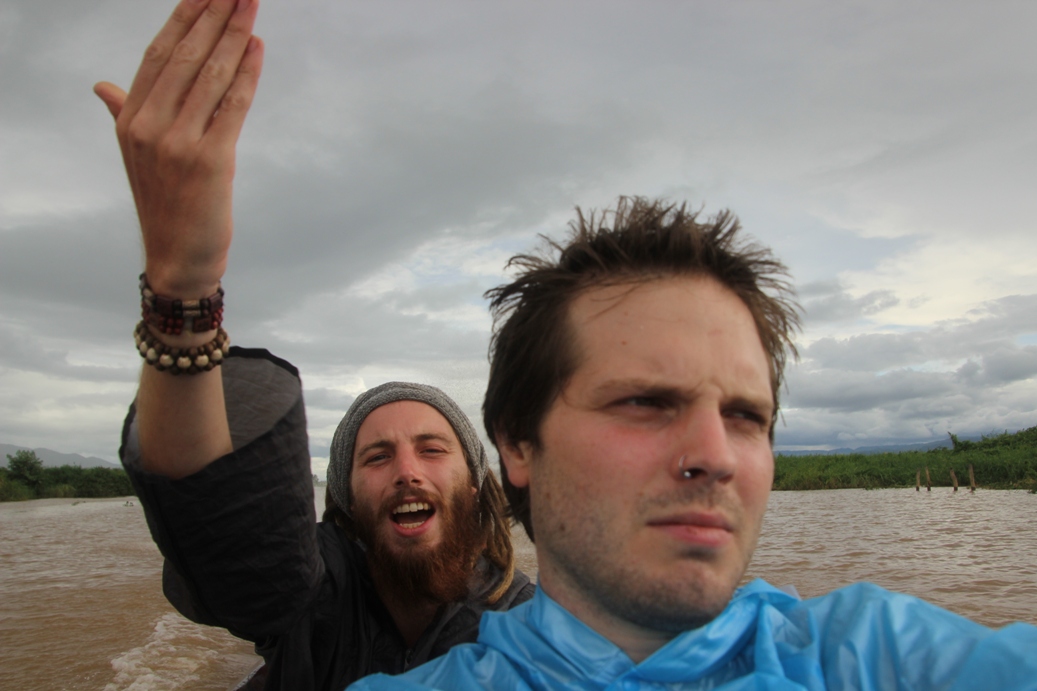
We were approaching Inle Lake…
As usual, photos can be found here. I would also recommend Roy’s, as he has a much better camera than I.
*Comments on the Singh brothers
I would like to first of all say that I do not regret the trek I went on for, despite it all, we did manage to turn it around and have a great experience. But there are still some things I would like to make known about Singh brothers and the way they have been conducting their business.
The Singh family have built up quite a good reputation for themselves over the years. This is probably largely to do with the amount of attention they received in the 10th edition of the Lonely Planet in 2009. That, and the fact that their aunt owns the cheapest backpacker digs in town (The Golden Lilly Guest House), means that they have managed to snatch themselves many trekking expeditions over the years. They are also, from what I have heard, actually fairly good at guiding. They have had some very positive feedback from the travellers they have taken out on expeditions over the years.
“So? What is the problem?” You’re probably thinking.
The problem begins with the fact that the Singh brothers themselves are rarely trekking these days. They are now nothing more than an agency, and one which exploits their guides, at that.
Somewhere along the line they have obviously realised that now they have built up such a strong reputation it is much easier to get others to do the hard work for them while they sit back and reap in most of the profits. Not only that, but they are also scamming their customers now as well.
When we were booking our trek with Rambo Singh, Roy and I were under the impression that it would be himself or maybe even one of his brothers who would be taking us on the trek. Instead, on the morning we left we were introduced to a young man called Hmin. This did actually turn out to be a blessing in the end as Hmin was a good guide. What shocked us was when we found out that Rambo was playing him only $8 a day, which is under 25% of what we paid for the trip.
We were also forced to spend two hours of our second day walking along a concrete road to pick up two more trekkers, just so Rambo could save some money.
“Do you get paid anymore for collecting them?” we asked Hmin.
Hmin shook his head. “Two people. Ten people… I get paid the same.”
This is a very poor and unfair way to do business. Not only for the fact that Roy and I were quoted a higher price for our trek on the basis that the costs were being split between just two people, which had suddenly jumped up to four, but it is also unfair on the guides who are being forced to work much harder for no extra money.
Roy and I dug a little deeper. We had already found out exactly how much the Singhs pay their guides, but we also looked into how much the boat and the accommodation costs were and then estimated (quite generously) the food. We discovered that when you book a trek with the Singhs, 60% of your money goes straight into their pockets.
And that is a lot of money for sitting on your ass all day.
I am not telling you this to put you off doing a trek, for guides like Hmin are still reliant upon agencies like the Singhs’ to get them work, and the last thing I want to do is destroy Hmin’s livelihood. I am telling you about this to make you more aware of where your money goes.
If you can’t find a guide directly and have to use an agency my advice would be: haggle. Haggle hard, because the guide, food, and accommodation are all going to cost the same anyway, so any extra money you are paying is all going the greedy pockets of people who pass the real work on to others. Give some extra money to your actual guide. If you’re from the western world something like $5 isn’t going to be a great amount to you, but to your guide that is enough to feed their family for at least a few days.
It is a shame to see what happens when money changes things, for it does seem that what was once an honest living for three well-intentioned brothers has transformed into an aggressive business model. I only hope that guides like Hmin eventually learn how to find their own customers and the Singh brothers learn that a good reputation can be a very fickle thing if you do not deliver.



 Tej Turner