Travelblog#12: Hsipaw – Burma

15th-18th September, 2014

We visited Hsipaw with the intension of venturing out on a trek from there but upon our arrival we found out that all excursions which ventured too far from the town had been strictly forbidden, due to current conflicts between the Myanmar army and Shan rebels. I happened to notice that the guesthouse we were staying in had recently gone to the trouble of having a brand new sign professionally made, politely apologising for the fact that they were no longer allowed to rent out motorcycles to foreigners – which said to me that they weren’t expecting any kind of resolution to the situation soon.

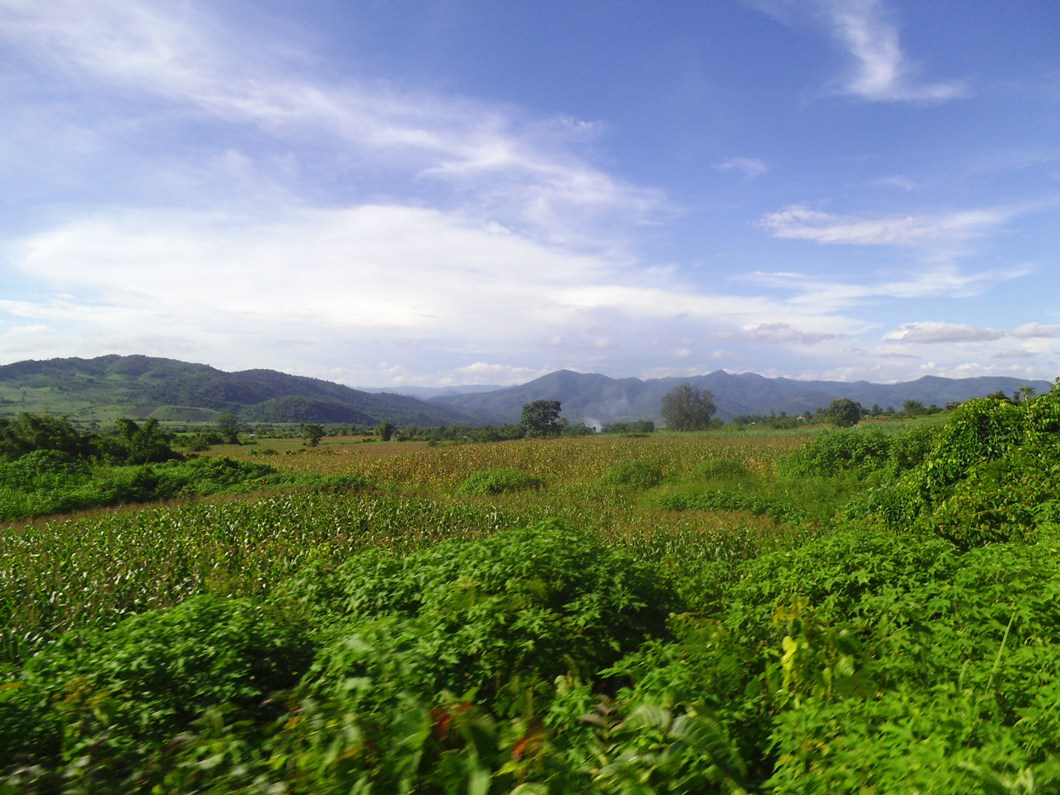
Fortunately, there were more than enough attractions close to the town itself to keep us occupied for a few days. Well – we probably could have seen them in two, in truth, but we liked Hsipaw so much that we lingered there for a while. Hsipaw is very much how you imagined a Burmese mountain town to be like when you were daydreaming about your trip to Burma, and in a good way. Thriving markets outnumber shops, buffalos wander the streets, and groups of young nuns walk to and fro, holding up umbrellas to shield their faces from the sun. The roadsides were dominated by massive trees – it seemed that the town had been built around them rather than over them. Some of them are dedicated to the nats and been converted into shrines.

In fact, there were many nat shrines in Hsipaw. There was even a Nat Garden.

1

Which was a blessing, as Roy and I were beginning to feel a bit bored of Buddhas, four weeks into our trip. If there is one thing there is plenty of in Burma, it is certainly Buddhas.

The Nat Gardens were also near “Little Bagan” which, while not anywhere near as impressive as the real Bagan, was a pleasant place to sit and eat lunch.

4

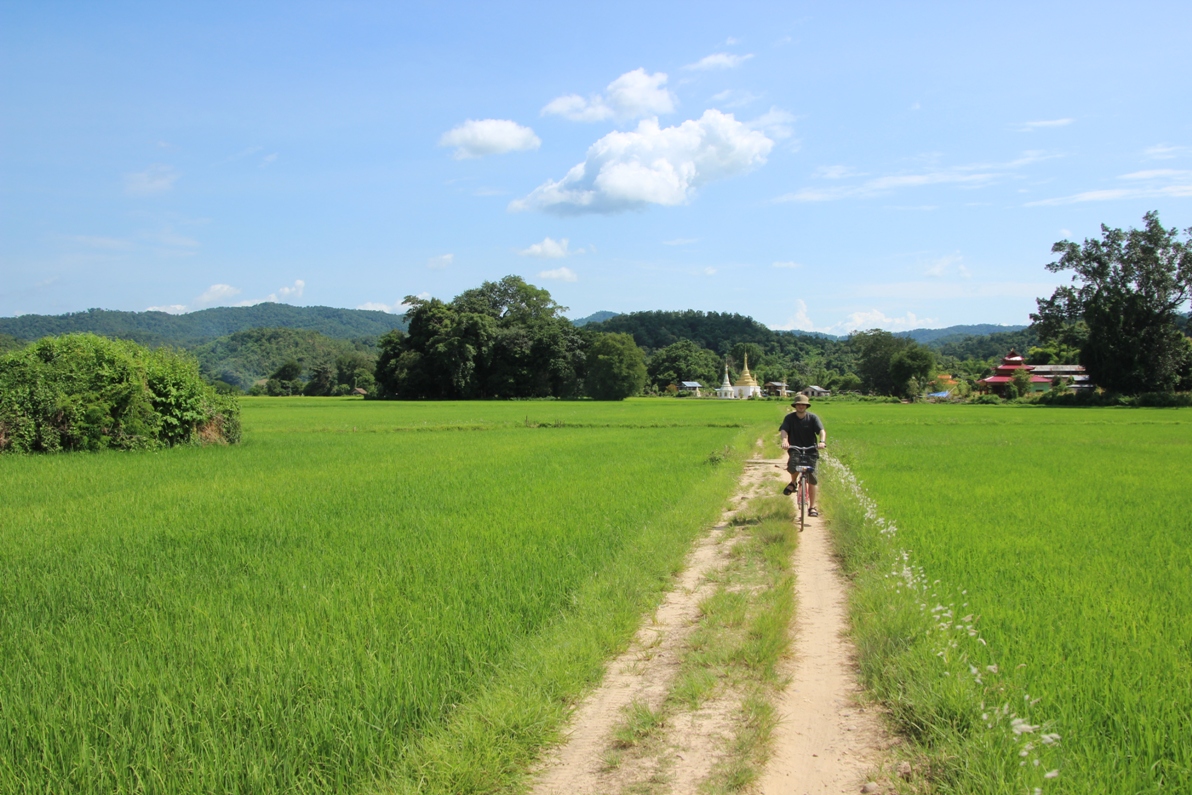
On our second day in Hsipaw we went on a little trek to a local waterfall. The trail began along a dirt-track road, and then we got lost for an hour or so in some very pretty rice paddies.

2

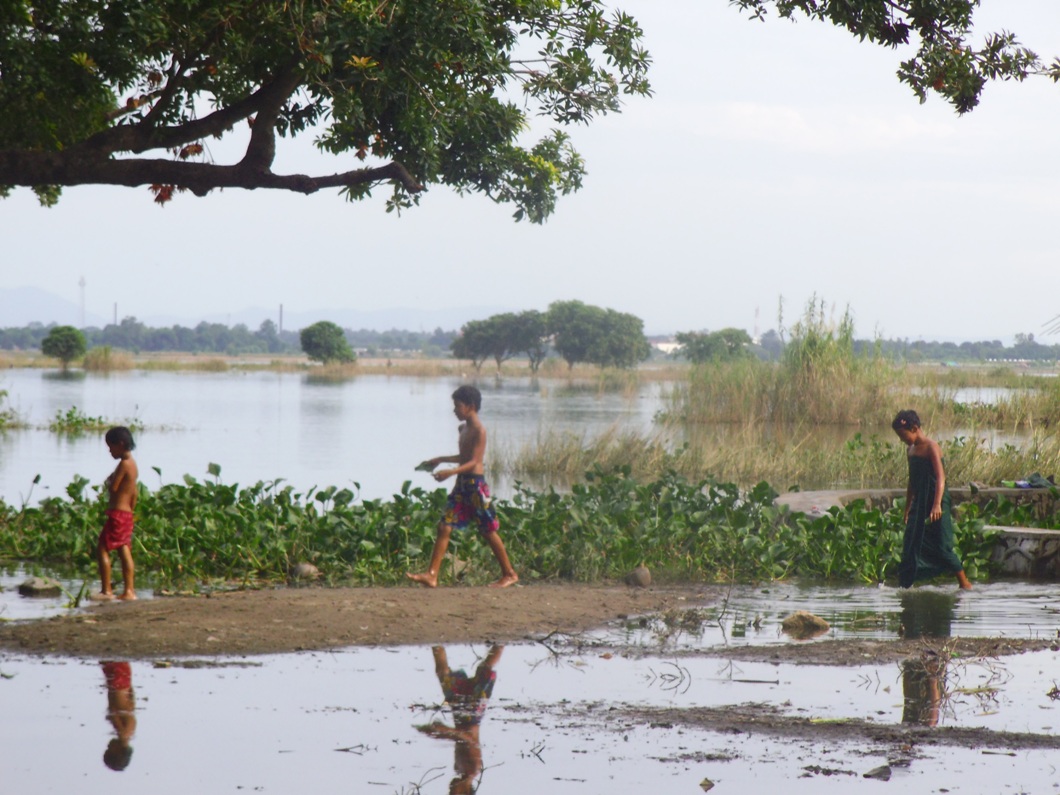
People had told us that Hsipaw had a cooler climate, but they were lying: it was around 35 degrees Celsius, and very humid. When we finally navigated our way through the jigsaw-like paths which criss-crossed between the rice fields we found ourselves in a small village. It was one of those typical, but nice, Asian farming villages. If you’ve travelled off the beaten track in Asia before, you’ll know the kind; the ones where everyone lives in humble homes and live fairly simplistic lives, but they all seem contented and friendly. A mother was on the riverbank, in the process of trying to bathe four very fidgety children by lathering them up with soap and then dunking them into the water while they thrashed around, giggling.

Roy and I sat in a monastery for a while to shelter from the sun and hydrate ourselves, until we had cooled down enough to brave the footpath again. We then went up a hill, and then down again, eventually passing through a small hamlet which had homes built around the curves of the river.

3

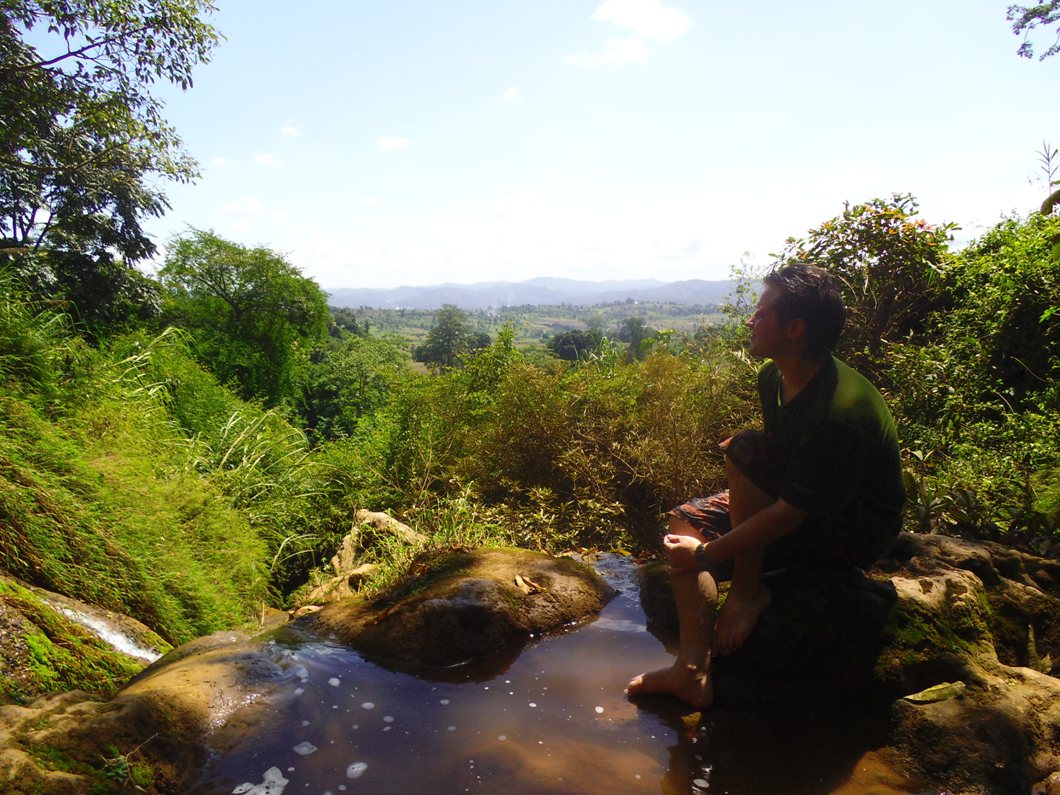
The waterfall itself wasn’t mind-blowing, but it did have a nice pool to swim in one of the tiers halfway up.

7

I ended up sitting at the edge of the tier for an hour or so, enjoying the cool water and the view as I waited for the midday sun to ease.

5

We also went on a short cycling trip the following day, through some of the villages towards the south which were, yet again, very picturesque.

9

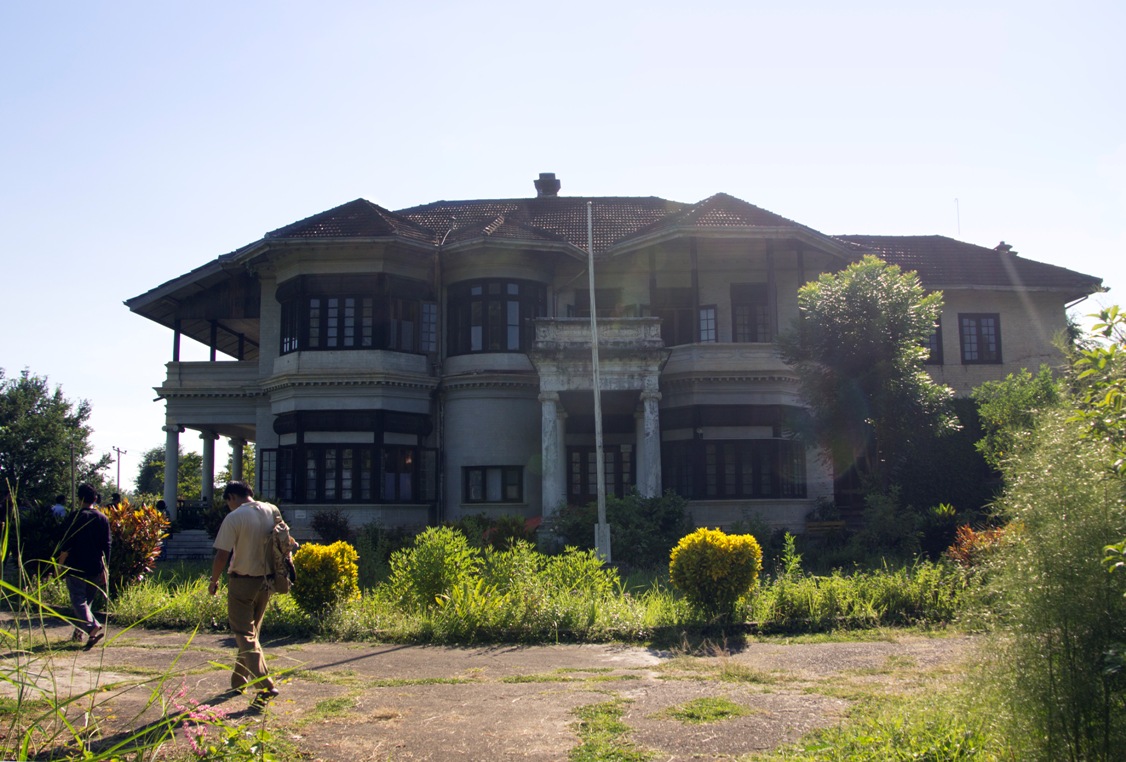
But our most interesting experience in Hsipaw had to be our visit to “The Shan Palace”.

8

Okay, so it is not exactly a palace. The real one was destroyed in the Second World War during air raids. I have seen a few “grand palaces” in Asia, though, and none of them were as interesting as this place.

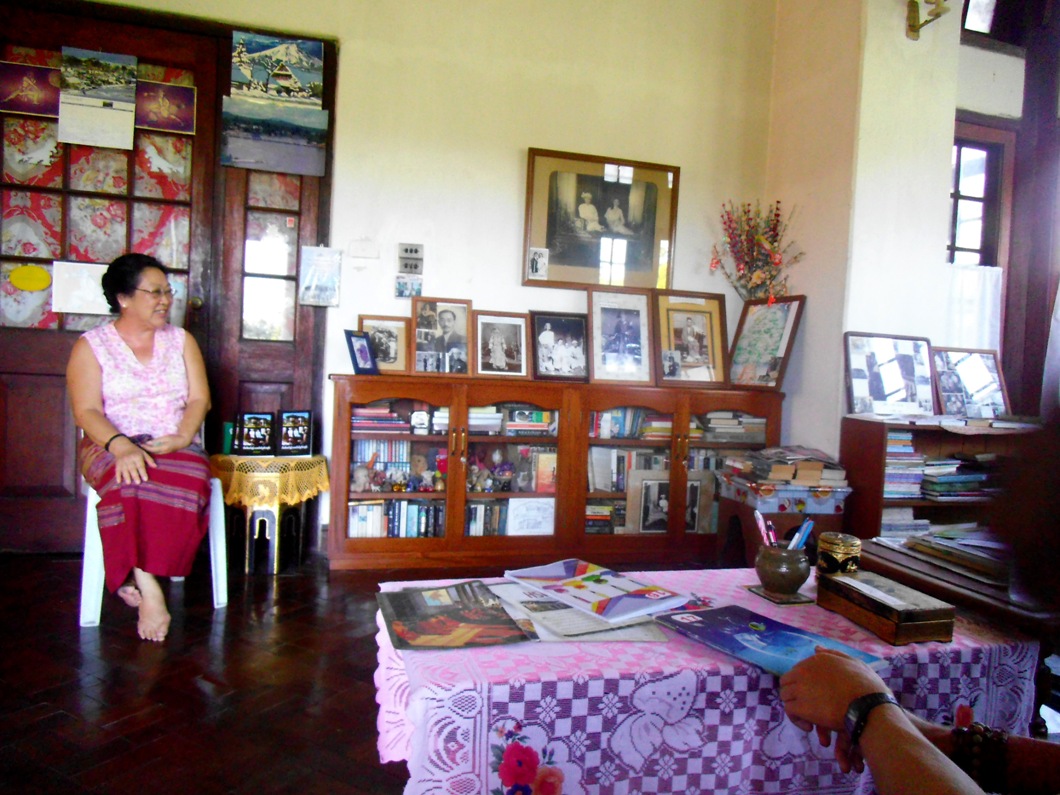
Fern, a  middle-aged woman who spoke perfectly accented English, invited us into her house to learn about the Shan Sawbwas (Princes).

6

She sat us down and, with the aid of family portraits behind her, told us the story of her husband’s ancestors. About Sao Kya Seng; the last Sawbwa of Hsipaw, who was educated in Oxford University, where fell in love with an Austrian woman and brought her back with him to be his wife, rejecting Shan polygamous traditions. In the past the Sawbwas of Hsipaw were a powerful hand in the administration of the Hsipaw region, even during the days of British colonisation but, shortly after the military coup in 1962, Sao Kya Seng was taken away by the junta and the family fell into decline.

Even today, Sao Kya Seng is officially classed as “missing” by the Myanmar military.

Fern’s husband, “Mr Donald”, (Sao Kya Seng’s nephew and would-be-heir) was imprisoned in 2005 for “tourism charges”, but he was released four years later on the condition that he does not communicate with foreign visitors and since then he has been living an inconspicuous life in Taunggyi. His wife has recently reopened their house in Hsipaw so she can continue telling people the tragic story of the Shan princes. She speaks very optimistically about the changes which have happened in Burma since the freeing of Aung San Suu Kyi, and I hope very much that her families’ situation continues to improve.

More pictures can be found on my Flickr account.

Travelblog#11: Pyin Oo Lwin, and the train to Hsipaw – Burma

12th-14th Setember, 2014

Torrential rain kept us trapped inside our hotel on our first morning in Pyin Oo Lwin. I am not sure if I have mentioned this yet but we have been travelling through Burma during the monsoon season and actually been fairly lucky with the lack of rain until this point. But that morning it seemed it had finally caught up with us.

The timing for this inevitable downpour was fortunate though; we had already decided that we wanted to relax for a couple of days because we had been travelling very fast of late, and sleepy Pyin Oo Lwin – another British hillstation, 3500 feet up in the Shan mountains – was a good place to wind down for a while.

By the afternoon the streets were flooded but the rains had cleared. I fancied taking a leisurely walk around the Kandawgyi Botanical Gardens but Roy, however, was much more keen on visiting Anisakan Waterfall – we eventually decided we would both please ourselves that day, and left the hotel in different directions.

To be honest, it was quite nice to have a day to myself. Roy and I are very compatible travelling companions but, no matter how well you get on with someone, I believe it is always healthy to occasionally have some time to yourself. To walk in silence and let your thoughts wander.

2

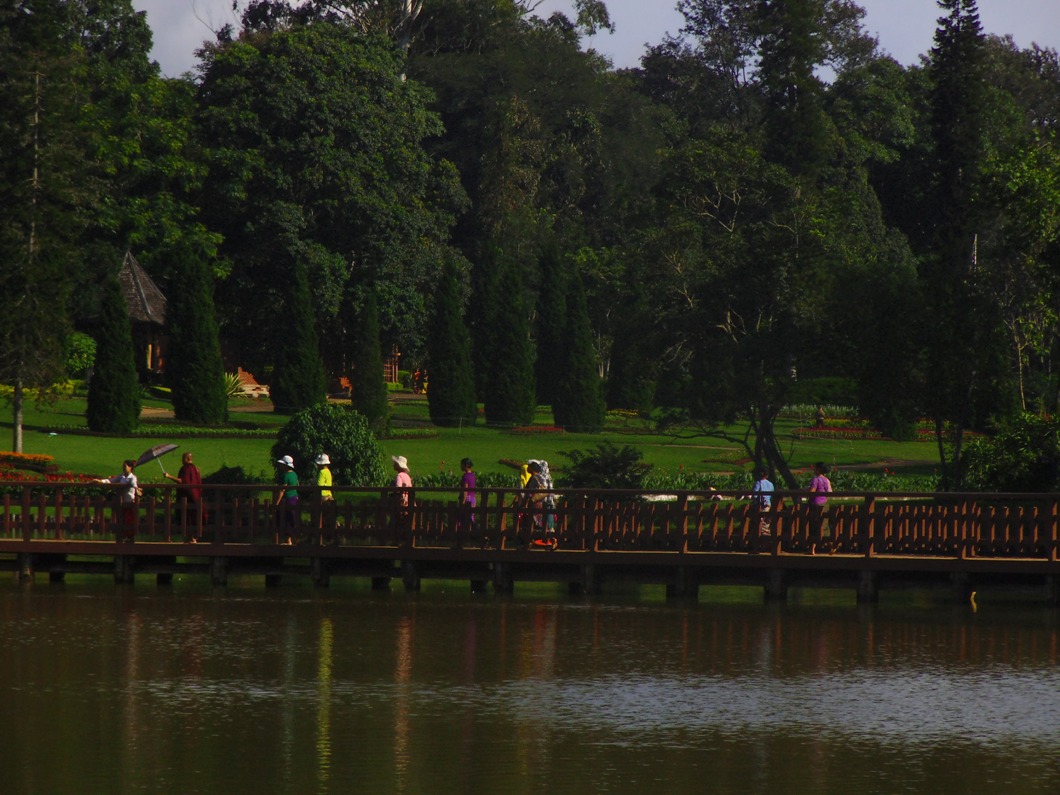
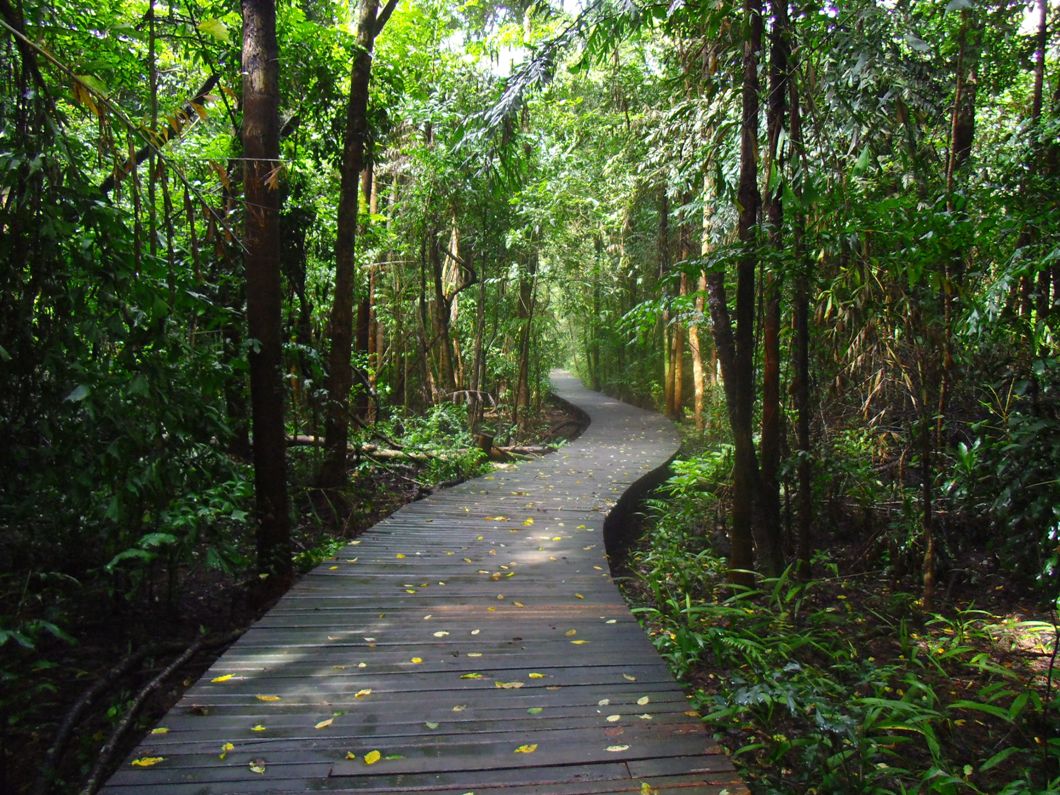
The Botanical Gardens were very impressive and had a wide variety of attractions. I spent at least three hours walking around, visiting all the different gardens and forests and enjoying the scenery. The boarded walkway through a swampy jungle was definitely a highlight. I saw lots of lizards there.

1

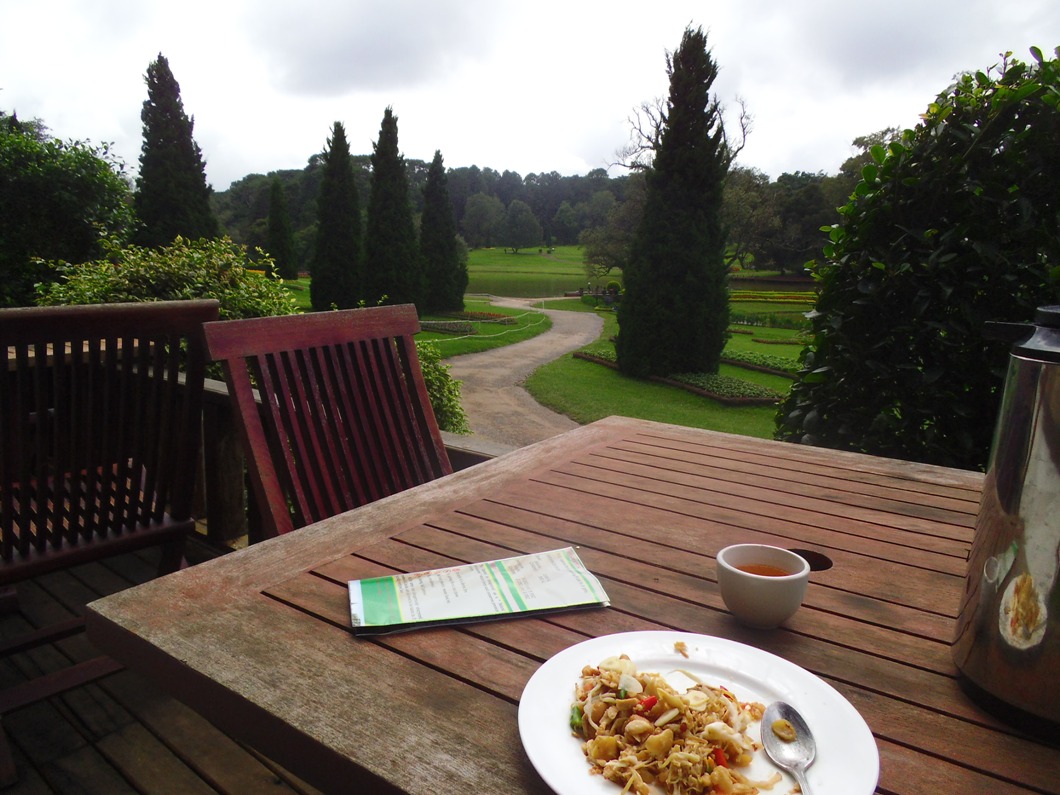
There was also a bamboo forest, two museums, an orchid garden, an area of natural woodlands, an aviary which was filled with exotic birds, a tower which was nice for views, and the central gardens surrounding the lake had colourful flowerbeds and uncountable species of trees. When I had finished exploring I went to the restaurant and ordered a ginger salad. It came with a free pot of Chinese tea, so I sat there for  the remainder of the afternoon, contentedly.

4

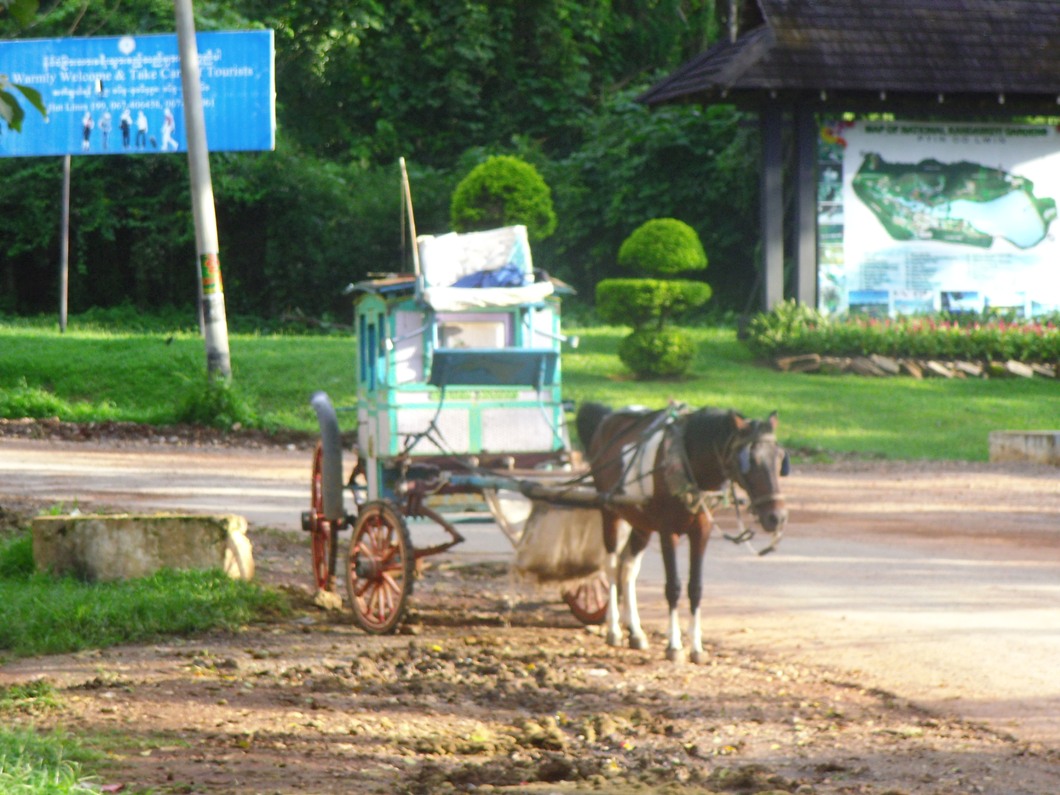
When I left the gardens I was offered a ride on this chariot:

5

But it came at a cost which was far too high – for both my wallet and, more importantly, my dignity – so I politely declined.

I spent most of the following day relaxing, reading, catching up on my blogs, drinking local damson wine, and eating lots of nice Burmese food and Indian cakes.

There was nothing spectacular about Pyin Oo Lwin, or even much to see, but still, I liked it very much… we did have to leave eventually though because we were limited for time and there was much of Burma to explore.

We decided to catch the train to Hsipaw. It is a journey which is almost as famous for its stunning scenery as it is for being a laboriously slow and bumpy. Derailments are a common occurrence but fortunately mortalities from these accidents are quite rare because the train never quite reaches speeds fast enough to cause too much destruction.

It was scheduled to call in at Pyin Oo Lwin at 7:45 am, but we were told it was almost certainly going to be late. We decided to turn up on time anyway, just to be sure.

When we walked into the station lots of people were sat around and someone was playing a guitar. This was a not a good sign. When someone has pulled out a guitar out and started playing, you just know that you’re in for a long wait.

We were told it would be there within in an hour, so we went out for breakfast. When we got back, an hour had turned into two, and then shortly after that, three. Then it was four.

I began reading Burmese Folk-Tales – a book I bought recently when I was in Bagan. It was very interesting. The first section was “Animal Tales”, and filled with short fables with names like “Why the Rabbit’s Nose Twitches” and “Why the Quail Stands on One Leg”. In all of them animals were speaking, contentious creatures, and the tales felt very much like they could have been lifted straight out of The Jungle Book universe.

Seventy pages in, the theme shifted to general folklore. One of my favourites was called “The Five Companions”, which is a story apparently told to Burmese children:


Once there were four brothers and an attendant. The attendant was not really a servant. More experienced and stronger than the others, he was rather a guide and leader of the group.

The attendant’s name was Stumpy, for he was thick-set and strong. The first brother’s name was Quarrelsome, for he was always challenging people to fight him. The second brother’s name was More-than-others, for he was the tallest among them all. The third brother’s name was Treasurer, for he was thrifty and careful. The fourth brother’s name was Little Brother, for he was the youngest and the smallest.

The five companions wandered about the country doing great deeds until they came to a great city, ruled by a powerful king. “What is the good of winning glory and honour in small bits?” said Stumpy. “Let us win a kingdom for ourselves, and make our names live in history forever.” The others agreed, and they went near the gates of the golden city. Quarrelsome challenged the King, and as a result there was a great fight between the king and his men-at-arms on the one side, and the five companions on the other. In the battle, More-than-others distinguished himself by his mighty deeds of valour. Finally the King was killed and the city surrendered.

The question now arose as to which of the five should be King. The four brothers said that Stumpy should rule because he was their captain, but the latter refused, suggesting instead that Quarrelsome should rule as he started the great battle with his bold challenge. Quarrelsome disagreed, and suggested that More-than-others should be King, for he was indeed more than others in the recent battle. However, More-than-others argued that as there was so much wealth in the city, Treasurer, with his economical ways, should rule. Treasurer in his turn said that Little Brother should become king, for he was the smallest and the gentlest and most helpless, and he could not win a kingdom by himself without the help of his brothers. But Little Brother said that he was too tiny to be king. They argued for hours and, finally, they decided to rule as joint-kings over the city.

Now look at your hands, my dearest. You also have five good companions ready to serve you. Your Thumb of course is none other than Stumpy, for he is thick and strong. Your Fore-Finger is of course Quarrelsome, for when you quarrel with any one you point that finger at him. Your Middle Finger is More-than-others, for he is the longest finger. The next Finger is Treasurer, for when you grow up and wear a ring, you will wear it on this finger. Last of all, you have the Little Finger, who is gentle and weak and humble, and he is Little Brother. So you have five faithful companions to serve you, my love, and they will doubtless win you a golden city and a golden throne when you grow up.”


I was pulled out of the book by the sound of people clapping and cheering. I looked up and saw that the train was pulling into the station. It was 12:45 pm, which made it a total of five hours late – but still, it was finally here.

1

We boarded, but still had to wait another forty-five minutes until the engine started. When it did finally roll it’s way out of the station the carriages began to rattle and swing from side to side. It felt more like being sat on a very giddy horse than being on a train.

In the first twenty minutes several bags fell from the railings above, but people learned from this mistake and spent a while strapping them onto the racks more securely.

An hour or so in some of us were beginning to feel a little bit seasick, but the views outside our windows were fantastic.

2

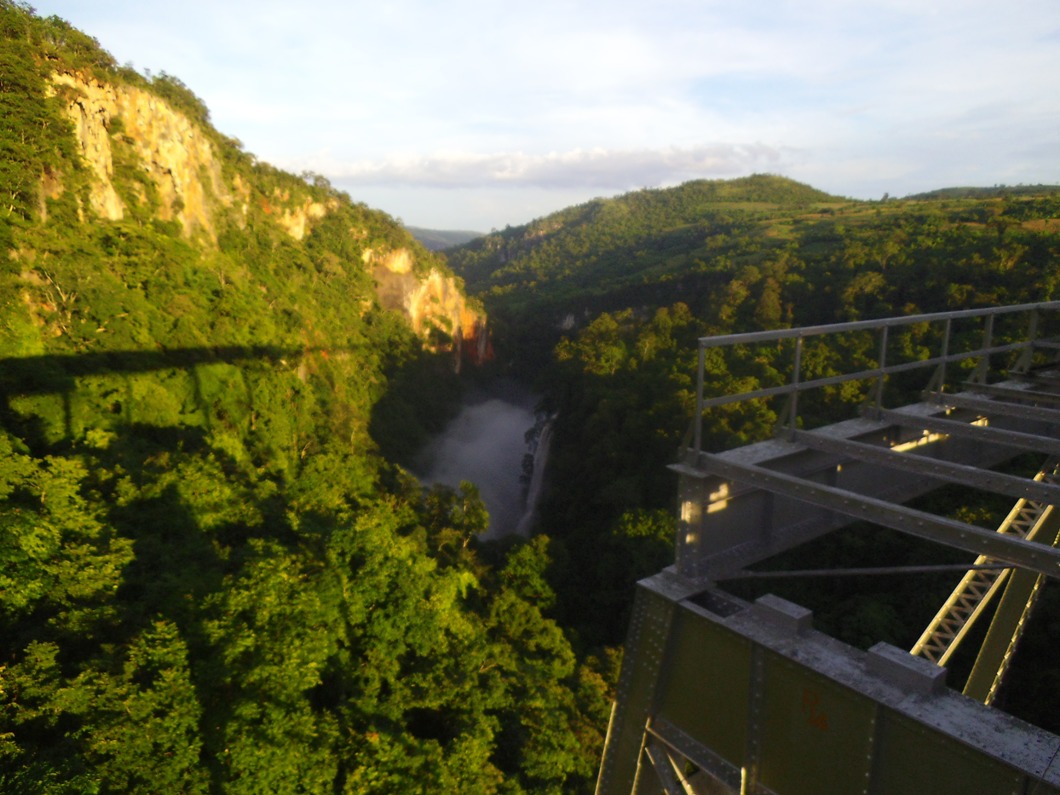
It was six hours later when we caught our first glimpse of the journey’s most famous feature; the Goteik Viaduct.

3

But, for some reason, the train pulled in for a stop just before we were about the cross it. And it stayed there for a long time. Feeling a little impatient, some of us got out of the carriage for a while to get some air.

45

After twenty minutes, we began speculating what the cause of this prolonged stop could possibly be. The train had lingered for a while before at some of the villages we had passed so that cargo could be loaded or offloaded, but there certainly wasn’t any of that going on. Another person theorised that the driver was checking that the bridge was still stable and safe, but that seemed unlikely. They didn’t seem to be fixing anything either. Nor refuelling. I proposed that they had stopped merely to build up our anticipation for the crossing of the bridge, and thus; this was all some kind of misguided effort to enrich our experience.

Eventually we all agreed that the reason was, simply, “Asia”.

After half an hour the whistle was blown and we all clambered back on. The train started up again, and we all leaned out of our windows, ready to take snaps as the train approached the bridge.

55

Those few minutes while the train slowly juddered its way across the ravine, made the whole day worth it. The views were great on both sides, and everyone kept darting from one side of the train to the other to capture pictures of it all.

66

When it was over we put our cameras away and settled back into our seats. I turned to Beau – an American guy we met that day, who just happened to have a smart phone with GPS.

“How far do we have to go now?” I asked.

“You really don’t want to know, dude.”

I eventually managed to coax him into showing me the map. He was right; I would have been better off not knowing. We were only just over halfway, so we had at least another four hours to go. It was beginning to get dark.

“I need a BEER. Anyone else want one?”

Several people nodded, so we began searching for a vendor.

Travelblog#10: Mount Popa & Monywa – Burma

9th-11th September, 2014

For our last day in the Bagan area we went out on a trip to Mount Popa; a sight famous in Burma for being a centre for nat worship.

0

The nats (literal translation; “spirits”) originate from spiritual traditions which existed in Burma before the rise of Buddhism, and it was an area that I wanted to explore as I have always been very drawn towards animist traditions.

To get there we were crammed into a very crowded pickup and the journey took over three hours. When we reached Popa we discovered that the streets were very busy, which surprised us, as we had heard that Mount Popa was a fairly low-key attraction that only received a steady trickle of visitors.

A little confused, we began making our way towards the base of the mountain by foot. Dozens and dozens of buses and motorbikes, crammed with people, drove past us. We tried to ask some of the locals why there so many of them, but none of them knew enough English to be able to explain. We saw a group of other western tourists, but they were walking in the opposite direction.

“It’s crazy up there,” one of them said, shaking his head. “We tried to go up… but it’s too crowded!”

We saw why when we reached this scene:

1

But we decided that as had already made it this far we might as try, and so, we began negotiating our way through chaos. We passed a small temple along the way where some kind of weird party was going on.

2

We eventually reached the bottom of the steps leading up to the monastery, but the ordeal was far from over. We still had to squeeze our way through this crowd:

3

It did take us a while, but we managed it. When we reached the top there were some pleasant views of the surrounding area and, most importantly, some very interesting nat shrines.

3a

In the centre platform devotees were placing offerings of bananas and coconuts: the spiritual essence of the fruits were being bequeathed to the nats.

4

But, clearly, their physical representations were destined to be consumed by a resident gang of macaques.

5

There was one shrine in particular which seemed to be a special focus of attention. People were crowding around it and they were taking it in turns to walk up to a golden statue of a man, so they could place an offering of money into his hat or collar. They would then pray, and some would even tenderly press their forehead or hands upon him.

6

After watching this for a while we eventually met a someone who spoke a little English. He explained to us that the statue was “Boe Min Khaung”, and the reason everyone was here that day was because it was his sixty-second anniversary. Anniversary of what, we couldn’t quite get out of him. We did get him to write the name down, though, in the hope it would help us shed light upon it later.

So – who was Boe Min Khaung?

7

I am not completely sure, to be honest. I searched online and only found one short reference, where he is described as; “the one famous of having magical power”. If you look closely at the photo above, though, you’ll see that next to the statue there is a picture of a man who bears a resemblance to him so, I am going to hazard a guess, and say that he was once a living person who somehow rose to the status of a demi-god sometime before or after his death. That would probably explain it being his “anniversary”, as well.

We went to visit more nat shrines on our way back down: it was less crowded by then so it was much easier.

8

In some ways it was annoying that we happened to come to Mount Popa when it was crammed with so many people, because it meant that we were unable to find ourselves an English speaking guide to teach us some of the folklore surrounding the nats, but, in another sense it was a blessing, because it was an interesting event to observe. There were definitely some peculiar energies on the mountain that day.

The following morning we moved on and ventured north, to Monywa; a town three hours away. We arrived at around lunchtime, which gave us just enough time to go out on a sightseeing tour in afternoon. We began by visiting Thanboddhay Pagoda, which was one of the most impressive modern temples I have seen in Burma so far.

1

The interior was like a maze, with gold and black Buddha statues stationed in almost every corner. There were also thousands of mini  effigies of Buddha perched upon the upper shelves.

2

It is estimated that there are over five thousand Buddha’s in that temple, in all, but I don’t think they have ever managed to find out a definite number.

And, if that isn’t enough Buddha for you, then check this out:

3

Bodhi Tataung – which we visited just before dusk. The Buddha at the front is 95 meters long, while the one at the back is 129 meters high – making it the second tallest statue in the world.

4

While we were in Monywa I did not see any other white people, so it seems that not many foreigners make the detour – which is surprising, as it is not very far away from Mandalay and it has some pretty decent attractions. I am guessing the lack of visitors probably has something to do with the fact that Monywa has very poor options when it comes to accommodation. We were forced to cough up $18 a night for a depressing, dingy room with red stains on the walls where past guests had been spitting out betel nut – and it felt a bit like we were being robbed.

Being the cheapest guest house in a town which lacks competition comes with a special kind of privilege, and the owners of Shwe Taung Taun Hotel have turned stretching the limits of that privilege into something an art form: they simply just do not care. They know people will stay with them anyway because they have no other choice.

Maybe one day someone in Monywa will learn that guests might stay in town for more than just one night if you make things pleasant for them and don’t rip them off, because the town itself is quite pleasant.

The following morning we left, hopping upon a saunabus which was heading east.

There are lots of photos of both Mount Popa and Monywa available on my Flickr account.

header