26th – 30th July, 2023
Those of you who follow me regularly and have looked at a map will have perhaps noticed that my route has been a bit strange recently. After spending a couple of weeks in Belize I have reversed direction again and returned to Guatemala (instead of continuing north to Mexico like most gringos do). I am planning to go to Mexico, but not until September. For now, I am heading south for a while to explore Honduras, Nicaragua and Costa Rica.
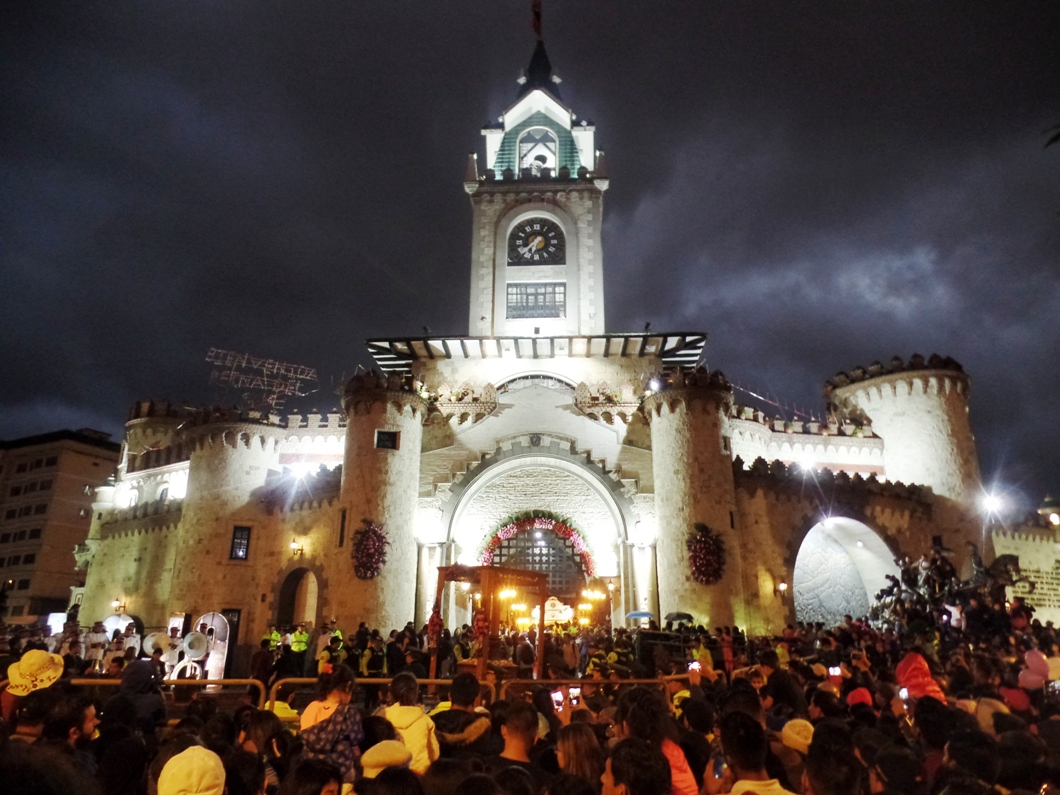
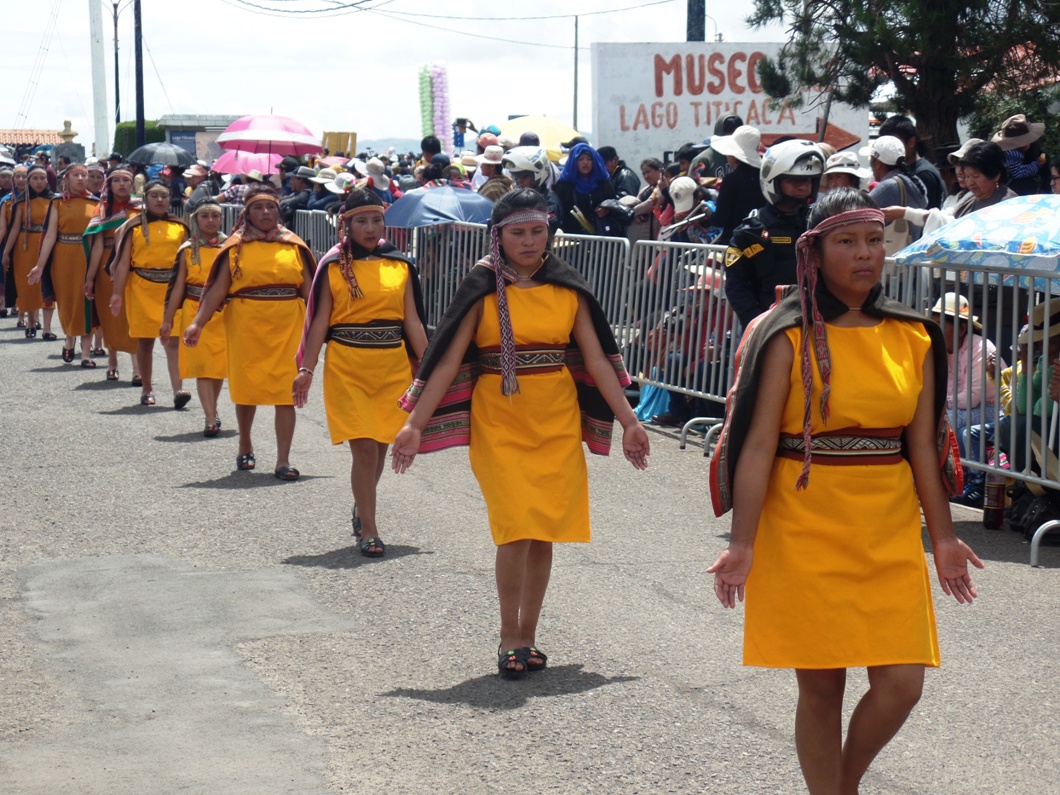
The reason for this strange route is I often look into local festivals that might be taking place in the countries I am visiting when planning my itinerary. I did this successfully in 2018 and managed to be in Loja for its Fiesta de la Virgen del Cisne and in Puno for Fiesta Jubilar. For this trip, I am saving Mexico for the end so that I can be there for Día de los Muertos, so that is why I am saving that for later, and I have just returned to Guatemala for another event.
When doing my research over a year ago, I came across the mention of a festival called Rabin Ajaw that takes place every year in a city called Cobán. There was scarce information about it in English, but from what I could glean it appeared to be a celebration of indigenous culture and involved people from all over the country gathering for a week of parades, Mayan ceremonies, and a pageant to crown a young woman from Guatemala ‘Daughter of the King’.
I am now, to my knowledge, the first person to blog about this event in English. I found a couple of articles about it online – concerning its history and other details – but nothing that gave an account of what it is like to attend it as a foreigner. So, if you have an interest in indigenous cultures or are considering attending this event, this blog should be interesting for you. If not, then I guess… why are you here?
Before I describe the event, I will first go into some details about the process of figuring out how to attend it, as such information wasn’t the easiest to come by, and perhaps others can learn from my mistakes and successes.
I am guessing that most of the announcements concerning this event are made locally. When I tried to find information about it online (in terms of a specific date and/or itinerary for 2023), I could only find vague references to it being sometime around the end of July or the beginning of August. I eventually took to social media and started asking questions on places such as community pages, and a local photographer kindly responded and gave me the dates 27th-30th of July. So I booked accommodation for those dates and hoped this information was accurate.

When the end of July came, I arrived the evening before and the family who ran the hotel reassured me there was indeed a festival. They didn’t know anything specific about the itinerary, but I figured this city wasn’t big enough for it to be too hard to find. The first morning I went for a wander to get my bearings and see if I could spot any activity, and as I was passing by the plaza, I received an alert on my phone from one of Cobán’s community pages. It was to a live stream where – in a village about twenty kilometres away – a Mayan ceremony was being conducted outside a beautiful church on the hill. It was interesting to watch on the screen but also frustrating. I had planned much of my route around attending this festival, and here I was: where I thought I should be yet somehow missing the first event. I began to wonder whether the next few days would be a wild goose chase.
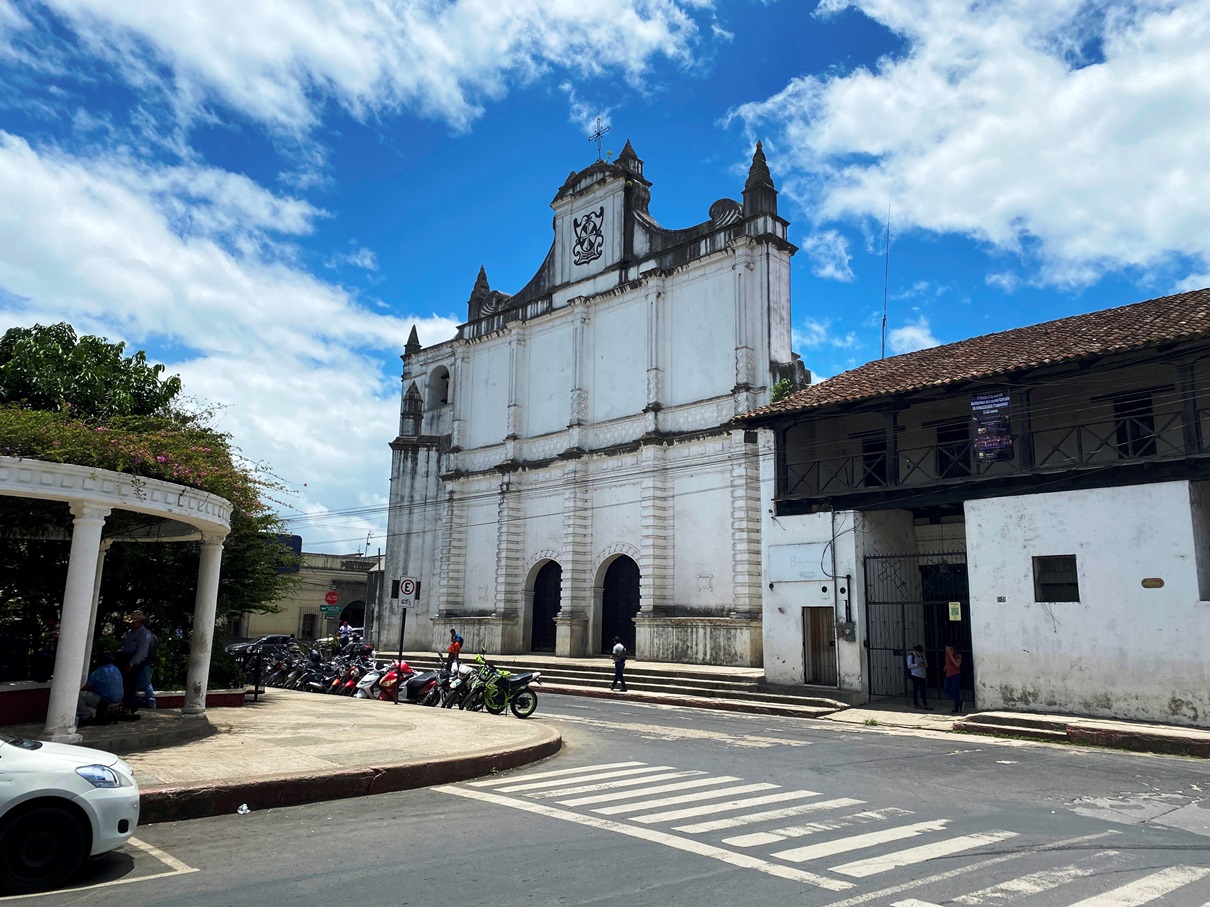
This spurred me to be more proactive. First I walked into the Palacio Municipal. The people there couldn’t help me but directed me to a smaller building on the other side of the plaza. There I found people who seemed to be connected to the event in some way, and… well, at first they shrugged and told me to look for the itinerary on the Municipalidad de Cobán Facebook page – duh, where else would it be? – but this was somewhere I had already scanned several times, so I demonstrated to them on my phone that it most definitely wasn’t there. They seemed surprised by this revelation, and after a bit of conferring, one of them asked me to give them my phone number so they could send it to me by WhatsApp. I finally – after all those hours and hours of searching – had an itinerary!
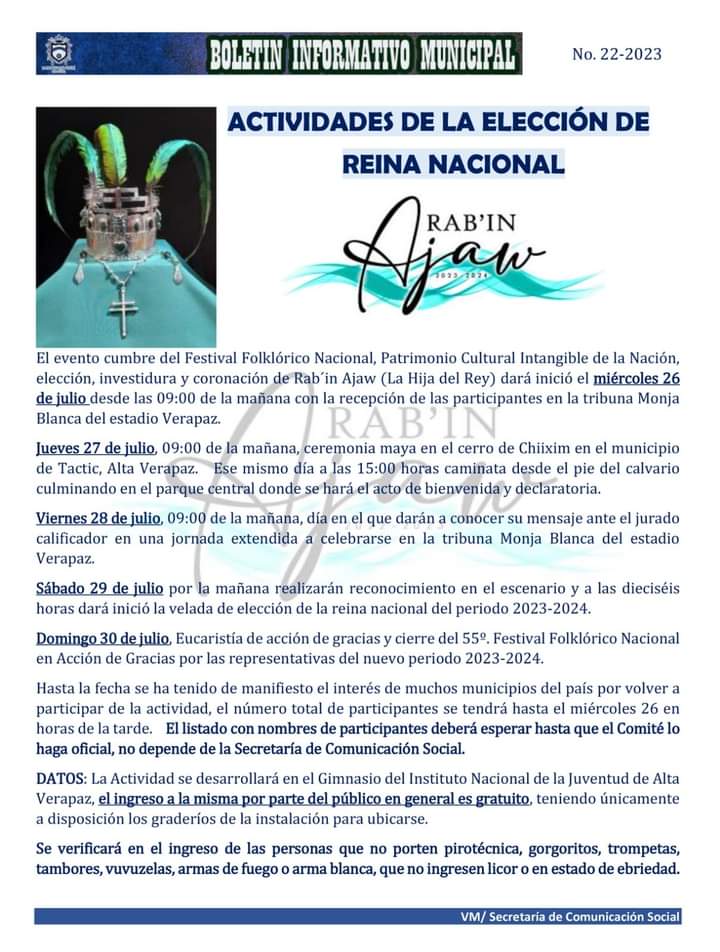
And, according to it, a parade was due to begin in two hours. Its starting point was very close to my hotel.
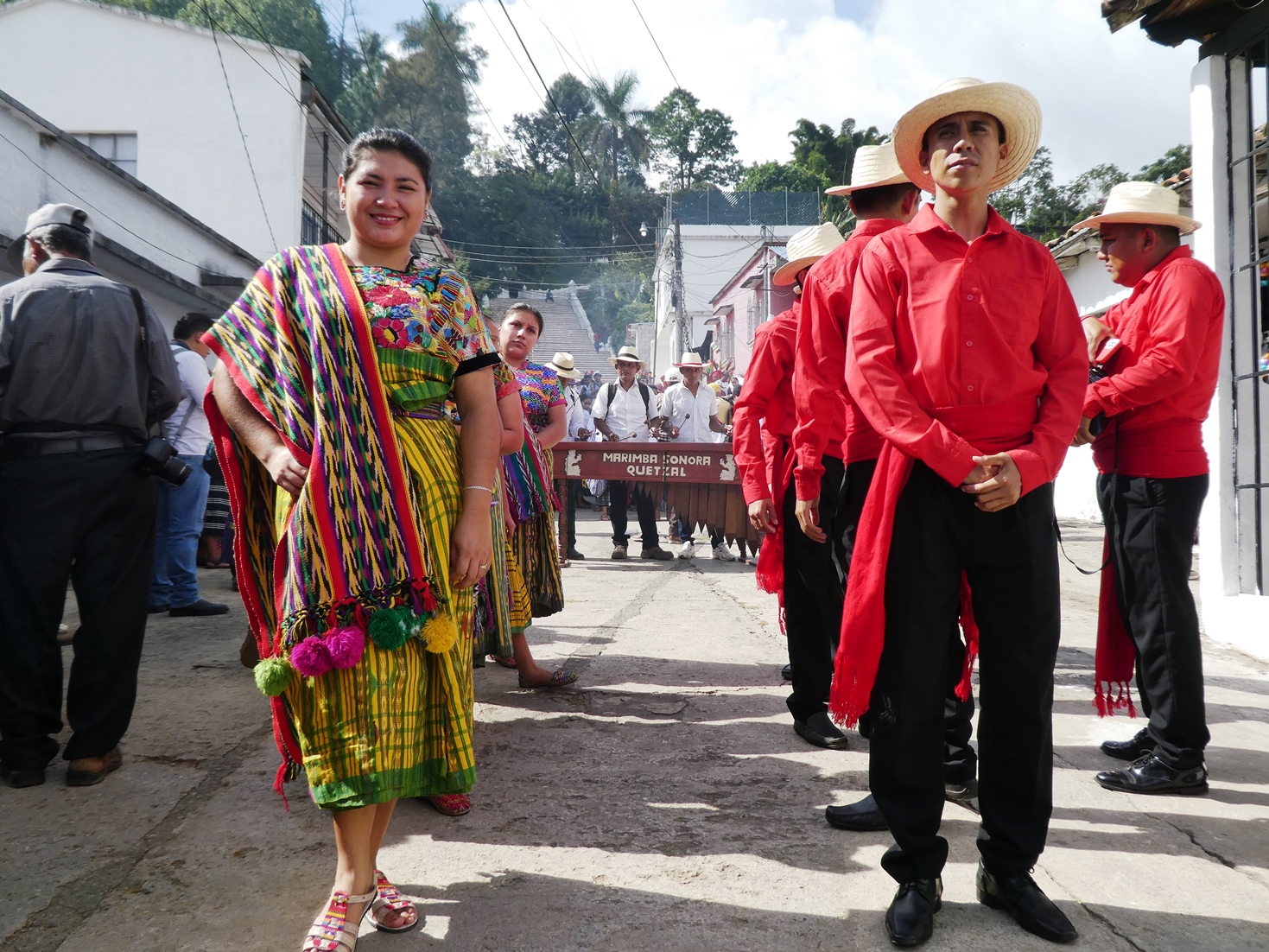
I arrived just as they were preparing. Teenagers were climbing into their costumes from the backs of trailers before their parents drove away, women were fixing on their headdresses, and the musicians were warming up. I saw another gringo and chatted with her between taking photos. She was an ex-pat from France who comes here every year because she finds this festival fascinating but is usually the only foreigner. She also happened to be the author of one of the articles I had read about it.
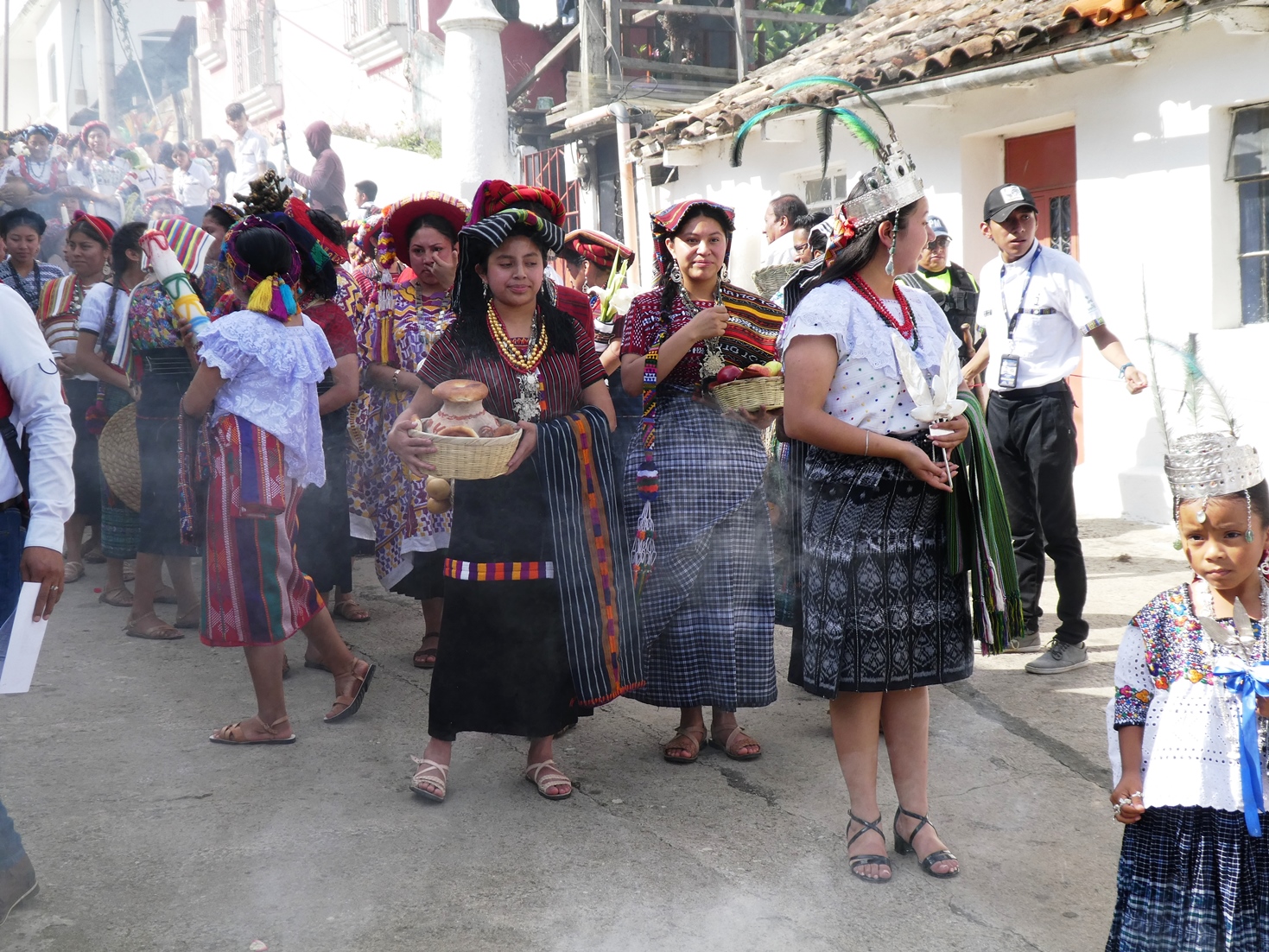
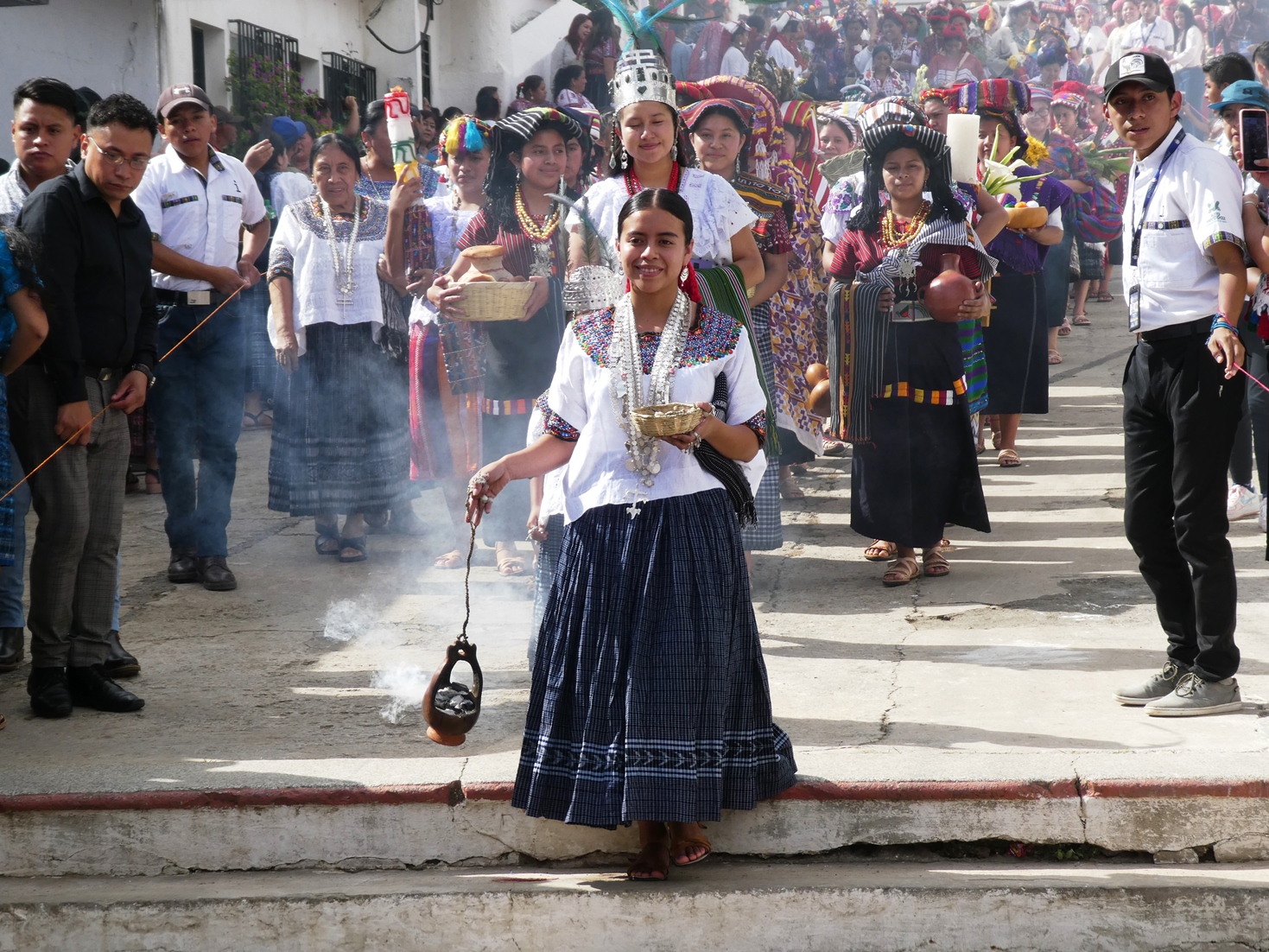
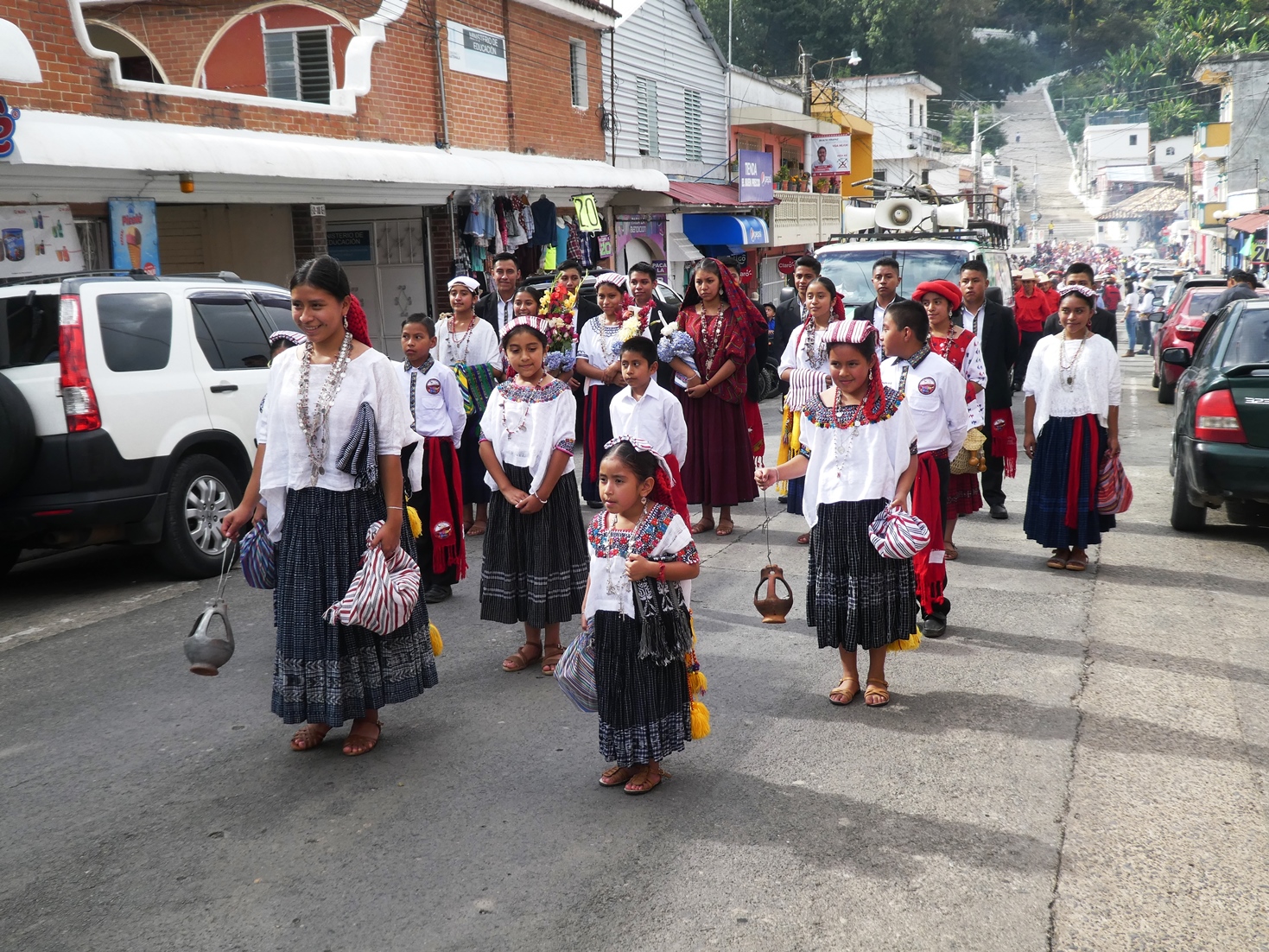
When the parade began, it was nothing short of spectacular. Zumba dancers led the way, shortly followed by a group of men playing the xylophone. And after that, the reigning Rabin Ajaw was chaperoned by a young girl and another young woman with a censer wafting with smoke.
And behind them walked the contestants to become this year’s Rabin Ajaw, each clad in beautiful garments and carrying symbolic items to represent their community. Some bore flowers, whilst others had fruits, pottery, baskets, or other crafts. Many of them had already won local pageants as part of a pre-selection process, and they had all come from different parts of Guatemala, hoping to bring the crown home with them.
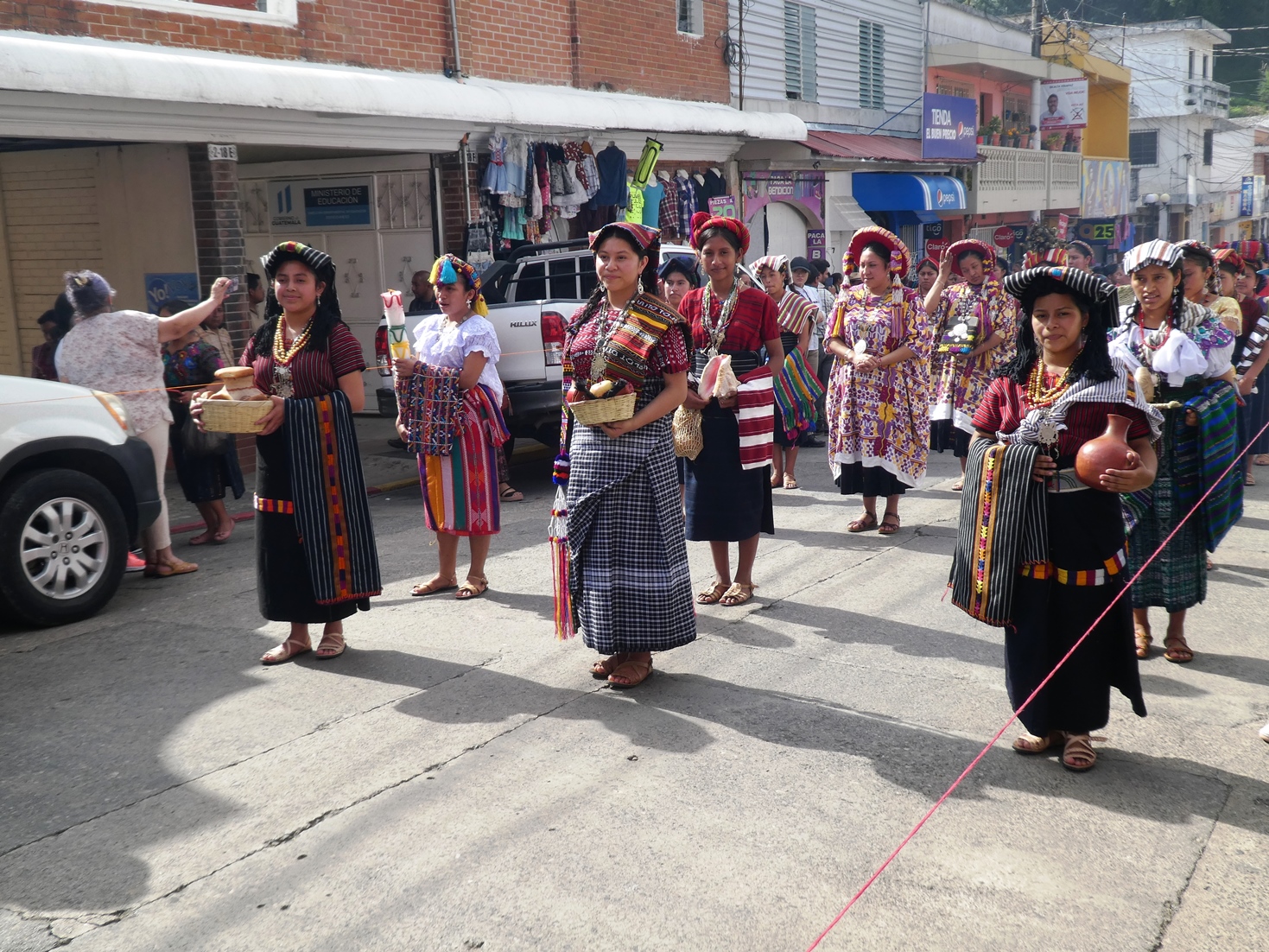
This event is simultaneously called Festival Folklórico Nacional de Cobán and Rabin Ajaw, something that confused me at first but I think I understand it now. It is a folklore festival because it is very much – in its essence – a celebration of Mayan culture, but many activities concerning the event centre around the pageant. The words Rabin Ajaw mean ‘Daughter of the King’ in Q’eqchi, and it is the title the winner assumes each year before passing the crown to the next winner.
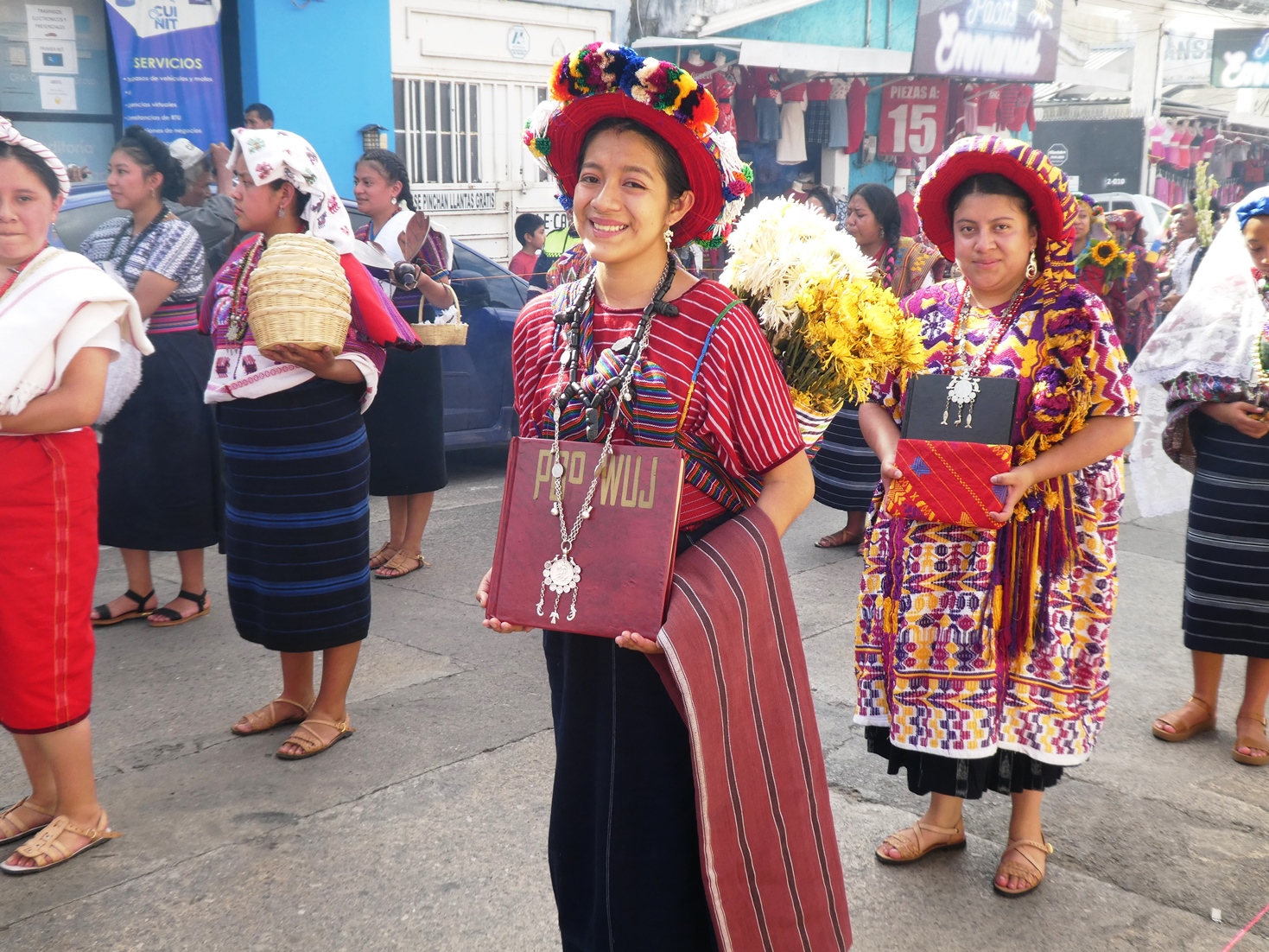
I won’t go into too much detail about the technical details of this and its history (as there is an excellent article about it here, and I don’t want to plagiarise someone else’s research) but Rabin Ajaw is a bit different to what most people would consider a ‘pageant’. They place far less emphasis on outside beauty and more upon things such as their knowledge of Mayan culture and their skills as an orator. The judges do not see their faces during the first stage of the competition – when the women deliver speeches on a series of topics concerning societal issues that affect present-day Guatemala – and from that, they will pick just thirteen as the semi-finalists.
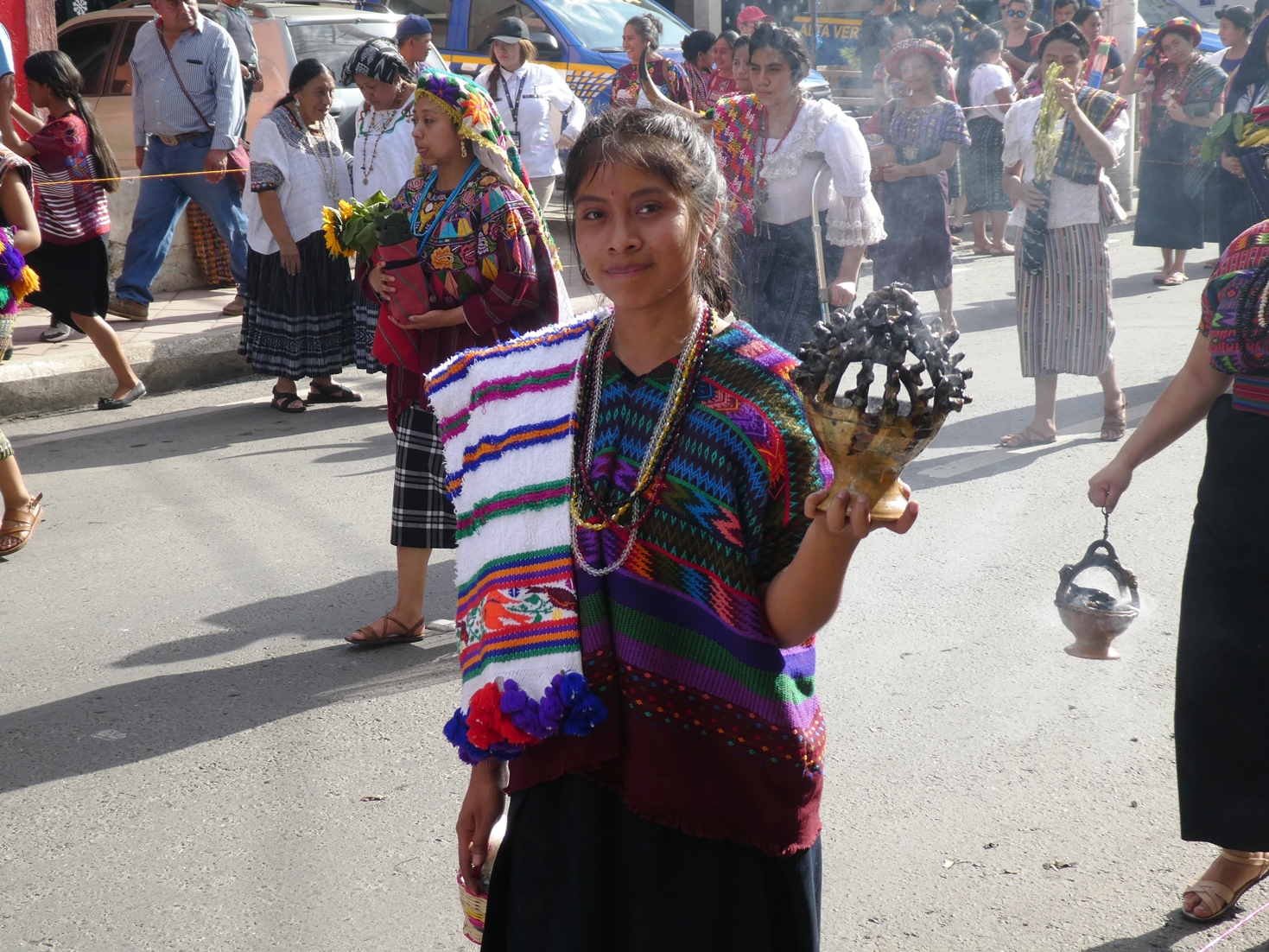
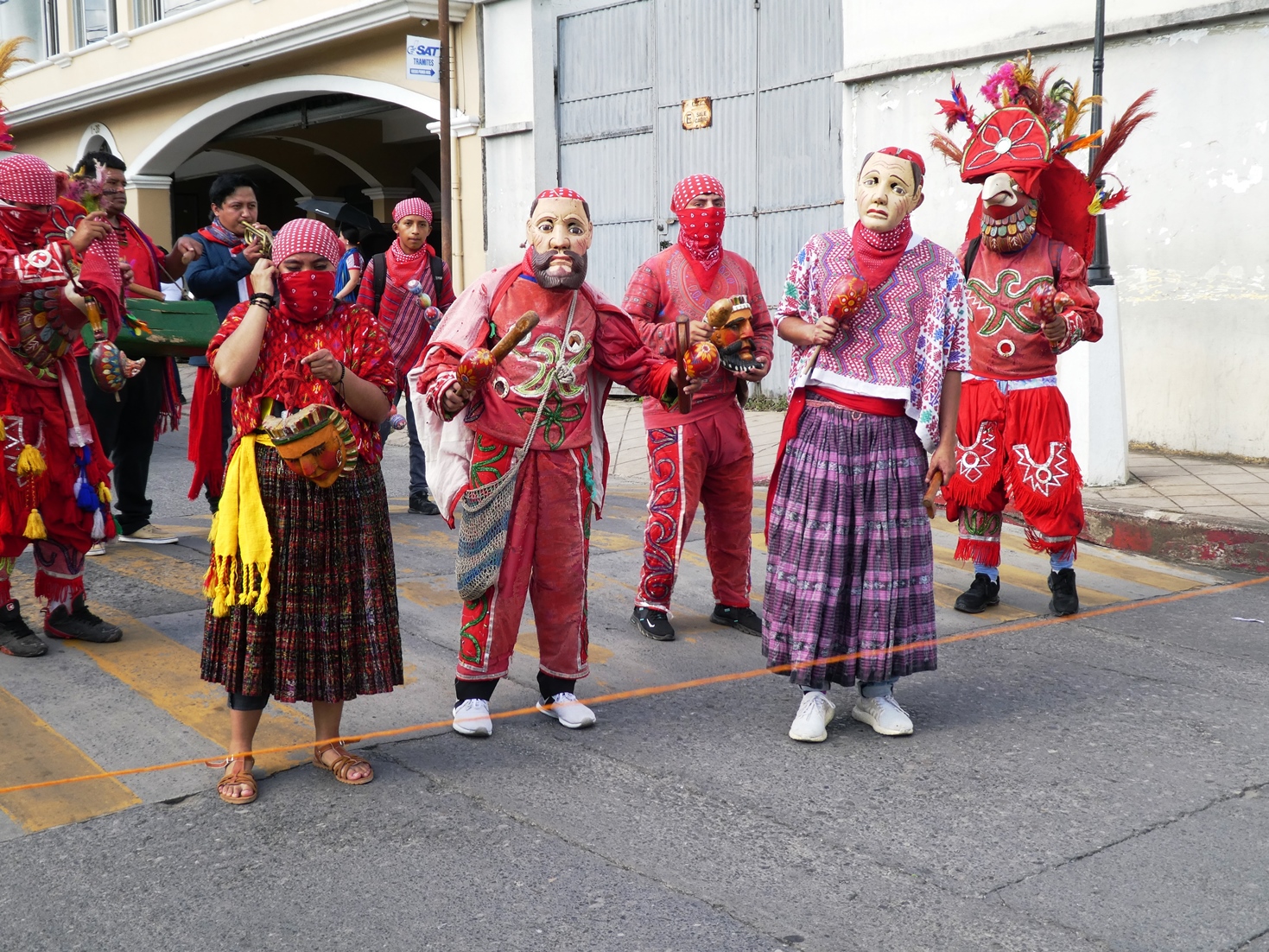
Behind the contestants marched various other groups, including scores of musicians, other women in traditional clothing, and groups wearing colourful, anthropomorphic masks, dancing wildly. This event was everything that I had hoped it would be.

The procession marched from the Iglesia El Calvario to the Catedral Santo Domingo in the main square, where, once they arrived, the contestants claimed seats whilst friends, family, observers and other people from the city gathered around.
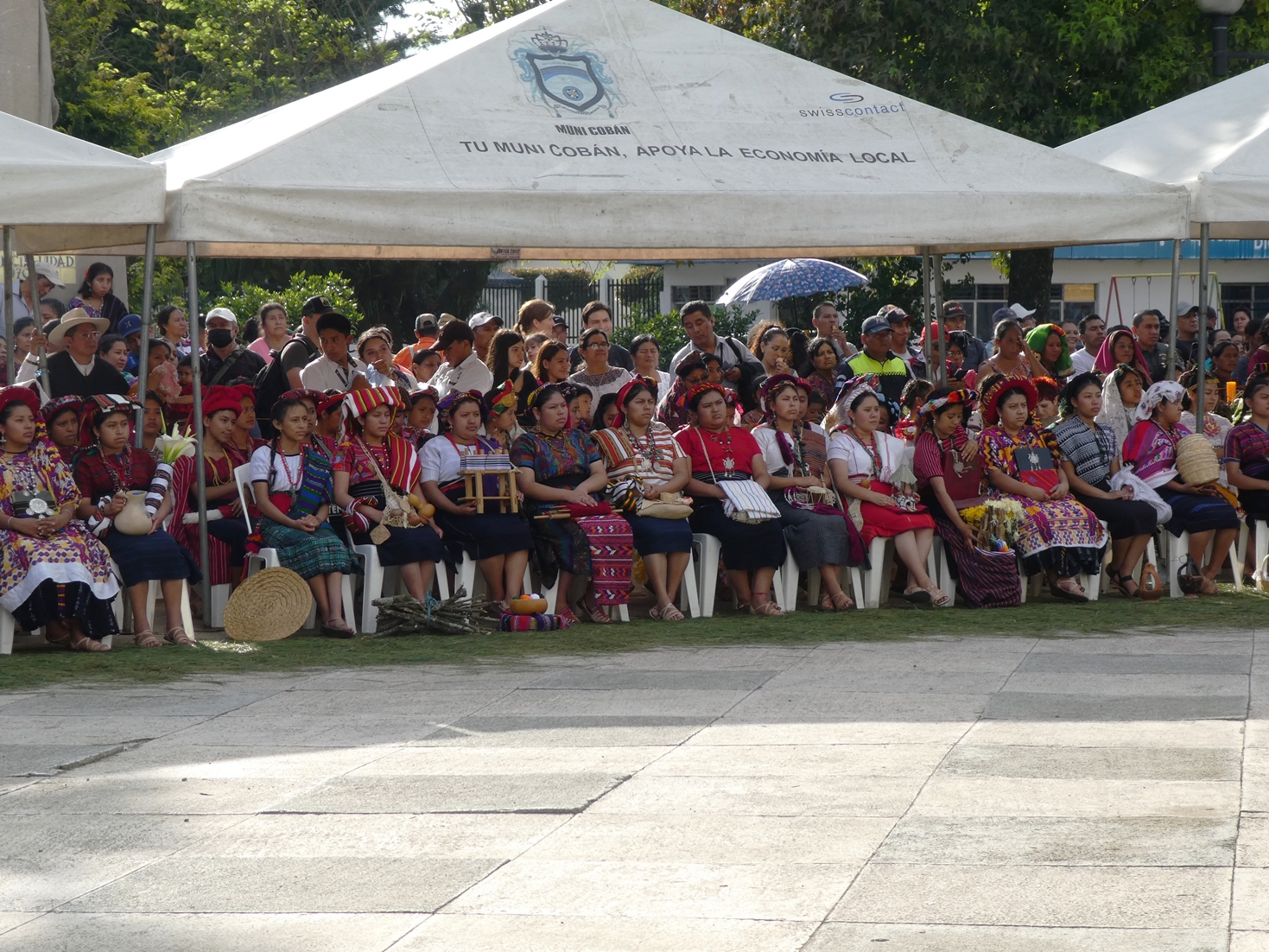
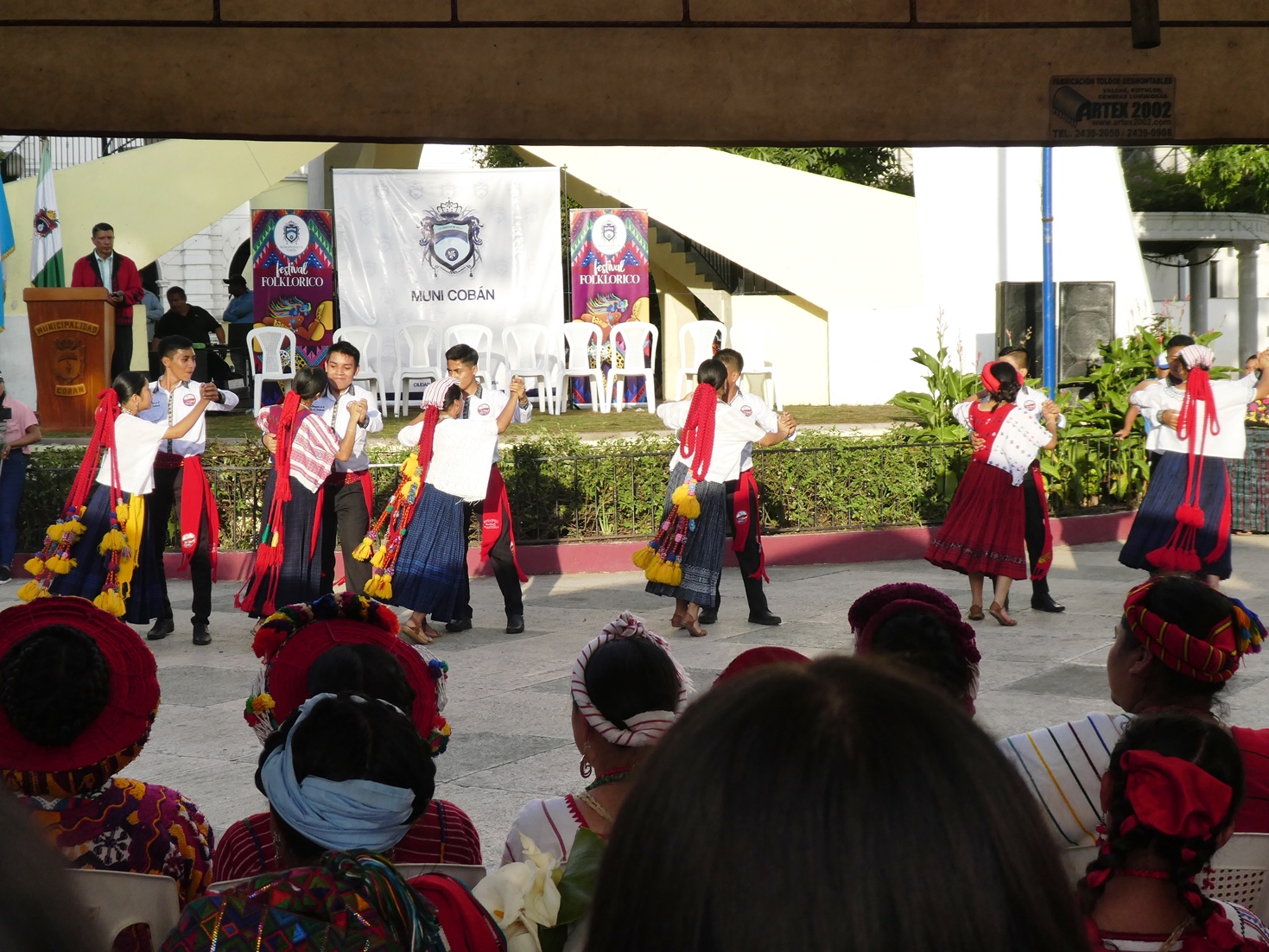
People made speeches, and then there was some entertainment in the form of dancers.
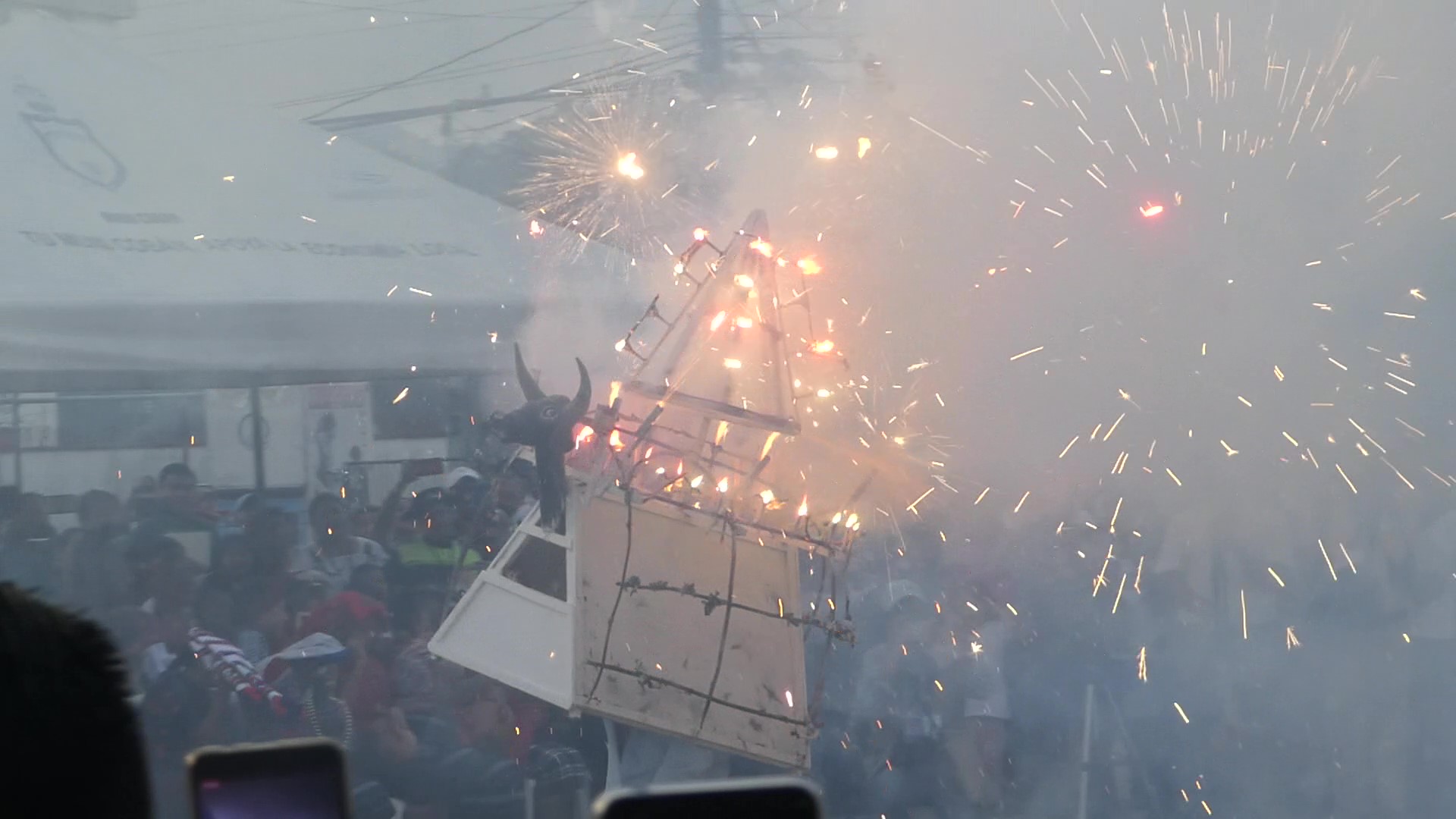
And then, just before everyone dispersed, a man appeared with this strange contraption on his head. They played some music from a speaker, and he began to dance around in circles. I was initially a little confused by this – as it seemed like a strange and almost tacky end to what had been a very impressive first day of the festival – but then someone came and lit a fuse, igniting fireworks.
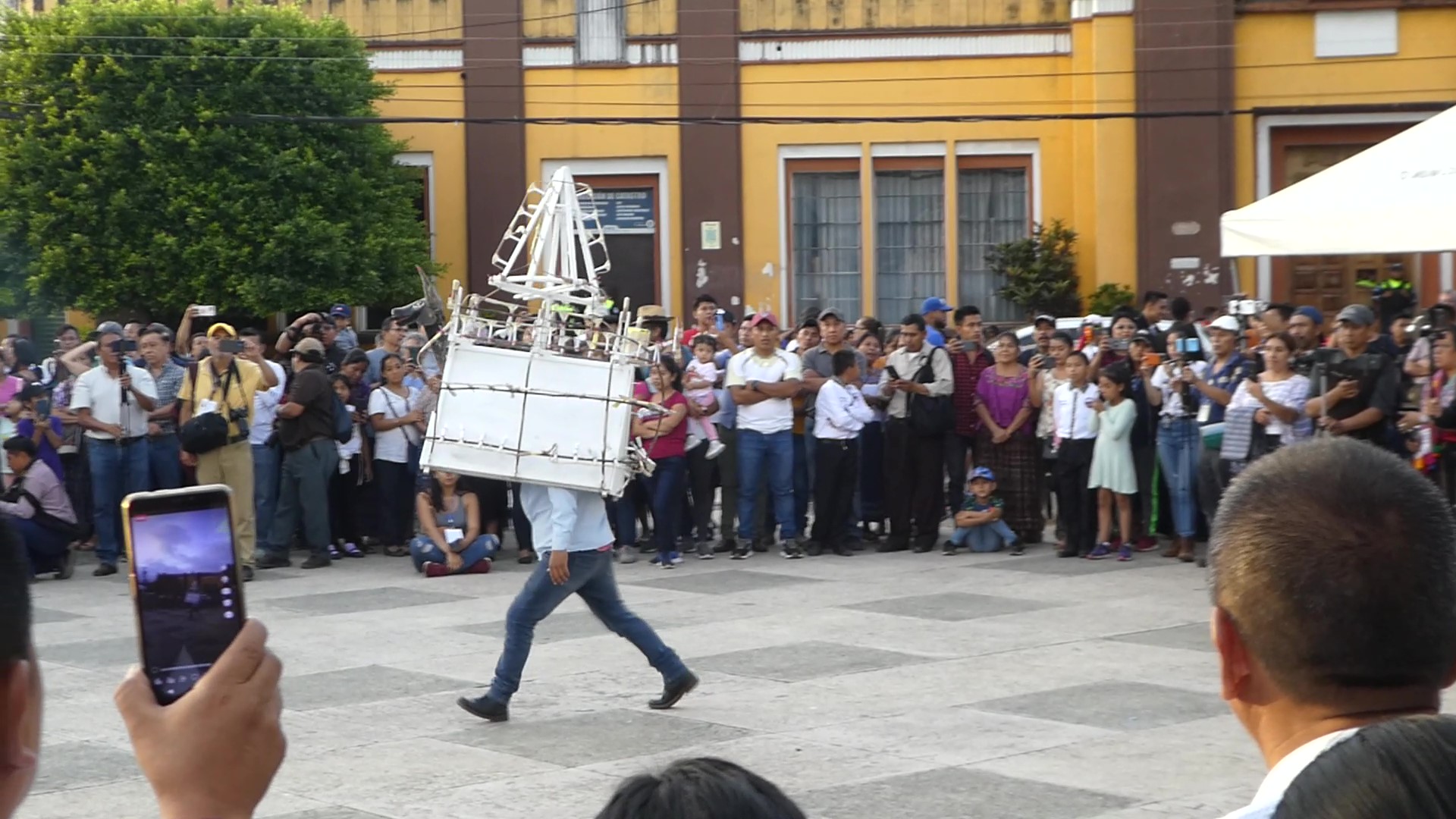
I am not sure how much risk assessment had been done here, but the contraption he was wearing seemed to protect him from the brunt of it all, and the fuses had cleverly assembled so they ignited gradually. He continued dancing for quite some minutes until the light show sparkling around his head came to a climactic end (which I have a video of here).
The second day of the festival didn’t have any public events. The contestants for Rabin Ajaw were giving their speeches in a building somewhere. This was – like most of the festival – live-streamed on Cobán’s community page. Perhaps if I had turned up and explained that I was writing a blog they would have let me observe – as I could see a handful of people taking photos from one of the balconies above – but I wasn’t feeling very well that day so decided to save my energy for the crowning ceremony the following evening.
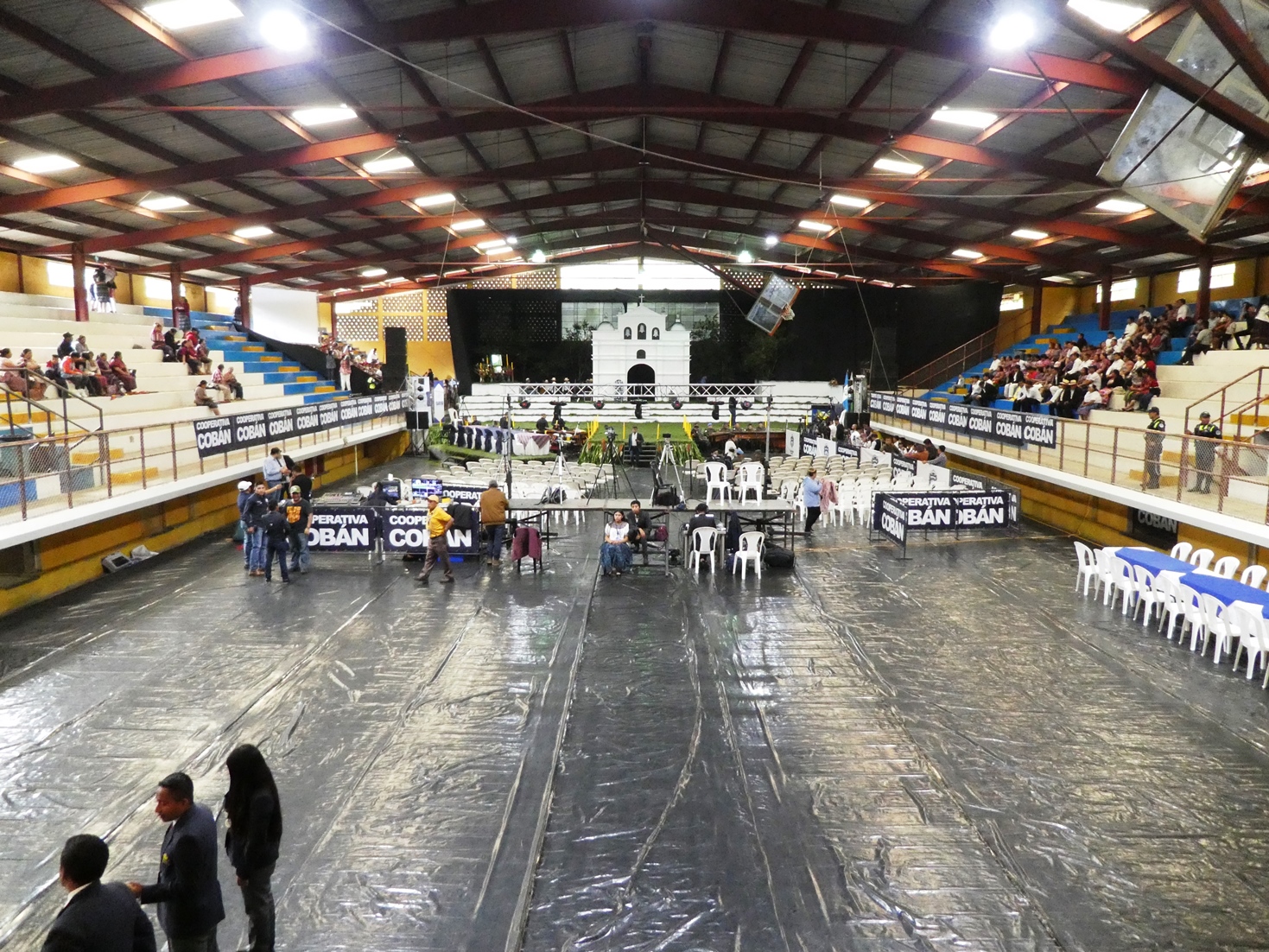
This took place at the Instituto Nacional de la Juventud Alta Verapacense, and the doors opened at 4 p.m. I turned up bright and early to claim a seat close to the front, but the ceremony didn’t begin until over two hours later.
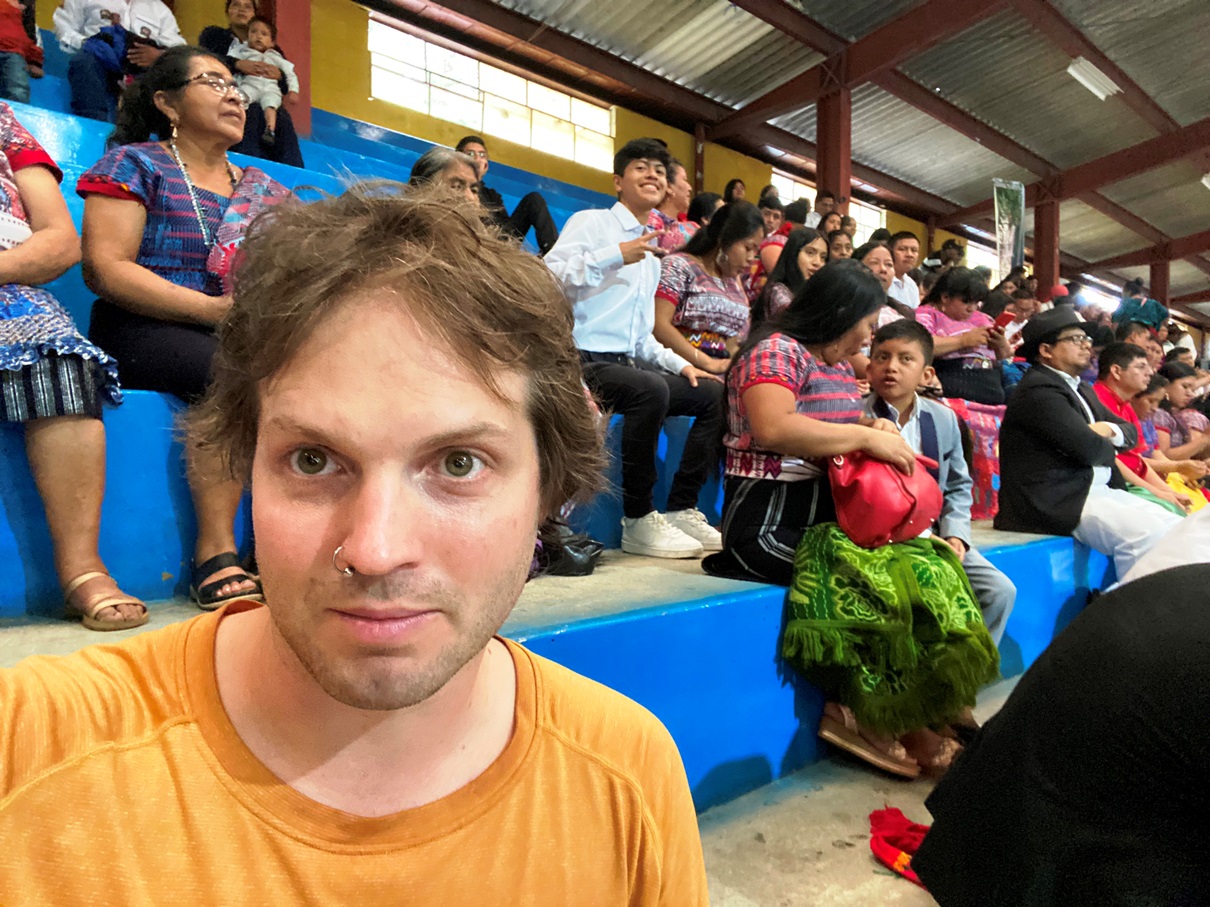
Now, one thing I will say is that I did not realise quite how long it would be. I had not eaten since lunchtime because I thought I would be back at my hotel after a few hours, but this turned out to be a big mistake. I do not regret going. It was an amazing experience and very interesting, but I definitely would have done a few things differently if I had any idea just how long it would be (such as eating a late lunch and bringing some snacks).
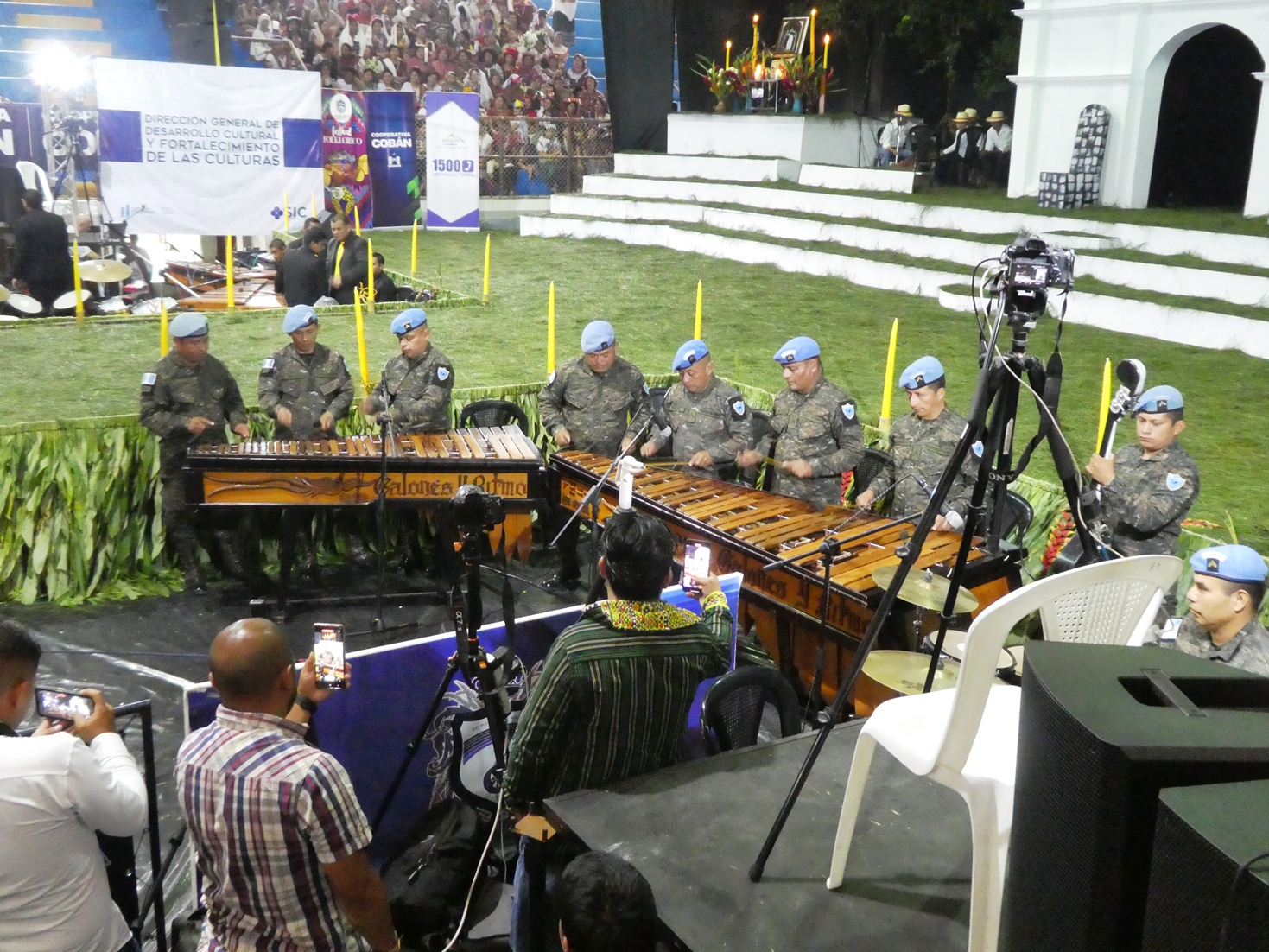
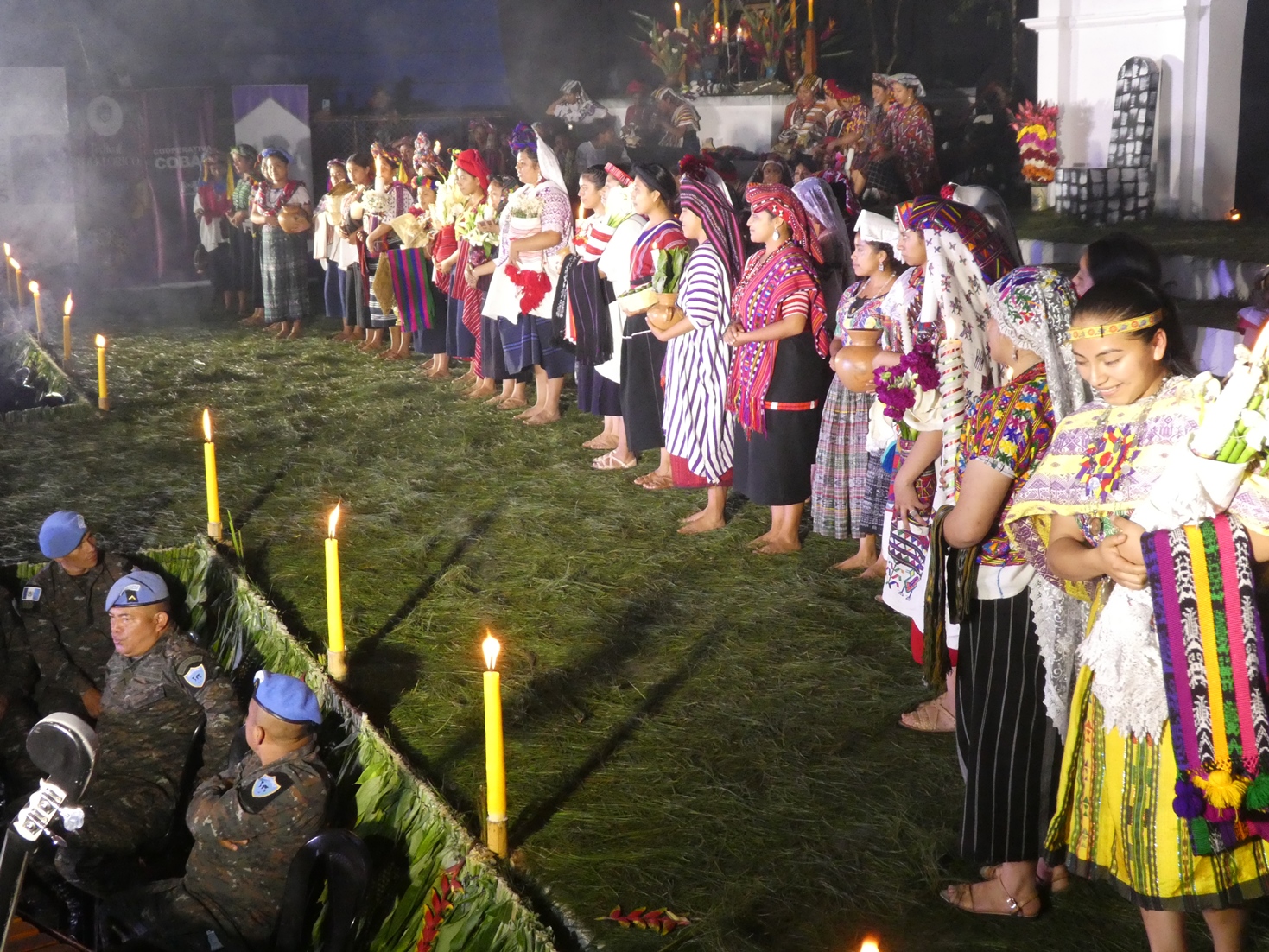
As we waited for the ceremony to begin, some men dressed in camouflage gear walked up to a series of xylophones. I was initially confused because they looked like the same security guys who had frisked me and other attendees when we entered, but they started playing (video here). Perhaps they are military men by day and xylophone players by night? I am not sure. Guatemala. It is an interesting place.
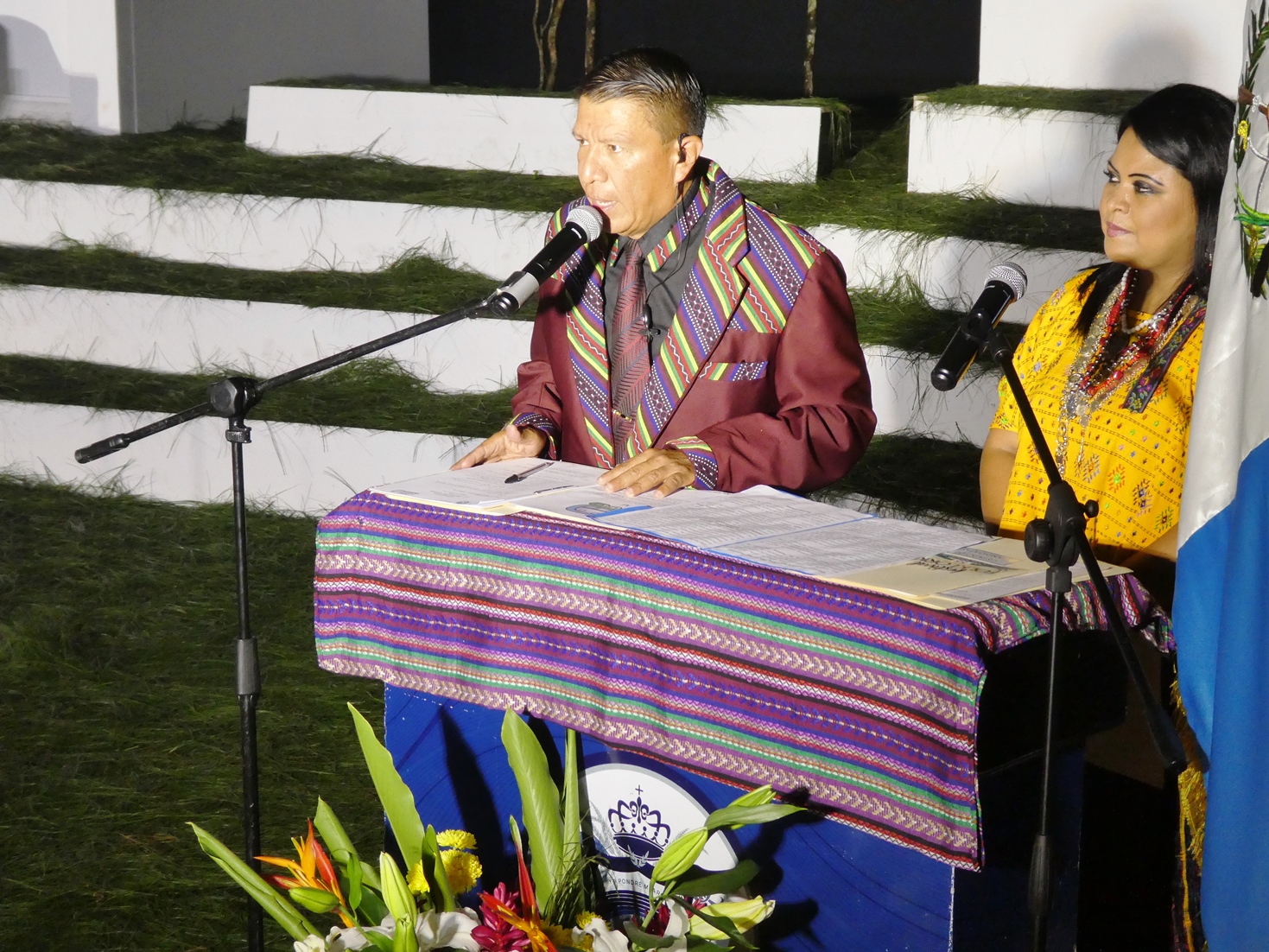
The two presenters made a series of long speeches and greeted some of the notable people who had come to the event. This included previous winners of Rabin Ajau, local politicians, and even a woman who I think might be this year’s Miss Guatemala.
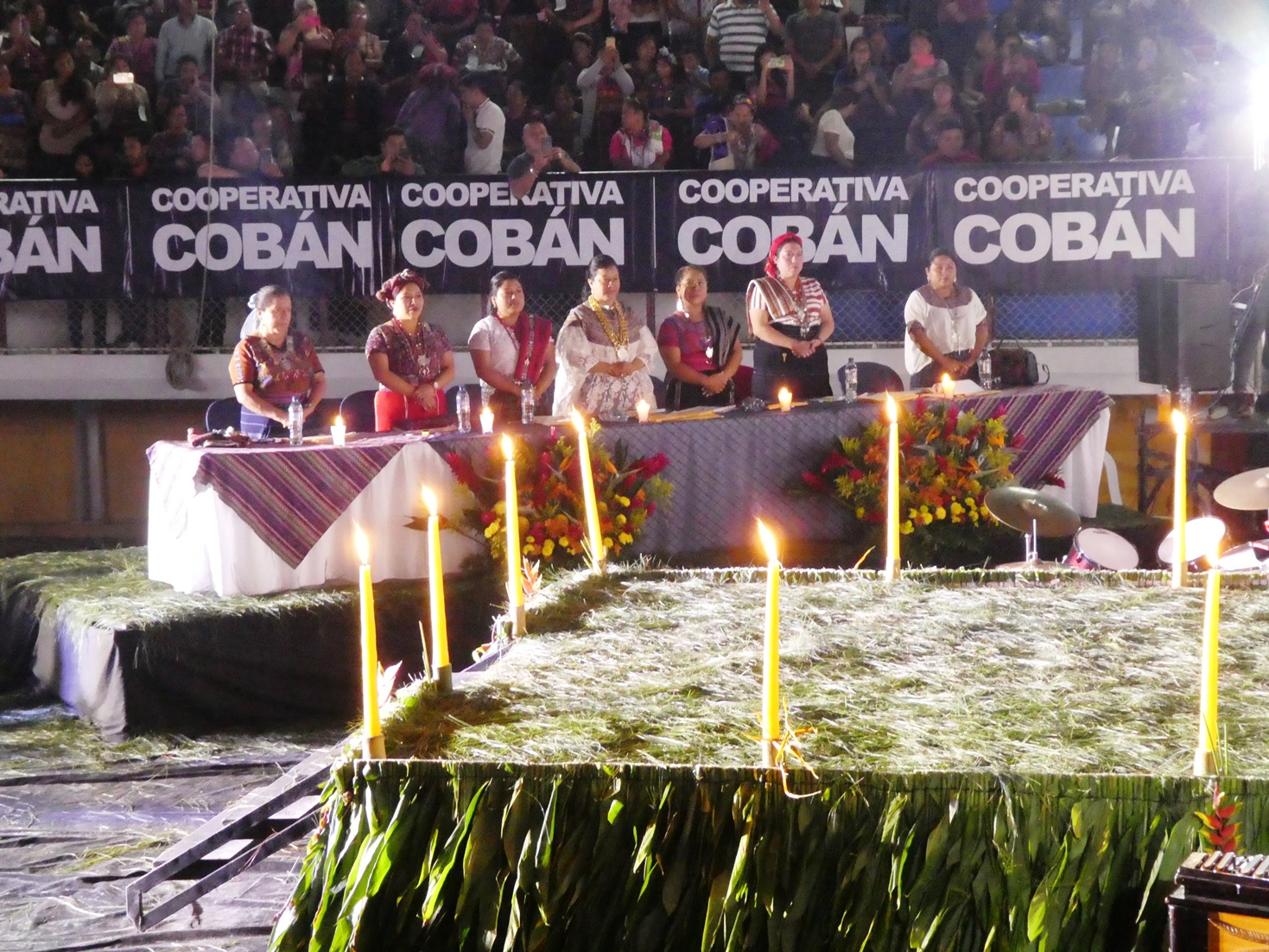
They also introduced the judges, listing their various qualifications and achievements. The recurring theme seemed to be that they were all heavily involved in community projects throughout Guatemala and were all previous Rabin Ajaw contestants. None of them were winners, but they were all finalists, which I found interesting.
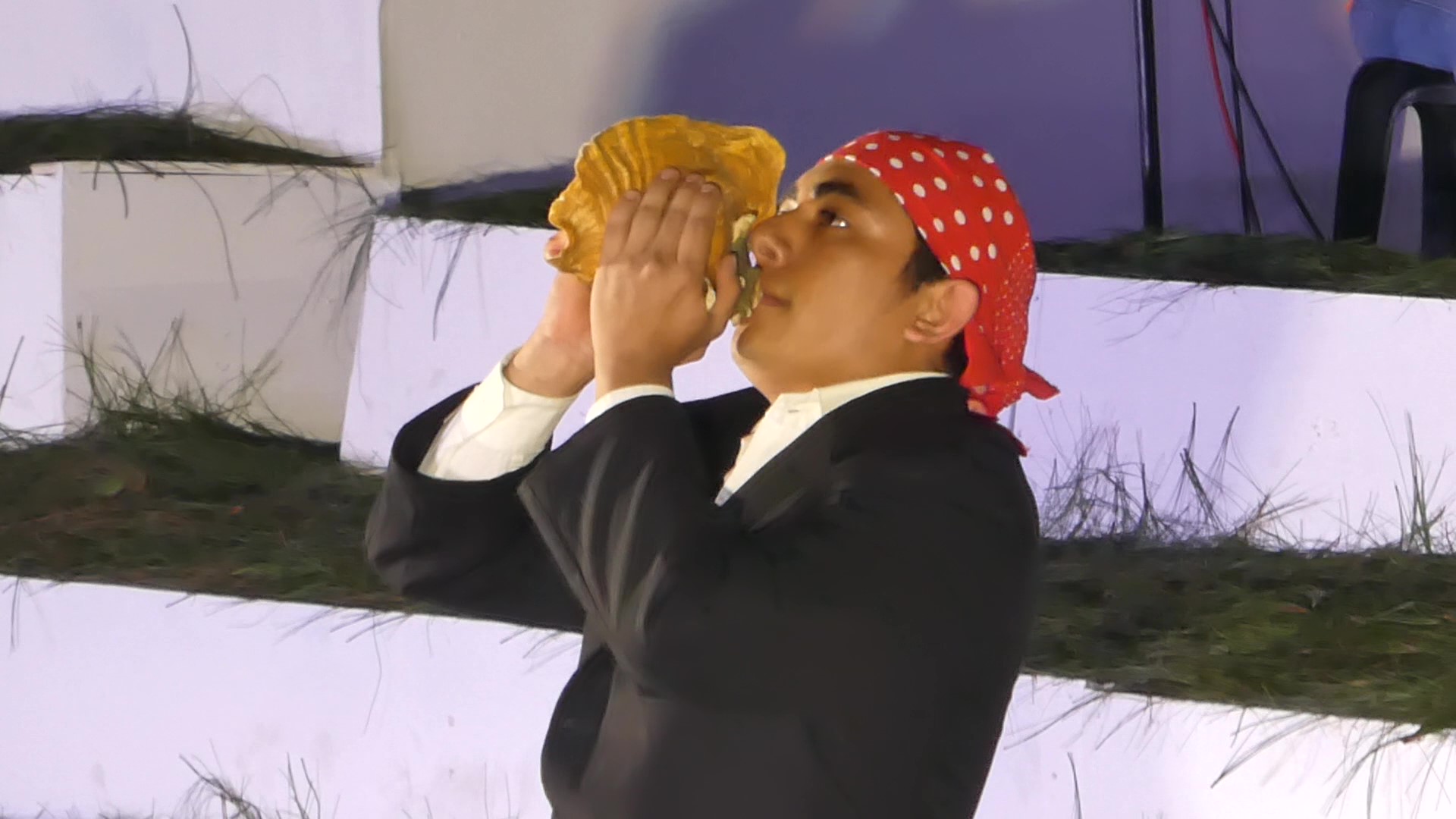
Eventually, a man stepped onto the stage and blew through a large shell, opening the ceremony. Everyone rose and sang the national anthem.

And after this, the reigning Rabin Ajaw – Alma Irene López Mendoza – made a speech, once again chaperoned by the same woman who had led the way during the parade a couple of days before.
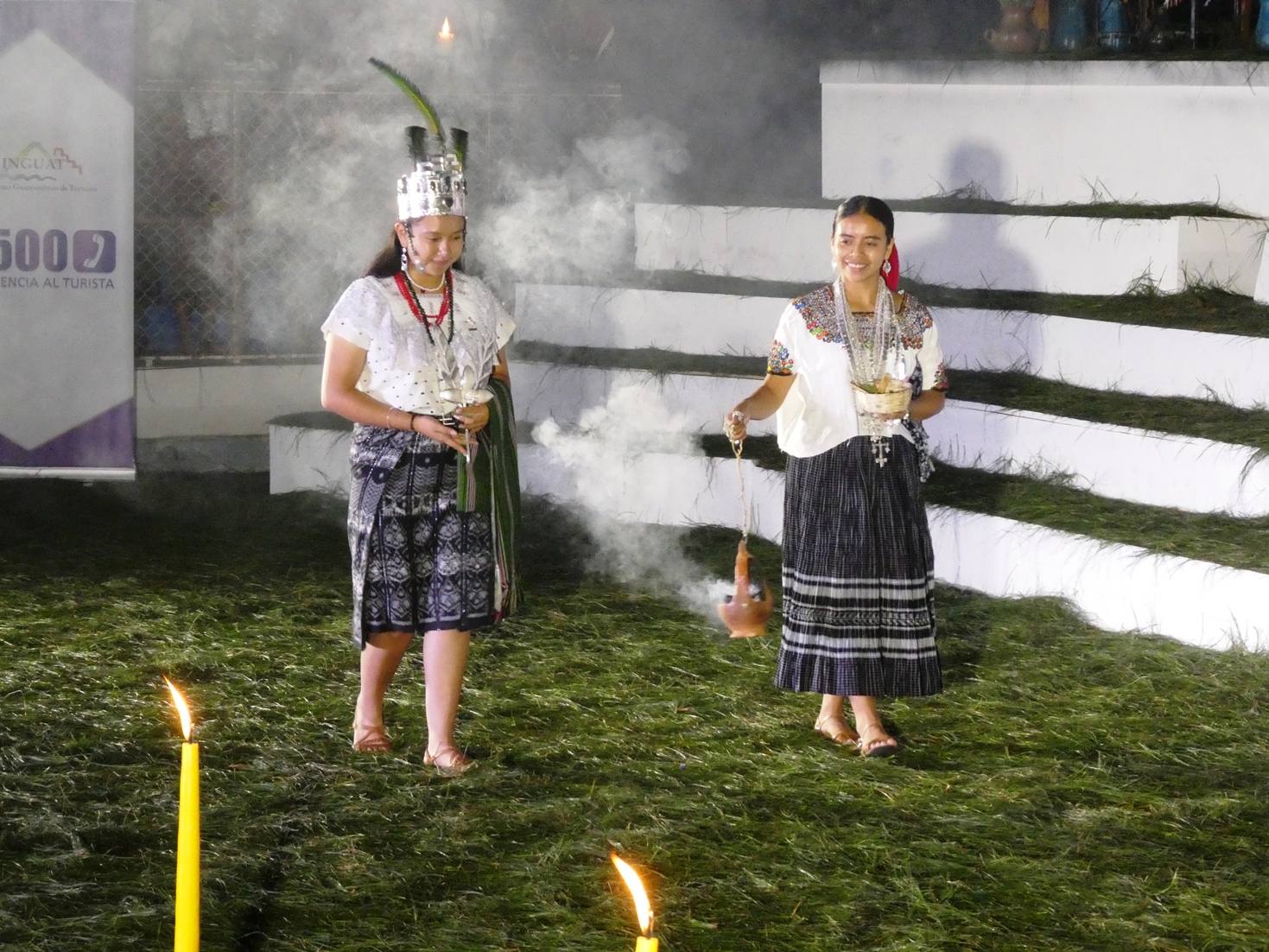
Both she and the Rabin Ajaw had chairs at the back of the stage, but hers was a little smaller. I suspect she was the runner-up in the previous year’s competition.
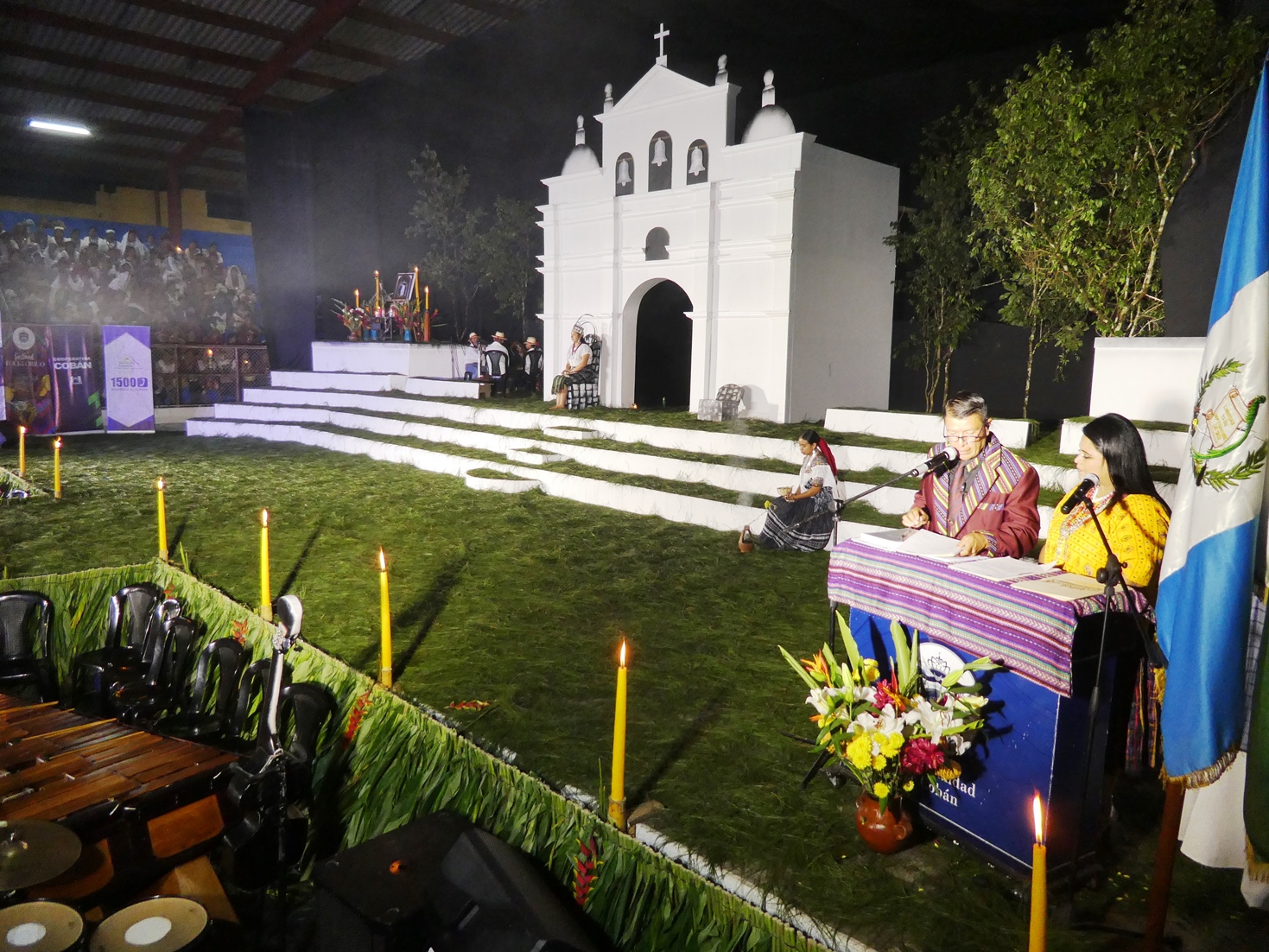
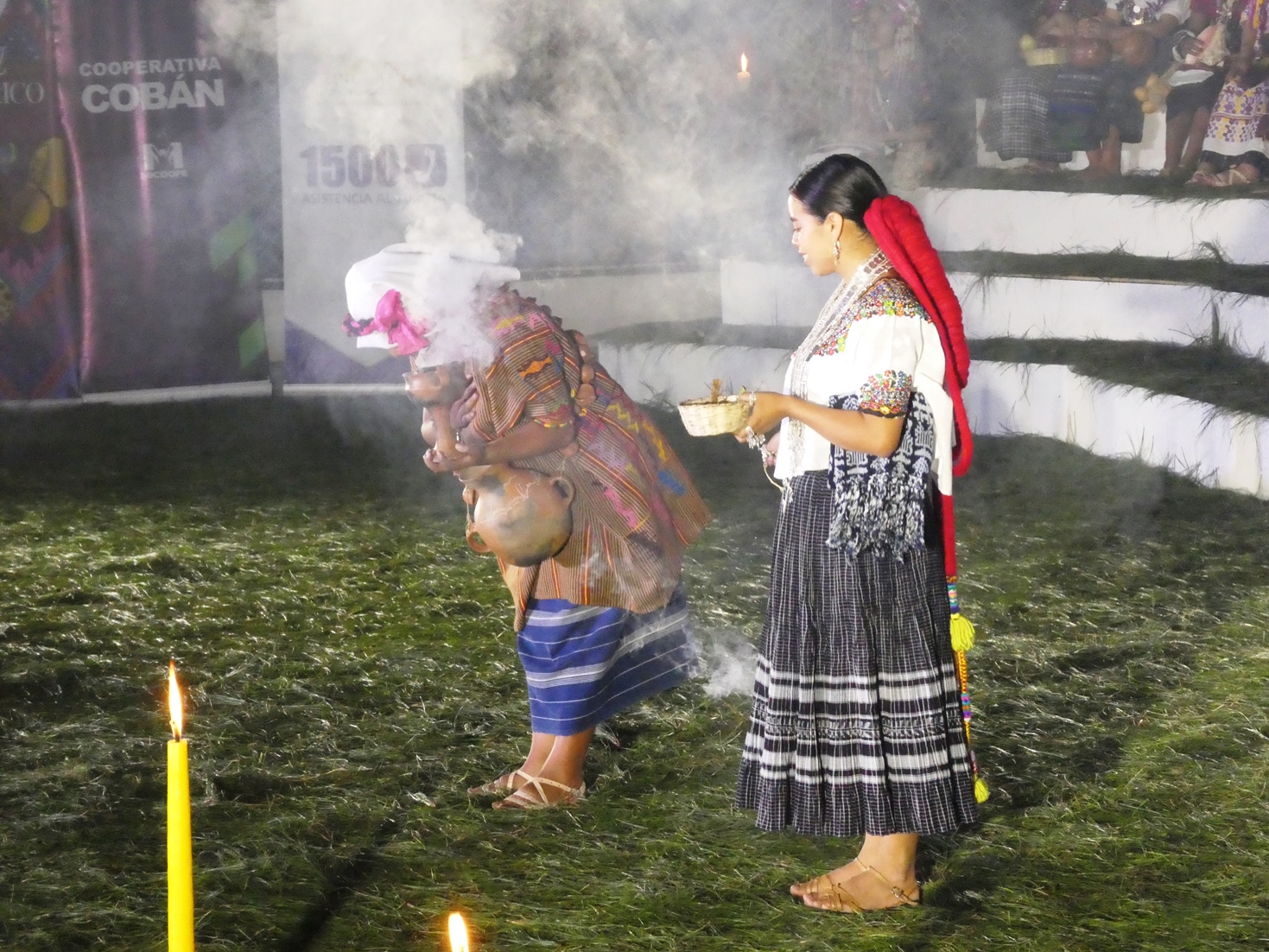
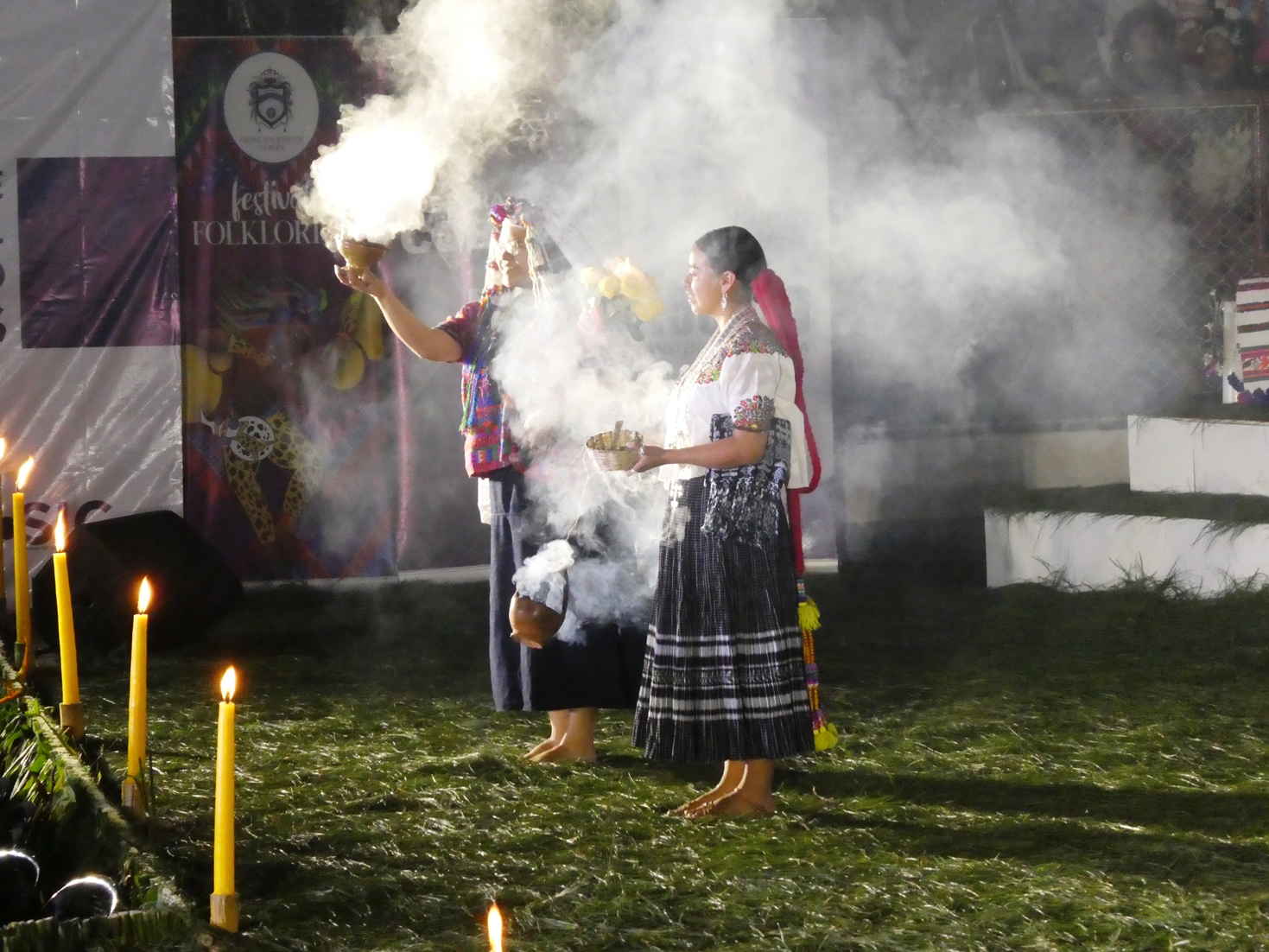
After reigning Rabin Ajaw seated herself, the contestants came onto the stage one at a time, each greeted by the young woman who wafted a trail of smoke from her censer as she guided them across the stage. The contestants would dip their heads first at the crowd, then the judges, and then the reigning Rabing Ajaw before taking a seat on one of the steps beneath her (example here). Meanwhile, the presenters narrated, telling us their names, where they were from, who their parents were and what languages they spoke, along with other details.
I then began to realise how long this ceremony was going to be. I had already been there for three and a half hours by that point (two hours waiting for it to begin and another hour and a half of opening speeches). It took somewhere between one to two minutes for each contestant to make their way across the stage, and there were one hundred and ten of them. It didn’t take much maths to figure out that I was going to be there for quite some time.
This is not a complaint. The ceremony was beautiful, and I liked that they gave each contestant a moment in the limelight. I do not regret going. Watching it was memorable, rewarding, and a very authentic experience. It will undoubtedly be one of the things I look back on in years to come.
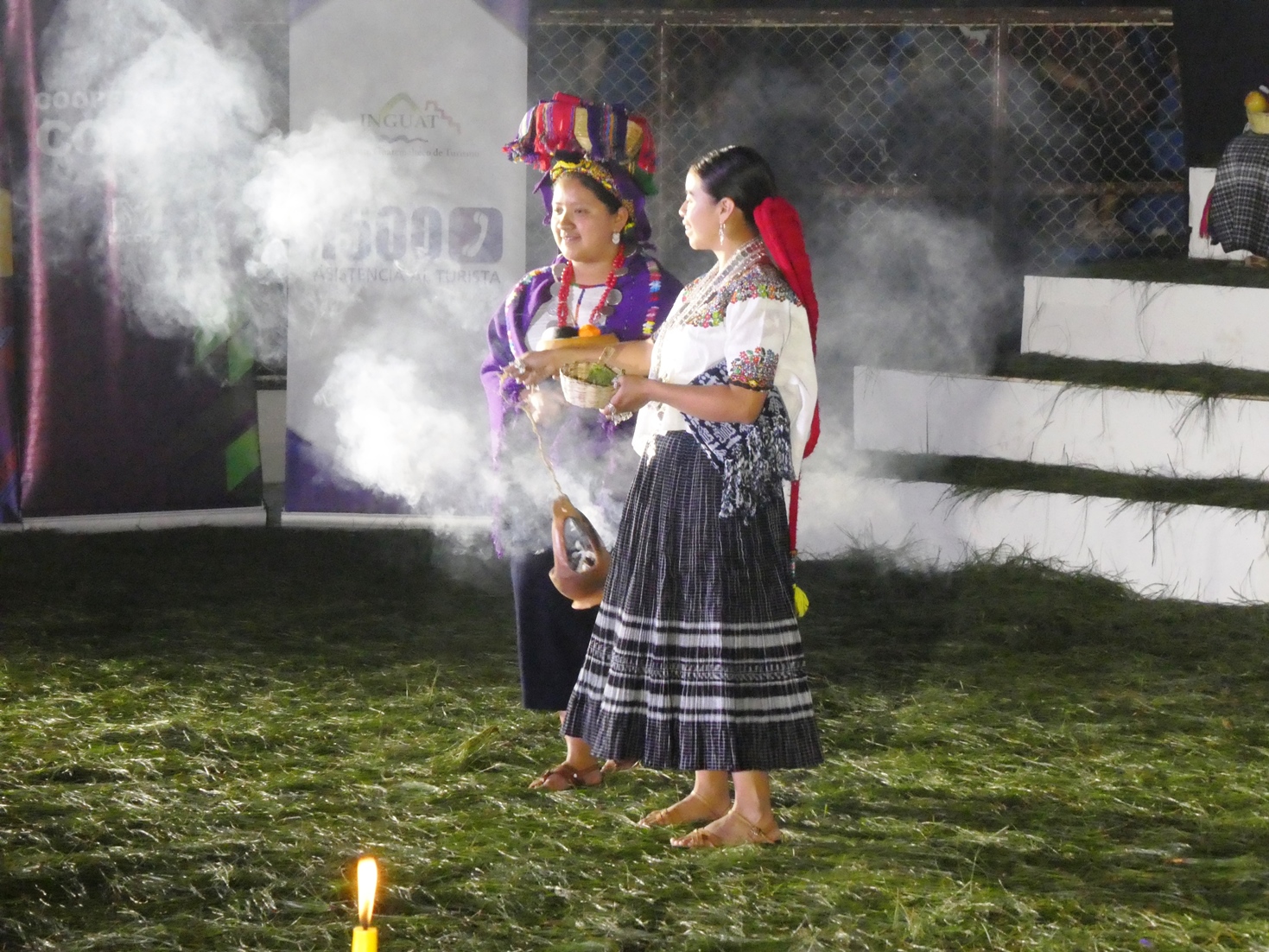
But I would also be lying if I said that I didn’t start to feel impatient an hour or so in. Rabin Ajaw is a festival that deserves more attention – I am still surprised that I was the only gringo there – but parts of it are quite slow, so it can feel like an endurance challenge at times. At one point, one of the contestants fainted and had to be carried off the stage, and I found myself worrying about the young woman escorting them. Being close to the stage, I could see that she was getting tired, and I hated to imagine how her arm must have been feeling after swinging that censer around for hours and hours. She truly was the hero of the evening.

Luckily, about halfway through, they did have a brief interlude where dancers came onto the stage and performed. I have a video you can watch here. The woman with the censer returned, looking a bit more refreshed, and the ceremony continued.
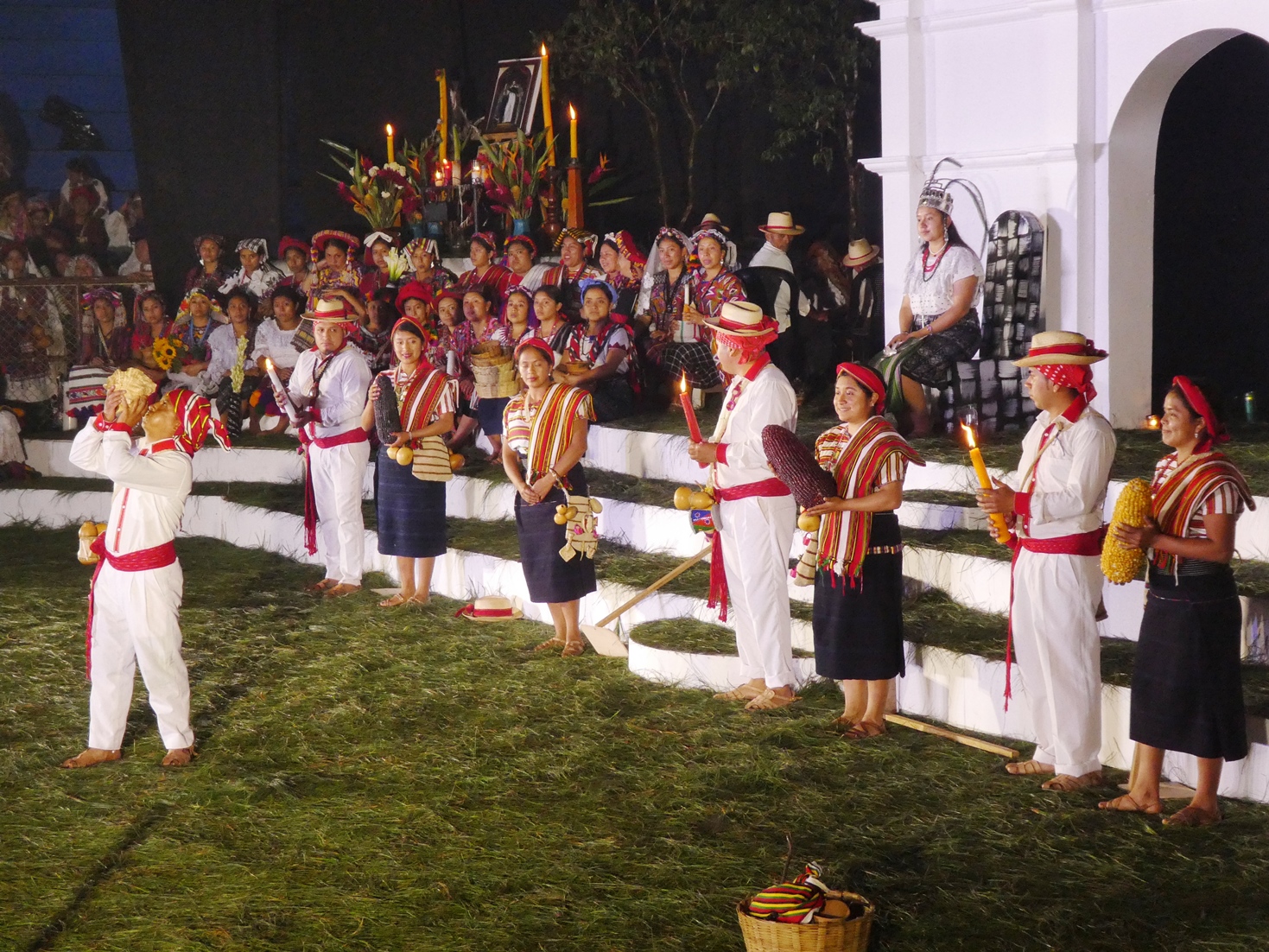
Once, some hours later, all of the young women were finally on the stage, the presenters made more speeches, and the crowd cheered. They also made the contestants get up and dance for a while in three groups.

I did not get the impression that this dancing part bore much weight in the competition, as it was neither technical nor did it seem rehearsed. I think it was part of the ceremony. I could be wrong, though.
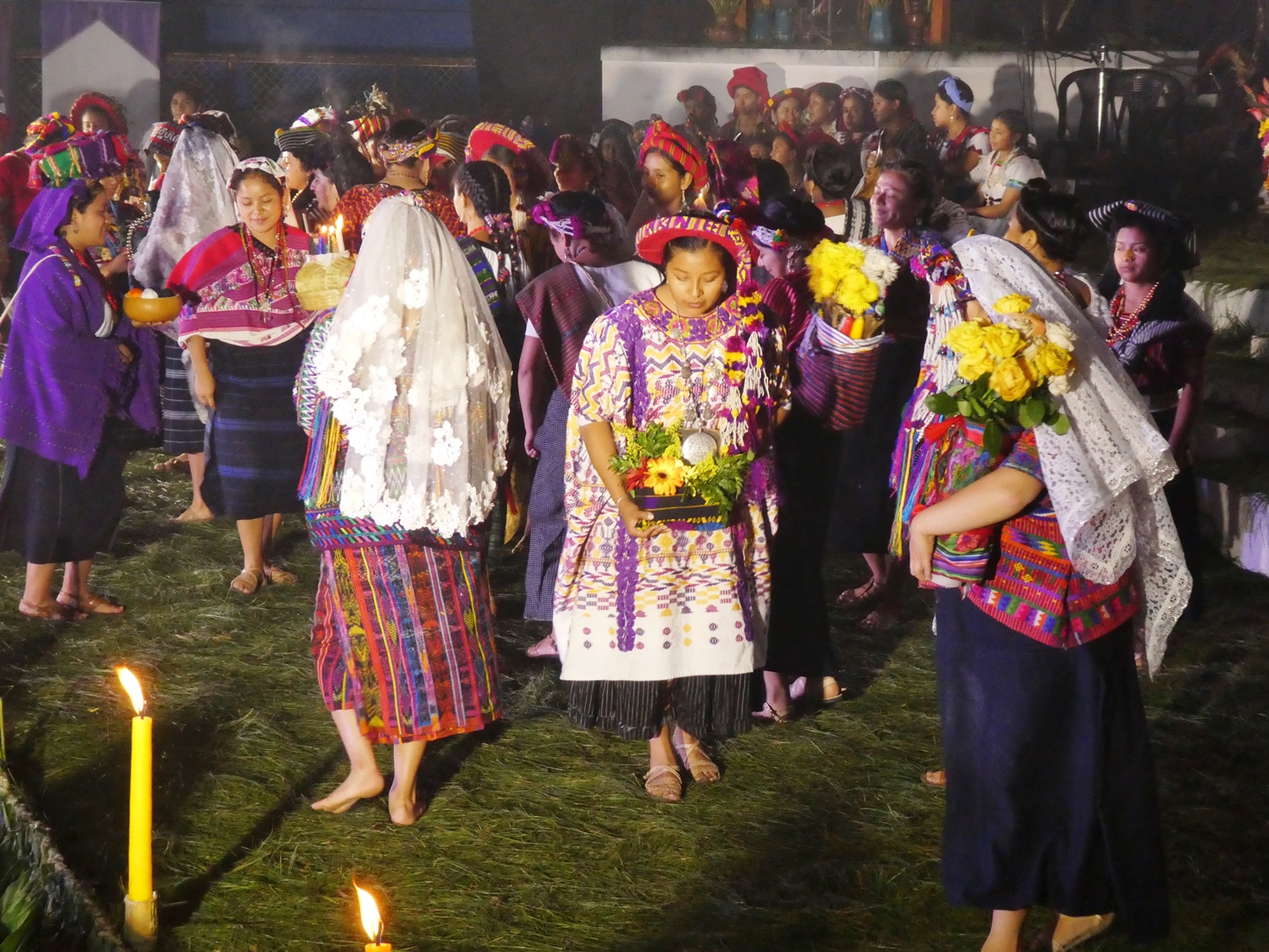
Shortly after this, the contestants returned to their seats for a while, and the judges handed the presenters an envelope with the names of the semi-finalists. Thirteen names were called, and each rose and walked up to the front of the stage whilst the audience applauded.
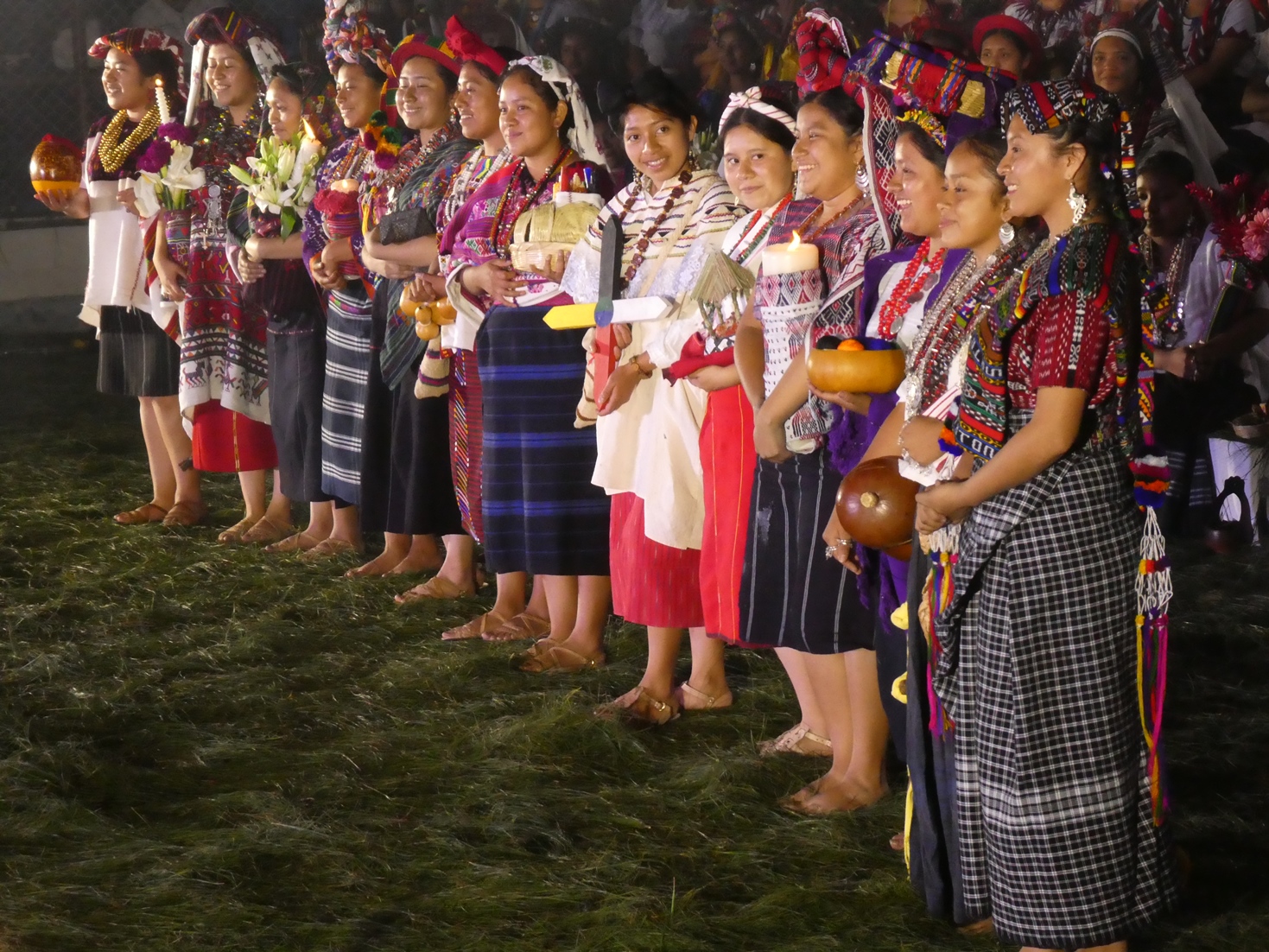
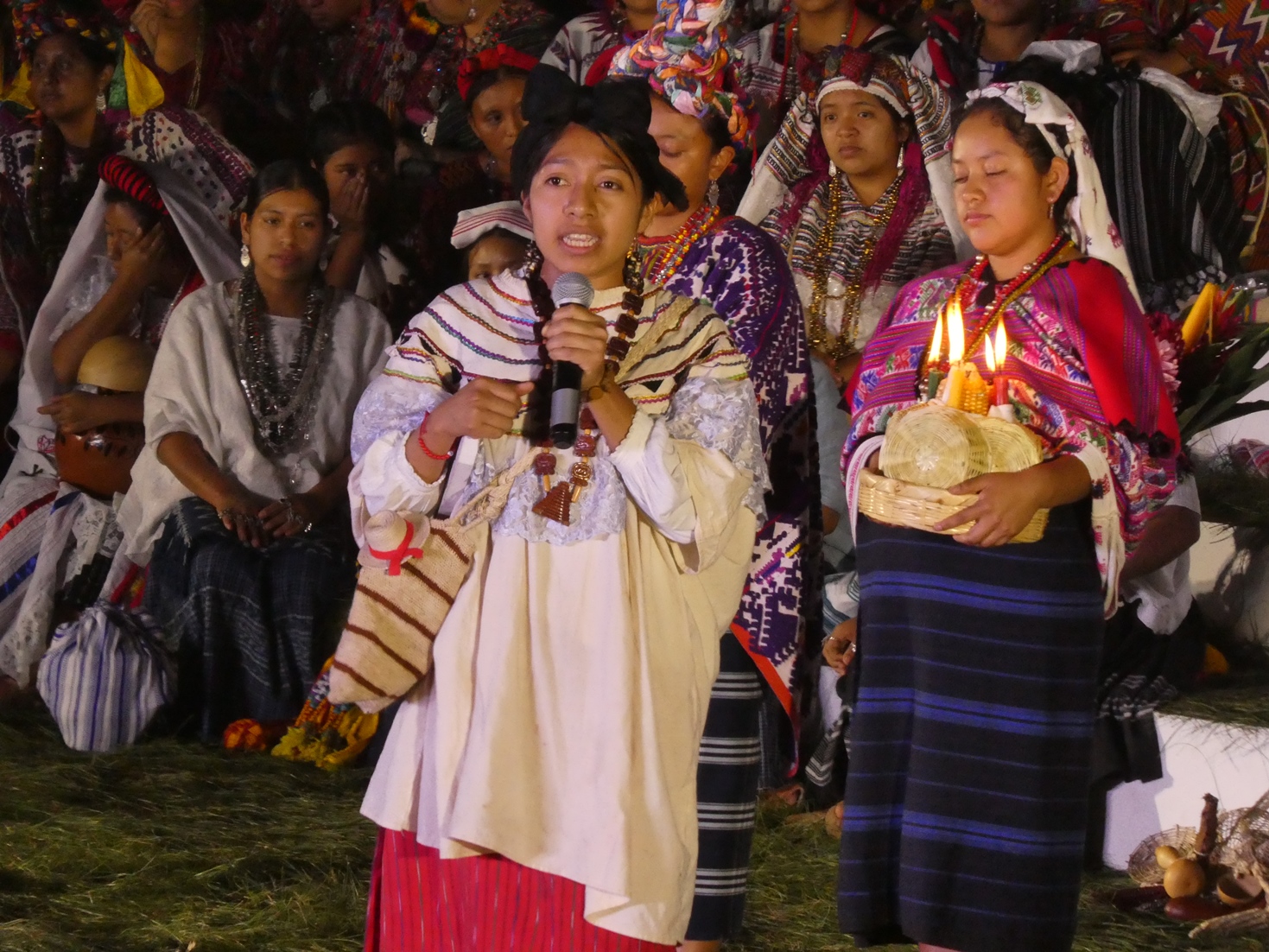
Each of them was given a question to answer. They ranged from topics such as, “What are your opinions on the use of plant medicine?”, “What wisdom can we learn from our elders?”, and “How should women uphold Mayan traditions in the modern world?”. Most of the contestants gave their speech first in their mother tongue and then a second time in Spanish.
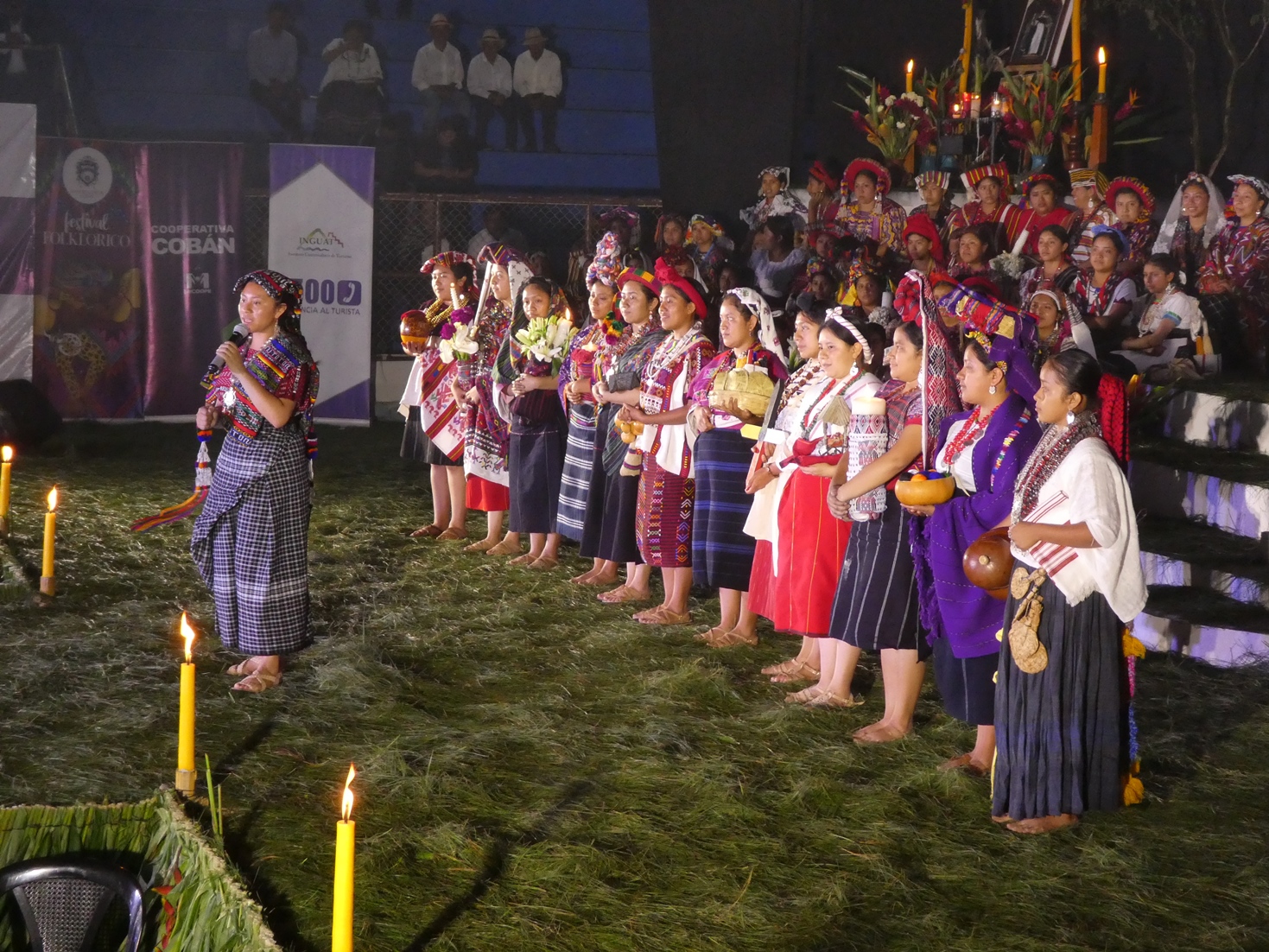
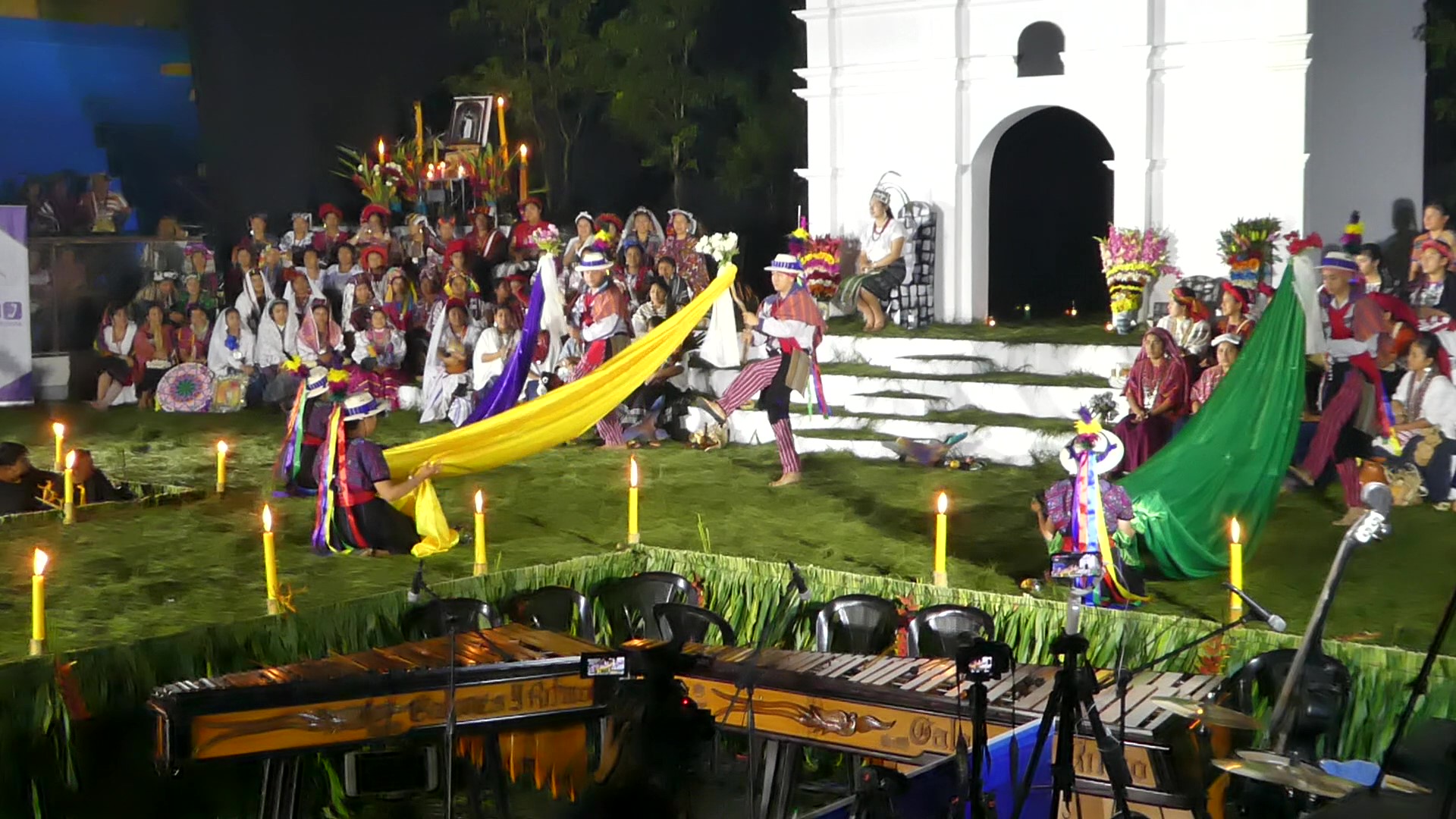
After this test, the judges walked away to a hidden room, and another group of dancers stepped onto the stage to entertain whilst they conferred (video here).
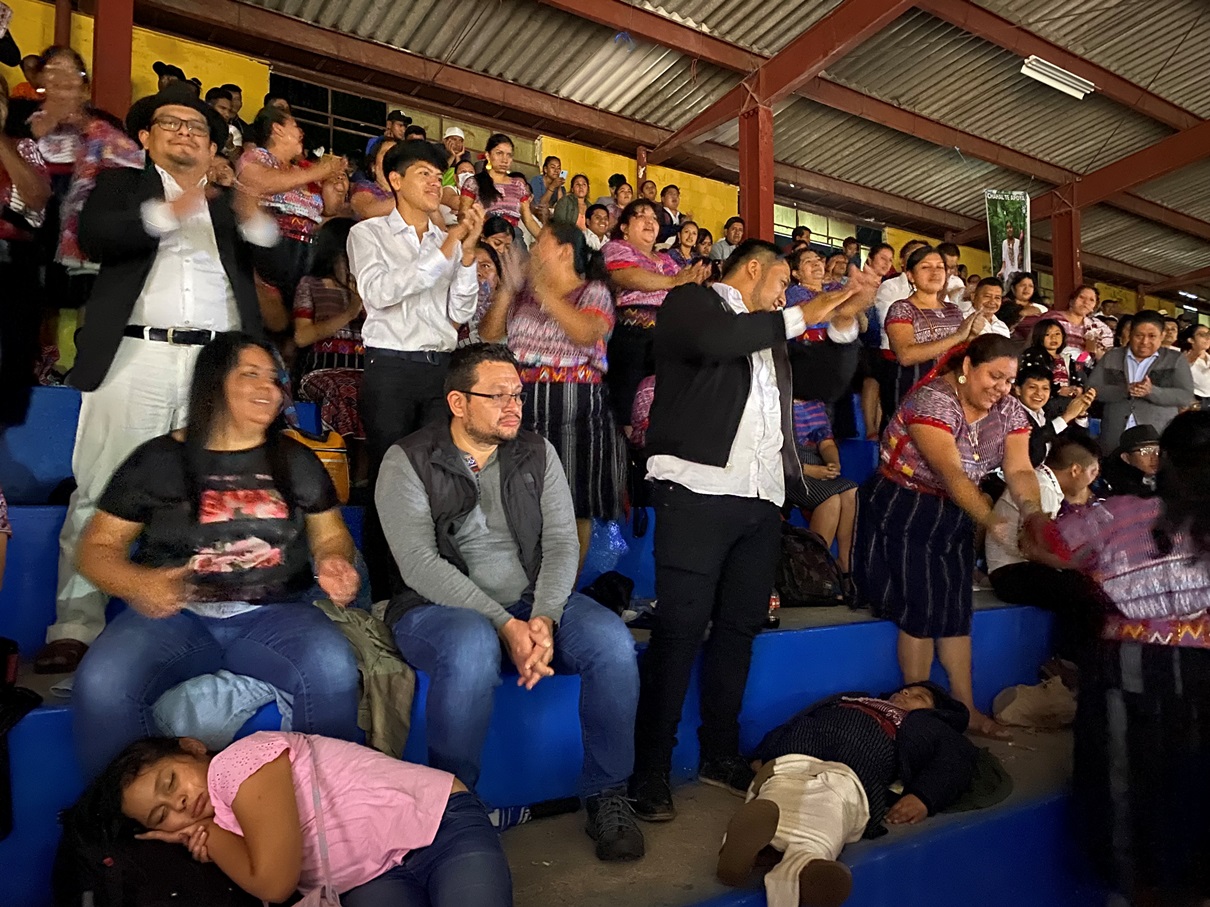
After the dancing was over, many of the audience took it upon themselves to entertain as we waited for the judges to return. They chanted, sang, and swayed back and forth. I have a video of it here. Fair play to them for their energy because they had more of it than me. It was past one o’clock in the morning by then, and it had been twelve hours since I had eaten. I had also been on my feet for most of the evening so that I could take photos. Needless to say, I was very, very tired.
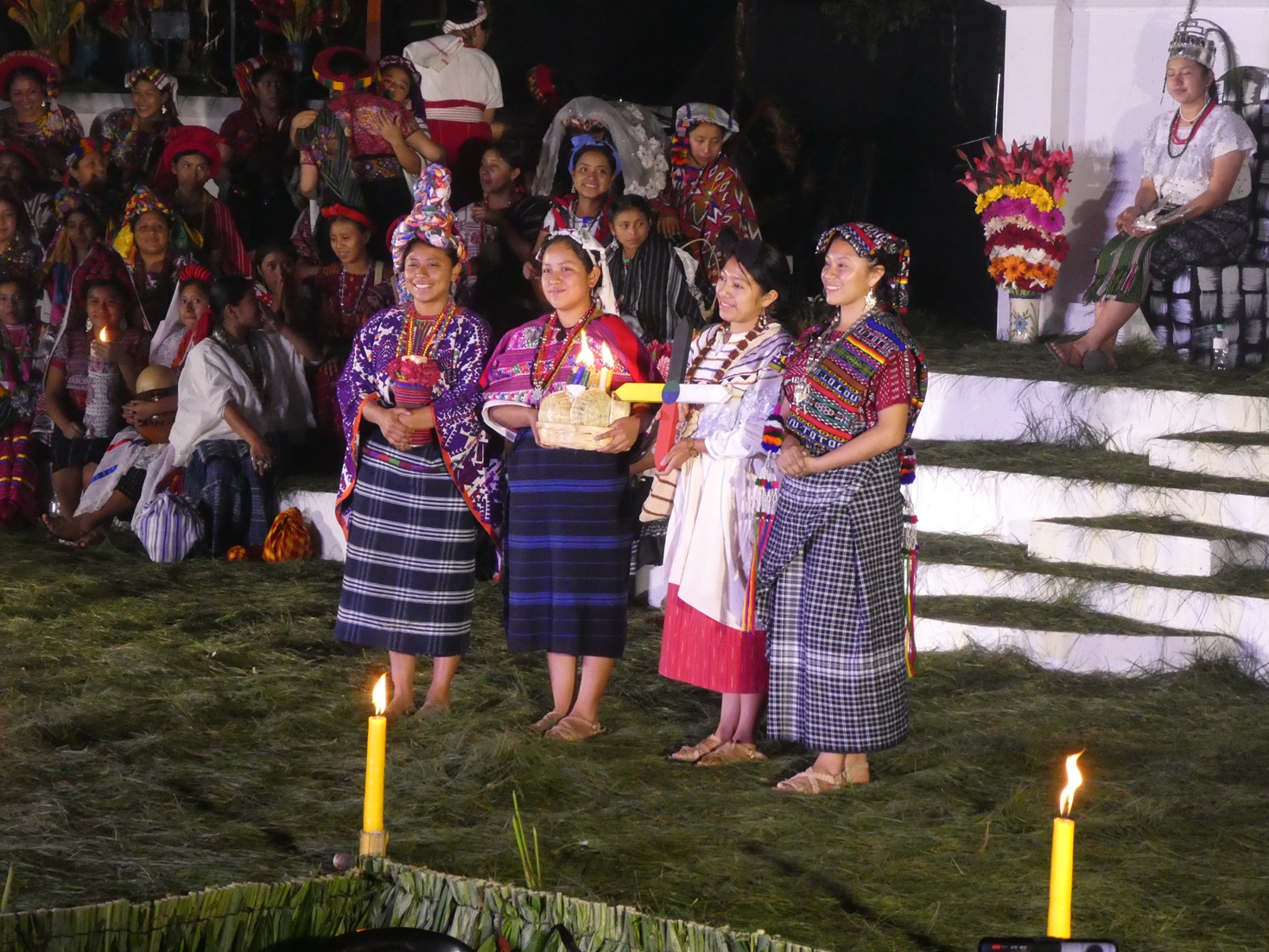
When the judges returned, four more names were announced as the finalists, and each was tested one final time with another question.
After this, the judges huddled together for a while to discuss as more dancers came onto the stage. By the time the performance was over, they were ready to announce the winner.
The four girls braced themselves as the presenter read the testament of the judges. The first announcement he made was not the winner but the runner-up (video here) – which he called ‘la primera finalista’. Her name is Jenifer Melissa Gutiérrez Subuyuj. If my theory is correct, she will be the one who escorts the contestants next year.
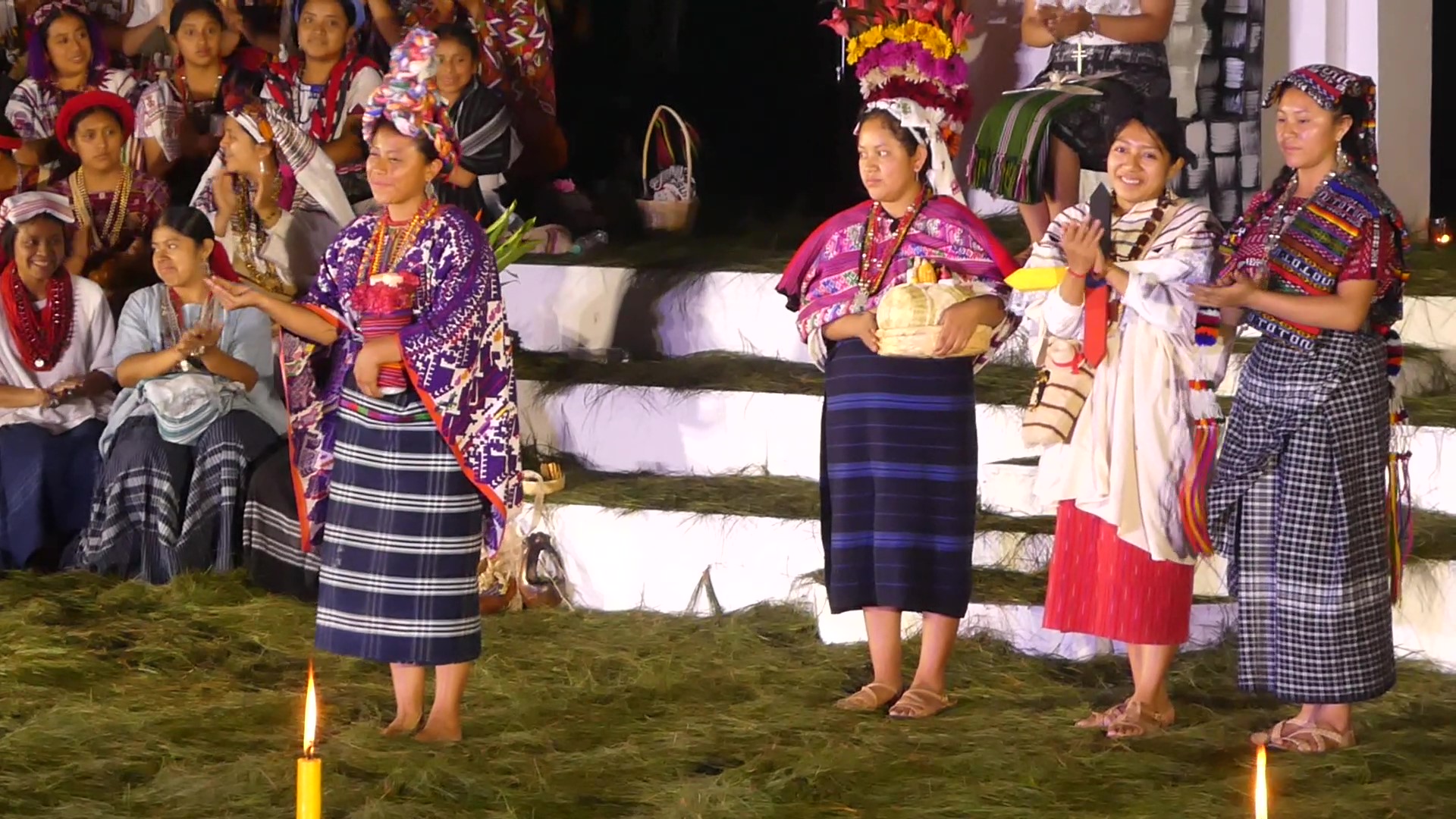
And then, finally – at half past two in the morning – he announced the winner.
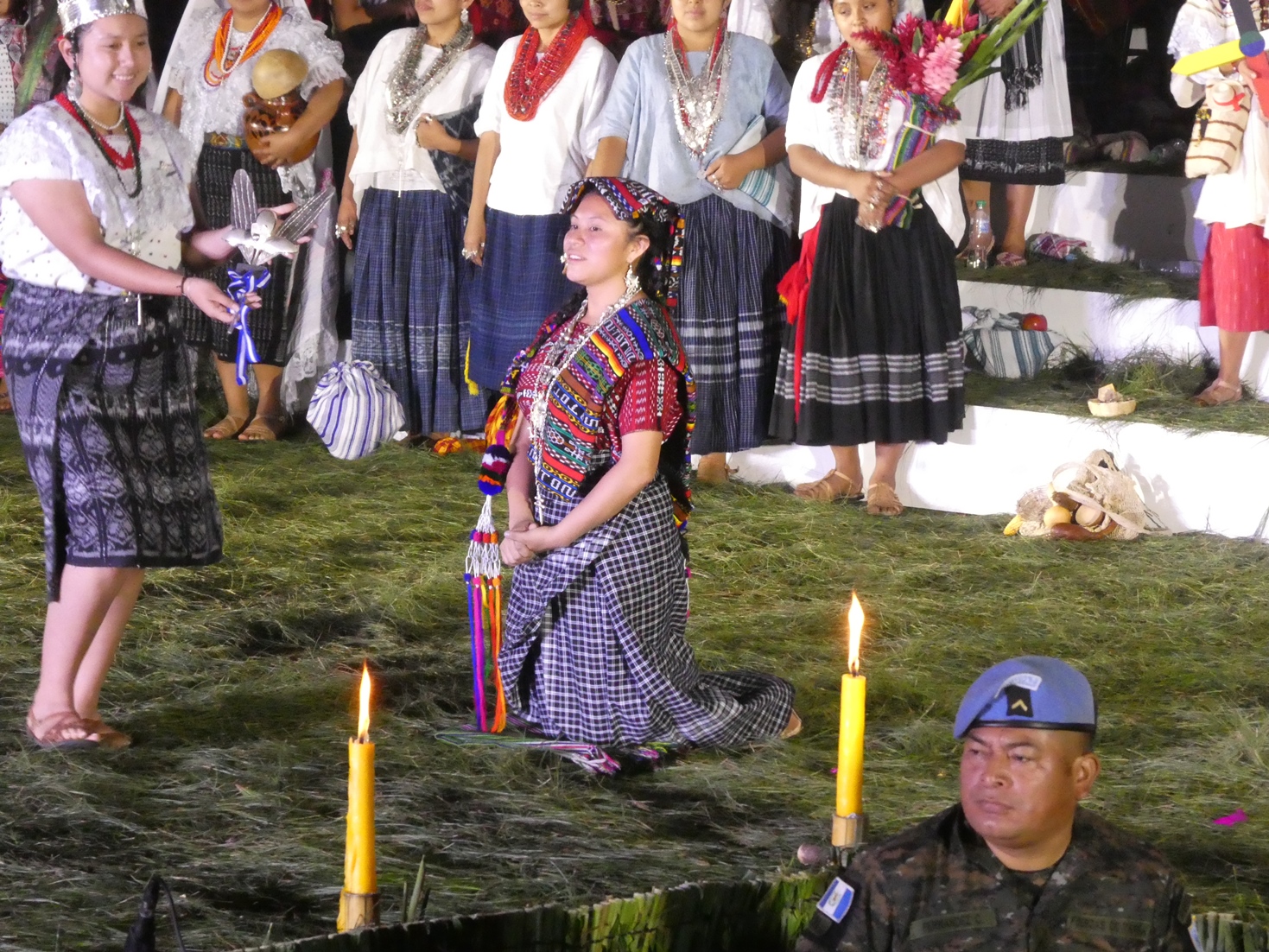
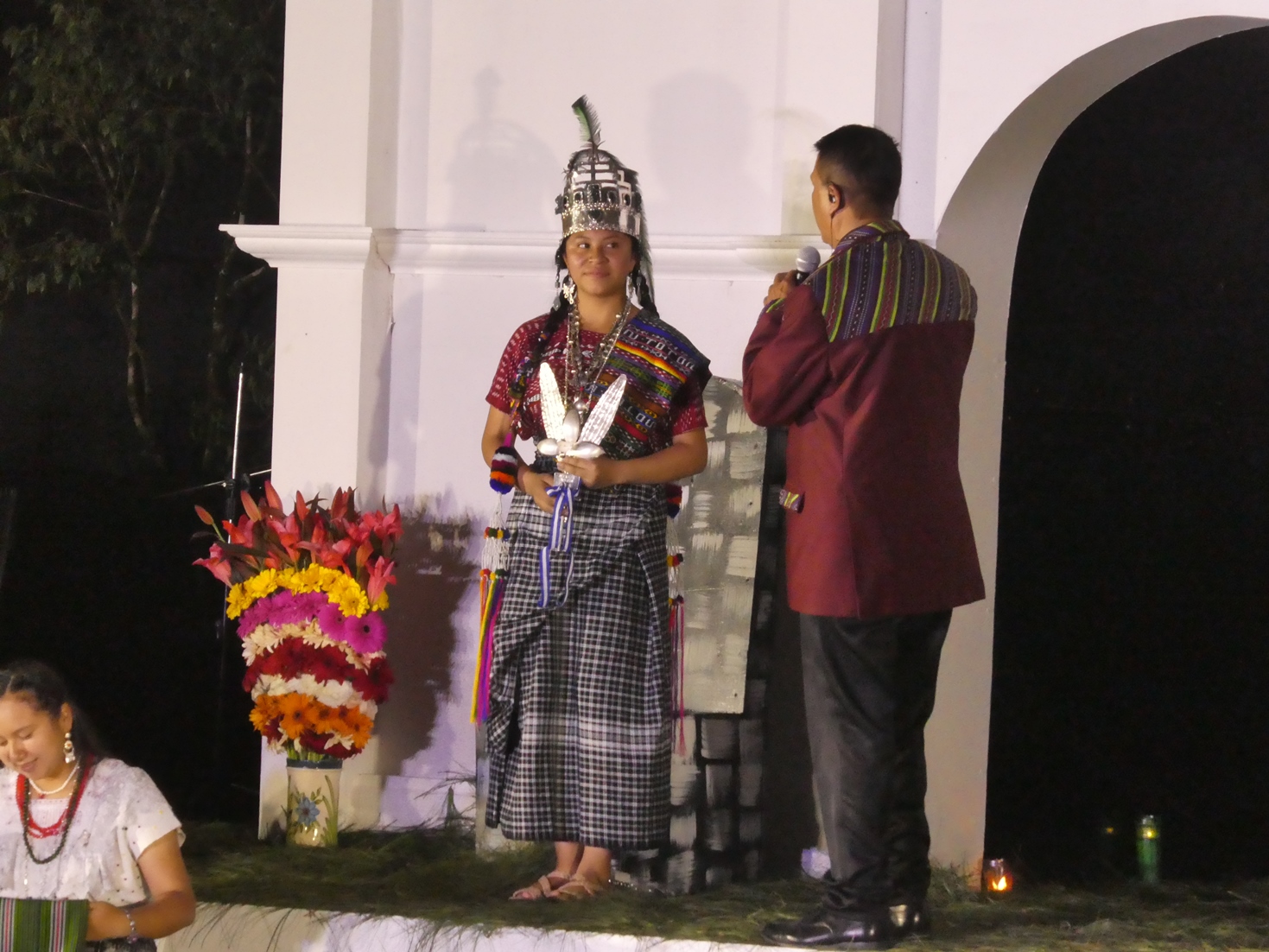
Her name is Marleny Miranda Toyom Canastuj, and I have a video of the moment she found out (that can be watched here).
Thank you for reading this blog. I know it has been one of my longer ones but there was a lot to get through, so if you made it this far, well done and I hope it was interesting.
More photos and videos from this amazing event can be seen by clicking here. There are a lot of them!
 Tej Turner