26th – 31st October, 2023
I arrived at the cemetery at around 6 p.m.

And, as usual, there was a bit of waiting for the festivities to begin. These events often run on what many people would call ‘Latin Time’, and that is something that I have grown used to over the last few months. I explained this to the other backpackers I was hanging out with that night and advised them to just buy a drink and enjoy the vibe. Mexico’s rules concerning drinking in public were relaxed that evening, and we passed lots of stalls selling drinks and food on our way there.
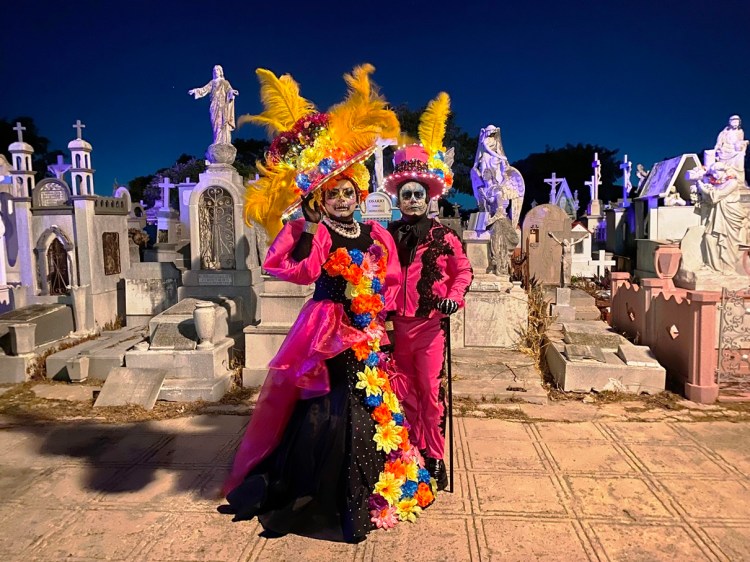
We spent a bit of time wandering around the cemetery before returning to the street. Candles were glowing from some of the graves and there were people with painted faces. We also met someone from Mérida’s tourist board who had a photographer with them. He asked if he could have a picture of us for promotion reasons.
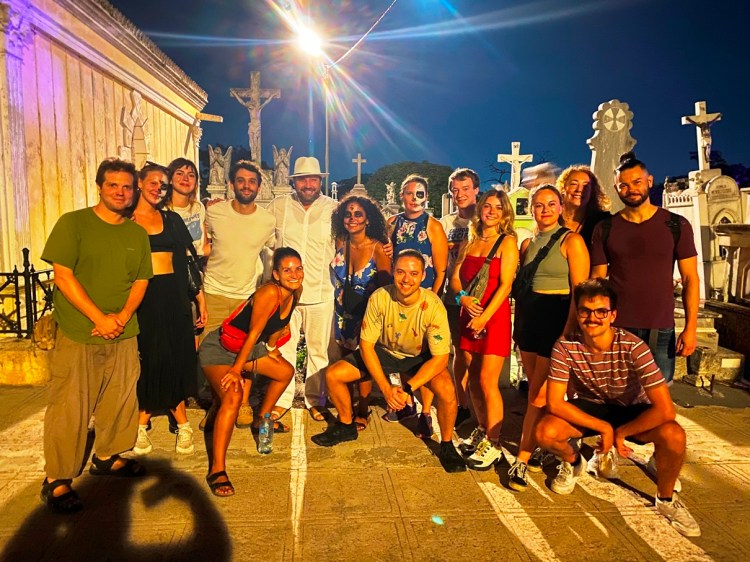
To thank us, he spent a bit of time explaining some of the details concerning this festival. Día de Muertos – or ‘Day of the Dead’ – is perhaps a bit of a misnomer: for most Mexican cities the festivities last for more than just one day. What we were about to witness was merely the opening ceremony; one where men, women and children with painted faces all gather at the cemetery and perform a short ceremony to invite the dead back into the world of the living before marching through the town. Each one of them is given a candle which is meant to help guide the spirits.
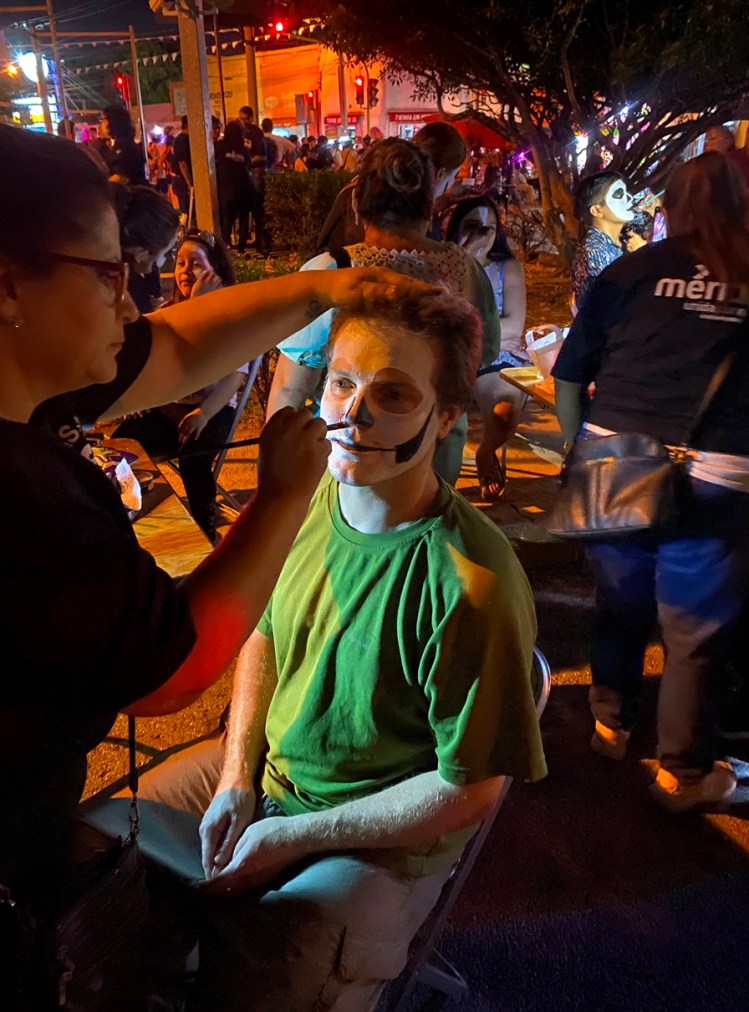
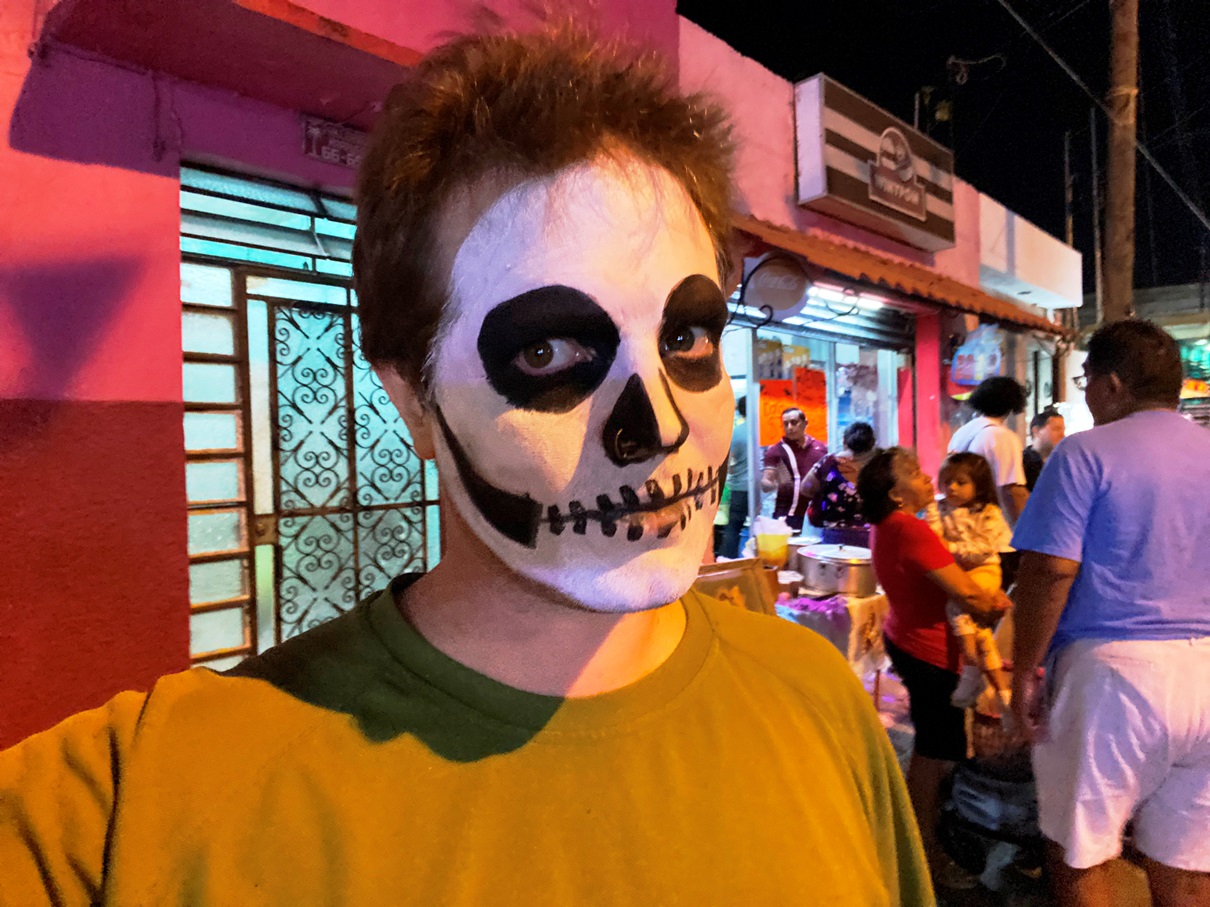
As time drew closer, we went back towards the street, bought some drinks, and waited. There was more than enough going on around us to keep us entertained. People had set up little altars outside their homes, and musicians were playing. There was even an entire section set up by the entrance to the cemetery where people could get their faces painted so I decided to assimilate.

To those of you who have probably seen the more popularised version of Día de Muertos depicted in movies, this video will perhaps seem a little more dialled down to what you were expecting. Well – as I previously said – this is a festival that takes place over several days and is made up of many parts. This parade is the opening ceremony, and it is called the Paseo de las Animas (‘The Walking of Souls’). It is something that has a lot of spiritual significance to Mexicans and they take it very seriously. These people have just invited the souls of ancestors and loved ones to come back to the world of the living; their painted faces are a way to represent them and the candles they are holding are meant to guide them. So, they march mostly in silence and respectfully. There are other events – including further parades – in the days to come.

One of the things the tourism representative explained to us when we visited the cemetery is that after this ‘official’ procession has passed, people from the crowd are allowed to join, and this is something that I and my companions did. Eventually, I got caught in the swarm and lost sight of the others.

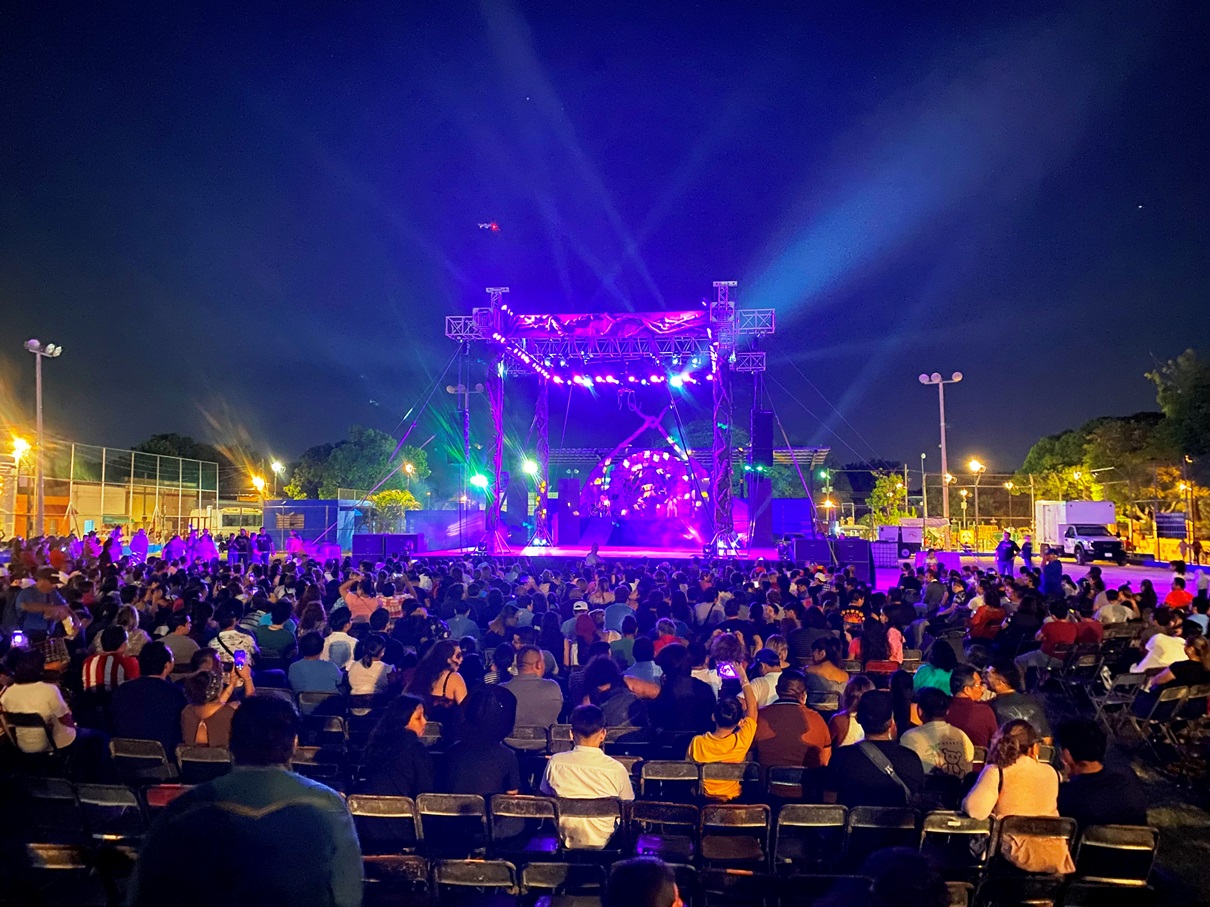
I realised that the Circo Leyendas Del Mayab was due to begin soon. This was an event not included in the official program but I knew about it because a friend I had made worked for the local government and helped to organise it. It was happening at Parque San Sebastian, which was just a couple of blocks away from my hostel. I made my way there.
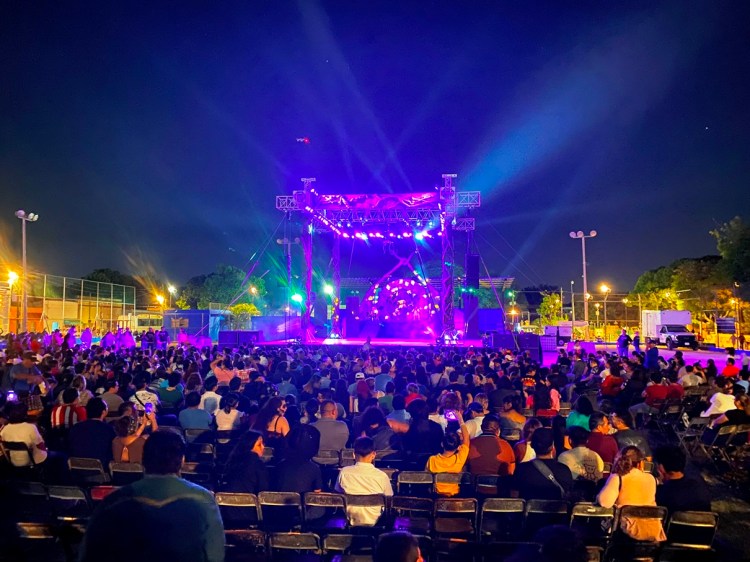
When I arrived, I found it to be a little less busy than I expected and there were still plenty of seats left. There was a comedy act currently performing – one that I was not fluent enough in Spanish to understand much of the humour of – but after this warm-up, the show began.

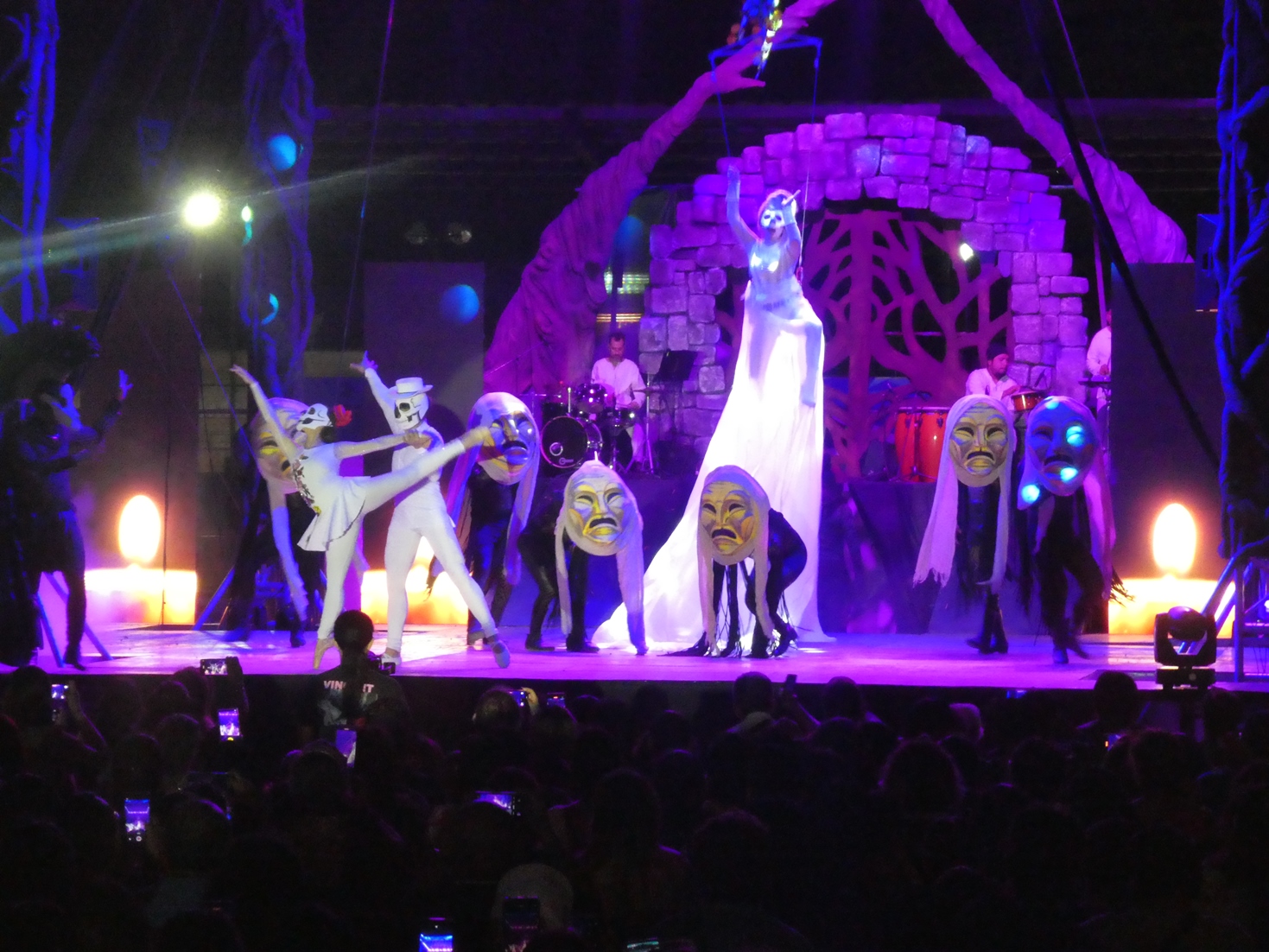
I had seen a rehearsal of this the night before – because my friend invited me – but back then many of the performers had not been wearing the costumes and there were a few transitions that went wrong. This night – however – everything seemed to go smoothly.
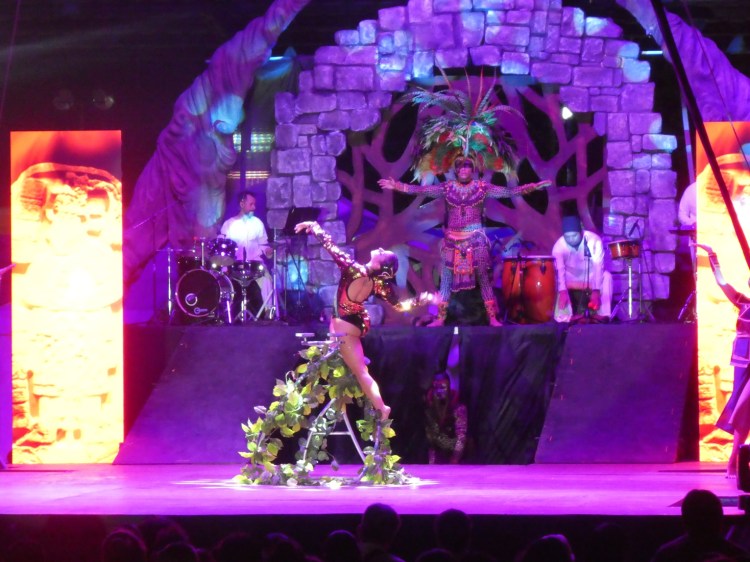
The performance was an interesting pastiche, involving many mediums. Acrobats, hula hooping, ballet, aerial dancing, singing, and others, but all of them were used to tell stories from Mayan myths and legends.

Which is something that could very easily turn out very cheesy, but – somehow – it worked. The reason I chose to be in Mérida for Día de Muertos is that they are very good at running events and seem to have perfected them over the years. I have also noticed that they find ways to represent their indigenous culture within the modern context in a way that is entertaining but not overly tacky.

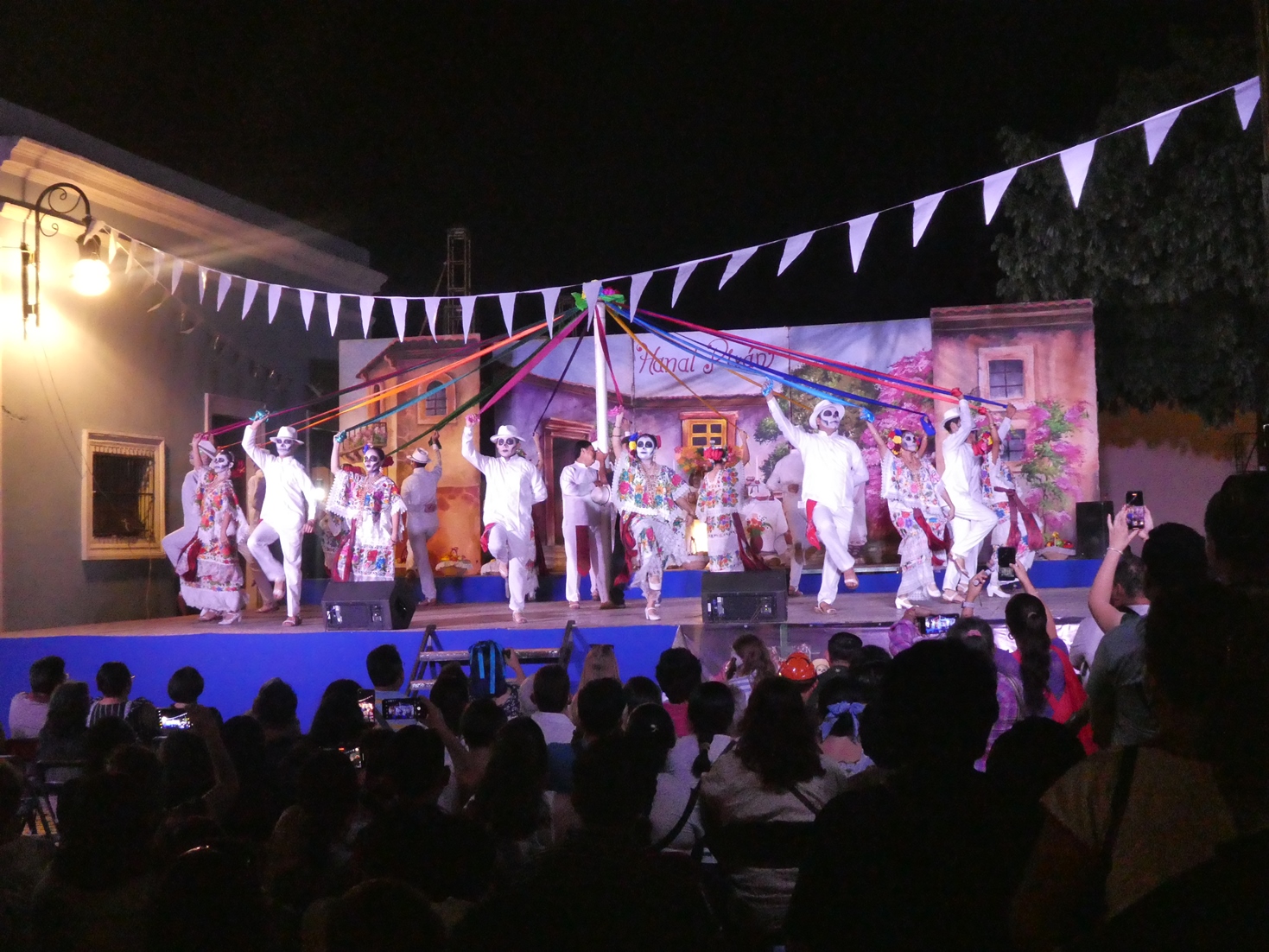
I then made my way back towards my hostel and ended up – by coincidence – bumping into the other backpackers again. They were just about to head to a bar closer to the centre of town, and I was intially tempted to join them, but just as we passed by La Ermita – the plaza just outside our hostel – I saw that dancers were performing on a stage and a lively street party was going on.

So, I decided to stay. I haven’t befriended too many backpackers during this trip. I think it is partly because I am older than most of them now, but also because my Spanish is fairly good and I have preferred to make local friends. The ones staying in my hostel during the festival were a nice bunch though, so I broke my usual pattern for this trip and bonded with them.

But, that said; I also figured I could drink with other Europeans in a bar somewhere in just about any other place in the world, whereas the festivities going on around me were a once-in-a-lifetime thing. I claimed a seat and spent the rest of the night in La Ermita, not only enjoying the show but also the atmosphere around me. It was a great way to finish the night.

During the second day of the festival, I spent most of the daytime resting. During Día de Muertos most of the main programme events tend to be in the evening. The daytimes do have some little things – such as markets and bicycle rides – but I didn’t attend all of them and the ones I did were not noteworthy enough to cover here.

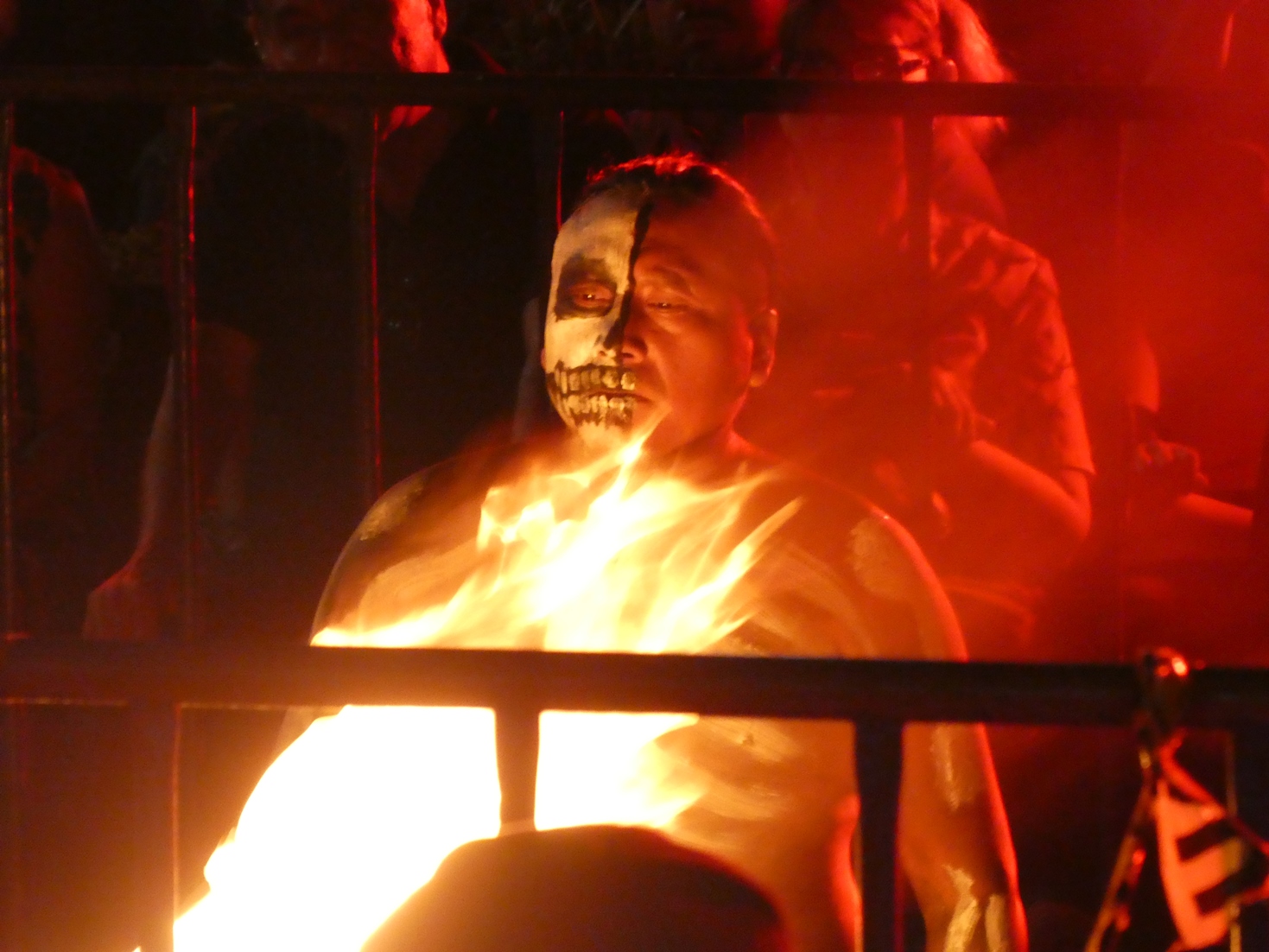
When the evening came, I once again headed out to the festivities with the other backpackers. That day they were happening at Paseo de Montejo, which is a famous avenue on the northern side of the city. We arrived just before the Juego de Pelota was about to begin. This was something that I have witnessed before (and if you want to know more about this you can read my previous blog from my time in Mérida here) so on this occasion I didn’t take many photos or videos. Perhaps it was the huge crowd around them but the players were on fire that night and put on a great show.

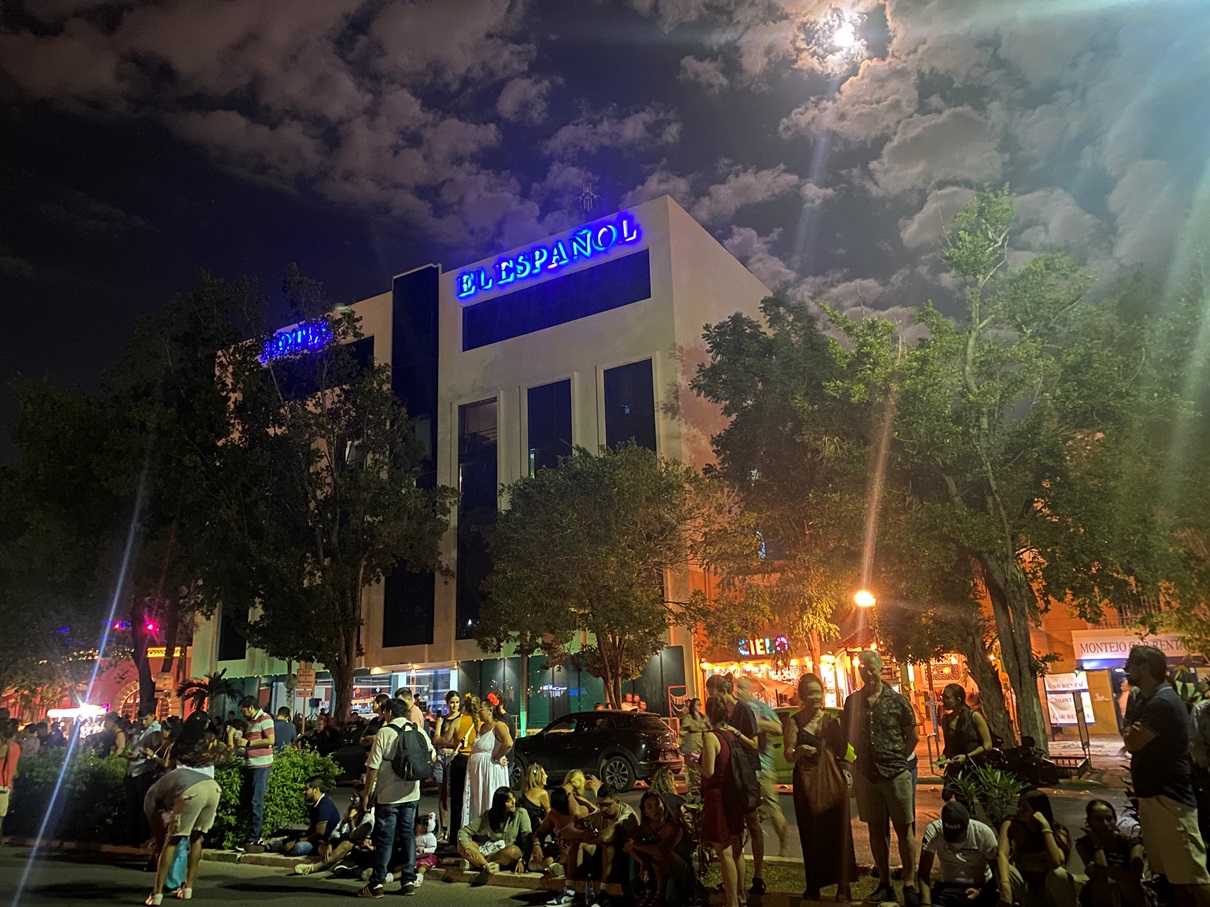
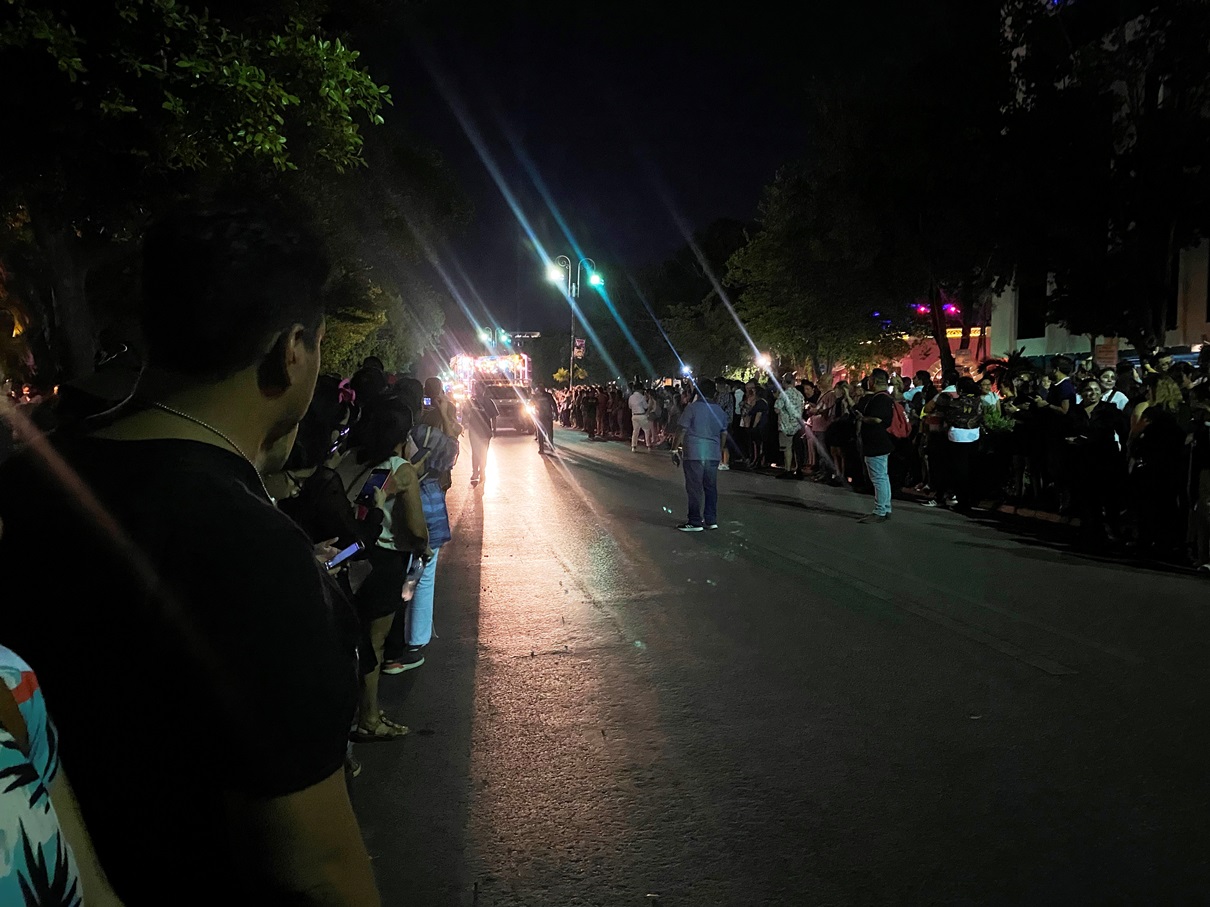
After the ball game was over, we made our way further up the avenue to find a place to watch that evening’s parade. There were a lot more people that night. The previous evening’s festivities had been spread out throughout more of the city because the parade had passed through many districts which were all holding street parties, but this parade was only passing through this one avenue. It took us a while to navigate through all the crowds.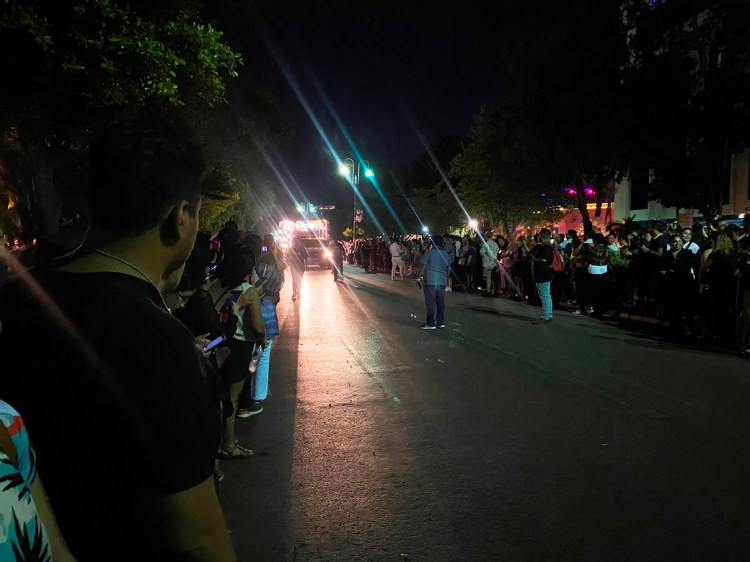
As usual, everything was a bit later than scheduled and there was a lot of waiting. And this evening it felt even longer because Mexico’s laws against public drinking were in effect again. But, when the parade came, it didn’t disappoint.
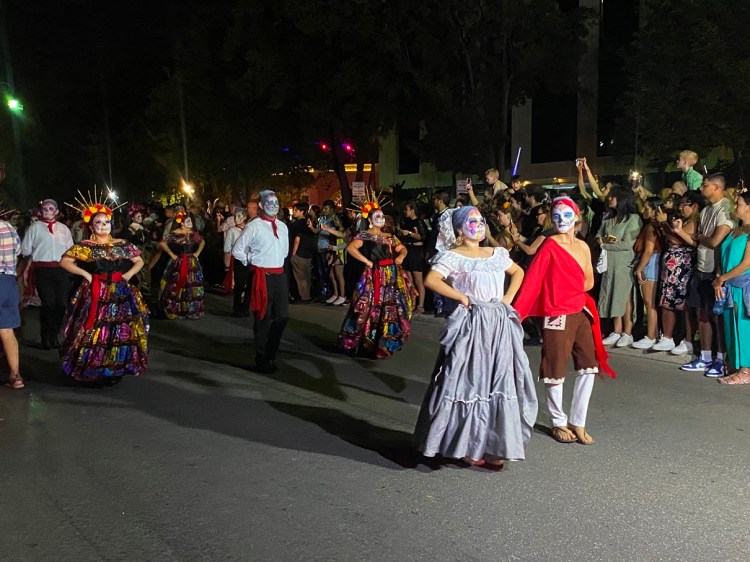
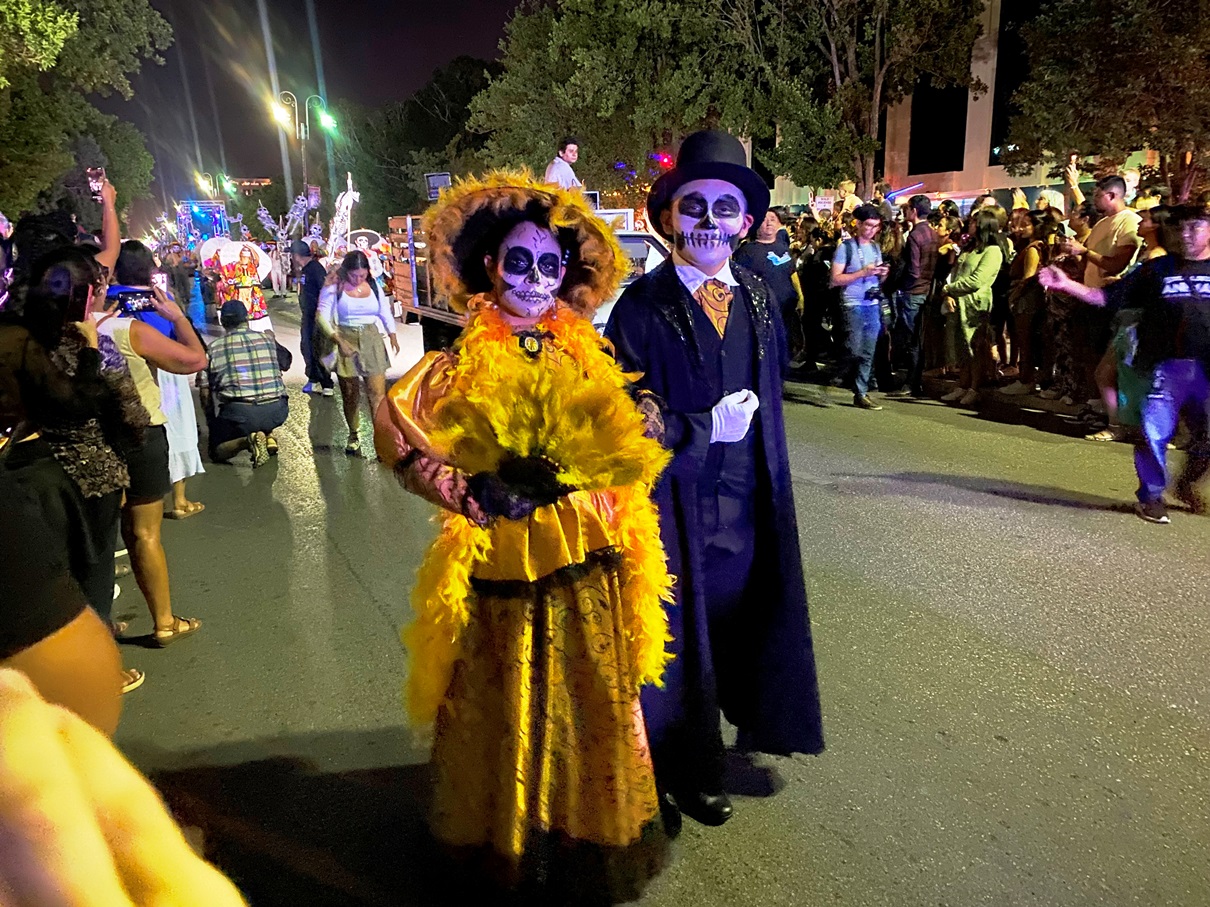
I mentioned earlier that the previous evening’s Paseo de las Animas was not quite as lively as the popularised version of Día de Muertos that a lot of people from outside of Mexico picture in their heads when they think of the festival. Well, I believe this parade was probably much closer to that.
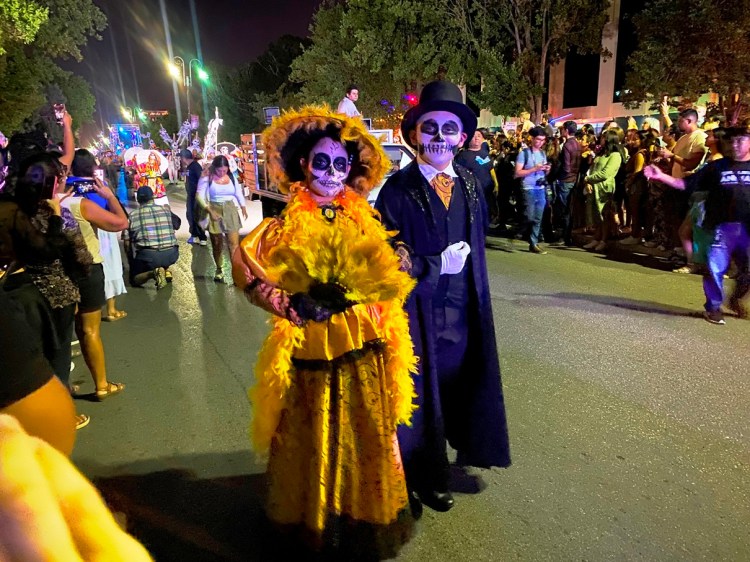
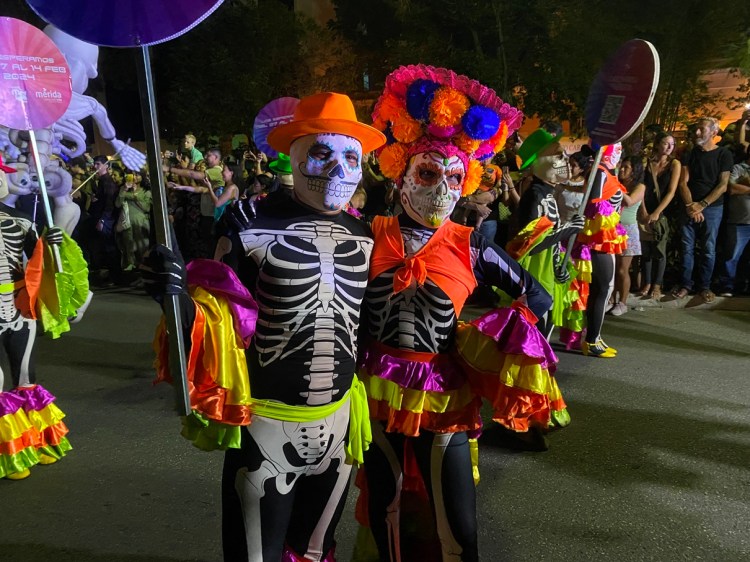
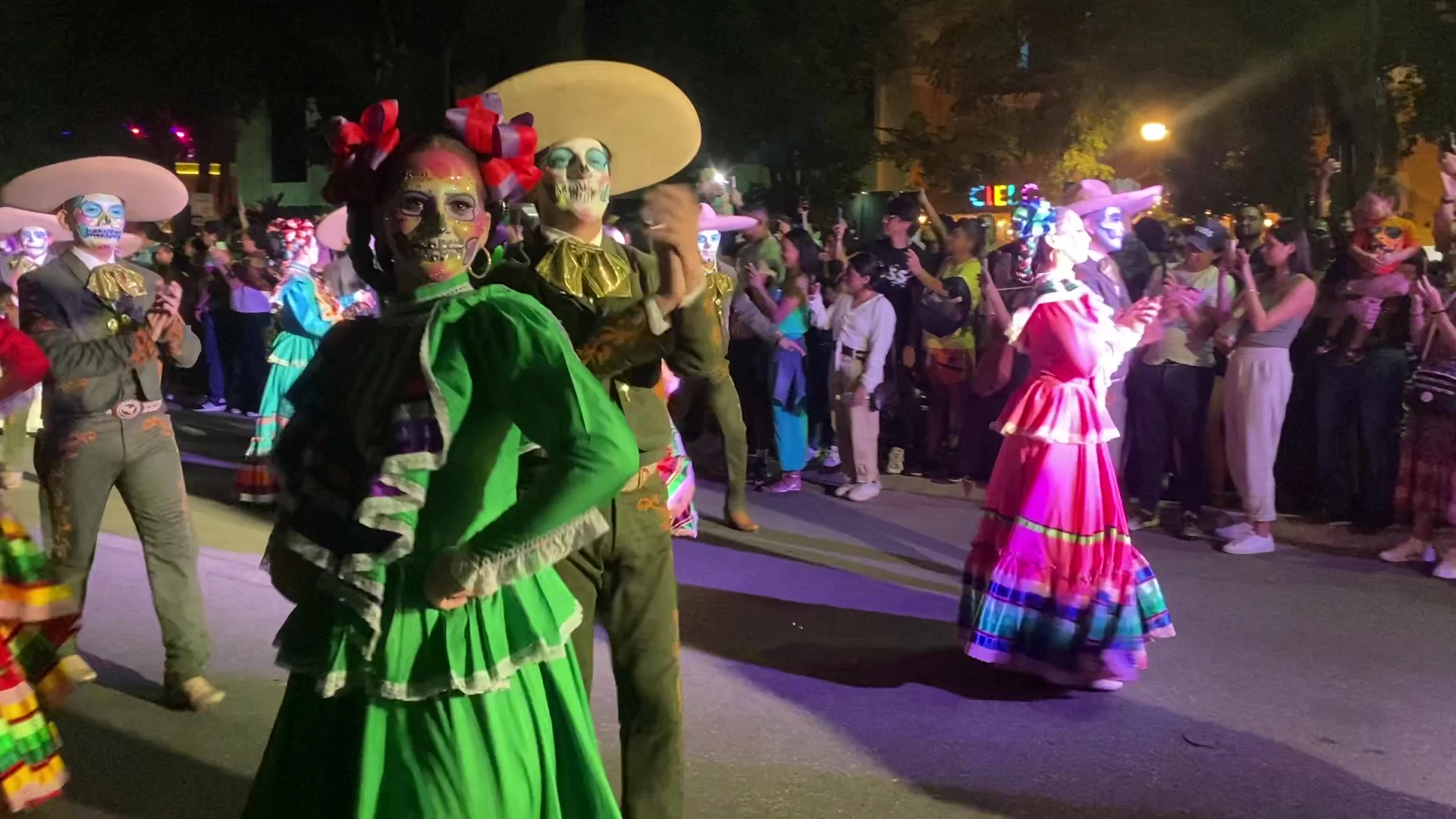
It is called the Desfile de Catrinas, and it tends to be livelier than the Paseo de las Animas. Less religious and more like a carnival. The participants wear flamboyant clothing from different regions of Mexico, and the make-up is more dramatic.

There are also lots of dancers.

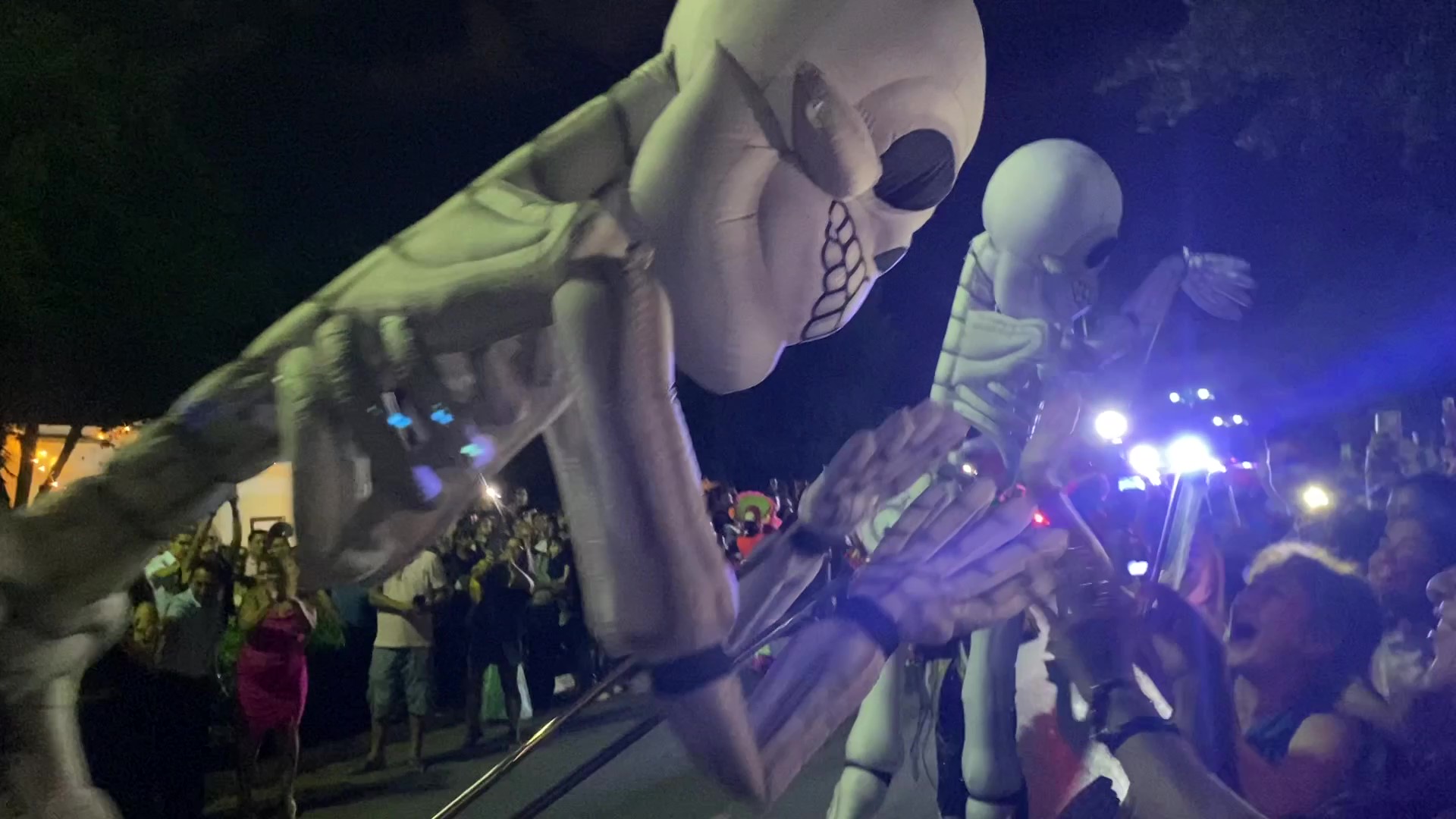
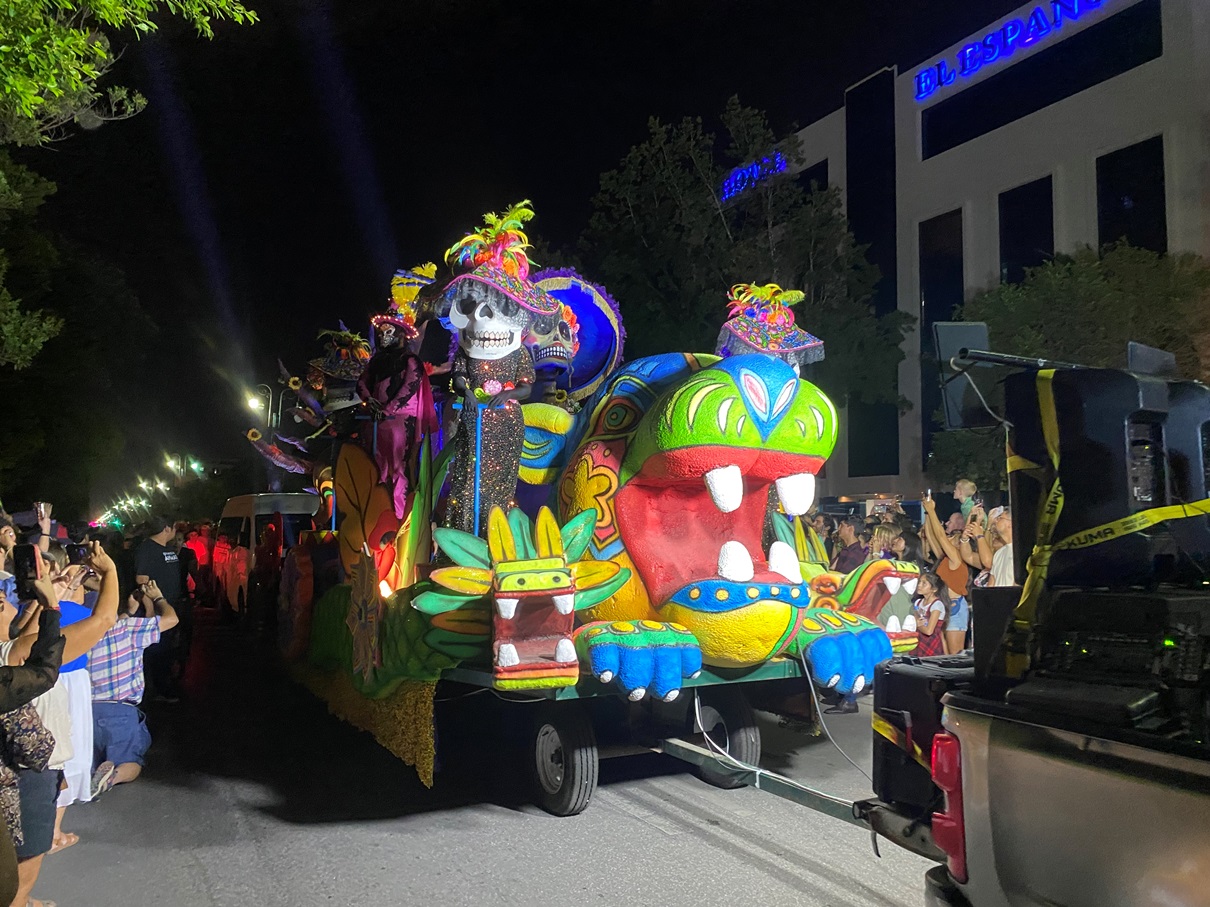
As well as people on the backs of trucks and wearing all kinds of dramatic costumes.

Overall, this event was great, and I got some very good photos and videos to share with you all, but one thing I will say is that I don’t want people to read this and dismiss the Paseo de las Armas. Despite the first night of the festival not having as much going on visually, it was fun to attend and had more of the ‘essence’ of Día de Muertos.
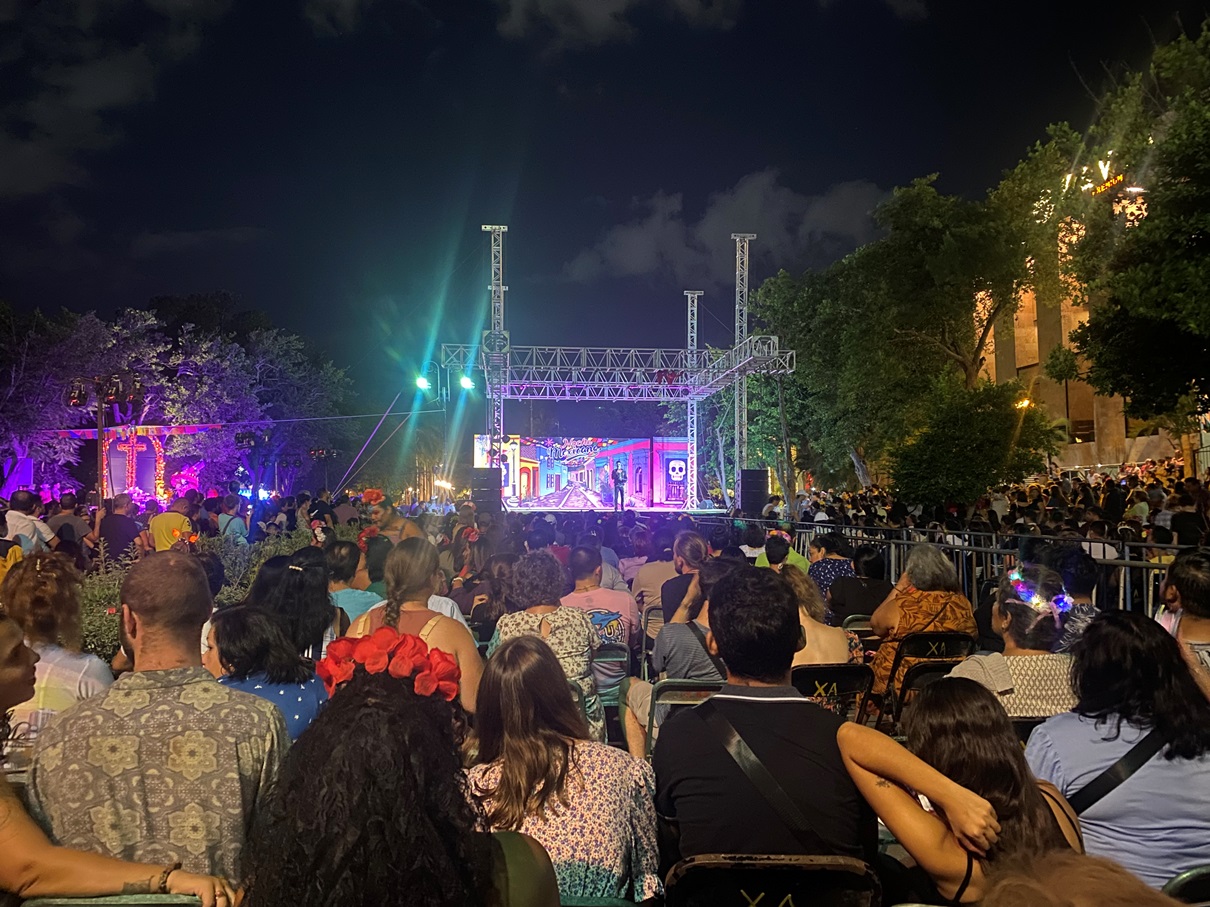
Afterwards, myself and some of the others lingered around Paseo de Montejo for a while. It didn’t quite have the revelry of the previous night but there was a decent range of street food available and a big stage was set up with several acts playing. I tried ‘marquesitas’ for the first time; a street food that is like a crispy pancake filled with Nutella and Gouda cheese. British people don’t mix sweet with savoury, so I was a little dubious about this combo at first, but I figured out it must be popular for a reason and found myself pleasantly surprised. I am happily converted, and it was also nice to find some street food that I can eat as a vegetarian.

I also watched some dancers performing on the stage for a while but didn’t stay quite as long as the previous night, as there were so many people that I couldn’t see it very well. Eventually, I went back to the hostel.

In truth, there wasn’t as much going on the third day of Día de Muertos. There was another market – one that I visited – and some kind of event that involved people honouring their pets but, it was quite far away from where I was staying, so, despite how much I love dogs, I gave it a miss. One thing that had been on my mind, however, is that there were guided tours of the cemetery running every evening that week so I figured this would be the evening to go.
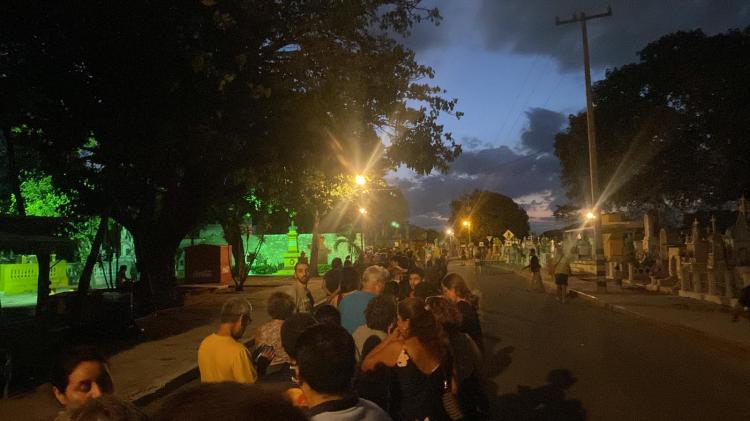
When I arrived, it became clear that I had been far from the only person to have this idea, and the queue was huge. Lucky for me the people who wanted their tour in English turned out to be fewer but we were still a very sizable crowd.
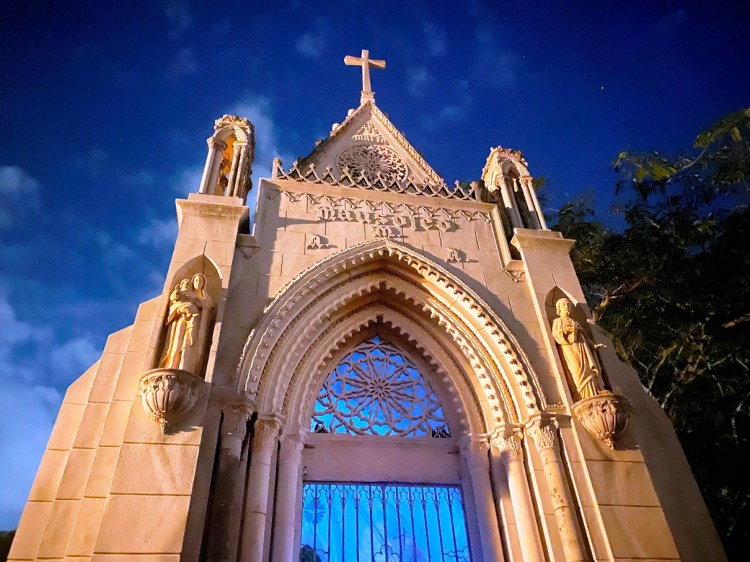
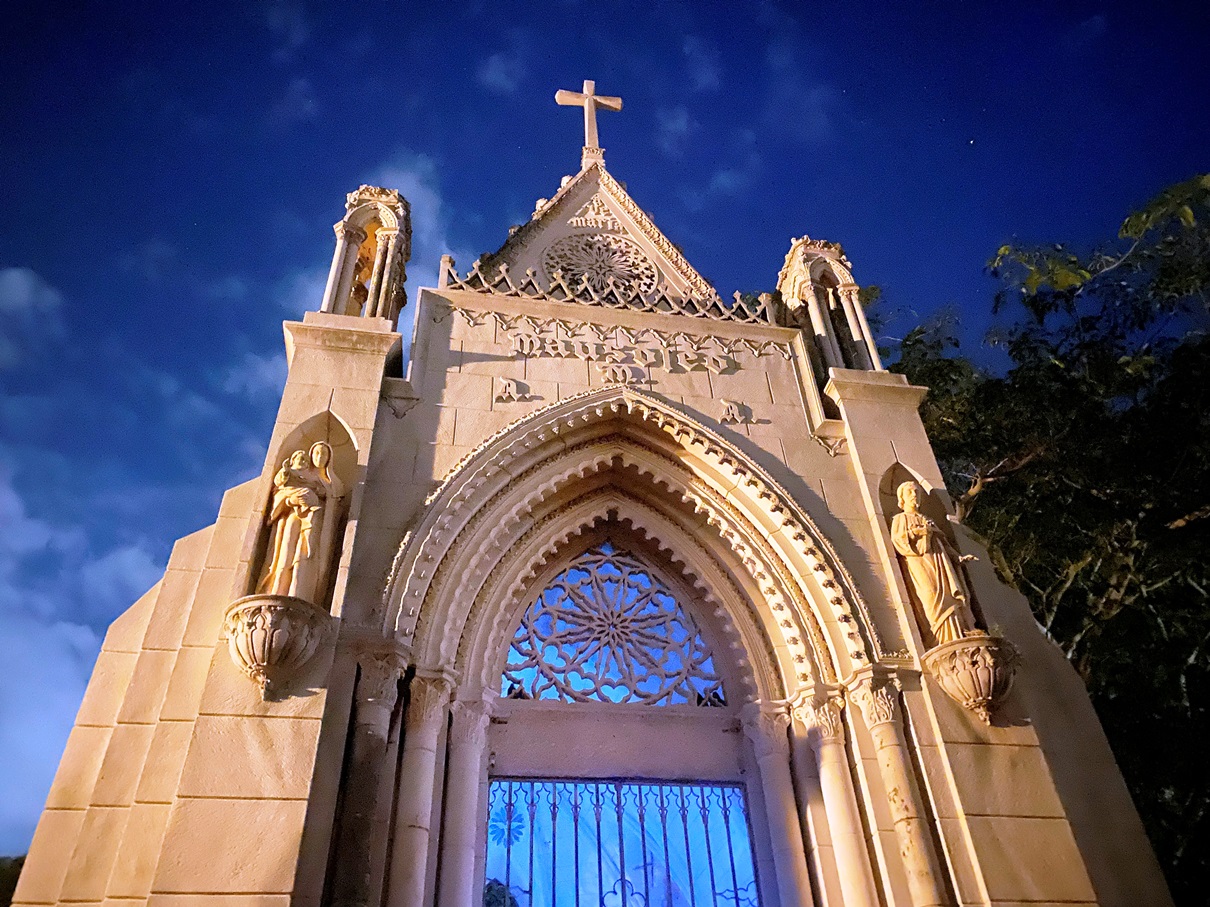
I was expecting the tour to be focussed on Día de Muertos customs but it was mostly about the history of the cemetery. It was still interesting. I was particularly intrigued by how this cemetery – like much of Mérida – combines both pre-Colombian and Hispanic elements (one notable feature being the yellow gates at the main entrance being very Mayan style). We were shown a range of different sections that had been adopted by groups of various identities and social classes since the cemetery was created in 1821. It had everything from grand mausoleums for wealthy families, to a section for Chinese immigrants, and even train workers.

One of the stories that I found the most memorable was that concerning Felipe Carrillo Puerto. Not only was he buried here within a grand monument that was later appropriated by other politicians of Mexico’s socialist party.
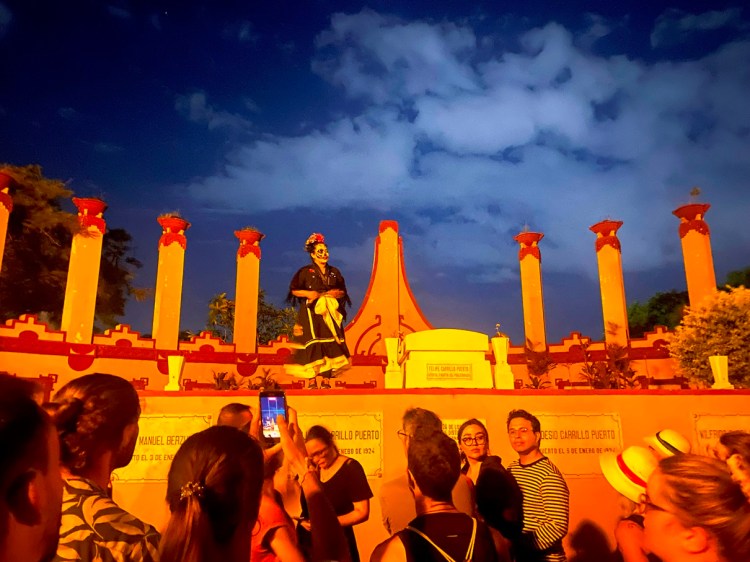
But I was also shown the place where he died. Puerto was a socialist who spent much of his life fighting for land reform and the rights of women and indigenous people. He was himself a mestizo but of a wealthy class and it was common for people of his status in the Yucatan to be brought up by nannies of Mayan heritage. These women – and their children – taught him their language, and customs, and helped to instil within him an empathy for the struggles indigenous people face. His efforts to improve their lives made other people of the upper classes see him as a traitor, and eventually, he was executed by rebels during the Adolfo De la Huerta uprising.

There wasn’t as much going on for my final day. The things that happen towards the end of the Día de Muertos festivities appear to be more of a private affair that is personal to Mexico’s residents. I am sure if I were to wander around the graveyard again on the 2nd of November I would come across all kinds of interesting scenes, but I am not sure if it is fair for me and other gringos to intrude with our cameras. The events that I have observed – and covered in this blog – are the opening festivities, and the city of Mérida did a great job of making it accessible to visitors and making us feel welcome. I don’t want to overstep this generosity.
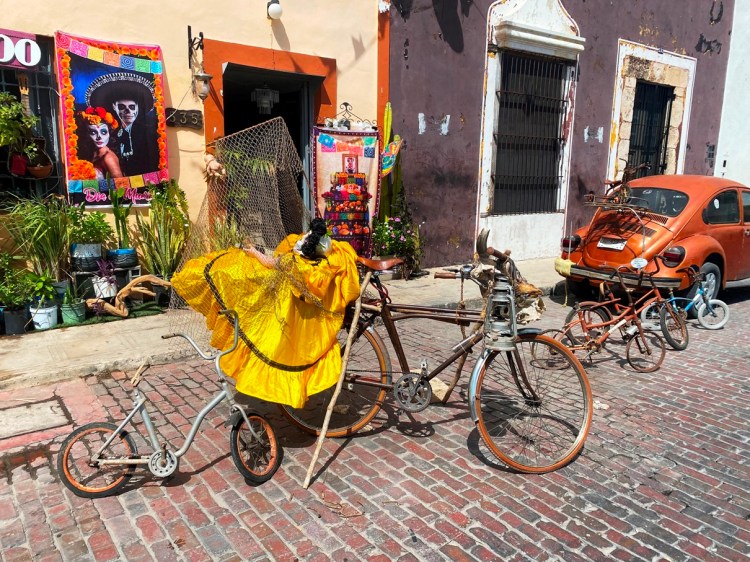
So for my final evening I met up with some of the friends that I had made. Not the backpackers this time, but ones from Mérida. They took me to a ‘catina’ which is a place where Mexicans go to drink beer, unwind and listen to music. It was a great way to finish my time there because I had been to a couple of places recently that claimed to be ‘Irish Pubs’ but they were really just posh bars with table service, restaurant food, and bottled beers at high prices. This place – although having some differences – felt like it had more of the essence of what I would personally call a ‘pub’.

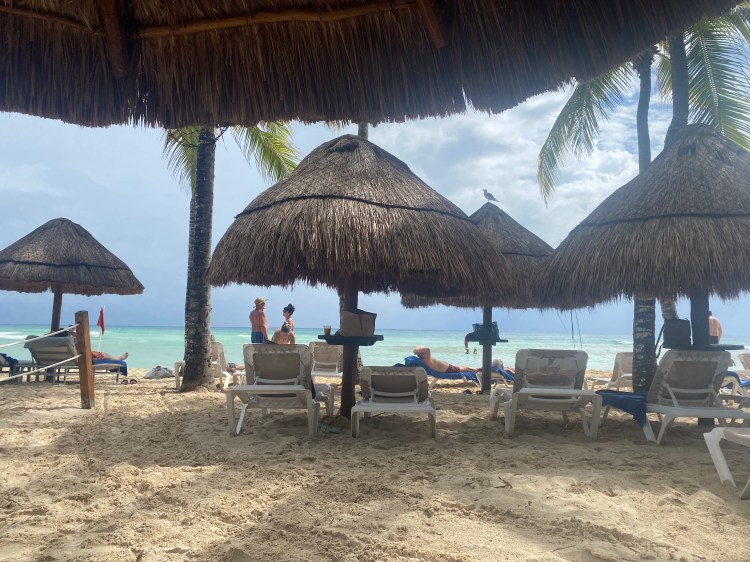
And thus, my journey – one that I started over nine months ago – has come to an end. Tomorrow, I am heading to Playa Del Carmen, where I have treated myself to a fancy resort at the beach for my last two days in Mexico. It is going to feel very strange having all this luxury after living like a backpacker all this time, but I have been lucky enough to have been offered my old job back to me when I return to the UK in two weeks’ time.
After Playa Del Carmen, I will be flying to Santiago in Chile, but this will be mostly to see my friends. Unless something dramatic and unexpected happens, I won’t be blogging about it. I am not home yet but I am no longer adventuring.
For those of you who have followed me during this journey, and are still here; thank you very much. I hope you have enjoyed reading this as much as I enjoyed writing it.
For more photos and videos from Día de Muertos, click here.



 Map by Tim Paul.
















 Tej Turner