
26th – 28th September, 2023
Another week, another series of ruins to explore.

And let’s just face it, lately this blog – besides from a few intervals – has turned into Tej’s History of Mexico Tour, so for those of you who are regular readers; welcome back. And those of you who are new; hello, this next instalment is going to cover my time in the Oaxaca region of Mexico, which was historically the home of the Zapotec people.
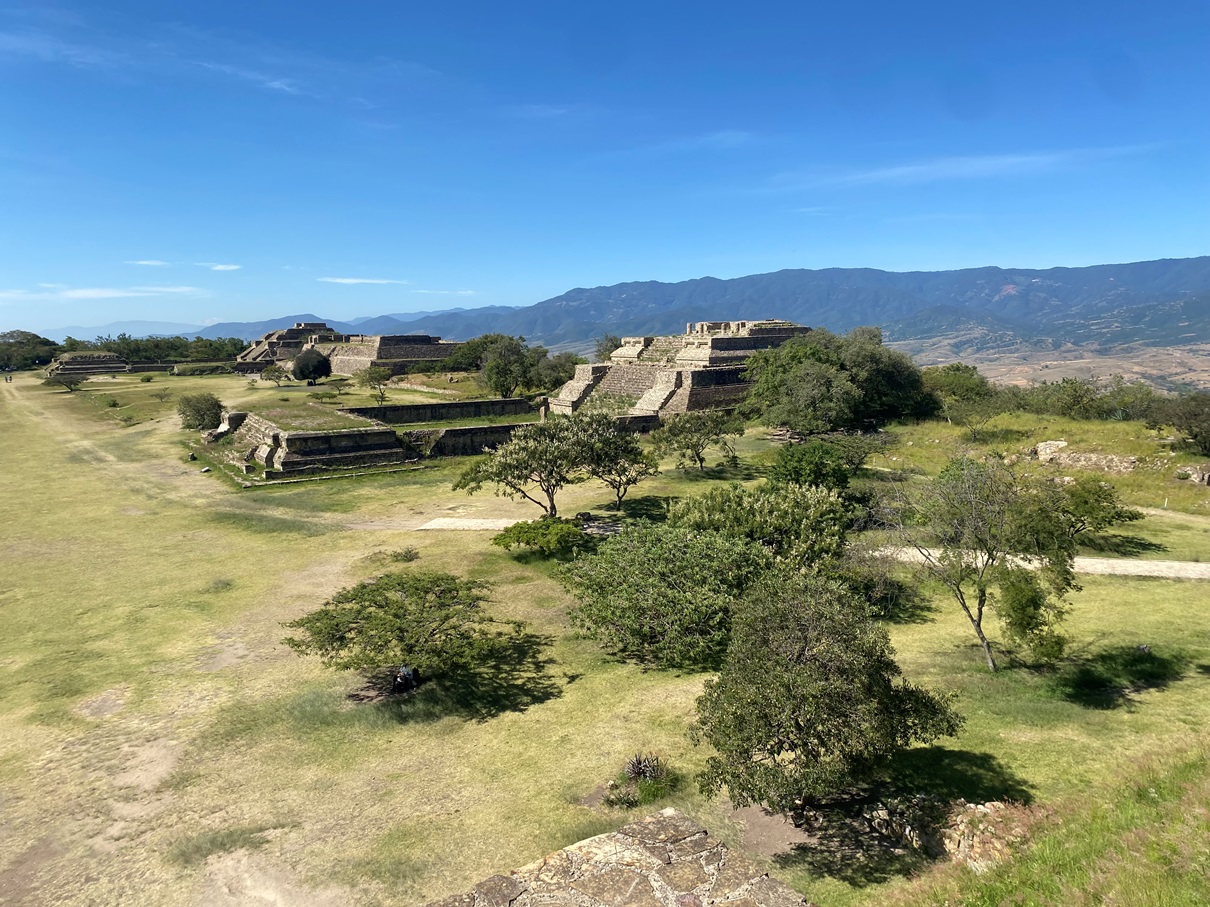
It is both predictable and fitting that I began my time here by visiting Monte Albán. This is one of the oldest known cities in Mesoamerica, and its timeline exists within a unique position; its founding shared an overlap that lasted for several hundreds of years with the decline of the mysterious Olmec civilisation and it then went on to enter a golden alongside likes of Cholula and Teotihuacan.

Its position at the meeting point of three valleys not only makes for some gorgeous views when one visits this place, but perhaps made its rise inevitable. At its height, this city had a population of almost twenty thousand people and it dominated most of the other settlements around it.
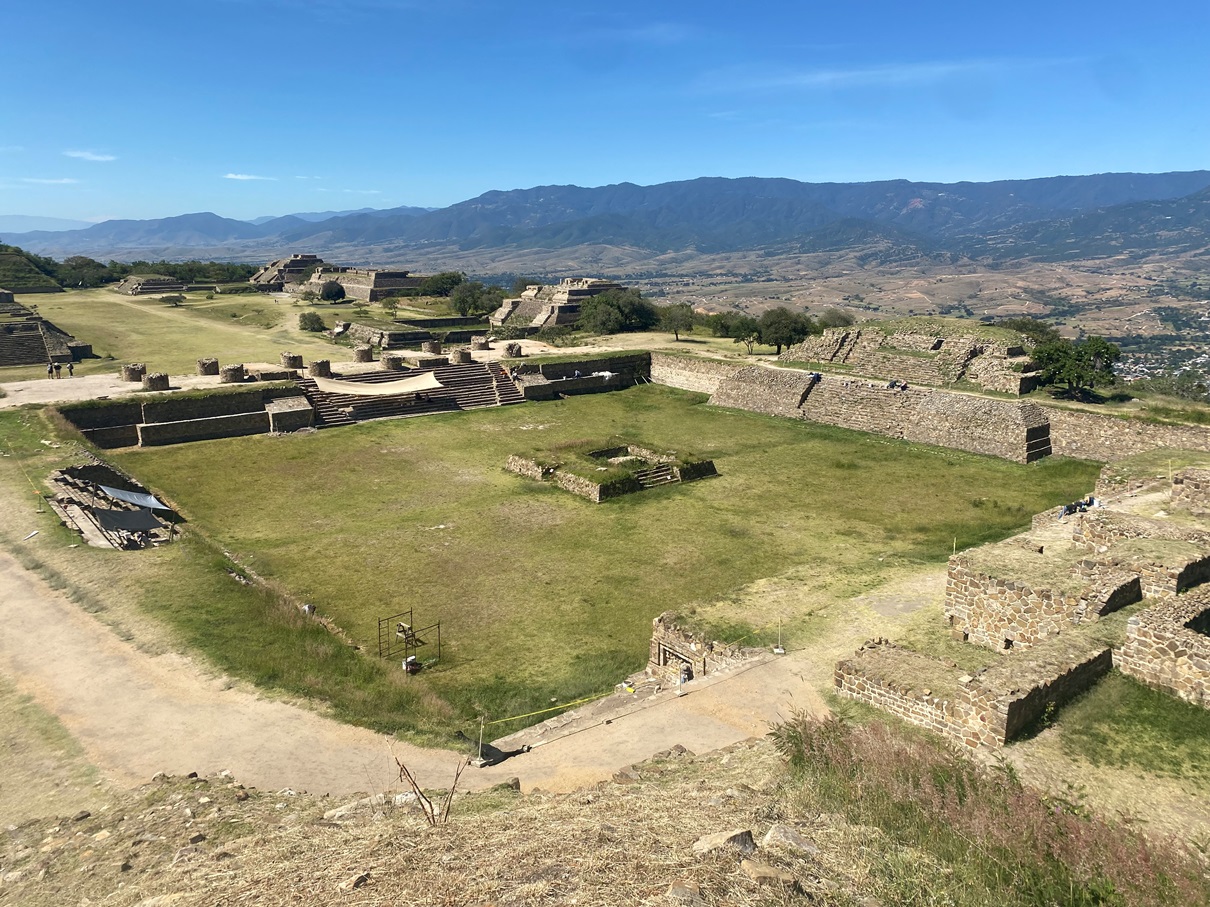
This place has many of the usual fixtures of Mesoamerican cities of the Classical era. Ones that you regular readers will perhaps be familiar with by now, such as pyramids, temples, plazas and palaces. So, on this occasion, I will simply tell you about some things that for me made this place stand out from the others I have seen.

Its carvings. The broad noses and thick lips of the figures depicted in these steles have made archaeologists believe that the artists were influenced by the Olmecs. Many of these steles also feature depictions of genital mutilation, a practice that the Mayans were also believed to have occasionally engaged in.

Like most Mesoamerican cities this place has a court for the famous ball game, but interestingly this civilisation is believed to have not included human sacrifice as an element.

Within the main plaza, two buildings are believed to have been astronomical observations. One of them also features carvings on its façade which tells the story of their conquests over the other cities in the area.

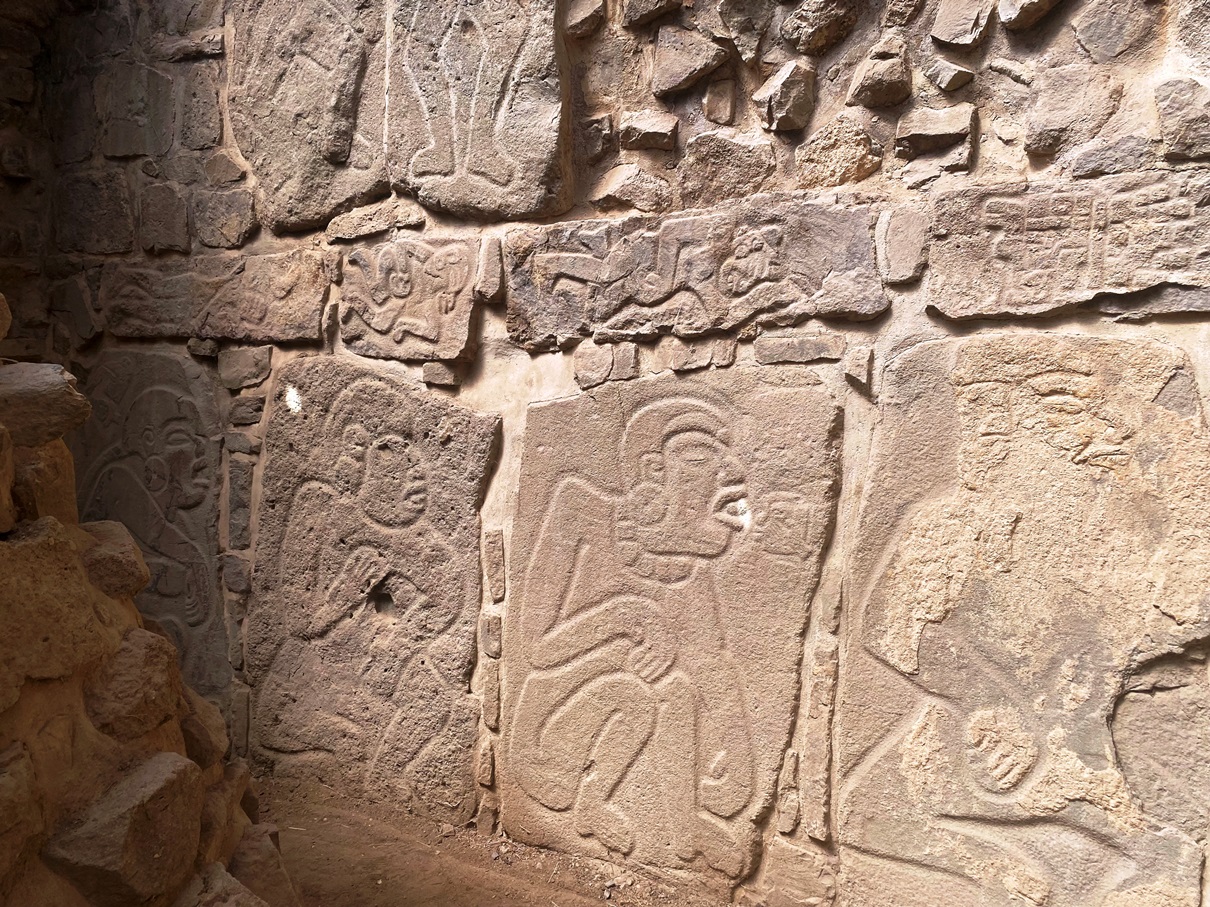
There is also this inner chamber which has more Olmec-inspired carvings on its walls. It has been dated to the temple’s earlier years (500-200 BCE), making it one of the earliest parts of this complex. Originally it was called the Chamber of the Dancers as it was believed to depict indigenous ceremonies, but now it is thought more likely that these are representations of rulers from nearby cities who were captured and sacrificed during the years of Monte Albán’s expansion.
My second day in this area was spent exploring Oaxaca De Juarez, the charming colonial city that was my base during my time here. My hostel was within the historic centre so I was surrounded by lots of colonial architecture and close to many attractions. This place is home to not just one but two cathedrals. Firstly, the Catedral Metropolitana de Nuestra Señora de la Asunción.

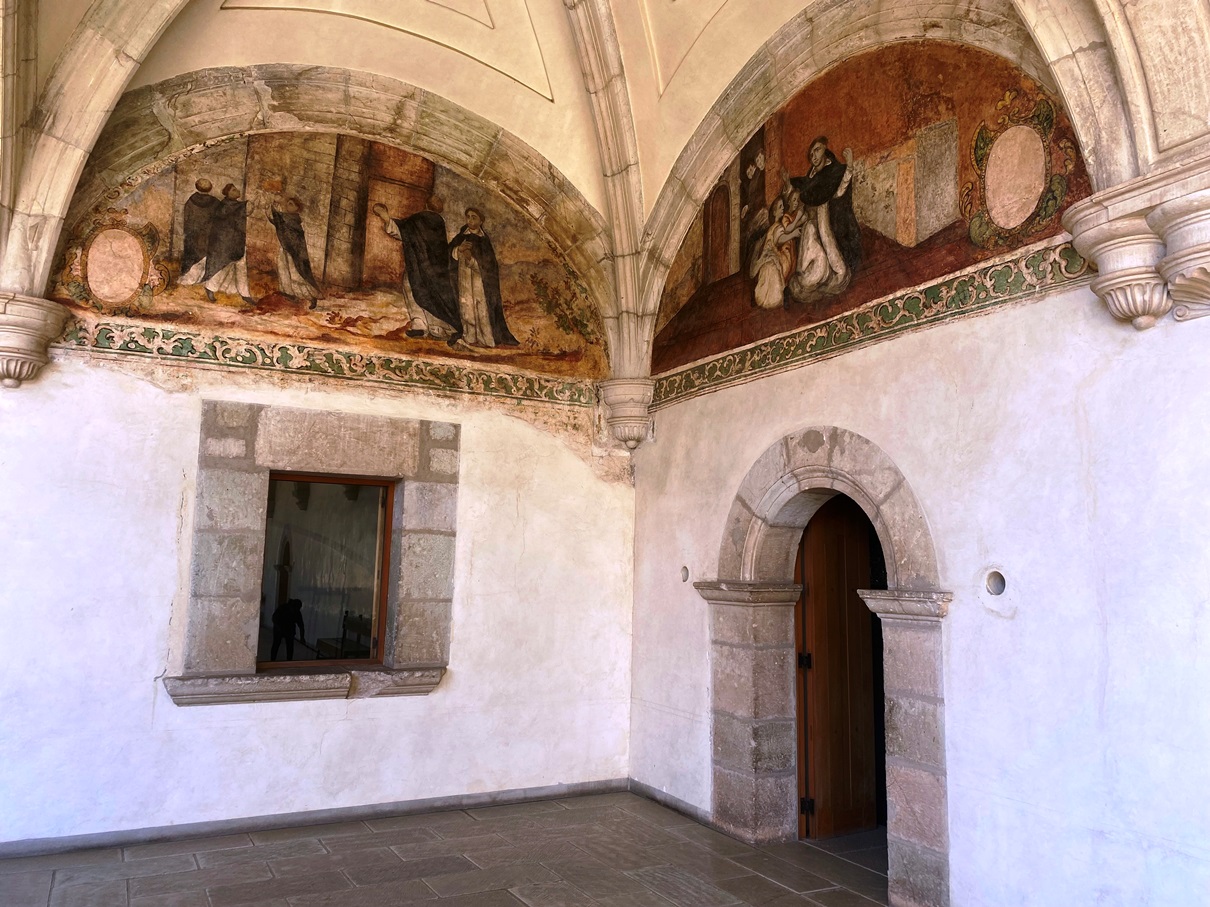
And the Templo de Santo Domingo de Guzmán, which also happens to be adjacent to the former Convent of Santo Domingo.

This is not only an amazing building in itself – with a columnated courtyard and original murals– but also home to an extensive museum concerning the history of this area.
There is the usual collection of pre and post-colonial displays here, but perhaps its most notable exhibition is its collection from ‘Tomb 7’; a famous discovery made in 1932, when a pair of archaeologists unearthed a tomb filled with over six hundred treasures.
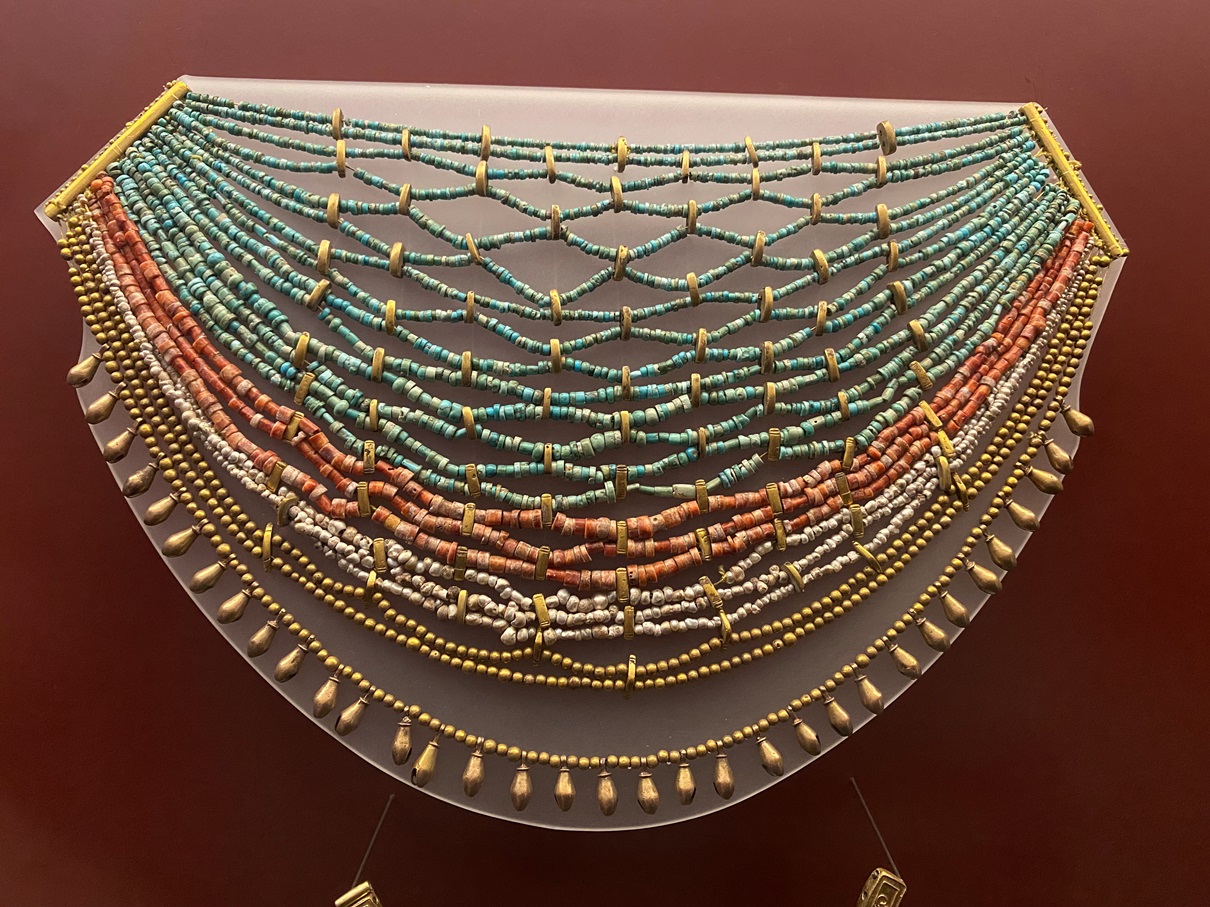
The tomb itself was Zapotec and dated from the Classical period but most of its contents were dated from hundreds of years later; meaning that the later Mixtec people who populated this area appropriated it.
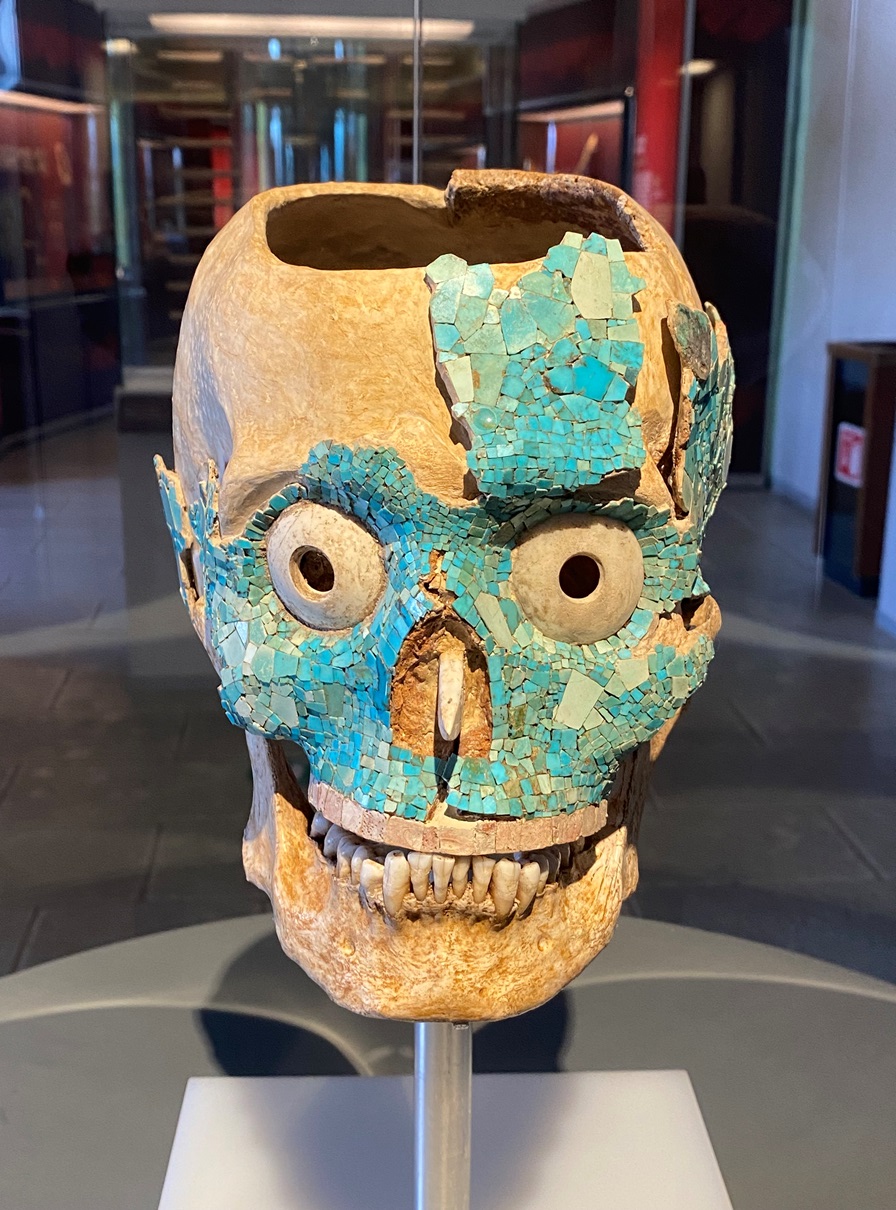
There are some truly amazing things in this collection, including this human skull decorated with turquoise. It is believed to have been a ritual object and representation of Mictlantecuhtli; the Aztec god of the underworld.

Also jaw-droppingly impressive is the collection of animal bones covered in intricate engravings. Most of them contain the foundational history of the Mixtec dynasties and folklore.
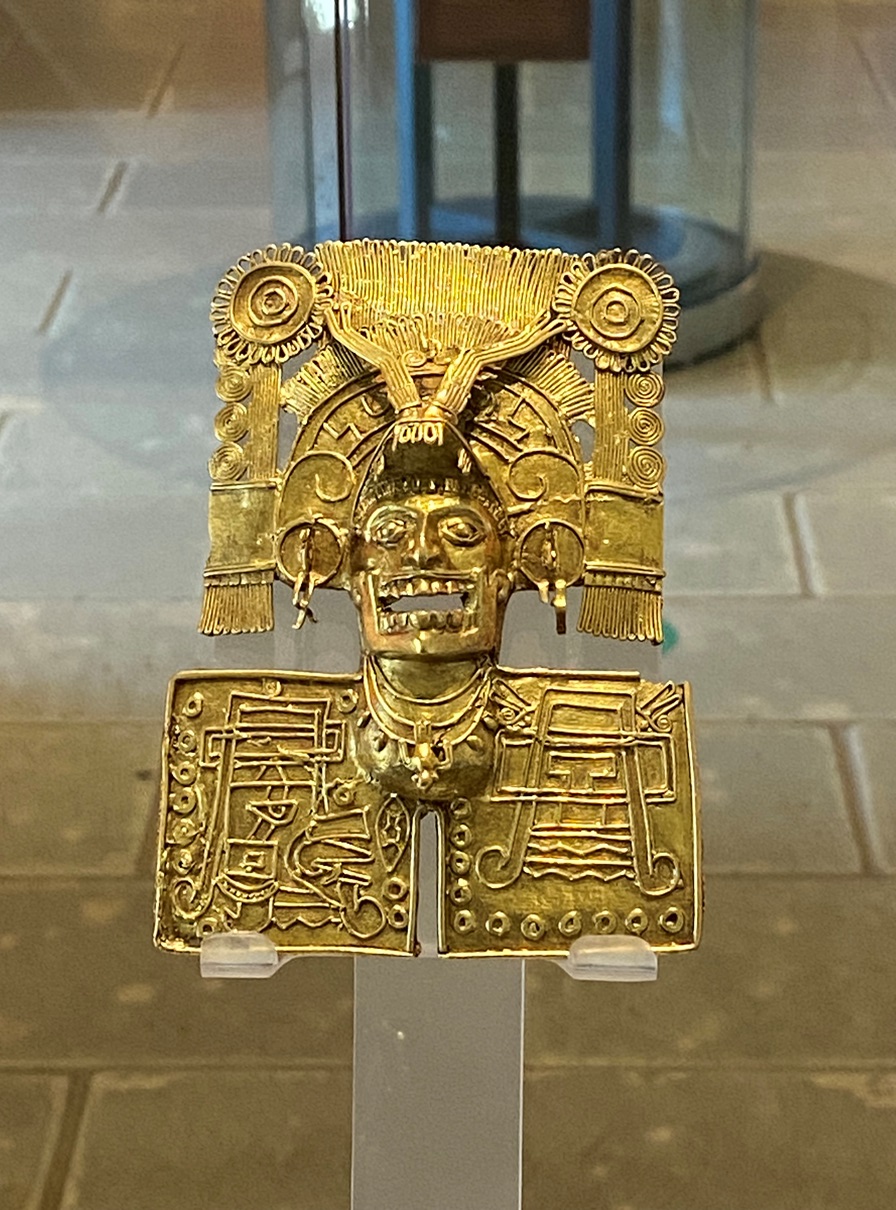
And this piece of metalwork that depicts someone who was part of the ruling class and very likely a shaman.

My final day of historical exploration in the Oaxaca area started with catching a bus to Mitla.
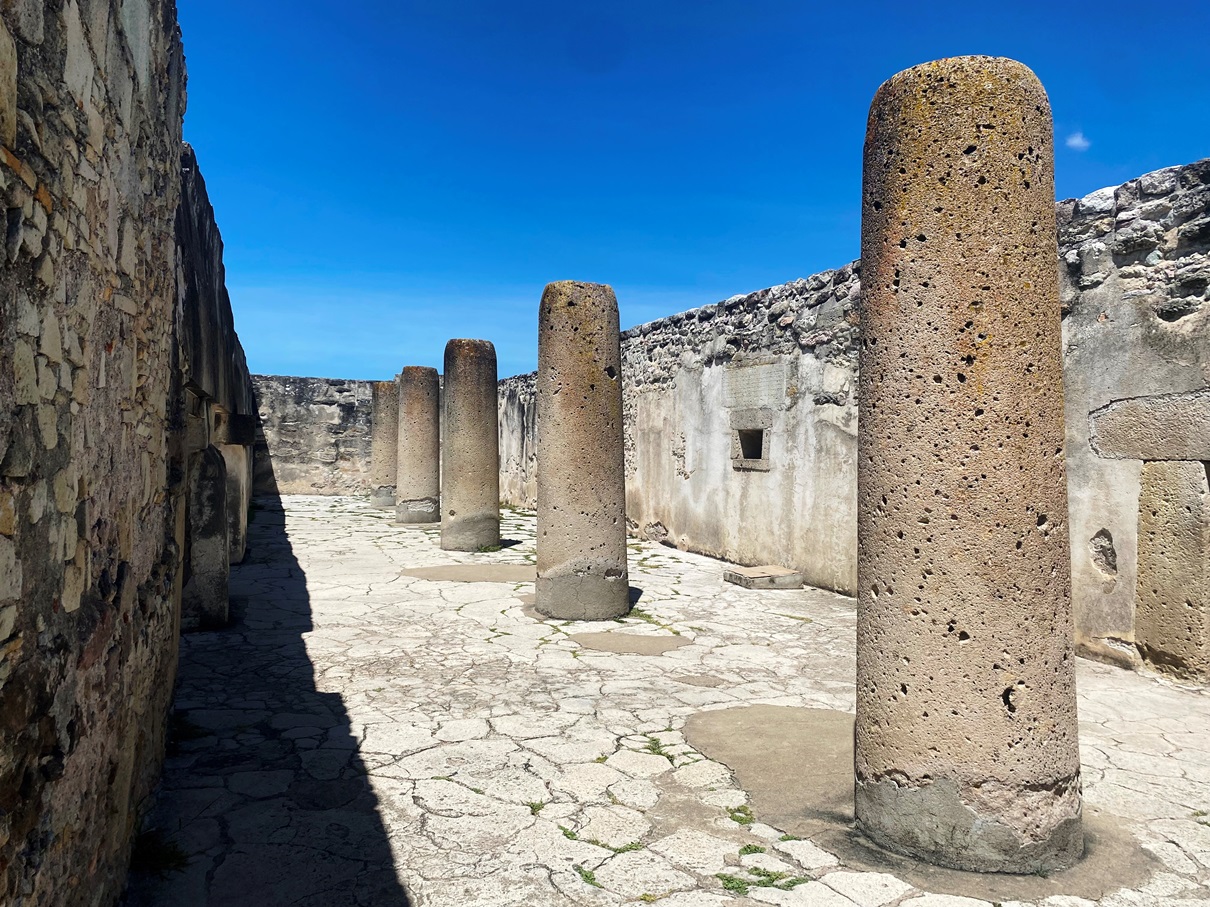
This was originally a satellite settlement contemporary with Monte Albán but it rose into prominence after Monte Albán fell into decline, and became the new religious centre of the Zapotecs. Its name means ‘the place of rest’, and it was believed that people who were buried here would become ‘cloud people’ who acted as intermediaries between humans and the gods.
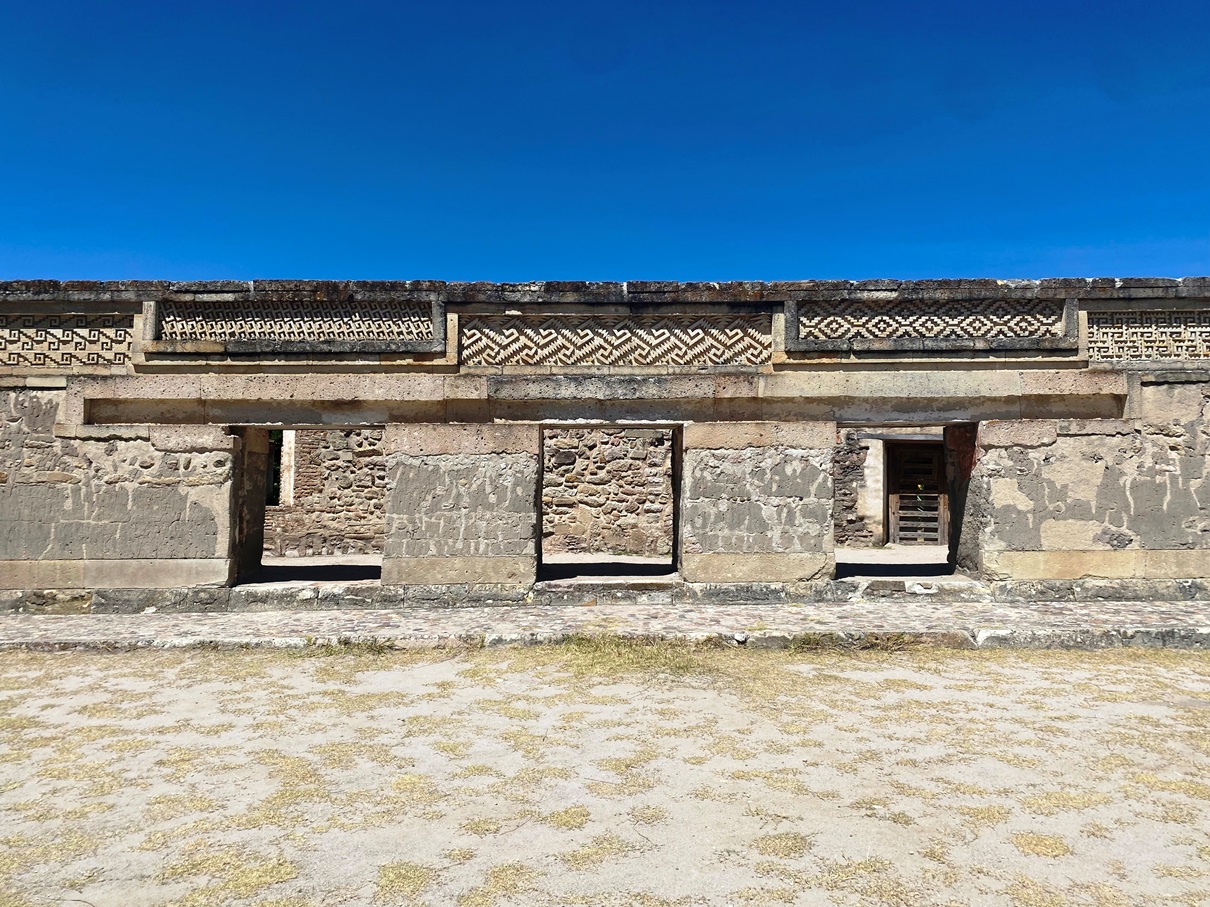
People still live here to this day, and there is a new town surrounding what remains of the ruins. Its nucleus is the Church of San Pablo which is built on top of one of the original plazas.

The architectural style here is somewhat of an anomaly and a mixture of both Zapotec and Mixtec styles. The most notable stylistic feature of this place is the friezes with geometric patterns.

I had read online that one of the highlights of this place is that you can enter a couple of the tombs which have original murals, but unfortunately they were closed on the day that I visited without any explanation. I am not sure if this is a permanent change or not.
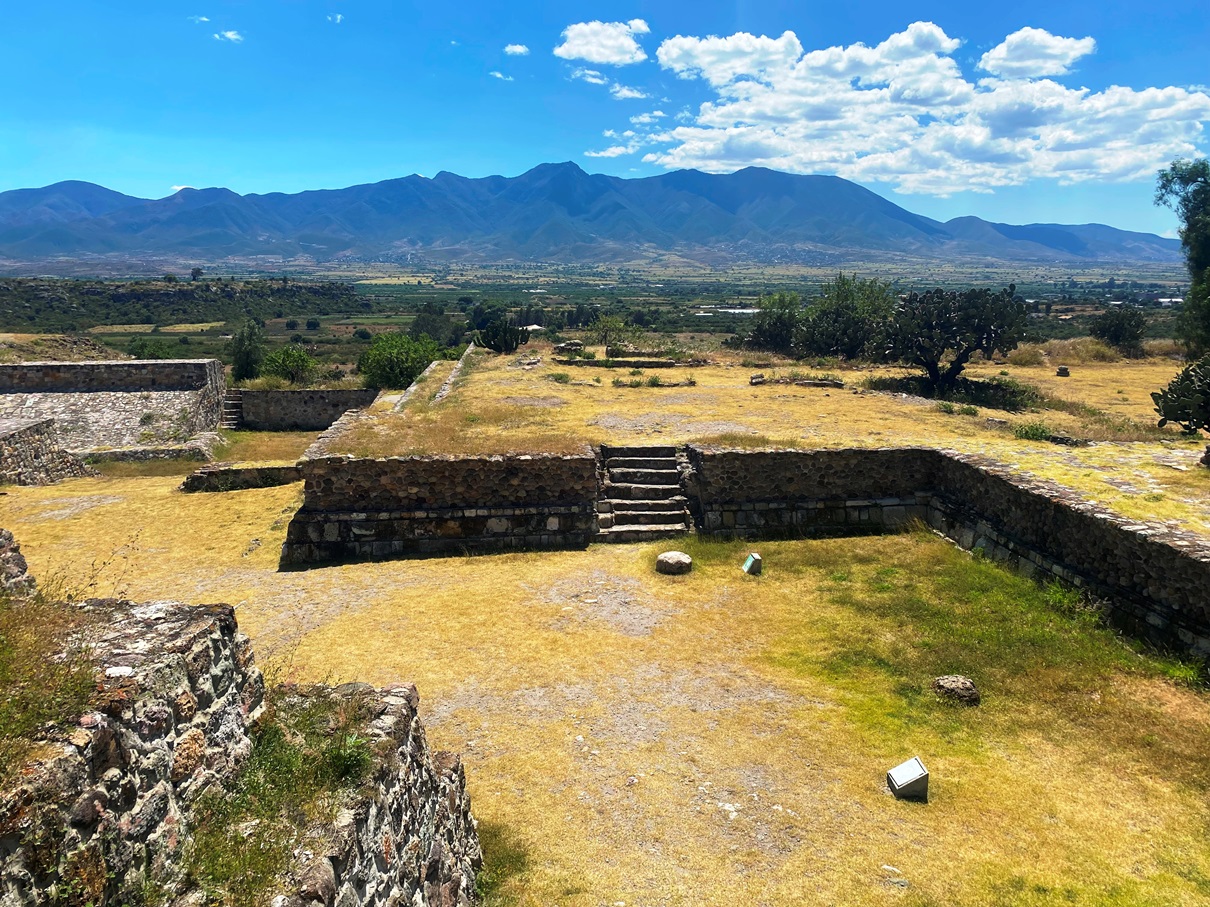
After Mitla, I then went to visit another place called Yagul. This was not part of my original plan that day but I was inspired when I noticed that the bus drove past it that morning. I had heard of this place in the travel guides as a day trip one can make from Oaxaca de Juarez but none of them mentioned just how close to Mitla it was and how easy it is to see both on the same day.
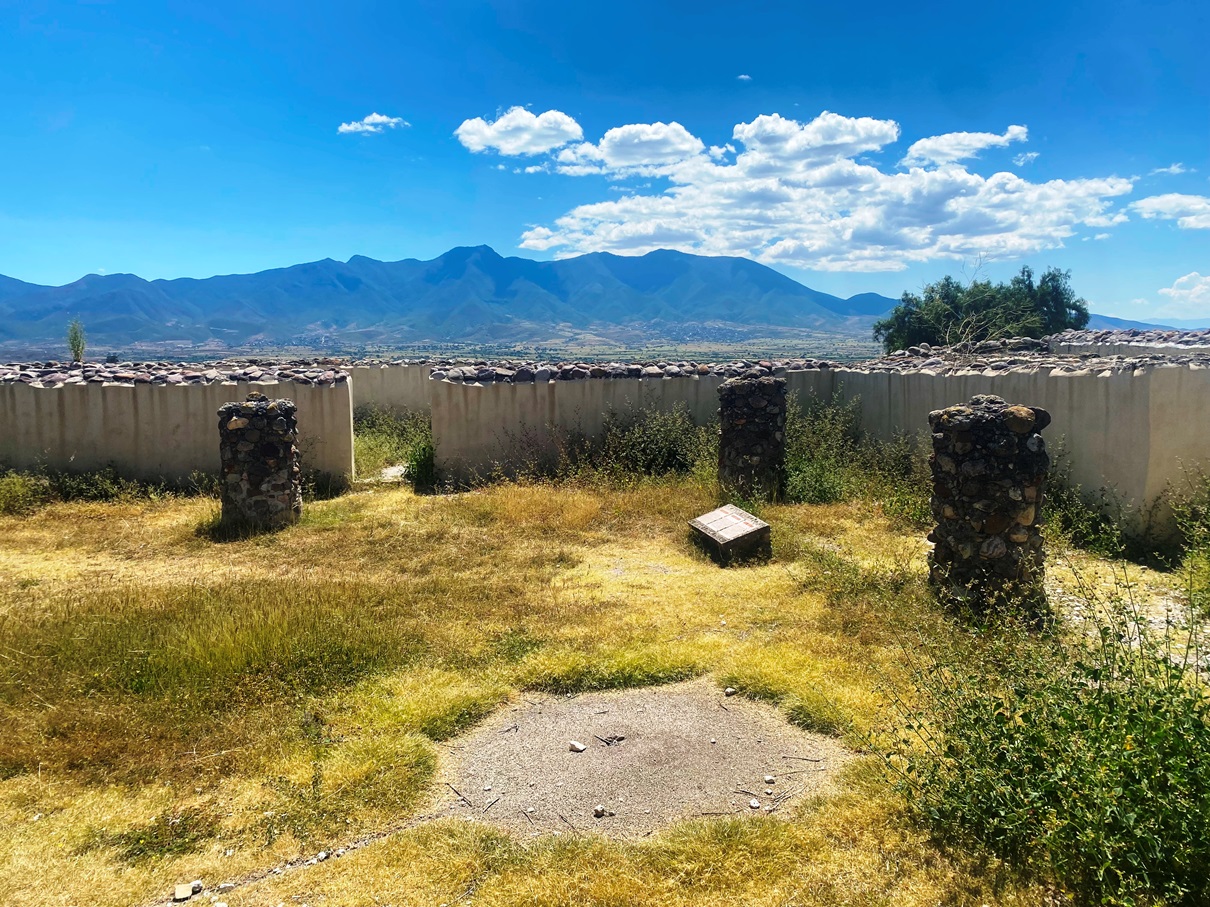
I guess one of the reasons this place isn’t as visited as Mitla is that the public buses do not take you all the way there but rather drop you off at a junction from which you have to walk a couple of kilometres under the hot sun. I didn’t mind as it was relatively flat – until the last few hundred meters at least – and there were some lovely views of the local mountains and farmlands.

I was the only visitor that day; something that somewhat bemused me when I saw how impressive this place was.

Yagul is yet another city-state that fell under the influence of Monte Albán, but they have found evidence that is likely much older, and even – like Milta – had a brief golden age after Monte Albán’s decline.

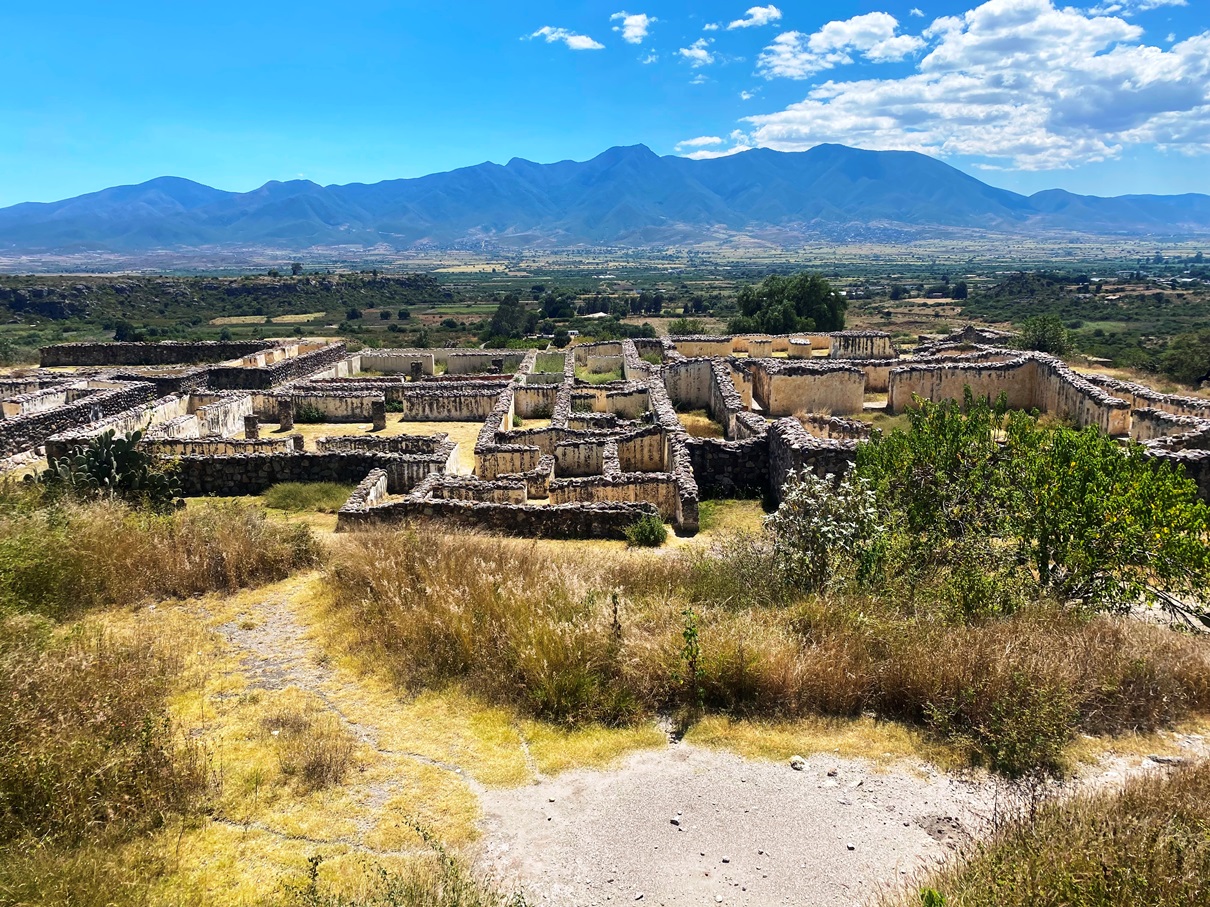
But I guess one of the reasons that it isn’t as visited is that this golden age only lasted for a couple of hundred years and it eventually fell into ruin. Mitla is more important historically, and it is also more unique in its style. Still, found it very strange that I shared Mitla with dozens of other visitors that day yet had this place entirely to myself. If you are like me and prefer older places Yagul is a much more rewarding site. It has it all. Plazas, pyramids, temples, and palaces. Even ball courts.

And it even – unlike Mitla – has a tomb that visitors are allowed to enter.

As well as a nearby hill that you can climb for even more amazing views.

So, if there is one thing I can take away from my visit to the Oaxaca region – apart from the little summary of some of its history I just gave you it is this; Yagul is underappreciated. More people should visit it.
For more photos from my time in the Oaxaca region, click here.
 Tej Turner