13th – 15th August, 2024
Those of you who follow my blog regularly will be aware that I have previously only used this platform to give accounts of long adventures to far-flung parts of the world, so some of you might be a little surprised to see my name suddenly appear in your inbox after months of silence, and with a blog that has ‘Scotland’ – of all places – in the title.
I have decided to try something a little different. Scotland is an amazing place, and although this excursion is somewhat shorter, I will travel in the same fashion as I do when backpacking abroad. I have all of my gear with me, including my tent, stove, and water filtration system, along with other things, and I will be mostly relying upon public transport. I also have a list of amazing places I want to see and I am excited to share them with you.
This is a new experiment for me and I may even – if these entries prove popular enough – start blogging more of my shorter trips. But don’t worry; this does not mean I am going to try and regale you with stories about me going for pub-crawl weekends in Stroud. Only when it is interesting.

I started this journey by catching the bus up to Wick. I had just spent the last five days at a convention in Glasgow and its proximity to somewhere I had always wanted to see helped to inspire me to go on this trip. My foremost destination is Orkney but whilst plotting my route I noticed that another area along the way also seemed to have lots of interesting places so added it to my itinerary.

The Caithness peninsula. One of Scotland’s northernmost regions. A remote, wind-swept place with rugged coastlines jutting out into the North Sea and untamed moorland.

I arrived at Wick River Campsite in the early afternoon. The people there were very helpful and keen to give me advice about the area and answer any questions I had. When I mentioned that I was mostly interested in seeing the area’s historic sites they informed me about the Caithness Broch Project and gave me a leaflet.
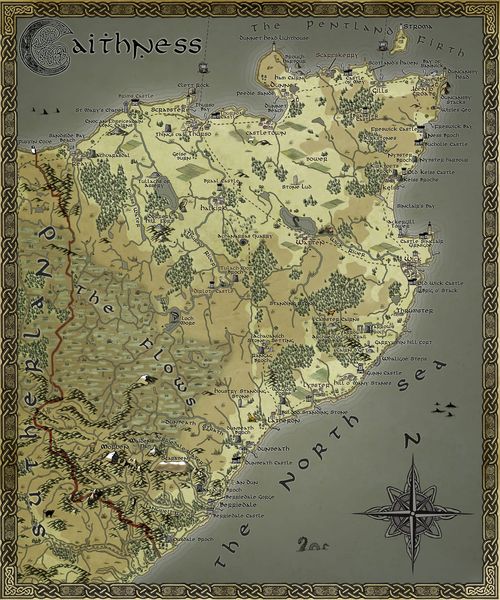
This is a local charity that is working to help promote the history and heritage of this region, which often gets overlooked by visitors to Scotland despite its wealth of outstanding scenery and sites of historical interest. One of its goals is to recreate an Iron Age Broch to serve as an archaeological experiment and tourist attraction. The leaflet has an interpretative map which can also be found online by clicking here.

Shortly after setting up my tent, I realised I needed to go to the supermarket, which is on the other side of the river. I was advised to walk along a short trail and cross a footbridge. This route was not only shorter but also a more picturesque option. In my opinion, this campsite is in the best part of Wick. It is a sleepy town. The imposing nineteenth-century bridge is the heart of the settlement and some of the architecture around it is quite charming, but the seafront area isn’t much to write home about.

I rose early the next morning to begin my long day of sightseeing. The public transport in this area is quite irregular so it was important to ensure I did not miss the first bus heading south that morning or I would risk having to wait three hours later for the next and waste half the day. I headed to a village called Mid Clyth which was just a short walk away from my first site that day. The Hill O’ Many Stanes.

I was glad I got to see it early in the morning, as I got to explore it whilst hearing the end of the dawn chorus and the light gave the place an ethereal quality.
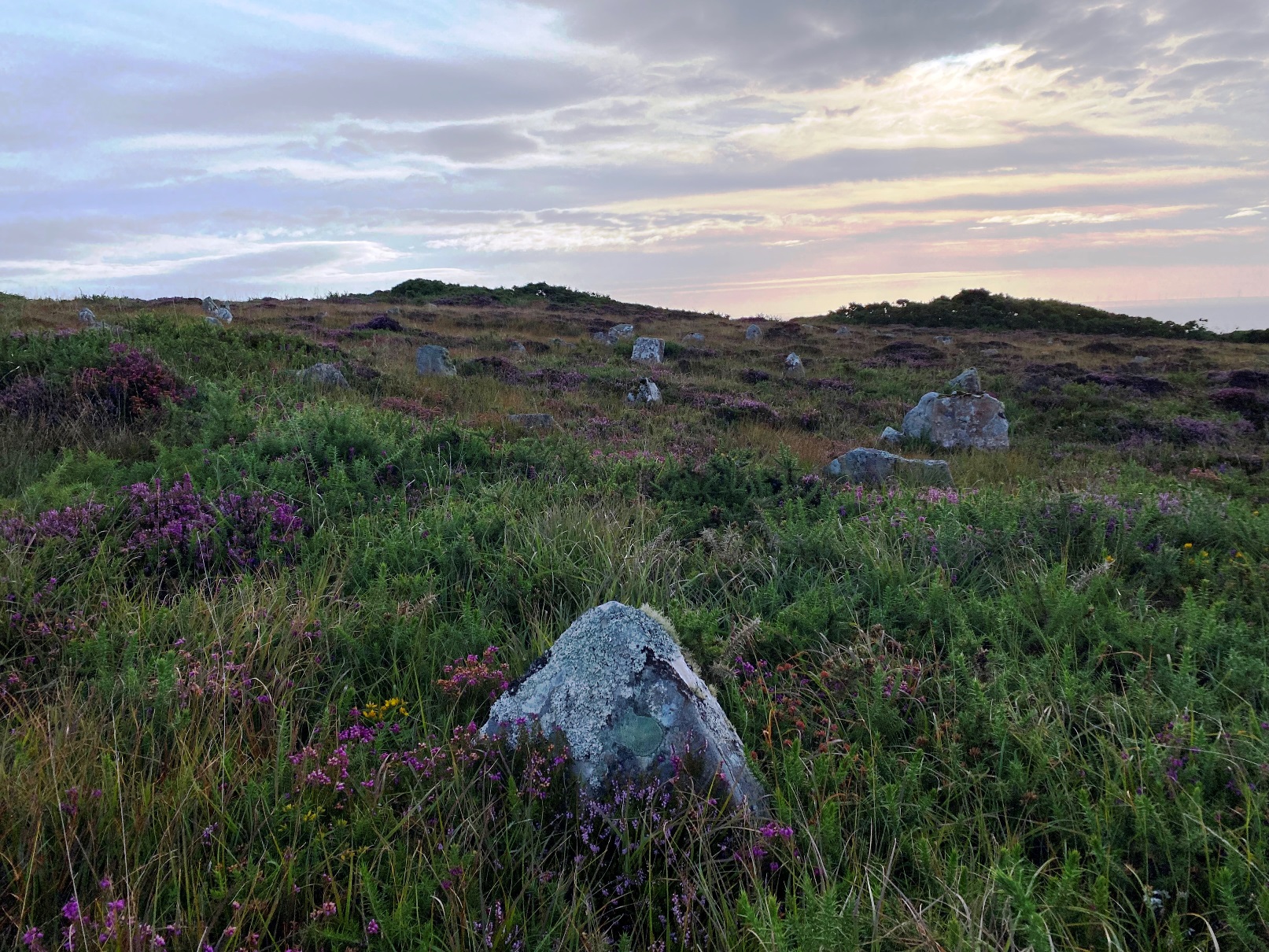
This place is believed to be around 5000 years old and is somewhat unique. The only site that it is really comparable to is Carnac in France (which has a similar layout but is made out of stones that are much larger). There are over two hundred of them and they are placed in around twenty-two rows. Archaeologists believe this to be connected by some form of ancestor worship or astronomical observatory (which accounts for most neolithic ceremonial sites, so I think that it is just their way of saying they don’t really know).
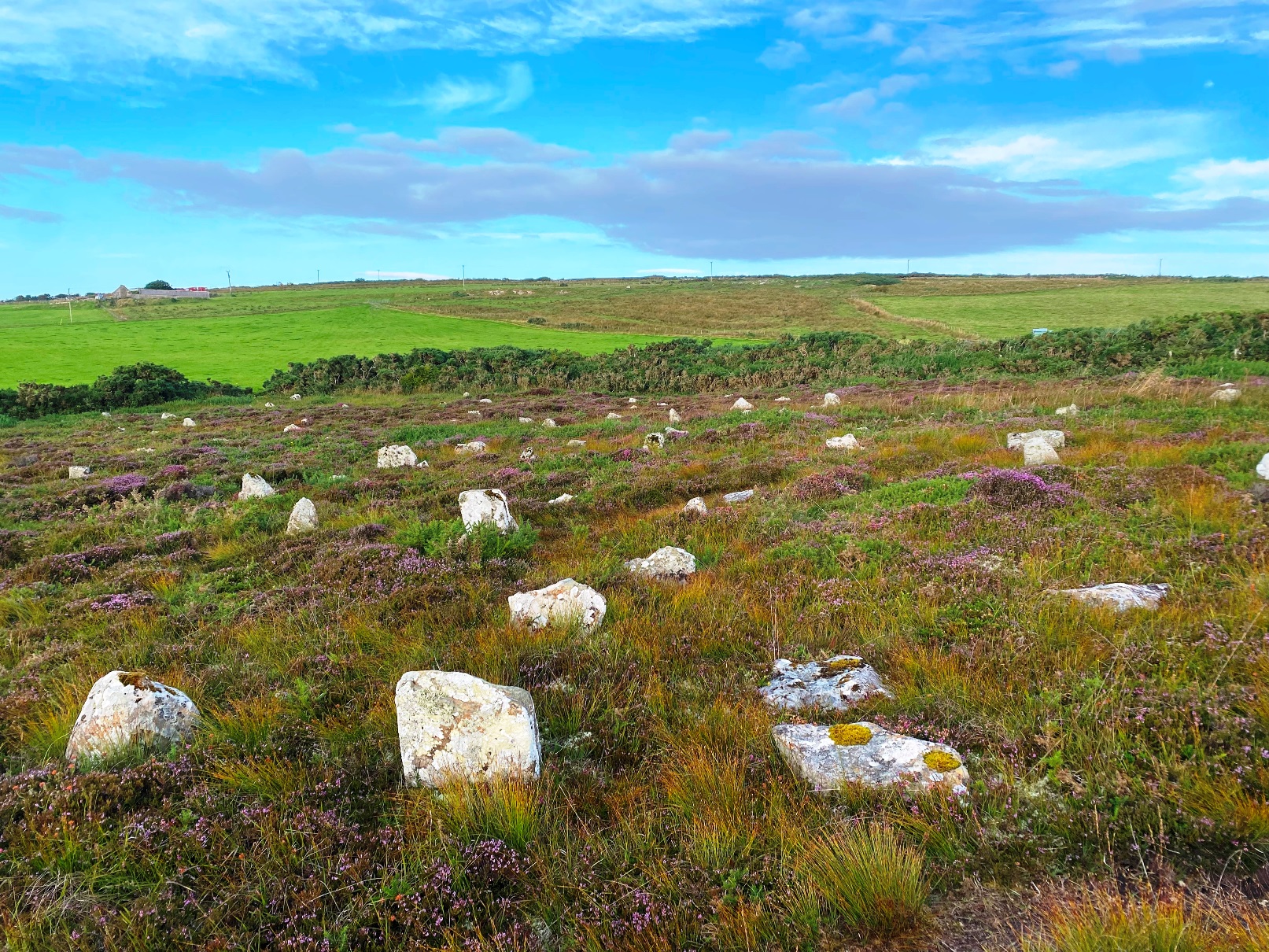
I haven’t mentioned this yet but Caithness is home to many wind farms. I saw hundreds of them just off of the shore when I got off the bus and there were many more just in land. I usually dislike the presence of industrial sites so close to historical ones but there is something elegant about wind turbines so I didn’t mind. Their presence was not jarring for me at all but if anything added to the ambience seamlessly.

After spending some time at the Hill O’ Many Stanes I then began my hike to Camster. This involved passing through one of the wind farms.

Besides that, the terrain was mostly moorland, which at this time of the year was dotted with colourful flowers and very beautiful.
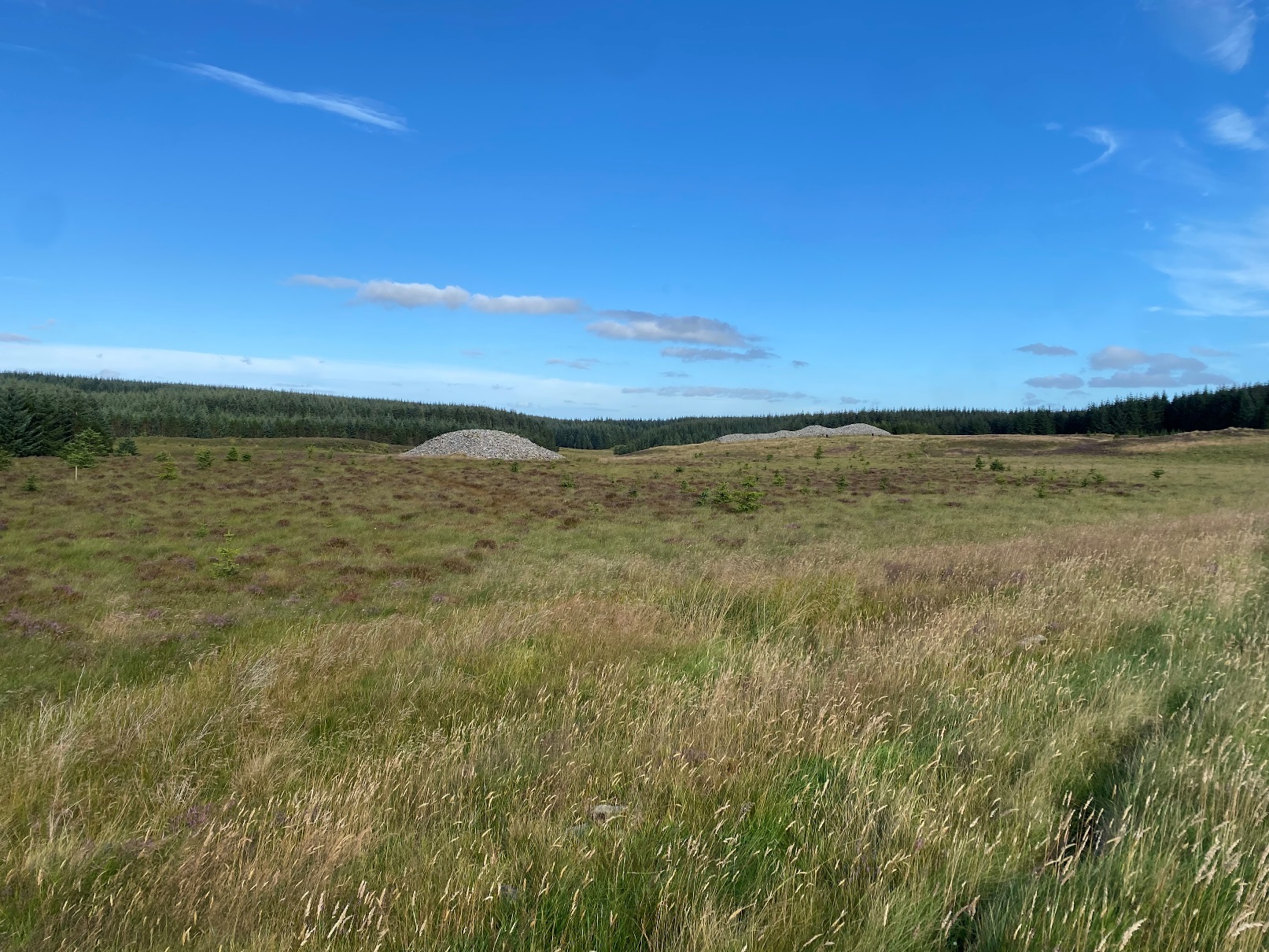
I reached Camster Cairns just under a couple of hours later, and at the time of my arrival, it was completely empty.

These were my first glimpses of chambered cairns in this area, but it is a style that I would become accustomed to in the following days. The opening passages are long and usually very narrow. For the first one I had to get on my hands and knees and it did test my claustrophobia a little.

All three of the tombs one could enter at this site had a similar layout; two megaliths at the end of the passageway, through which one passes to enter a spherical – surprisingly spacious – chamber with another three megaliths.

The chamber that is in the lone mound was the most rewarding. It was the most intact – still having its original ceiling – and after climbing inside I sat within the chamber, closed my eyes and drifted off for a while, losing sense of time. I emerged sometime later and walked over to the others who were all clustered together in a group.

There were a couple of other sites I wanted to see that day in a place called Whaligoe, but I still wasn’t quite sure how I was going to reach them. This place is quite remote. There is a one-track road but it is mostly used for commercial logging. There were no direct footpath paths to my next destination, and some of the locals the warned me against trying to cut across the moors because a lot of them were boggy. Luckily another pair of visitors showed up – one of whom was an archaeologist – and they offered to give me a lift to Latheron.
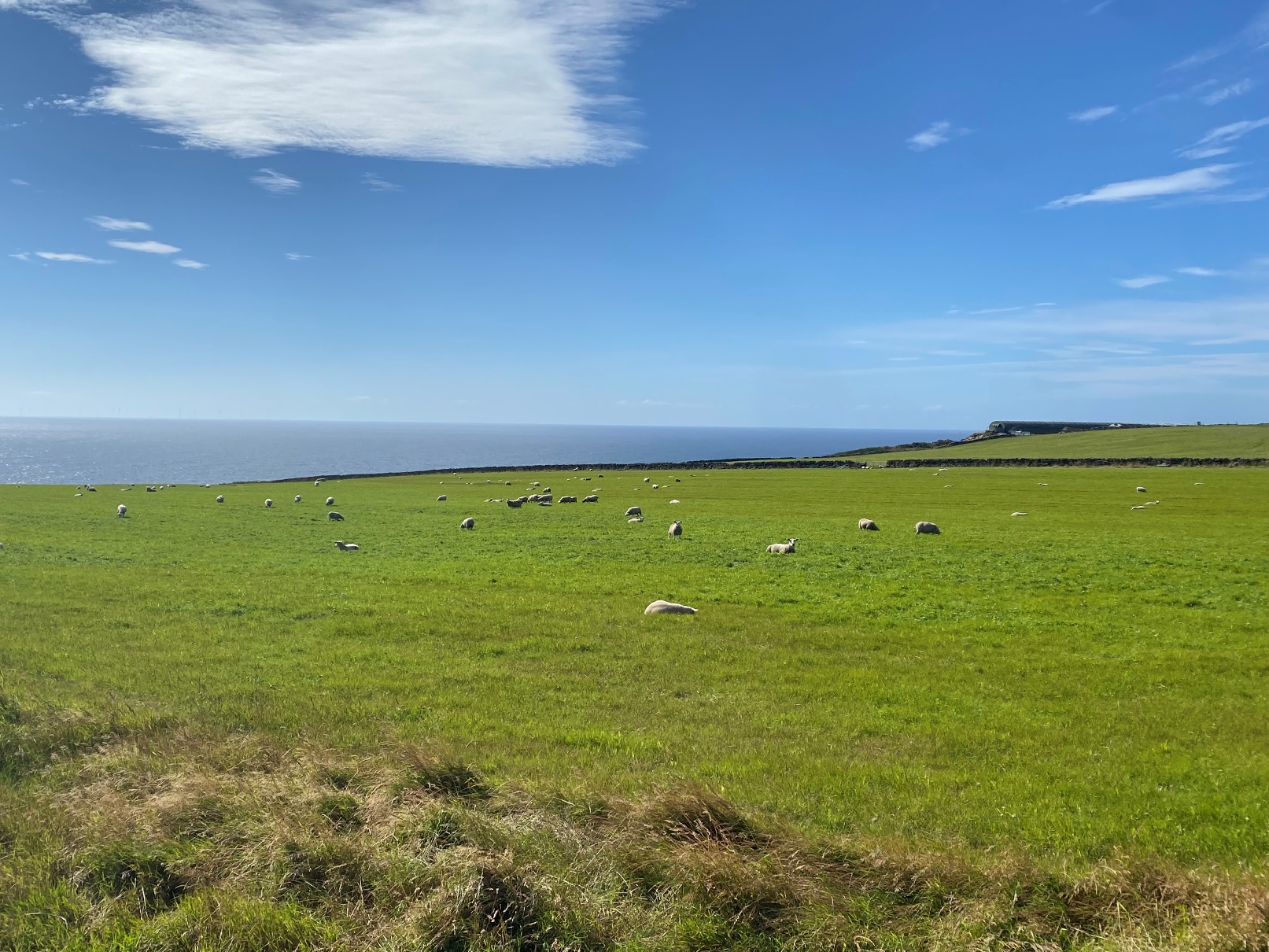
This was still a bit away from where I wanted to go but it was a little closer and – more importantly – had more passing traffic. I started walking. It was only a couple of hours away but I stuck my thumb out to some of the cars that passed by and eventually, a Swiss woman picked me up and saved me an hour of my life.

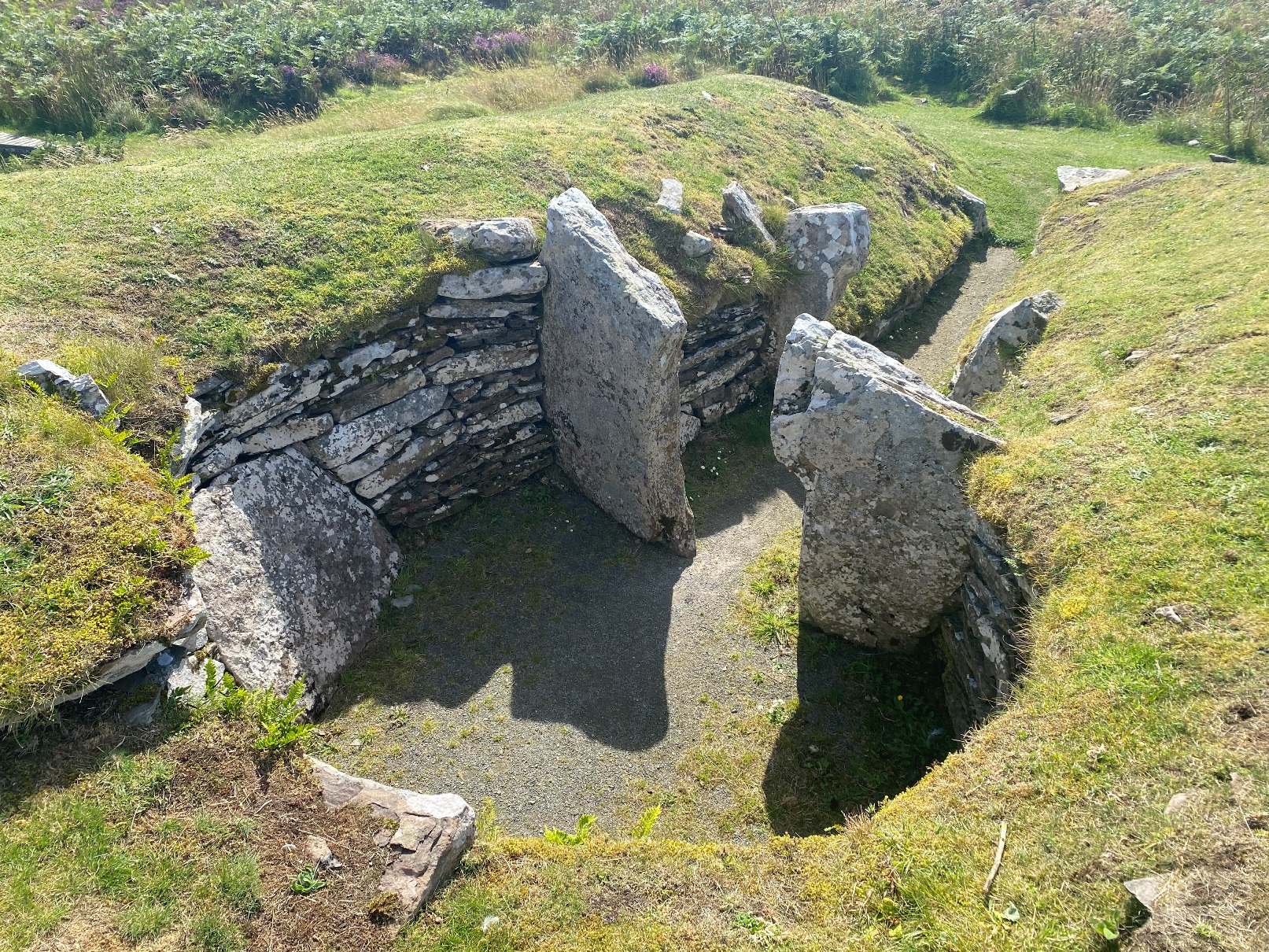
When I reached Whaligoe, my first point of call was to another burial cairn called Cairn O’ Get. This one was not as well preserved as the two I had seen earlier that day, as it was missing its roof, but this gave me an opportunity to see this style of chambered from above.
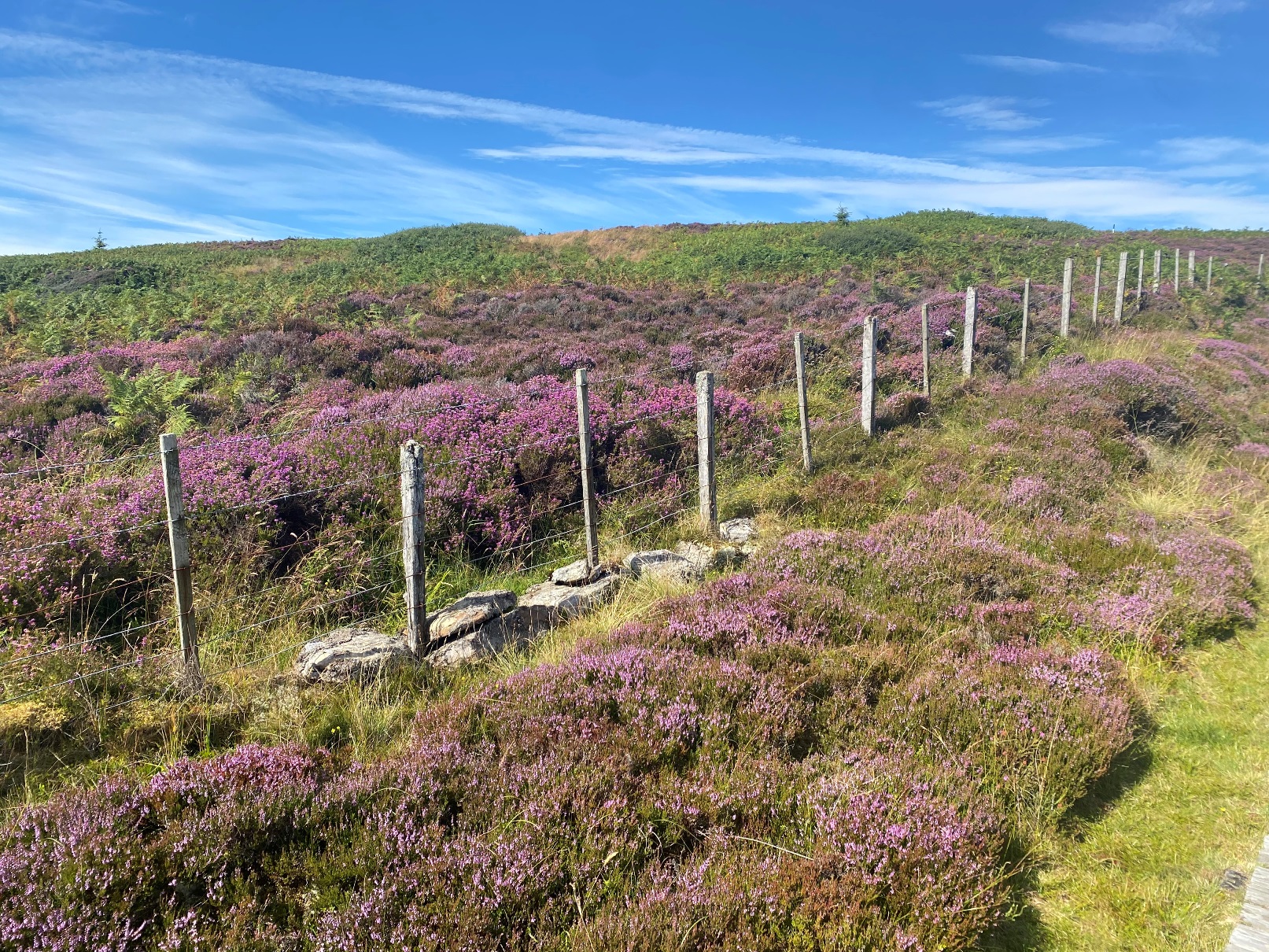
The walk to Cairn O’ Get was something that also made the visit worth it as it passed through more of this area’s scenic moorland. This stretch of it was particularly eye-catching and almost dreamlike with its bright colours.
And another reason to visit Cairn O’ Get is that it is just a stone’s throw away from my final spot for the day; the Whaligoe Steps.
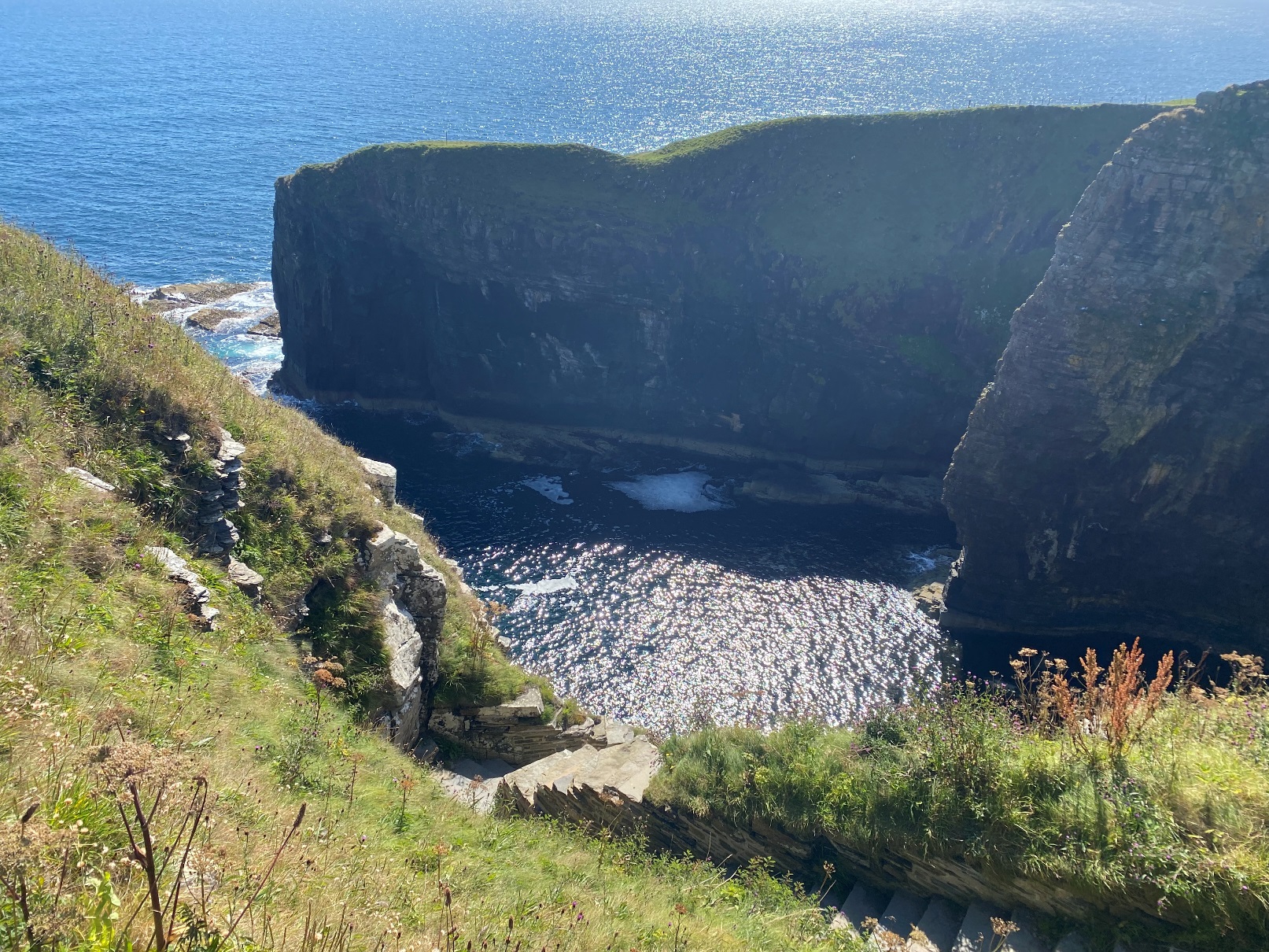
This is a place that could be easily missed – as it is not signposted – but it is certainly worth a stop if one is passing by the area. The climb is not too exhausting, and I honestly can’t think of many places in the world where one can be rewarded with such fine views with such little effort.

There are ruins of an old building at the bottom, as well as some old machinery, and this piqued my interest so I did some research when I got back to the campsite. Apparently, these steps were originally built so that local fisherwomen to haul up creels of herring to sell at the markets in Wick.

After my day of sightseeing, I caught the bus back to Wick and prepared to move on the next day. As I was packing my bags the following morning one of the other campers offered to give me a lift to the ferry terminal as he was driving in that direction anyway and I had helped him figure out how to pitch his tent when he first arrived two days ago. This saved me a lot of hassle with having to hop between different buses so I was very thankful. I arrived at Scrabster a few hours early so I claimed a table at a café and spent the time drinking tea and writing this blog.
For more photos from my time in Caithness, click here.
 Tej Turner