30th September – 1st October, 2023
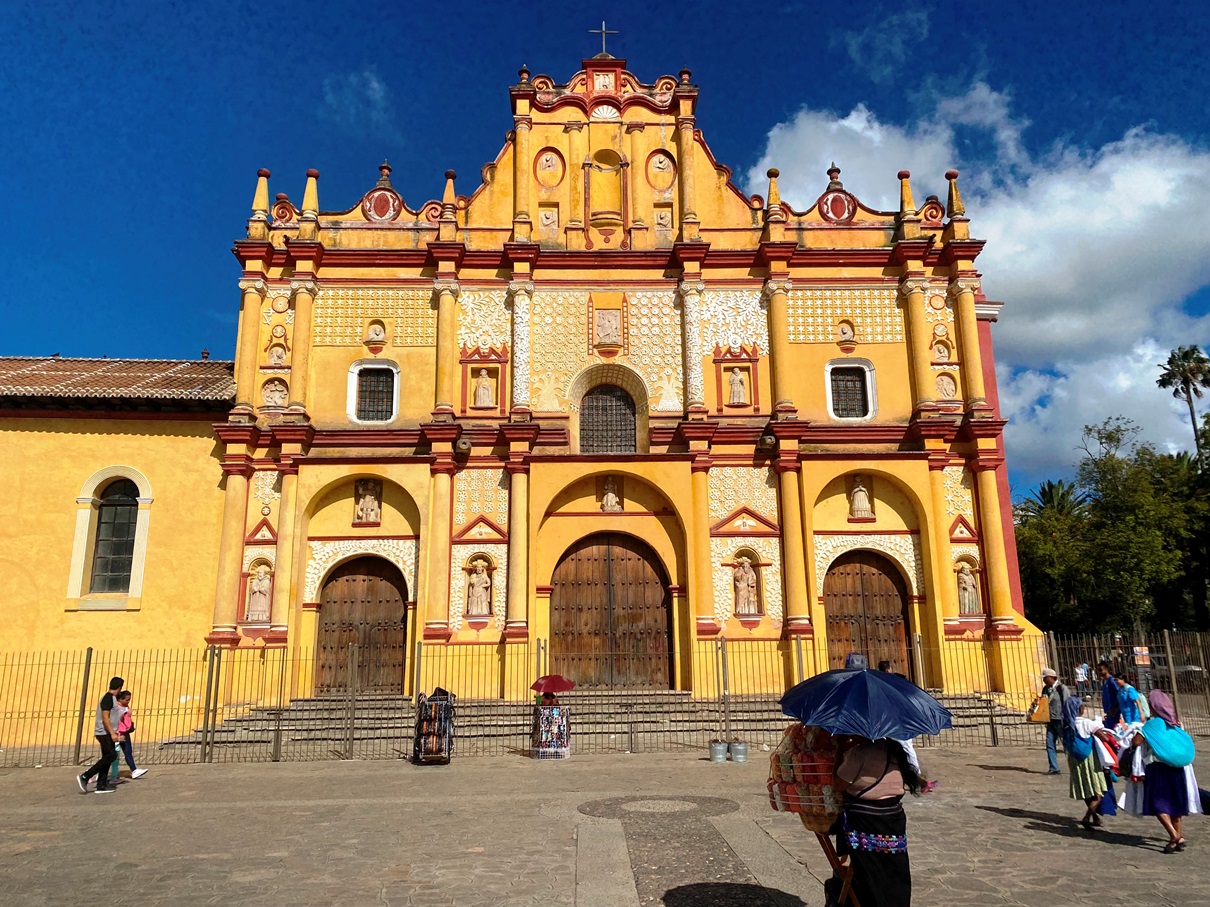
I arrived in San Cristobal De Las Casas on a wet and cloudy morning, after a night bus from Oaxaca. As soon as I stepped onto the street the architecture and ambiance felt oddly familiar; single-storey buildings and cobbled streets. It reminded me of Guatemala. This is perhaps not all that surprising considering that I was back in Mayan territory and this part of Mexico is close to the border. There was a time when the Chiapas region almost was a part of Guatemala back in the days before Latin America’s borders were finalised.

I didn’t do much that first day as I was tired from my journey. Once I had checked into my hostel I went for a little walk around the plaza to get my bearings and then to the market to buy some ingredients. Life seems to pass slowly here, and the other backpackers I met were mostly of two varieties; people staying just a night or two whilst passing between the Mexico-Guatemala border, and those who were staying much longer because they had come here as a place to lay low for a while.

This place also has somewhat of an expat population; something that I discovered my first day when I found myself wandering into places such as organic markets filled with artisan stalls, and a splattering of international restaurants. Most of them seemed to be of the more down-to-earth kind, and they have assimilated well; the city still has an air of authenticity about it. I think there are several reasons people end up moving here. The cool mountain air is certainly one of them; at over two thousand meters altitude, the climate is very agreeable. It also happens to be somewhat cheaper than the other parts of Mexico that I have visited so far.

The following day I did what many consider to be the most rewarding activity in this area and went on a tour to some of the nearby villages. I decided to go with a guide on this occasion; both because the price was quite reasonable and visiting the communities around here is more of a cultural than scenic experience and it seemed like a wise idea to have someone from the area to explain the nuances to me.

The minibus picked me up from my hostel and I shared the experience with around ten other people. Most of them were Mexican but the guide also spoke English and translated his speeches for me and a pair of other English speakers. The first village that we went to was called Zinacantán, and it was mostly a sprawl of homes and greenhouses spread across a valley. Our guide explained to us that most of the men here cultivate flowers whilst the women work in textiles.

After passing through a checkpoint where we had to – like all visitors – pay a small fee, we went to a cooperative where we got to witness a young woman working a loom and the guide told us more about the people of this village. They speak a language called Tzotzil, which is a Mayan dialect, but most of the schools are bilingual now so the younger generation also speak Spanish. Here, it is normal for people to get married sometime between the ages of fourteen to eighteen, and these pairings were traditionally arranged by their parents but there is currently a cultural shift going on where people are now getting to choose their partners.
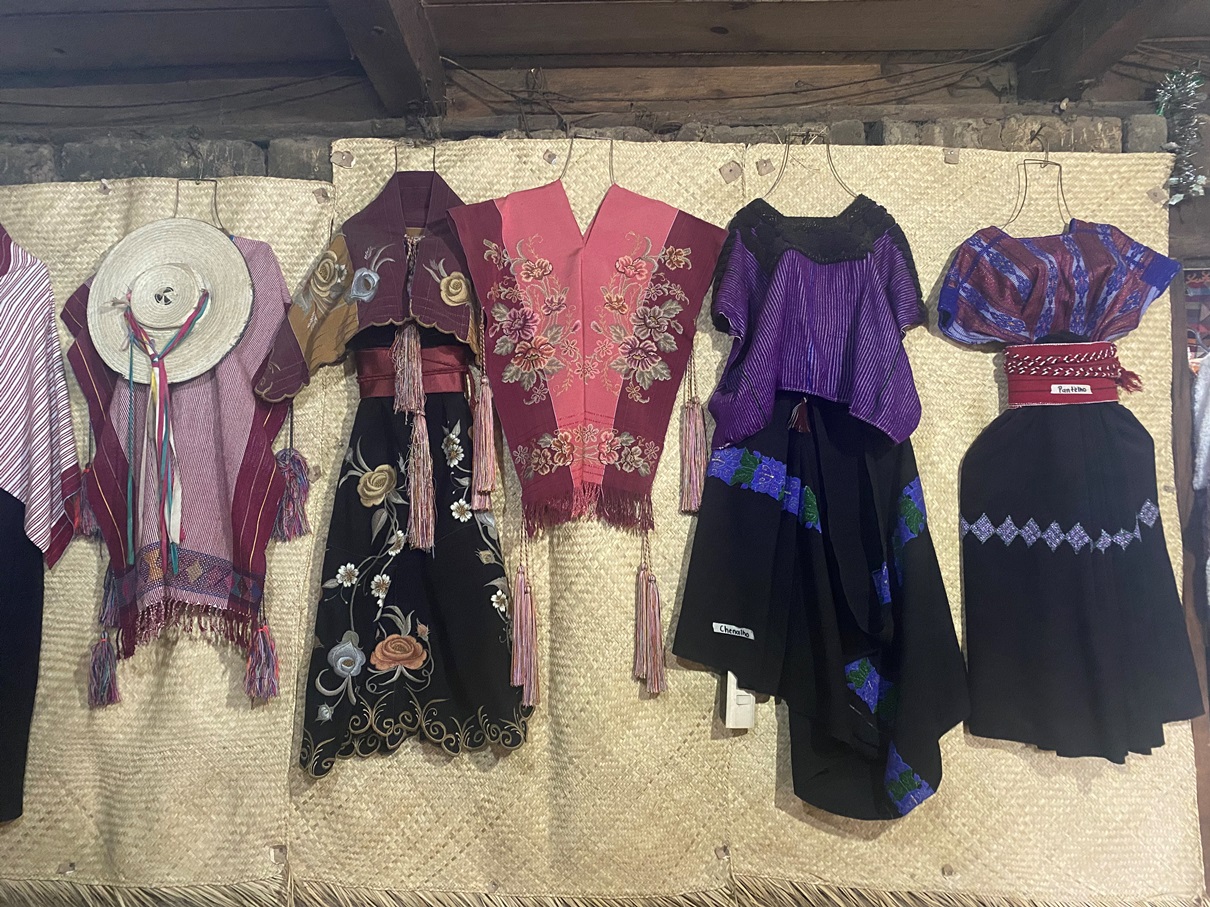
We got to try a local of kind of distilled alcohol they produce here called pox which is made from corn and sugar cane, and then we were taken to a room where we saw different kinds of attire the people in the area wear. Each village has its own kind of style of clothing so people can tell where someone is from by how they are clad. I got to try on the everyday attire of a man from Zinacantán.

Next we were taken to see an authentic kitchen where a pair of women were making homemade tortillas using a dough presser and cooking them over an open fire. They had a selection of ingredients out so that we could try then, including beans, crushed pumpkin seeds and locally-made goat’s cheese.

One last thing that I would like to add is that just as we were leaving we passed by a little procession of men making their way through the village whilst playing instruments. Our guide told us that it was to honour the saints (video here).

The second village that we visited was Chamula, and despite being quite close to Zinacantán, the energy felt very different here. As we entered the wealth gap within the population was obvious from the differences between some of the homes; varying from little huts to grand mansions. This is because some of them were farmers whilst others either worked in commerce or were part of the local cartel. Our guide also warned us that we needed to be a bit more careful here when it came to etiquette, particularly with the use of our cameras; taking photos of the town’s features was fine, but we were not to take pictures of the locals without their permission.

We parked up by a derelict old church that was built by the Spanish during the colonial times but the locals abandoned it in favour of a newer one on the other side of the town. The cemetery around it, however, was very much still in use and we could see people tending to it when we arrived. Apparently, with Día de Muertos coming up, they were clearing up the graves as it is believed that the spirits return during the festival.
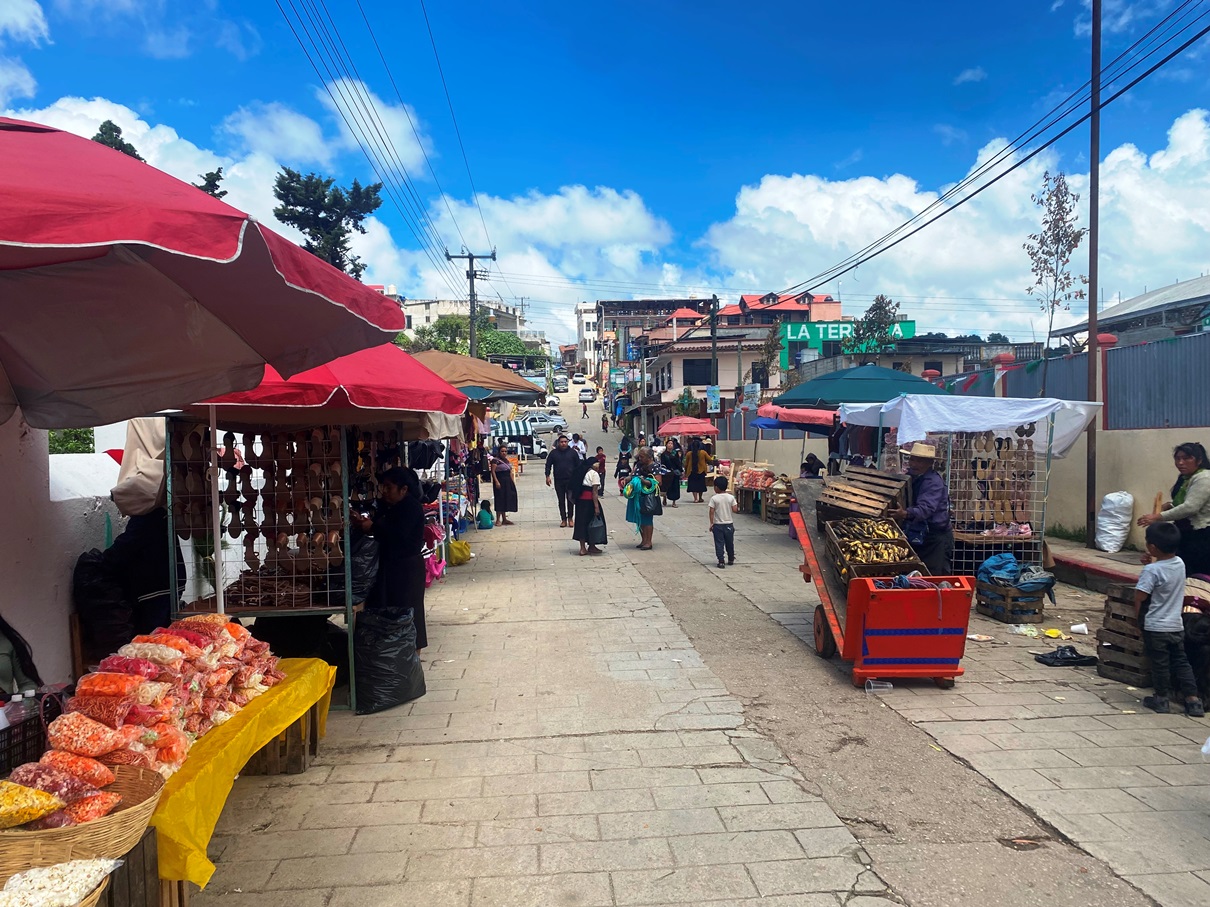
It was a market day and we got to wander through it all. I have seen plenty of indigenous markets by now and this one felt more authentic than most. The main event for visiting this village, however, was when we reached the Iglesia de San Juan Chamula.
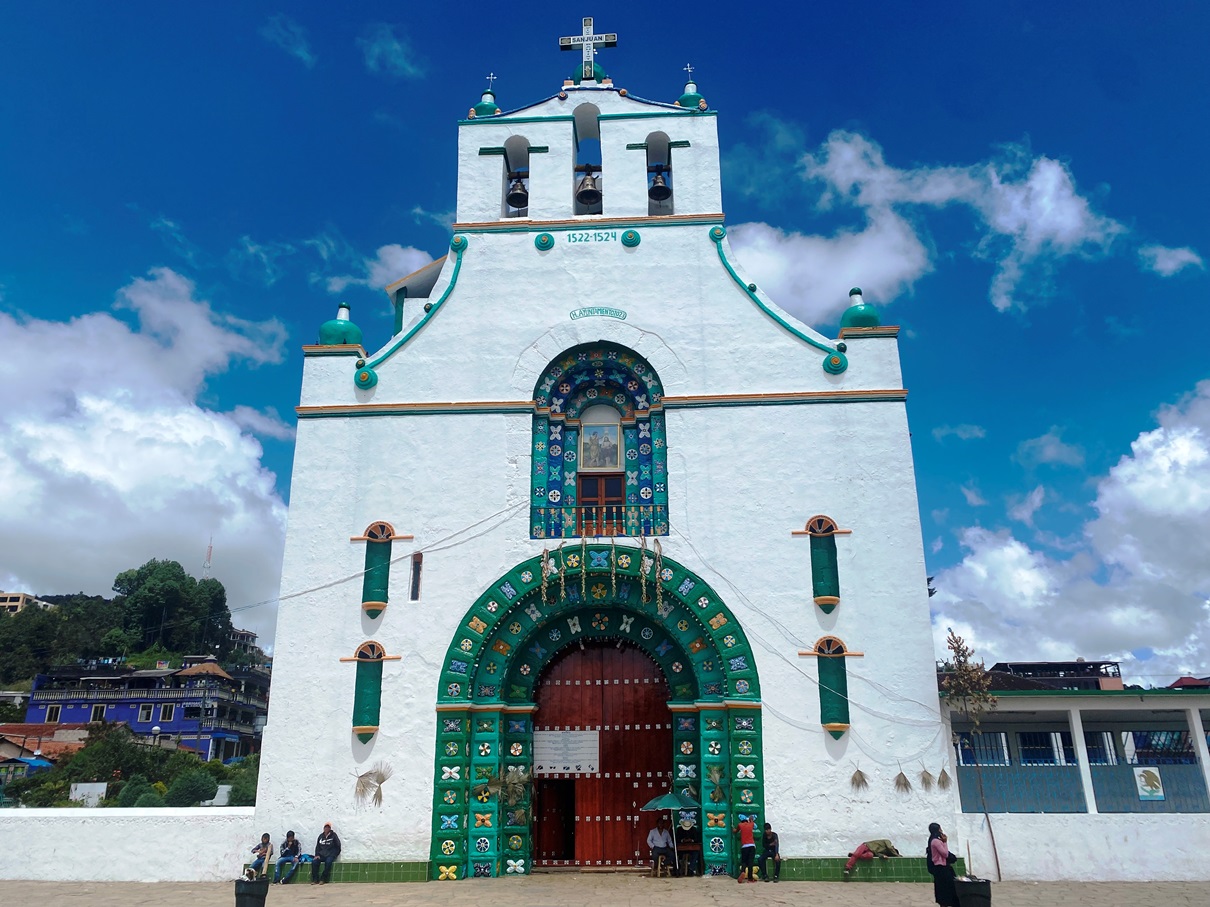
Our guide reminded us that it was strictly against the rules to take any photos here, and when I entered, I could completely understand why. It was not like any church that I had ever seen before. There were no chairs, so most of the chamber was space where families and individuals sat on the floor burning candles and making offerings whilst chanting. The walls were lined with cabinets containing effigies of various saints, and covered in bouquets of flowers. And, in front of those, were tables filled with thousands upon thousands of candles, softly glowing and so numerous that standing too close would cause you to sweat. There was also fresh grass covering much of the floor – between all the spots where people were making their offerings – which gave the room a floral and musky smell.
I have rarely, in all my travels, seen such religiosity as did in this place. The fixated fashion that some of the people prayed was very moving. You could tell that, for them, at this moment, nothing else existed but them and the god or saint that they were praying to as they swayed back and forth, murmured, pressed their foreheads to the floor, or made other supplications.
Although this is technically a Catholic church, conventional mass is never held here and there are no priests. Only shamans, who practice similar techniques to what these people used to perform in places such as caves before the Spanish came. People come to them with their problems, and the nature of the problem will dictate which particular saint they appeal to (and this is just me guessing, but I think that the ‘saints’ have likely all been assimilated with pre-Colombian gods). Most of the time it is to ask for healing or boons but they do also sometimes offer darker wishes such as curses.
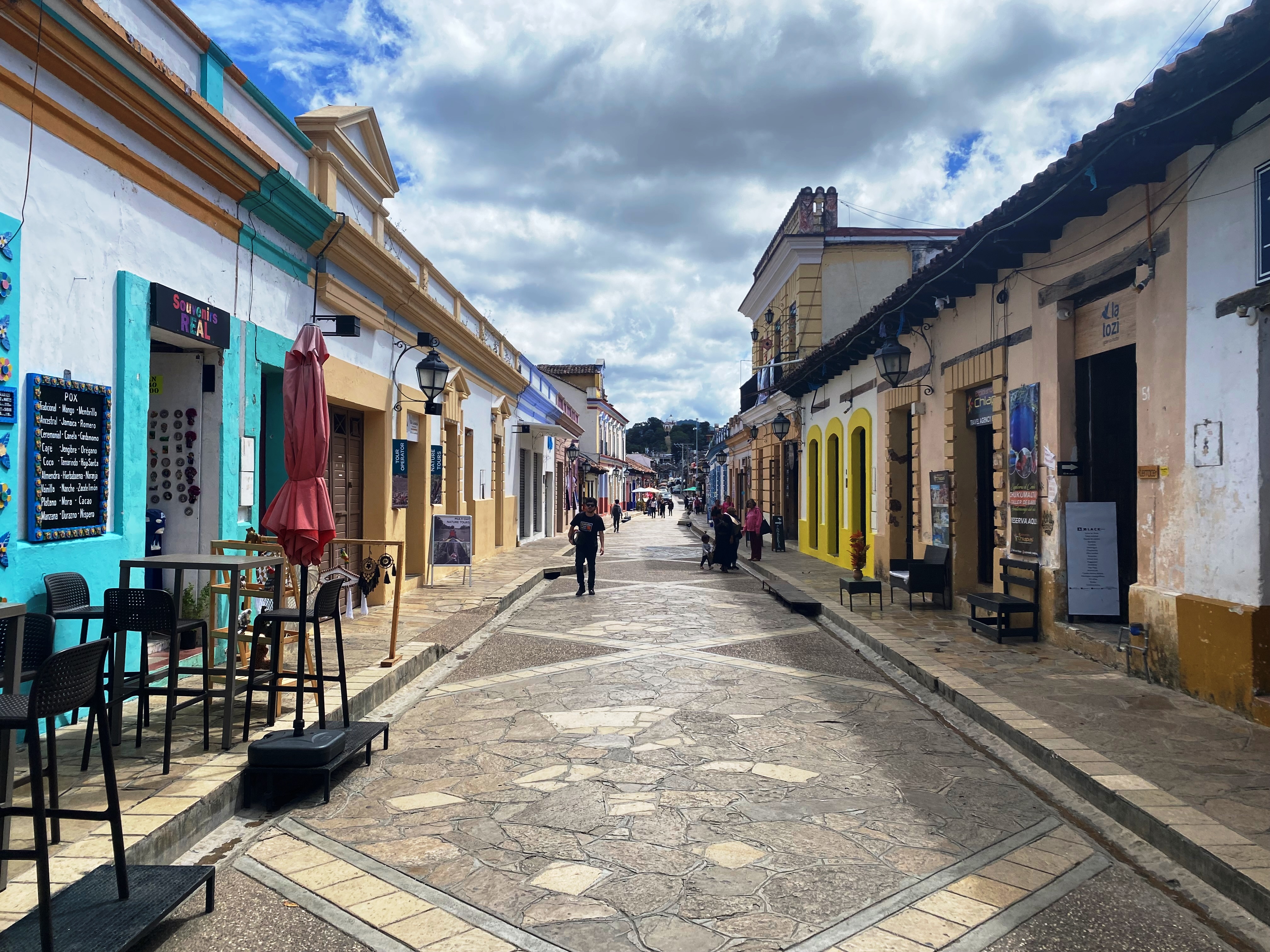
Besides this day trip, most of my short time in San Cristobal De Las Casas was spent enjoying the slow pace of life and relaxing before I continued to the next stage of my journey. I am back in Mayan territory now, but on the Mexican side, and I am heading towards the Yucatan peninsular. My next stop will be a place called Palenque.
One last thing I would like to mention before I sign off on this blog is I want to give a shout-out to Loving Hut; a tasty Asian-inspired vegan place close to the market. The food there is delicious and cheap, and Heaven – the young woman who runs it – is a lovely person. Make sure to visit if you are in the area.
 Tej Turner