19th – 23rd September, 2023
Puebla was not on my original itinerary when I plotted my route for Mexico. I found myself inspired to come here when I overheard other backpackers talking about it, and I did a bit of reading and realised that not only did it have some historic sites – such as the Great Pyramid of Cholula – but there was also going to be a festival at the end of the week at a place nearby called Atlixco.
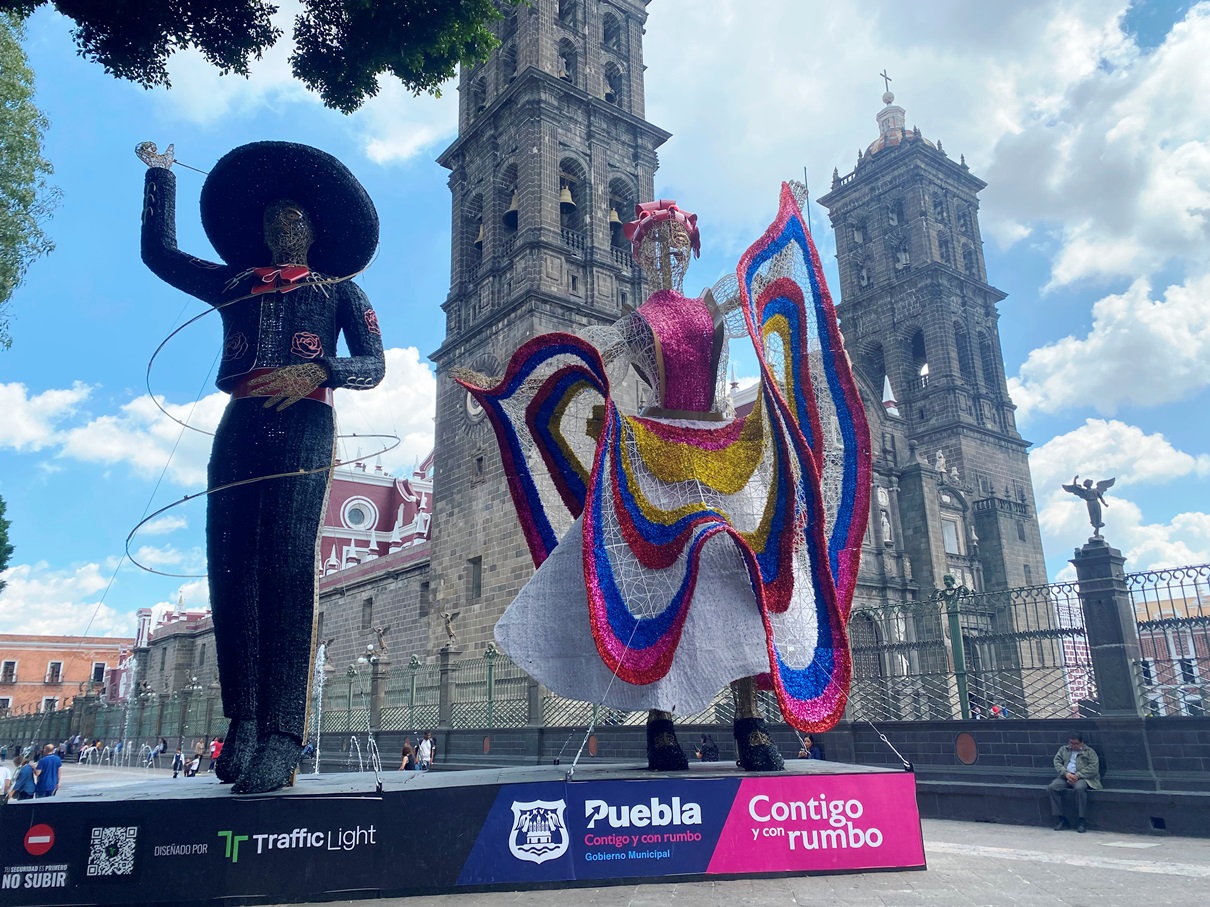
So, after I had finished in Mexico City I caught a bus and checked in at the lovely Casa Pepe Boutique Hostel. This is the sort of place that would usually be way beyond my budget but because it is currently low season I snatched a last-minute deal and treated myself. The dorm was air-conditioned with partitioned beds and hot showers. A bit more comfort than I am used to these days.
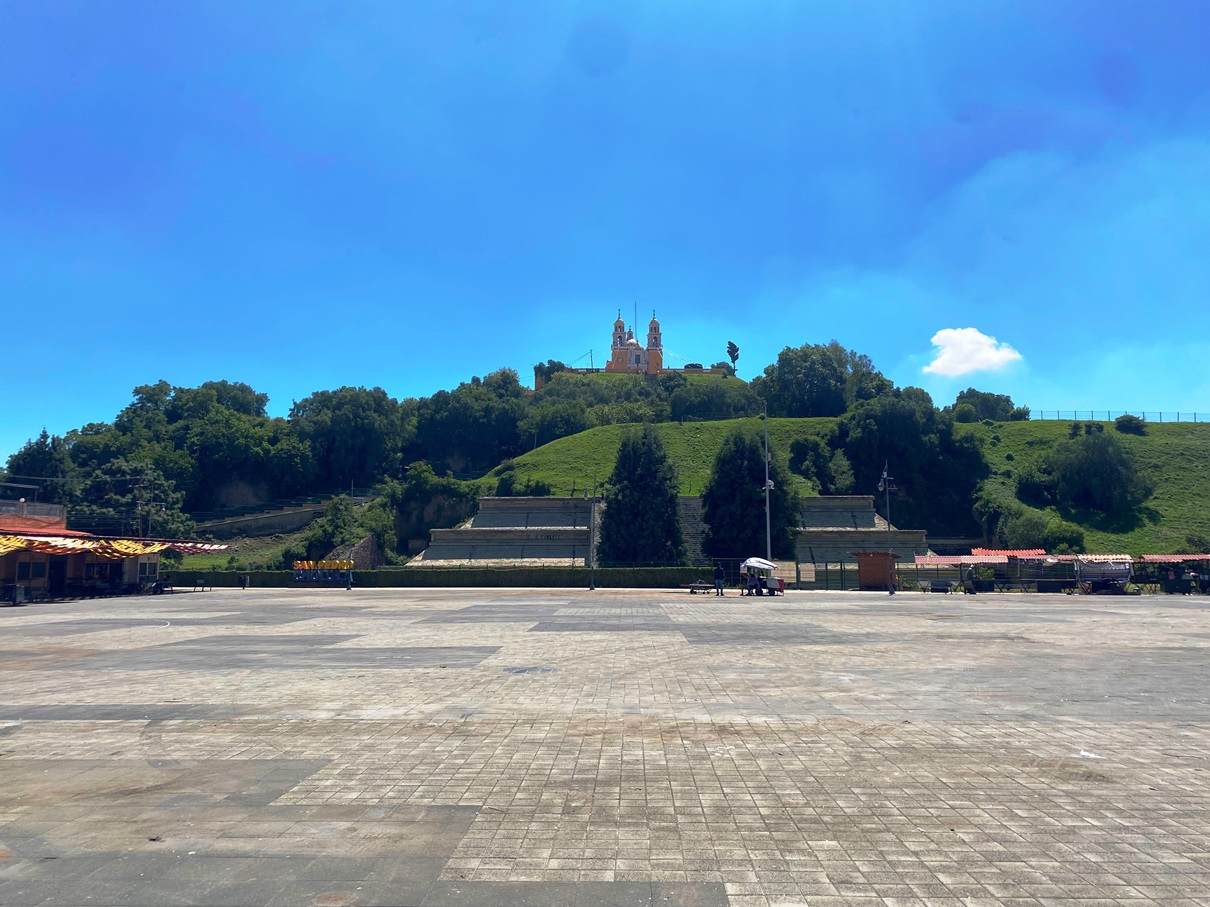
The next day, Cholula was the first place I explored. It is technically a different city but if you look at a map you will see that the two have merged over the years, and it was just a short colectivo ride away.

Considering this is technically the biggest pyramid in the world, you would expect this place to be more famous. I guess the fact that – from most angles – it more resembles a hill makes it less iconic and photogenic. Its appearance is deceiving, as this is arguably one of the most enigmatic archaeological sites in the New World.

Most of the site remains buried beneath the earth, but archaeologists have dug over seven kilometres of passages which revealed there are seven different layers, all built over each other throughout hundreds of years. Here is a model.
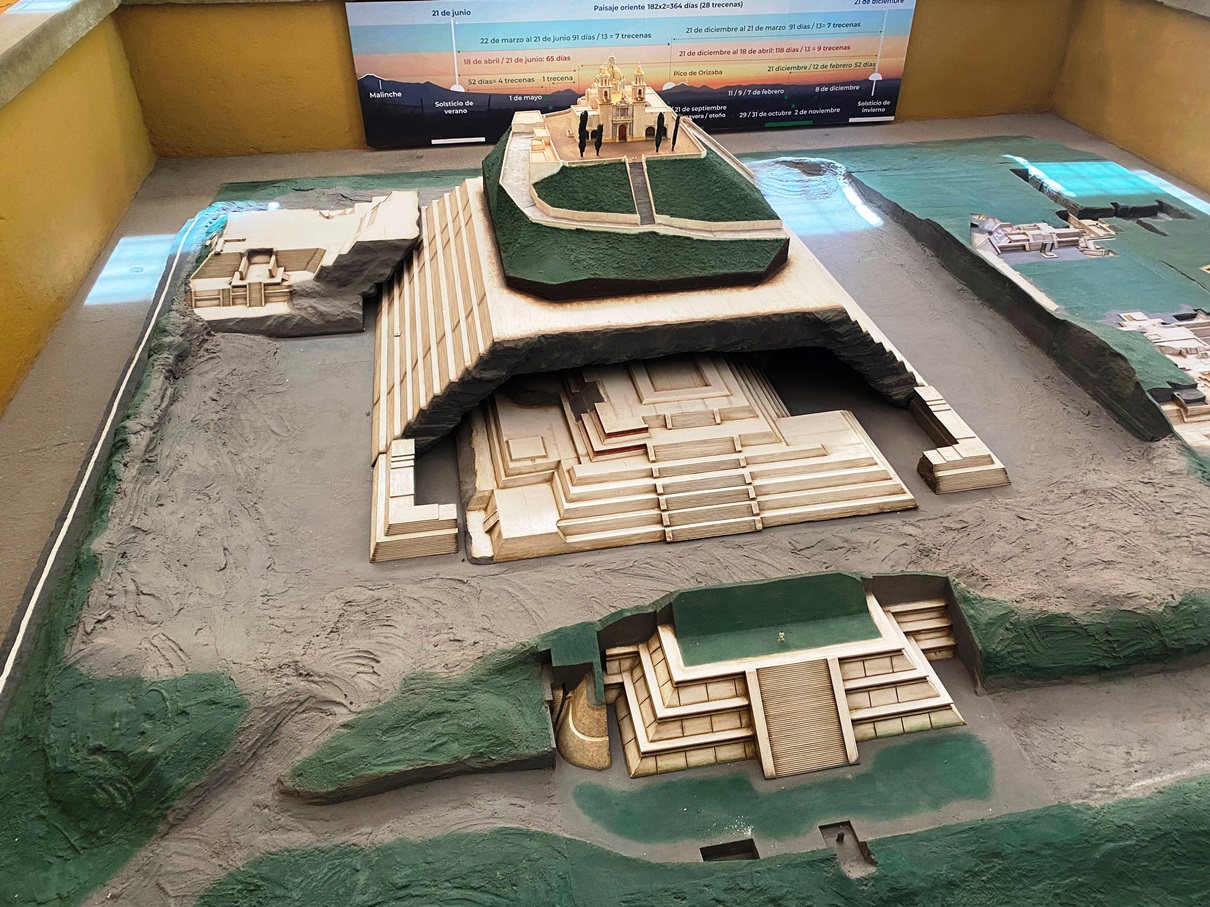
Some of the lower levels have also been excavated and you can walk around them.

Visitors to this place are initially coaxed into an on-site museum which is filled with artefacts and features information about the site. Despite claims by the likes of Graham Hancock – in his Ancient Apocalypse series – most archaeologists agree that construction of this site began in the first century CE and it remained in use until the ninth, which makes it roughly contemporary with Teotihuacan. They have even found similarities in the styles of construction within some of the layers and unearthed artefacts that suggest the two of them had a relationship and traded with each other. I find it interesting that it seems they both fell into decline around the same time too; it seems to add weight to the theories that some kind of environmental factor – such as a volcanic eruption or drought – could have played a part.
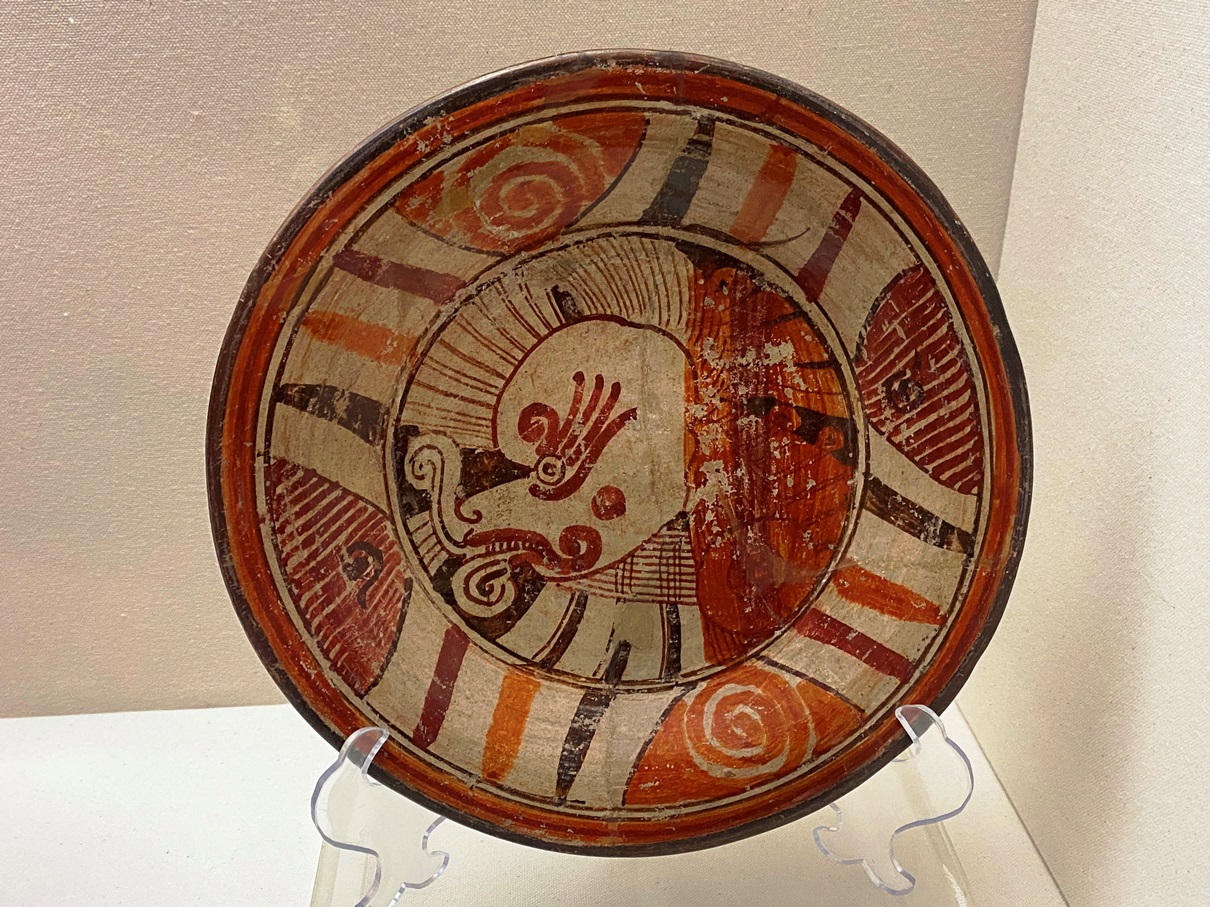
Further evidence of the drought theory was found at this altar, which has been dated to the post-classic period of Cholula’s decline. Skulls of children have been found at its base, and such sacrifices are thought to have been a common tradition among Mesoamerican civilisations to beseech the gods for rain.

The museum also features some examples of murals, including a partial reconstruction of one discovered in one of the oldest buildings of the temple. The original is over fifty-six meters long and is especially interesting as it features a scene of people attending what appears to be a festival, giving us some clues as to their traditions and the way they dressed. They appear to be drinking pulque, a beverage made from agave that people in the area still drink to this day.

Whilst the archaeological site is sectioned off, the peak of the pyramid is open to the public and is a popular place for people to walk and enjoy the view of the city. On the day I went it was clear enough for me to see the outline of Popocatapétl Volcano.
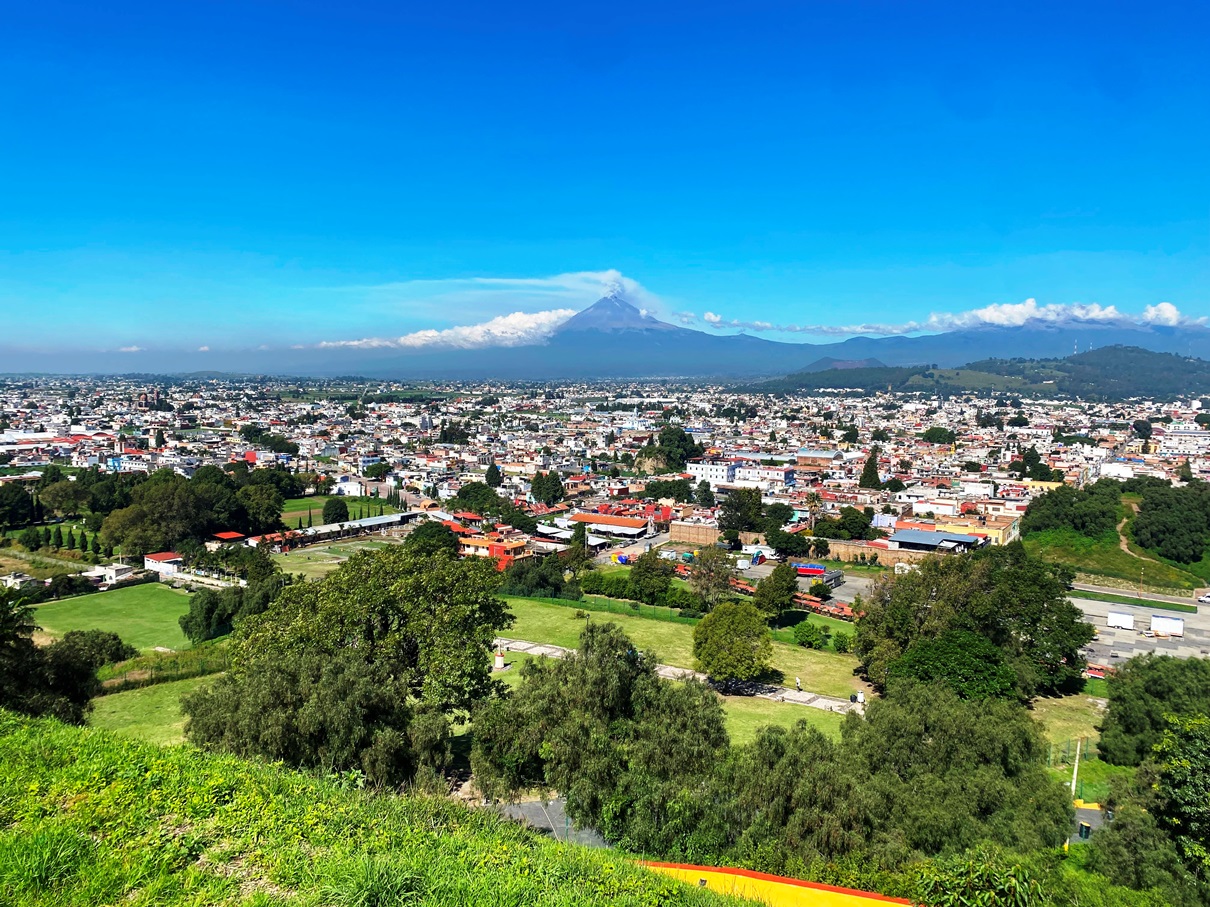
It is also home to the Iglesia de Nuestra Senora de los Remedios, which has a legend surrounding it; it is said that the peak of this hill was once home to a shrine to a pre-Colombian deity but it got struck by lightning three times so they eventually built a church there instead. It is an interesting story but I am not sure about its veracity. It does sound like it could quite easily be Christian propaganda.
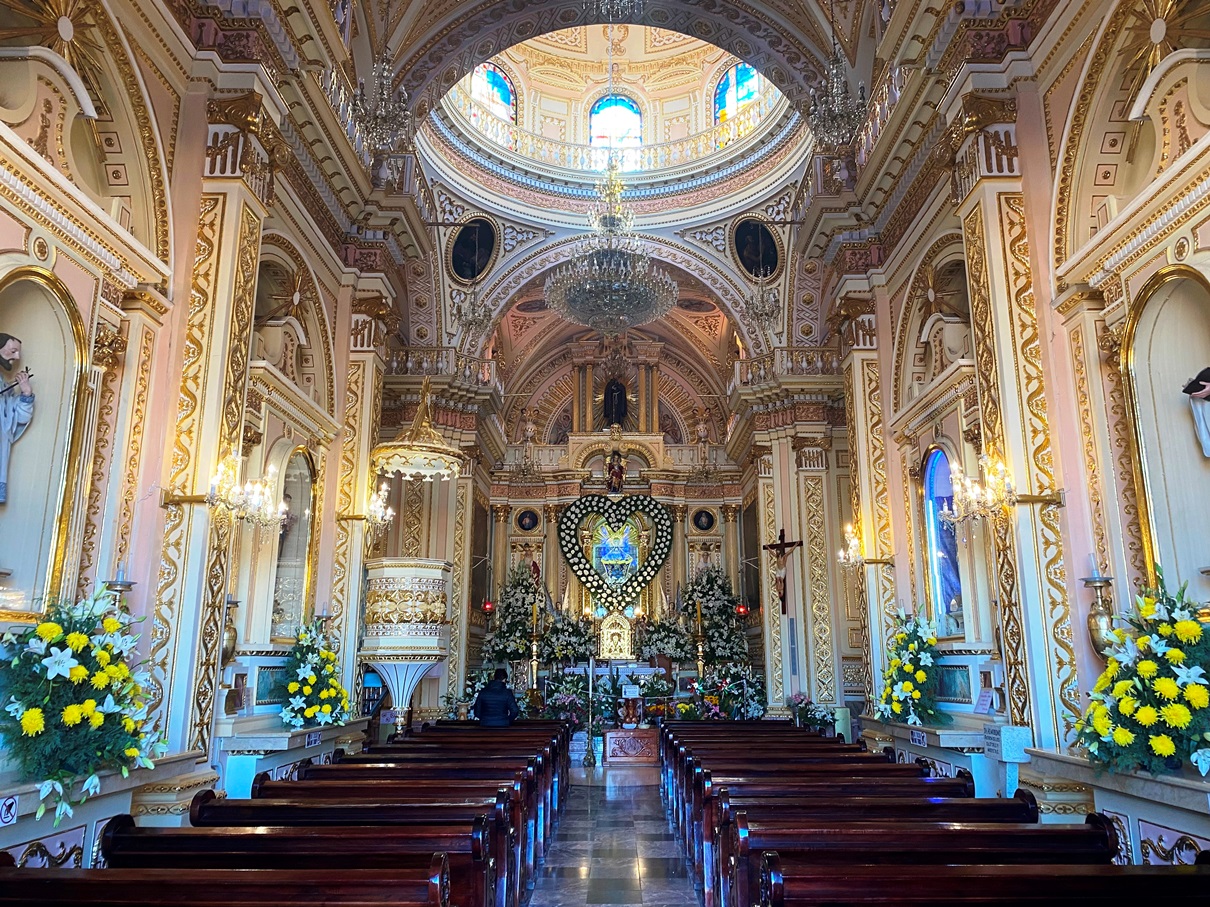
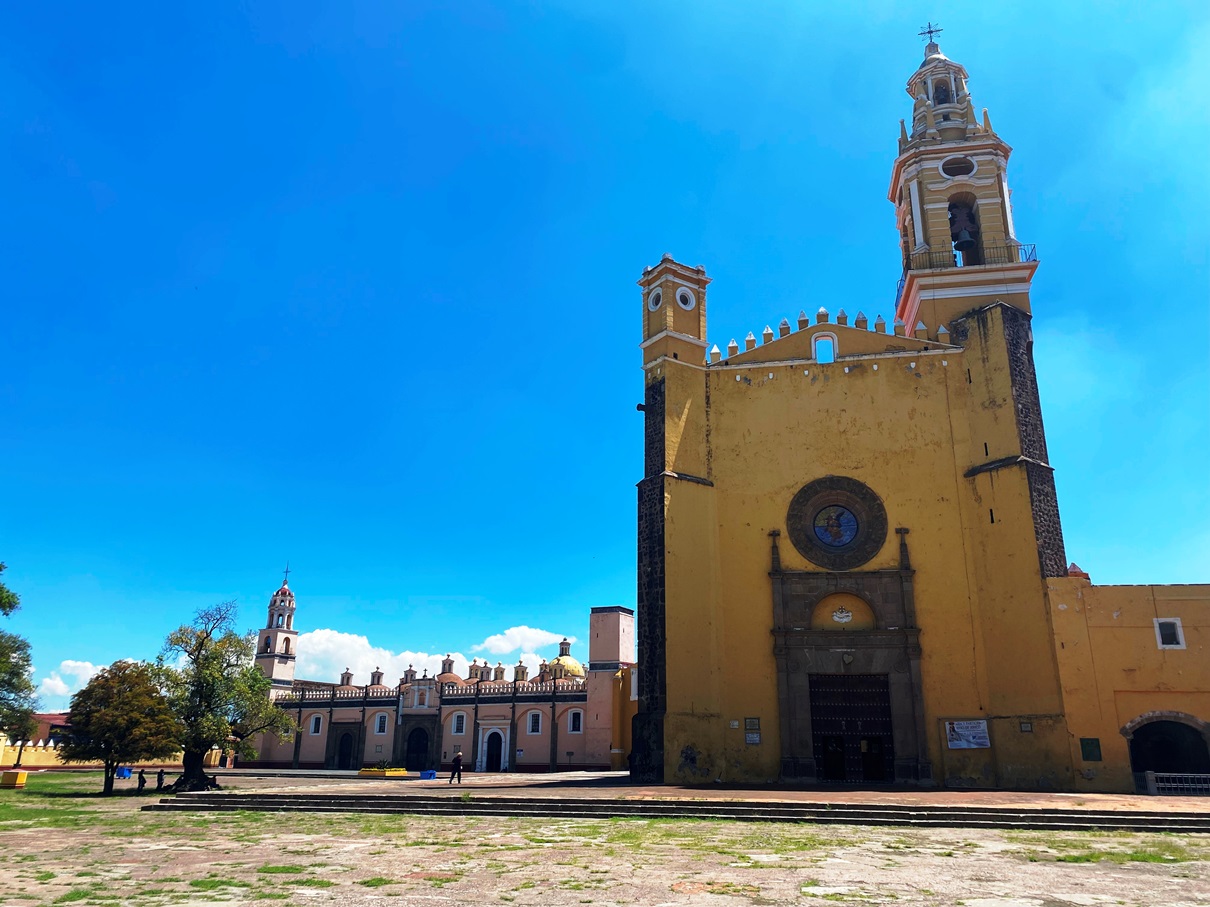
The city of Cholula itself was also quite charming and after visiting the pyramid I wandered around for a while, exploring the plaza and some of its churches. The Convento de San Gabriel Arcangel and Capilla Real de Naturales are both next to each other and not to be missed.
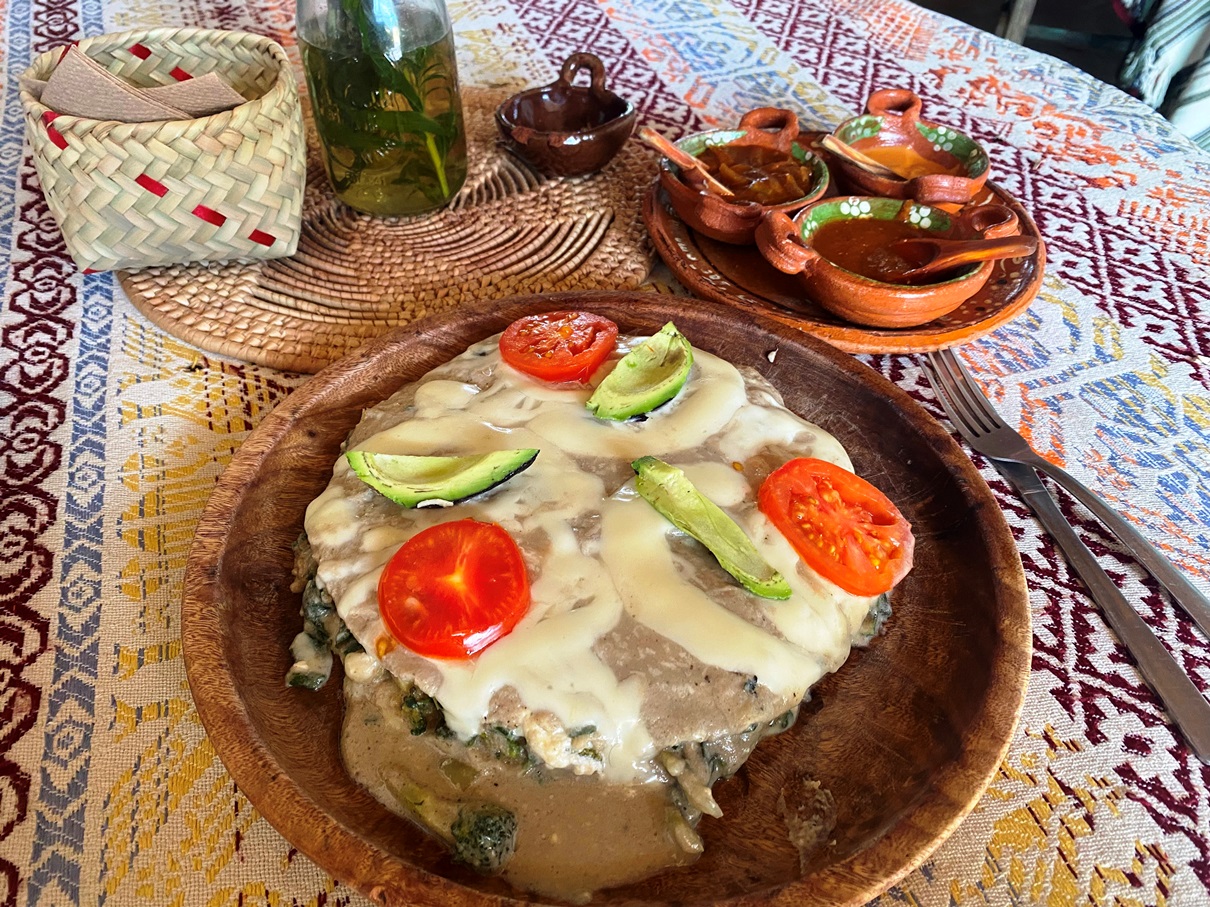
I also found a nice restaurant called Koatlikue Pachamama. I have mostly been cooking for myself since I came to Mexico (both for budget reasons and because the street food and traditional restaurants have been quite meat-heavy), but this place is vegetarian and specialises in ancestral food so I treated myself. The owner made me a local dish called Choluteca con Salsa de Champignons (cheesy mushrooms and other vegetables sandwiched between two homemade tortillas). It was delicious.
Over the days that followed I did also spend some time exploring Puebla. The historic centre is very scenic and home to some lovely churches. They were everywhere so I didn’t really bother to log them all and just wandered in and out as I passed them.

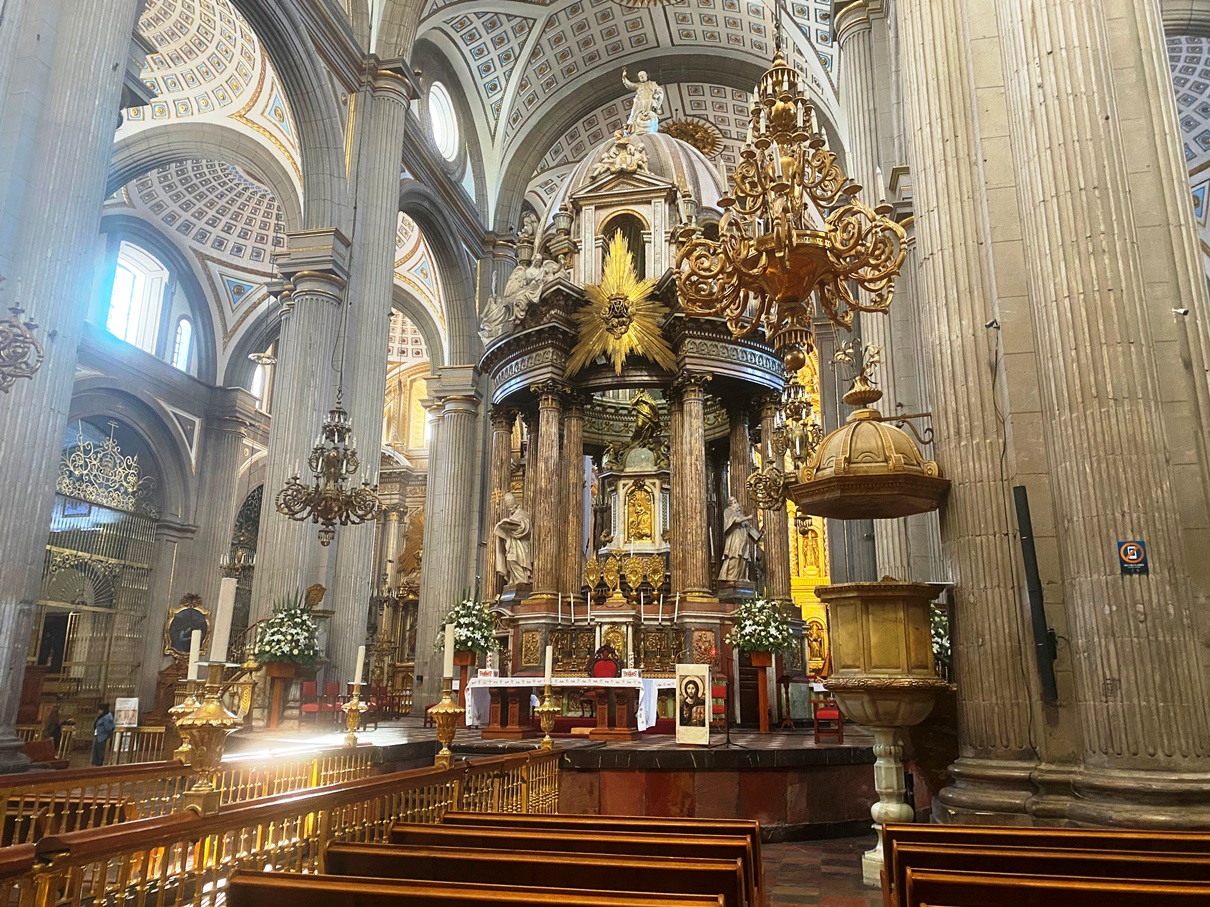
The cathedral is magnificent, and one of my favourites in Latin America so far.
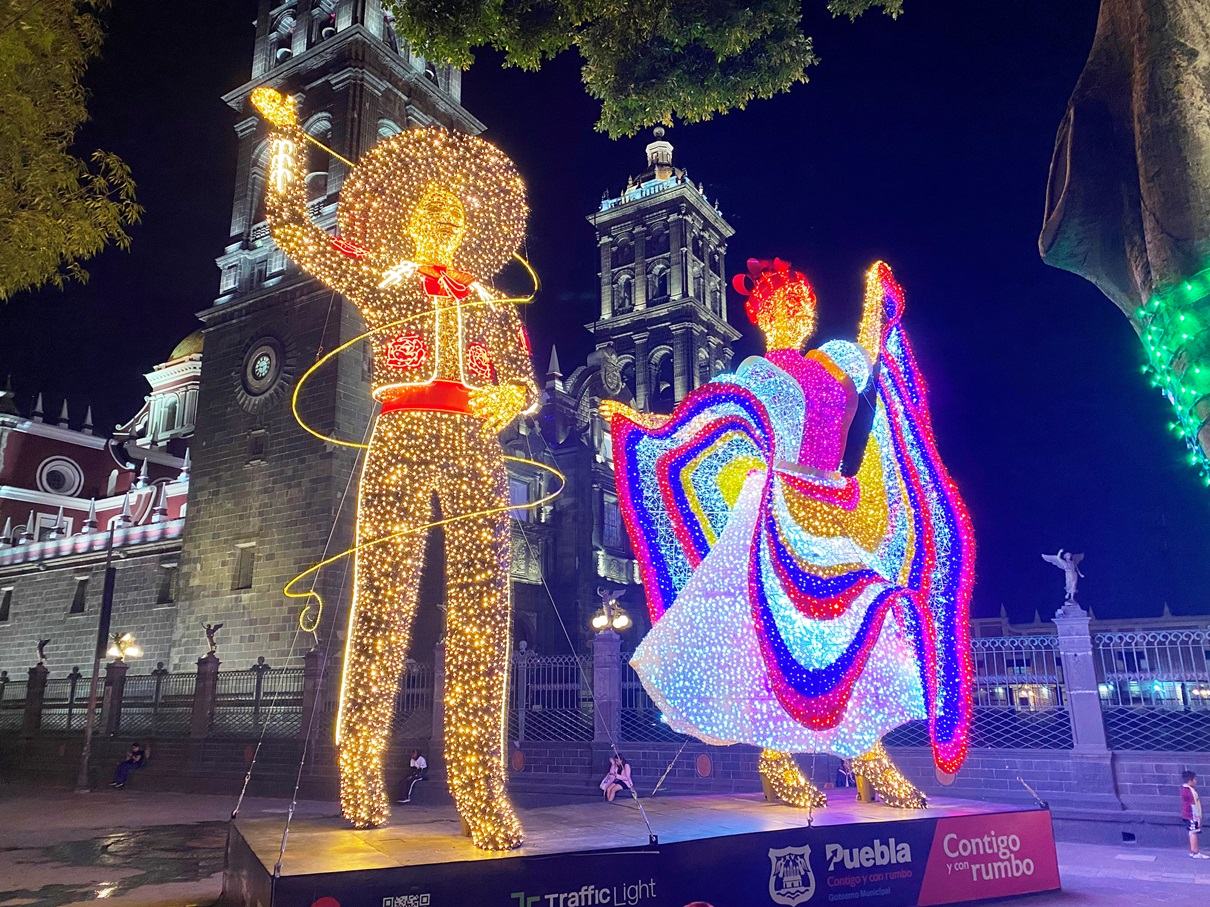
And the plaza was also a great place to wander. One evening I did so at night and saw all of the light features.
But I will say that one thing I was slightly disappointed by about Puebla was Fuertes Parque. On paper, it seemed that everything about it was the kind of thing that I enjoy, but none of it quite lived up to my expectations. The ‘park’ is mostly concrete. The ‘hill’ isn’t very high so the view is nowhere near as impressive as the one you can see from the Great Pyramid of Cholula.

Loreto Fort was quite expensive to enter and didn’t have much within it to justify that price. There were some displays explaining the famous battle that was fought against the Napoleonic forces here on the 5th of May, but it wasn’t anything that you couldn’t find out by simply doing a bit of research online. It takes about twenty minutes to read all the displays and walk out again.

I briefly visited the Museo Regional de Puebla but shortly after asked for a refund. Once again, this place was a bit expensive, and none of their displays were translated into English.

One museum in Puebla that did impress me, however, was Museo Amparo. This is not state-owned but rather the creation of a rich philanthropist who inaugurated it in the memory of his deceased wife. Much of the second floor is dedicated to modern art, which those of you who read this regularly will know I am not a massive fan of so I will let someone who can judge that more fairly give an opinion.
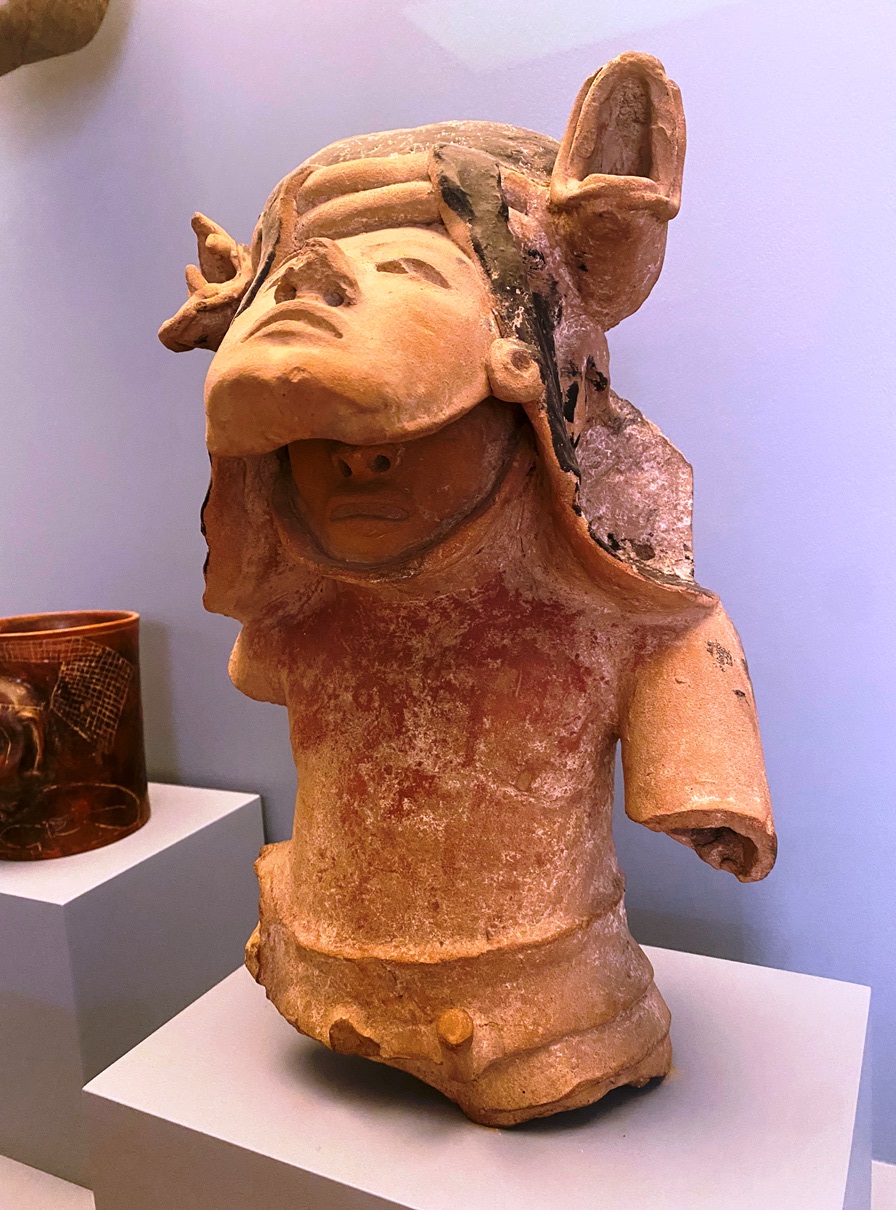
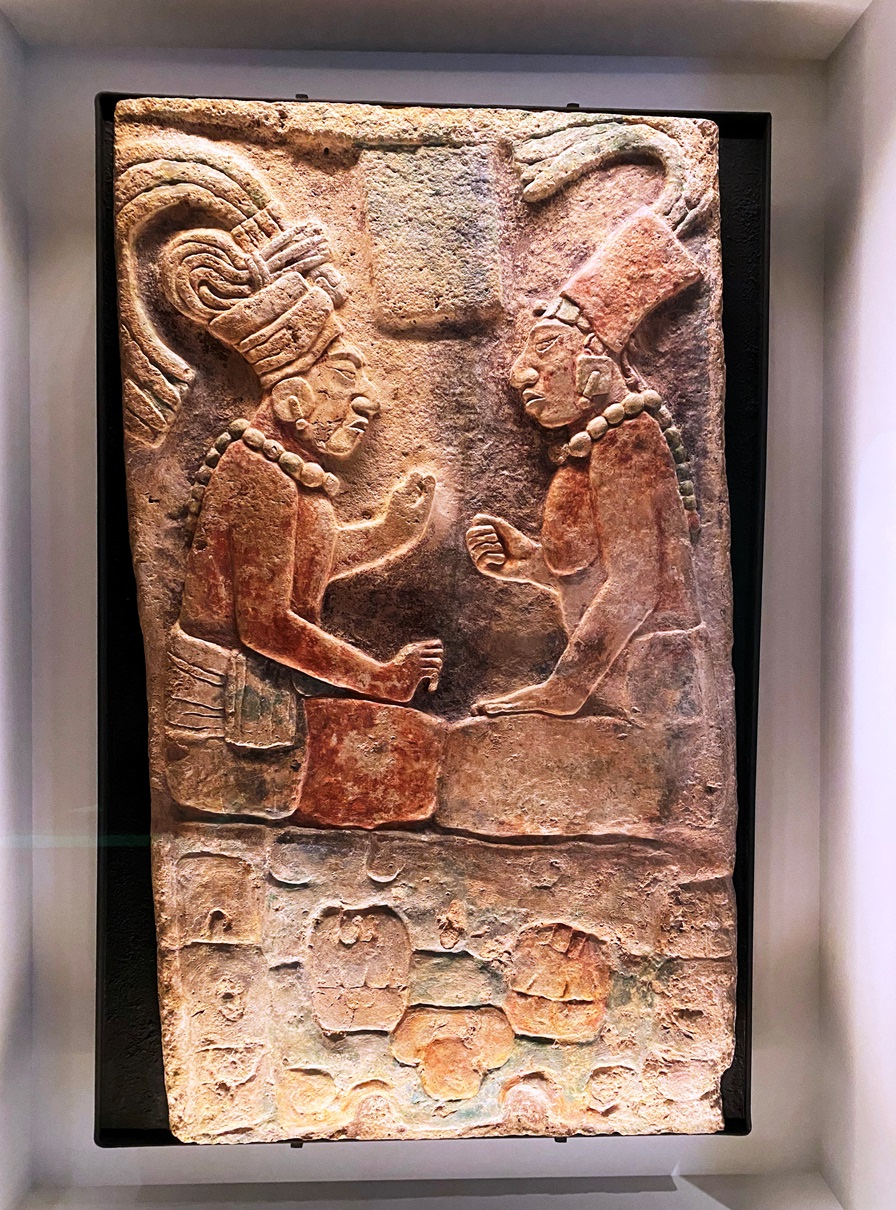
It does, however, also have an extensive collection of pre-Colombian artefacts and sculptures, which those of you who read regularly will also know is most definitely my thing.
My next blog will cover my day trip to Atlixco for its Huey Atlixcáyotl festival. Don’t miss it as it’s going to be an interesting one!
For more photos from my time in Puebla and Cholua, click here.
 Tej Turner