23rd July, 2023
Actun Tunichil Muknal – which translates roughly as “Cave of the Crystal Sepulchre” – is something that I almost missed. My day-to-day budget as a backpacker is relatively lean, but I have a pot of extra money put aside for activities and allow myself to do one expensive thing in each country I visit. In Ecuador it was a tour into the Amazon, in Colombia it was The Lost City, and in Belize I intended to use it to visit either Lamanai or Caracol: both impressive Mayan sites that are hard to get to because they are deep into the jungle.
However, when I looked into options for reaching them, I discovered that – with it being low season – there was scarce interest from other travellers, and the price I would have needed to pay for a company to take me to either of them alone was staggering. Most of the other backpackers trickling through San Ignacio during my stay were going to a place colloquially known as ‘ATM Caves’, and they all kept returning from there looking dirty, wet and like they had just had an adventure. And, also, with nothing but good things to say.
This piqued my interest, so I did some reading and discovered that Actun Tunichil Muknal is a Mayan archaeological site located within a cave, and National Geographic included it on its list of the top ten sacred caves in the world. Its location beneath the ground meant it never got buried by jungle but rather remained frozen in time, and the archaeologists who have excavated it decided to leave most of it as found so the place is still full of artefacts and human remains in their original positions. This also means that access is tightly controlled. Only a few dozen specially-trained guides are permitted to escort visitors through whilst enforcing many measures to preserve its integrity.
The more I read the more I realised that perhaps it was fortunate that Caracol and Lamanai were unfeasible for a solo traveller at the time of year I visited Belize. I think sometimes we get caught up within our specific zones of interest, so when I was skimming the travel guides all those months ago I circled all the places that immediately appealed to me whilst places such as caves were often dismissed.
I am still a bit disappointed that I didn’t get to see Lamanai or Caracol, but let’s face it; I have already seen several Mayan ruins by now, and there are more to come in the coming weeks. But caving? That isn’t something I do all too often. And a sacred cave used by the Mayans for hundreds of years that is still a living archaeological site? That is a once-in-a-lifetime opportunity.
I was surprised by how quickly I got wet during this tour. I had been warned. I was wearing swimming shorts beneath my trousers, a quick-dry T-shirt, and hiking shoes, and that was all I had brought with me. My pockets were empty. No camera. Even if I had not worried about drowning it, you aren’t allowed to bring them into the cave anyway as several years ago, a tourist dropped one onto a human skull and damaged it. The photos featured in this blog were all kindly donated to this blog by PACZ Tours.
There is a forty-minute walk through the jungle before one reaches the entrance to the cave, and this involves three river crossings, the first being immediately after you leave the car park. The trail itself is well-maintained and reasonably flat. It seems a bit strange that they have not built any bridges between this perfectly made pathway, but I guess anyone who comes here will get drenched as soon they enter the cave anyway, so bridges on the trail leading up to it would be a bit redundant. As soon as you reach the entrance to the cave, you once again immerse yourself, but this time into a subterranean river. You are swimming against the current, but it isn’t too difficult, and this first section is only about twenty meters or so until you climb onto the first resting point.
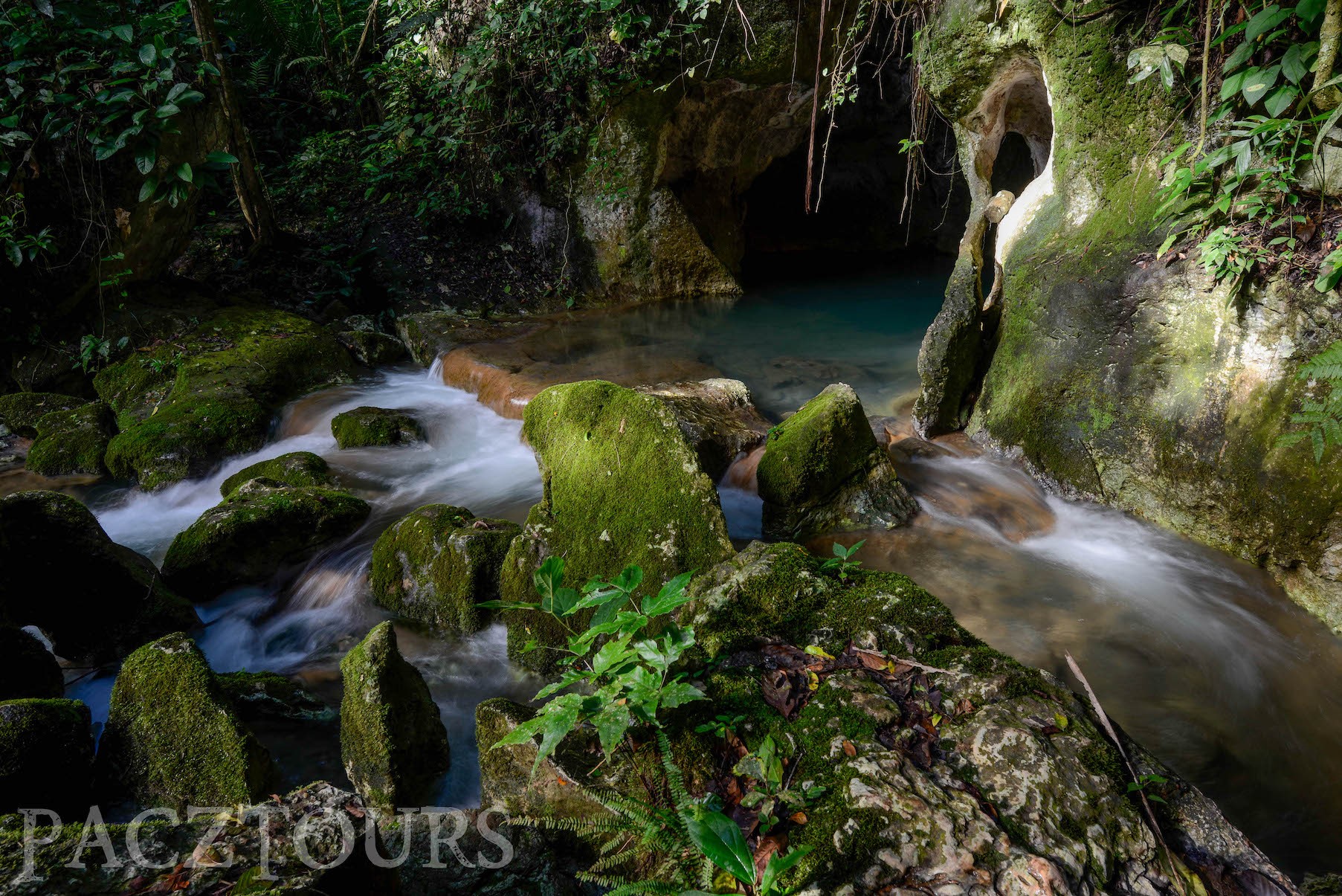
Each time we stopped, our guide – Oscar – would tell us about the cave and show us some of its features. I know it sounds silly, but being told shortly into the journey that this system has four different entrances was reassuring. It certainly made me feel less claustrophobic as we made our way deeper. The part of my brain that works overtime – pondering what would happen if there was a rockslide, the river started to flood, or some other misfortune of nature cut us off – was placated to know the cave has several evacuation routes. Speaking of claustrophobia, if this is something any of you also experience: I didn’t find it a problem. There are some very brief parts where you need to squeeze between some boulders or duck into a pool and swim to a new chamber, but there are no tunnels you need to worm your way through or anything like that.
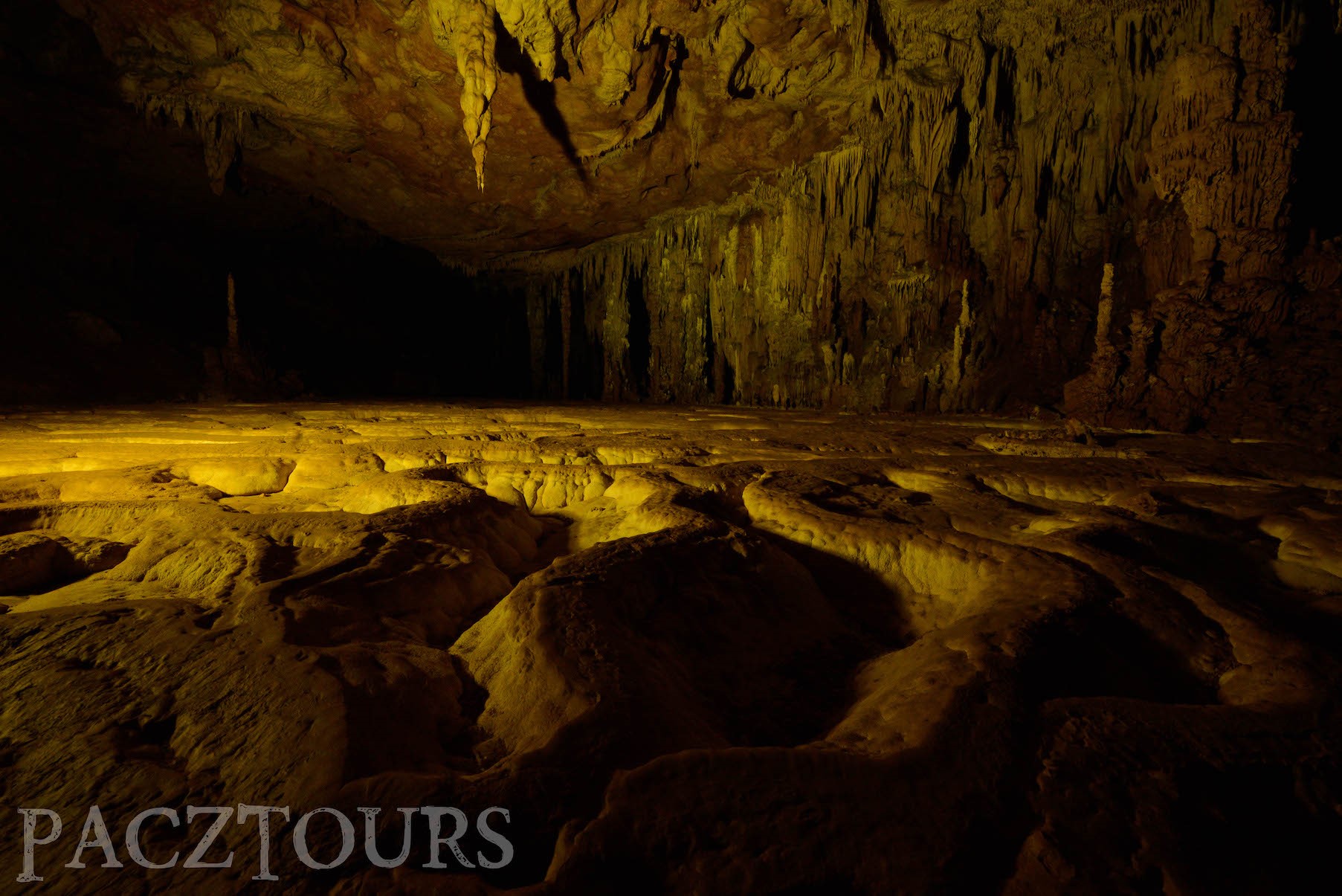
It took us just under an hour to reach the chambers where the archaeological remains are but to be honest, I was not at all in a rush to reach it because this cave was amazing in itself with beautiful features and rock formations. I am not a massive caver, but as someone who casually does it now and then, this one would rank somewhere in my top ten even if it wasn’t historically notable. The journey is also fun. You don’t care about being wet as you don’t have any valuables on you to worry about and it feels like you are on a Goonies-like adventure. A part of me was glad I didn’t have my camera with me as I got to live in the moment.
Eventually, when we reached the entrance to the chamber, there was a bit of a climb, and we were required to remove our shoes when we reached the top. I understand this to be a request the archaeologists made to help preserve the site.
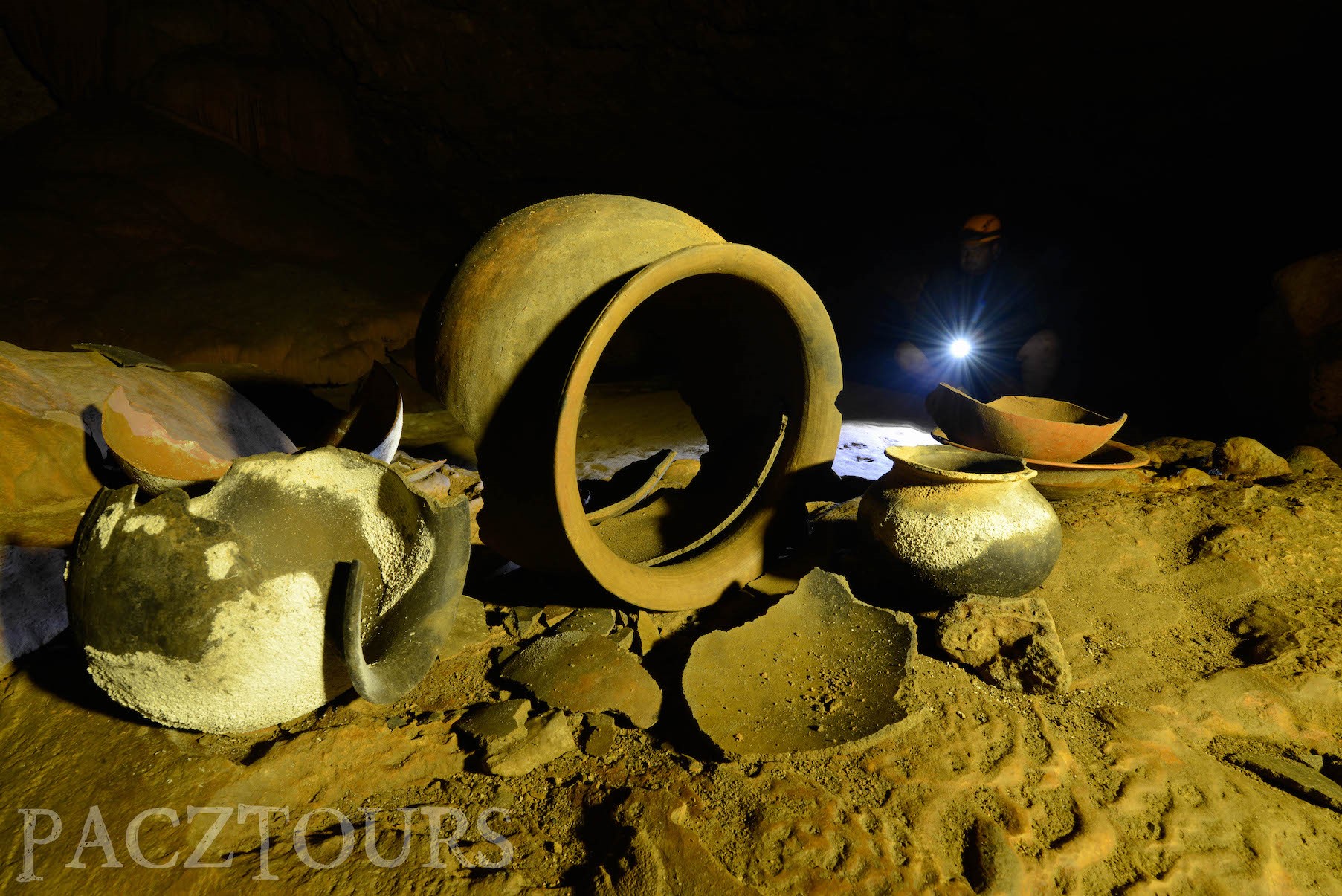
This part of the cave is elevated from the subterranean river but still receives a steady trickle of water that drips from the ground above. Some of the places where these leaks happen have created extraordinary textures on the walls over millions of years, and you can understand how the Mayans – lacking our understanding of the natural processes involved – would have come to see it as something miraculous. This light flow of water has occasionally displaced some of the objects within these upper chambers, but seldom washed them away completely. When you first step into the first chamber you initially see piles of broken pottery that suffered this fate but the further you go the more unchanged everything is. You never see any completely intact pottery, however – even the ones that seem whole have cracks or a chip missing somewhere if you look closely – and Oscar explained that this is because they were offerings and because the Mayans were animists, the act of breaking them was to release their essence.

Early into these chambers there are also remains of fireplaces and even evidence of food preparation, indicating that at one point this was a place where shamans would have held extended ceremonies. There are also two stalagmites which – when you shine a light upon them – cast shadows on the wall that resemble a crone and a maiden. This is a very eerie experience, and it was interesting to learn afterwards that both of those stalagmites show signs of modification.
Archaeologists have dated many of the remains and found this cave was used by the Mayans for hundreds of years, all the way from the pre to post-Classic. One of the prevailing theories for the decline of their civilisation in the 10th century was that they endured drought and could no longer sustain their population. We also know from inscriptions that Chaac (the Mayan god of rain) was also associated with caves and believed to dwell in them, so it makes sense this cave – with its subsurface river and water dripping from surreal formations – would become a place that the Maya visit to when they wanted to appeal to Chaac. The oldest artefacts are closest to the entrance – so the Mayans ventured further throughout the generations – and it is in the deeper recesses that you find the evidence of them becoming desperate enough to start making the ultimate sacrifice: members of their population.

The human remains do vary in age, but most are estimated to be adolescent, and there are a few that have appeared to have undergone artificial cranial deformation – an act where someone would have their head bound from a young age so that it grows into a distorted shape – indicating that they were of a particular caste. Many of the sacrificed have signs of blunt-force trauma, and there is one whose position suggests their arms were bound behind their back.
The cave’s final feature is also its most visually iconic; where lays the skeleton for which it gets its name. Water oozing from the walls and occasionally pooling over the years has caused its bones to calcify, but it remains in its original position. Perhaps this is projecting, but to me, his pose indicates that this final plea to Chaac was the act of a society that had grown desperate and no longer had time for pomp and ceremony.

If you are reading this and interested in visiting ATM caves, I can recommend PACZ Tours. They can be contacted on Whatsapp at +501 623-2385.
 Tej Turner