
NOTE: This blog will feature a Practical Information section at the end giving tips for other travellers heading to the same places.
25th May – 1st June, 2023
Those who read my last blog will not be surprised when I say I took it easy when I returned from Ciudad Perdida. I was exhausted, had blisters on my feet, and not only did I need some rest but also had some maintenance to catch up on, such as laundry and hand-washing my sweaty backpack.
Santa Marta was where I based myself for the week that followed. This place holds the title of being the first-ever Spanish settlement in Colombia but it became overshadowed by Cartagena and nowadays almost everyone that visits this area passes through this city, but it doesn’t get much mention as most people (including myself) use it primarily as a launching pad for more notable attractions.
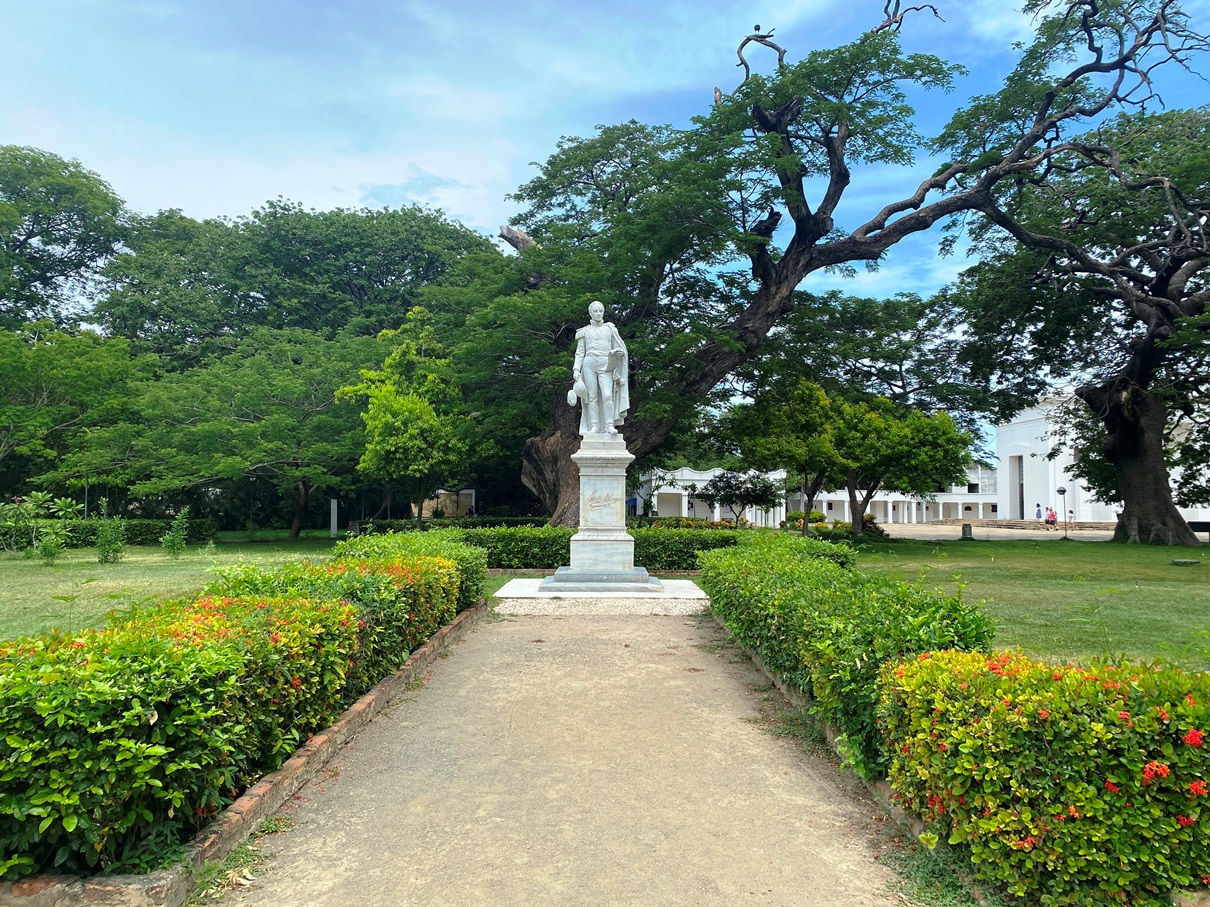
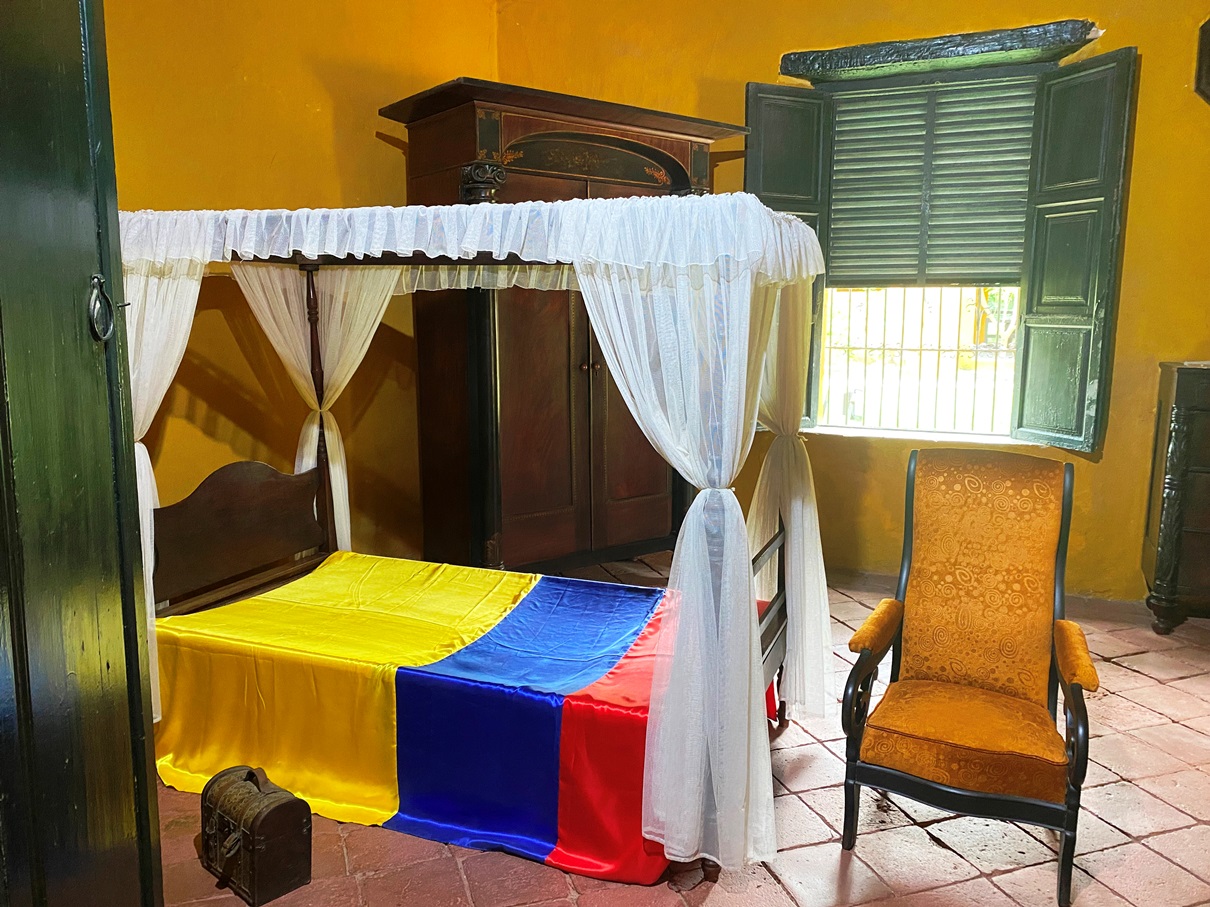
My low expectations for Santa Marta actually made me quite fond of it by the end. When I first arrived, I stayed on the outskirts at a hostel close to the bus station that also happened to be close to Quinta de San Pedro Alejandrino – a hacienda famous for being the place where Simon Bolivar spent his final days – so I wandered there the morning after arriving back from Ciudad Perdida. It is home to museums, some botanical gardens, and a memorial, and you can also see the room where Bolivar passed away.
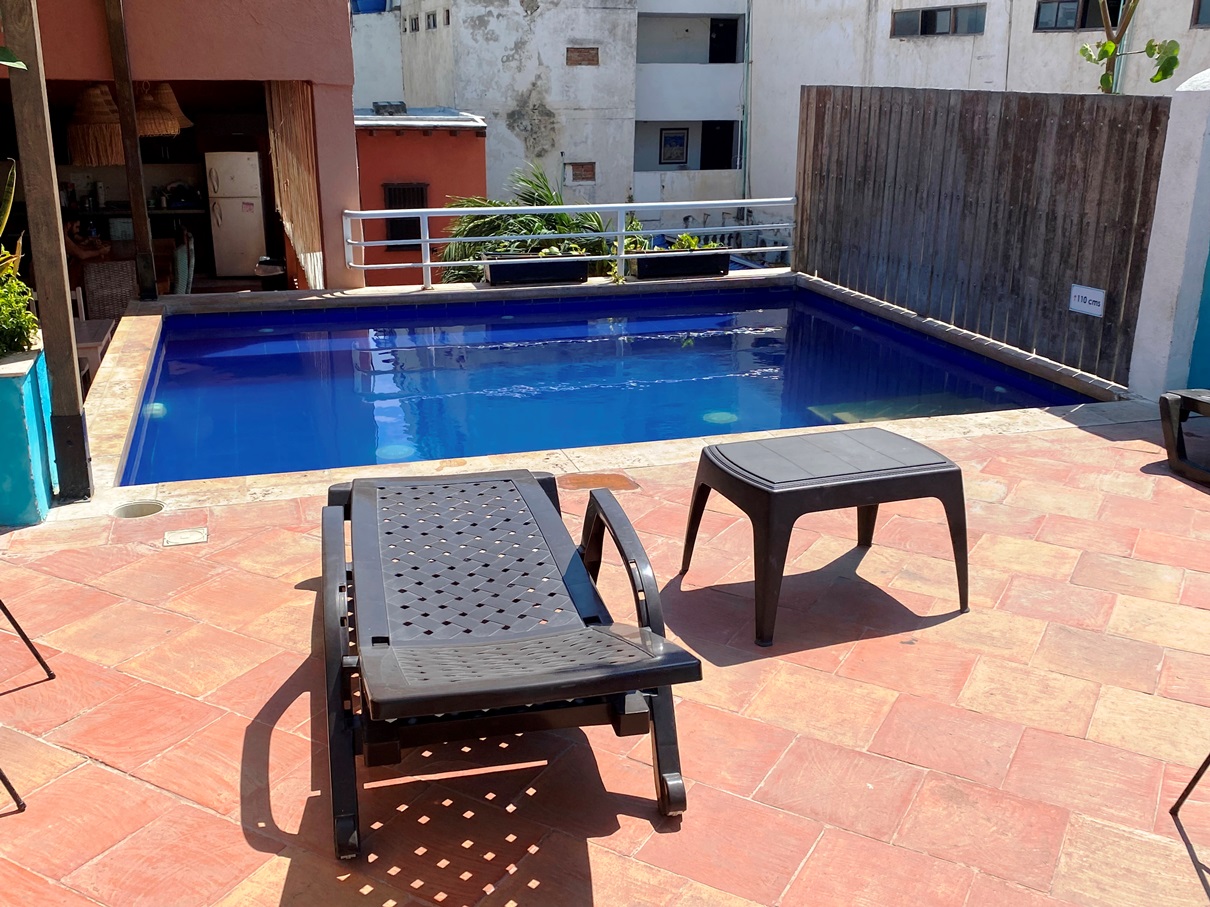
This got me curious about what else Santa Marta had to offer, so I decided to move to somewhere closer to the historic centre, eventually settling upon Gagaka Rua – a hostel close to the old town with a rooftop pool – and it was the perfect place for me to chill out and lay low for a while.
It was something I needed, as I had been travelling very fast over the last few weeks. My trip to Cuyabeno was not in my original itinerary – but something I chose to do after hearing glowing recommendations from other people – so I entered Colombia behind schedule and had to play catch up. And then, even after I had caught up, I heard on the grapevine that the rainy season was due to begin along the northern coast, so I was racing to get to Ciudad Perdida whilst the weather was still good.

I found the centre of Santa Marta to be quite charming. Its architecture doesn’t hold up against Cartagena, but tourism not being so central to its economy made it feel more like a real town. It also has a great museum – El Museo De Oro – which is free to enter and has a collection of artefacts and lots of information about the area’s history.

As well as relaxing and catching up with my blog – between having dips in the pool – Santa Marta is where I based myself whilst making some trips to nearby places. The first being Tayrona National Park.
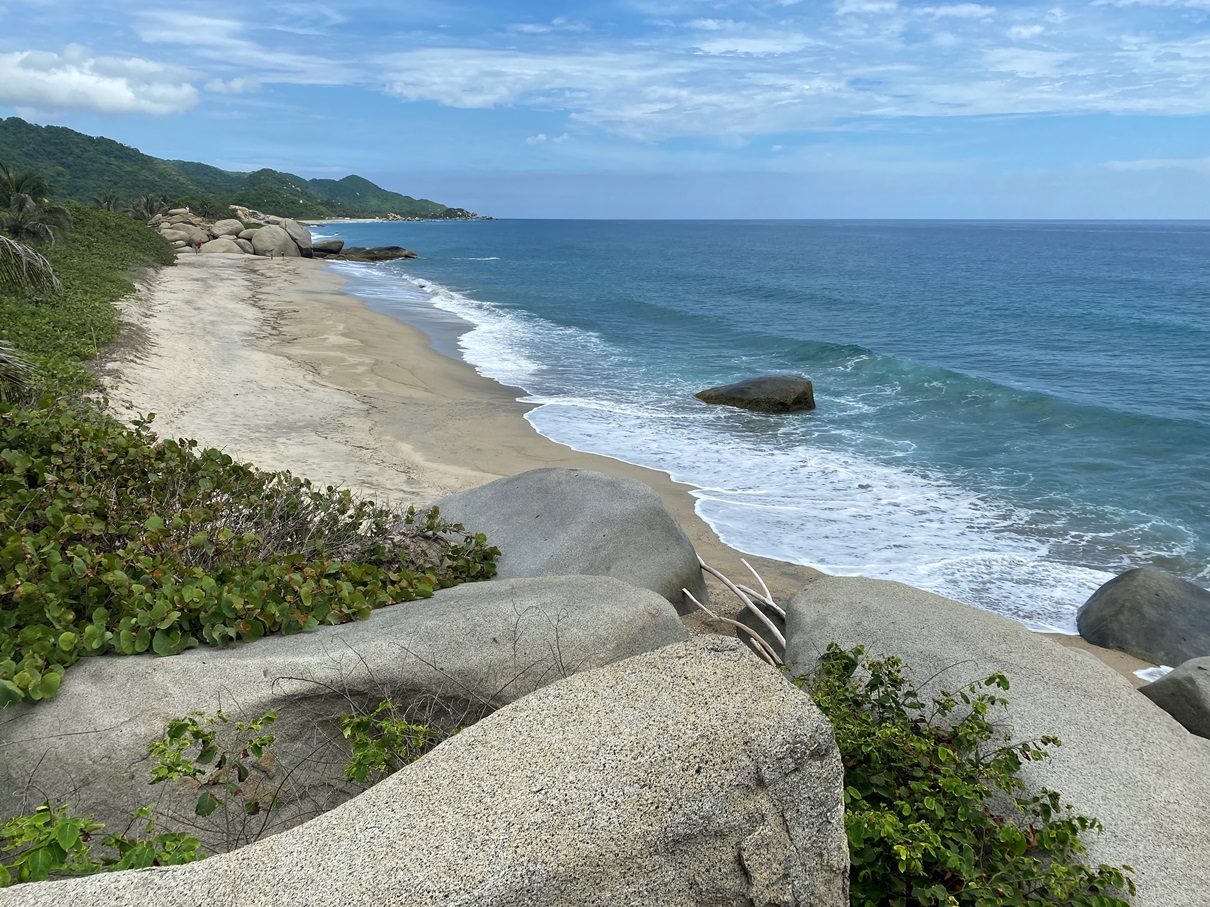
Not only was this home to some beautiful beaches, but it was also surprisingly good for wildlife. On my first day there I reunited with Lydia and Alex (two of the other people I hiked to Ciudad Perdida with), and within just a few minutes of walking through the jungle, spotted capuchin monkeys.

This is a species that I have worked with during my time in Merazonia, but not encountered in the wild until this point. I ended up seeing several other groups over the next two days, and some were displaying weird behaviour that made me suspect that humans have been feeding them.
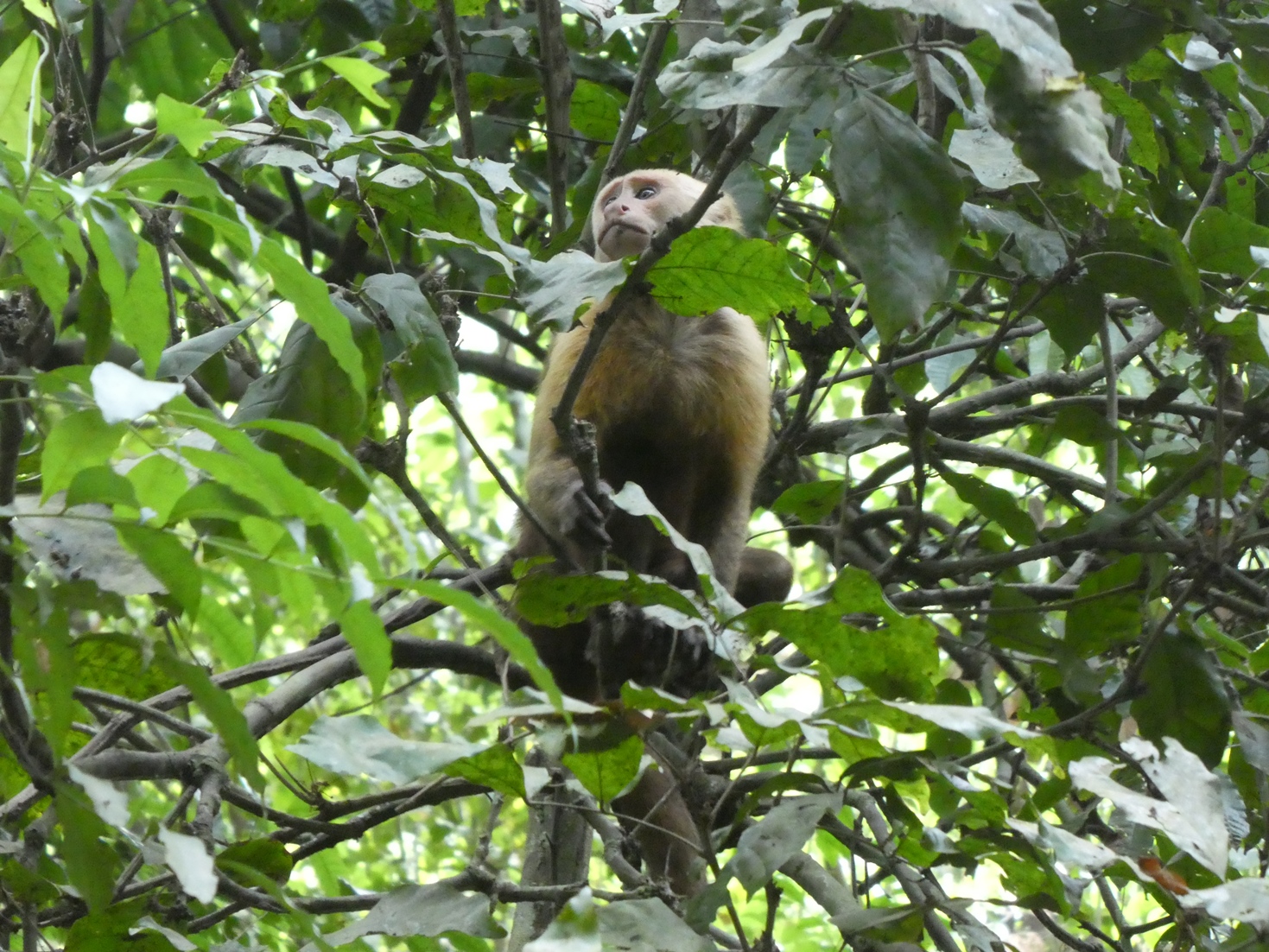
I am going to get on my soapbox for a quick moment and say this: please don’t feed wild animals. Especially creatures like monkeys. It is really bad for them to associate humans with food because they eventually start to rely upon it and forget how to provide for themselves, and sometimes they will start to get violent when they don’t get what they expect. I know some of you think it is cute to be able to get closer to them but trust me on this; it is so much more magical when you come across wild animals that are still truly wild and behaving normally.

As well as capuchins, I also saw some red howler monkeys.

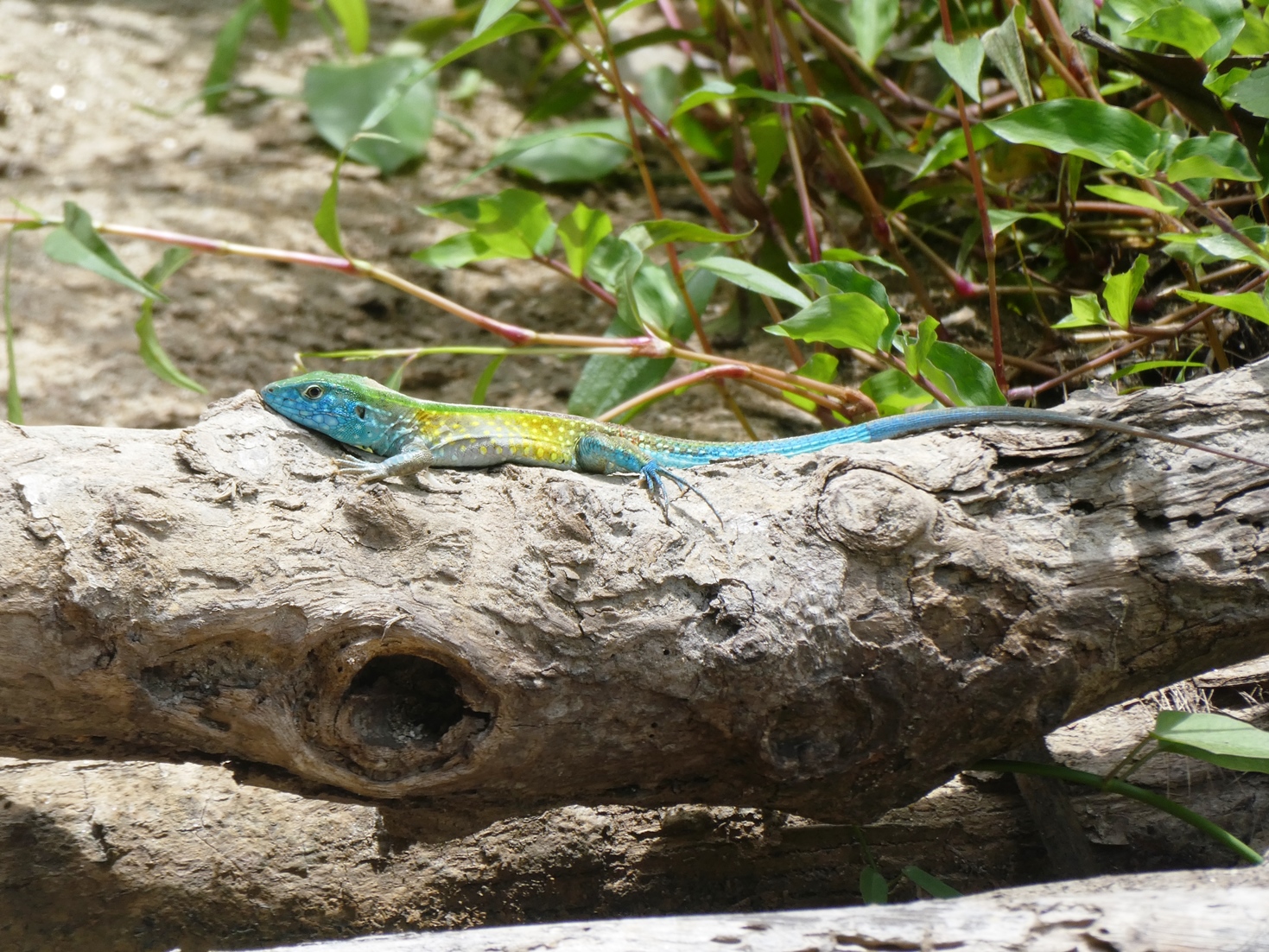
Lizards.
Many species of birds, including this woodpecker.

Several capibaras and even a cotton-top tamarin monkey. Neither of which I managed to get any decent photos of because they were flighty creatures.

Otherwise, Tayrona was where I spent time swimming and relaxing at the beach. I also got to test out the new snorkel I bought in Medellin.
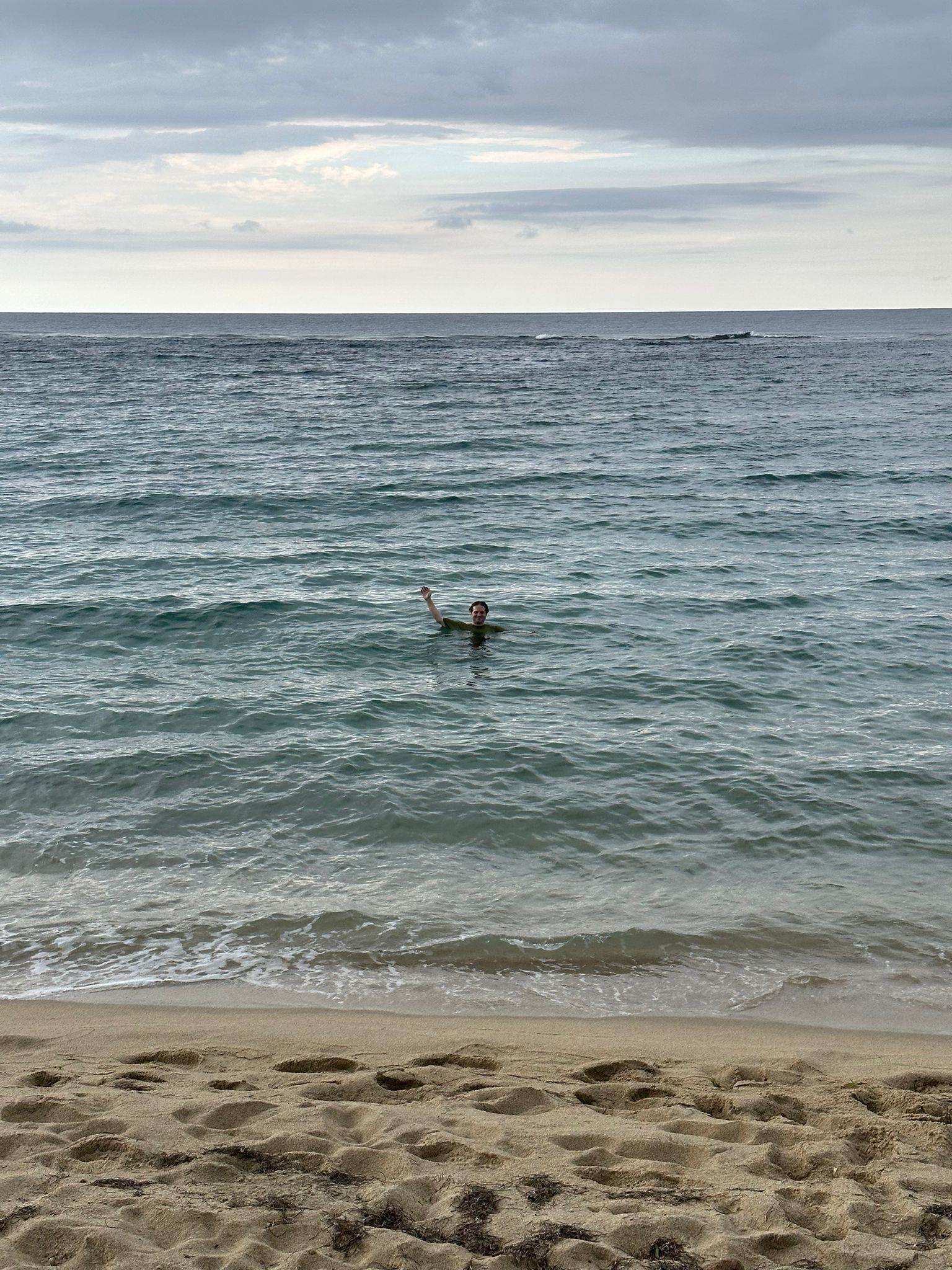
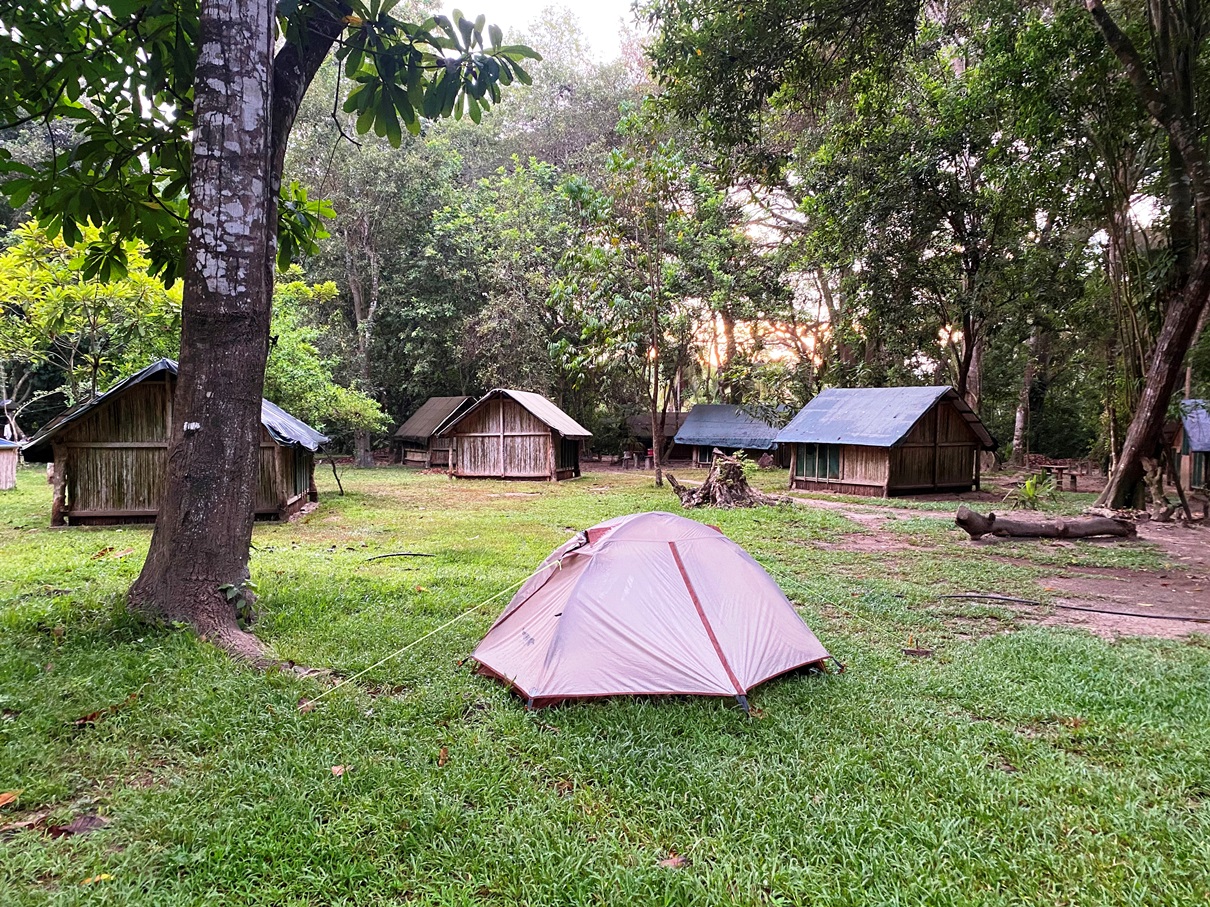
Lydia and Alex only came for a day trip, so I said goodbye to them the first afternoon, but I had brought my tent with me and ended up spending the night.
The other place I visited whilst at Santa Marta was Minca, a nearby village in the mountains. I was a little on the fence about coming here as it is one of those places that Gringo expats have colonised and filled with fancy hostels, yoga retreats, cafes, etc, and those sorts of places can irritate me at times. Don’t get me wrong, I am a bit of a hippy myself and also spiritual. It’s just when these first-world ‘free-spirited’ residents are so absorbed within their privileged bubble that they are completely out of touch with reality – or are weird in a way that feels showy rather than authentic – that they annoy me. Whilst I did overhear some conversations that made me snort to myself, and at one point found myself witness to an upcoming guru leading an ‘erotic hypnotherapy’ meditation session intended to parasexually trigger orgasms on its attendants (yes really), it wasn’t too bad.

On the morning I arrived, the weather seemed good whilst the forecast the following day was a bit bleak, so I caught a moto taxi straight up to a place called Los Pinos; a known viewpoint where one can see much of the Sierra Nevada on a clear day, but, alas, when we were halfway up the mountain, it began to rain. By the time I arrived, the view looked like this.

I waited an hour or two, hoping it would clear up, but I seemed to be out of luck that day. No matter; I was aware I had been more than lucky so far. The north and south of Colombia are in two different climatic regions. When I was in the south, people told me it was at the tail end of the rainy season, but the weather was great, and – as I mentioned before – in the north the rainy season was long overdue. Travelling in the low season in both areas made things much easier and cheaper for me, but I had been blessed with great weather so am grateful for my good fortune. The rain had finally caught up with me.

I hiked back to my hostel in Minca whilst the clouds wafted across the mountain, visiting a pair of waterfalls on my way and passing by many coffee plantations. It did start to clear up a little that afternoon, and I didn’t get too wet.

Much of the next two days were spent chilling at my hostel, where I caught up with my blogs (including this one) at a little desk overlooking the mountains. Look, here is a photo of me now.

And this is the view.

Yes, that’s right. This is one of the very few occasions where I am writing a blog contemporaneously (instead of playing catch-up days or weeks later). Hi.

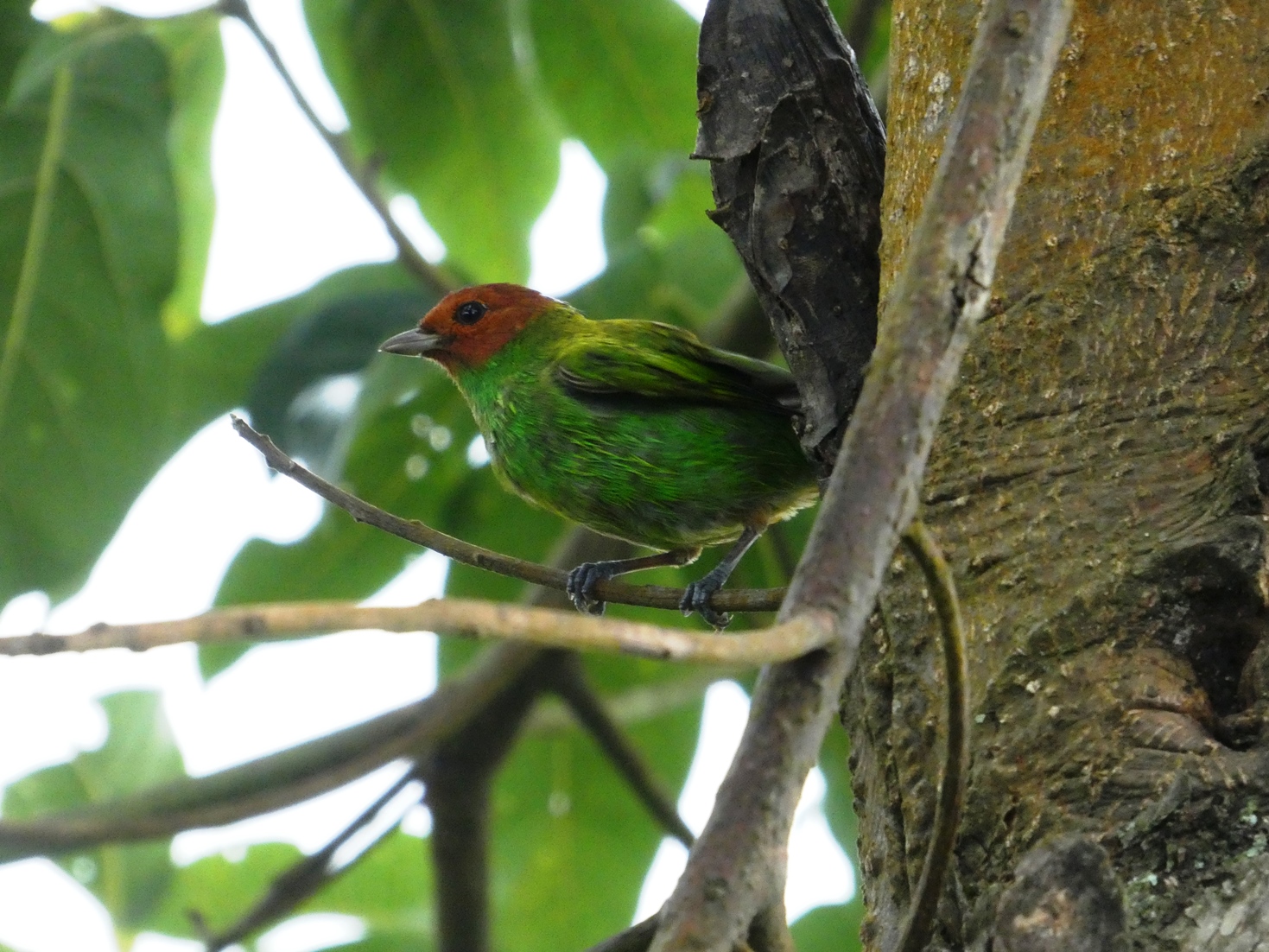
Minca is known for its birdlife, and as I was writing this, reading books, and catching up on TV series, I kept having to read for my camera as creatures appeared in the trees around me (between the rainstorms).
After my two nights spent in Minca, I caught a night bus down to a place called San Gil. This wasn’t in my original itinerary, but all that fast travelling I mentioned means I now have some spare time.

For more photos from Santa Marta, Tayrona and Minca, click on these hyperlinks.
Practical Information and Recommendations
This is mostly going to be some recommendations for places to stay, as there were some lovely hostels in this area that I want to give a shout-out to.
First of all, Hostal Casa San Pedro in Santa Marta. It is a brand-new place within walking distance of the main bus terminal and Quinta de San Pedro Alejandrino. The facilities are great, and being out of town meant it was quiet (I had the dorm to myself for the three nights I stayed). The people who run it are friendly and helpful, and they were excited to see me because I was their first-ever foreign guest. They looked after my backpack and valuables for me during Ciudad Perdida.
Within the centre of Santa Marta, I was initially going to stay at República – a popular hostel that I had heard good things about online – but when I arrived, they made me wait in the common area for a while before checking in, and during that time decided it wasn’t for me. It was full of people partying by the pool in the daytime to awful music, the staff seemed disinterested, and there was something weird about the energy there. I ended up cancelling my booking and instead checked in to Gagaka Rua Hostel, which also had a pool, but was also quieter and had more personable staff.
In Minca I stayed at Dunarinka, which is owned by a lovely lady, had a balcony, hammocks, a great view, communal kitchen, and was just a ten-minute walk from town. There are other places which have amenities like swimming pools, but they were all quite pricey. Lots of the accommodation options in Minca are owned by first-world expats who have raised prices artificially, but Dunarinka – run by locals – remains good value for the budget traveller.
Finally, my advice for Tayrona National Park is for anyone who wants to camp. When I arrived at the entrance, a tout posing as park staff greeted me (I have found this a very common phenomenon in bus stations in this part of Colombia, too: always buy your tickets from the official booths). He tried to tell me that I needed to book my camping there and then went through a list of campsites with me (along with their prices). I refused, and not only were my suspicions confirmed when I arrived at the park – where I saw from the actual prices he was charging commission – but his ‘map’ did not even include all of the options.
San Juan has the best beach, and there is camping available there, but bear in mind that it is a bit more expensive, does not have as many amenities (such as wifi), and the only option for eating is a single restaurant which – judging from its prices – is very aware it possesses a monopoly. It is also very busy during the daytime. My advice is to camp closer to Arrecifes, as the beaches are quieter, there is a range of campsites and restaurants – all with more amenities – and you won’t have to walk so far carrying all your camping gear. You can then walk to beaches such as San Juan whilst treating Arrecifes as your base. Out of the campsites there, I found EcoCamping Lui to be the best value. Tequendama was the nicest looking but expensive, whilst Jacobo Bermudez and Andres Bermudez (both run by the same family) were a bit run down, and I got a weird vibe from them. There is another option further away from the beach called Don Pedro that I didn’t see so can’t give an opinion.
 Tej Turner